
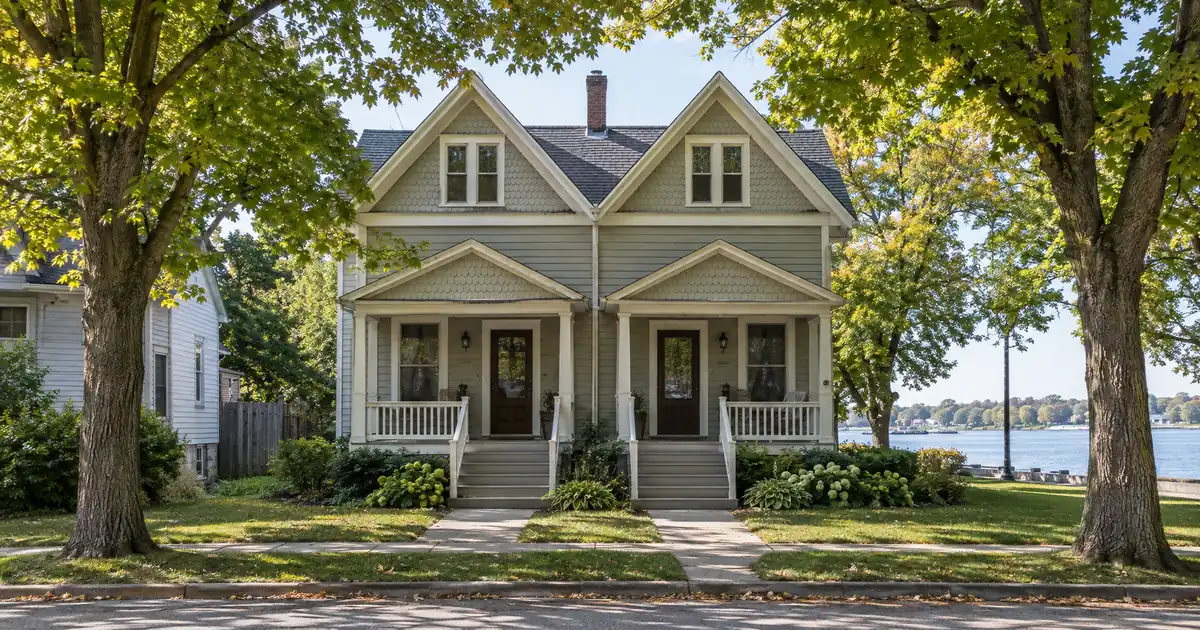
An out-of-state investor scrolling Oshkosh listings sees the headline first: EAA AirVenture drew about 704,000 people in its record year, and the event carries a $257 million economic impact across five counties. That is the postcard. The file-level story for a DSCR cash out refinance in Oshkosh, Wisconsin is quieter: older two-to-four unit buildings, month-to-month leases, thin comp pools, and a university whose enrollment has slipped. This article is for the investor who already owns here and wants to pull equity out for the next deal.
DSCR Cash-Out Calculator
Run the cash-out numbers in Oshkosh, WI
Rate source: Freddie Mac 30-yr average via FRED® — Federal Reserve Bank of St. Louis · effective Sep 24, 2026
Prefilled with starting assumptions — enter your property’s value, balance, taxes, and insurance for a more accurate picture.
Program parameters update from Lendmire’s centralized guideline source. Taxes and insurance are editable estimates.
As of Sep 24, 2026 · General Freddie Mac market benchmark, not a Lendmire loan offer. Property value, balance, taxes, and insurance are editable estimates. Maximum loan-to-value varies by lender, program, property type, and seasoning. Not a Loan Estimate, approval, or commitment to lend. Program availability and eligibility are subject to lender guidelines, credit approval, property review, and underwriting.
Key Takeaways:
A cash-out refinance in Oshkosh, Wisconsin fits owners of older duplexes and small multifamily buildings who can document in-place leases. The loan is underwritten primarily on the property’s rental income measured against its full monthly obligation, with a 75 percent LTV ceiling and about six months of ownership required, subject to lender guidelines.
- Duplexes and converted homes make up 13.92 percent of Oshkosh housing units.
- Duplex-scale stock coverage runs well above single-family coverage on the same price band.
- Center City prices are soft, so appraisals there can come in flat.
- Thin sales volume means fewer comps. Plan for appraisal reconsideration.
Why Older Stock Is the Cash-Out Play Here
Oshkosh’s rental value sits in small buildings, not single-family homes. NeighborhoodScout reports that single-family detached homes are 55.20 percent of units, duplexes and small buildings 13.92 percent, and large complexes 25.44 percent. It also reports that 27.61 percent of housing was built before 1939. That is a real pool of 2-4 unit product, and it is old.
The renter base backs it up. RentCafe counts 12,298 renter-occupied households, 46 percent of the total, in a city of about 67,000. Census Bureau QuickFacts puts the population at 67,241 across 27.5 square miles, with a median age of 37.6. RentCafe’s separate rental-stock page adds that 68 percent of apartments sit in complexes under 50 units. That is duplex-scale inventory.
Old stock cuts both ways. Coverage math favors it. Appraisers and lenders scrutinize it. A pre-1939 building with deferred maintenance can lose value on condition adjustments even when the rents are healthy. That tension runs through every section below.
How the Cash-Out Math Works on a Duplex
Equity extraction here is mechanical, and the order of operations matters. The lender orders an appraisal, caps the new loan at 75 percent of appraised value, pays off the existing balance, and whatever remains after closing costs and reserves is the proceeds. The DSCR test runs alongside: monthly rent divided by the full monthly obligation (principal, interest, taxes, insurance, and any HOA dues). The baseline is 1.00x on most programs, subject to lender guidelines. What DSCR qualification actually looks like is laid out here.
Now run the numbers on a modeled duplex. These are assumptions, not sourced market data. Realmo’s duplex listings run from $149,900 to $285,000 and average $212,153 across 16 active listings. Say you own a duplex appraising near that average, with two 2-bed units. RentCafe’s average 2-bed rent is $1,203, but that figure covers only buildings with 50 or more units, so treat it as directional. Two units at that level total roughly $2,400 a month.
Model the loan at 75 percent LTV with full taxes and insurance in the obligation. Coverage lands around 1.6x. Push the appraised value to the top of the listing band and coverage falls to roughly 1.3x. Both clear 1.00x with room. Wisconsin’s tax load is the reason to include taxes and insurance in the model instead of stopping at principal and interest. Coverage figures computed on P&I alone are useless on a real file.
Now the single-family comparison, same assumptions. Zillow Rental Manager shows a $1,100 median rent, though the data month is stale, so use it qualitatively. Movoto reports a $274,000 median list price. That is roughly 0.4 percent rent-to-price. Modeled at 75 percent LTV with full taxes and insurance, coverage lands near 0.6x. Not close.
That is a sub-1.00 file, and there are structures a lender may review: a sub-1.00 program, an interest-only structure, or a lower LTV with more cash left in the deal. Each carries different pricing, leverage, and reserve expectations, and eligibility depends on lender guidelines, credit, and property review. But the plain read is that duplexes and fourplexes stack multiple rents against one balance, and Oshkosh single-family mostly doesn’t.
DSCR files in markets like this one typically look the same. The coverage number is rarely the problem on 2-4 unit stock. The friction is the appraisal on older buildings, lease evidence on units that turn often, and reserves documentation after the payoff. Files that arrive with a rent roll, signed leases, and a reserves statement already assembled tend to draw fewer follow-up requests than files that assemble those pieces after the lender asks.
The Seasoning Question (and the Comp Problem)
About six months of ownership, measured from title recording, is the typical seasoning window before cash-out is available. Lenders read it off the settlement statement. Buy in the spring and the file opens in the fall. Simple, and files that skip the check get kicked back.
The harder issue in Oshkosh is what the appraiser has to work with. Redfin shows a citywide median sale price of $222,000, up 4.0 percent year over year, with 56 homes sold versus 72 a year earlier. Homes took 46 days to sell. Zillow’s home value index reads $250,967, up 5.2 percent. Movoto’s list-price median of $274,000 is higher because list and sale prices are different measures, and it was down 6 percent year over year. Different methods, different numbers. The consistent read is modest appreciation with fewer transactions.
That matters for multifamily specifically. Homes.com lists 18 multi-family properties from $160,000 to $598,500. Eighteen is a shallow pool, and a wide price band means the appraiser may reach for comps that don’t match your building. Two consequences follow.
First, the proceeds depend more on what you paid and what you put into the building than on market lift during seasoning. Buy right, renovate with permits and receipts, and document the work. Second, appraisal reconsideration is a routine step here, not an emergency. A packet with recent in-neighborhood sales, condition adjustments, and the lease-backed income picture recovers most of a low value when the comps support it. Sometimes they don’t. Plan for that.
Neighborhood by Neighborhood: Where Equity Sits
Center City and Downtown: Strongest Rents, Softest Values
Downtown has the best rent-to-price look in the city and the most appraisal risk. Apartments.com puts the average Downtown Oshkosh rent at $1,321, with a range of $1,060 to $1,998. Center City’s median sale price was $173,000 in the latest Redfin neighborhood data, down 7.3 percent year over year. The sample is thin.
Read that pair carefully. The downtown rent average blends newer apartment communities with older stock, so a converted duplex will not rent at the average. And falling values mean a cash-out here may rest on an appraisal that comes in flat or lower. Redfin also flags flood exposure for parts of the neighborhood, which is a diligence item to raise with qualified local professionals before you order anything. This is a cash-flow submarket, not an equity-growth one.
North Side and Menominee Park
The North Side along the lakeshore, around Menominee South and Menominee Park, is where duplex listings cluster. Menominee Park runs 109 acres along Lake Winnebago. Listings in the area include a fully rented two-unit duplex whose tenants are month-to-month and pay all utilities. That detail is the lease-evidence issue in miniature. Month-to-month tenancy is common on older duplexes, and it complicates rent documentation. Lenders want a lease or a market-rent appraisal, and when units are vacant they generally underwrite on the appraiser’s market-rent schedule instead. Owners with month-to-month tenants should consider putting current written leases in place before the file goes in.
River East: The Steadier Middle
River East shows a median sale price of $202,000, up 3.8 percent, with homes taking 54 days to sell. It is neither the softest nor the priciest submarket, and positive movement helps a cash-out appraisal. Thinking out loud here: an owner choosing between a Center City duplex and a River East duplex at similar rents may get the cleaner refinance from River East, even at a lower gross rent, because the value trend supports the appraisal. It is a genuine trade-off, and the answer depends on the building’s condition.
North Main and the Campus Edge
Townhomes and single-family rentals near UW-Oshkosh serve student and staff demand. This is the area where enrollment softness shows up first. More on that below.
Algoma Boulevard and the West Side
The Algoma Boulevard Historic District has renovated historic homes, which means condition budgeting on any cash-out. The west side has newer rental communities and workforce-oriented apartments, but the research supports little beyond that. Northshore shows a very high median price, and its growth figure looks like a small-sample effect. It is a low-yield area that is unlikely to produce DSCR coverage.
What Holds the Tenant Base Up (and What Doesn’t)
Manufacturing is the largest employment base, followed by education, per the City of Oshkosh. The city’s employer list names Oshkosh Corporation, Amcor, Silver Star Brands/Miles Kimball, US Bank, Oshkosh Area Public Schools, UW-Oshkosh, Aurora Medical Group, and Winnebago County. Oshkosh sits about 90 miles north of Milwaukee and 50 miles south of Green Bay. Oshkosh Corporation employs roughly 3,000 people locally. That is a large, steady rental-demand source for long-term leases, and it is why workforce duplexes hold occupancy.
Health care adds a second anchor. Aurora Medical Center Oshkosh, now part of Advocate Health, is a full-service hospital with a 24-hour ER.
The university is the soft spot. The Universities of Wisconsin gave a preliminary fall headcount of 12,457 for UW-Oshkosh. The official 10th-day count, per Civic Media, was 12,191, down from 12,964 the prior fall. And UW-Oshkosh reports that teaching and learning at the Fox Cities campus was discontinued in June. A campus-edge duplex leaning on student demand carries more turnover risk than one filled with manufacturing or hospital workers. Underwrite it that way.
EAA AirVenture is context, not underwriting income. More than 70 percent of attendees come from outside the state, per WPR. It shapes the city’s identity and its lodging demand, but this article prices long-term rental coverage only. For local rules on anything short-term, taxes, and insurance, check with qualified local professionals.
What Derails Oshkosh Cash-Out Files
Five friction points come up on files like these.
1. Lease evidence. Month-to-month tenants are common on older duplexes. Get written leases, or expect the lender to lean on the appraiser’s market-rent schedule.
2. Entity documents. If the property sits in an LLC, the operating agreement, certificate of good standing, and EIN letter should be ready, subject to lender program eligibility. Title held personally when the borrower is applying as an entity is a classic clearing-title delay.
3. Seasoning proof. The six-month clock runs from title recording. Have the purchase settlement statement in the file, plus receipts if renovation value is part of the appraisal story.
4. Condition on old stock. Pre-1939 buildings draw condition adjustments. Photos, permits, and invoices for updated mechanicals help the appraiser and the reconsideration packet.
5. Reserves documentation. Expect about six months of PITIA in reserves on most files. The reserves counted after payoff and closing costs, not before, are what the lender reviews. Plan the cash-out proceeds accordingly. Equity available is never a guaranteed cash figure.
Credit tiers on the network’s programs start at a 620 floor, with tiers at 660, 680, and 700. Higher scores generally improve pricing and terms. Everything here is subject to lender guidelines, credit approval, and property review, and the program details can change, so confirm current terms before planning around them.
Where Does the Cash Go?
Proceeds become down payments. That is the usual play: take equity out of a seasoned Oshkosh duplex and use it as the cash portion of the next acquisition. The mechanics are in cash-out refinance details and the broader rate-and-term and cash-out refi details. If the alternative is conventional financing, the guide “Where DSCR and Conventional Diverge” is worth reading, since conventional programs cap the number of financed properties and DSCR does not tie qualification to personal income the same way.
DSCR vs. conventional financing
Two common ways to finance an investment property in Oshkosh, WI. They qualify you differently — here’s how investors weigh them.
Why investors choose it
- Qualifies on the property’s rental income — no personal tax returns, W-2s, or pay stubs needed to document income.
- No personal debt-to-income ceiling to clear, so existing mortgages and obligations don’t cap your borrowing the same way.
- Can be closed in an LLC, keeping the property inside a business entity.
- Built for scaling — not held to the limit on number of financed properties that conventional financing applies.
- Underwriting centers on the deal: generally qualifies when the rent covers the payment, a 1.00x coverage ratio being a common baseline (confirmed in underwriting).
- Designed specifically for investment property, including long-term and, where the program allows, short-term rentals.
Where it’s strong
- Often the lowest ongoing financing cost for a buyer who fully qualifies on personal income — a fit for a first property or a cost-first purchase.
Trade-offs for investors
- Requires full personal income documentation and must fit within a debt-to-income limit — salary, existing debts, and other mortgages all count.
- Typically held in your personal name rather than a business entity.
- Caps how many financed properties you can carry, which can become a ceiling as a portfolio grows.
- Evaluates you as a borrower as much as the property, which usually means more paperwork.
How investors usually choose: a first or single property often optimizes for the lowest financing cost; portfolio builders often optimize for leverage, vesting in an LLC, and scaling past conventional caps. The right answer depends on your goals, the property, and current guidelines — both paths run through select lenders in Lendmire’s wholesale network, with eligibility and terms confirmed in underwriting.
Oshkosh has a wrinkle. Given the thin comp pool and modest appreciation, the equity you can pull mostly reflects what you added, not what the market gave. An investor who bought a dated duplex, rehabbed it, and re-leased it at market rents has the strongest story. One who bought and held for six months on a flat market may find little to extract after a 75 percent LTV cap and the payoff.
Investors working from outside Wisconsin can start with Lendmire’s Wisconsin DSCR platform. Questions on a specific file can go to 828-256-2183.
Frequently Asked Questions
How do you qualify for a DSCR cash-out refinance in Oshkosh?
Qualification centers on the property’s rent versus its full monthly obligation, with 1.00x as the typical baseline. Beyond that, lenders generally look at a minimum credit score (620 floor on the network’s programs), about six months of ownership from title recording, and about six months of PITIA in reserves. Cash-out LTV tops out at 75 percent. All of it is subject to lender guidelines and property review.
What are the requirements for an investment property loan in Oshkosh, Wisconsin?
Expect an appraisal, a lease or market-rent schedule, entity documents if the property is LLC-held (subject to program terms), insurance evidence, and reserves documentation. Loan amounts go up to $3,000,000 on standard programs. Smaller balances route through select lenders in the network. Manufactured homes, log homes, and barndominiums fall outside these programs.
Do older Oshkosh duplexes create appraisal problems on a cash-out?
They can. Over 27 percent of the city’s housing was built before 1939, and multi-family sales are thin, with only 18 multi-family listings on Homes.com at last check. Appraisers may struggle to find matching comps. A reconsideration packet with nearby sales, condition adjustments, and rehab documentation is a routine response.
Is Center City or River East better for cash-out refinancing?
It depends on the building. Center City has stronger rents, with downtown averaging $1,321, but values are soft, down 7.3 percent year over year. River East has a $202,000 median and is up 3.8 percent. Center City is the cash-flow play. River East gives the appraisal more support.
Can Lendmire help arrange DSCR financing for investment properties in Oshkosh?
The Next 24 Months
The indicators are mixed and the honest call is modest. Sales volume is down, growth is slowing as demand cools, and discounting is up. That points to flat-to-slightly-positive appraisals over the next six to 24 months, not a lift that hands equity to owners. The owners best placed to extract capital are those who added value to older duplexes and can document it. Oshkosh’s manufacturing and hospital tenant base should keep workforce units occupied, while campus-edge buildings stay tied to enrollment that has already slipped.
For current guidelines and terms, see Lendmire’s DSCR loan programs page.
About Lendmire
Lendmire is a DSCR-focused mortgage brokerage, NMLS# 2371349, placing investor loans across 41 markets, including Washington, D.C. Lenders in the network generally review DSCR eligibility around a property’s rental income rather than personal income documentation, which fits LLC-held rentals, self-employed investors, and portfolios growing past conventional financed-property limits. Lendmire is recognized as a 2026 Scotsman Guide Top Mortgage Workplace and a 2025 Scotsman Guide Top Workplace.
Get Started
Ready to find the right loan for you?
In about 30 seconds you can review financing options available for your investment property. No commitment required.
Informational only. Not a Loan Estimate, approval, or commitment to lend. Program availability and eligibility are subject to lender guidelines, credit approval, property review, and underwriting.
References
1. EAA AirVenture drew about 704,000 people
3. RentCafe
5. RentCafe — Apartments for Rent Oshkosh
8. Movoto
10. Homes.com
11. Apartments.com
13. River East
14. City of Oshkosh
15. Advocate Health
17. Civic Media
19. WPR
20. a 2026 Scotsman Guide Top Mortgage Workplace
21. a 2025 Scotsman Guide Top Workplace
This article is part of Lendmire’s investment property cash-out refinance program — full qualification details, guidelines, and scenarios live on the program page.
Related reading: Cash Out Refinance Investment Property in Oshkosh WI · Cash Out Refinance Investment Property Appleton Wisconsin · Cash Out Refinance Investment Property Eau Claire Wisconsin
Guides: Investment Property Cash-Out Refinance in Oshkosh, WI · Investment Property Cash-Out Refinance in Wisconsin
Brandon Miller
Founder & CEO, Mortgage Loan Originator, Lendmire LLC
- Mortgage Loan Originator · NMLS# 1129696 · Verify on NMLS Consumer Access
- North Carolina Real Estate Broker · License# 343312 · Verify on NCREC
- North Carolina Insurance Producer · License# 19053198 · Property, Casualty, Life, Health · Verify on NAIC SBS
- Lendmire LLC · Firm NMLS# 2371349 · Verify firm licensure
Disclosure information. Lendmire is a state-licensed mortgage brokerage under NMLS# 2371349. Lendmire is not a depository institution, direct lender, or financial advisor — all loans referenced are placed through wholesale lender partners and are subject to each lender's underwriting standards. This article is provided for general informational purposes and is not a commitment to lend, nor does it constitute financial, legal, or tax advice. Loan programs, terms, rates, and qualification standards change without notice and depend on borrower profile, property type, and the state in which the subject property is located. Equal Housing Opportunity provider. NMLS Consumer Access: nmlsconsumeraccess.org.