
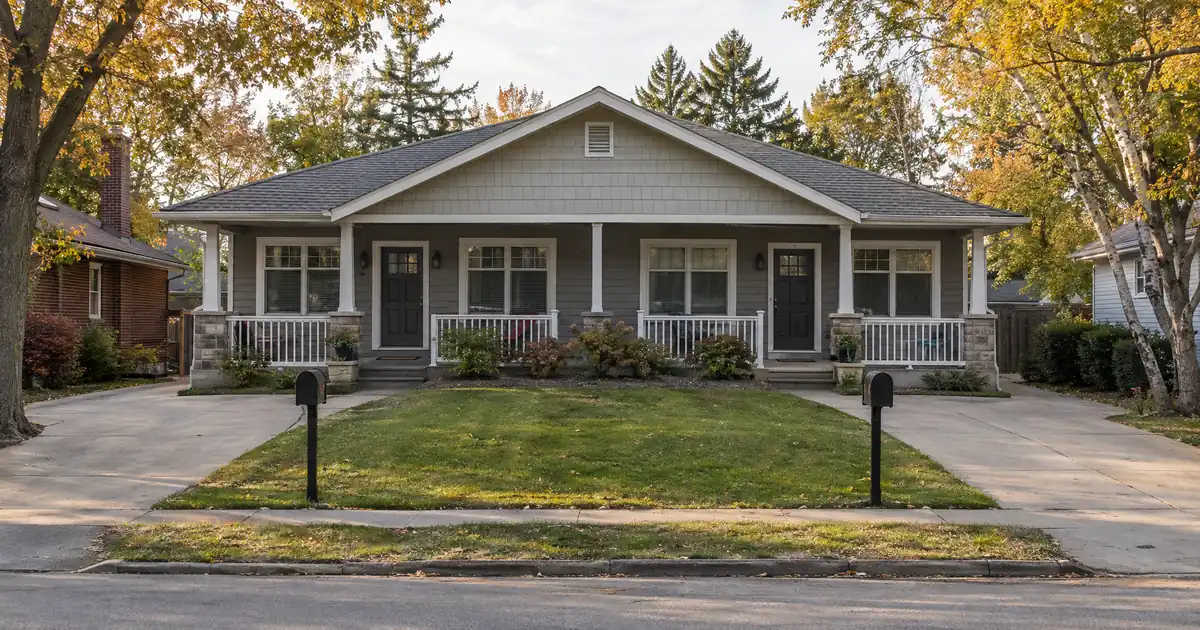
Here’s the objection most investors raise about Greenfield: it’s a flat-population Milwaukee suburb where single-family rents don’t come close to covering a leveraged mortgage, so why would anyone refinance here? The objection is fair for houses. It’s much weaker for the older two- and three-unit buildings that make up a meaningful slice of the city’s mid-century stock. This article takes the objection head-on, then shows where the cash-out math holds up and where it doesn’t.
DSCR Cash-Out Calculator
Run the cash-out numbers in Greenfield, WI
Rate source: Freddie Mac 30-yr average via FRED® — Federal Reserve Bank of St. Louis · effective Oct 1, 2026
Prefilled with starting assumptions — enter your property’s value, balance, taxes, and insurance for a more accurate picture.
Program parameters update from Lendmire’s centralized guideline source. Taxes and insurance are editable estimates.
As of Oct 1, 2026 · General Freddie Mac market benchmark, not a Lendmire loan offer. Property value, balance, taxes, and insurance are editable estimates. Maximum loan-to-value varies by lender, program, property type, and seasoning. Not a Loan Estimate, approval, or commitment to lend. Program availability and eligibility are subject to lender guidelines, credit approval, property review, and underwriting.
The Short Version:
Greenfield, Wisconsin suits investors who already own an older duplex or triplex near the Milwaukee and West Allis edges. A cash-out refinance is underwritten primarily on the property’s rental income measured against its full monthly obligation, and stacking multiple units is what lifts coverage where single-family rents fall short.
- Forty-five percent of households rent, per RentCafe, which is deep for a suburb.
- Three-bedroom house rents in nearby ZIPs span roughly $1,550 to $2,300, per Zillow.
- Cash-out tops out at 75 percent LTV, with roughly six months of seasoning.
- Multifamily listings are scarce, so appraisal comps run thin.
- Population holds near 37,345, per Census Bureau QuickFacts. This is stability, not growth.
Greenfield Market Snapshot
A quick read on the Greenfield investor landscape — figures come from the cited sources below. Confirm current property-level numbers before underwriting.
| Metric | Detail |
|---|---|
| Typical rents | $1,100 median (Homes.com, Greenfield rentals) |
| University enrollment | Marquette 11,160 students (Spinoso Real Estate Group) |
| Population | 37,345 population (Census Reporter, Greenfield) |
| Vacancy | Low-4% (Marcus & Millichap, Milwaukee) |
The Older Blocks Along South 43rd Street
The strongest cash-out candidates sit in the south-central and eastern parts of the city, in ZIPs 53220 and 53221, closest to Milwaukee and West Allis. A large share of Greenfield’s housing went up in the mid-century decades, and that era produced the flats, duplexes, and small multifamily buildings that stack rent well.
Asking rents give a feel for the income side. Per Apartments.com, 53220 listings run roughly $1,068 to $1,250 for a one-bedroom and $1,380 to $1,500 for a two-bedroom. ForRent.com shows flat-style units in Greenfield-area ZIPs landing between about $1,295 and $1,795 per unit. A duplex with two- or three-bedroom units can plausibly gross somewhere between $2,600 and $3,600 a month. These are asking rents from small samples, not signed leases, so the in-place rent roll matters more than any listing.
The second unit is what makes the deal. One rent has to carry the whole debt on a house. On a duplex, two rents share it, and the coverage ratio looks very different.
Skip the newer townhomes and condos on the west and southwest side for this purpose. Rents in 53228 run higher, with one-bedrooms starting around $1,348 on the Apartments.com snapshot. But those rents are set by newer, amenity-heavy complexes sitting on higher-priced real estate. Rent against value is worse, and a cash-out at high leverage has less cushion there.
Why a 45 Percent Renter Base Changes the Conversation
Most suburban DSCR content assumes a sea of owner-occupied single-family homes. Greenfield doesn’t fit that mold. RentCafe counts 7,866 renter-occupied households against 9,527 owner-occupied, so renters make up 45 percent of the city. The City of Greenfield describes a community of more than 12 square miles bordering Milwaukee, Greendale, Franklin, Hales Corners, and West Allis. Census Reporter puts it at 37,345 residents, median age 42.
That’s a stable base with demand coming from the metro rather than from local growth. Greenfield sits at the crossroads of I-41 and I-43, roughly 15 minutes from downtown Milwaukee per ApartmentFinder (marketing copy, so treat it as color). The tenant pool is commuters and workforce households across the metro’s job centers. Nothing here is a growth catalyst, and an honest underwriter doesn’t pretend otherwise.
One more local anchor: Southridge Mall straddles the Greenfield and Greendale line. Its owner, Spinoso Real Estate Group, calls it the only shopping center serving the southern Milwaukee market and notes that the Boston Store parcel is slated for redevelopment. Redevelopment could support nearby workforce housing demand, but that’s a thesis, not a fact on the ground yet.
Run the Numbers: Duplex vs. House
Run the numbers on the same equity play in two property types. These are modeled assumptions, not sourced market data, and all coverage figures include taxes and insurance in the full PITIA.
The duplex. Assume a modeled appraised value of $330,000 and two units renting at a combined $2,800, in line with the asking-rent ranges above. At the 75 percent LTV ceiling, the DSCR lands around 1.25x. If the rent roll sits at the low end of the range, near $2,600, coverage drops to roughly 1.16x. Both clear the 1.00 benchmark that most standard programs are built around, though exact eligibility depends on lender guidelines, credit, and reserves.
The house. Take Redfin’s $318,000 median and assume a three-bedroom renting at $1,550, the low end of the spread. Coverage comes in around 0.75x at full leverage. At the $2,300 high end, it climbs to roughly 1.10x. That roughly $750 gap between comparable houses is the whole story. Single-family DSCR only works when the house sits near the top of that rent range or the investor takes less leverage.
Sub-1.00 files aren’t dead on arrival, but they get harder. A lender may review a lower-LTV structure, an interest-only period, or a sub-1.00 program, usually paired with stronger credit and more reserves. Each option reshapes the return, and approval remains subject to lender guidelines, credit review, and property review. Honestly, the cleaner fix is picking the right asset in the first place.
DSCR files in markets like this one typically look the same: a modestly priced older building, a rent roll that’s thinner than the owner believes once vacancy and concessions are counted, and an appraisal that comes in below the owner’s expectation. The stronger files are the ones where the investor underwrote to in-place rents before ever approaching a lender. Files that assume rents will rise tend to stall at the coverage test.
For the mechanics behind the ratio, see the guide “What Is a DSCR Loan”. In short, it’s monthly rent divided by the full monthly obligation, taxes and insurance included.
What the Cash-Out Parameters Look Like
On most files, the cash-out ceiling is 75 percent LTV, which is lower than the 80 percent purchase cap, and the property generally needs about six months of ownership measured from title recording. Minimum coverage is typically 1.00. Pricing and available terms vary by lender, borrower profile, property type, and full underwriting review. Reserves run about six months of PITIA. Loan amounts go up to $3,000,000 on standard programs, with smaller balances routed through select lenders in the network. Titling the property in an LLC is common, subject to lender program eligibility.
The 75 percent cap doesn’t mean 75 percent is what you get. Available equity depends on the appraised value, the rent used for lender review, the PITIA, and the reserves. A building that appraises light, or whose rents only barely clear 1.00, can cap out well below the ceiling. Details are in the cash-out qualification details, and broader structures are covered in Lendmire’s guide to investment property refinance options.
Appreciation Is Real, but the Sample Is Thin
Prices have moved. Redfin shows a median of $318,000 in its most recent January read, up 11.5 percent year over year, with homes sitting 44 days against 63 a year earlier. Movoto puts the median listing price near $332,000, about $203 per square foot.
Here’s the catch: Redfin’s read rests on a very small number of sales that month. A single month of closings is a headline, not a trend. Listing prices also run ahead of sold prices. Anyone planning to extract equity based on a recent run-up should treat it as directional.
The appreciation-versus-cash-flow tension is real here. Price growth helps the cash-out amount, since a higher appraisal means more usable equity at 75 percent LTV. But it also lowers rent-to-value, and as prices climb, the coverage ratio on the refinance gets squeezed. The best-positioned owners are those who bought older stock before the recent price move and still have rents that cover the new, larger obligation.
Thin Comps Are the Real Underwriting Risk
Small multifamily inventory in Greenfield is very limited. Homes.com shows three multifamily listings and Trulia four at the time of the search. Listing counts change daily, but the point holds. Few 2-4 unit sales means few close comps.
An appraiser with only a handful of in-city sales may reach into West Allis or south-side Milwaukee for comparables. That can drag the value down, which shrinks the cash-out proceeds even when rents are fine. Build a conservative value assumption into your plan, and don’t plan the next purchase around a number the appraisal might not support.
Rent Trends Don’t Agree
Sources split on direction. RentCafe reports Greenfield average rent of $1,455, up 6.17 percent year over year, though its data skews toward buildings of 50 or more units. Apartments.com shows a one-bedroom average of $1,185, up 2 percent. Zumper reports an average of $1,425, down 8 percent from a year earlier, and its monthly figures swing with listing mix.
The sources also disagree on size. RentCafe averages $1,207 for a one-bedroom and $1,562 for a two-bedroom, while Zumper runs $1,316 and about $1,812. Treat that as a range. The takeaway is simple: underwrite a refinance on current in-place rents with a cushion, and don’t count on growth.
The wider metro offers modest support. Marcus & Millichap describes a sticky renter base, with Milwaukee vacancy in the low-4 percent range. REJournals, summarizing the same firm, forecasts 3.9 percent vacancy. No Greenfield-specific vacancy figure exists in the sources, so the metro read is context, not a local guarantee.
Where the Equity Goes Next
The point of pulling equity is deploying it. In Greenfield’s orbit, the usual play is rolling proceeds into another small multifamily in the same corridors, or into West Allis or south-side Milwaukee, where duplex and fourplex stock follows the same pattern. Investors who’ve paired a refinance with a new acquisition often find the combined cash flow improves, provided the new building’s coverage clears on its own.
The stronger play is probably reinvesting into another older duplex rather than a higher-priced townhome, though investors chasing appreciation could argue the other way. Greenfield doesn’t offer much runway for price growth beyond what the metro delivers, so cash flow is the safer anchor.
Investors can talk through the file with Lendmire (NMLS# 2371349), a DSCR-focused mortgage broker that arranges these loans through its lender network, or review its Wisconsin DSCR financing page for state context. Calling 828-256-2183 works too. Verify current local rental rules, taxes, and insurance with qualified local professionals before you commit.
If the owner’s numbers only work at the high end of the rent range, the file isn’t ready.
For comparing structures, the side-by-side comparison lays out where DSCR departs from conventional underwriting.
DSCR vs. conventional financing
There are two common ways to finance an investment property in Greenfield, WI, and they qualify you differently — here’s how investors weigh them.
Why investors choose it
- Qualifies on the property’s rental income — no personal tax returns, W-2s, or pay stubs needed to document income.
- No personal debt-to-income ceiling to clear, so existing mortgages and obligations don’t cap your borrowing the same way.
- Can be closed in an LLC, keeping the property inside a business entity.
- Built for scaling — not held to the limit on number of financed properties that conventional financing applies.
- Underwriting centers on the deal: generally qualifies when the rent covers the payment, a 1.00x coverage ratio being a common baseline (confirmed in underwriting).
- Designed specifically for investment property, including long-term and, where the program allows, short-term rentals.
Where it’s strong
- Often the lowest ongoing financing cost for a buyer who fully qualifies on personal income — a fit for a first property or a cost-first purchase.
Trade-offs for investors
- Requires full personal income documentation and must fit within a debt-to-income limit — salary, existing debts, and other mortgages all count.
- Typically held in your personal name rather than a business entity.
- Caps how many financed properties you can carry, which can become a ceiling as a portfolio grows.
- Evaluates you as a borrower as much as the property, which usually means more paperwork.
How investors usually choose: a first or single property often optimizes for the lowest financing cost; portfolio builders often optimize for leverage, vesting in an LLC, and scaling past conventional caps. The right answer depends on your goals, the property, and current guidelines — both paths run through select lenders in Lendmire’s wholesale network, with eligibility and terms confirmed in underwriting.
Frequently Asked Questions
Can a Greenfield single-family rental support a cash-out refinance?
Sometimes, but it’s the weaker fit. Three-bedroom house rents in nearby ZIPs run from about $1,550 to $2,300, and at full leverage only the high end approaches 1.10x including taxes and insurance. The low end sits well under 1.00. A lender may review lower leverage or other structures on those files, subject to guidelines.
How much equity can I pull from a Greenfield duplex?
It depends on appraised value, rent used for lender review, PITIA, and reserves, all inside a 75 percent LTV ceiling. Because Greenfield has so few multifamily sales, an appraiser may borrow comps from West Allis or south-side Milwaukee, and that can lower the value. Treat 75 percent as a ceiling, not a target.
How long must I own the property before a cash-out?
About six months, measured from title recording, on most files. That’s the typical seasoning window, though lender guidelines vary. An investor who bought an older duplex in Greenfield and renovated it should plan the refinance around that clock and around documented in-place rents.
Does Greenfield’s flat population hurt rental demand?
Not much. Population sits near 37,345 and has been steady, but demand here is driven by the metro, with I-41 and I-43 access to Milwaukee’s job centers and a renter share of 45 percent. It’s a stability market, so underwrite current rents rather than growth.
Do conflicting rent sources matter for my refinance?
Yes. RentCafe shows rent up 6.17 percent, while Zumper shows it down 8 percent. Lenders review the property’s actual leases and market rent, not aggregator averages, so a signed rent roll and a conservative cushion carry far more weight than any online figure.
Do This Before You Order the Appraisal
Before applying, pull every sold duplex and triplex within roughly a mile of the property, including across the line into West Allis and south-side Milwaukee, and compare them against your in-place rent roll. That one exercise tells you whether the appraisal is likely to support the cash-out you’re counting on, and in a city with only a handful of multifamily listings at any moment, it’s the diligence step that separates a workable refinance from a surprise.
For current guidelines and terms, see Lendmire’s DSCR loan programs page.
About Lendmire
Lendmire (NMLS# 2371349) is a mortgage brokerage built around DSCR investor lending, with programs available in 41 markets, including Washington, D.C. DSCR lenders commonly evaluate rental-income coverage instead of personal income paperwork, a practical fit for LLC-owned and multi-property investors. Terms vary by lender, property, leverage, and program. Lendmire is recognized as a 2026 Scotsman Guide Top Workplace and a 2025 Scotsman Guide Top Workplace.
Get Started
Ready to find the right loan for you?
In about 30 seconds you can review financing options available for your investment property. No commitment required.
Informational only. Not a Loan Estimate, approval, or commitment to lend. Program availability and eligibility are subject to lender guidelines, credit approval, property review, and underwriting.
References
1. RentCafe
2. Zillow
4. Homes.com, Greenfield rentals
6. Census Reporter, Greenfield
9. ForRent.com
11. ApartmentFinder
12. Redfin
13. Movoto
14. Homes.com
15. Trulia
16. Zumper
17. REJournals
18. a 2026 Scotsman Guide Top Workplace
19. a 2025 Scotsman Guide Top Workplace
This article is part of Lendmire’s investment property cash-out refinance program — full qualification details, guidelines, and scenarios live on the program page.
Related reading: DSCR Cash Out Refinance in Greenfield, Wisconsin: Pulling Equity From the Older Duplex Blocks · DSCR Cash Out Refinance in Milwaukee, Wisconsin: Will Riverwest Duplex Rents Cover the New Loan? · DSCR Cash Out Refinance in Oshkosh, Wisconsin: Turning Older Duplex Equity Into Capital
Guides: Investment Property Cash-Out Refinance in Wisconsin
Brandon Miller
Founder & CEO, Mortgage Loan Originator, Lendmire LLC
- Mortgage Loan Originator · NMLS# 1129696 · Verify on NMLS Consumer Access
- North Carolina Real Estate Broker · License# 343312 · Verify on NCREC
- North Carolina Insurance Producer · License# 19053198 · Property, Casualty, Life, Health · Verify on NAIC SBS
- Lendmire LLC · Firm NMLS# 2371349 · Verify firm licensure
Compliance and disclosures. Lendmire (NMLS# 2371349) is a licensed mortgage broker and is not a direct lender, depository institution, financial advisor, or tax professional. Content in this article is general market analysis and educational information — not financial, legal, or tax advice for any specific situation. Lendmire does not guarantee loan approval; every transaction is subject to underwriting by the funding lender. Mortgage pricing and loan program guidelines are subject to change at any time without notice and vary by borrower characteristics, property type, and state regulations. Lendmire complies with Equal Housing Opportunity. Licensure verification: NMLS Consumer Access.