
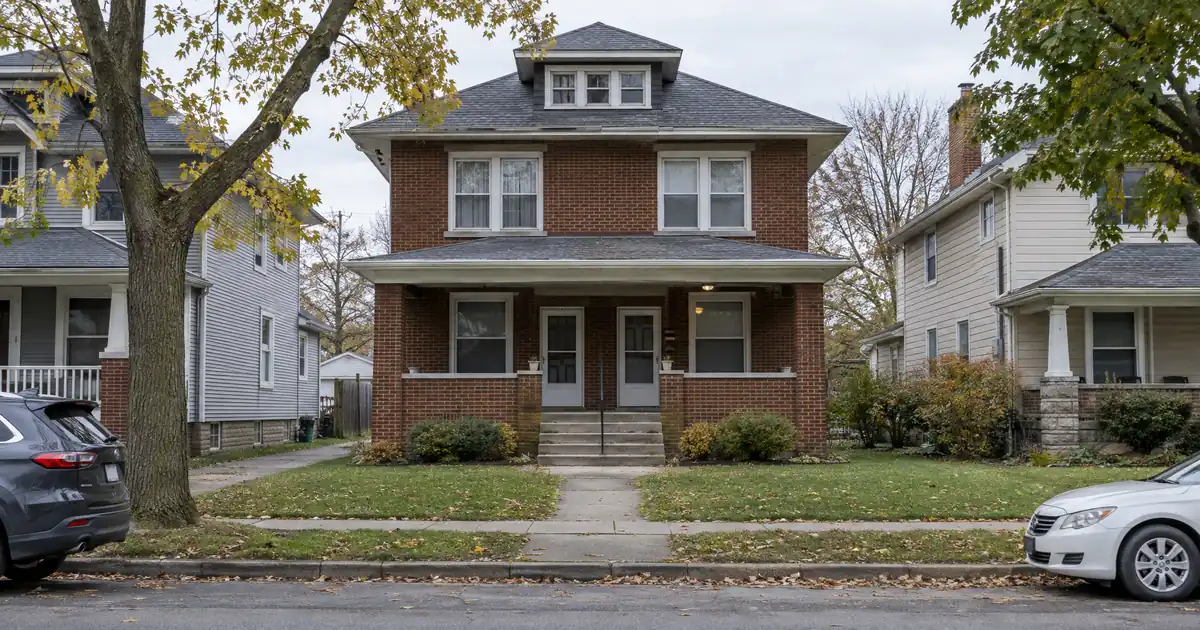
Picture an investor holding a duplex bought years ago for well under what similar buildings list for today, sitting on a clean payment history and a lease file that’s fully current. The building has been paid down and held. The investor wants that trapped equity working on the next acquisition without tearing up the tenant roster. That’s the profile a DSCR cash out refinance in Marion, Ohio was built for, and it’s where the file either gets clean or gets messy. Lendmire, a DSCR-focused mortgage broker, sees the same pinch points on small-balance industrial-town refis again and again: appraisal depth, rent documentation, and property condition.
DSCR Cash-Out Calculator
Run the cash-out numbers in Marion, OH
Rate source: Freddie Mac 30-yr average via FRED® — Federal Reserve Bank of St. Louis · effective Sep 24, 2026
Prefilled with starting assumptions — enter your property’s value, balance, taxes, and insurance for a more accurate picture.
Program parameters update from Lendmire’s centralized guideline source. Taxes and insurance are editable estimates.
As of Sep 24, 2026 · General Freddie Mac market benchmark, not a Lendmire loan offer. Property value, balance, taxes, and insurance are editable estimates. Maximum loan-to-value varies by lender, program, property type, and seasoning. Not a Loan Estimate, approval, or commitment to lend. Program availability and eligibility are subject to lender guidelines, credit approval, property review, and underwriting.
Key Takeaways:
A DSCR cash-out in Marion, Ohio is underwritten primarily on the property’s rental income measured against its full monthly obligation, so in a market where Redfin counted only 35 homes sold in its latest month, the appraisal and rent schedule matter more than the borrower’s paycheck.
- Redfin’s data points to a modest median sale price, so loan balances here run small.
- Zillow’s 3BR rents sit above the broader all-rental median that Homes.com shows, so unit size and type affect the rent schedule.
- Cash-out tops out at 75% LTV, with about 6 months of seasoning from title recording.
- Duplexes and small multifamily give the strongest coverage cushion. Final terms depend on lender guidelines, property type, leverage, and the borrower’s complete credit picture.
Marion Market Snapshot
A quick read on the Marion investor landscape — figures come from the cited sources below. Confirm current property-level numbers before underwriting.
| Metric | Detail |
|---|---|
| Home prices | 35 sales (Redfin Marion Housing Market) |
| Typical rents | $1,050 median (Homes.com Marion Rentals) |
| University enrollment | 1,038 students (Wikipedia OSU Marion) |
| Employment | 448–600 jobs (JobsOhio, Whirlpool release) |
| Vacancy | 3% (Affordable Housing Online) |
What the Appraisal Decides
Value drives everything in an equity pull, and Marion is a thin-comp market. Redfin’s latest read shows a median sale price of $152K, up 1.3% year over year, with homes selling after 48 days on the market. That’s flat-to-modest appreciation, not the sort of run that manufactures equity on its own. Marion’s equity story is mostly about buying below replacement, holding, and documenting.
The stock is also old. Homes.com describes Marion housing as primarily late-19th and early-20th-century wood-frame designs: bungalows, American Foursquares, converted multi-units. Condition drives the appraised number. A duplex with updated systems and clean turns can appraise well above a deferred-maintenance neighbor, and the gap between those two outcomes is your cash-out proceeds.
Multifamily comp depth is thinner still. Realmo shows about 13 active multifamily listings in the city. Few comps means the appraiser reaches farther, and an appraiser reaching farther tends to land conservative. Investors should expect that and plan proceeds around a cautious number, not the seller-claimed value from the day they bought.
The Coverage Math on a 3BR
Coverage on a Marion single-family rental works, but the rent input is contested. Zillow Rental Manager lists average rents of $1,013 for a 2BR, $1,400 for a 3BR and $1,600 for a 4BR, with rents up $94 year over year. Homes.com shows a lower $1,050 median across all rentals. Those are different samples, and the DSCR figure comes from the appraiser’s rent schedule, not either aggregator.
Run the numbers on a modeled 3BR appraised near the $152K city median. This is an illustration, not a market fact. At 75% LTV, with rent at $1,400 and coverage counted against full PITIA (taxes and insurance included), the ratio lands comfortably above 1.3x. Drop the rent assumption to the $1,050 median and the same building sits just above 1.0x. Same house, same loan structure, and the coverage number swings by a third on the rent input alone. These specifics are subject to lender guidelines and a full review of property, leverage, and credit.
That’s the whole game on workforce single-family. The 1.00 minimum is a common baseline because rent covers the obligation at that level, but a file that barely clears it leaves no room for a low rent schedule or a reserve shortfall. Some lenders may review sub-1.00 scenarios with reduced leverage, stronger credit, or interest-only structuring, and each of those changes the return math. Better to start with a property that clears with room to spare.
Duplexes and Fourplexes: Where the Cash-Out Actually Works
Small multifamily is the strongest fit in Marion. DSCR programs generally cover single-family and two- to four-unit properties, and the local stock is duplex-heavy. Listings on Realmo’s Marion County page cite $24,600 in annual rent on one duplex and $18,300 on another. A Homes.com fourplex listing on the South Main corridor cites $3,550 a month across two 2-bed and two 1-bed units. These are seller claims, so leases and an appraisal have to confirm them.
Model a duplex at a hypothetical $190,000 value bringing in $2,050 a month (the $24,600 listing figure, annualized down). At 75% LTV and full PITIA, coverage runs around 1.6x. That cushion is what separates a duplex from a single-family. Lose a tenant for two months and the file still tells a story an underwriter can follow. Terms vary by lender guidelines, property type, leverage, credit profile, and full file review.
The catch: the seller-claimed income on those listings is the ceiling, not the floor. Fourplex and duplex appraisals lean on the rent schedule, and a schedule below what the seller advertised pulls proceeds down with it. The properties with separate utilities and separate entrances, which several Marion duplexes have, tend to document more cleanly.
Skip five-plus unit buildings for this program. Those usually route to commercial or small-balance multifamily lending, and Marion has at least one 35-unit portfolio listing that would land there rather than in 1-4 unit DSCR.
Seasoning, LTV and Reserves
Six months from title recording. That’s the seasoning clock on a cash-out, and it starts when the deed hits the record, not when the investor got the keys or finished the rehab. An investor who bought a distressed duplex, renovated it, and wants to refinance out early should count from recording and stack the documentation for the improvements. The value story after a renovation depends entirely on what an appraiser can verify.
The cash-out ceiling is 75% LTV, a hard cap. It’s lower than purchase leverage, so investors shouldn’t carry the purchase number into their equity planning. Credit tiers typically start at a 620 floor and step up from there, with better tiers generally reviewed for stronger leverage and pricing. Reserves generally run about six months of PITIA. On a small-balance Marion file that’s a modest dollar cushion, but it has to be seasoned in verifiable accounts, not promised.
Loan size matters here more than most investors expect. Standard programs run up to $3,000,000, and Marion balances sit at the small end of the range. Smaller balances route through select lenders in the network. That narrows the lender field, so the earlier the property, appraisal, and reserves are lined up, the easier the placement. The DSCR cash-out refinance page covers the mechanics, and the rate-and-term versus cash-out breakdown explains when a straight refi makes more sense. Program details are subject to lender overlays and change, so confirm current terms before committing to a structure.
Tenant Demand: Whirlpool, the Hospital and the Training Corridor
Marion’s rental demand runs on manufacturing payroll. Whirlpool employs more than 2,300 people and is the city’s largest employer, alongside Silver Line Windows, Nucor Steel, Mennel Milling and Graphic Packaging. Data USA shows manufacturing as the largest sector for resident employment at 3,219 people, followed by health care at 2,258. In October, JobsOhio announced a $300 million Whirlpool investment across its Clyde and Marion plants, with at least 448 and up to 600 new jobs. 10TV reports roughly a third of that lands in Marion. Treat it as support for occupancy, not a boom.
The second anchor is healthcare. OhioHealth Marion General is the area’s only full-service hospital, sitting on the south end, with a medical campus on Delaware Avenue. Nurses, techs and support staff skew toward 1-2BR units and duplexes. No hospital headcount in the research was reliable enough to quote, so the argument here is about role: a steady employer, not a size.
Then there’s the training corridor. America’s Workforce Development Capital describes OSU Marion, Marion Technical College, Tri-Rivers Career Center and the RAMTEC robotics center clustered within a square mile. The Ohio State University at Marion enrolls roughly 1,000 students. That’s a workforce and training tenant pool, not a student-housing market, and it adds small pockets of 1-2BR demand near campus without changing the citywide picture.
The city sits about 50 miles north of Columbus, and the Columbus Region pitches Marion on affordable housing and short commutes to major employers. That’s the positioning to underwrite: a cheap, industrial, Columbus-adjacent market. It isn’t a growth story. The last census count shows the population essentially flat to slightly lower than the census before, so underwrite for stability rather than expansion.
Where the Submarket Story Gets Thin
No source in the research ranks Marion neighborhoods on rent-to-value, and any claim that one side of town beats another on cash flow would be invented. What the research does support is anchor-based framing. Look near the hospital and the Delaware Avenue medical corridor for healthcare-worker demand. Look near the downtown Center Street core, where a brewery, coffee shop and restaurants are part of a revitalization push, for small-unit demand. Duplex listings cluster along corridors like Bellefontaine Avenue and Mount Vernon Avenue, but those are listing patterns, not vetted submarkets. North Main and Marion-Mount Gilead Road are retail corridors, not rental submarkets, so don’t confuse traffic counts with tenant demand.
The stronger play might be a duplex near a demand anchor over a scattered single-family, since the extra unit spreads vacancy risk. Investors buying for appreciation could argue for the reverse, but the appreciation data doesn’t back them up here. NeighborhoodScout ranks Marion’s recent annual appreciation below half of Ohio cities.
Marion’s Real Risk
Marion’s downside is one industry. A 10TV report notes that local leaders remember losing major manufacturers, and a resident named the Tecumseh plant as gone. Whirlpool’s combined Marion and Clyde workforce is about 4,500 per company materials, so the tenant base leans heavily on one payroll. That’s fine while the investment is flowing in. It’s not a reason to run a cash-out at the razor’s edge.
Rent data is the other weak spot. Apartments.com shows Marion averages well below Zillow’s figures, with a mid-$600 to mid-$700 average depending on the read, and a local manager lists newer-style units in the $999-$1,199 range. Underwriters who anchor on the lower aggregate will produce weaker coverage than the Zillow 3BR number suggests. Affordable Housing Online cites HUD Fair Market Rent between $806 and $1,409 depending on unit size, which at least gives a public benchmark bracketing the 3BR range. The practical fix: get a local rent schedule and don’t lean on one aggregator. Keep the sizing conservative and confirm current local rental rules, taxes and insurance with qualified local professionals.
What a Clean File Looks Like
Files from small industrial markets tend to fall into two groups. The cleaner ones, from a documentation standpoint, arrive with executed leases, proof of deposit for tenants, a paid-through mortgage statement, evidence of the six-month title recording date, and receipts for any capital work. The messier ones show a verbal lease, month-to-month tenants with no paperwork, and rehab claimed but not shown. In markets like Marion with older stock and thin comps, the common friction point is condition: an appraiser flagging deferred maintenance can trim value and proceeds in one step. An investor who fixes the roof and the electrical first often nets more cash-out than one who refinances as-is and argues with the appraisal.
Entity ownership adds a layer. LLC-titled properties are commonly reviewed for these programs, subject to lender program eligibility, and the vesting should be cleaned up before the file goes out, not after.
Redeploying the Proceeds (Without Chasing the Wrong Market)
Cash-out money is only as good as what it buys next. In Marion, that likely means another duplex or a small-multifamily add, since the coverage cushion beats single-family. The trap is chasing appreciation elsewhere with money pulled from a flat-appreciation market, then running a thin-coverage deal on top of it. Equity extraction works when the next asset carries its own weight. The DSCR versus conventional comparison shows why investors already at conventional financed-property limits use this structure to keep scaling, and Ohio DSCR investor loans covers the state-level program picture.
To scope a specific Marion property, reach Lendmire at 828-256-2183 or pull a DSCR quote.
Frequently Asked Questions
How do you qualify for a DSCR cash out refinance in Marion, Ohio?
Qualification centers on the property, not the borrower’s W-2. The lender divides the appraiser’s rent schedule by full PITIA and looks for at least 1.00, then reviews credit (620 floor), about six months of reserves, and seasoning of about six months from title recording. All of it is subject to lender guidelines and overlays. On a Marion duplex, the rent schedule is usually where the file is won or lost.
DSCR vs. conventional financing
Two common ways to finance an investment property in Marion, OH. They qualify you differently — here’s how investors weigh them.
Why investors choose it
- Qualifies on the property’s rental income — no personal tax returns, W-2s, or pay stubs needed to document income.
- No personal debt-to-income ceiling to clear, so existing mortgages and obligations don’t cap your borrowing the same way.
- Can be closed in an LLC, keeping the property inside a business entity.
- Built for scaling — not held to the limit on number of financed properties that conventional financing applies.
- Underwriting centers on the deal: generally qualifies when the rent covers the payment, a 1.00x coverage ratio being a common baseline (confirmed in underwriting).
- Designed specifically for investment property, including long-term and, where the program allows, short-term rentals.
Where it’s strong
- Often the lowest ongoing financing cost for a buyer who fully qualifies on personal income — a fit for a first property or a cost-first purchase.
Trade-offs for investors
- Requires full personal income documentation and must fit within a debt-to-income limit — salary, existing debts, and other mortgages all count.
- Typically held in your personal name rather than a business entity.
- Caps how many financed properties you can carry, which can become a ceiling as a portfolio grows.
- Evaluates you as a borrower as much as the property, which usually means more paperwork.
How investors usually choose: a first or single property often optimizes for the lowest financing cost; portfolio builders often optimize for leverage, vesting in an LLC, and scaling past conventional caps. The right answer depends on your goals, the property, and current guidelines — both paths run through select lenders in Lendmire’s wholesale network, with eligibility and terms confirmed in underwriting.
What are the requirements for an investment property refinance in Marion, Ohio?
Expect a 1-4 unit property, a maximum 75% LTV on cash-out, a minimum 620 credit score and about six months of PITIA in reserves. Manufactured homes, log homes and barndominiums fall outside these programs. Smaller Marion balances route through select lenders in the network, so placement takes more planning than a large-balance file. Exact terms depend on the lender’s guidelines, property type, leverage, and a full review of the borrower’s file.
Can a Marion duplex support a cash-out on rents alone?
Often yes, and better than single-family. In a modeled duplex at a $190,000 value with $2,050 in monthly rent, full-PITIA coverage runs around 1.6x at 75% LTV. Listed duplex incomes are seller claims, so leases and an appraiser’s rent schedule set the real number.
Does Whirlpool’s expansion make Marion a safer refi market?
It may help, but modestly. The largest employer is adding jobs, and roughly a third of the announced hiring lands in Marion. The city’s history of plant losses argues for keeping a coverage cushion and reserves rather than assuming the payroll will remain stable.
The Move for Marion Owners
The investors who fix condition, paper the leases, and time the refinance to the six-month recording date will pull the most equity out of Marion’s older duplex stock.
For current guidelines and terms, see Lendmire’s DSCR loan programs page.
About Lendmire
Lendmire, NMLS# 2371349, is a DSCR and non-QM mortgage brokerage with investor loan programs in 41 markets, including Washington, D.C. Lenders commonly review DSCR eligibility around property-level rent rather than personal income documentation, subject to lender guidelines, and the brokerage helps arrange financing for LLC-owned portfolios beyond conventional financed-property limits. Lendmire was recognized by Scotsman Guide as a 2026 Top Workplace and a top-ranked workplace in 2025, as covered in the 2026 industry recognition release. Review details are subject to lender overlays, and nothing here is a commitment to lend.
Get Started
Ready to find the right loan for you?
In about 30 seconds you can review financing options available for your investment property. No commitment required.
Informational only. Not a Loan Estimate, approval, or commitment to lend. Program availability and eligibility are subject to lender guidelines, credit approval, property review, and underwriting.
References
1. Redfin, Marion housing market
4. JobsOhio, Whirlpool release
6. Homes.com
8. Zillow Rental Manager, Marion
9. Realmo’s Marion County page
11. Data USA, Marion
12. 10TV
13. OhioHealth Marion General Hospital
14. America’s Workforce Development Capital
15. Columbus Region, Marion County
16. U.S. Census Bureau (census.gov) — QuickFacts
18. recognized by Scotsman Guide as a 2026 Top Workplace
19. Scotsman Guide — Top Workplaces 2025
20. EIN Presswire — Lendmire Recognized as a 2026 Top Workplace by Scotsman Guide
This article is part of Lendmire’s investment property cash-out refinance program — full qualification details, guidelines, and scenarios live on the program page.
Related reading: Cash Out Refinance Investment Property Marion Ohio · DSCR Cash Out Refinance Toledo Ohio · DSCR Cash Out Refinance Kettering Ohio
Guides: Investment Property Cash-Out Refinance in Ohio
Brandon Miller
Founder & CEO, Mortgage Loan Originator, Lendmire LLC
- Mortgage Loan Originator · NMLS# 1129696 · Verify on NMLS Consumer Access
- North Carolina Real Estate Broker · License# 343312 · Verify on NCREC
- North Carolina Insurance Producer · License# 19053198 · Property, Casualty, Life, Health · Verify on NAIC SBS
- Lendmire LLC · Firm NMLS# 2371349 · Verify firm licensure
Required disclosures. Lendmire (NMLS# 2371349) operates as a licensed mortgage broker, not a direct lender or depository. The discussion in this article is general in nature and should not be relied upon as financial, legal, or tax advice — every investment scenario is unique and should be reviewed by a qualified professional. Any loan inquiry is subject to lender underwriting, and this article is not a commitment to lend or a guarantee of approval. Mortgage rates, loan terms, and program guidelines vary by borrower, property, and state, and may change without notice. Equal Housing Opportunity. Verify licensure at NMLS Consumer Access.