
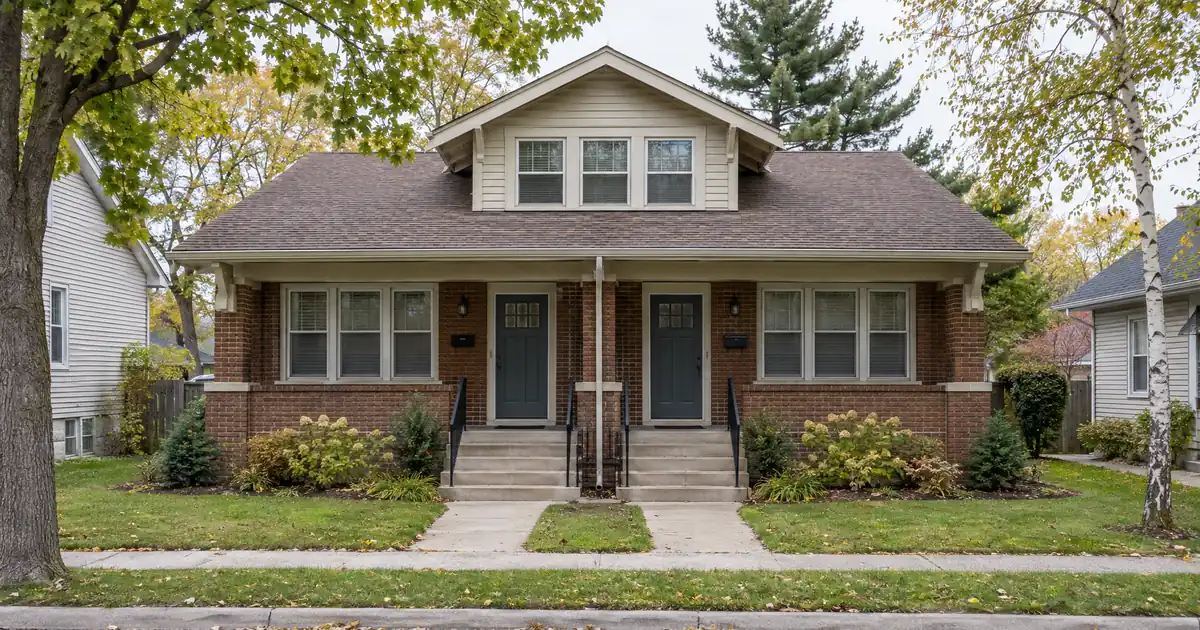
Picture an investor holding a duplex bought near downtown Sun Prairie at $340,000 a few years ago. Assume a modeled appraisal now near $430,000. On paper, that owner is sitting on a healthy gain. The question is how much of it a lender will let them pull out, and whether the rents can carry a bigger loan. In this market, the second question matters more than the first.
The Quick Read: A DSCR cash-out refinance in Sun Prairie, Wisconsin is underwritten primarily on the property’s rental income measured against its full monthly obligation, so a new, larger loan must still be carried by the rent, not just the appraisal.
DSCR Cash-Out Calculator
Run the cash-out numbers in Sun Prairie, WI
Rate source: Freddie Mac 30-yr average via FRED® — Federal Reserve Bank of St. Louis · effective Sep 24, 2026
Prefilled with starting assumptions — enter your property’s value, balance, taxes, and insurance for a more accurate picture.
Program parameters update from Lendmire’s centralized guideline source. Taxes and insurance are editable estimates.
As of Sep 24, 2026 · General Freddie Mac market benchmark, not a Lendmire loan offer. Property value, balance, taxes, and insurance are editable estimates. Maximum loan-to-value varies by lender, program, property type, and seasoning. Not a Loan Estimate, approval, or commitment to lend. Program availability and eligibility are subject to lender guidelines, credit approval, property review, and underwriting.
- Redfin puts the median sale price at $397,500, up 7.7 percent year over year.
- Cash-out caps at 75 percent LTV with roughly six months of seasoning from title recording.
- Rents grew about 1.85 percent, far slower than prices, so coverage is the binding constraint.
- Small multifamily stretches coverage better than single-family at similar prices.
Lendmire (NMLS# 2371349), a DSCR-focused mortgage broker, arranges these files through wholesale lending channels. Eligibility is set by the lender, subject to lender guidelines and property review.
Sun Prairie Market Snapshot
A quick read on the Sun Prairie investor landscape — figures come from the cited sources below. Confirm current property-level numbers before underwriting.
| Metric | Detail |
|---|---|
| Home prices | $430,000 median (Homes.com multi-family Sun Prairie) |
| Population | Population estimate 38,387 (City of Sun Prairie) |
How the Equity Pull Actually Works
The mechanics run in a fixed order. The appraised value is multiplied by the LTV ceiling (75 percent for cash-out on an investment property), and the existing payoff comes out of that number. What remains is the maximum gross equity, before closing costs and reserves.
Two gates sit ahead of that math. The first is seasoning: about six months of ownership, measured from title recording. The second is the coverage test. Monthly rent used for lender review is divided by the full monthly obligation (principal, interest, taxes, insurance, and any HOA dues). Most standard programs are built around a 1.00 benchmark, though exact eligibility depends on credit tier (620 is the floor, with tiers stepping up at 660, 680, and 700), reserves of about six months, and lender review.
Here’s the catch: a cash-out loan is bigger than the loan it replaces. A bigger loan means a bigger obligation, and the same rent now divides into it. An owner can have plenty of LTV headroom and still run out of coverage first. The guide “The Refi Options” is worth reading before you pick a target draw, because the proceeds are never a guaranteed figure.
Why Sun Prairie Is an Appreciation Market First
Prices have outrun rents here, and that shapes every cash-out decision. Redfin’s citywide median sale price is $397,500, up 7.7 percent. Zillow’s home value index reads lower, at $381,833, up 2.4 percent. The gap comes from methodology: Zillow tracks typical value, Redfin tracks closed sales. The honest summary is low-to-high single-digit appreciation, depending on the source.
Rents tell a calmer story. RentCafe’s average is $1,607, up 1.85 percent, with two-bedrooms at $1,777 and three-bedrooms at $1,765. Those figures cover apartment buildings of 50 or more units only. ApartmentFinder shows $1,677 for a two-bedroom and $1,914 for a three-bedroom. Zumper shows a much higher growth figure, and it reads as an outlier next to the others.
So the thesis is equity-led. Owners who bought earlier hold gains that rent growth never generated. The refinance turns those gains into capital, but underwriting has to assume flat-to-low-single-digit rent growth. Run the numbers on rent alone. Don’t count on appreciation to fix a coverage shortfall.
The Multifamily Advantage (and Its Limits)
Small multifamily is where the coverage math pencils best. A sampled set of five multifamily listings on Homes.com started at $444,900 and ran up to $779,000. The entry point sits a bit above the citywide single-family median, yet it buys two rent streams. Illustratively, two-bedroom units at RentCafe’s average would gross around $3,550 a month. A single-family home at a similar price collects one rent, and that rent looks thin against a purchase price above $400,000.
Single-family coverage in this price band often lands near or below 1.00 once taxes and insurance are counted. On a sub-1.00 file, a lender may review options such as a sub-1.00 program, an interest-only structure, or a lower requested draw. Each is subject to lender guidelines, credit approval, and property review. Qualification isn’t assumed.
The inventory has limits. Redfin’s multifamily listings skew toward older downtown-area two-flats, and Homes.com shows a mixed-use building with three residential units above commercial suites. Mixed-use may not fit a standard residential DSCR program, so confirm eligibility with the broker before you count on a refinance exit.
Where the Rent Comps Come From
Rent supply is mostly newer and mostly small-complex. RentCafe reports that 74 percent of Sun Prairie rentals sit in complexes under 50 units, 22 percent in larger buildings, and just 3 percent are single-family. About 72 percent of rental buildings were completed since 2000, and 39 percent of residents rent.
That mix cuts two ways. Well-located single-family and duplex rentals face limited direct competition. But your comp set is newer apartments, and the appraiser and rent schedule will lean on them.
Downtown and Cannery Square
The downtown core is the rent ceiling. Cannery Square is a mixed-use infill redevelopment of the historic downtown, per Kubala Washatko Architects. Listings there showed two-bedroom, two-bath units at $1,595 to $1,895, alongside a one-month-free promotion. A concession like that tells you effective rent runs below the ask.
Older duplexes near downtown compete against that new product. Underwrite them at the low end of the comp range, not the shiny end.
The Highway 151 Corridor
The east side along Highway 151 carries the region’s newest employment anchor. SSM Health dedicated a 90,000-square-foot outpatient center at O’Keeffe Avenue, offering eye care plus orthopedic and eye surgery. New-construction subdivisions such as Windsor Gardens and Winfield Estates sit nearby.
Newer stock here carries fewer deferred-maintenance surprises, which helps on appraisal. The tradeoff is price. Recent-build purchase costs make coverage harder for single-family holds than for a small multi-unit.
Established Apartment Pockets
Apartments.com’s neighborhood rankings list Smith’s Crossing, Sunset, and Providence among the most expensive rental areas. Carriage Hill Estates, Hunters Trail, and Emerald Terrace rank as the most affordable. That ranking is qualitative, and the underlying data is older. Use it to sort comps, not to set rents.
Vacancy and New Supply
Metro data, not Sun Prairie data, is the best available read on vacancy. The Greater Madison Chamber reports a net 2,802 multifamily units added in the latest year. Metro vacancy moved from 5.9 to 6.2 percent, and asking-rent growth slowed from 2.5 to 1.4 percent. Another 5,837 units were under construction.
Those are metro figures, and no reliable Sun Prairie-specific vacancy number turned up in the research. Still, new supply is competing for the same tenants.
The City of Madison’s housing snapshot adds a wrinkle. In Madison proper, one- and two-star rentals ran 4.6 percent vacancy, versus 6.5 percent for three-star and 6.9 percent for four- and five-star. Extending that to Sun Prairie is an inference, not a finding. Still, it hints that modestly priced older units are the tighter segment, and that supports buying a workhorse duplex over competing with new-build apartments.
Working DSCR brokers see a recurring pattern in high-price, moderate-rent suburbs like this one: the appraisal comes in strong, the rent schedule comes in conservative, and the owner discovers the coverage number, not the equity, sets the loan size. Owners who bring a lease history and a realistic rent estimate to the first conversation tend to size their draw correctly on the first pass.
What Holds the Rents Up
Sun Prairie is the most populous Madison suburb, and the City of Sun Prairie puts its estimated population at 38,387. It isn’t a pure bedroom community. The city’s employer data lists approximately 1,501 jobs at Sun Prairie Schools, 505 at Colony Brands, 450 at QBE Insurance, and 419 at Costco. Continental ContiTech and Milwaukee Tool round out the industrial side.
Downtown Madison is about a 20-minute drive. That commute link gives tenants two job markets to draw on, which supports lease renewals over a long hold.
Is It Better to Refinance or Hold?
This one’s a genuine toss-up on single-family. The equity is real and the appreciation case is strong, but the coverage math constrains the draw. A duplex owner has more room. A single-family owner may find the smarter play is a smaller draw, or waiting for rents to catch up. A partial pull that clears the benchmark beats a maximum pull that doesn’t.
Owners with LLC-titled properties should note that program terms differ, subject to lender program eligibility. For a deeper look at the alternatives, see the side-by-side comparison of DSCR and conventional financing. And the guide “What Is a DSCR Loan” covers the underwriting basics. Proceeds routinely fund the next down payment.
DSCR vs. conventional financing
Two common ways to finance an investment property in Sun Prairie, WI. They qualify you differently — here’s how investors weigh them.
Why investors choose it
- Qualifies on the property’s rental income — no personal tax returns, W-2s, or pay stubs needed to document income.
- No personal debt-to-income ceiling to clear, so existing mortgages and obligations don’t cap your borrowing the same way.
- Can be closed in an LLC, keeping the property inside a business entity.
- Built for scaling — not held to the limit on number of financed properties that conventional financing applies.
- Underwriting centers on the deal: generally qualifies when the rent covers the payment, a 1.00x coverage ratio being a common baseline (confirmed in underwriting).
- Designed specifically for investment property, including long-term and, where the program allows, short-term rentals.
Where it’s strong
- Often the lowest ongoing financing cost for a buyer who fully qualifies on personal income — a fit for a first property or a cost-first purchase.
Trade-offs for investors
- Requires full personal income documentation and must fit within a debt-to-income limit — salary, existing debts, and other mortgages all count.
- Typically held in your personal name rather than a business entity.
- Caps how many financed properties you can carry, which can become a ceiling as a portfolio grows.
- Evaluates you as a borrower as much as the property, which usually means more paperwork.
How investors usually choose: a first or single property often optimizes for the lowest financing cost; portfolio builders often optimize for leverage, vesting in an LLC, and scaling past conventional caps. The right answer depends on your goals, the property, and current guidelines — both paths run through select lenders in Lendmire’s wholesale network, with eligibility and terms confirmed in underwriting.
What Happens to the Cash
Cash-out proceeds only earn their keep if the next property clears its own coverage test. In Sun Prairie, that points toward small multifamily or workforce-tier product, where rent stretches further against price. Investors expanding beyond the city can start with Wisconsin DSCR financing for state-level context.
Reach Lendmire at 828-256-2183 or start your quote to see what a specific property supports. Loan amounts run up to $3,000,000 on standard programs, subject to lender guidelines.
Verify current local rental rules, taxes, and insurance with qualified local professionals before you refinance.
Frequently Asked Questions
How much equity can a Sun Prairie investor pull out?
The ceiling is 75 percent of appraised value, less the existing payoff. The coverage test usually binds first, so the practical figure depends on rent used for lender review, full monthly obligation, and reserves. It’s never a guaranteed number.
Does a duplex refinance easier than a single-family in Sun Prairie?
Usually, on coverage. Two rent streams against a purchase price only modestly above the citywide median stretch coverage further. Single-family at a similar price often runs near or below 1.00. Eligibility is still set by the lender.
Will new apartment supply hurt my rent schedule?
It can cap it. Metro vacancy edged up and asking-rent growth slowed, and Cannery Square-area listings advertise concessions. Underwrite to the lower end of local comps, and expect the appraiser’s rent schedule to do the same.
How long do I have to own a property before cashing out?
About six months, measured from title recording. Investors who bought earlier and hold appreciated equity are typically the first candidates, since the value gain has already had time to build.
Is a mixed-use downtown building eligible?
Not necessarily. A building with residential units above commercial suites may fall outside standard residential DSCR programs. Confirm eligibility with the broker before counting on a cash-out exit.
The investors who size their draw to the coverage number, not the appraisal, will still be buying when the next Sun Prairie supply wave arrives.
For current guidelines and terms, see Lendmire’s DSCR loan programs page.
About Lendmire
Lendmire, NMLS# 2371349, is a DSCR and non-QM mortgage brokerage with investor loan programs in 41 markets, including Washington, D.C. Lenders commonly review DSCR eligibility around property-level rent rather than personal income documentation, subject to lender guidelines, and the brokerage helps arrange financing for LLC-owned portfolios beyond conventional financed-property limits. The firm is recognized as a 2025 Scotsman Guide Top Mortgage Workplace and a top-ranked workplace in 2026.
Get Started
Ready to find the right loan for you?
In about 30 seconds you can review financing options available for your investment property. No commitment required.
Informational only. Not a Loan Estimate, approval, or commitment to lend. Program availability and eligibility are subject to lender guidelines, credit approval, property review, and underwriting.
References
1. Redfin – Sun Prairie Housing Market
2. Homes.com
3. City of Sun Prairie – About
4. Zillow – Sun Prairie Home Values
5. RentCafe – Sun Prairie Average Rent
6. Kubala Washatko Architects – Cannery Square
7. SSM Health – Sun Prairie Outpatient Center
8. Greater Madison Chamber – Metro Metrics
9. City of Madison – Rental Housing Market
10. City of Sun Prairie – Demographic & Economic Data
11. a 2025 Scotsman Guide Top Mortgage Workplace
12. Scotsman Guide — Top Workplaces 2026
This article is part of Lendmire’s investment property cash-out refinance program — full qualification details, guidelines, and scenarios live on the program page.
Related reading: Cash Out Refinance on Investment Property in Sun Prairie WI · DSCR Cash Out Refinance Franklin for LLC Investors · DSCR Cash Out Refinance Janesville Wisconsin
Guides: Investment Property Cash-Out Refinance in Wisconsin
Brandon Miller
Founder & CEO, Mortgage Loan Originator, Lendmire LLC
- Mortgage Loan Originator · NMLS# 1129696 · Verify on NMLS Consumer Access
- North Carolina Real Estate Broker · License# 343312 · Verify on NCREC
- North Carolina Insurance Producer · License# 19053198 · Property, Casualty, Life, Health · Verify on NAIC SBS
- Lendmire LLC · Firm NMLS# 2371349 · Verify firm licensure
Required disclosures. Lendmire (NMLS# 2371349) operates as a licensed mortgage broker, not a direct lender or depository. The discussion in this article is general in nature and should not be relied upon as financial, legal, or tax advice — every investment scenario is unique and should be reviewed by a qualified professional. Any loan inquiry is subject to lender underwriting, and this article is not a commitment to lend or a guarantee of approval. Mortgage rates, loan terms, and program guidelines vary by borrower, property, and state, and may change without notice. Equal Housing Opportunity. Verify licensure at NMLS Consumer Access.