
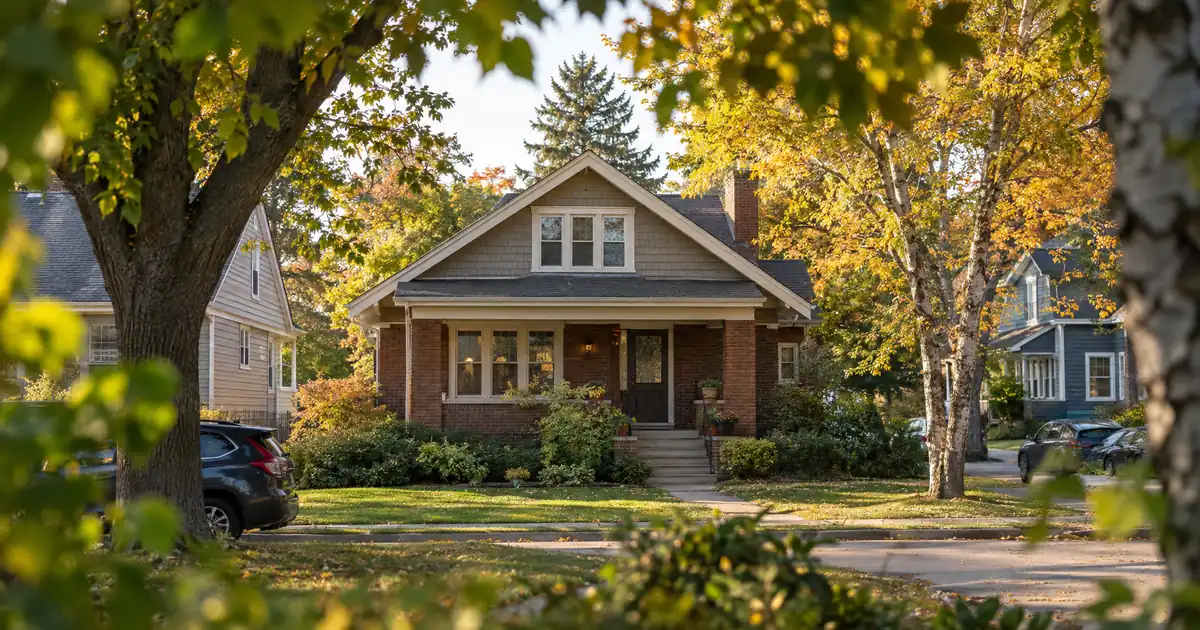
Most owners weighing a cash out refinance investment property loan in Fitchburg assume the 75% LTV ceiling is the constraint. It usually isn’t. Rent coverage is.
TL;DR: A cash-out refinance on a Fitchburg, Wisconsin rental is underwritten primarily on the property’s rental income measured against its full monthly obligation. With average rent near $1,600 against a median sale price of $485,000, coverage, not equity, tends to limit proceeds.
DSCR Cash-Out Calculator
Run the cash-out numbers in Fitchburg, WI
Rate source: Freddie Mac 30-yr average via FRED® — Federal Reserve Bank of St. Louis · effective Sep 24, 2026
Prefilled with starting assumptions — enter your property’s value, balance, taxes, and insurance for a more accurate picture.
Program parameters update from Lendmire’s centralized guideline source. Taxes and insurance are editable estimates.
As of Sep 24, 2026 · General Freddie Mac market benchmark, not a Lendmire loan offer. Property value, balance, taxes, and insurance are editable estimates. Maximum loan-to-value varies by lender, program, property type, and seasoning. Not a Loan Estimate, approval, or commitment to lend. Program availability and eligibility are subject to lender guidelines, credit approval, property review, and underwriting.
- Duplexes and small multifamily are scarce, at 4.85% of housing units.
- A 3-bedroom house near $2,700 rent still models below 1.00 at the 75% cap, taxes and insurance included.
- Metro vacancy rose to 6.2% while asking-rent growth slid to 1.4%.
- Seasoning runs about 6 months from title recording, and reserves about 6 months of PITIA.
Lendmire (NMLS# 2371349) is a DSCR-focused mortgage broker, and DSCR financing for Fitchburg, Wisconsin investors runs through wholesale lenders that Lendmire works with across 41 markets, including D.C. Every figure below is a guideline range, subject to lender guidelines, credit approval, and property review.
Fitchburg Market Snapshot
A quick read on the Fitchburg investor landscape — figures come from the cited sources below. Confirm current property-level numbers before underwriting.
| Metric | Detail |
|---|---|
| Recent appreciation | +0.1% (Zillow Home Values) |
| Employment | 500+ employees (City of Fitchburg Technology) |
Crescent Crossing and the Newer Duplex Stock
Newer-built duplexes in subdivisions like Crescent Crossing are the best-fitting collateral for a DSCR cash-out in Fitchburg. They rent by the unit, which is what the coverage math needs. Homes.com describes a duplex rental there with 2 bedrooms and 2.5 baths near Epic, Promega, and UW–Madison. The listing didn’t state a rent.
The rent side of the math needs an assumption. Run the numbers this way, as a modeled scenario and not a market fact. Take a duplex priced near the $485,000 median, two 2-bedroom units each renting near $1,945 (borrowed from newer-build asking rents), and a 75% LTV refinance. Rent divided by full PITIA, taxes and insurance included, lands around 1.2x. Haircut those rents by 8% to reflect achieved versus asking, and the number slides into the low 1.1s. Still above the 1.00 benchmark, but the cushion is thinner. Terms vary by lender guidelines, property type, leverage, credit profile, and full file review.
Compare that with a single-family house. Rentometer shows 3-bedroom houses near $2,700. The page contains errors (it mentions a campus and a neighborhood that aren’t in Fitchburg, Wisconsin), so treat it as a directional figure. At the roughly $470,000 single-family median, and 75% LTV, coverage models in the mid-to-high 0.8s including taxes and insurance. Not ideal. Exact terms depend on the lender’s guidelines, property type, leverage, and a full review of the borrower’s file.
A number below 1.00 is not automatically a dead end. Some lenders in the network review sub-1.00 programs. Lower leverage can bring coverage back toward 1.00, and a rent-stronger property type is the other route. Each of those carries its own tradeoffs in pricing, reserves, and credit expectations, and none is assured.
The Tower Hill Park and Quarry Hill area is the other workable pocket. Homes.com reports older homes near newer development selling between $350,000 and $550,000. The lower half of that band is where rent-to-value has a chance. Harlan Hills, where prices can approach $1 million, is not a DSCR target.
How Much Equity Is Really There?
Equity in Fitchburg depends on when you bought, not on what the market did last year. Appreciation here is either flat or modest, and the sources disagree. Zillow shows an average value of $509,171, up 0.1% over a year. Homes.com shows a median sale price up 7% over a trailing 12 months. NeighborhoodScout puts median cost at $549,979 and says the latest annual appreciation is lower than 90% of other Wisconsin cities and towns. Census-derived Data USA reports a median value of $417,200, but that is owner-reported and runs low.
A cash-out refinance on a purchase from a few years ago may have real equity. On a recent purchase near market price, the 75% ceiling leaves little to pull, and the roughly 6-month seasoning clock, measured from title recording, has to run first. (Seasoning is a floor, not a target.)
Then the second filter applies. Say an investor holds a rental with meaningful equity on paper. The proceeds available depend on rent used for lender review, PITIA, reserves of about 6 months, and the 75% cap, whichever binds first. In Fitchburg it is usually rent. The refi programs page and the guide to pulling equity out cover the mechanics.
One tailwind: the City of Madison’s housing snapshot, as summarized by Haven Lifestyles, puts owner-occupied vacancy at 0.6%, below the national 1.1%. That is a Madison figure, but scarce for-sale inventory supports appraised values across the metro.
Who Rents Here (and Why It Matters for Turnover)
Fitchburg’s tenant pool draws on several employers, not one plant or one campus. The City’s recruitment brochure lists Sub-Zero Group, Promega, and Thermo Fisher Scientific among major employers. The Fitchburg Technology Neighborhood hosts over 20 companies employing over 500 people at an average annual income of $70,000. Local property managers also name Epic Systems, Exact Sciences, American Family Insurance, and UW Health as regional anchors. Those are marketing pages, so use them as color, not headcounts.
The population trend matters more than any single employer. Fitchburg counted 29,609 residents in the 2020 census, and the Wisconsin Department of Administration estimate cited by Wikipedia is 37,220. Median household income runs about $86,516 on Census ACS data. Renters are 54% of households per RentCafe.
UW–Madison sits about 7 miles north. The Universities of Wisconsin report a preliminary headcount of 51,550, and the Cap Times noted enrollment dipped half a point. A regional college says 75% of students live off campus. That is steady overflow demand, not growth. Fitchburg is car-dependent, so it competes for graduate students and young professionals more than near-campus undergraduates. Don’t underwrite rents on campus expansion.
The Property-Type Problem
Fitchburg is apartment-heavy and light on the product DSCR lenders like. NeighborhoodScout counts large apartment complexes at 50.34% of housing units, single-family detached at 37.66%, and duplexes or small buildings at 4.85%. RentCafe slices the rental stock differently: 73% of rental units sit in buildings under 50 units, and only 3% are single-family rentals. The two sources define “large” and “rental stock” differently, so neither contradicts the other.
The practical takeaway is comp depth. A single-family rental here will be appraised against a thin pool of rented houses, and an appraiser may lean on apartment comps that don’t fit. Scarcity cuts both ways. Few duplexes means few comps, but it also means little competing supply of the product that works.
Rent assumptions should follow the product tier. Redfin’s average of $1,600 and RentCafe’s $1,616 are blended figures, and some listing aggregators show lower, near $1,450 to $1,490. Older, cheaper stock drags the average down. The average rental building is about 32 years old. A rehabbed or newer 3-bedroom is a different asset than the city average, and asking rents are not achieved rents. Zumper has Fitchburg rents down roughly 1% year over year.
Vacancy Is Loosening at the Top
New-build supply is softening the upper tier while older units stay tighter. There is no Fitchburg-specific vacancy figure, so these are Madison-area numbers. The Greater Madison Chamber reports metro vacancy rose from 5.9% to 6.2% and asking-rent growth fell from 2.5% to 1.4%, with 5,837 multifamily units under construction. The City of Madison puts stabilized vacancy at 4.8%. The Cap Times breaks that out by tier: 3-to-5-star units run 6% to 7% vacancy, and 1-to-2-star units run 4.6%.
For a refinance, the implication is modest. Underwrite rent growth near the metro’s typical 1% to 2% a year, and expect an appraiser’s rent schedule to reflect that. An older, well-maintained Fitchburg duplex is not competing on concessions with a new Class A complex. It is also the property most likely to hold its rent.
Is the loosening a warning or an entry point? A genuine toss-up. Falling asking rents compress coverage on the next refinance, but they also soften acquisition prices for whoever is buying with the proceeds. Stress-test both.
What the Deal Desk Sees in Markets Like This
In markets where the median price outruns the median rent, the friction point on cash-out files is rarely the appraisal. It is the gap between the rent an investor hopes to show and the rent the lender’s schedule supports. The cleaner files tend to have a signed lease at or near market, documented reserves, and title seasoning that is already clear. Files that stall usually have proceeds pencilled in before the coverage number has been run. Running it first, on the full obligation including taxes and insurance, is the habit that separates the two.
The guideline frame looks like this, and lender guidelines control:
- Cash-out LTV: up to 75%, a ceiling and not a target.
- Seasoning: about 6 months of ownership from title recording.
- Coverage: a 1.00 benchmark on rent used for lender review against PITIA is standard, though some lenders may review lower scenarios with compensating factors such as lower leverage or more cash in reserve.
- Credit: tiers run 620, 660, 680, and 700, with 620 as the floor. Better scores generally widen options.
- Reserves: about 6 months of PITIA, rising to about 9 months above $1,500,000.
Loan sizes go up to $3,000,000 on standard programs, well above anything Fitchburg’s median price requires. Investors who want the mechanics of the ratio can start with the guide “What Is a DSCR Loan”.
Where Conventional Wins (and Where It Stops)
DSCR is not automatically the right answer here. A W-2 borrower with one or two rentals and clean traditional personal-income documentation may find the comparison works in conventional’s favor. Conventional financing can carry a lower cost, and it does not care that a 3-bedroom house covers at 0.87x. The flip point comes with entity ownership, a growing portfolio, or traditional personal-income documentation that don’t show the rental income cleanly. Then property income becomes the cleaner underwriting basis, and DSCR is the practical path. Investors comparing programs across the state can start from DSCR loans in Wisconsin. LLC-held properties are eligible subject to lender program eligibility.
What the proceeds do matters as much as the loan type. Pulling equity to buy a duplex where coverage clears at current pricing is straightforward. Pulling equity out of a house that covers at 0.87x to buy another house that covers at 0.87x just doubles the problem. Better to redeploy into the product tier the numbers favor.
Investors who want a coverage number run on their own property can call 828-256-2183. Program details change, so confirm current terms before relying on any figure here. Investors should also verify current local rental rules, taxes, and insurance with qualified local professionals.
Frequently Asked Questions
Can a Fitchburg single-family rental support a cash-out refinance?
Sometimes, but the coverage number is the hurdle. At a median near $470,000 and a 3-bedroom rent near $2,700, modeled coverage sits in the mid-to-high 0.8s at 75% LTV with taxes and insurance included. Lower leverage, a higher-rent product, or a lender that reviews sub-1.00 scenarios changes the picture. Qualification is subject to lender guidelines and property review.
DSCR vs. conventional financing
Two common ways to finance an investment property in Fitchburg, WI. They qualify you differently — here’s how investors weigh them.
Why investors choose it
- Qualifies on the property’s rental income — no personal tax returns, W-2s, or pay stubs needed to document income.
- No personal debt-to-income ceiling to clear, so existing mortgages and obligations don’t cap your borrowing the same way.
- Can be closed in an LLC, keeping the property inside a business entity.
- Built for scaling — not held to the limit on number of financed properties that conventional financing applies.
- Underwriting centers on the deal: generally qualifies when the rent covers the payment, a 1.00x coverage ratio being a common baseline (confirmed in underwriting).
- Designed specifically for investment property, including long-term and, where the program allows, short-term rentals.
Where it’s strong
- Often the lowest ongoing financing cost for a buyer who fully qualifies on personal income — a fit for a first property or a cost-first purchase.
Trade-offs for investors
- Requires full personal income documentation and must fit within a debt-to-income limit — salary, existing debts, and other mortgages all count.
- Typically held in your personal name rather than a business entity.
- Caps how many financed properties you can carry, which can become a ceiling as a portfolio grows.
- Evaluates you as a borrower as much as the property, which usually means more paperwork.
How investors usually choose: a first or single property often optimizes for the lowest financing cost; portfolio builders often optimize for leverage, vesting in an LLC, and scaling past conventional caps. The right answer depends on your goals, the property, and current guidelines — both paths run through select lenders in Lendmire’s wholesale network, with eligibility and terms confirmed in underwriting.
How does the 6-month seasoning clock work if I bought a Fitchburg property below market?
Seasoning is generally measured from the date the title was recorded, so the clock starts at purchase, not at renovation. An investor who bought below market and has held past roughly 6 months may have real equity to draw on. The appraised value still has to support it, and appreciation here has been modest.
Which Fitchburg rent figure should I use in my numbers?
Use the tier that matches your property, not the city average. Redfin and RentCafe put the average near $1,600, older stock pulls it down, and newer 3-bedroom townhomes ask from around $2,740. Those are asking rents, so haircut them. A lease at or near market is the cleanest support.
Is a duplex in Fitchburg easier to refinance than a house?
On coverage, generally yes, since rent stacks across two units against one obligation. The catch is scarcity. At 4.85% of housing units, duplex comps are thin, and the appraisal can be the slower part of the file. Newer subdivisions like Crescent Crossing tend to have the most comparable stock.
Does UW–Madison enrollment affect a Fitchburg rental?
Only indirectly. Enrollment is steady, around 51,550 on a preliminary headcount, with a half-point dip and no growth push. Most students rent off campus, but Fitchburg is car-dependent and draws more graduate students and young professionals than undergraduates. Underwrite on employment-driven demand, not campus growth.
The investors who underwrite Fitchburg on duplex rents and moderate leverage instead of the median sale price will come out ahead.
About Lendmire
Lendmire (NMLS# 2371349) is a mortgage brokerage focused on DSCR investor financing, helping arrange programs through wholesale and investor-lending channels in 41 markets, including Washington, D.C. DSCR loans are evaluated by the lender on property cash flow rather than personal income, subject to lender guidelines, supporting LLC closings and accommodating investors with four or more financed properties. Lendmire was named a Scotsman Guide Top Mortgage Workplace in both 2025 and 2026.
Get Started
Ready to find the right loan for you?
In about 30 seconds you can review financing options available for your investment property. No commitment required.
Informational only. Not a Loan Estimate, approval, or commitment to lend. Program availability and eligibility are subject to lender guidelines, credit approval, property review, and underwriting.
References
1. Redfin – Fitchburg Rental Market
2. Homes.com – Fitchburg Local Guide
3. NeighborhoodScout – Fitchburg Real Estate
4. Greater Madison Chamber of Commerce – Metro Metrics
5. Zillow
6. City of Fitchburg – Technology Neighborhood
7. Zillow — Fitchburg WI Apartments
8. Rentometer — Average Rent IN Fitchburg WI
10. Wikipedia
11. $86,516
12. RentCafe
13. Universities of Wisconsin – Preliminary Enrollment
14. Zumper
15. Cap Times
16. a 2026 Scotsman Guide Top Mortgage Workplace
17. recognized by Scotsman Guide in 2025
18. the Top Workplace press announcement
This article is part of Lendmire’s investment property cash-out refinance program — full qualification details, guidelines, and scenarios live on the program page.
Related reading: DSCR Cash Out Refinance Fitchburg Wisconsin · DSCR Loans in Madison, Wisconsin: Investor Financing for Willy Street, Atwood, Fitchburg & Real Estate Investors · DSCR Cash Out Refinance Sun Prairie Wisconsin
Guides: Investment Property Cash-Out Refinance in Wisconsin
Brandon Miller
Founder & CEO, Mortgage Loan Originator, Lendmire LLC
- Mortgage Loan Originator · NMLS# 1129696 · Verify on NMLS Consumer Access
- North Carolina Real Estate Broker · License# 343312 · Verify on NCREC
- North Carolina Insurance Producer · License# 19053198 · Property, Casualty, Life, Health · Verify on NAIC SBS
- Lendmire LLC · Firm NMLS# 2371349 · Verify firm licensure
Compliance and disclosures. Lendmire (NMLS# 2371349) is a licensed mortgage broker and is not a direct lender, depository institution, financial advisor, or tax professional. Content in this article is general market analysis and educational information — not financial, legal, or tax advice for any specific situation. Lendmire does not guarantee loan approval; every transaction is subject to underwriting by the funding lender. Mortgage pricing and loan program guidelines are subject to change at any time without notice and vary by borrower characteristics, property type, and state regulations. Lendmire complies with Equal Housing Opportunity. Licensure verification: NMLS Consumer Access.