
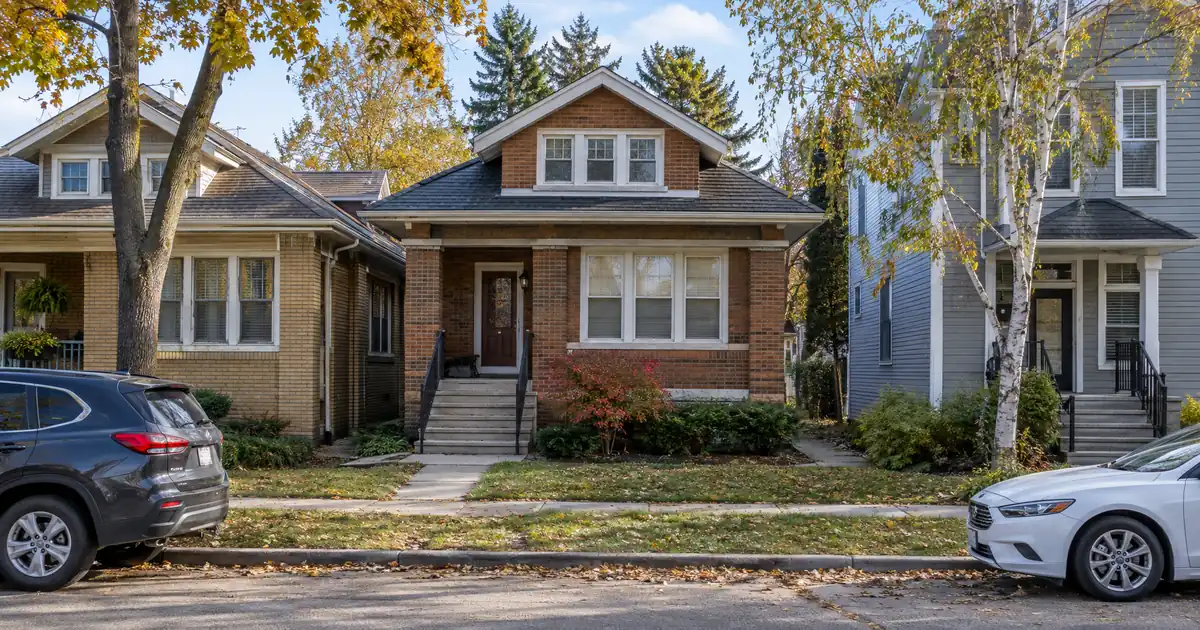
Most Fitchburg owners assume equity is the constraint on a cash-out refinance. It usually isn’t. The 75% loan-to-value ceiling leaves room on most properties bought before recent price gains. The rent line is what binds, because a single-family house at Fitchburg prices rarely produces enough rent to cover its own debt.
TL;DR: A DSCR cash-out refinance in Fitchburg, Wisconsin is underwritten primarily on the property’s rental income measured against its full monthly obligation. With only 4.85% of housing units in 2–4 unit buildings, the deal usually hinges on whether the property’s rent covers the debt rather than how much equity exists.
DSCR Cash-Out Calculator
Run the cash-out numbers in Fitchburg, WI
Rate source: Freddie Mac 30-yr average via FRED® — Federal Reserve Bank of St. Louis · effective Sep 24, 2026
Prefilled with starting assumptions — enter your property’s value, balance, taxes, and insurance for a more accurate picture.
Program parameters update from Lendmire’s centralized guideline source. Taxes and insurance are editable estimates.
As of Sep 24, 2026 · General Freddie Mac market benchmark, not a Lendmire loan offer. Property value, balance, taxes, and insurance are editable estimates. Maximum loan-to-value varies by lender, program, property type, and seasoning. Not a Loan Estimate, approval, or commitment to lend. Program availability and eligibility are subject to lender guidelines, credit approval, property review, and underwriting.
- Single-family rent-to-price is thin; modeled coverage sits below 1.00 once taxes and insurance are included.
- Duplexes and small multifamily are scarce here, which helps the ones that exist.
- Cash-out caps at 75% LTV, with roughly six months of seasoning from title recording.
- Rent growth across the metro is modest, so appreciation should not carry the underwriting. Every figure here varies by lender and program — guidelines, property type, leverage, and credit profile all apply.
Lendmire (NMLS# 2371349) is a DSCR-focused mortgage broker, and DSCR financing for Fitchburg, Wisconsin investors runs through wholesale lenders that Lendmire works with across 41 markets, including D.C. Eligibility is set by those lenders, subject to lender guidelines, credit approval, and property review.
Fitchburg Market Snapshot
A quick read on the Fitchburg investor landscape — figures come from the cited sources below. Confirm current property-level numbers before underwriting.
| Metric | Detail |
|---|---|
| Recent appreciation | +0.1% (Zillow Home Values) |
| Employment | 500+ employees (City of Fitchburg Technology) |
Tower Hill Park and Quarry Hill: The Middle of the Market
Start where the price band is workable. Homes.com describes older Tower Hill Park sitting beside newer Quarry Hill development, with homes selling between $350,000 and $550,000. That spread matters. The bottom of it is where rent-to-price gets closest to reasonable. The top is where it falls apart.
No neighborhood-level rent dataset exists for Fitchburg, so assigning a rent to each pocket would be guesswork. What can be said is qualitative. Older stock near the low end of the band competes on price. Newer stock near the top competes on finish and pays for it in purchase price. Coverage tends to get worse as you move up the band, not better.
Harlan Hills, where prices climb toward $1 million, is not a DSCR neighborhood. Skip it.
What the Price and Rent Numbers Actually Say
Pick one price and stick with it. The 12-month median sale price is $485,000, up 7%. The single-family median is about $470,000. Zillow puts its average home value higher, at $509,171, but shows only +0.1% over the past year. Different methodology, different answer. Appreciation here is somewhere between flat and modest, and the sources disagree about where.
Rents are lower than the prices imply. RentCafe reports an average of $1,616, and 54% of households rent. Rentometer shows 3-bedroom houses near $2,700, though that page contains obvious errors about other places, so treat the figure as directional only. Newer product asks more: listings for 3-bedroom townhomes start near $2,740, and 2-bedrooms in newer buildings start near $1,945. Those are asking rents, not achieved rents. Zumper shows Fitchburg rents down about 1% year over year.
The gap between the $1,616 average and a $2,700 house is the whole story. The average is dragged down by older apartments. Your rent assumption should follow the product tier, not the city figure.
Run the Numbers on Two Properties
These are modeled assumptions, not market data. Coverage below is rent divided by full PITIA (principal, interest, taxes, and insurance), using Wisconsin average tax and insurance loads and a high-6s financing assumption.
Single-family, $470,000, rent of $2,700. At the 75% cash-out ceiling, modeled coverage lands in the 0.8s including taxes and insurance. That is below the 1.00 benchmark most standard programs are built around. Options a lender may review include a sub-1.00 program at reduced leverage, an interest-only structure, or a smaller cash-out. Pulling leverage down toward 60% LTV puts the number back near 1.0, but very little cash comes out. Whether any of these is available depends on lender guidelines, credit, reserves, and property review.
Duplex, $520,000, two units renting around $1,945 each. Same assumptions, same 75% ceiling. Coverage lands around 1.1x including taxes and insurance. Same city, same LTV, a different answer. Here the DSCR loan works as designed.
Run this comparison on any Fitchburg property before choosing a strategy. Small multifamily stacks two rents against one set of taxes and one mortgage. Single-family stacks one rent against the same full load.
Why Duplexes Are the Interesting Product (and Why That’s Also the Catch)
Only 4.85% of Fitchburg housing units are duplexes or small apartment buildings. Large complexes make up 50.34% of units, and single-family detached homes are 37.66%. Scarcity supports value on the owner’s side. It also limits comps, and comps drive appraisals.
RentCafe slices the rental stock differently. It counts 73% of rental units in buildings under 50 units, 24% in buildings of 50 or more, and just 3% in single-family rentals. Its data also puts the average rental building at 32 years old, with 42% completed since 2000. The two sources define “large” and “rental stock” differently, which is why they don’t reconcile. The practical read is that a single-family rental has very few direct rent comps, so appraisers and lenders will lean on apartment data. Expect comp depth to be a live question on any house.
Newer duplex and townhome stock exists in pockets like Crescent Crossing and Hartung Fields. Older duplexes closer to the city’s original communities likely trade for less. Which of those has better coverage is a toss-up until you have actual rents and an actual price in hand. The newer stock rents higher, but you also pay more for it.
The Tenant Base: Employers, Not a Campus
Fitchburg’s demand comes from several directions. The City of Fitchburg lists Sub-Zero Group, Promega, and Thermo Fisher Scientific among its major employers. The Fitchburg Technology Neighborhood is home to more than 20 companies employing over 500 people at an average annual income of $70,000, and the district spans more than 2,000 acres. Area apartment-marketing pages also point to Epic Systems in Verona, Exact Sciences, American Family Insurance, and UW Health. Those are marketing sources, so use them qualitatively.
Population growth has done a lot of the lifting. The state’s estimate is 37,220, up from 29,609 at the last decennial census, per figures cited in Wikipedia. ACS-based data puts median household income at $86,516.
UW–Madison sits about 7 miles north. The Universities of Wisconsin reported a preliminary headcount of 51,550, and other counts run slightly higher. Enrollment dipped by half a percentage point, and the university said it did not seek to grow its incoming class. U.S. News reports 75% of students live off campus. That is steady overflow demand for the metro, not growing demand. Underwrite Fitchburg rents without campus-growth assumptions.
Vacancy: Read the Metro Numbers Carefully
There is no Fitchburg-specific vacancy figure, so the metro data has to stand in. The Greater Madison Chamber reports metro vacancy rose from 5.9% to 6.2% over the past year while asking-rent growth fell from 2.5% to 1.4%. The metro added a net 2,802 multifamily units, with another 5,837 under construction. Madison’s own stabilized rental vacancy is 4.8% per the City of Madison.
The tier split matters more than the headline. Per the Cap Times’ summary of the city report, 3–5 star units run 6–7% vacancy while 1–2 star units run 4.6%. New supply is loosening the top of the market. Older, maintained stock stays tighter. For a cash-out borrower, that argues for holding a well-kept older duplex over competing with new complexes on concessions.
These are Madison and Dane County figures, not Fitchburg’s. Underwrite rent growth in the 1–2% range, not anything resembling a boom.
Seasoning, LTV, and Where the Cash Actually Comes From
The mechanics are short. Cash-out on these programs typically caps at 75% LTV. The property generally needs about six months of ownership, measured from title recording. Minimum coverage is typically 1.00 on rent used for lender review against PITIA, credit tiers on most files start at a 620 floor, and reserves usually run about six months of PITIA (more above $1,500,000). Standard programs go up to $3,000,000, and smaller balances route through select lenders. Treat all of this as typical guidance that varies by borrower, property, and loan scenario, not a commitment to lend. How DSCR qualification works is a good primer if the ratio is new to you.
Here is the appreciation problem. If Zillow is right and values are up 0.1%, a property bought recently has little new equity to pull. If Homes.com is right and they’re up 7%, there’s more. An investor who bought two years ago at a lower basis probably has room either way. One who bought last year should check the appraisal risk before paying for a cash-out.
Scarce for-sale inventory in Madison supports values, and the city’s snapshot puts owner-occupied vacancy at 0.6%. But modest rent growth limits the rent side. In Fitchburg, the refinance is more likely to be limited by coverage than by LTV. Get the number right first, then size the cash-out. (Most owners do it in reverse.)
What the proceeds do next matters more than the extraction itself. Pulling equity to buy another duplex in a comparable submarket, where coverage clears 1.00 at 75% leverage, is a straightforward thesis. Pulling equity to prop up a single-family portfolio that already sits below 1.00 is a different decision. That one deserves a hard stress test. For the mechanics of pulling equity out, the pillar page covers seasoning and structure. Refi programs are also worth comparing if you’re deciding between a rate-and-term move and cash-out. Final terms depend on lender guidelines, property type, leverage, and the borrower’s complete credit picture.
DSCR vs. conventional financing
Two common ways to finance an investment property in Fitchburg, WI. They qualify you differently — here’s how investors weigh them.
Why investors choose it
- Qualifies on the property’s rental income — no personal tax returns, W-2s, or pay stubs needed to document income.
- No personal debt-to-income ceiling to clear, so existing mortgages and obligations don’t cap your borrowing the same way.
- Can be closed in an LLC, keeping the property inside a business entity.
- Built for scaling — not held to the limit on number of financed properties that conventional financing applies.
- Underwriting centers on the deal: generally qualifies when the rent covers the payment, a 1.00x coverage ratio being a common baseline (confirmed in underwriting).
- Designed specifically for investment property, including long-term and, where the program allows, short-term rentals.
Where it’s strong
- Often the lowest ongoing financing cost for a buyer who fully qualifies on personal income — a fit for a first property or a cost-first purchase.
Trade-offs for investors
- Requires full personal income documentation and must fit within a debt-to-income limit — salary, existing debts, and other mortgages all count.
- Typically held in your personal name rather than a business entity.
- Caps how many financed properties you can carry, which can become a ceiling as a portfolio grows.
- Evaluates you as a borrower as much as the property, which usually means more paperwork.
How investors usually choose: a first or single property often optimizes for the lowest financing cost; portfolio builders often optimize for leverage, vesting in an LLC, and scaling past conventional caps. The right answer depends on your goals, the property, and current guidelines — both paths run through select lenders in Lendmire’s wholesale network, with eligibility and terms confirmed in underwriting.
Where Lendmire’s Deal Desk Sees Friction
In suburban markets built around a nearby core city, the common friction point on DSCR refinance files is rent documentation, not equity. Lendmire’s deal desk tends to see cleaner files when the lease, a rent schedule, and a current insurance quote are lined up before the file goes to a lender. Files with a single-family property and thin comps get more questions than files with a duplex and two signed leases. Fresh tax and insurance numbers tend to move coverage more than the rent does.
That says something about the workplace, not about any particular deal.
Conventional or DSCR? Depends on the Borrower
For a single rental owned personally by a high-W-2 borrower with clean traditional personal-income documentation, conventional cash-out may carry a lower cost and won’t hinge on rent coverage at all. That matters in Fitchburg, where single-family coverage runs below 1.00. DSCR becomes the practical lane for entity-owned portfolios, self-employed investors, and anyone past the conventional financed-property limit, subject to program terms on LLC-held properties. The guide “Where DSCR and Conventional Diverge” is worth a read before you commit. Wisconsin investors can also see DSCR loans in Wisconsin for the statewide picture, or call 828-256-2183 to talk through a specific property. Verify current local rental rules, taxes, and insurance with qualified local professionals before you model anything.
Frequently Asked Questions
Can a Fitchburg single-family rental support a DSCR cash-out refinance?
Sometimes, but the coverage math is tight. At a $470,000 price and a $2,700 rent, modeled coverage lands in the 0.8s including taxes and insurance at the 75% ceiling. A lender may review reduced leverage, an interest-only structure, or a sub-1.00 program, subject to guidelines, credit, and property review.
Is a duplex in Fitchburg easier to refinance than a house?
Usually the coverage is better, since two rents stack against one debt. Duplexes are only 4.85% of the city’s housing units, though, so appraisers may have fewer direct comps. Newer duplex stock near Crescent Crossing rents higher but also costs more to buy.
How much equity can I pull out of a Fitchburg property?
The ceiling is 75% of appraised value, less the existing balance, but coverage and reserves usually cut it further. Zillow shows values up 0.1% over a year and Homes.com shows 7%, so a recent purchase may have little new equity. The calculator converts LTV into dollars.
Does UW–Madison enrollment help Fitchburg rents?
Only indirectly. Enrollment of about 51,550 is stable but not growing, and 75% of students already live off campus. Fitchburg is about 7 miles away, so it draws more from grad students and working professionals than undergraduates.
Should I worry about new apartment construction nearby?
Somewhat, at the top of the market. The metro has 5,837 units under construction, and 3–5 star units run 6–7% vacancy versus 4.6% for older 1–2 star stock. These are Madison figures, not Fitchburg’s. Older maintained units have held up better.
The investors who season a duplex, model coverage on the product tier instead of the city average, and pull equity conservatively will come out ahead in Fitchburg.
About Lendmire
Lendmire (NMLS# 2371349) is a mortgage brokerage focused on DSCR investor financing, helping arrange programs through wholesale and investor-lending channels in 41 markets, including Washington, D.C. DSCR loans are evaluated by the lender on property cash flow rather than personal income, subject to lender guidelines, supporting LLC closings and accommodating investors with four or more financed properties. Lendmire is a Scotsman Guide Top Mortgage Workplace in both 2025 and 2026.
Get Started
Ready to find the right loan for you?
In about 30 seconds you can review financing options available for your investment property. No commitment required.
Informational only. Not a Loan Estimate, approval, or commitment to lend. Program availability and eligibility are subject to lender guidelines, credit approval, property review, and underwriting.
References
1. NeighborhoodScout – Fitchburg Real Estate
2. Zillow – Fitchburg Home Values
3. City of Fitchburg – Technology Neighborhood
4. Homes.com – Fitchburg Local Guide
5. RentCafe – Fitchburg Average Rent
6. Wikipedia
7. Universities of Wisconsin – Preliminary Enrollment
8. Greater Madison Chamber of Commerce – Metro Metrics
9. City of Madison – Rental Housing Market
10. a 2026 Scotsman Guide Top Mortgage Workplace
11. recognized by Scotsman Guide in 2025
12. Top Workplace press announcement
This article is part of Lendmire’s investment property cash-out refinance program — full qualification details, guidelines, and scenarios live on the program page.
Related reading: Cash Out Refinance Investment Property Fitchburg Wisconsin · DSCR Loans in Madison, Wisconsin: Investor Financing for Willy Street, Atwood, Fitchburg & Real Estate Investors · Cash Out Refinance on a Sheboygan Investment Property
Guides: Investment Property Cash-Out Refinance in Wisconsin
Brandon Miller
Founder & CEO, Mortgage Loan Originator, Lendmire LLC
- Mortgage Loan Originator · NMLS# 1129696 · Verify on NMLS Consumer Access
- North Carolina Real Estate Broker · License# 343312 · Verify on NCREC
- North Carolina Insurance Producer · License# 19053198 · Property, Casualty, Life, Health · Verify on NAIC SBS
- Lendmire LLC · Firm NMLS# 2371349 · Verify firm licensure
Disclosure information. Lendmire is a state-licensed mortgage brokerage under NMLS# 2371349. Lendmire is not a depository institution, direct lender, or financial advisor — all loans referenced are placed through wholesale lender partners and are subject to each lender's underwriting standards. This article is provided for general informational purposes and is not a commitment to lend, nor does it constitute financial, legal, or tax advice. Loan programs, terms, rates, and qualification standards change without notice and depend on borrower profile, property type, and the state in which the subject property is located. Equal Housing Opportunity provider. NMLS Consumer Access: nmlsconsumeraccess.org.