
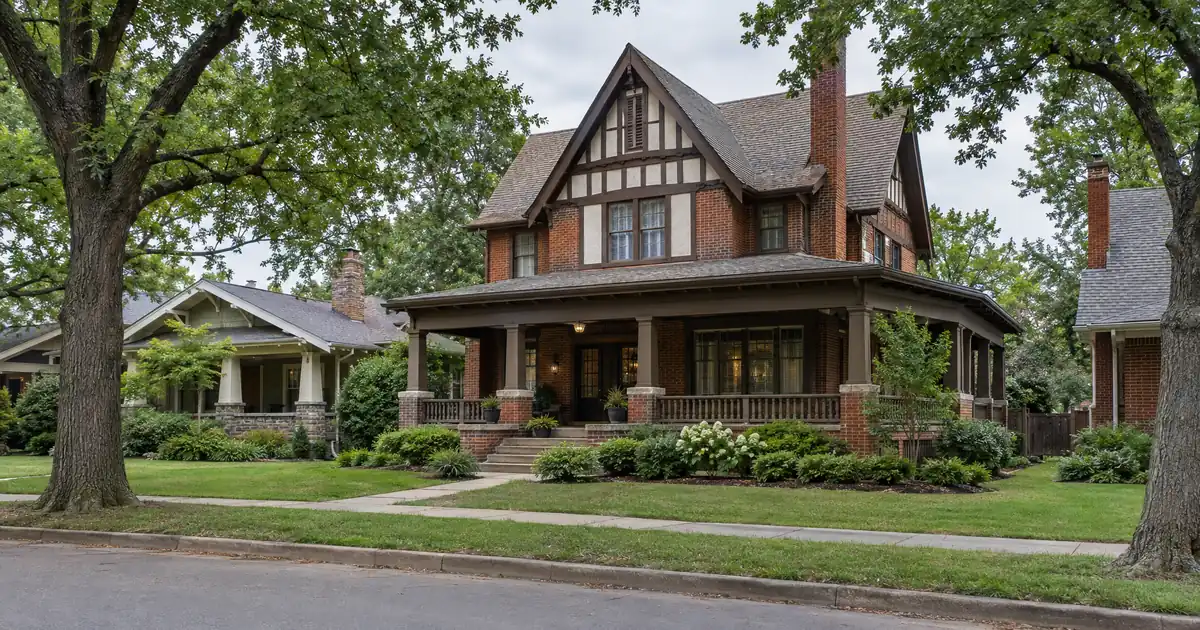
The equity you think you own and the equity an appraisal will recognize are often two different numbers. That gap is the friction point for most rental owners looking to pull capital out, and it is wider than usual in a market where prices are flat. A DSCR cash-out refinance in Oklahoma City, Oklahoma has to clear three hurdles in order: ownership seasoning, a value that supports the loan-to-value cap, and rent that covers the full monthly obligation. Lendmire’s Oklahoma DSCR platform sees the third hurdle trip up more files here than the first two.
The Short Version: A cash-out refinance on a rental in Oklahoma City, Oklahoma is underwritten primarily on the property’s rental income measured against its full monthly obligation, and flat pricing shapes the equity: with the Redfin median near $270K and down 1.9% year over year, usable equity comes from how the property was bought, not appreciation.
DSCR Cash-Out Calculator
Run the cash-out numbers in Oklahoma City, OK
Rate source: Freddie Mac 30-yr average via FRED® — Federal Reserve Bank of St. Louis · effective Sep 24, 2026
Prefilled with starting assumptions — enter your property’s value, balance, taxes, and insurance for a more accurate picture.
Program parameters update from Lendmire’s centralized guideline source. Taxes and insurance are editable estimates.
As of Sep 24, 2026 · General Freddie Mac market benchmark, not a Lendmire loan offer. Property value, balance, taxes, and insurance are editable estimates. Maximum loan-to-value varies by lender, program, property type, and seasoning. Not a Loan Estimate, approval, or commitment to lend. Program availability and eligibility are subject to lender guidelines, credit approval, property review, and underwriting.
- Cash-out LTV tops out at 75%, and ownership typically needs about 6 months of seasoning.
- Median-priced houses struggle to reach 1.00x coverage; below-median workforce stock clears it more easily.
- Redfin shows homes taking 38 days to sell versus 34 a year earlier.
- Tinker AFB alone employs over 25,000 people, anchoring long-term rental demand.
- New-build apartment oversupply is the vacancy risk. Older small-building stock is a different product.
Oklahoma City Market Snapshot
A quick read on the Oklahoma City investor landscape — figures come from the cited sources below. Confirm current property-level numbers before underwriting.
| Metric | Detail |
|---|---|
| University enrollment | 3,680 students (Data USA, OUHSC) |
| Employment | About 33,000 secondary jobs (Oklahoma Watch) |
| Vacancy | 12.2% projected q2 2026 (Apartments.com Learning Center) |
Flat Prices Change the Equity Math
Appreciation will not do the work for you here; the discount you negotiated at purchase or the value you added will. Redfin puts the median sale price at $270K for the most recent three-month window, down 1.9% year over year, with homes taking 38 days to sell against 34 a year earlier. Zillow’s home value index sits lower at $209,117, down 0.3% year over year. That is a different methodology, not a contradiction: Redfin tracks closed sale prices, while Zillow’s index smooths across a wider mix of homes.
For a cash-out, the practical consequence is this. An owner who bought at market in the last year should not assume the appraisal will land above the purchase price. An owner who bought a dated house below market and renovated it has a much better shot. Lenders in the network typically cap cash-out at 75% LTV (subject to lender guidelines and the appraisal), and seasoning generally runs about 6 months from title recording. Both figures are ceilings and minimums, not promises about what a given file will produce.
Here is the flip point. If you bought at or near the median and have held about 6 months, the cash-out may return little or nothing after the 75% cap is applied. Waiting for a renovation to finish or for rent to be re-set at renewal usually beats forcing the refinance early. Not glamorous advice. It is the math.
Coverage Is the Real Constraint
Rent-to-value, not equity, decides most Oklahoma City cash-out files. Zillow puts the citywide median rent for all property types at $1,362 against that $270K median sale price, which works out to roughly half a percent of price per month. The two figures use different property mixes, so treat that as a rough benchmark, not a submarket number.
Run the numbers on a modeled median-priced house: $270,000 price, $1,362 rent, 75% LTV, principal and interest plus taxes and insurance. Coverage lands around 0.8x, well under the standard 1.00x benchmark most programs are built around. If a file looks like that, the paths a lender may review include a sub-1.00 program at lower leverage, an interest-only structure, or a smaller cash-out request. Whether any of them fits depends on lender guidelines, credit, reserves and property review. The better question is whether the submarket selection, not the loan type, is the problem.
Now model a cheaper house: a $180,000 workforce house at a $1,495 rent, both modeled assumptions (the rent borrows the Zumper citywide figure for houses, not a rent for any specific property). At 75% LTV, including taxes and insurance, coverage runs around 1.3x. Same loan structure, same city, completely different answer. Terms vary by lender guidelines, property type, leverage, credit profile, and full file review.
| Scenario (modeled) | Price | Rent | Coverage read |
|---|---|---|---|
| Median-priced house | $270,000 | $1,362 | Around 0.8x |
| Workforce house | $180,000 | $1,495 | Around 1.3x |
The takeaway: below-median entry prices and older workforce stock are where coverage clears. Apartment-level data can mislead here. RentCafe covers only buildings of 50 or more units and reports a $1,065 average rent, so it says little about a duplex or a single house.
Where the Numbers Hold (and Where They Don’t)
Neighborhood-level rent data for small rentals is thin in this market, so the submarket read below is qualitative except where a source supports a figure.
Capitol Hill and the older south-of-downtown stock is the workforce-rental candidate. It is one of the more affordable historic areas, near Stockyards City. No reliable rent source exists at this level, so underwrite each property on its own comps.
Paseo Arts District sits at a higher price tier. A local guide on oklahomacity.com lists homes and converted spaces at $120,000 to $280,000, a wide band that should be read with caution. Spanish Revival character and arts-district appeal support tenant interest, but the upper end of that band will run into the same coverage ceiling as the citywide median.
Midtown, the Plaza District and Gatewood carry 1930s to 1950s bungalows and converted-commercial lofts, with about 40% of households renting. Demand comes from young professionals near the OU Health and downtown corridor. Older bungalows with updated systems are the cleaner cash-out files here.
Midwest City, Del City and Moore sit next to Tinker AFB, which is itself in Midwest City. Demand ties to base employment, and the suburbs suit long-term holders. A rent comparison with the central neighborhoods is an inference, not sourced data.
Heritage Hills and Mesta Park are the contrast case. Historic, higher-end homes near downtown rarely produce workable rent-to-value for a DSCR file. They make sense as a lifestyle hold, less so as a cash-out candidate.
Bricktown and Deep Deuce show the urban-core premium, but mostly in new apartments. Rent.com’s one-bedroom averages run $1,613 in Deep Deuce and $1,474 in Valencia, against $664 in Greenvale, $700 in Hilldale and $725 in Lansbrook. That is roughly a 2x spread, but core prices are higher too. Don’t assume core apartment rents transfer to a small rental down the street.
The Federal Payroll Under the Rent Roll
The steadiest tenant pool here is tied to federal aerospace jobs, not to oil prices or a single corporate campus. Tinker Air Force Base calls itself Oklahoma’s largest single-site employer, with over 25,000 personnel. Oklahoma Watch cites 26,694 workers in state data, plus roughly 33,000 secondary jobs and a $3.5B annual impact. The Greater Oklahoma City Chamber’s employer list (undated, so treat the numbers as approximate) adds INTEGRIS Health at 10,000, Amazon at 8,000 and the FAA Mike Monroney Aeronautical Center at 5,150.
Health care adds depth. OKC’s economic-development site, A Better Life OKC, counts more than 123,000 regional jobs in health care and social assistance. The OU Health Sciences Center enrolls 3,680 students per Data USA, and the same campus corridor hosts OU Medical Center and Stephenson Cancer Center.
Why this matters for a cash-out: long-term lease demand tied to federal and hospital payrolls supports holding the asset after the refinance, which is when the loan’s seasoning and coverage get tested again at renewal. It doesn’t lift rent growth, though. Apartment List shows the overall median at $1,092, up just 0.3% year over year, so don’t underwrite a rent bump.
Vacancy: Two Different Markets
The oversupply is in new luxury apartments, and that distinction matters for small-rental owners. Apartments.com projected OKC multifamily vacancy at 12.2% at the end of the second quarter, noting that high-end supply outpaces demand while low-end supply stays limited. A Colliers forecast reported by GlobeSt shows demand of negative 427 units and occupancy slipping to 94.2% later in the year.
The pipeline looks to be thinning, though the evidence here is limited. New construction starts have reportedly slowed, which could ease pressure on rents over the 12-to-24-month horizon of a refinance, but that outlook is not something to underwrite against. The honest read: near-term absorption is soft, and the longer-term supply picture may be better. Build a vacancy haircut into the rent input and price to in-place comps. Timing is a genuine toss-up, so stress-test coverage with rents flat for a full lease cycle.
Where the Proceeds Go
Cash-out proceeds only pay off if the next deal pencils at today’s prices. That argues for small multifamily over another single-family house at the median. NorthMarq puts the Oklahoma multifamily median per unit below where it stood a year earlier, while apartment rents have continued to rise. That reflects larger trades, so 2-to-4-unit comps will differ and need local verification. Because the figures are directional and come from a single source, investors should confirm pricing and rents against current local comps before committing proceeds. Exact terms depend on the lender’s guidelines, property type, leverage, and a full review of the borrower’s file.
Consider a scenario: an investor holds a renovated Midtown bungalow and pulls equity at the 75% LTV cap to buy a duplex in an older workforce area. If the duplex’s rent clears 1.00x on its own, the second purchase stands alone. If the investor instead deploys the proceeds into a market where the math doesn’t pencil, that’s a different decision, and worth stress-testing before committing. Every figure here varies by lender and program — guidelines, property type, leverage, and credit profile all apply.
Proceeds are constrained by rent used for lender review, full monthly obligation, reserves (typically about 6 months) and the 75% ceiling. Credit tiers run 620, 660, 680 and 700, with 620 as the floor. Details are in the equity-extraction mechanics and the investment property refinance options. Qualification remains subject to lender overlays.
Cash-Out or Something Else?
A DSCR cash-out makes sense for the LLC-held or self-employed owner whose traditional personal-income documentation doesn’t show the rental income cleanly. A W-2 borrower with one or two rentals and strong personal income may find conventional financing cheaper. DSCR versus conventional is the comparison that flips the answer, and the break-even often arrives around the third or fourth financed property.
On these Oklahoma files, the cleaner ones from a documentation standpoint tend to share three traits: a lease at or near market, a full insurance quote in hand before submission, and a clear title-recording date. The common friction point in markets where prices are flat is an appraisal that lands at or near the purchase price, which shrinks the cash-out after the 75% cap is applied. Underwriting the cash-out at a conservative LTV up front avoids a restructured file late in the process.
One more thing: whatever the loan, verify current local rental rules, taxes and insurance with qualified local professionals. To talk through a specific file, reach Lendmire at 828-256-2183.
What the Next Two Years Probably Look Like
The likeliest path is flat-to-modest price movement with tighter rent supply. The pipeline looks to be thinning, though the evidence is limited, and a smaller delivery volume would favor landlords of older workforce stock and small buildings more than owners competing with new luxury product. But a 1.9% annual price decline and sluggish rent growth argue against counting on appreciation to rescue a thin cash-out. Investors who buy below market near the Tinker and FAA corridors, season the loan and refinance on documented rent are best positioned; those waiting for a price bounce on median-priced houses may keep waiting. A forecast is only a forecast, and the Colliers demand softness could last longer than the pipeline drop suggests.
DSCR vs. conventional financing
Two common ways to finance an investment property in Oklahoma City, OK. They qualify you differently — here’s how investors weigh them.
Why investors choose it
- Qualifies on the property’s rental income — no personal tax returns, W-2s, or pay stubs needed to document income.
- No personal debt-to-income ceiling to clear, so existing mortgages and obligations don’t cap your borrowing the same way.
- Can be closed in an LLC, keeping the property inside a business entity.
- Built for scaling — not held to the limit on number of financed properties that conventional financing applies.
- Underwriting centers on the deal: generally qualifies when the rent covers the payment, a 1.00x coverage ratio being a common baseline (confirmed in underwriting).
- Designed specifically for investment property, including long-term and, where the program allows, short-term rentals.
Where it’s strong
- Often the lowest ongoing financing cost for a buyer who fully qualifies on personal income — a fit for a first property or a cost-first purchase.
Trade-offs for investors
- Requires full personal income documentation and must fit within a debt-to-income limit — salary, existing debts, and other mortgages all count.
- Typically held in your personal name rather than a business entity.
- Caps how many financed properties you can carry, which can become a ceiling as a portfolio grows.
- Evaluates you as a borrower as much as the property, which usually means more paperwork.
How investors usually choose: a first or single property often optimizes for the lowest financing cost; portfolio builders often optimize for leverage, vesting in an LLC, and scaling past conventional caps. The right answer depends on your goals, the property, and current guidelines — both paths run through select lenders in Lendmire’s wholesale network, with eligibility and terms confirmed in underwriting.
Frequently Asked Questions
How do you qualify for a DSCR cash-out refinance in Oklahoma City?
Qualification is built mainly on the property’s rent against its full monthly obligation, with 1.00x as the common baseline, typically a 620 minimum credit score and about 6 months of reserves. Seasoning of about 6 months from title recording usually applies, and the cash-out LTV is capped at 75%. Approval remains subject to lender guidelines, appraisal and property review. The guide “What Is a DSCR Loan” breaks down the math.
What are the requirements for an investment property loan in Oklahoma City, Oklahoma?
For a cash-out refinance, typical requirements include seasoning of about 6 months, the 75% LTV ceiling, a credit score of 620 or higher and reserves of about 6 months of the full monthly obligation. Reserves rise to around 9 months above $1,500,000. These are guideline ranges from select wholesale lenders, not guarantees, and lender overlays can add conditions. Final terms depend on lender guidelines, property type, leverage, and the borrower’s complete credit picture.
Can a house bought near the Oklahoma City median still produce a cash-out?
Possibly, but coverage is the obstacle. With rent near the citywide median and a price near $270K, modeled coverage including taxes and insurance runs below 1.00x at 75% LTV. Lower leverage, a sub-1.00 program or a smaller cash-out may be reviewed by a lender. The alternative is waiting for a rent reset or finishing a renovation first.
Does Tinker AFB employment help a cash-out refinance?
It helps the tenant-demand side, not the appraisal. Tinker’s 25,000-plus personnel support long-term renter demand in Midwest City, Del City and central Oklahoma City, which favors stable occupancy. The loan itself still turns on rent, value, LTV and credit, and LLC-titled borrowers are reviewed subject to lender program eligibility.
For current guidelines and terms, see Lendmire’s DSCR loan programs page.
About Lendmire
Lendmire is a non-QM mortgage brokerage (NMLS# 2371349) arranging DSCR investor loans in 41 markets, Washington, D.C. included. Eligibility is generally reviewed around a property’s rental income rather than personal income, per lender and program guidelines, which suits self-employed investors and LLC-owned portfolios. The firm was recognized by Scotsman Guide as a 2026 Top Workplace and a top-ranked workplace in 2025.
Get Started
Ready to find the right loan for you?
In about 30 seconds you can review financing options available for your investment property. No commitment required.
Informational only. Not a Loan Estimate, approval, or commitment to lend. Program availability and eligibility are subject to lender guidelines, credit approval, property review, and underwriting.
References
1. Redfin, Oklahoma City housing market
2. Data USA, OU Health Sciences Center
4. Apartments.com Learning Center
6. Zillow — Market Trends Oklahoma City OK
7. Zumper citywide figure for houses
8. RentCafe
10. Movoto — Oklahoma City Homes for Sale Real Estate Trends in Plaza District
11. Rent.com’s one-bedroom averages
13. Greater Oklahoma City Chamber, Major Employers
16. Apartment List
17. GlobeSt
18. NorthMarq
19. recognized by Scotsman Guide as a 2026 Top Workplace
20. Scotsman Guide — Top Workplaces 2025
This article is part of Lendmire’s investment property cash-out refinance program — full qualification details, guidelines, and scenarios live on the program page.
Related reading: DSCR Cash Out Refinance in Midwest City, Oklahoma: Tinker Payroll and Scarce Fourplexes · Cash Out Refinance Investment Property in Muskogee, Oklahoma: The 2026 DSCR Guide to Port Muskogee · DSCR Cash Out Refinance in Lawton, Oklahoma: Army Town Rents and Equity You Have to Earn
Guides: Investment Property Cash-Out Refinance in Oklahoma City, OK · Investment Property Cash-Out Refinance in Oklahoma
Brandon Miller
Founder & CEO, Mortgage Loan Originator, Lendmire LLC
- Mortgage Loan Originator · NMLS# 1129696 · Verify on NMLS Consumer Access
- North Carolina Real Estate Broker · License# 343312 · Verify on NCREC
- North Carolina Insurance Producer · License# 19053198 · Property, Casualty, Life, Health · Verify on NAIC SBS
- Lendmire LLC · Firm NMLS# 2371349 · Verify firm licensure
Required disclosures. Lendmire (NMLS# 2371349) operates as a licensed mortgage broker, not a direct lender or depository. The discussion in this article is general in nature and should not be relied upon as financial, legal, or tax advice — every investment scenario is unique and should be reviewed by a qualified professional. Any loan inquiry is subject to lender underwriting, and this article is not a commitment to lend or a guarantee of approval. Mortgage rates, loan terms, and program guidelines vary by borrower, property, and state, and may change without notice. Equal Housing Opportunity. Verify licensure at NMLS Consumer Access.