
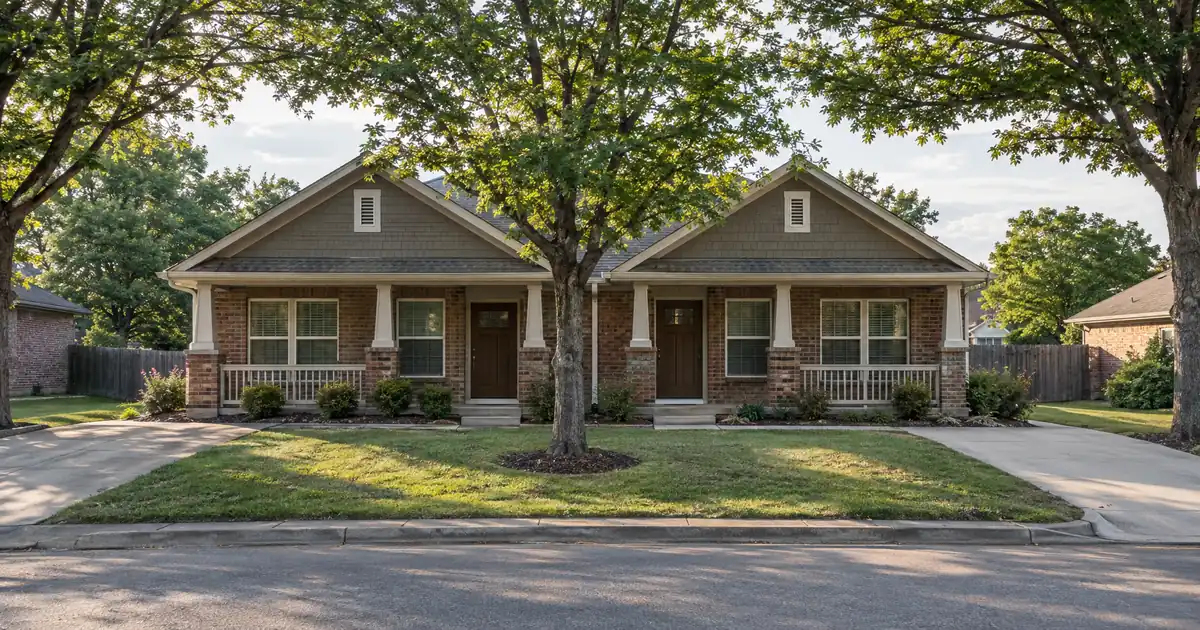
If you own a rental in Broken Arrow that you bought a while back, the cash-out question is rarely “is there equity?” It’s “does the rent carry the new balance once taxes and insurance go in?” Most owners here find the answer depends on property type more than on neighborhood.
DSCR Cash-Out Calculator
Run the cash-out numbers in Broken Arrow, OK
Rate source: Freddie Mac 30-yr average via FRED® — Federal Reserve Bank of St. Louis · effective Sep 24, 2026
Prefilled with starting assumptions — enter your property’s value, balance, taxes, and insurance for a more accurate picture.
Program parameters update from Lendmire’s centralized guideline source. Taxes and insurance are editable estimates.
As of Sep 24, 2026 · General Freddie Mac market benchmark, not a Lendmire loan offer. Property value, balance, taxes, and insurance are editable estimates. Maximum loan-to-value varies by lender, program, property type, and seasoning. Not a Loan Estimate, approval, or commitment to lend. Program availability and eligibility are subject to lender guidelines, credit approval, property review, and underwriting.
The Short Version:
A DSCR cash-out refinance in Broken Arrow, Oklahoma is underwritten primarily on the property’s rental income measured against its full monthly obligation, so proceeds hinge on rent, escrowed costs, and the 75% LTV ceiling. Single-family rentals near the $283K median sale price run thin. Duplexes carry more coverage. Exact terms depend on the lender’s guidelines, property type, leverage, and a full review of the borrower’s file.
- Single-family rent-to-price here sits near 0.5–0.6% a month, which squeezes coverage at 75% LTV.
- Duplexes cost about what a single-family home does but bring two rent streams.
- Cash-out generally requires about 6 months of ownership, measured from title recording.
- Appreciation is steady, not surging, so appraisals tend to land near cost plus modest growth.
Broken Arrow Market Snapshot
A quick read on the Broken Arrow investor landscape — figures come from the cited sources below. Confirm current property-level numbers before underwriting.
| Metric | Detail |
|---|---|
| Home prices | $315K median (Homes.com multi-family page) |
| Cap rates | 6.5–7.0% cap rates (Northmarq) |
| University enrollment | 2,000+ students (NSU Broken Arrow) |
| Population | 122,131 population (Census Reporter) |
| Employment | 6,000+ manufacturing jobs (Broken Arrow EDC) |
| Vacancy | 4.8% (Northmarq, “Oklahoma) |
How a Cash-Out Pull Works on a Broken Arrow Rental
The mechanism is simple, and the order matters. The lender sets a maximum balance at 75% of appraised value on a cash-out. It subtracts your existing payoff and closing costs. Whatever remains is your proceeds, but only if rent covers the new payment at the program’s 1.00 minimum coverage benchmark. Coverage is monthly rent divided by principal, interest, taxes, insurance, and any HOA dues.
So two limits apply, and the tighter one wins. Value caps the loan. Rent caps the loan too. On a Broken Arrow single-family house, the rent limit usually binds first. Eligibility, as always, depends on lender guidelines, credit (620 floor, with better tiers at 660, 680, and 700), reserves of roughly 6 months, and property review. Loan sizes run up to $3,000,000 on standard programs, though few Broken Arrow rentals come close.
Seasoning is the other gate. Lenders look for about 6 months of ownership from the date the deed recorded, and they check it against the settlement statement. A file that assumes seasoning away gets kicked back.
Why the Single-Family Number Runs Tight
Start with the rent side. Zumper puts the median rent across all property types at $1,645, up 3% year over year. Homes.com shows a median home price of $315,000. That’s a gross monthly rent-to-price ratio near 0.52%. Against Redfin’s $283K median sale price, it’s about 0.58%. (Homes.com measures listing prices and Redfin measures closed sales, so the two medians differ by method.)
Run the numbers on a modeled single-family rental priced near $315,000 renting at $1,645. These are assumptions, not market quotes. At 75% LTV, coverage including taxes and insurance lands in the mid-0.8s. Drop leverage toward 60% and it climbs to roughly 1.0. That means a cash-out on a typical single-family rental here often returns far less than the 75% headline suggests.
Not a dead end. It’s a sizing problem. Lower-priced homes, a lower-LTV request, or a different property type each move the number.
The Duplex Is the Better Cash-Out Candidate
Homes.com lists multi-family homes in Broken Arrow from $320,000 to $729,000, but only 4 were active at the time. RentCafe shows average rents of $1,132 for a one-bedroom and $1,291 for a two-bedroom.
Model a duplex near $320,000 with one side at each of those rents, about $2,400 combined. Coverage including taxes and insurance clears 1.0x with some cushion at 75% LTV. Trim the rents 10% and it still clears, though the cushion shrinks. Keep one caveat in view: RentCafe covers only buildings with 50 or more units, so actual small-building rents can run lower. Use a lease or a rent schedule from the appraiser, not an average.
The tenure mix explains why these are scarce. RentCafe puts 28% of households in renter-occupied housing and 72% in owner-occupied. Small-investor stock here is mostly single-family. If you own a duplex, you hold the scarce, better-covered asset.
Where the Equity Sits: Four Pockets
The Rose District. The revitalized downtown mixes lofts and new apartments. The market source describes the district’s character, and new mixed-use rental product has added to it. Demand comes from renters who want walkable living near work. The catch is that no reliable submarket rent-to-value figure exists. An appraiser will lean on whatever loft or small-building comps are available, so expect rent evidence to matter.
The Highway 51 corridor and central grid. The EDC counts 33 neighborhoods and roughly 44,000 homes, and the older central stock includes ranch homes and some small multi-unit property. No independent source confirms a duplex concentration, so check comps before assuming one. This is the part of the city where an older, seasoned hold is most likely to show equity beyond cost plus modest growth.
Southside, near the Creek Turnpike. Newer subdivisions and commuter demand toward south Tulsa define this area, along with the amphitheater and Events Park area being reshaped at 101st Street. The city’s Sunset Amphitheater page reports the developer raised its investment to more than $100 million, and a Tulsa Flyer report described a 12,500-seat venue targeting a fall opening. Confirm opening status before leaning on it. Don’t underwrite event demand. Underwrite the lease.
Silvertree and the wooded larger-lot enclaves. These are higher-priced custom areas with lower rent-to-value. They suit owner-occupants and appreciation buyers. A DSCR cash-out on a house here will usually be rent-limited, not value-limited. Skip them for cash flow.
Appreciation: Don’t Underwrite a Jump
Sources disagree, and the disagreement is the lesson. Redfin shows the median sale price up noticeably year over year, while Zillow’s average home value shows a much smaller gain. Rents are flat to modestly up, with RentCafe showing a barely perceptible change and Zumper showing a somewhat stronger one.
Read that as stable. A property bought some time ago tends to appraise near purchase price plus modest growth. A property bought recently, then refinanced right at the seasoning mark, gives the appraiser little to work with. If you’re counting on proceeds to fund the next deal, plan on the conservative number.
One more mechanical point. Single-family comp depth is good, with Redfin showing 116 sales in a recent January and an average of 48 days on market. Multi-family comps are thin, at an average of 44 days on market across a handful of listings. A duplex appraisal may reach for older or more distant sales. That’s where appraisal reconsideration becomes routine: bring recent sales and a condition-adjustment sheet rather than arguing in general terms.
What Keeps the Tenant Base Steady
Rental demand here follows jobs. The Census Reporter profile shows 122,131 residents and a median household income of $91,077, above the Tulsa metro’s $69,658. DataUSA lists health care and social assistance (8,389), retail trade (6,705), and manufacturing (6,590) as the top resident sectors.
Local employers add to it. The Broken Arrow EDC names FlightSafety International, which builds full-flight simulators, among the major employers. Zeeco and St John Broken Arrow Medical Center are on that list too. NSU’s Broken Arrow campus serves over 2,000 students and has added lower-division courses, a modest new source of demand near the Creek Turnpike and Highway 51.
For the lender, the point is diversified long-term tenancy. For the appraiser, it supports occupancy assumptions.
Northmarq reports that the Tulsa South/Broken Arrow submarket led new demand as the Oklahoma City and Tulsa markets together absorbed 3,900 units, while completions fell from about 3,700 to 2,200 and then only 300 in the first quarter. Combined-market vacancy was 4.8%. That is oversupply risk easing. It’s a regional apartment read, though, not a rent figure for your house.
Documentation Is Where These Files Slip
In markets with thin multi-unit inventory and mixed rent sources, the common friction on Lendmire’s deal desk is rent evidence, not value. Cleaner files from a documentation standpoint tend to arrive with signed leases, a rent schedule for each unit, the original settlement statement showing the recording date, and entity documents lined up if the property sits in an LLC (subject to lender program eligibility). The slower files are the ones where the leases are expired month-to-month and the appraiser’s market rent comes in under what the owner assumed.
Reserves documentation is the second item. Roughly 6 months of PITIA, in statements that show seasoned funds, is a typical expectation. Cash that appeared last week invites questions.
Property type is the third. Manufactured homes, log homes, and barndominiums fall outside these DSCR programs. A rural-edge property with an outbuilding conversion needs a hard look before anyone orders an appraisal.
From Proceeds to the Next Deal
Treat the proceeds as capital, not a windfall. The duplex pencil above is why many Broken Arrow owners recycle equity from an older single-family hold into a two-unit property: the next file starts with better coverage. Compare the paths through DSCR versus conventional financing and the cash-out refinance details before you choose leverage.
DSCR vs. conventional financing
There are two common ways to finance an investment property in Broken Arrow, OK, and they qualify you differently — here’s how investors weigh them.
Why investors choose it
- Qualifies on the property’s rental income — no personal tax returns, W-2s, or pay stubs needed to document income.
- No personal debt-to-income ceiling to clear, so existing mortgages and obligations don’t cap your borrowing the same way.
- Can be closed in an LLC, keeping the property inside a business entity.
- Built for scaling — not held to the limit on number of financed properties that conventional financing applies.
- Underwriting centers on the deal: generally qualifies when the rent covers the payment, a 1.00x coverage ratio being a common baseline (confirmed in underwriting).
- Designed specifically for investment property, including long-term and, where the program allows, short-term rentals.
Where it’s strong
- Often the lowest ongoing financing cost for a buyer who fully qualifies on personal income — a fit for a first property or a cost-first purchase.
Trade-offs for investors
- Requires full personal income documentation and must fit within a debt-to-income limit — salary, existing debts, and other mortgages all count.
- Typically held in your personal name rather than a business entity.
- Caps how many financed properties you can carry, which can become a ceiling as a portfolio grows.
- Evaluates you as a borrower as much as the property, which usually means more paperwork.
How investors usually choose: a first or single property often optimizes for the lowest financing cost; portfolio builders often optimize for leverage, vesting in an LLC, and scaling past conventional caps. The right answer depends on your goals, the property, and current guidelines — both paths run through select lenders in Lendmire’s wholesale network, with eligibility and terms confirmed in underwriting.
Frequently Asked Questions
How do you qualify for a DSCR cash-out refinance in Broken Arrow, Oklahoma?
Qualification centers on the property’s rent compared with its full monthly obligation, with a typical 1.00 minimum. Lenders also review credit (620 floor), roughly 6 months of reserves, and about 6 months of ownership from title recording. LTV tops out at 75%. Final eligibility depends on lender guidelines and property review.
What are the requirements for an investment property loan in Broken Arrow, Oklahoma when you already own the home?
Expect a lease or rent schedule, the settlement statement for seasoning, reserve statements, and entity documents if an LLC holds title. An appraisal sets value and market rent. Manufactured homes, log homes, and barndominiums are not eligible through these programs.
Why does a single-family rental in Broken Arrow often return less cash-out than expected?
Rent-to-price runs near 0.5–0.6% a month, which pushes single-family coverage below the 1.00 benchmark at 75% LTV. Lower leverage or a lower-priced home improves it. Because rent usually binds before value, many owners request less than the maximum.
Is a duplex easier to cash out in Broken Arrow than a house?
Often, yes. A duplex priced near a single-family home brings two rent streams, so coverage tends to clear with more cushion. The tradeoff is thin comps, with only a handful of multi-family listings, so the appraisal may lean on older sales.
Can Lendmire help structure a DSCR cash-out refinance scenario for a Broken Arrow rental property?
Yes. Lendmire is a mortgage broker, placing DSCR investor loans. Cash-out scenarios are structured around rent coverage and a 75% LTV ceiling, with eligibility set by the lender. Call 828-256-2183 or request a scenario quote. Every figure here varies by lender and program — guidelines, property type, leverage, and credit profile all apply.
Broken Arrow Against Its Neighbor
Against Tulsa itself, Broken Arrow’s steady-not-surging prices favor owners who have held for a while and own two-unit property, while a recent single-family purchase pulls the same thin coverage on either side of the county line. Right now the math favors the seasoned Broken Arrow duplex.
For current guidelines and terms, see Lendmire’s DSCR loan programs page.
About Lendmire
Lendmire is a DSCR-focused mortgage brokerage, NMLS# 2371349, placing investor loans across 41 markets, including Washington, D.C. Lenders generally review DSCR eligibility around a property’s rental income rather than personal income documentation, which fits LLC-held rentals, self-employed investors, and portfolios scaling past conventional financed-property limits. Lendmire was recognized by Scotsman Guide as a 2026 Top Workplace and recognized by Scotsman Guide in 2025; see the 2026 Top Workplace recognition announcement.
For broader investor-financing rules and property-type coverage across the state, see Oklahoma DSCR loans.
Get Started
Ready to find the right loan for you?
In about 30 seconds you can review financing options available for your investment property. No commitment required.
Informational only. Not a Loan Estimate, approval, or commitment to lend. Program availability and eligibility are subject to lender guidelines, credit approval, property review, and underwriting.
References
1. Redfin, Broken Arrow housing market
2. Homes.com
3. Northmarq, Oklahoma multifamily Q1 research
4. Northeastern State University, Broken Arrow
5. Census Reporter — Broken Arrow OK
7. Zumper — Rent Research Broken Arrow OK
8. RentCafe, Broken Arrow rent trends
9. city’s Sunset Amphitheater page
11. Zillow’s average home value
12. DataUSA
13. Broken Arrow Economic Development Corporation: Major Employers
14. recognized by Scotsman Guide as a 2026 Top Workplace
15. recognized by Scotsman Guide in 2025
16. the 2026 Top Workplace recognition announcement
This article is part of Lendmire’s investment property cash-out refinance program — full qualification details, guidelines, and scenarios live on the program page.
Related reading: DSCR Loans Oklahoma: Investor Financing for Oklahoma City, Tulsa, Broken Bow, Norman, and Real Estate Investors · DSCR Loans Broken Bow & Hochatown · DSCR Cash Out Refinance in Moore, Oklahoma: How Rent Math Clears at 75% LTV on Storm-Code Homes
Guides: Investment Property Cash-Out Refinance in Broken Arrow, OK · Investment Property Cash-Out Refinance in Oklahoma
Brandon Miller
Founder & CEO, Mortgage Loan Originator, Lendmire LLC
- Mortgage Loan Originator · NMLS# 1129696 · Verify on NMLS Consumer Access
- North Carolina Real Estate Broker · License# 343312 · Verify on NCREC
- North Carolina Insurance Producer · License# 19053198 · Property, Casualty, Life, Health · Verify on NAIC SBS
- Lendmire LLC · Firm NMLS# 2371349 · Verify firm licensure
Compliance and disclosures. Lendmire (NMLS# 2371349) is a licensed mortgage broker and is not a direct lender, depository institution, financial advisor, or tax professional. Content in this article is general market analysis and educational information — not financial, legal, or tax advice for any specific situation. Lendmire does not guarantee loan approval; every transaction is subject to underwriting by the funding lender. Mortgage pricing and loan program guidelines are subject to change at any time without notice and vary by borrower characteristics, property type, and state regulations. Lendmire complies with Equal Housing Opportunity. Licensure verification: NMLS Consumer Access.