
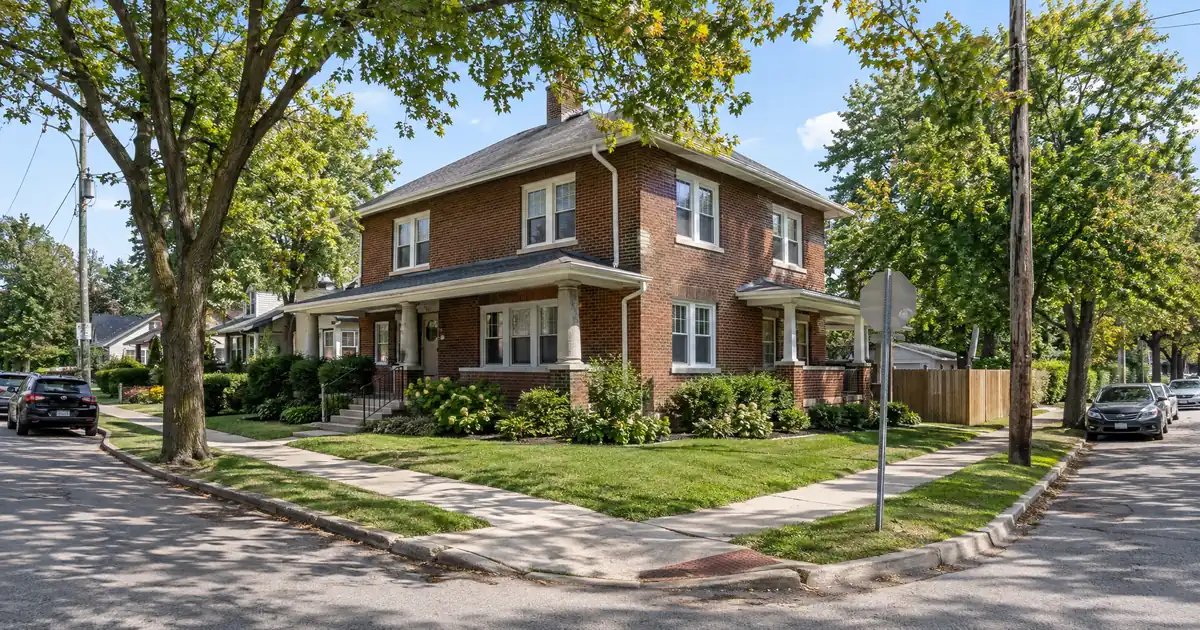
Does a cash out refinance on an investment property in North Olmsted, Ohio still leave enough room to fund the next deal? Often yes, but the answer depends on property type and leverage more than on the city. Redfin puts the median sale price at $284K, up 6.3 percent year over year, so owners with a lower basis have equity to work with. Rent coverage on single-family stock is the constraint, and the sections below show where it binds.
The Quick Read: A cash-out refinance on a North Olmsted, Ohio rental suits the owner who already holds a seasoned, two-bedroom-friendly asset and wants capital for the next acquisition. The loan is underwritten primarily on the property’s rental income measured against its full monthly obligation, with leverage capped at 75 percent of value.
DSCR Cash-Out Calculator
Run the cash-out numbers in North Olmsted, OH
Rate source: Freddie Mac 30-yr average via FRED® — Federal Reserve Bank of St. Louis · effective Sep 24, 2026
Prefilled with starting assumptions — enter your property’s value, balance, taxes, and insurance for a more accurate picture.
Program parameters update from Lendmire’s centralized guideline source. Taxes and insurance are editable estimates.
As of Sep 24, 2026 · General Freddie Mac market benchmark, not a Lendmire loan offer. Property value, balance, taxes, and insurance are editable estimates. Maximum loan-to-value varies by lender, program, property type, and seasoning. Not a Loan Estimate, approval, or commitment to lend. Program availability and eligibility are subject to lender guidelines, credit approval, property review, and underwriting.
- Single-family rent near $1,950 against a $284K median price lands close to 1.0 coverage at the 75 percent cap, per Homes.com and Redfin.
- Duplexes underwritten at two-bedroom rents model stronger, but listings are scarce.
- Roughly six months of seasoning and a 620 credit floor gate the file.
- The mall redevelopment is an upside watch item, not underwriting income.
North Olmsted Market Snapshot
A quick read on the North Olmsted investor landscape — figures come from the cited sources below. Confirm current property-level numbers before underwriting.
| Metric | Detail |
|---|---|
| Home prices | 38 sales (Redfin) |
| Typical rents | $1,118 average (Apartments.com North Olmsted) |
| Recent appreciation | +6.3% yoy (Redfin) |
The Great Northern Corridor: Upside You Can’t Underwrite
The Great Northern Mall and Country Club Boulevard corridor is the most interesting submarket in North Olmsted, and also the one where no rent or price figure can be sourced. That gap matters. The corridor’s case rests on policy and construction plans, and a lender’s appraiser will not credit either.
Here is what is documented. The city adopted a Mall Area Mixed Use Overlay District, which the Cuyahoga County Planning Commission describes as aimed at a dense, walkable, transit-supportive hub for jobs, entertainment, and residential living. News 5 Cleveland reports plans to demolish the former Sears and build a grocery supercenter of more than 100,000 square feet, plus a gas station and convenience store. Cleveland19 reports that the city changed zoning on the property to allow housing as well as retail.
So what does an equity-extraction investor do with that? Treat it as a tailwind for neighboring owner-held rentals, not a number in the file. A grocery anchor of that size tends to support nearby demand, but demolition and construction come first, and plans slip. If you refinance based on a hoped-for post-redevelopment value, you are borrowing against a story. If you refinance on today’s appraised value and treat any redevelopment lift as a bonus, you have a margin of safety.
The hotel cluster along Country Club Boulevard (Sonesta Simply Suites, Extended Stay America, and Hampton Inn among them) suggests demand from crews and contractors needing longer stays. That is an inference, not data. It is commercial land, mostly outside the residential rental thesis here.
Central North Olmsted and the Two-Bedroom Reality
Away from the mall, the residential core around Dover Center Road, Butternut Ridge Road, and Bretton Woods is owner-occupied colonial territory. NeighborhoodScout counts 13,550 housing units with a median house value of $284,746, and 71.08 percent are single-family detached. Renters are the minority. RentCafe puts renter households near 21 percent, which means a thin but stable pool.
The rental stock is smaller-scale than the usual headline averages suggest. RentCafe’s breakdown has 33 percent of apartments in buildings of 50 or more units, 47 percent in smaller complexes, and 19 percent single-family rentals. The Yardi-based average rent of $1,254, which RentCafe’s rent trends page shows up 2.9 percent, covers only the large-building slice. Two-bedrooms dominate, at 56 percent of rentals against 38 percent for one-bedrooms.
Two things follow for anyone pulling equity.
First, underwrite a duplex at two-bedroom-per-side rents, not three-bedroom single-family rents. The unit that has proven demand here is the 2BR.
Second, rent varies more by property condition than by address. Redfin’s asking rents run about $1,050 to $1,209 for older two-bedrooms, against $1,639 for a two-bedroom and $2,147 for a three-bedroom in newer product along Great Northern Boulevard. An appraiser’s rent schedule decides which band your property gets. Plan on the lower band, and if the upper one shows up, treat it as cushion.
One more data point: the apartment stock averages about 53 years old, and none has been built since 2000. That points to little new supply competing with small landlords. It does not prove low vacancy, since no vacancy figure was sourced. It does mean capex reserves matter, because older buildings are what lenders scrutinize at appraisal.
Where the Coverage Math Lands
Single-family coverage in North Olmsted sits right around the 1.00 benchmark at the 75 percent cash-out ceiling, and improves only as leverage drops or unit count rises. Gross rent-to-price on a single-family home runs roughly 0.69 percent monthly, based on median rent from Homes.com set against the Redfin median price. Homes.com’s own price-to-rent ratio points the same direction, though its sample is small, so lean on it directionally.
The table below is modeled, not sourced market data. It uses the rent and price above, a standard 30-year amortization, and full taxes and insurance at statewide Ohio averages. The figures are rounded down.
| Scenario | LTV | Modeled coverage |
|---|---|---|
| Single-family, $1,950 rent | 75 percent | about 1.0 |
| Single-family, $1,950 rent | 70 percent | about 1.10 |
| Single-family, $1,950 rent | 65 percent | about 1.15 |
| Duplex at the median price, two units at $1,150 | 75 percent | about 1.2 |
Read the duplex row carefully. It assumes a duplex priced at the citywide median, which is a modeling convenience. A real duplex will price differently, and Redfin recently noted just one multi-family listing among the month’s for-sale stock.
DSCR files in markets like this one typically look like thin-to-borderline single-family coverage paired with strong owner equity. The stronger files tend to come from owners who bought below current value, hold a stable tenant, and are willing to take a lower LTV to clear the coverage line. Lenders generally weigh the appraiser’s market-rent estimate over the in-place lease when the two disagree. Getting a current insurance quote and a realistic rent opinion in front of the file early prevents the number from moving late.
What if the number lands under 1.00?
Lendmire arranges these loans through a wholesale network, and a ratio near or under 1.00 does not end the conversation. A 1.00 baseline is common because rent covers the obligation at that level, but some programs review lower ratios with compensating factors: lower leverage, stronger credit, deeper reserves, different pricing, or interest-only structuring. Whether any of that applies depends on lender guidelines, credit approval, and property review.
The better question is whether you should reach for it. If the property only works at sub-1.00 because you want maximum cash out, that is a signal to take less cash. If the coverage gap closes with a 5-point LTV reduction, the trade is often worth it.
Appreciation Is Doing Some of the Work
Redfin’s 6.3 percent year-over-year price gain is the only sourced appreciation figure for North Olmsted, and it matters because the 75 percent ceiling applies to current appraised value. A property that appreciates 6.3 percent raises the base that ceiling applies to by exactly that much. At a fixed existing balance, the lift in available equity is larger in percentage terms than the lift in value. An owner sitting at 60 percent of current value has 15 points of LTV headroom before the cap, and a 6.3 percent move in value widens that headroom.
Redfin also shows price per square foot at $177, up 18.3 percent. Don’t over-read that. Per-square-foot figures swing with the mix of homes that sold, and with only 38 sales in the month sampled, versus 40 the year before, the sample is small.
The softer signal is days on market. Homes sold after 19 days against 11 a year earlier. That is still a quick-turning market by most standards, but the direction is toward more negotiating room for buyers. For an owner planning a cash-out, it is a reminder that appraisal value is a point-in-time opinion, and a softening market can shave it.
Seasoning is the other gate. Programs in this network typically require about six months of ownership, measured from title recording, before a cash-out. An investor who bought, rehabbed, and rented a property in North Olmsted should plan the sequence so the clock has run before the application goes in. On reserves, typical guidance is about six months of PITIA, rising to about nine months above $1,500,000. Credit tiers run through 620, 660, 680, and 700, with 620 the floor, and the tier you land in influences leverage and pricing.
Loan size is a practical wrinkle. Standard programs reach up to $3,000,000, but North Olmsted balances sit far below that. Smaller balances route through select lenders in the network, and the minimums vary. All of this is subject to lender guidelines and varies by borrower, property, and loan scenario.
Cash-Out or Conventional? The Flip Point
For one rental held personally by a W-2 borrower with clean returns and low existing debt, conventional cash-out financing can carry lower cost and avoids the non-QM layer. How DSCR stacks up against conventional depends on how many properties you finance and how cleanly your traditional personal-income documentation shows rental income.
The flip point arrives sooner for LLC-held portfolios (subject to lender program eligibility), for self-employed owners whose returns understate cash flow, and for anyone near conventional financed-property limits. If the file is a single colonial near the 1.0 line and your personal income is strong, conventional may beat DSCR here. If coverage is 1.2 on a duplex and your returns are messy, the DSCR lane is the cleaner path.
Who Should Pull Equity Here?
Pull equity here if you own a seasoned, tenant-occupied asset, you are reinvesting into a market where coverage pencils, and you can accept lower leverage to clear the number. Hold off if the proceeds are headed somewhere the math is worse than what you are leaving.
That second case deserves a real stress test. Using North Olmsted equity to buy single-family elsewhere in Cuyahoga County at similar rent-to-price ratios just replicates a thin-coverage position with more debt. The stronger play might be redeploying into small multifamily, which the sourced data suggests North Olmsted itself undersupplies. Or the better move is to keep the existing property unlevered and wait. Honestly, this is a toss-up for owners near the 1.0 line.
On tenant durability, the demand anchors are employment-based. Cleveland Clinic’s Fairview Hospital sits in the adjacent Cleveland-side area with 488 licensed beds, a Level II trauma designation, and a North Olmsted physician office. Healthgrades also lists Southwest General and UH Parma Medical Center within range. Several hospital systems within commuting distance support steady demand from nurses and allied-health staff, who often prefer two-bedroom units near I-480. No headcount was sourced, so treat this as a qualitative anchor, not a quantified one.
Highway access widens the pool. North Olmsted sits on I-480 and I-71, connecting to Downtown Cleveland, and Hopkins International Airport is about eight miles away, according to Apartments.com. Longer-tenure renters are what lenders like to see in a file. For a broader view of the state’s footprint, see Lendmire’s Ohio DSCR financing hub.
DSCR vs. conventional financing
There are two common ways to finance an investment property in North Olmsted, OH, and they qualify you differently — here’s how investors weigh them.
Why investors choose it
- Qualifies on the property’s rental income — no personal tax returns, W-2s, or pay stubs needed to document income.
- No personal debt-to-income ceiling to clear, so existing mortgages and obligations don’t cap your borrowing the same way.
- Can be closed in an LLC, keeping the property inside a business entity.
- Built for scaling — not held to the limit on number of financed properties that conventional financing applies.
- Underwriting centers on the deal: generally qualifies when the rent covers the payment, a 1.00x coverage ratio being a common baseline (confirmed in underwriting).
- Designed specifically for investment property, including long-term and, where the program allows, short-term rentals.
Where it’s strong
- Often the lowest ongoing financing cost for a buyer who fully qualifies on personal income — a fit for a first property or a cost-first purchase.
Trade-offs for investors
- Requires full personal income documentation and must fit within a debt-to-income limit — salary, existing debts, and other mortgages all count.
- Typically held in your personal name rather than a business entity.
- Caps how many financed properties you can carry, which can become a ceiling as a portfolio grows.
- Evaluates you as a borrower as much as the property, which usually means more paperwork.
How investors usually choose: a first or single property often optimizes for the lowest financing cost; portfolio builders often optimize for leverage, vesting in an LLC, and scaling past conventional caps. The right answer depends on your goals, the property, and current guidelines — both paths run through select lenders in Lendmire’s wholesale network, with eligibility and terms confirmed in underwriting.
Budget for taxes and insurance, which vary by county, and check local rental rules and any HOA rental restrictions on condos with qualified local professionals. Condos are a lower-basis entry, with Homes.com showing a $1,325 median condo rent, but HOA rules can limit rentals.
Investors who want the mechanics in order can read the guide “What Is a DSCR Loan”, then review the refinance side and the page on pulling equity out. To run a specific property, connect with Lendmire or call 828-256-2183.
Rent Data: Why the Sources Disagree
Quoted rents in North Olmsted range from roughly $1,118 on Apartments.com to $1,375 for the Homes.com median, with RentCafe at $1,254 in between. These aren’t errors. They measure different things: large-building averages, small-sample home medians, and listing asking rents.
For underwriting, the number that counts is the one the appraiser’s rent schedule produces. Don’t build a refinance around the highest quoted rent. Build it around the lower band, which still leaves a path if the appraisal comes in conservative. A sourced neighborhood-level rent view barely exists for this city, so any claim that one pocket of North Olmsted outrents another is unsupported.
Frequently Asked Questions
How do you qualify for a DSCR cash-out refinance in North Olmsted?
The property’s rent used for lender review has to cover its full PITIA at a minimum 1.00 ratio on typical programs. You also need roughly six months of ownership from title recording, a 620 credit floor, and about six months of reserves. The cash-out LTV cap is 75 percent. Final eligibility depends on lender guidelines, credit approval, and property review.
What are the requirements for an investment property loan in North Olmsted, Ohio?
Expect an appraisal with a market-rent opinion, proof of insurance, reserves, and a credit profile at or above the 620 floor. Eligible property types are the usual rentals, such as single-family homes, condos, and small multifamily. Manufactured homes, log homes, and barndominiums fall outside these programs. Terms vary by borrower, property, and loan scenario.
Can a North Olmsted single-family rental clear the coverage line at 75 percent LTV?
It is borderline. Using a $1,950 modeled single-family rent against the $284K median price and full taxes and insurance, coverage lands near 1.0. A modest LTV reduction, or a duplex priced similarly, improves the number. Whether a sub-1.00 file can be reviewed depends on the lender and the compensating factors.
Does the Great Northern Mall redevelopment count toward my appraised value?
No. Appraisers value the property as it stands, and a planned grocery anchor and housing-friendly zoning are not income. They may influence neighborhood sentiment once construction is underway. Plan the refinance on current value and treat any redevelopment lift as upside.
For current guidelines and terms, see Lendmire’s DSCR loan programs page.
Three Indicators for the Next Quarter
Track these before committing capital.
1. Mall site milestones. Watch for the Sears demolition and a construction start on the grocery supercenter. Both would confirm the corridor’s momentum, and a stall would remove the upside.
2. Days on market. If that stretch keeps growing, appraisal values may flatten and your 75 percent ceiling shrinks with them.
3. The rent gap between older and newer units. The spread between roughly $1,050 to $1,209 for older two-bedrooms and $1,639 for newer ones shows how much a renovated North Olmsted unit can actually command before you underwrite it at the upper band.
About Lendmire
Lendmire is a non-QM mortgage brokerage (NMLS# 2371349) arranging DSCR investor loans in 41 markets, including Washington, D.C. DSCR eligibility is generally reviewed around property-level rental income rather than personal income, subject to lender and program guidelines, which suits self-employed investors and LLC-owned portfolios. Lendmire has been named a 2025 Scotsman Guide Top Workplace and a 2026 Scotsman Guide Top Workplace.
Get Started
Ready to find the right loan for you?
In about 30 seconds you can review financing options available for your investment property. No commitment required.
Informational only. Not a Loan Estimate, approval, or commitment to lend. Program availability and eligibility are subject to lender guidelines, credit approval, property review, and underwriting.
References
1. Redfin
2. Homes.com
4. Cuyahoga County Planning Commission
6. Cleveland19
8. RentCafe
9. RentCafe’s rent trends page
10. Cleveland Clinic’s Fairview Hospital
11. a 2025 Scotsman Guide Top Workplace
12. a 2026 Scotsman Guide Top Workplace
This article is part of Lendmire’s investment property cash-out refinance program — full qualification details, guidelines, and scenarios live on the program page.
Related reading: DSCR Cash Out Refinance in North Olmsted, Ohio: Can Your Rent Cover a Bigger Loan Here? · DSCR Cash Out Refinance in Reynoldsburg, Ohio: Equity Without Appreciation · DSCR Cash Out Refinance in Beavercreek, Ohio: Tight Coverage and Steady Base-Driven Demand
Guides: Investment Property Cash-Out Refinance in Ohio
Brandon Miller
Founder & CEO, Mortgage Loan Originator, Lendmire LLC
- Mortgage Loan Originator · NMLS# 1129696 · Verify on NMLS Consumer Access
- North Carolina Real Estate Broker · License# 343312 · Verify on NCREC
- North Carolina Insurance Producer · License# 19053198 · Property, Casualty, Life, Health · Verify on NAIC SBS
- Lendmire LLC · Firm NMLS# 2371349 · Verify firm licensure
Compliance and disclosures. Lendmire (NMLS# 2371349) is a licensed mortgage broker and is not a direct lender, depository institution, financial advisor, or tax professional. Content in this article is general market analysis and educational information — not financial, legal, or tax advice for any specific situation. Lendmire does not guarantee loan approval; every transaction is subject to underwriting by the funding lender. Mortgage pricing and loan program guidelines are subject to change at any time without notice and vary by borrower characteristics, property type, and state regulations. Lendmire complies with Equal Housing Opportunity. Licensure verification: NMLS Consumer Access.