
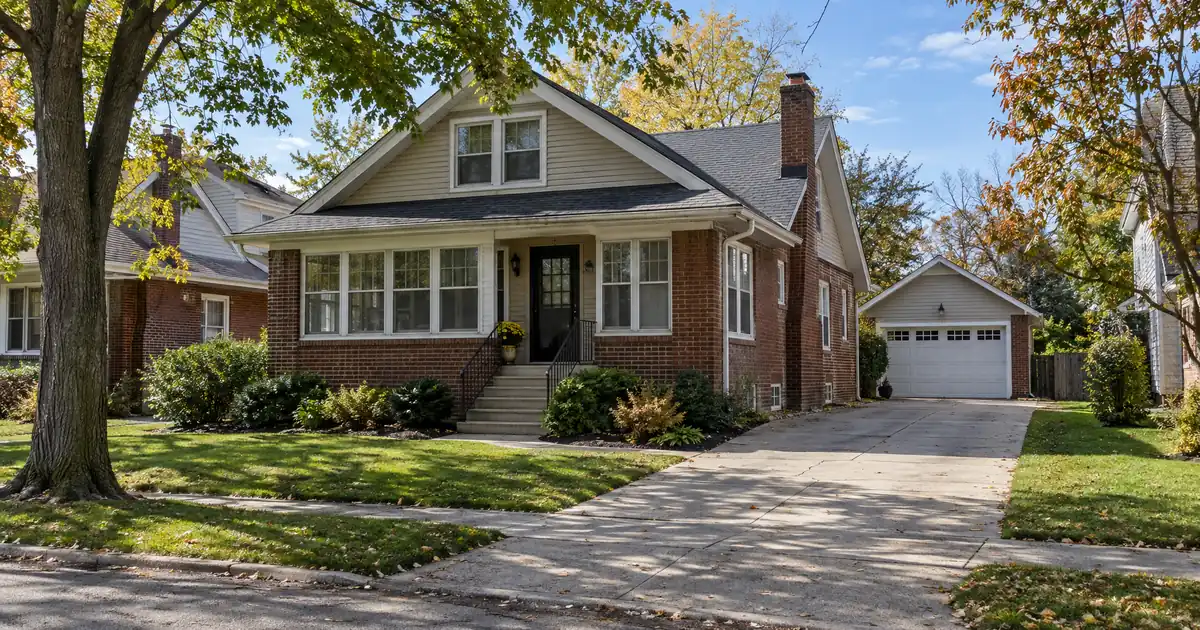
A public-media report on southeast Ohio’s housing squeeze counted 1,556 short-term rentals registered countywide in Hocking County, and a local tourism official said the conversions are eliminating workforce housing. That number reframes the equity-extraction question. In a market where cabins get the attention, the property that may support a cash-out refinance is the ordinary in-town rental with a tenant who stays.
DSCR Cash-Out Calculator
Run the cash-out numbers in Hocking Hills, OH
Rate source: Freddie Mac 30-yr average via FRED® — Federal Reserve Bank of St. Louis · effective Sep 24, 2026
Prefilled with starting assumptions — enter your property’s value, balance, taxes, and insurance for a more accurate picture.
Program parameters update from Lendmire’s centralized guideline source. Taxes and insurance are editable estimates.
As of Sep 24, 2026 · General Freddie Mac market benchmark, not a Lendmire loan offer. Property value, balance, taxes, and insurance are editable estimates. Maximum loan-to-value varies by lender, program, property type, and seasoning. Not a Loan Estimate, approval, or commitment to lend. Program availability and eligibility are subject to lender guidelines, credit approval, property review, and underwriting.
Key Takeaways:
A DSCR cash-out in Hocking Hills, Ohio fits investors who already own an in-town long-term rental and want to pull equity for the next deal, because the loan is underwritten primarily on the property’s rental income measured against its full monthly obligation, not on cabin-style tourism revenue.
- Cash-out is capped at 75 percent loan-to-value, with ownership seasoning of about six months.
- Logan’s median sale price is $260K per Redfin, but only nine homes sold that month.
- Modeled single-family coverage lands near 1.2 including taxes and insurance. Unit mix on multi-unit properties decides the rest.
- Log cabins, manufactured homes, and barndominiums fall outside these programs.
Hocking Hills Market Snapshot
A quick read on the Hocking Hills investor landscape — figures come from the cited sources below. Confirm current property-level numbers before underwriting.
| Metric | Detail |
|---|---|
| Home prices | Median value $208,879 (NeighborhoodScout, Logan) |
| Recent appreciation | 10-year appreciation 107.09% (NeighborhoodScout, Logan) |
| Employment | 1,635 jobs (Logan Daily News, tourism) |
| Vacancy | 6.8% rental (Wikipedia, Hocking County, Ohio) |
Why Equity Extraction Here Is Different
Hocking Hills is a tourism region, not a city. Its hub and county seat is Logan, and nearly every usable data point sits at the Logan or county level. OhioBiz puts Hocking County at 28,050 residents and Logan at about 7,000. USAFacts estimates Logan closer to 6,600, a lower figure that reflects a more recent count. Either way, this is a small market, and a small market punishes sloppy underwriting.
Investors underwriting deals in Hocking Hills, Ohio can use DSCR programs Lendmire arranges — available across 41 markets, including D.C. Lendmire (NMLS# 2371349) is a DSCR-focused mortgage broker, and it places these loans through wholesale investor lenders rather than lending directly. This article stays on the harder question: after you own the property, how much can the rent support?
The tourism numbers explain why the local rental picture is lopsided. A Tourism Economics study reported by the Logan Daily News found $179 million in direct visitor spending, a $295 million total economic impact, 1,635 jobs, and $43 million in wages. Those jobs need housing, and the workers who fill them overwhelmingly live in and around Logan.
The Number That Decides Everything: Coverage on Rent You Can Document
Cash-out on a DSCR loan lives or dies on one ratio: monthly rent divided by the full monthly obligation of principal, interest, taxes, insurance, and any HOA dues. The baseline for most standard programs is 1.00, though exact eligibility depends on lender guidelines, credit profile, reserves, and property review. The loan ceiling is 75 percent of value for a cash-out, and the property typically needs about six months of ownership measured from title recording. Credit tiers generally run from a 620 floor up through 660, 680, and 700, and reserves run about six months of PITIA on most files. All of this is subject to lender guidelines and varies by borrower, property, and loan scenario.
Here is the modeled math. These rents come from Zumper’s Logan snapshot, which averages $1,400 for apartments, $2,070 for houses, $600 for a one-bedroom, and $1,500 for a two-bedroom. Zumper itself says inventory is too thin for neighborhood-level data, so treat these as directional inputs, not market-verified rents. The prices are modeled assumptions anchored to Redfin’s $260K Logan median. Coverage figures include taxes and insurance at Ohio-average loads and are rounded down.
| Modeled scenario (75% LTV) | Rent assumption | Coverage read |
|---|---|---|
| Home at $260K, house-rent average | $2,070 | About 1.2 |
| Home at $260K, apartment-average rent | $1,400 | Low 0.8s |
| Duplex at $320K, two 2BR units | $3,000 combined | About 1.4 |
| Duplex at $320K, one 1BR plus one 2BR | $2,100 combined | Roughly 1.0 |
Read the table from the bottom. The same duplex swings from comfortable to borderline depending on which units are in the building. That is the multi-unit stacking logic: one roof, two or more leases, one loan. It helps coverage only when each door carries real rent. A $600 one-bedroom beside a $1,500 two-bedroom barely clears the baseline, which means the cash-out is capped by the weakest unit.
The sub-1.00 case matters too. A home that rents like an apartment, in the low 0.8s, does not clear a standard 1.00 benchmark on long-term rent alone. Paths a lender may review include a sub-1.00 program, an interest-only structure, or a lower-leverage cash-out, each with stronger compensating factors, different pricing, or more cash retained in the deal. Eligibility review depends on lender guidelines, credit approval, and property review, and none of this is a commitment to lend.
DSCR files in markets like this one typically look like small-town, single-appraiser files. The in-place lease or the appraiser’s market-rent schedule sets the rent used for lender review, and comparable rentals can be sparse. The files that go smoothly tend to carry a signed lease at a rent consistent with nearby listings, plus reserves documented before the lender asks. The files that stall tend to lean on a rent figure the appraiser cannot support.
Skeptical Read: Why 75 Percent of $260K May Not Mean What You Think
The Redfin median is $260K, up 7.5 percent year over year, but homes took 84 days to sell versus 61 a year earlier, and only nine homes closed in the month measured. That is a thin sample. A single outlier sale can move a median by tens of thousands of dollars. NeighborhoodScout uses a different method and reports a median house value of $208,879, along with a ten-year cumulative appreciation figure above 100 percent. The gap between $260K and roughly $209K is not an error. It is two methods describing a market with too few transactions to settle the question.
For a cash-out borrower, that gap is the whole story. The appraisal sets the value, the value sets the 75 percent ceiling, and a conservative appraisal in a slow-moving market can shrink the proceeds well below what the headline median suggests. The stronger play is to size the refinance on rent coverage and treat any appraisal upside as a bonus. Logan is a cash-flow market that has also appreciated, not an appreciation market that happens to cash-flow.
Anecdotes reinforce the price run. A realtor quoted by Spectrum News said a home a young family could buy for under $150,000 a decade ago now costs about $300,000. That is one voice, not data. But it fits the NeighborhoodScout trend, and it matters if you bought early: your equity may be real even if the next appraisal comes in short of the stories.
Where the Math Pencils: Logan, In Town
Logan’s older in-town stock is the best DSCR fit in the region. It is a county seat along the Hocking River, roughly 43 miles southeast of Columbus, with a mix of older single-family homes and small multi-unit properties. NeighborhoodScout reports that single-family detached homes make up 70.55 percent of Logan’s housing units. That leaves about 30 percent as multi-unit, manufactured, or other housing, so duplexes and small multifamily are a minority product here, which also means comps are scarce.
The demand anchors are ordinary and stable. Hocking Valley Community Hospital is a 25-bed critical access hospital, a non-profit community hospital affiliated with OSU Wexner Medical Center. OhioBiz lists Logan-Hocking Local Schools, the hospital, and General Mills as the county’s largest employers. No sourced headcounts are available for those employers, so the claim here is qualitative: the tenant base is year-round workers, not weekend guests.
Rental supply helps the thesis. Per the decennial Census data summarized on the Hocking County page, the county had 12,987 housing units, with 26.9 percent of occupied units renter-occupied and a 6.8 percent rental vacancy rate. The 12.0 percent total vacancy figure is inflated by seasonal and second-home units, so it should not be mistaken for rental vacancy. The 6.8 percent number is usable as a vacancy haircut in a stress test.
The Hocking Metropolitan Housing Authority manages 164 public housing units, including 71 in a high-rise and 93 scattered across Logan, plus 27 market-rate rentals. That tells you the town already has a documented base of rental demand at the lower end of the rent scale, which is the segment where workforce duplexes compete.
One caution on rent inputs: published HUD Fair Market Rents for the area, as summarized by Affordable Housing Online, run from $737 to $1,383 depending on unit size. That range is a conservative floor for stress-testing a rent assumption when an appraiser’s schedule is thin. If your pro forma needs rents well above that ceiling to clear 1.00, the file leans on optimism.
The Student Corner: Nelsonville and Hocking College
Nelsonville sits roughly 12 miles from Logan and is anchored by Hocking College, a public community college on a campus of about 2,300 acres. Student and workforce demand supports the area’s affordable housing stock. The caution is data. No reliable rent or price source turned up for Nelsonville, and listing sites without dated statistics do not support underwriting. If you hold a rental there, the appraisal will be the first real rent evidence anyone sees. Expect more variance on that file than on an in-town Logan property, and plan reserves accordingly.
What to Leave Out
Skip the cabin corridor. The Old Man’s Cave area around Laurelville, Rockbridge, and South Bloomingville is cabin and lodge territory. WYSO reports the region’s lodging is predominantly cabins, lodges, and single-family detached homes. A long-term-rental DSCR cash-out gets no support from a property built for nightly stays, and a log cabin falls outside the network’s DSCR programs entirely, along with manufactured homes and barndominiums. Tourism-income structures are a separate underwriting conversation, and this article does not recommend one.
Be careful with West Logan and Green Township. West Logan is a small unincorporated community between Logan and US 33, and Green Township is rural single-family to the southeast. Neither has a price or rent source. Rural comps compound the appraisal risk described above.
How the Proceeds Get Redeployed
An equity extraction only works if the proceeds buy something that earns. Picture an investor holding a paid-down duplex in Logan that has been rented for more than six months. A cash-out at up to 75 percent of appraised value, if the coverage clears, converts trapped equity into capital for a second property. The honest question is what that second property is. If the answer is another in-town Logan rental with documented rent, the strategy compounds. If it is a cabin, the investor has swapped a stable long-term-lease asset for a seasonal one, with the same debt stacked on top.
Say you own a rental that cleared a 1.0 coverage ratio at purchase and appraises higher today. A new loan at 75 percent LTV will carry higher obligations than the old one, so the coverage ratio can fall even as the equity rises. The equity available depends on rent used for lender review, PITIA, reserves, and the 75 percent ceiling, so it is not a guaranteed cash figure. Run the coverage number on the new loan before assuming the proceeds are there. The guide “The Refi Options” walks through the sequence and compares rate-and-term and cash-out paths.
One more point on the alternative: a conventional cash-out leans on personal income and debt-to-income, while a DSCR loan leans on the property. The comparison lays out the tradeoff. For self-employed owners or investors with several leveraged properties, the property-income basis is often the reason this route gets considered.
The Thing Most Investors Miss About Hocking Hills
Everyone talks about the cabins. Competing content treats this region almost entirely as an Airbnb market, so investors arrive assuming the only play is nightly rental. The research points the other way: with so many homes converted to short-term use, the long-term lease in Logan is the scarcer asset. That is an inference from the sources, not a measured rent premium, and it should not be priced into a pro forma as one. But it does suggest that stable in-town rentals with signed leases are the kind of property a DSCR lender can underwrite without leaning on seasonal projections.
DSCR vs. conventional financing
There are two common ways to finance an investment property in Hocking Hills, OH, and they qualify you differently — here’s how investors weigh them.
Why investors choose it
- Qualifies on the property’s rental income — no personal tax returns, W-2s, or pay stubs needed to document income.
- No personal debt-to-income ceiling to clear, so existing mortgages and obligations don’t cap your borrowing the same way.
- Can be closed in an LLC, keeping the property inside a business entity.
- Built for scaling — not held to the limit on number of financed properties that conventional financing applies.
- Underwriting centers on the deal: generally qualifies when the rent covers the payment, a 1.00x coverage ratio being a common baseline (confirmed in underwriting).
- Designed specifically for investment property, including long-term and, where the program allows, short-term rentals.
Where it’s strong
- Often the lowest ongoing financing cost for a buyer who fully qualifies on personal income — a fit for a first property or a cost-first purchase.
Trade-offs for investors
- Requires full personal income documentation and must fit within a debt-to-income limit — salary, existing debts, and other mortgages all count.
- Typically held in your personal name rather than a business entity.
- Caps how many financed properties you can carry, which can become a ceiling as a portfolio grows.
- Evaluates you as a borrower as much as the property, which usually means more paperwork.
How investors usually choose: a first or single property often optimizes for the lowest financing cost; portfolio builders often optimize for leverage, vesting in an LLC, and scaling past conventional caps. The right answer depends on your goals, the property, and current guidelines — both paths run through select lenders in Lendmire’s wholesale network, with eligibility and terms confirmed in underwriting.
For all rules, taxes, and insurance questions tied to rentals in Logan and Hocking County, verify current requirements with qualified local professionals before committing. Lendmire’s Ohio DSCR platform covers the statewide program overview.
Frequently Asked Questions
How do you qualify for a DSCR cash-out refinance in Hocking Hills, Ohio?
The property needs about six months of ownership from title recording, a credit score at or above the 620 floor, and rent that covers the full monthly obligation at a baseline of 1.00. Loan-to-value is capped at 75 percent, and reserves of about six months of PITIA are typical. Final eligibility depends on lender guidelines, credit approval, and property review.
What are the requirements for an investment property loan in Logan, Ohio?
Expect a documented lease or an appraiser’s market-rent schedule, a coverage ratio that meets the lender’s minimum, reserves, and an eligible property type. Log homes, manufactured homes, and barndominiums are outside the network’s DSCR programs. In a town where only nine homes sold in the measured month, the appraisal is the most uncertain input. Review my scenario if you want a lender-side read on your numbers.
Does a cabin near Old Man’s Cave work for a DSCR cash-out?
Not under a long-term-rental underwriting. Cabins are built for visitor stays, and log construction is ineligible in these programs regardless. In-town duplexes and workforce single-family homes in Logan are the better fit.
How much does unit mix matter on a Logan duplex?
A great deal. At the modeled rents above, two-bedroom units clear a standard benchmark with room to spare, while a one-bedroom paired with a two-bedroom lands near 1.0. The weakest unit sets the ceiling on what the lender will count.
Can a self-employed investor buying in Hocking Hills be reviewed for DSCR financing?
Yes, subject to lender guidelines. Lendmire arranges DSCR investor loans and the programs are evaluated primarily on the property’s rental income rather than personal income paperwork. Call 828-256-2183 to talk through the file.
The Bottom Line for Logan Owners
The cash-out case in Hocking Hills is narrow but real: in-town rentals with documented leases, sized on rent coverage rather than a median that nine sales produced. The investors who underwrite Logan’s long-term leases now, while the cabins soak up the headlines, will come out ahead.
About Lendmire
Lendmire (NMLS# 2371349), a non-QM mortgage broker serving investors in 41 markets including Washington, D.C., helps structure DSCR scenarios commonly evaluated around a property’s rental income rather than personal income paperwork, subject to lender guidelines. A Scotsman Guide Top Mortgage Workplace in 2025 and 2026, Lendmire places loans through wholesale investor lenders and is not a direct lender.
Get Started
Ready to find the right loan for you?
In about 30 seconds you can review financing options available for your investment property. No commitment required.
Informational only. Not a Loan Estimate, approval, or commitment to lend. Program availability and eligibility are subject to lender guidelines, credit approval, property review, and underwriting.
References
1. WOUB, economic gains and housing
2. Redfin, Logan housing market
4. Logan Daily News, tourism impact study
9. Hocking Valley Community Hospital
10. Hocking Metropolitan Housing Authority
12. Hocking College
13. WYSO
14. 2025
15. 2026
This article is part of Lendmire’s investment property cash-out refinance program — full qualification details, guidelines, and scenarios live on the program page.
Related reading: Cash Out Refinance Investment Property in Hocking Hills, Ohio: 2026 DSCR Guide to the SR 664 Corridor · DSCR Loans In Hocking Hills, Ohio · DSCR Loans Ohio: Investor Financing for Columbus, Cleveland, Cincinnati, Hocking Hills, and Real Estate Investors
Guides: Investment Property Cash-Out Refinance in Ohio
Brandon Miller
Founder & CEO, Mortgage Loan Originator, Lendmire LLC
- Mortgage Loan Originator · NMLS# 1129696 · Verify on NMLS Consumer Access
- North Carolina Real Estate Broker · License# 343312 · Verify on NCREC
- North Carolina Insurance Producer · License# 19053198 · Property, Casualty, Life, Health · Verify on NAIC SBS
- Lendmire LLC · Firm NMLS# 2371349 · Verify firm licensure
Disclosures. The information presented in this article is general market commentary, not financial, legal, or tax advice. Lendmire is a mortgage brokerage (NMLS# 2371349) — not a direct lender or depository institution — and loan placement is subject to lender underwriting. Nothing in this content represents a commitment to lend. Loan terms, pricing, and program availability vary based on borrower qualifications, property characteristics, and state of subject property, and are subject to change at any time. Lendmire complies with Equal Housing Opportunity requirements. Consumer access: nmlsconsumeraccess.org.