
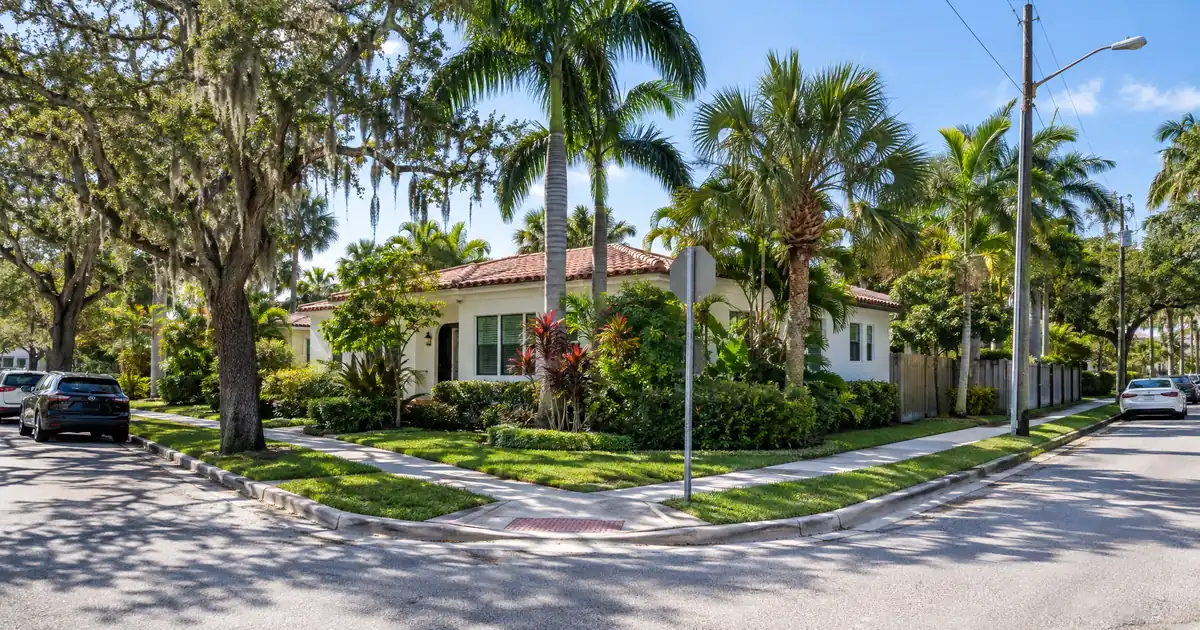
Melrose Park’s median sale price per square foot sits at $304, up 7.8 percent in a year, per Redfin’s neighborhood data. Citywide, the Zillow typical home value is up only 4.6 percent. That gap is where cash-out refinance files get interesting. An investor who bought in the right pocket can carry far more appraised equity than the citywide average suggests, and the file’s job is to turn that equity into capital without stalling on documentation.
Lendmire (NMLS# 2371349) is a multi-state mortgage brokerage that helps Fort Lauderdale, Florida investors arrange DSCR financing across 41 markets, including Washington, D.C. This article covers the equity side only: seasoning, the LTV ceiling, re-tested coverage on a bigger balance, and which Fort Lauderdale submarkets produce files that clear review.
DSCR Cash-Out Calculator
Run the cash-out numbers in Fort Lauderdale, FL
Rate source: Freddie Mac 30-yr average via FRED® — Federal Reserve Bank of St. Louis · effective Sep 24, 2026
Prefilled with starting assumptions — enter your property’s value, balance, taxes, and insurance for a more accurate picture.
Program parameters update from Lendmire’s centralized guideline source. Taxes and insurance are editable estimates.
As of Sep 24, 2026 · General Freddie Mac market benchmark, not a Lendmire loan offer. Property value, balance, taxes, and insurance are editable estimates. Maximum loan-to-value varies by lender, program, property type, and seasoning. Not a Loan Estimate, approval, or commitment to lend. Program availability and eligibility are subject to lender guidelines, credit approval, property review, and underwriting.
At a Glance:
A DSCR cash-out refinance in Fort Lauderdale, Florida is underwritten primarily on the property’s rental income measured against its full monthly obligation, and the citywide typical home value of $520,973 means submarket selection decides whether coverage clears.
- Cash-out typically caps at 75 percent LTV, with about six months of seasoning from title recording.
- Melrose Park rents near $3,642 against a median value near $466,000.
- Citywide gross rent-to-price runs roughly 0.5 to 0.6 percent, so weaker coverage is common.
- Small multifamily in Tarpon River and along Griffin Road stacks rent better than single-family.
- Standard programs generally run up to $3,000,000 in loan amount, subject to lender guidelines.
Fort Lauderdale Market Snapshot
A quick read on the Fort Lauderdale investor landscape — figures come from the cited sources below. Confirm current property-level numbers before underwriting.
| Metric | Detail |
|---|---|
| Home prices | $520,973 typical home value (Zillow Home Value Index – Fort Lauderdale) |
| Typical rents | $2,816 average (RentCafe – Fort Lauderdale Rent) |
| Recent appreciation | +7.8% yoy (Redfin Melrose Park Housing) |
| Cap rates | ~7% cap rate (Homes.com Multi-Family Fort) |
| Population | 190,640 population (Census Reporter – Fort) |
| Employment | Autonation 25,000 employees (Greater Fort Lauderdale) |
Where the Equity Actually Sits
Fort Lauderdale equity is uneven. The citywide Zillow typical value of $520,973 (up 4.6 percent) hides a wide spread. Redfin’s MLS-based median sale price runs higher at $600K, up 14.3 percent, because it measures closed sales rather than an index. Different methodology, different number. The appraiser’s number is the one that counts on a cash-out file, and neither aggregator is the appraiser.
Melrose Park is the cleanest example of equity plus rent. NeighborhoodScout’s profile puts average rent at $3,642 against a median value near $466,092. Redfin’s median sale price there is $469K, up 7.8 percent. That is a gross rent-to-price ratio around 0.78 percent, well above the citywide baseline.
Run the numbers on a modeled Melrose Park single-family at the median price, 75 percent LTV, full PITIA including taxes and insurance. Coverage lands around 1.15 to 1.2x. That is a modeled assumption, not a quote, and the real figure moves with the appraisal rent schedule and the insurance binder. It is still a rare single-family pocket in this city where the number can clear 1.00 without unit stacking.
Compare the citywide picture. With RentCafe’s average rent at $2,816 against a $520,973 typical value, the same modeled structure lands in the mid-0.8s including taxes and insurance. Below 1.00. Options exist for that profile: a sub-1.00 program, interest-only structuring, or a lower loan amount. Each comes with stronger compensating factors, different pricing, or more cash left in the deal, and all of it is subject to lender guidelines and credit review.
The Seasoning Clock and the 75 Percent Ceiling
Seasoning is about six months of ownership, measured from title recording. Not contract date. Not closing-table signing. The recording date.
Investors who assume the clock started earlier get kicked back. The settlement statement from the purchase is the document that proves it, and it needs to match the vesting on the current title. If the property moved from personal name into an LLC after purchase, that transfer can complicate the seasoning read. Whether a lender counts the original ownership period depends on the program, so sort that out before the file goes in.
The LTV cap on cash-out is 75 percent, a hard ceiling. The purchase-side 80 percent figure does not carry over. The 75 percent applies to the new appraised value, and the existing lien gets paid off first. What is left is the proceeds. Available equity depends on rent used for lender review, PITIA, reserves, and that ceiling, so it is never a guaranteed cash figure.
Other typical parameters on these files: a 620 credit floor with tiers at 660, 680 and 700, about six months of PITIA in reserves (about nine above $1,500,000), and a 1.00 minimum DSCR. All of these are guideline ranges, not commitments. Current details are on the cash-out qualification page, and a broader refinance comparison is available in Lendmire’s investor refinance breakdown. Every figure here varies by lender and program — guidelines, property type, leverage, and credit profile all apply.
Re-Running Coverage on the New Balance
Here is the mistake that sinks cash-out files. The property covered 1.25x at purchase, so the owner assumes it covers after the refinance. But cash-out raises the loan balance, which raises the monthly obligation. The ratio gets re-tested on the new balance against the appraisal’s market rent.
Consider an investor who owns a Melrose Park house, pulls the maximum at 75 percent LTV, and sees coverage drop from comfortable to borderline. That is normal. The fix is to size the cash-out to the coverage, not to the ceiling. Pulling less than the maximum often keeps the ratio above 1.00 and the file clean.
Working DSCR brokers see a recurring pattern in high-cost coastal markets like this one: owners size the cash-out from last year’s appraisal or an aggregator estimate, then the new appraisal and the fresh insurance quote land in the same week and the coverage number moves. Files that carry a rent-schedule estimate, a current binder and a conservative proceeds target tend to hold their structure through review. Files sized to the ceiling on day one are the ones that get re-cut.
If you want the ratio run on your own balance, run the numbers with Lendmire. For the mechanics behind the ratio itself, see the guide “What Is a DSCR Loan”.
Small Multifamily: Tarpon River, Griffin Road, Lauderdale Manors
Small multifamily is the strongest DSCR fit in Fort Lauderdale proper. The reason is simple arithmetic: rent stacks by unit, while single-family price points stay elevated.
A Tarpon River fourplex listed on Redfin’s 33301 multifamily page shows four 1-bed/1-bath units, each with rent potential of $1,800 to $2,000 per month. That is $7,200 to $8,000 in gross monthly rent under one loan. A nearby 6-unit legal multifamily on a small lot was marketed with $195,000 in annual income. Single-family loans in that footprint cannot produce income at that scale.
Along Griffin Road, a newer triplex on Homes.com was marketed at roughly $7,200 per month in rent and a near-7 percent cap rate. Those are listing claims, not underwritten figures. They are still the profile a cash-out investor should be looking at: small, newer, and stabilized.
Lauderdale Manors is the value-priced version. Multifamily there carries a median price of $434,900, per Homes.com. Victoria Park multifamily, by contrast, has a median of $1,249,000 according to its own Homes.com page. Roughly a 3x price gap between adjacent submarkets. Victoria Park is an appreciation play. Lauderdale Manors is the buy, season, cash-out candidate.
On multi-unit files, the paperwork load rises. Expect the lender to want a rent roll, current leases for each unit, and proof that the unit count is legal and conforming. A property marketed as a fourplex that appraises as a triplex plus an unpermitted unit is a file that stalls. Small tenants pay on time or they don’t, so vacancy on any one unit shows up in the income the appraiser uses.
Skip the Waterfront Equity
Rio Vista shows the problem. Homes run from $1 million to $10 million or more, at $790 per square foot, with a 10.8 percent year-over-year decline in median sale price. Waterfront properties generally yield 3 to 5 percent gross. Victoria Park sits around 5 to 6 percent with values roughly flat.
Those are appreciation and equity-preservation markets, not cash-out-coverage markets. At 75 percent LTV against a seven-figure value, the coverage ratio usually lands well under 1.00 because rent does not scale with price. Lenders can review sub-1.00 scenarios, but they usually want lower leverage and stronger reserves. If the goal is pulling capital out to buy the next rental, waterfront equity is the hardest equity to extract.
Loan size also matters at the top end. Standard programs generally run up to $3,000,000, and reserves step up to about nine months of PITIA above $1,500,000. A large Rio Vista or Las Olas Isles file can trip that threshold.
Flagler Village and Downtown: Condo Paperwork
Flagler Village rents average $3,877 per NeighborhoodScout, and Downtown averages roughly $3,992 per month. Condos there start in the mid-$200s. The rent-to-entry-price math can support coverage, especially on smaller units.
The friction is the building, not the unit. The HOA questionnaire has to be complete. Condo certification has to show acceptable owner-occupancy mix, reserve funding and litigation status. One incomplete questionnaire page or a building with pending litigation and the file sits. HOA dues also count in the monthly obligation, which pulls coverage down.
Downtown demand is tied to office-using hiring. Matthews cites sub-4 percent unemployment and more than 25 percent income growth since 2020 supporting multifamily demand, even as job growth cools. That supports tenant durability for workforce units near the Las Olas office corridor.
What the Tenant Base Looks Like
Fort Lauderdale’s population is 190,640, and the tenant pool is broad. Port Everglades generates more than $48.3 billion in annual economic activity, and the Greater Fort Lauderdale Alliance reports about 13,000 direct port jobs. Broward Health, one of the largest public health systems in the country, has 1,529 beds system-wide per its Wikipedia profile. AutoNation is headquartered in the city with roughly 25,000 employees. Nova Southeastern University adds a healthcare-training pipeline.
That is non-seasonal employment, which matters for long-term lease stability. It also helps the appraiser’s rent comps hold up.
Vacancy needs a straight read. Matthews reported vacancy rising to 7.5 percent from a 3.5 percent low, with luxury at 9.2 percent. Class B and C units stayed below 7 percent. The pressure is in new Class A towers and nearby submarkets like Hollywood/Dania Beach and Pompano Beach. The value-priced stock DSCR investors typically own sits on the healthier side. Looking ahead, a Marcus & Millichap forecast calls for 3,300 deliveries, the smallest annual figure in several years, with metro vacancy near 4.9 percent.
What Derails These Files
Short list. All preventable.
1. Seasoning proof. The recorded deed date and purchase settlement statement need to match the title vesting.
2. Entity documents. Articles, operating agreement and EIN for any LLC-titled property, subject to lender program eligibility.
3. Lease evidence. Current leases on every unit, with rent roll that matches the appraiser’s rent schedule.
4. Appraisal access. Tenant-occupied units need scheduling cooperation. A missed inspection adds days of rework, not hours.
5. Reserves documentation. Statements showing about six months of PITIA, seasoned and sourced.
DSCR vs. conventional financing
Two common ways to finance an investment property in Fort Lauderdale, FL. They qualify you differently — here’s how investors weigh them.
Why investors choose it
- Qualifies on the property’s rental income — no personal tax returns, W-2s, or pay stubs needed to document income.
- No personal debt-to-income ceiling to clear, so existing mortgages and obligations don’t cap your borrowing the same way.
- Can be closed in an LLC, keeping the property inside a business entity.
- Built for scaling — not held to the limit on number of financed properties that conventional financing applies.
- Underwriting centers on the deal: generally qualifies when the rent covers the payment, a 1.00x coverage ratio being a common baseline (confirmed in underwriting).
- Designed specifically for investment property, including long-term and, where the program allows, short-term rentals.
Where it’s strong
- Often the lowest ongoing financing cost for a buyer who fully qualifies on personal income — a fit for a first property or a cost-first purchase.
Trade-offs for investors
- Requires full personal income documentation and must fit within a debt-to-income limit — salary, existing debts, and other mortgages all count.
- Typically held in your personal name rather than a business entity.
- Caps how many financed properties you can carry, which can become a ceiling as a portfolio grows.
- Evaluates you as a borrower as much as the property, which usually means more paperwork.
How investors usually choose: a first or single property often optimizes for the lowest financing cost; portfolio builders often optimize for leverage, vesting in an LLC, and scaling past conventional caps. The right answer depends on your goals, the property, and current guidelines — both paths run through select lenders in Lendmire’s wholesale network, with eligibility and terms confirmed in underwriting.
6. Condo paperwork. Completed HOA questionnaire and condo certification before submission.
7. Insurance binder. Current and complete, since coverage gets re-tested against it. Budget for taxes and insurance, which vary by property, and verify current local rules with qualified local professionals.
Appraisal reconsideration is a routine step when comps come in light. A packet with recent in-neighborhood sales and condition adjustments often recovers the gap. Given the spread between Zillow, Redfin and Census-based medians, comp selection is where Fort Lauderdale appraisals most often get contested.
Frequently Asked Questions
How long before I can cash out on a Fort Lauderdale rental I just bought?
About six months from title recording, per typical program guidelines. The recording date on the deed is the anchor, and the purchase settlement statement documents it.
What is the maximum LTV on a cash-out in Fort Lauderdale?
Typically 75 percent of the new appraised value, which is lower than the purchase ceiling. The existing lien is paid first, and proceeds depend on coverage, reserves and the appraisal. Pulling less than the maximum often keeps the ratio cleaner.
Why do some Fort Lauderdale single-family rentals fail the 1.00 coverage test?
Citywide gross rent-to-price sits around 0.5 to 0.6 percent, so full PITIA including taxes and insurance often outruns rent at high leverage. Melrose Park and small multifamily pencil better. Sub-1.00 files may route to lower-leverage or interest-only structures, subject to lender review.
Does a condo in Flagler Village or Downtown work for cash-out?
It can, since rents there run around $3,900 a month. The risk is the building: an incomplete HOA questionnaire or a condo certification problem holds the file. HOA dues also reduce coverage.
Is the Fort Lauderdale vacancy increase a problem for a cash-out?
Mostly for new luxury towers, where vacancy hit 9.2 percent. Class B and C stock stayed below 7 percent. Appraisers rely on comparable rents, so a stabilized workforce property is less exposed.
Where This Leaves Investors
Fort Lauderdale rewards investors who match the equity source to the coverage math. Borrowers can see Lendmire’s Florida DSCR platform for state-level details. Questions can go to Lendmire at 828-256-2183.
The investors who season in Melrose Park and small multifamily, size cash-out to coverage instead of the ceiling, and keep their paperwork current will come out ahead.
About Lendmire
Lendmire (NMLS# 2371349) is a DSCR-focused mortgage broker that helps arrange investor financing across 41 markets, including Washington, D.C., through wholesale and investor-lending channels. Lenders generally review DSCR eligibility around the property’s rental income rather than personal income documentation, subject to lender guidelines. That suits self-employed investors, LLC operators and portfolios above four financed properties. Scotsman Guide named Lendmire a Top Mortgage Workplace in both 2025 and 2026.
Get Started
Ready to find the right loan for you?
In about 30 seconds you can review financing options available for your investment property. No commitment required.
Informational only. Not a Loan Estimate, approval, or commitment to lend. Program availability and eligibility are subject to lender guidelines, credit approval, property review, and underwriting.
References
2. Zillow Home Value Index, Fort Lauderdale
4. Homes.com
6. AutoNation
7. Redfin Housing Market, Fort Lauderdale
8. NeighborhoodScout, Melrose Park
9. Redfin’s 33301 multifamily page
10. Homes.com
11. Homes.com — Victoria Park Neighborhood Multi Family Homes
13. Matthews
14. Port Everglades Statistics
15. the Greater Fort Lauderdale Alliance
16. Broward Health
17. en.wikipedia.org — Wiki Broward Health
18. Nova Southeastern University
19. Matthews Q1 Fort Lauderdale Multifamily Report
20. a Marcus & Millichap forecast
21. 2025
22. 2026
This article is part of Lendmire’s investment property cash-out refinance program — full qualification details, guidelines, and scenarios live on the program page.
Related reading: Investment Property Loans in Fort Lauderdale, FL: What It Takes to Qualify on Local Rents · DSCR Loans in Fort Lauderdale, Florida: Investor Financing for Victoria Park, Wilton Manors, and Flagler Village — Waterfront Cash Flow, STR Demand, and South Florida Rental Growth · DSCR Cash Out Refinance in Davie, Florida: The 2026 DSCR Guide to the Griffin Road Corridor
Guides: Investment Property Cash-Out Refinance in Fort Lauderdale, FL · Investment Property Cash-Out Refinance in Florida
Brandon Miller
Founder & CEO, Mortgage Loan Originator, Lendmire LLC
- Mortgage Loan Originator · NMLS# 1129696 · Verify on NMLS Consumer Access
- North Carolina Real Estate Broker · License# 343312 · Verify on NCREC
- North Carolina Insurance Producer · License# 19053198 · Property, Casualty, Life, Health · Verify on NAIC SBS
- Lendmire LLC · Firm NMLS# 2371349 · Verify firm licensure
Compliance and disclosures. Lendmire (NMLS# 2371349) is a licensed mortgage broker and is not a direct lender, depository institution, financial advisor, or tax professional. Content in this article is general market analysis and educational information — not financial, legal, or tax advice for any specific situation. Lendmire does not guarantee loan approval; every transaction is subject to underwriting by the funding lender. Mortgage pricing and loan program guidelines are subject to change at any time without notice and vary by borrower characteristics, property type, and state regulations. Lendmire complies with Equal Housing Opportunity. Licensure verification: NMLS Consumer Access.