
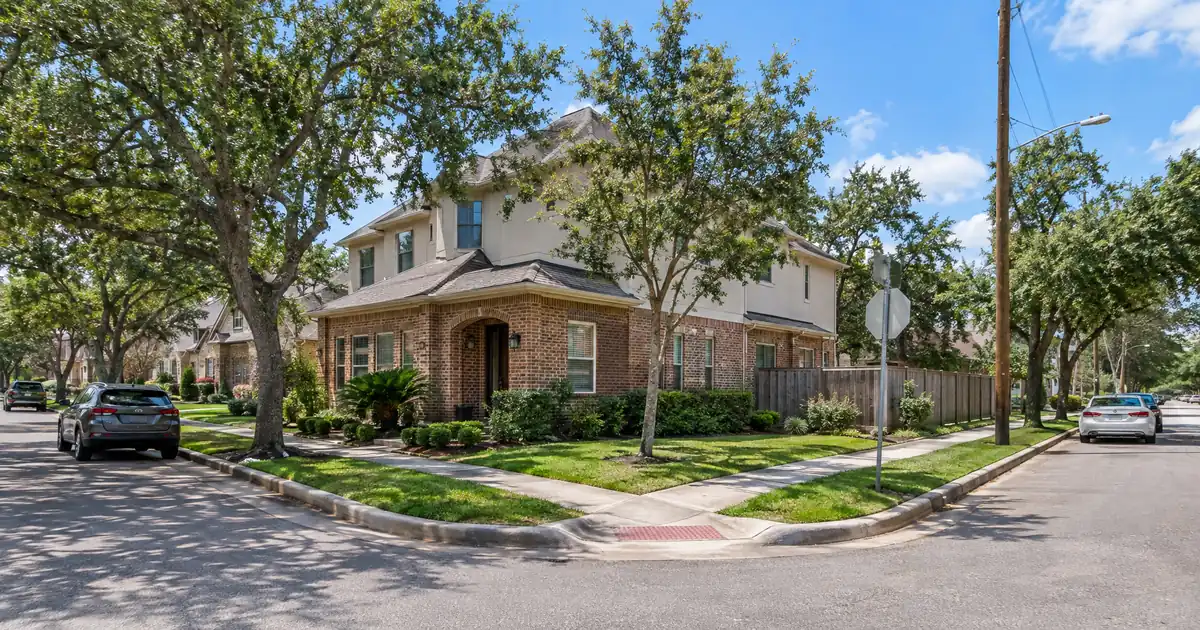
The appraisal decides a League City cash-out before the coverage number does. NeighborhoodScout puts single-family detached homes at 77.09 percent of the housing stock, so nearly every file here is a house, and houses are priced at levels that squeeze rent-to-debt ratios once leverage climbs. Lendmire (NMLS# 2371349) is a DSCR-focused mortgage broker that arranges investor loans across 40 states plus Washington, D.C. This article covers the equity-extraction side of League City: what the value needs to support, what the rent needs to cover, and where files stall.
The Quick Read: A cash-out refinance on a League City, Texas rental is underwritten primarily on the property’s rental income measured against its full monthly obligation, so the file works when rent used for lender review covers principal, interest, taxes, insurance, and any HOA dues after the new loan sits inside the lender’s cash-out leverage cap and seasoning window.
DSCR Cash-Out Calculator
Run the cash-out numbers in League City, TX
Rate source: Freddie Mac 30-yr average via FRED® — Federal Reserve Bank of St. Louis · effective Sep 24, 2026
Prefilled with starting assumptions — enter your property’s value, balance, taxes, and insurance for a more accurate picture.
Program parameters update from Lendmire’s centralized guideline source. Taxes and insurance are editable estimates.
As of Sep 24, 2026 · General Freddie Mac market benchmark, not a Lendmire loan offer. Property value, balance, taxes, and insurance are editable estimates. Maximum loan-to-value varies by lender, program, property type, and seasoning. Not a Loan Estimate, approval, or commitment to lend. Program availability and eligibility are subject to lender guidelines, credit approval, property review, and underwriting.
- Cash-out leverage tops out at 75 percent LTV, with about six months of ownership measured from title recording.
- Median rent is $1,661 and essentially flat year over year, per Apartment List.
- Small multifamily is about 1.76 percent of housing stock, per NeighborhoodScout.
- Bay Colony’s $299,500 median is the lowest of the profiled submarkets, per Homes.com.
- Reserves of about six months of PITIA get documented on the file.
Where the Coverage Number Lands
Coverage is tight to sub-1.00 on most League City houses at cash-out leverage, and it clears comfortably only on lower-priced houses or small multi-unit stock. The standard benchmark is 1.00x, meaning rent used for lender review covers the full monthly obligation. Qualification is subject to lender guidelines.
Run the numbers on three modeled cases. These are illustrative assumptions, not sourced market rents, and each ratio includes taxes and insurance, not just principal and interest.
- A $299,500 house, Bay Colony level, at 75 percent LTV. Assume $2,000 in rent, below the Zillow figure covered later. Coverage models right around 1.0x.
- A $450,000 house, Mar Bella or Tuscan Lakes territory, at 75 percent LTV. Assume $2,300 in rent. Coverage models well under 1.00, roughly in the mid-0.7s.
- A four-unit priced near $695,000 at 75 percent LTV. Assume $1,600 per unit, in line with the 2-bedroom levels from Apartment List and RentCafe. Coverage models around 1.3x.
The multi-unit case looks best, and it is the hardest file to appraise here. More on that below.
When a house lands under 1.00, the paths a lender may review are a sub-1.00 program, an interest-only structure, or a lower LTV so the rent covers the obligation. Each carries tradeoffs. Unlike lenders whose sub-1.00 programs add meaningful leverage and eligibility tradeoffs, Lendmire’s approach is to size the file to the coverage first and show the borrower what each structure costs in leverage before it goes to a lender. Details on the mechanics sit in Lendmire’s DSCR guide and the guide “Where DSCR and Conventional Diverge” page.
The Appraisal Is the Choke Point
Value drives the loan amount on a cash-out, and League City’s value signals are flat and conflicting. Zillow shows an average home value of $377,316, up 0.0 percent over the past year. Movoto reports a higher median sale price of $453,365 and says properties now take 66 days to sell versus 38 days a year earlier. The gap comes from methodology, average versus median and different sale samples. The direction is the same in both: no appreciation tailwind.
That changes how the equity math works. An investor who bought a few years back and expects appreciation to have built the cushion may find the appraisal lands near the purchase price. Proceeds depend on the 75 percent ceiling applied to the appraised value, less the payoff. It is not a guaranteed figure.
Multi-unit files carry extra risk. Homes.com’s multifamily page showed only two multifamily listings in League City in an August 2025 snapshot, priced from $695,000 to $1,995,000. With that little inventory, appraisers reach for wide-ranging or out-of-city comps. The small multi-unit stock nearby sits mostly in bayside pockets outside the city, and advertised rents there run well below League City’s 2-bedroom level. A 2-4 unit cash-out here should expect a longer appraisal conversation.
DSCR files in markets like this one typically look like a flat-value, flat-rent refinance where the appraisal comes in near the prior number and the borrower’s real decision is whether to take cash at a lower LTV or hold. The files that go smoothly bring their own comp support, recent in-neighborhood sales and a condition summary, so an appraisal reconsideration request is a routine step, not an emergency. The files that stall assumed appreciation that never showed up.
Seasoning: The Six-Month Clock
The seasoning window is about six months of ownership, measured from title recording, and the settlement statement is the proof. The lender will look for the recording date, not the contract date or the closing date on a loose document. Investors who bought with a hard-money loan or renovated first should pull the recorded deed and the final settlement statement early. A missing or unsigned settlement statement is one of the most common reasons a seasoning check gets kicked back.
Cash-out on a recent purchase also raises a question about how the property is valued. Depending on program guidelines, a lender may lean on the lower of the appraised value and a recent purchase price when ownership is short. Investors planning a quick renovate-and-refi should confirm which value basis applies before counting the proceeds.
Where the Equity Sits
Bay Colony, Westover Park, and Heritage Park are the submarkets to test first for cash-out coverage, because price is the lever. Rent data by subdivision is missing, so this is a hypothesis, not a finding.
Bay Colony. Homes.com shows a $299,500 median, the lowest of the profiled group. It sits on Clear Lake, and a local realtor guide notes it draws NASA and aerospace professionals. At that price, modeled coverage sits near the benchmark even after taxes and insurance, so this is where a 75 percent LTV cash-out has the best shot at clearing without a restructure.
Westover Park and Heritage Park. A secondary guide lists single-family homes here from $240,000 to $410,000. The lower half of that range is the workforce-rental sweet spot. Treat the source as secondary and verify each property’s actual rent.
South Shore Harbour, Hidden Lakes, Mar Bella, and Tuscan Lakes. These carry medians from $405,000 to $506,000 on Homes.com, and Tuscan Lakes includes a 55+ section. They may be good places to own. As DSCR cash-out candidates they are tough, because the coverage number runs under 1.00 at full leverage. Owners here should expect to take less cash or use a restructure.
The stronger play might be the lower-priced pockets for cash flow, though an owner with heavy equity in a premium neighborhood could argue that a lower-LTV cash-out still works. It is a genuine toss-up on the numbers, and the answer depends on how much cash the owner actually needs.
Rent Reality: Skip the Top of the Zillow Range
Underwrite to the rent a house realistically gets, and the sources disagree by a wide margin. Apartment List shows a $1,661 median, up 0.1 percent year over year, and RentCafe shows an average of $1,489, up 1.96 percent, with 3-bedrooms at $2,011. Zillow Rental Manager shows $2,395 across all types and $2,310 for 3-bedrooms, and calls the market “cool.” The Zillow figure leans toward single-family and larger units, so use it cautiously.
Two things cap the top end. First, apartments along the East League City Parkway and Egret Bay corridor were advertising concessions in undated Redfin listings, such as “4 weeks free,” with 3-bedroom rents from about $1,660 to $2,318. A managed apartment near $2,000 competes directly with a house. Second, Houston-area apartment supply has been heavy. Apartment Living Locators, summarizing MMG and Integra research, reports more than 16,000 units completed in the 12 months through the second quarter of 2026, with rent growth not expected to return more clearly until 2027. That is metro data, not League City’s own vacancy, but the direction matters. A cash-out underwritten on today’s flat rents shouldn’t count on growth to lift coverage later.
Only 25 percent of League City households rent, so the renter pool is small relative to the population. That does not doom a rental. It means a vacant house has fewer competing applicants than the headline population suggests.
Demand Anchors Behind the Rent Roll
Long-term tenant demand rests on aerospace, healthcare, education, and energy employment, and the anchors are large enough to support stable occupancy. Johnson Space Center lists roughly 12,541 civil servants and contractors, and it sits adjacent to League City in the Clear Lake area. The Houston Spaceport cluster, with tenants including Axiom Space, sits about a fifteen-minute drive away, per Texas Monthly. Texas Monthly also frames NASA budget uncertainty as a risk, which is a real caveat for tenant-demand assumptions.
Healthcare is the steadier layer. Data USA shows Health Care & Social Assistance as the largest resident-employment industry at 9,449 people, ahead of manufacturing at 7,548 and educational services at 6,261. Community Impact reports a $300 million UTMB League City expansion approved by the UT board of regents, expected to complete by 2030, plus an HCA Houston Healthcare Clear Lake expansion with a new 30-bed neurosciences floor. Clear Creek ISD reports a staff count of 5,013.49, and a regional college lists 5,993 undergraduates at the University of Houston-Clear Lake. Add the regional petrochemical and energy base the League City Economic Development office cites, with access to a workforce of more than one million. The tenant pool is employed, and it is spread across several employers.
What Goes in the File
The documentation that most often holds up a cash-out is entity paperwork, lease evidence, and reserves proof. Program details vary, and the parameters below are typical guidelines for the wholesale network, not commitments.
1. Title and seasoning. Recorded deed and final settlement statement showing the recording date, for the roughly six-month window.
2. Entity documents. If the property sits in an LLC, the operating agreement, EIN letter, and certificate of good standing should match the vesting on title, subject to lender program eligibility. Mismatched names are a common preventable gap.
3. Lease evidence. A signed lease and, on multi-unit, a clean rent roll. Month-to-month tenants with no paper leave the lender relying on the appraiser’s rent schedule.
4. Reserves. Roughly six months of PITIA documented in statements, and about nine months above $1,500,000 in loan size. Statements need to be recent and show the account holder.
5. Credit and loan size. Typical tiers run 620, 660, 680, and 700, with 620 as the floor, and loan amounts reach up to $3,000,000 on standard programs. Smaller balances route through select lenders in the network.
The cash-out refi mechanics page walks through this step by step, and Lendmire’s guide to rate-and-term and cash-out refinancing compares the two structures. Investors can also review Lendmire’s Texas DSCR loan programs for the state-level picture. For a file review, reach the team at 828-256-2183 or get a DSCR quote.
DSCR vs. conventional financing
Two common ways to finance an investment property in League City, TX. They qualify you differently — here’s how investors weigh them.
Why investors choose it
- Qualifies on the property’s rental income — no personal tax returns, W-2s, or pay stubs needed to document income.
- No personal debt-to-income ceiling to clear, so existing mortgages and obligations don’t cap your borrowing the same way.
- Can be closed in an LLC, keeping the property inside a business entity.
- Built for scaling — not held to the limit on number of financed properties that conventional financing applies.
- Underwriting centers on the deal: generally qualifies when the rent covers the payment, a 1.00x coverage ratio being a common baseline (confirmed in underwriting).
- Designed specifically for investment property, including long-term and, where the program allows, short-term rentals.
Where it’s strong
- Often the lowest ongoing financing cost for a buyer who fully qualifies on personal income — a fit for a first property or a cost-first purchase.
Trade-offs for investors
- Requires full personal income documentation and must fit within a debt-to-income limit — salary, existing debts, and other mortgages all count.
- Typically held in your personal name rather than a business entity.
- Caps how many financed properties you can carry, which can become a ceiling as a portfolio grows.
- Evaluates you as a borrower as much as the property, which usually means more paperwork.
How investors usually choose: a first or single property often optimizes for the lowest financing cost; portfolio builders often optimize for leverage, vesting in an LLC, and scaling past conventional caps. The right answer depends on your goals, the property, and current guidelines — both paths run through select lenders in Lendmire’s wholesale network, with eligibility and terms confirmed in underwriting.
Where do the proceeds go? Usually into the next down payment, a renovation on another door, or reserves. If the next purchase is an out-of-League-City property, that is a separate file with its own numbers. Verify current local rental rules, taxes, and insurance with qualified local professionals before sizing the payoff.
Frequently Asked Questions
How long do I need to own a League City rental before a cash-out?
About six months, measured from title recording. The lender checks the recorded deed and the final settlement statement, so a hard-money payoff or a renovation timeline does not shorten the clock. Pull both documents before the file goes in.
Will flat League City rents block a cash-out?
Not automatically, but they limit how much leverage the coverage supports. Rents are up only 0.1 to 2 percent year over year depending on the source, so a house priced in the mid-$400Ks models under 1.00 at 75 percent LTV. A lower LTV, a sub-1.00 program, or an interest-only structure may be reviewed, subject to lender guidelines and credit approval.
Is a duplex or fourplex easier to refinance here than a house?
The income math is easier, the appraisal is harder. Small multifamily is about 1.76 percent of the stock, so appraisers have few local comps and may reach outside the city. Uniform 2-bedroom units make the rent roll simple, but expect to help the appraiser with comp support.
Which League City neighborhoods are the best candidates for a cash-out?
Bay Colony, Westover Park, and Heritage Park, based on price alone. Bay Colony’s median is $299,500, and the Westover and Heritage guide lists homes from $240,000 to $410,000. Rent data by subdivision is missing, so run each property on its own lease.
Does NASA exposure add risk to the tenant base?
Some, but League City is not a single-employer market. Texas Monthly flags NASA budget uncertainty, yet healthcare is the largest resident-employment industry at 9,449 people, and two hospital systems are expanding. Underwrite to the rent, not to a headcount forecast.
The Blind Spot: Equity That Isn’t There
The biggest risk for DSCR-financed investors in League City is assuming appreciation built the equity. Values are flat to slightly positive, sale times have stretched from 38 to 66 days, and rents are moving 0 to 2 percent. An owner who counts on last cycle’s gains may find the appraisal, the 75 percent cap, and a coverage number under 1.00 combine to leave little cash on the table. Pull real comps and price the file at the rent the house actually gets.
For current guidelines and terms, see Lendmire’s DSCR loan programs page.
About Lendmire
Lendmire (NMLS# 2371349) is a mortgage brokerage built around DSCR investor lending, with programs available in 41 markets, including Washington, D.C. DSCR lenders commonly evaluate rental-income coverage rather than personal income paperwork, a practical fit for LLC-owned and multi-property investors. Terms vary by lender, property, leverage, and program. Lendmire was named a top-ranked workplace in 2026 and a 2025 Scotsman Guide Top Workplace.
Get Started
Ready to find the right loan for you?
In about 30 seconds you can review financing options available for your investment property. No commitment required.
Informational only. Not a Loan Estimate, approval, or commitment to lend. Program availability and eligibility are subject to lender guidelines, credit approval, property review, and underwriting.
References
1. NeighborhoodScout, League City real estate
2. Apartment List, League City rent report
4. RentCafe, League City rent trends
5. Zillow, League City home values
6. Movoto, League City market trends
7. Homes.com — League City TX Multi Family Homes for Sale
10. Texas Monthly
12. Community Impact, hospital expansions
13. League City Economic Development
14. Scotsman Guide — Top Workplaces 2026
15. a 2025 Scotsman Guide Top Workplace
This article is part of Lendmire’s investment property cash-out refinance program — full qualification details, guidelines, and scenarios live on the program page.
Related reading: Cash Out Refinance Investment Property League City Texas · DSCR Cash Out Refinance Haltom City Texas: How Investors Access Equity Without Income Docs · Cash Out Refinance Investment Property Grapevine Texas
Guides: Investment Property Cash-Out Refinance in League City, TX · Investment Property Cash-Out Refinance in Texas
Brandon Miller
Founder & CEO, Mortgage Loan Originator, Lendmire LLC
- Mortgage Loan Originator · NMLS# 1129696 · Verify on NMLS Consumer Access
- North Carolina Real Estate Broker · License# 343312 · Verify on NCREC
- North Carolina Insurance Producer · License# 19053198 · Property, Casualty, Life, Health · Verify on NAIC SBS
- Lendmire LLC · Firm NMLS# 2371349 · Verify firm licensure
Compliance and disclosures. Lendmire (NMLS# 2371349) is a licensed mortgage broker and is not a direct lender, depository institution, financial advisor, or tax professional. Content in this article is general market analysis and educational information — not financial, legal, or tax advice for any specific situation. Lendmire does not guarantee loan approval; every transaction is subject to underwriting by the funding lender. Mortgage pricing and loan program guidelines are subject to change at any time without notice and vary by borrower characteristics, property type, and state regulations. Lendmire complies with Equal Housing Opportunity. Licensure verification: NMLS Consumer Access.