
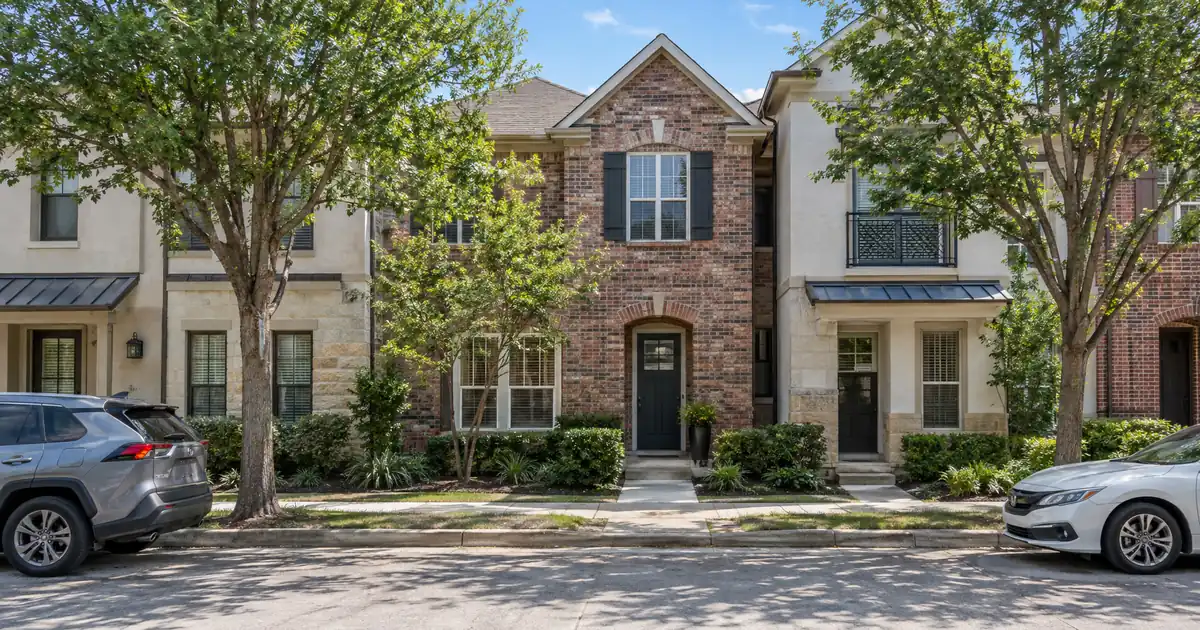
Can an Allen rental still produce usable equity when prices are sliding? Yes, but the limit is rarely the equity. It’s coverage. Redfin shows a median sale price of $499K, down 2.8 percent year over year, so there is still equity in well-held properties, but the rent has to carry a full payment that includes taxes and insurance.
At a Glance: A DSCR cash-out refinance on an Allen, Texas investment property is underwritten primarily on the property’s rental income measured against its full monthly obligation, then sized to a 75 percent loan-to-value ceiling on the appraised value, with proceeds limited by coverage, reserves, and ownership seasoning rather than personal income documents.
DSCR Cash-Out Calculator
Run the cash-out numbers in Allen, TX
Rate source: Freddie Mac 30-yr average via FRED® — Federal Reserve Bank of St. Louis · effective Sep 24, 2026
Prefilled with starting assumptions — enter your property’s value, balance, taxes, and insurance for a more accurate picture.
Program parameters update from Lendmire’s centralized guideline source. Taxes and insurance are editable estimates.
As of Sep 24, 2026 · General Freddie Mac market benchmark, not a Lendmire loan offer. Property value, balance, taxes, and insurance are editable estimates. Maximum loan-to-value varies by lender, program, property type, and seasoning. Not a Loan Estimate, approval, or commitment to lend. Program availability and eligibility are subject to lender guidelines, credit approval, property review, and underwriting.
- Median sale price sits near $499K, per Redfin.
- Median rent is $1,642, down 3.6 percent year over year, per Apartment List.
- Typical single-family coverage runs thin, so lower leverage is often part of the structure.
- Cash-out needs about 6 months of ownership, measured from title recording.
- Model the appraisal 3 to 6 percent below recent comps.
Lendmire (NMLS# 2371349), a DSCR-focused mortgage broker, places DSCR investor financing for Allen, Texas through non-QM wholesale channels that cover 41 markets, including Washington, D.C. This article skips purchase mechanics. It covers the owner who already holds an Allen rental and wants to recycle equity into the next deal. For the statewide picture, see Lendmire’s Texas DSCR loan programs. For the mechanics of the ratio, see the guide “What Is a DSCR Loan”.
Allen Market Snapshot
A quick read on the Allen investor landscape — figures come from the cited sources below. Confirm current property-level numbers before underwriting.
| Metric | Detail |
|---|---|
| Home prices | $499K median (Redfin, Allen housing market) |
| University enrollment | 7,000+ students (Texapedia) |
| Employment | About 35,000 daytime employees (Dallas Morning News) |
| Vacancy | 12.2% (Matthews DFW Multifamily Q1 2026) |
What Will the Appraiser Say About Your Allen Property?
Expect a conservative number. Allen is softening, not crashing, and the appraisal is where a cash-out gets resized first. Stack the sources and you get a consistent picture: flat to slightly lower values, balanced inventory, and deep comps in the middle of the market.
Zillow’s typical home value is $517,494, down 1.6 percent. The Dunnican Team’s broker report, built on NTREIS data, puts the Q2 median at $505,000, down 3.6 percent, with months of supply at 3.9 and the close-to-original-list ratio slipping from 98.1 percent to 96.6 percent. That is a realtor report, so read it as direction rather than gospel. The same report shows the dominant price band at $500K to $749K. Deep comps in that band help a defensible appraisal. They also mean buyers have negotiating room, so recent sales may sit below what a seller wanted.
The higher-priced northwest feels it most. Zillow’s 75013 average home value is $664,843, down 5.3 percent. An owner who bought near the prior peak in the Twin Creeks or Watters area should model the refinance at a value 3 to 6 percent below the most recent comps, then see what the 75 percent ceiling leaves. If the file still works at the lower value, an appraisal that lands higher is a bonus, not a requirement.
One step matters here: appraisal reconsideration. When the first value comes in light, a packet with closed sales from the same subdivision, condition adjustments, and any recent capital improvements can recover part of the gap. It works best when comps are tight and recent. It works poorly when the subject is the only home in its street that hasn’t been updated.
Coverage Math on a $500K-Class House (It Runs Below 1.00)
Typical Allen single-family coverage lands below 1.00 on full payment math at high leverage. That is the main fact for anyone planning a cash-out here.
The rent-to-value ratio is tight. Apartments.com reports an average Allen house rent of $3,082. Against the Zillow value and Redfin median above, that is a gross rent-to-price ratio near 0.6 percent. That figure mixes sources, so treat it as directional. It is also well above the Apartment List all-property median rent of $1,642, because houses rent for far more than the apartment-heavy mix in that number. Both are real. Use the one that matches your property type, and use the house number only with a lease behind it.
Run the numbers on a modeled house valued in the low $500Ks with rent near that house-rent average. These are modeled assumptions, not market data. Coverage is monthly rent divided by the full monthly obligation: principal, interest, taxes, insurance, and any HOA dues. At 75 percent LTV, including taxes and insurance, that math lands in the high 0.8s. Pull leverage down toward the mid-60s and it gets close to 1.00. A standard DSCR program typically works around a 1.00 baseline, though some lenders review lower ratios with compensating factors like lower leverage, stronger reserves, or different pricing. Eligibility is subject to lender guidelines, credit approval, and property review.
So what are the options on a sub-1.00 house? An owner can cut the loan amount, since taking less cash out is often the cleanest fix. A sub-1.00 program may be available through select lenders in the network, typically with lower leverage or more reserves. An interest-only structure can also change the coverage calculation. Each is a path a lender would review, not a promise of approval.
Here is the pattern-level view from broker files. DSCR files in markets like this one typically look like a well-kept property with strong equity, a solid lease, and a coverage number that sits a notch under the benchmark at the leverage the owner first asked for. The file usually clears after the owner accepts a smaller cash-out, not after hunting for a higher rent figure. Files that insist on the highest rent estimate tend to stall at appraisal, when the rent schedule comes back conservative.
The soft rent trend matters too. Both Apartment List and the broker research below show rents drifting down, so stress-test with flat or slightly lower rent. Growth shouldn’t be in the base case.
Seasoning, Leverage, and Where the Proceeds Go
The program frame is simple. Cash-out caps at 75 percent LTV, never the 80 percent used on purchases. Seasoning is about 6 months of ownership, measured from title recording and documented with the settlement statement. Reserves typically run about 6 months of PITIA, and more above $1,500,000. Credit tiers step from a 620 floor through 660, 680, and 700, with better tiers generally supporting better leverage. Standard programs go up to $3,000,000, and smaller balances route through select lenders. All of it is subject to lender program guidelines, and the cash you can actually pull is not guaranteed.
Consider an owner whose payoff sits near 60 percent of a conservative appraised value. That leaves 15 points of room under the cap before costs. Coverage, not the cap, often decides how much of it becomes cash. If the house only clears 1.00 at 65 percent, the owner’s real extraction window is five points, not fifteen. That is why the first call with a broker should be about coverage, not about how much equity the house has.
Seasoning also affects the plan for value-add. In a market with slower buyer demand, flips inside the seasoning window have less upside than they did when inventory was tight. Plan to hold the property through the window at its current condition, and document the improvements with invoices so the appraiser can credit them.
For the general refinance options, including rate-and-term and cash-out refi details, see the refinance page. For how the proceeds recycle into the next purchase, see the equity recycle pathway.
Submarkets: Where the Equity Sits
Allen’s submarkets differ more in price and product than in tenant type. The neighborhood descriptions here come from realtor guides like Dustin Pitts’ Allen guide, not rent-by-neighborhood data, because none was found. Treat them as qualitative.
Twin Creeks and Watters (northwest, 75013). This is the master-planned core near Watters Creek, Allen Premium Outlets, and the US-75 and SH-121 corridors. Tenants tend to be professionals commuting toward Legacy and Frisco. Values here are highest and have fallen furthest in the Zillow data above, so the appraisal risk is greatest. It is also where a late-peak owner is most likely to see a 75 percent cap applied to a lower number than expected.
The Village at Twin Creeks and Watters Edge (townhomes near SH-121 and Alma). Newer lock-and-leave townhomes, including three-story product, are the best fit for townhome rentals. HOA dues count in the coverage math, and the HOA questionnaire has to be complete. Missing budget pages, reserve data, or rental-cap language are the usual delay on townhome files. No verified rents were found, so underwrite each unit on its own lease.
Starcreek, Waterford Parks, and Waterford Crossing. Larger, newer homes near the Sam Rayburn Tollway. Apartments.com’s trends page lists Waterford Parks among Allen’s more affordable rental neighborhoods and Waterford Crossing among the most expensive, but that data is dated and internally inconsistent. Use it as a pointer, not a rent comp.
The older core (Allen Station, downtown, Summerfield, Cumberland Crossing). East of US-75, these traditional homes are likely the best source of value-oriented single-family stock. No reliable price or rent data turned up, so the thesis is qualitative. Lower basis can mean better coverage at a given rent. Confirm it with recent closed sales before assuming it.
One property type is notably scarce. NeighborhoodScout reports duplexes and small converted buildings at only about 1.78 percent of Allen’s housing units, against 73.42 percent single-family detached. The data year is unclear, so use it directionally. Multi-unit income stacking is a niche play here with few comps, and an owner planning to buy a fourplex with the proceeds will probably shop McKinney, Plano, or Richardson.
The rental stock also shapes demand. RentCafe’s Census-based page shows 31 percent of residents renting, with 27 percent of rentals single-family, 38 percent in small complexes under 50 units, and 33 percent in complexes over 50 units. Houses and townhomes are a meaningful share of rental supply, not an afterthought.
Demand Anchors and the Supply Overhang
Allen’s tenant base comes from employment, income, and flexibility, not from a single employer. Allen’s Economic Development Corporation points to financial services and insurance, information, technology, professional services, and telecommunications, plus a concentration of data centers backed by fiber and redundant power. Credit Union of Texas is headquartered in Allen and was called a leading employer after an expansion. An older city financial report, covered by the Dallas Morning News, showed about 35,000 daytime employees, with the top 10 employers at 7,375 jobs, over 21 percent of that total. That data is old, so read it as scale rather than a current count.
Public-sector and medical employment add a base. Allen ISD’s staff count is about 2,549. Texas Health Presbyterian Hospital Allen has served Collin County since 2000. Medical demand is moderate, and Allen is not a hospital-driven rental market. Per StateDemographics, Allen has about 110,265 residents with a median household income of $130,901, and a regional health system reports 24.8 percent of workers working from home. Tenants here are not tied to one commute, which supports retention.
Supply is the counterweight. Matthews’ DFW multifamily report, using CoStar data, puts metro vacancy at 12.2 percent, with 7.3K unit deliveries against 5.1K absorbed. It names Allen and McKinney among the suburban submarkets under supply pressure and describes falling rents in both high-end and mid-tier assets. New apartments compete with single-family and townhome rentals. Underwrite at market rent net of concessions, not at asking rent, because a lender’s appraisal rent schedule can come back conservative.
This is a genuine trade-off. Allen has stable, high-income tenant demand and low distress risk. It also has soft rents and a price level that keeps coverage thin. An owner who values stability can live with a smaller cash-out. One who needs maximum proceeds may find the numbers work better in a cheaper market.
Paperwork That Stalls Allen Files
Most avoidable friction on these files is documentation. The appraisal can be fine and the file can still stall.
DSCR vs. conventional financing
Two common ways to finance an investment property in Allen, TX. They qualify you differently — here’s how investors weigh them.
Why investors choose it
- Qualifies on the property’s rental income — no personal tax returns, W-2s, or pay stubs needed to document income.
- No personal debt-to-income ceiling to clear, so existing mortgages and obligations don’t cap your borrowing the same way.
- Can be closed in an LLC, keeping the property inside a business entity.
- Built for scaling — not held to the limit on number of financed properties that conventional financing applies.
- Underwriting centers on the deal: generally qualifies when the rent covers the payment, a 1.00x coverage ratio being a common baseline (confirmed in underwriting).
- Designed specifically for investment property, including long-term and, where the program allows, short-term rentals.
Where it’s strong
- Often the lowest ongoing financing cost for a buyer who fully qualifies on personal income — a fit for a first property or a cost-first purchase.
Trade-offs for investors
- Requires full personal income documentation and must fit within a debt-to-income limit — salary, existing debts, and other mortgages all count.
- Typically held in your personal name rather than a business entity.
- Caps how many financed properties you can carry, which can become a ceiling as a portfolio grows.
- Evaluates you as a borrower as much as the property, which usually means more paperwork.
How investors usually choose: a first or single property often optimizes for the lowest financing cost; portfolio builders often optimize for leverage, vesting in an LLC, and scaling past conventional caps. The right answer depends on your goals, the property, and current guidelines — both paths run through select lenders in Lendmire’s wholesale network, with eligibility and terms confirmed in underwriting.
- Lease evidence. A signed lease with deposit proof supports the rent figure. A month-to-month tenant with no paper trail invites a lower appraised rent.
- Rent net of concessions. With new apartment supply pushing concessions, bring the actual collected rent, not the listing.
- HOA and condo items. Townhome files need the HOA questionnaire complete, with budget, reserves, and any rental restrictions.
- Entity documents. LLC-owned properties need operating agreement, EIN, and good-standing papers, subject to lender program eligibility.
- Title and seasoning. Clearing title and showing the recording date on the settlement statement proves the ownership window.
- Reserves documentation. Statements showing about 6 months of PITIA, with sourcing for any large deposits, avoid a late condition.
- Insurance binder. Coverage ratios pencil on the old quote and shift when the new one lands, so get a current binder before the file goes in.
Investors should verify current local rental rules, taxes, and insurance with qualified local professionals. To see where a specific property sits, reach Lendmire at 828-256-2183 or compare DSCR options.
Frequently Asked Questions
How do you qualify for a DSCR cash-out refinance in Allen, Texas?
The property has to show enough rental income against its full monthly obligation, typically at a 1.00 baseline, subject to lender guidelines. You also need about 6 months of ownership from title recording, a credit score at or above the 620 floor, and reserves of about 6 months PITIA. Cash-out leverage tops out at 75 percent LTV. Because Allen houses tend to show thin coverage, many files qualify only after the requested loan amount comes down.
What are the requirements for an investment property loan in Allen, Texas on a townhome?
Townhome files need the usual items plus a complete HOA questionnaire covering budget, reserves, and rental restrictions. HOA dues count in the coverage math. Lease evidence, entity documents if the property sits in an LLC (subject to program terms), and a current insurance binder round out the package. Manufactured homes, log homes, and barndominiums fall outside these programs.
How much should I expect the appraisal to come in below the last comp?
Model 3 to 6 percent lower. Zillow shows Allen values down 1.6 percent, Redfin shows the median sale price down 2.8 percent, and the Dunnican report shows a 3.6 percent median decline. The 75013 area is down 5.3 percent on Zillow. Anything above the modeled value is a bonus, and a reconsideration request with tight in-neighborhood comps can help if it comes in light.
Are there duplexes or fourplexes in Allen to add to a cash-out plan?
Very few. NeighborhoodScout puts duplexes and small converted buildings at only about 1.78 percent of Allen’s housing units. No verified Allen fourplex rent data was found, so multi-unit buyers often look in nearby markets and confirm comps before assuming a coverage advantage.
How do DSCR lenders review rental income instead of traditional tax-return income in Texas?
Lenders typically measure the property’s rent used for lender review against its full monthly obligation rather than relying on personal income documents, subject to lender guidelines. Lendmire arranges these loans. A key feature is that the rent-to-debt ratio, not traditional employment income, drives the review.
For current guidelines and terms, see Lendmire’s DSCR loan programs page.
The Choice Facing an Allen Owner
An Allen owner with seasoned equity has two real options, and each has a cost. Pull a smaller, lower-leverage cash-out now, accept less capital, and keep coverage near 1.00 while values drift lower. Or hold off and wait for the appraisal and rent picture to firm up, keeping the equity locked in a market where months of supply sit at 3.9 and rents are still falling.
About Lendmire
Lendmire, NMLS# 2371349, is a DSCR and non-QM mortgage brokerage with investor loan programs in 41 markets, including Washington, D.C. Lenders commonly review DSCR eligibility around property-level rent rather than personal income documentation, subject to lender guidelines. The brokerage also helps arrange financing for LLC-owned portfolios that exceed conventional financed-property limits. Lendmire has been recognized by Scotsman Guide in 2025 and recognized by Scotsman Guide as a 2026 Top Workplace.
Get Started
Ready to find the right loan for you?
In about 30 seconds you can review financing options available for your investment property. No commitment required.
Informational only. Not a Loan Estimate, approval, or commitment to lend. Program availability and eligibility are subject to lender guidelines, credit approval, property review, and underwriting.
References
1. Redfin — Allen Housing Market
3. Texapedia
5. Matthews’ DFW multifamily report
6. Zillow’s typical home value is $517,494, down 1.6 percent
7. Q2 median at $505,000, down 3.6 percent
8.
9. Apartments.com reports an average Allen house rent of $3,082
10. Dustin Pitts’s Allen guide
11. Apartments.com’s trends page
13. Allen’s Economic Development Corporation
14. Credit Union of Texas is headquartered in Allen
15. Texas Health Presbyterian Hospital Allen
17. recognized by Scotsman Guide in 2025
18. recognized by Scotsman Guide as a 2026 Top Workplace
This article is part of Lendmire’s investment property cash-out refinance program — full qualification details, guidelines, and scenarios live on the program page.
Related reading: Cash Out Refinance Investment Property in Allen TX · DSCR Cash Out Refinance in Tyler, Texas: How Much Equity Investors Can Pull in Tyler · DSCR Cash Out Refinance in Duncanville, Texas: Can Your Rent Cover the New Loan Payment?
Guides: Investment Property Cash-Out Refinance in Allen, TX · Investment Property Cash-Out Refinance in Texas
Brandon Miller
Founder & CEO, Mortgage Loan Originator, Lendmire LLC
- Mortgage Loan Originator · NMLS# 1129696 · Verify on NMLS Consumer Access
- North Carolina Real Estate Broker · License# 343312 · Verify on NCREC
- North Carolina Insurance Producer · License# 19053198 · Property, Casualty, Life, Health · Verify on NAIC SBS
- Lendmire LLC · Firm NMLS# 2371349 · Verify firm licensure
Compliance and disclosures. Lendmire (NMLS# 2371349) is a licensed mortgage broker and is not a direct lender, depository institution, financial advisor, or tax professional. Content in this article is general market analysis and educational information — not financial, legal, or tax advice for any specific situation. Lendmire does not guarantee loan approval; every transaction is subject to underwriting by the funding lender. Mortgage pricing and loan program guidelines are subject to change at any time without notice and vary by borrower characteristics, property type, and state regulations. Lendmire complies with Equal Housing Opportunity. Licensure verification: NMLS Consumer Access.