
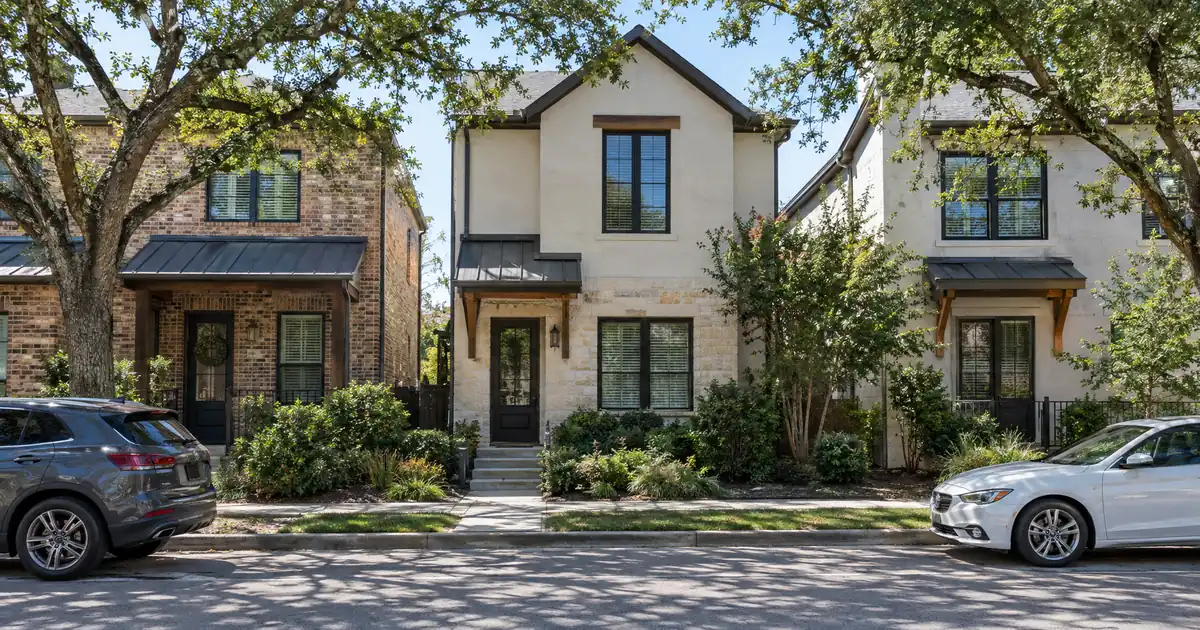
Georgetown was the Census Bureau’s fastest-growing U.S. city over 20,000 people, and only 31% of its households rent. Most investors read that as an equity machine. It isn’t one right now. Redfin puts the median sale price near $430K, essentially flat year over year, so equity here comes from a low basis, paydown, or a well-chosen building, not from a rising market. On a cash-out refinance, coverage usually binds before loan-to-value does.
Lendmire (NMLS# 2371349) places DSCR investor loans on Georgetown, Texas properties through wholesale lending channels reaching 41 markets, including D.C. The rest of this piece covers which Georgetown properties can support a cash-out and which can’t.
DSCR Cash-Out Calculator
Run the cash-out numbers in Georgetown, TX
Rate source: Freddie Mac 30-yr average via FRED® — Federal Reserve Bank of St. Louis · effective Sep 24, 2026
Prefilled with starting assumptions — enter your property’s value, balance, taxes, and insurance for a more accurate picture.
Program parameters update from Lendmire’s centralized guideline source. Taxes and insurance are editable estimates.
As of Sep 24, 2026 · General Freddie Mac market benchmark, not a Lendmire loan offer. Property value, balance, taxes, and insurance are editable estimates. Maximum loan-to-value varies by lender, program, property type, and seasoning. Not a Loan Estimate, approval, or commitment to lend. Program availability and eligibility are subject to lender guidelines, credit approval, property review, and underwriting.
At a Glance:
A DSCR cash-out refinance in Georgetown, Texas is underwritten primarily on the property’s rental income measured against its full monthly obligation on the new, larger loan. It also requires seasoning, reserves, and a leverage ceiling, all subject to lender guidelines. Equity alone doesn’t carry the file.
- Cash-out LTV tops out at 75%, with about six months of seasoning from title recording.
- Median-priced single-family here models below 1.0x coverage even after a cash-out.
- Small multifamily is where the ratio tends to clear, though inventory is thin.
- Rents are flat to slightly down across most sources, so don’t underwrite increases.
- Georgetown is 69% owner-occupied, which limits rental comps at appraisal.
Georgetown Market Snapshot
A quick read on the Georgetown investor landscape — figures come from the cited sources below. Confirm current property-level numbers before underwriting.
| Metric | Detail |
|---|---|
| Home prices | $675,000 list price (Homes.com Williamson County) |
| Employment | Up to 1,500 jobs (Hello Georgetown) |
Growth Isn’t Equity
Georgetown’s population story is strong. Its price story is flat. The City of Georgetown reports the population has passed 100,000, a nearly 50% increase since 2020. KXAN reported 10.6% growth in a single year. Demand is real.
Prices haven’t followed. Zillow’s value index shows an average near $420,930, down 4.3% over the past year, while Redfin shows a flat median. The two disagree on direction, so call it flat to slightly softer. Local agent blogs cite anywhere from about 4.9 to more than six months of housing supply, and Austin-Suburbs attributes part of the median’s drift to a mix shift toward entry-level product.
The consequence for a cash-out: an appraiser values your property on comps, not on what you paid. If you bought near the top of the local range and builder incentives are pulling comps down, don’t count on appreciation to create the equity you plan to extract. Growth supports demand. It doesn’t guarantee an appraisal.
Where Coverage Breaks: Median Single-Family
A median-priced Georgetown house does not clear 1.0x coverage on a cash-out at standard leverage. Run the numbers on the median. Zumper shows houses renting for a median of $2,150 a month. Against a $430K median price, that’s about 0.5% monthly rent-to-price. These are modeled inputs from two sources with different methods, not one clean dataset.
Coverage is monthly rent divided by full monthly obligation: principal, interest, taxes, and insurance. Using a Texas-average tax and insurance load and a 30-year amortization at an assumed high-6s rate, the break-even sits near 0.7% rent-to-price at 75% LTV. A 0.5% property lands around 0.7x. Drop leverage to roughly 65% and it improves to about 0.8x. Even near 55% LTV, the modeled number stays under 1.0x, all including taxes and insurance. Terms vary by lender guidelines, property type, leverage, credit profile, and full file review.
Not ideal. Tax layers in some master-planned communities make it worse.
The baseline for most standard DSCR programs is 1.00x. Some lenders review sub-1.00 files, but expect lower leverage, stronger credit, deeper reserves, or different pricing. For a sub-1.00 house, the structures a lender may review include a sub-1.00 program or an interest-only period. Whether either fits depends on lender guidelines, credit approval, and property review. If the only way to make a Georgetown house work is a sub-1.00 structure, the better question is whether the property is right for a cash-out at all.
The Fourplex Exception
Small multifamily is the one property type that plausibly clears the number. Homes.com showed a fully leased fourplex of 2BR/1BA units near Williams Drive and I-35, listed around $675,000. The listing’s actual rents weren’t published. Modeled with Zumper’s $1,628 average 2BR rent, four units gross about $6,500 a month, or roughly 0.96% rent-to-price. At 75% LTV, that models around 1.4x including taxes and insurance. Exact terms depend on the lender’s guidelines, property type, leverage, and a full review of the borrower’s file.
That’s almost double the single-family ratio at a similar price point per door. Consider what that means for an investor who already holds a building like this at a low basis. The coverage clears even after a cash-out, so the constraint moves back to the 75% cap and reserves.
The catch is inventory. Homes.com’s recent Georgetown multifamily data shows listings from $375,000 to $780,000 averaging 83 days before sale, and Crexi shows 2-unit assets priced anywhere from $145,000 to $390,000 per unit. Per-door basis swings widely, so underwrite each building on its own rents. Few sales also means few comps for the appraiser, which is the real risk at refinance. A thin appraisal file is where cash-out proceeds get trimmed.
The Cash-Out Mechanics That Actually Bind
The 75% ceiling, about six months of seasoning, and reserves of roughly six months of PITIA define the box. Seasoning is measured from title recording. Reserves run about nine months above $1,500,000. Credit tiers step from a 620 floor upward, and loan amounts run up to $3,000,000 on standard programs, with smaller balances routing through select lenders in the network. Program details are subject to lender review and change, and the full mechanics of how the cash-out works are covered in our guide.
Here’s the sequence most Georgetown owners miss. Take an investor with a first lien at about 55% of appraised value. The ceiling suggests 20 points of room, but proceeds require coverage on the new, larger loan. A house that models at 0.7x on a fresh 75% loan doesn’t get there just because the equity exists. A fourplex at 1.4x has cushion to spare.
This is a genuine toss-up on borderline properties: cash out less and keep coverage healthy, or pull the maximum and accept a tighter file. The stronger play is usually the smaller pull. Flat rents mean the ratio won’t improve on its own.
Working DSCR brokers see a recurring pattern in owner-heavy suburban markets like this one: the appraisal, not the rent roll, is what moves the file. Files that pencil on paper get trimmed when the appraiser reaches for new-construction comps sold with builder incentives. Bringing a rent schedule, current leases, and a realistic view of comps up front tends to prevent leverage surprises.
Submarkets That Pencil (and One That Doesn’t)
Lower-priced product carries the better rent-to-value in Georgetown, though none of it clears the number at the median. No published source ranks neighborhoods by cash flow, so this is directional, and the 3BR rent figures are citywide.
MorningStar is the entry-level new-build lane. Better Broker places it from the low $300s into the $500s. Model a $350,000 home against Zumper’s citywide 3BR rent of $2,029: roughly 0.58% rent-to-price, or about 0.8x coverage at 75% LTV, rounded down. It’s the closest single-family fit, but still short. Every figure here varies by lender and program — guidelines, property type, leverage, and credit profile all apply.
Georgetown Village, a suburban area built in the 1990s and 2000s, shows a tight $385K–$479K band with thin inventory. It’s likely the best mainstream fit for cash-out candidates who bought there earlier, when the basis was lower. Verify comps.
Wolf Ranch is the weakest rent-to-value. LRG Realty says most listings run $450K–$600K, and it sits in a master-planned community with two MUDs. Rents don’t scale with those prices. Skip it as a cash-out candidate unless the basis is very low.
Old Town and the Historic Square are walkable, but inventory varies by age and condition, with only about three dozen Old Town listings on Movoto. Renovated duplexes or ADUs may exist there, and small multifamily is scarce. That scarcity could be an advantage, or it could mean an illiquid exit.
Sun City’s age-restricted stock sits outside the investor pool, which trims the housing supply competing for tenants.
What Demand Rests On
Georgetown’s tenant demand comes from healthcare, manufacturing, and Austin-area commuters. Demand is steady, but it doesn’t push rents up. St. David’s Georgetown Hospital is an 111-bed facility with a 60-year history. Southwestern University enrolls 1,431 undergraduates, too few to create student-rental demand. AirBorn is the largest private employer at about 600 workers. CelLink and ZT Systems have announced projects with large job targets, but those are targets, not headcount.
Rent growth looks negative. Relocity reports Georgetown rents down about 2.9% year over year with rising move-in concessions. AustinApartments.com reports about 3,249 apartment units delivered in the Round Rock/Georgetown submarket over a recent twelve-month period, a combined submarket, not Georgetown alone. Both sources are secondary, so treat them as directional. The takeaway is simple: underwrite at current rents, and never model increases to reach coverage.
One counterweight. A local property manager says tenants in single-family rentals tend to stay longer than apartment renters. That’s marketing color from a manager, but longer tenancy lowers turnover drag on a house.
What Do the Proceeds Do Next?
Cash-out proceeds should buy something that clears coverage on its own, not something that leans on the property you just refinanced. If the next deal is small multifamily where the ratio holds, the strategy compounds. If it’s another median-priced Georgetown house, the arithmetic above repeats, and the exercise adds debt without adding coverage. Deploying proceeds out of state into markets that don’t pencil is a different decision, and worth stress-testing before committing.
If the property is titled in an LLC, subject to lender program eligibility, the file is reviewed at the entity level. Portfolios beyond four financed properties often find conventional financing runs out, and the guide “Where DSCR and Conventional Diverge” lays out the flip points. For a single rental owned personally by a high-W-2 borrower, conventional may cost less and cash-flow cleanly. DSCR pulls ahead for entity-held portfolios or self-employed investors. The guide “What Is a DSCR Loan” covers the basics, and the refinance side covers rate-and-term alternatives. Investors can review Lendmire’s Texas DSCR platform or reach the team at 828-256-2183.
Frequently Asked Questions
Can I pull cash out of a Georgetown house I bought within the last year?
Typically not until about six months of ownership have passed, measured from title recording. Even then, value is set by the appraiser’s comps, so a purchase near the local median with flat pricing may not appraise higher. Confirm timing against current lender guidelines.
DSCR vs. conventional financing
Two common ways to finance an investment property in Georgetown, TX. They qualify you differently — here’s how investors weigh them.
Why investors choose it
- Qualifies on the property’s rental income — no personal tax returns, W-2s, or pay stubs needed to document income.
- No personal debt-to-income ceiling to clear, so existing mortgages and obligations don’t cap your borrowing the same way.
- Can be closed in an LLC, keeping the property inside a business entity.
- Built for scaling — not held to the limit on number of financed properties that conventional financing applies.
- Underwriting centers on the deal: generally qualifies when the rent covers the payment, a 1.00x coverage ratio being a common baseline (confirmed in underwriting).
- Designed specifically for investment property, including long-term and, where the program allows, short-term rentals.
Where it’s strong
- Often the lowest ongoing financing cost for a buyer who fully qualifies on personal income — a fit for a first property or a cost-first purchase.
Trade-offs for investors
- Requires full personal income documentation and must fit within a debt-to-income limit — salary, existing debts, and other mortgages all count.
- Typically held in your personal name rather than a business entity.
- Caps how many financed properties you can carry, which can become a ceiling as a portfolio grows.
- Evaluates you as a borrower as much as the property, which usually means more paperwork.
How investors usually choose: a first or single property often optimizes for the lowest financing cost; portfolio builders often optimize for leverage, vesting in an LLC, and scaling past conventional caps. The right answer depends on your goals, the property, and current guidelines — both paths run through select lenders in Lendmire’s wholesale network, with eligibility and terms confirmed in underwriting.
Why does my Georgetown house fall short of 1.0x coverage after a cash-out?
Median rents sit near 0.5% of median price, while break-even at 75% LTV needs roughly 0.7%. The gap comes from price levels, not from a paperwork issue. Lower leverage narrows it but doesn’t close it on median product, and a lender may review sub-1.00 structures subject to guidelines. Final terms depend on lender guidelines, property type, leverage, and the borrower’s complete credit picture.
Does Georgetown’s fast growth mean my property has appreciated?
Not necessarily. Population has jumped roughly 50% since 2020, but Redfin shows a flat median and Zillow shows a decline of about 4%. Growth supports occupancy. It hasn’t translated into a rising sale price recently, so don’t budget for appraisal-driven equity.
Are builder incentives in west-side communities a problem for refinance appraisals?
They can be. Builder incentives can compete with resale and rental-conversion inventory and distort the comps an appraiser sees. If your property sits near new construction, expect the appraisal to reflect that competition and plan leverage conservatively.
Is a duplex or fourplex easier to refinance here than a house?
It usually covers better, but it’s harder to appraise. Small multifamily models at a much higher rent-to-price ratio, yet listings are thin and slow-moving, which means fewer comps. Bring rent schedules and leases, and expect the appraisal to be the gating item.
Where the Asymmetry Sits
The underpriced asset in Georgetown is small multifamily. It rents at close to double the single-family ratio in a market where 69% of households own, and inventory is scarce enough that the few duplexes and fourplexes near Williams Drive, Sierra Vista, and the Old Town core rarely compete with each other. Single-family at the median asks tenants to pay for a market that has stopped appreciating. A four-door building priced per door near workforce-house levels does the opposite. It’s the one property type here where a cash-out can plausibly fund the next deal instead of just adding debt.
For current guidelines and terms, see Lendmire’s DSCR loan programs page.
About Lendmire
Lendmire, NMLS# 2371349, is a non-QM mortgage broker serving real estate investors in 41 markets, including Washington, D.C., through DSCR investor loan programs. Qualification is generally reviewed around the subject property’s rental income, not the borrower’s W-2 history, which suits LLC-titled portfolios and self-employed investors. All scenarios remain subject to lender review and program guidelines. The firm has earned two consecutive Scotsman Guide Top Mortgage Workplace recognitions, including a 2026 Scotsman Guide Top Mortgage Workplace and a top-ranked workplace in 2025. To compare DSCR options, request a quote.
Investors should verify current local rental rules, taxes, and insurance with qualified local professionals.
Get Started
Ready to find the right loan for you?
In about 30 seconds you can review financing options available for your investment property. No commitment required.
Informational only. Not a Loan Estimate, approval, or commitment to lend. Program availability and eligibility are subject to lender guidelines, credit approval, property review, and underwriting.
References
1. RentCafe / Yardi Matrix – Georgetown
2. Redfin – Georgetown housing market
3. Homes.com
5. City of Georgetown – Demographics and Statistics
6. KXAN
7. Zillow – Georgetown home values
10. Crexi
11. Better Broker
12. a tight $385K–$479K band with thin inventory
13. LRG Realty
14. HCA Healthcare – St. David’s Georgetown Hospital
15. AirBorn
16. Relocity
18. relypm.com — Rent Growth in Georgetown What Landlords Should Expect Going into 2026
19. a 2026 Scotsman Guide Top Mortgage Workplace
20. Scotsman Guide — Top Workplaces 2025
This article is part of Lendmire’s investment property cash-out refinance program — full qualification details, guidelines, and scenarios live on the program page.
Related reading: Cash Out Refinance Investment Property in Buda Texas · DSCR Loans in Round Rock / Georgetown, Texas: Investor Financing for Williamson County’s Tech Corridor, Sun City & Suburban Cash-Flow Markets · Cash Out Refinance Investment Property in Longview TX
Guides: Investment Property Cash-Out Refinance in Georgetown, TX · Investment Property Cash-Out Refinance in Texas
Brandon Miller
Founder & CEO, Mortgage Loan Originator, Lendmire LLC
- Mortgage Loan Originator · NMLS# 1129696 · Verify on NMLS Consumer Access
- North Carolina Real Estate Broker · License# 343312 · Verify on NCREC
- North Carolina Insurance Producer · License# 19053198 · Property, Casualty, Life, Health · Verify on NAIC SBS
- Lendmire LLC · Firm NMLS# 2371349 · Verify firm licensure
Legal disclosures. Lendmire (NMLS# 2371349) is a state-licensed mortgage brokerage that arranges financing through wholesale lender relationships. Lendmire is not a direct lender, depository institution, or registered financial advisor. The discussion above is general informational content about real estate financing — it is not financial, legal, or tax advice, and readers should consult licensed professionals for guidance on their individual circumstances. Loan inquiries are subject to lender underwriting; this article does not represent a commitment to lend. Loan terms, rates, and qualification standards vary by borrower, property, and state, and are subject to change at any time. Equal Housing Opportunity. NMLS Consumer Access: nmlsconsumeraccess.org.