
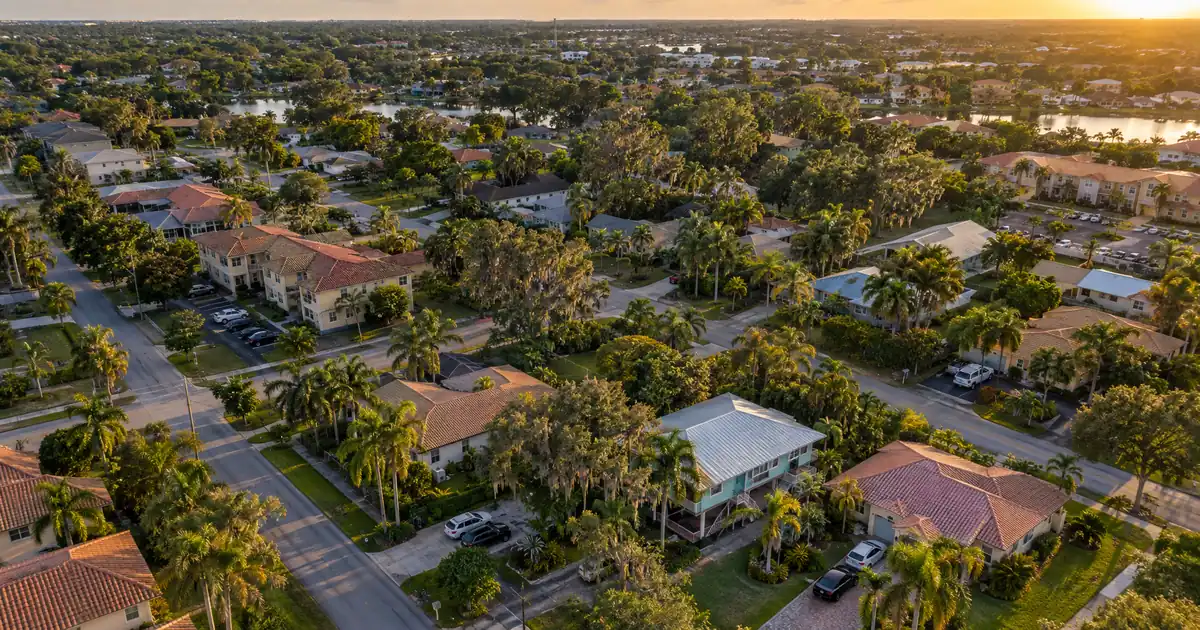
Picture an investor holding a Coral Springs single-family home bought at the citywide median price fourteen years ago. Recorded sales now put the median far higher, a substantial gain per Momentum Realty’s market data. The equity is real. The question for a DSCR cash out refinance in Coral Springs, Florida is whether the rent can carry a new loan large enough to release it. With the citywide median rent modest relative to today’s values per Zillow, that home covers well under 1.0x at full leverage once taxes and insurance are counted.
TL;DR: A DSCR cash-out refinance in Coral Springs, Florida is underwritten primarily on the property’s rental income measured against its full monthly obligation, so the process runs from seasoning and appraisal through a coverage test, a 75% loan-to-value ceiling, and reserve verification before proceeds are disbursed, all subject to lender guidelines and property review.
DSCR Cash-Out Calculator
Run the cash-out numbers in Coral Springs, FL
Rate source: Freddie Mac 30-yr average via FRED® — Federal Reserve Bank of St. Louis · effective Sep 24, 2026
Prefilled with starting assumptions — enter your property’s value, balance, taxes, and insurance for a more accurate picture.
Program parameters update from Lendmire’s centralized guideline source. Taxes and insurance are editable estimates.
As of Sep 24, 2026 · General Freddie Mac market benchmark, not a Lendmire loan offer. Property value, balance, taxes, and insurance are editable estimates. Maximum loan-to-value varies by lender, program, property type, and seasoning. Not a Loan Estimate, approval, or commitment to lend. Program availability and eligibility are subject to lender guidelines, credit approval, property review, and underwriting.
- Citywide recorded sales rose 186% over 14 years, per Momentum Realty.
- West ZIP 33065 shows an 8.06% gross yield versus 4.69% in east ZIP 33071, per Momentum.
- Duplexes and small multifamily are the cleanest path to coverage above 1.0x.
- Cash-out caps at 75% LTV after roughly 6 months of seasoning.
- Local apartment vacancy ran 6.1% in a HUD-based regional read.
- These specifics are subject to lender guidelines and a full review of property, leverage, and credit.
Lendmire is a non-QM mortgage broker (NMLS# 2371349). Investors underwriting deals in Coral Springs, Florida can use DSCR programs Lendmire arranges — available across 41 markets, including D.C. This article skips purchase mechanics. It covers what an owner of existing Coral Springs rental property can pull out, which submarkets produce the coverage to support it, and where the proceeds are best redeployed. For the general mechanics, the guide “The Refi Options” is laid out separately.
Coral Springs Market Snapshot
A quick read on the Coral Springs investor landscape — figures come from the cited sources below. Confirm current property-level numbers before underwriting.
| Metric | Detail |
|---|---|
| Home prices | $522,322 avg. home value (Zillow Home Values) |
| Typical rents | $2,300 median (Zillow Rental Manager) |
| Recent appreciation | 6.0%/yr (Momentum Realty ZIP 33071) |
| University enrollment | 51,000+ students (Broward College About page) |
| Employment | 11,000+ employees (Broward Health (official site)) |
What Does a 75% Ceiling Actually Release?
Cash-out proceeds are the lesser of what the coverage test allows and what the 75% LTV ceiling allows, minus the existing payoff. Appreciation alone does not set the number. In Coral Springs the coverage test is usually the binding constraint, not the equity.
The program parameters are straightforward. Cash-out LTV caps at 75%, a step below the purchase ceiling. Ownership generally needs about 6 months of seasoning, measured from title recording. Minimum coverage sits at the 1.00 benchmark, rent against full principal, interest, taxes, and insurance. Reserves run about 6 months of that obligation, stepping up on larger balances. Credit tiers start at a 620 floor, and standard programs go up to $3,000,000. All of this is subject to lender guidelines, credit approval, and property review. Some lenders will look at sub-1.00 files, but typically with lower leverage, different pricing, or more cash in reserve.
Coral Springs has one structural advantage here. Appraisal support. The 186% run in the median came from 14 years of recorded sales, a deep comp trail that a cash-out appraiser can lean on. Newer-build Florida submarkets have thin histories, and their valuations get challenged. A Greater Fort Lauderdale Alliance profile describes the city as fully “built-out,” so recent comps are mostly resales and renovations, not new subdivision product. That tends to keep appraisals anchored to nearby, comparable sales.
Equity available is never a guaranteed cash figure. It depends on rent used for lender review, the full monthly obligation, reserves, and the 75% ceiling working together. The calculator handles the dollar conversion. The sections below handle the ratios.
The East-West Fork: 33071 Versus 33065
West Coral Springs (ZIP 33065) is the stronger day-one coverage market. East Coral Springs (ZIP 33071) is the stronger appreciation market. They produce opposite answers on a cash-out file, and the table below shows why. Gross yield and appreciation figures come from Momentum Realty’s 33071 scorecard and 33065 scorecard. The coverage row is a modeled assumption, not sourced data.
| Factor | East (33071) | West (33065) |
|---|---|---|
| Gross rent yield | 4.69% | 8.06% |
| Value growth, per year (5-yr) | about 6.0% | about 3.9% |
| Typical home value | $584,907 | $334,455 |
| Modeled coverage at 75% LTV | about 0.6x | about 1.0x |
The modeled row divides annual rent implied by the gross yield by a full obligation (principal and interest on a 30-year note, plus taxes and insurance at Florida averages), at 75% LTV. East lands near 0.6x. West lands right around 1.0x, and the figure is deliberately rounded down. Terms vary by lender guidelines, property type, leverage, credit profile, and full file review.
Reducing leverage changes the picture. At roughly 65% LTV, the west-side number improves to about 1.15x on the same modeled basis. East stays under 1.0x at any workable leverage on a single-family rent. That is the whole east-side problem in one line. Exact terms depend on the lender’s guidelines, property type, leverage, and a full review of the borrower’s file.
East-side owners are sitting on the larger paper gain, yet their coverage is the weakest. West-side owners have less appreciation, but the rent supports a cash-out at or near the benchmark. For an east-side owner with a sub-1.00 file, the options a lender would review include a sub-1.00 program, reduced leverage, interest-only structuring, or a smaller pull. None is assured, and each depends on credit approval and property review.
This one’s a genuine toss-up for an investor choosing where to hold. East builds equity faster, and a west-side position produces coverage sooner. A cash-out strategy that depends on repeatedly releasing equity favors the west. A hold-for-appreciation strategy tolerates the east.
Reading the Rent Ladder (and Where the Price Data Runs Out)
Rent in Coral Springs spans a wide ladder, but rent alone says nothing about coverage without a matching value. Redfin’s rental market page lists neighborhood medians from a September 2025 snapshot:
- Coral Springs Lakes: $4,550
- Heron Bay: $4,200
- Wyndham Lakes: $3,750
- Coral Bay: $2,967
- North Margate: $2,650
- Cypress Run: $2,290
- Coral Key: $2,250
The data gap is real. Reliable neighborhood-level sale prices were not available in this review pass, so coverage by neighborhood cannot be computed with confidence. What the ladder does show is the relationship between rent and the city’s overall value level. The top three submarkets rent for roughly 1.6x to 2.0x the entry-level pocket, while values per square foot do not typically scale that cleanly. A homeowner in Coral Springs Lakes or Heron Bay may carry strong absolute rent but a high basis. Coverage there depends on the premium rent holding.
The lower rungs, Coral Key and Cypress Run, sit near the citywide median rent of about $2,300 and sell at lower price points. They match the workforce tenant base. For a cash-out the question is simple: does the home’s appraised value, multiplied by the 75% ceiling, produce a loan the rent can service? At the citywide median value, no. In a lower-priced pocket with similar rent, closer.
North Margate deserves a cautionary note. Redfin showed a 32.5% month-over-month jump in its median rent. A move that large in a single month reads more like small-sample noise than a durable trend. Treat it as a pocket to watch, not as an underwriting input.
Rents quoted from different aggregators will disagree, so treat any single figure as a reference point rather than a fixed input. The bedroom-level breakdown from RentHop is a reasonable place to start for 2BR and 3BR workforce product, since it spans a wide band from one-bedroom units up to three-bedroom units and brackets the Zillow figure comfortably. Check it against current listings for the specific submarket before relying on it in an underwriting model.
Why Two Units Beat One in This City
Duplex and small multifamily product is where Coral Springs coverage clears most decisively. The reason is arithmetic: rent stacks by unit, while value in a built-out suburb tracks the land and the neighborhood.
Take the active listing evidence. A duplex marketed on Homes.com shows $3,200 rent on each side, or $6,400 combined. Another listing on Homes.com cites about $69,120 in annual gross income. A 4-unit property in the Corporate Park area, listed on Redfin, shows $117,000 gross income against $31,000 of expenses and a 6.5% cap rate.
Run the numbers on a modeled duplex. Assume an appraised value of $650,000 and the $6,400 combined rent from that listing. At 75% LTV, with full principal, interest, taxes, and insurance counted, coverage lands near 1.5x. Compare that with the single-family median at about 0.6x. Same city, same leverage ceiling, and a spread of roughly 0.9x in coverage. The $650,000 is a modeled assumption chosen for illustration, not a market quote. Every figure here varies by lender and program — guidelines, property type, leverage, and credit profile all apply.
The scarcity cuts both ways. Redfin’s investment inventory snapshot showed 373 condos, 100 townhouses, and only 4 multifamily units for sale in a recent month. Owners of true 2-4 unit product hold something hard to replace. A cash-out refinance on that asset converts a scarce position into capital without selling it. Selling means trying to replace it in a market where replacement inventory barely exists.
The practical read: owners of legacy duplexes should favor cash-out over sale. Owners of single-family homes should look at whether the released equity can buy a duplex. A single-family cash-out at 75% on a sub-1.00 file is the harder structure. Final terms depend on lender guidelines, property type, leverage, and the borrower’s complete credit picture.
The Demand Layer Under the Rent Roll
Coral Springs rental demand rests on healthcare, retail, and professional-services employment, not on a single dominant corporate employer. That is the honest framing, and it is a data gap worth stating: no verified top-employer list with headcounts exists for the city itself.
What the sources do show: DataUSA reports employment among residents grew 2.55%, from 68.6k to 70.4k. The leading sectors are health care and social assistance (9,686 people), retail trade (9,567), and professional, scientific, and technical services (6,230). The Broward Health system employs more than 11,000 people regionally, and its Coral Springs hospital has 200 beds. HCA Florida Northwest Hospital in neighboring Margate adds a 289-bed facility within commuting distance. Broward College, which operates a Coral Springs academic center, serves more than 51,000 students system-wide with nearly 3,500 faculty and staff.
That mix favors 2BR and 3BR workforce rentals with steady lease renewals. About 40% of Coral Springs households rent, or 17,941 households, per RentCafe. A renter base of that size is large enough to sustain a rental stock, though it is not so dominant that the market depends on turnover.
Vacancy is the soft spot. A HUD regional analysis, summarized by Steve Kaminer, found a 6.1% apartment vacancy rate in the Coral Springs market area, versus 5.4% across the division and 3.9% in Pompano Beach-Deerfield Beach. That is apartment data, not single-family, and it is a point-in-time read. Still, it implies Coral Springs runs looser than its southern neighbor. A cash-out file that only clears 1.00 with zero vacancy cushion is thinner than it looks. Build in a vacancy haircut before relying on a coverage number, and expect the appraiser’s rent schedule to do the same.
Where Most Investors Get It Wrong on Proceeds
The common error is treating the 75% ceiling as the amount available. In Coral Springs it often is not. Single-family owners with large paper gains discover that the coverage test, not the equity, limits the pull.
Experienced DSCR desks see a repeatable pattern in suburbs like this one. The cleaner files from a documentation standpoint tend to be the ones where rent is supported by a signed lease and a market rent schedule that agree with each other. The common friction point in built-out South Florida suburbs is the gap between asking rent and in-place rent, plus an insurance quote that changed between application and review. Owners who refresh the insurance quote and have the lease ready before the file is submitted avoid most of the late surprises.
For sub-1.00 situations, the paths a lender would review include a sub-1.00 program with reduced leverage, an interest-only structure, or a smaller cash-out. Qualification stays subject to lender guidelines and credit approval. Title held in an LLC is workable on many files, subject to program terms. The refinance pathway for investor properties covers the rate-and-term alternative when the objective is restructuring, not extraction.
Where do the proceeds go? Three options pencil in this market:
1. A second west-side or small-multifamily acquisition. Coverage clears more easily there, and a down payment funded from released equity keeps the new loan within standard leverage.
DSCR vs. conventional financing
There are two common ways to finance an investment property in Coral Springs, FL, and they qualify you differently — here’s how investors weigh them.
Why investors choose it
- Qualifies on the property’s rental income — no personal tax returns, W-2s, or pay stubs needed to document income.
- No personal debt-to-income ceiling to clear, so existing mortgages and obligations don’t cap your borrowing the same way.
- Can be closed in an LLC, keeping the property inside a business entity.
- Built for scaling — not held to the limit on number of financed properties that conventional financing applies.
- Underwriting centers on the deal: generally qualifies when the rent covers the payment, a 1.00x coverage ratio being a common baseline (confirmed in underwriting).
- Designed specifically for investment property, including long-term and, where the program allows, short-term rentals.
Where it’s strong
- Often the lowest ongoing financing cost for a buyer who fully qualifies on personal income — a fit for a first property or a cost-first purchase.
Trade-offs for investors
- Requires full personal income documentation and must fit within a debt-to-income limit — salary, existing debts, and other mortgages all count.
- Typically held in your personal name rather than a business entity.
- Caps how many financed properties you can carry, which can become a ceiling as a portfolio grows.
- Evaluates you as a borrower as much as the property, which usually means more paperwork.
How investors usually choose: a first or single property often optimizes for the lowest financing cost; portfolio builders often optimize for leverage, vesting in an LLC, and scaling past conventional caps. The right answer depends on your goals, the property, and current guidelines — both paths run through select lenders in Lendmire’s wholesale network, with eligibility and terms confirmed in underwriting.
2. A renovation on an existing property. In a built-out city, resale and renovation drive appreciation, so improvement spending is the supply lever available to an owner.
3. Reserve building. Reserves of about 6 months of the full obligation are a program requirement, so a portion of proceeds often goes straight back into qualifying the next file.
For a primer on how coverage is measured, see Lendmire’s primer on DSCR loans. If the question is how this differs from a bank refinance, the comparison lays it out. Coral Springs investors can also find the broader state picture under Florida DSCR financing. To discuss a specific property, call 828-256-2183 or request a quote online.
Frequently Asked Questions
How do you qualify for a DSCR cash-out refinance in Coral Springs?
Qualification centers on the property’s rent measured against its full monthly obligation, with 1.00 as the common benchmark. Typical guidance includes a 620 credit floor, about 6 months of seasoning, and about 6 months of reserves. The loan is capped at 75% of appraised value. Final eligibility depends on lender guidelines, credit approval, and property review.
What are the requirements for an investment property cash-out loan in Coral Springs, Florida?
Expect a seasoned property, a market rent schedule from the appraisal, reserves, and a loan within the 75% LTV ceiling. Standard programs go up to $3,000,000. Manufactured homes, log homes, and barndominiums fall outside these programs. Requirements vary by lender and loan scenario.
Does a single-family rental in Coral Springs usually clear 1.00 on a cash-out?
At median values it generally does not. A home near the city’s median rent of about $2,300 models around 0.6x at 75% LTV once taxes and insurance are included. West-side ZIP 33065 models closer to 1.0x, and a duplex can model near 1.5x. Lower leverage or a sub-1.00 program may be options a lender would review.
Is Coral Springs better for cash-out than for appreciation plays?
It depends on the ZIP. The east side (33071) shows about 6.0% annual value growth but a 4.69% gross yield, which favors holding for equity. The west side (33065) shows an 8.06% yield and about 3.9% growth, which favors cash-out and recycling capital.
For current guidelines and terms, see Lendmire’s DSCR loan programs page.
Where the Asymmetry Sits
The mispriced asset in Coral Springs is the legacy two-to-four-unit property, especially on the west side where gross yields near 8% sit beside a city with only a handful of multifamily listings at any time. Rent stacks while the land stays fixed, so a scarce duplex can support a cash-out that a median single-family home cannot.
About Lendmire
As a non-QM mortgage broker (NMLS# 2371349), Lendmire facilitates DSCR investor loans across 41 markets, including Washington, D.C. DSCR eligibility is generally reviewed around property-level rental income rather than personal income documentation, subject to lender guidelines, which suits LLC-structured portfolios and self-employed borrowers who don’t fit conventional boxes. Lendmire is a two-time Scotsman Guide Top Mortgage Workplace (2025, 2026).
Get Started
Ready to find the right loan for you?
In about 30 seconds you can review financing options available for your investment property. No commitment required.
Informational only. Not a Loan Estimate, approval, or commitment to lend. Program availability and eligibility are subject to lender guidelines, credit approval, property review, and underwriting.
References
1. Momentum Realty’s market data
2. Zillow
3. Momentum
6. Momentum Realty’s 33071 scorecard
9. Greater Fort Lauderdale Alliance profile
10. Redfin’s rental market page
11. RentHop
12. Homes.com
13. Homes.com
14. Redfin
15. DataUSA
17. HCA Florida Northwest Hospital
18. RentCafe
19. Scotsman Guide — Top Workplaces 2025
20. a 2026 Scotsman Guide Top Mortgage Workplace
This article is part of Lendmire’s investment property cash-out refinance program — full qualification details, guidelines, and scenarios live on the program page.
Related reading: Cash Out Refinance Investment Property in Coral Springs · DSCR Cash Out Refinance in Coral Gables, Florida: What It Takes to Qualify on $3,800 Rent · Cash Out Refinance Investment Property in Coral Gables, Florida: What Qualifying Takes on $3,000 Rent
Guides: Investment Property Cash-Out Refinance in Coral Springs, FL · Investment Property Cash-Out Refinance in Florida
Brandon Miller
Founder & CEO, Mortgage Loan Originator, Lendmire LLC
- Mortgage Loan Originator · NMLS# 1129696 · Verify on NMLS Consumer Access
- North Carolina Real Estate Broker · License# 343312 · Verify on NCREC
- North Carolina Insurance Producer · License# 19053198 · Property, Casualty, Life, Health · Verify on NAIC SBS
- Lendmire LLC · Firm NMLS# 2371349 · Verify firm licensure
Disclosures. The information presented in this article is general market commentary, not financial, legal, or tax advice. Lendmire is a mortgage brokerage (NMLS# 2371349) — not a direct lender or depository institution — and loan placement is subject to lender underwriting. Nothing in this content represents a commitment to lend. Loan terms, pricing, and program availability vary based on borrower qualifications, property characteristics, and state of subject property, and are subject to change at any time. Lendmire complies with Equal Housing Opportunity requirements. Consumer access: nmlsconsumeraccess.org.