
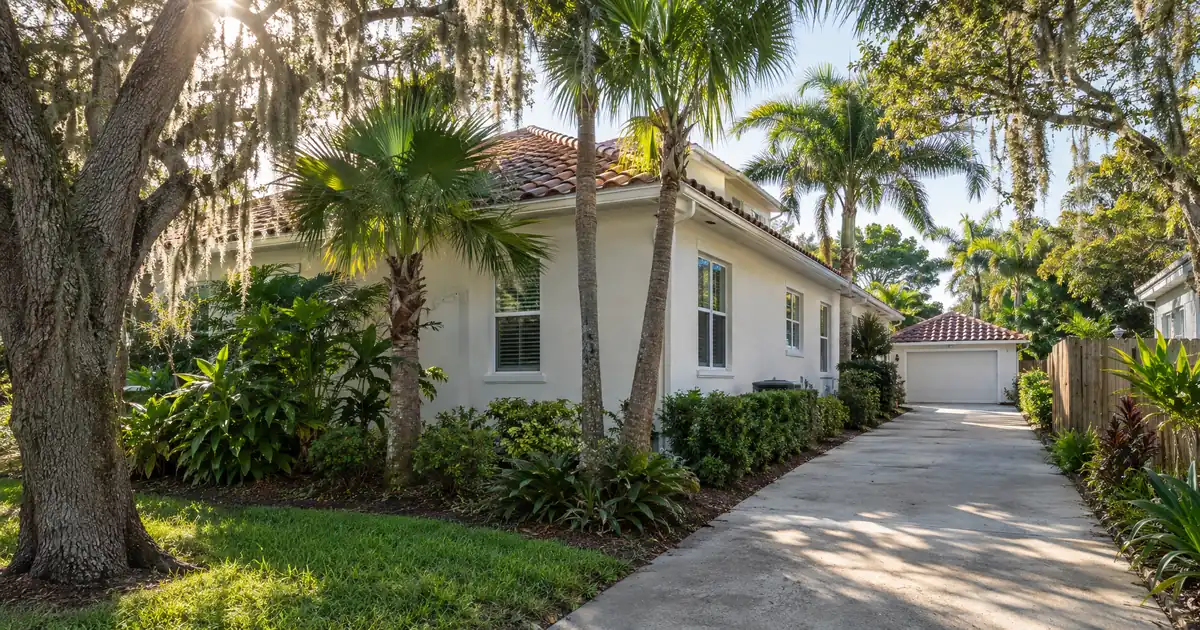
Jupiter rents don’t cover Jupiter prices. Zillow puts the typical home value at $699,018, down 2.2 percent over the past year, while Zumper puts average rent at $3,500 a month. Run those two figures against each other and gross monthly rent comes to roughly 0.5 percent of value (Lendmire Research arithmetic on listing-based data).
That is thin. A cash-out refinance here will not be sized by how much equity the owner has. It will be sized by how much debt the rent can carry. This report works through that tension: where the coverage math holds, where it breaks, and how an owner who already holds the property turns equity into the next acquisition.
DSCR Cash-Out Calculator
Run the cash-out numbers in Jupiter, FL
Rate source: Freddie Mac 30-yr average via FRED® — Federal Reserve Bank of St. Louis · effective Sep 24, 2026
Prefilled with starting assumptions — enter your property’s value, balance, taxes, and insurance for a more accurate picture.
Program parameters update from Lendmire’s centralized guideline source. Taxes and insurance are editable estimates.
As of Sep 24, 2026 · General Freddie Mac market benchmark, not a Lendmire loan offer. Property value, balance, taxes, and insurance are editable estimates. Maximum loan-to-value varies by lender, program, property type, and seasoning. Not a Loan Estimate, approval, or commitment to lend. Program availability and eligibility are subject to lender guidelines, credit approval, property review, and underwriting.
Key Takeaways:
A DSCR cash-out refinance on a Jupiter, Florida rental is underwritten primarily on the property’s rental income measured against its full monthly obligation, subject to a loan-to-value ceiling and a short ownership seasoning period. The appraisal and the rent schedule, not the owner’s equity, decide how much capital actually comes out.
- Citywide gross rent-to-value runs near 0.5 percent, so coverage is the binding constraint, not equity.
- Condos and townhomes near Abacoa are the likeliest fit, though they absorb slower than houses.
- Appreciation signals conflict. Underwrite on rent, never on assumed price growth.
- The 75 percent LTV ceiling is a maximum. Many Jupiter files will land lower.
Jupiter Market Snapshot
A quick read on the Jupiter investor landscape — figures come from the cited sources below. Confirm current property-level numbers before underwriting.
| Metric | Detail |
|---|---|
| Cap rates | 4%–6% cap rate (Taiter Realty blog) |
| Employment | 600+ ZimVie employees (Palm Beach County BDB Life) |
Why Equity Isn’t the Constraint Here
Jupiter’s DSCR ceiling comes from the rent-to-debt ratio, and that ratio is thin at citywide medians. At 75 percent LTV, including taxes and insurance, the typical-house math lands somewhere in the 0.7s. Equity is plentiful. Coverage is not.
Quick mechanics. A DSCR file divides qualifying monthly rent by the full monthly obligation: principal, interest, taxes, insurance and any HOA dues. Most standard programs are built around a 1.00x benchmark because the rent covers the obligation at that level. Some lenders review lower ratios, but those files usually bring lower leverage, different pricing or more cash behind them. Eligibility turns on lender guidelines, credit profile, reserves and property review. The DSCR qualification mechanics page covers the baseline.
Now a modeled case. Say you own a condo near Town Center. Assume it appraises at $400,000 and rents for $2,500 a month (modeled assumptions, not market data). Including taxes and insurance at standard Florida averages, coverage at 75 percent LTV lands a hair under 1.00x. Drop to 60 percent LTV and the number moves to roughly 1.1x. HOA dues, which vary by community, pull both figures down.
That is the shape of the market. The owner who wants the full 75 percent will often find the ratio says no. The owner who accepts 60 to 65 percent often clears.
A sub-1.00 result isn’t a dead end. A lender may review a sub-1.00 program, an interest-only structure or a lower loan amount for the same file. Each carries its own pricing, reserve and credit conditions, and none is assured. The point is to know which constraint is binding before ordering the appraisal.
For owners comparing paths, DSCR versus conventional is the short version. Conventional underwriting leans on personal income and caps financed properties. A DSCR file leans on the property.
What 75 Percent Actually Buys
The 75 percent LTV ceiling applies to cash-out refinances, and it is a ceiling, not an entitlement. Seasoning matters too: lenders typically look for about six months of ownership measured from title recording before a cash-out file is reviewed. Equity available depends on rent used for lender review, the full obligation, reserves and that cap. Cash-out refinance details explain the structure.
Jupiter complicates the appraisal side, because price signals disagree. Zillow shows values down 2.2 percent. Redfin reports a three-month median near $670,000, down 5.0 percent, though Redfin’s median is a sale-price measure and Zillow’s is a modeled home value, so the two will differ. Momentum Realty shows a $600,000 median with 0.0 percent change on MLS data. One data site, Houzeo, reports a $722,500 median up 25.65 percent. Those numbers cannot all describe the same market. The spread itself says comps are mixed by property type and price tier.
Reading the tape, Jupiter looks priced for lifestyle and held up by seasonal demand rather than by yield. Don’t underwrite a cash-out on assumed appreciation. Expect appraisers to be careful.
Absorption data sharpens that. According to PBP Real Estate, citing BeachesMLS, houses carried 2.8 months of inventory while condos and townhouses carried 5.0. Houses took a median 22 days to go under contract. Condos and townhouses took 57. About 44.2 percent of houses and 47.9 percent of condos and townhouses were priced below their original ask, with a median house cut of 6.9 percent.
Condos are the likelier DSCR fit on price, yet they are the softer comp set. Houses are tighter but rent thinly against value. Genuine trade-off. Neither side wins outright.
Working DSCR brokers see a recurring pattern in lifestyle-priced coastal markets: owners size their cash-out off the listing-era value in their heads, the appraisal lands lower after a stretch of price cuts, and the rent schedule then caps proceeds below what the owner expected. The files that move cleanly usually start with a conservative value, a lease already in place and reserves documented before the appraisal is ordered.
Where the Coverage Math Holds
Abacoa and the lower-rent pockets are where the ratio has the most room. Lower-priced condos and townhomes against steady apartment-style rents give the best odds of clearing 1.00x, though the price side of that comparison needs confirming property by property.
Abacoa. A master-planned community east of I-95 with its own Town Center and Roger Dean Chevrolet Stadium, per Apartments.com, which lists one-bedrooms near $2,495, two-bedrooms near $3,029 and three-bedrooms near $3,234. RentHop shows two-bedrooms at $3,050, up 7.33 percent year over year. Redfin’s neighborhood table showed a $3,550 median rent, but that was an older snapshot. Treat the range as listing-based, not leasing-verified.
Abacoa also carries a spring-training calendar. The Marlins and Cardinals train at the stadium. For an owner, the practical read is that tenant demand here comes from a mix of workers, seasonal residents and students from nearby campuses, which supports occupancy even when for-sale inventory swings.
Jupiter Village and Jupiter Lakes. Zumper lists these among the more affordable jupiter neighborhoods by rent, with Indian Creek priced higher. Lower rent usually means a lower entry price, so these are the first places to test for coverage. Pull price comps before assuming they beat Abacoa. They may not.
Botanica and Mallory Creek. Rent.com shows Botanica one-bedrooms at $2,500 and Mallory Creek at $2,214. No reliable price data surfaced for either, so treat them as named rental submarkets, not underwritten targets.
Rent sources conflict across the city, which is worth flagging. Zumper’s citywide median sits well above its apartment figure and just below its figure for houses, so the blended number depends heavily on property type. RentHop prices the three-bedroom well above the two-bedroom and shows the three-bedroom down meaningfully year over year. Rent.com’s one-bedroom apartment figure comes in lower than either of those. Rents look flat to slightly down citywide, with luxury pockets rising. Use the lower credible figure when sizing a file.
Equity-Rich, Coverage-Poor: The Luxury Pockets
High-value jupiter neighborhoods hold the most equity and the least coverage. Owners there can usually extract more dollars, but ratio constraints bind sooner. These pockets work for the owner with other income to back a lower-leverage structure, and for little else.
Jonathan’s Landing. A gated golf community. Redfin shows a median sale price of $829,717, down 11.7 percent year over year. Zumper shows rents at $8,000 a month, up 33.3 percent, but that is a thin luxury sample and not a workforce benchmark. Price down, rent up, sample tiny. Don’t build a file on it.
Jupiter Farms. Larger-lot, semi-rural. Zumper reports average rent of $5,500, up 12 percent year over year. A brokerage page lists homes from $350,000 to $5,000,000, but that is a listing range, not a median, so it says little about where a typical file sits. Demand here is for larger homes. Rent.com shows Jupiter Farms one-bedrooms as among the lower-priced in the city, which suggests an uneven unit mix.
Jupiter Harbour and Downtown. Waterfront and walkable, near Jupiter Beach. Zumper shows Jupiter Harbour rents up 21.9 percent to $5,000, and Rent.com lists Downtown one-bedrooms at $2,287. No verified price data surfaced. High rent, unknown basis, no ratio to test.
The honest read on all three: the equity is real, the coverage is hard to prove, and the appraisal is the swing factor.
Small Multifamily: Scarce and Hard to Comp
Jupiter has little small multifamily, so the usual DSCR workaround of stacking units for income is mostly unavailable. A local property manager, Palm Beach County Property Management, describes the town as mostly single-family and townhome rentals at premium rents, with far less small multifamily than West Palm Beach or Lake Worth. That is a manager’s marketing description, not independent data.
A Taiter Realty broker blog puts small multifamily cap rates generally in a 4 to 6 percent range and says most duplexes and triplexes sit in older, established neighborhoods and sometimes trade off-market. Attribute that to a broker’s view. It is an estimate, not audited data.
The implication for a refinance is practical. With few comparable sales, an appraiser has less to lean on, and the opinion of value can come in conservative. An owner of a rare duplex may hold a better ratio than any SFR in town but a harder appraisal. This one’s a genuine toss-up: better income math against thinner comps. Pricing that trade-off before applying beats discovering it at appraisal.
Tenants Who Stay
Jupiter’s tenant base rests on a research and healthcare cluster, which supports long tenancies more than it supports high yields. Employers anchor demand even while prices soften.
The Palm Beach County Business Development Board (BDB) describes Scripps Research’s Florida campus as three buildings on 30 acres between I-95 and the Atlantic, in the county’s innovation corridor. Florida Atlantic University’s Jupiter campus houses the Stiles-Nicholson Brain Institute and the Harriet L. Wilkes Honors College. The Max Planck Florida Institute for Neuroscience is also named as a local employer in secondary sources. Jupiter Medical Center was named by Forbes as one of America’s Best Midsize Employers. A biotech and neuroscience cluster inside a small beach town is unusual, and it points to a professional tenant profile. That last part is an inference, not a sourced finding.
Resident employment tells the same story. According to Data USA, the largest resident sectors are professional, scientific and technical services at 3,803 people, health care and social assistance at 3,716, and retail trade at 3,018.
Scale matters. The Town of Jupiter reports 61,047 residents at the 2020 Census and a 61,333 estimate more recently, with 26,959 occupied households. The Town’s annual financial report says another 12,000 to 15,000 residents arrive between Thanksgiving and Easter. It also describes a town covering just over 23 square miles and cites a county median family income of $99,093 and unemployment of 3.1 percent. The result is a small footprint with a seasonal swing, and that swing is why occupancy holds even while for-sale prices drift.
One practical point from the property-manager source: master-planned and gated communities such as Abacoa, Jupiter Farms and Admirals Cove each run their own lease-approval steps and minimum lease terms. That is a manager’s claim, but it matches how those communities operate. Long tenancies support steady DSCR income, while approval steps can lengthen lease-up. A cash-out file that depends on a unit being re-let should be built with that in mind. Owners should also verify current local rental rules, taxes and insurance with qualified local professionals.
Where the Cash Goes Next
Cash-out proceeds from a Jupiter rental are most useful when redeployed into a property with better coverage than the one they came from. That usually means moving out of a high-value, low-ratio asset and into a lower-priced rental market. The proceeds are capital, not income, and the next purchase has to clear its own ratio.
DSCR vs. conventional financing
There are two common ways to finance an investment property in Jupiter, FL, and they qualify you differently — here’s how investors weigh them.
Why investors choose it
- Qualifies on the property’s rental income — no personal tax returns, W-2s, or pay stubs needed to document income.
- No personal debt-to-income ceiling to clear, so existing mortgages and obligations don’t cap your borrowing the same way.
- Can be closed in an LLC, keeping the property inside a business entity.
- Built for scaling — not held to the limit on number of financed properties that conventional financing applies.
- Underwriting centers on the deal: generally qualifies when the rent covers the payment, a 1.00x coverage ratio being a common baseline (confirmed in underwriting).
- Designed specifically for investment property, including long-term and, where the program allows, short-term rentals.
Where it’s strong
- Often the lowest ongoing financing cost for a buyer who fully qualifies on personal income — a fit for a first property or a cost-first purchase.
Trade-offs for investors
- Requires full personal income documentation and must fit within a debt-to-income limit — salary, existing debts, and other mortgages all count.
- Typically held in your personal name rather than a business entity.
- Caps how many financed properties you can carry, which can become a ceiling as a portfolio grows.
- Evaluates you as a borrower as much as the property, which usually means more paperwork.
How investors usually choose: a first or single property often optimizes for the lowest financing cost; portfolio builders often optimize for leverage, vesting in an LLC, and scaling past conventional caps. The right answer depends on your goals, the property, and current guidelines — both paths run through select lenders in Lendmire’s wholesale network, with eligibility and terms confirmed in underwriting.
Picture an investor holding a long-owned Jupiter townhome with substantial equity and a lease in place. Taking a moderate cash-out at conservative leverage, rather than the 75 percent maximum, keeps the existing property clearing 1.00x and leaves a cushion if the appraisal trims value. The proceeds then fund the next acquisition somewhere the rent-to-price relationship is friendlier than Jupiter’s roughly 0.5 percent gross.
On the lender side, the typical program guidance includes a credit floor near 620, with higher tiers at 660, 680 and 700 generally improving options. Reserves usually run about six months of the full obligation, rising to about nine months above $1,500,000. Standard programs generally handle loan amounts up to $3,000,000, with smaller balances routed through select lenders. All of this is subject to lender guidelines, credit approval and property review. Manufactured homes, log homes and barndominiums fall outside these programs.
One more observation. The stronger play for many Jupiter owners might be a modest cash-out now over a maximum cash-out later. If values keep softening, a lower loan today avoids a ratio problem and an appraisal problem at the same time. Investors counting on appreciation to rescue a thin ratio could argue the other way, but the data doesn’t give them much to point to. Every figure here varies by lender and program — guidelines, property type, leverage, and credit profile all apply.
Jupiter owners who size the loan to the rent instead of the equity will come out ahead.
Frequently Asked Questions
How do you qualify for a DSCR cash-out refinance in Jupiter, Florida?
The property has to show that its rent used for lender review covers its full monthly obligation, with 1.00x as the common baseline. Lenders typically also look for about six months of ownership from title recording, a credit score of at least 620 and roughly six months of reserves. Jupiter’s thin rent-to-value means many files qualify at lower LTV than the 75 percent maximum. Final eligibility rests with the lender.
What are the requirements for an investment property loan in Jupiter, Florida?
Expect a property-level rent review, an appraisal, documented reserves and a credit review, all subject to lender guidelines. Eligible property types generally include single-family homes, condos, townhomes and small multifamily. Manufactured homes, log homes and barndominiums are outside the network’s DSCR programs. HOA dues on condos enter the coverage calculation, so they matter more here than in many markets.
Why do Jupiter condos often work better than houses for DSCR coverage?
Condos and townhomes carry lower entry prices against rents that sit closer to house rents, so the rent-to-value ratio improves. Zumper shows apartments at $2,230 and houses at $3,725, while a brokerage source puts many condos and townhomes at $300,000 to $500,000. The catch is slower absorption: 57 days to contract against 22 for houses, which can soften the appraisal.
Can a self-employed investor buying in Jupiter be reviewed for DSCR financing?
Yes. Lendmire arranges DSCR investor loans and these programs are commonly reviewed around the property’s rent rather than personal income documentation. Self-employed borrowers are still subject to lender guidelines on credit, reserves and property review.
Does seasonal demand help a Jupiter rental qualify?
It can help, though only indirectly. The Town’s financial report cites 12,000 to 15,000 additional residents arriving each season, which supports occupancy. But a DSCR file is generally reviewed on the lease or market rent, not on seasonal swings. Treat the seasonal population as a demand signal and leave it out of the ratio.
For current guidelines and terms, see Lendmire’s DSCR loan programs page.
About Lendmire
Lendmire, NMLS# 2371349, is a DSCR and non-QM mortgage brokerage with investor loan programs in 41 markets, including Washington, D.C. Lenders commonly review DSCR eligibility around property-level rent rather than personal income documentation, subject to lender guidelines, and the brokerage helps arrange financing for LLC-owned portfolios beyond conventional financed-property limits. Lendmire was recognized by Scotsman Guide as a 2026 Top Workplace and was a top-ranked workplace in 2025.
For broader investor-financing rules and property-type coverage across the state, see Florida DSCR loans.
Get Started
Ready to find the right loan for you?
In about 30 seconds you can review financing options available for your investment property. No commitment required.
Informational only. Not a Loan Estimate, approval, or commitment to lend. Program availability and eligibility are subject to lender guidelines, credit approval, property review, and underwriting.
References
1. Zillow, Jupiter Home Values
2. Zumper, Jupiter Rent Research
4. Palm Beach County Business Development Board, Life Sciences
5. Redfin
7. Houzeo
8. PBP Real Estate, Jupiter Statistics
10. RentHop
11. Rent.com
12. Redfin
13. Zumper
14. Palm Beach County Property Management
15. Florida Atlantic University, Jupiter Campus
18. Town of Jupiter, Demographics
19. Town of Jupiter Annual Comprehensive Financial Report
20. Scotsman Guide, Top Workplaces 2026
21. Scotsman Guide, Top Workplaces 2025
This article is part of Lendmire’s investment property cash-out refinance program — full qualification details, guidelines, and scenarios live on the program page.
Related reading: Cash Out Refinance Investment Property in Jupiter FL · DSCR Cash Out Refinance in Davie, Florida: The 2026 DSCR Guide to the Griffin Road Corridor · Cash Out Refinance Investment Property in Wynwood, Florida: Pulling Equity From Wynwood Norte Rentals
Guides: Investment Property Cash-Out Refinance in Jupiter, FL · Investment Property Cash-Out Refinance in Florida
Brandon Miller
Founder & CEO, Mortgage Loan Originator, Lendmire LLC
- Mortgage Loan Originator · NMLS# 1129696 · Verify on NMLS Consumer Access
- North Carolina Real Estate Broker · License# 343312 · Verify on NCREC
- North Carolina Insurance Producer · License# 19053198 · Property, Casualty, Life, Health · Verify on NAIC SBS
- Lendmire LLC · Firm NMLS# 2371349 · Verify firm licensure
Disclosure information. Lendmire is a state-licensed mortgage brokerage under NMLS# 2371349. Lendmire is not a depository institution, direct lender, or financial advisor — all loans referenced are placed through wholesale lender partners and are subject to each lender's underwriting standards. This article is provided for general informational purposes and is not a commitment to lend, nor does it constitute financial, legal, or tax advice. Loan programs, terms, rates, and qualification standards change without notice and depend on borrower profile, property type, and the state in which the subject property is located. Equal Housing Opportunity provider. NMLS Consumer Access: nmlsconsumeraccess.org.