
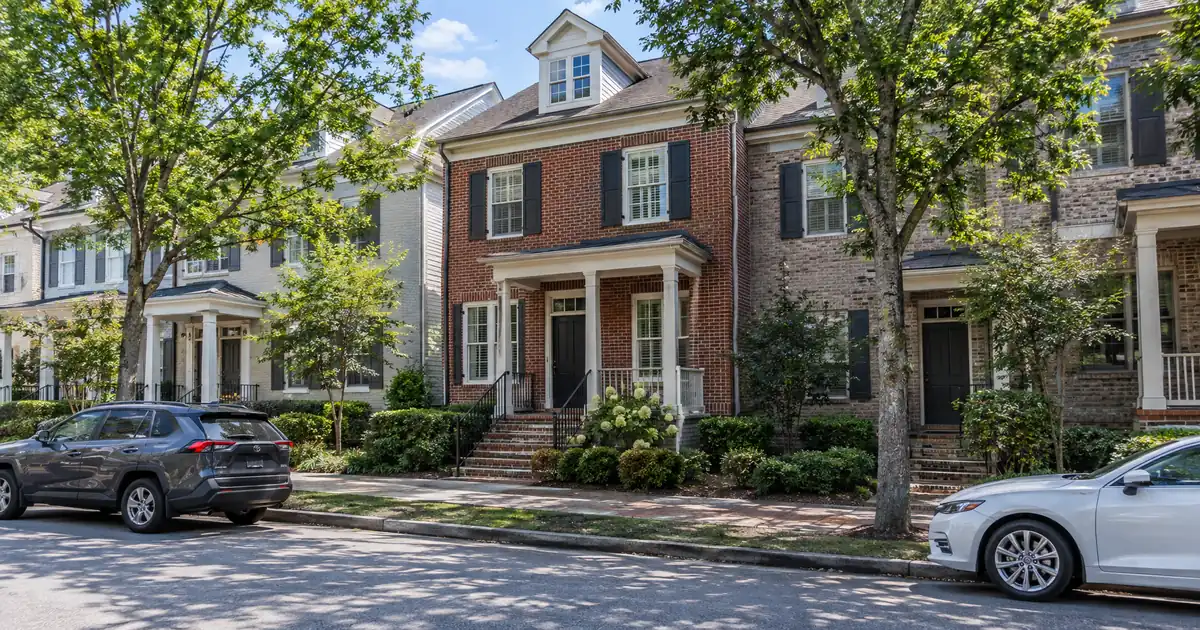
A rental in Fieldstone Farms hits the DSCR math like this: assume a single-family home worth $700,000 (a modeled value, not a sourced sale) renting at Redfin’s neighborhood median of $2,589. Refinance to the 75 percent ceiling and the coverage ratio, counting taxes and insurance, lands in the low 0.6s. Pull leverage back to 50 percent and it improves to the mid-to-high 0.8s. Still under 1.00.
That is Franklin in one paragraph. The equity is real, the tenant base is strong, and the rent doesn’t carry the debt that the equity would support.
DSCR Cash-Out Calculator
Run the cash-out numbers in Franklin, TN
Rate source: Freddie Mac 30-yr average via FRED® — Federal Reserve Bank of St. Louis · effective Sep 24, 2026
Prefilled with starting assumptions — enter your property’s value, balance, taxes, and insurance for a more accurate picture.
Program parameters update from Lendmire’s centralized guideline source. Taxes and insurance are editable estimates.
As of Sep 24, 2026 · General Freddie Mac market benchmark, not a Lendmire loan offer. Property value, balance, taxes, and insurance are editable estimates. Maximum loan-to-value varies by lender, program, property type, and seasoning. Not a Loan Estimate, approval, or commitment to lend. Program availability and eligibility are subject to lender guidelines, credit approval, property review, and underwriting.
The Quick Read:
A cash-out refinance on a Franklin, Tennessee rental is underwritten primarily on the property’s rental income measured against its full monthly obligation. With home values near $928,567 per Zillow and rents far below that, leverage shapes how much equity, if any, can come out.
- Cash-out tops out at 75 percent LTV, with about six months of ownership seasoning from title recording.
- Reserves typically run about six months of PITIA, and about nine above $1,500,000.
- Fieldstone Farms rents sit near $2,589, while a citywide three-bedroom averages $3,432 per Rentometer.
- Single-family coverage models below 1.00 at high leverage. Small multifamily is the scarce exception.
- Central Franklin’s average and median prices point opposite directions, which complicates appraisals.
Franklin Market Snapshot
A quick read on the Franklin investor landscape — figures come from the cited sources below. Confirm current property-level numbers before underwriting.
| Metric | Detail |
|---|---|
| Home prices | 41% home value gain 2015–2021 (City of Franklin Housing) |
| Cap rates | 4–5% (Dyad Real Estate 2026 guide) |
| Employment | 2,300+ employees (Indeed: Williamson Health) |
| Vacancy | 7.0% (Apartment List national report) |
Where the Coverage Ratio Holds Up: Cool Springs and Berry Farms
The lowest-basis product in Franklin, townhomes and condos near Cool Springs and Berry Farms, is where a cash-out has the best chance of clearing 1.00. It’s the only place the numbers get close without heavy equity left in the deal.
Cool Springs is the commercial and office corridor along I-65, anchored by CoolSprings Galleria and a cluster of healthcare administration and corporate employers. Berry Farms in the southeast is newer, mixed-use construction with townhomes and smaller single-family homes. Broker commentary from Dyad Real Estate puts entry-level townhomes at roughly $350,000 to $500,000. Submarket-level rent data for either area is thin, so the math below uses modeled inputs, not sourced comps.
Run the numbers on a townhome valued at $425,000, the midpoint of that band. Assume rent near $2,400, a modeled figure just above Rentometer’s $2,212 two-bedroom average. At 75 percent LTV, the ratio including taxes and insurance lands in the mid-0.9s. Drop to 65 percent LTV and it moves to roughly 1.05. That gap, about ten points of LTV, is the entire decision in this segment: how much cash-out the investor gives up in exchange for a qualifying ratio.
If the file stays under 1.00, a lender may review other structures: a sub-1.00 program, lower leverage, stronger credit, larger reserves, or interest-only structuring. Whether any of those apply depends on lender guidelines, credit approval, and property review. And the useful question comes before that one: is the property worth refinancing at that leverage at all?
The Duplex Exception (If You Can Find One)
Multifamily is where the coverage picture changes, and it’s also where the supply runs out. Redfin’s investment-property page showed only one multifamily unit for sale in Franklin over the past month. Its Williamson County multifamily search showed one listing at a median asking price of $990,000.
One newer duplex listing advertises rents near $3,400 per unit. That’s an asking figure from a single listing, not a verified comp, but it shows what the math could do. On a duplex valued near $990,000 (a modeled value borrowed from that county listing) at 75 percent LTV, combined rent of $6,800 produces a ratio of roughly 1.15 including taxes and insurance. If each unit rents closer to $2,800, it slips below 1.00.
The investor who already owns a small multifamily property in the area has an equity story worth telling a lender. The investor hoping to buy one to refinance later is chasing inventory that barely exists. Franklin’s owner/renter mix has been stable for two decades per the City of Franklin Housing Strategy, and its protected historic core limits infill. Don’t build a plan around finding a fourplex here.
Why Single-Family Fights the Ratio
Rent-to-value is the number that decides this. Zillow puts the average Franklin home value at $928,567, up only 1.4 percent year over year. Rentometer’s listing data shows three-bedroom rents averaging $3,432 and four-plus-bedroom rents averaging $4,539. Dividing the three-bedroom average by the city-average value gives a gross monthly rent-to-value near 0.37 percent. That’s Lendmire Research’s arithmetic, not a published figure. And it’s generous, because it assumes the rented house is worth the average.
A local brokerage puts three- and four-bedroom rents at $2,200 to $3,800 and gross yields at 4 to 6 percent, calling Franklin an appreciation market before a cash-flow one. Attribute that to the broker, but the direction matches everything else in the data.
Central Franklin shows another wrinkle. Redfin’s neighborhood data shows an average house price of $760,000, up 26.7 percent year over year, while the three-month median sale price was $694,000, down 9.6 percent. Median price per square foot rose 4.6 percent to $342, and homes sold in a median of about 50 days. Averages and medians are pulling in opposite directions, which usually means a thin, mixed set of comps. An appraisal in that environment can land below the headline averages, and cash-out proceeds go with it. Pull your own recent sold comps before assuming a number.
Then there’s Westhaven. Closings there ran from $705,000 to $5.7 million per Nashville Home Guru, and it made up roughly 18 percent of Franklin’s closing volume in a single month. The equity is enormous. The rent-to-value is thin enough that a DSCR refinance is a hard fit. For an owner there who needs liquidity, the conventional lane deserves a serious look first, especially if income documentation is clean.
Who Rents Here, and Why It Matters for Underwriting
Franklin is not a college town. There’s no student-rental driver, and the local higher-ed presence, including the Columbia State Community College Williamson Campus, is too small to move demand. What drives rentals is employment.
Williamson County calls itself a headquarters and back-office destination. Williamson, Inc. names Nissan North America, Tractor Supply, Mars Petcare, Mitsubishi Motors North America, and Kaiser Aluminum. The Nashville Area Chamber counts about 5,000 companies and more than 40 national or international headquarters. An older Livability list of county private employers ranked Nissan North America at 1,850, UnitedHealthcare at 1,816, Williamson Medical Center at 1,609, and Optum at 1,600. Treat those headcounts as dated. Williamson Health now describes itself as a system with more than 2,300 employees and more than 30 locations, per its job postings.
Employer concentration cuts both ways, though. Verizon’s Franklin office, noted in Williamson Scene, has since closed. Corporate demand is deep, and it also moves.
Tenure data helps too. RentCafe reports that 36 percent of Franklin households rent, about 11,840 households. A published study, as summarized by a realtor blog, reportedly found rental occupancy near 95 percent. It’s a secondary source, so hold it loosely, but it fits a county vacancy figure near 6 percent from Affordable Housing Online. Tenant demand isn’t the risk here. The ratio is.
Six to Twenty-Four Months: What Could Change the Math
Franklin’s fundamentals are steady, and its price momentum isn’t. Zillow shows homes going pending in about 16 days, while Turner Victory reports 4.03 months of supply, 1,424 active listings, and a 96.2 percent sale-to-list ratio. Dyad reports inventory up about 12 percent year over year. Value growth of 1.4 percent is flat. Rent growth, at 0.85 percent for larger apartment communities, is flat too.
This is the pattern to watch. Cash-out here works when equity was built earlier, through purchases before recent pricing or the roughly 41 percent home-value gain the Housing Strategy records over its measured period. It gets harder for anyone counting on the next stretch of appreciation to create new equity. The city projects growth to 128,089 residents, about 44 percent above the recent baseline of 89,065, and 57 percent of households are one- or two-person. That supports demand for smaller, lower-basis product like townhomes, which is the same product that pencils best.
Three indicators are worth tracking: rent growth against value growth, months of supply as it drifts above four, and appraisal comps in the submarket you own. If value growth turns negative while rents hold, the 75 percent ceiling starts working against you.
The Cash-Out Test: What Do the Proceeds Do?
Pulling equity from Franklin to buy another Franklin rental repeats the problem. Same basis, same thin ratio. Pulling equity to buy where the basis is lower changes the arithmetic: Turner Victory puts Murfreesboro’s median near $440,000, roughly half of Franklin’s. That’s a different rent-to-value profile, though it brings a different tenant base and different risks to underwrite.
Here’s the flip point. If you own one rental personally, have strong traditional employment income, and the DSCR file lands below 1.00, the guide “Where DSCR and Conventional Diverge” between DSCR and conventional financing may favor conventional. If your portfolio is entity-owned (subject to lender program eligibility) or your traditional personal-income documentation doesn’t show rental income cleanly, DSCR is the practical lane. How DSCR qualification works is the rent-to-debt logic, and the guide “The Refi Options” is where LTV, seasoning, and reserves come in.
In markets with this profile, the common friction point on files is the gap between the value an owner expects and the value the appraisal supports. Lendmire’s deal desk tends to see the cleaner files come from investors who pulled recent sold comps and a current insurance quote before the file went to a lender. The files that stall are usually built on a headline price, not a comp set. In a market where averages and medians diverge, that difference matters more than usual.
Next steps are simple. Pick the property, pin down the realistic rent, and review my scenario to see where the ratio lands at different leverage levels. Investors comparing paths can also look at refi programs and Lendmire’s Tennessee DSCR loan programs. Questions can go to 828-256-2183. Franklin owners generally get better results running two or three leverage scenarios than fixating on one.
Verify current local rental rules, taxes, and insurance with qualified local professionals.
Frequently Asked Questions
How do you qualify for a DSCR loan in Franklin?
Qualification centers on the property’s rent measured against its full monthly obligation (principal, interest, taxes, insurance, and any HOA dues), with 1.00 the common baseline. Credit tiers start at a 620 floor and run through 660, 680, and 700. In Franklin, rent-to-value is the limiting factor, so leverage often matters more than credit. All of this is subject to lender guidelines and property review.
DSCR vs. conventional financing
Two common ways to finance an investment property in Franklin, TN. They qualify you differently — here’s how investors weigh them.
Why investors choose it
- Qualifies on the property’s rental income — no personal tax returns, W-2s, or pay stubs needed to document income.
- No personal debt-to-income ceiling to clear, so existing mortgages and obligations don’t cap your borrowing the same way.
- Can be closed in an LLC, keeping the property inside a business entity.
- Built for scaling — not held to the limit on number of financed properties that conventional financing applies.
- Underwriting centers on the deal: generally qualifies when the rent covers the payment, a 1.00x coverage ratio being a common baseline (confirmed in underwriting).
- Designed specifically for investment property, including long-term and, where the program allows, short-term rentals.
Where it’s strong
- Often the lowest ongoing financing cost for a buyer who fully qualifies on personal income — a fit for a first property or a cost-first purchase.
Trade-offs for investors
- Requires full personal income documentation and must fit within a debt-to-income limit — salary, existing debts, and other mortgages all count.
- Typically held in your personal name rather than a business entity.
- Caps how many financed properties you can carry, which can become a ceiling as a portfolio grows.
- Evaluates you as a borrower as much as the property, which usually means more paperwork.
How investors usually choose: a first or single property often optimizes for the lowest financing cost; portfolio builders often optimize for leverage, vesting in an LLC, and scaling past conventional caps. The right answer depends on your goals, the property, and current guidelines — both paths run through select lenders in Lendmire’s wholesale network, with eligibility and terms confirmed in underwriting.
What are the requirements for an investment property loan in Franklin, Tennessee?
Expect a credit score of at least 620, reserves of about six months of PITIA (about nine above $1,500,000), and a property that is an eligible type. Manufactured homes, log homes, and barndominiums fall outside these programs. Loan amounts go up to $3,000,000 on standard programs, and exact terms vary by borrower and lender.
How long do you have to own a Franklin rental before a cash-out refinance?
About six months, measured from title recording. That matters for investors who bought below current values, since the appraisal, not the purchase price, sets the equity available. Equity available also depends on rent, PITIA, reserves, and the 75 percent LTV ceiling, so it’s never a guaranteed figure.
Does Franklin’s rent-to-value support cash-out at 75 percent LTV?
Rarely for single-family. The citywide three-bedroom average rent is $3,432 against an average home value of $928,567, which models below 1.00 including taxes and insurance at full leverage. Lower-basis townhomes and the occasional duplex come closer. Lower leverage or a sub-1.00 program may be worth reviewing, subject to lender guidelines.
For current guidelines and terms, see Lendmire’s DSCR loan programs page.
What an Appraiser Would Tell You
Franklin homes hold their value and the tenants show up, but the rent won’t carry a full-leverage refinance on most single-family houses here. The investor who walks away with capital is the one who owns a townhome or small multifamily bought below current values, accepts a lower LTV, and puts the proceeds somewhere with a cheaper basis.
About Lendmire
Lendmire, NMLS# 2371349, is a mortgage brokerage specializing in DSCR investor loans, helping arrange financing across 41 markets, including Washington, D.C., through wholesale and investor-lending channels. The model centers on property-level rental income reviewed by the lender rather than W-2 documentation, subject to lender guidelines, which suits entity-owned and multi-property investors. Lendmire holds recognition as a 2025 Scotsman Guide Top Mortgage Workplace and a 2026 Scotsman Guide Top Mortgage Workplace.
Get Started
Ready to find the right loan for you?
In about 30 seconds you can review financing options available for your investment property. No commitment required.
Informational only. Not a Loan Estimate, approval, or commitment to lend. Program availability and eligibility are subject to lender guidelines, credit approval, property review, and underwriting.
References
1. Redfin’s
2. Zillow
3. Rentometer
4. City of Franklin Housing Strategy
6. Indeed — Williamson Medical Center Franklin, TN Jobs
7. Apartment List national report
8. Redfin — Amenity Investment Property
9. Williamson County multifamily search
10. Redfin — Central Franklin Housing Market
12. Columbia State Community College Williamson Campus
13. Williamson, Inc.
15. Livability list
16. Williamson Scene
17. RentCafe
19. Turner Victory
20. a 2025 Scotsman Guide Top Mortgage Workplace
21. a 2026 Scotsman Guide Top Mortgage Workplace
This article is part of Lendmire’s investment property cash-out refinance program — full qualification details, guidelines, and scenarios live on the program page.
Related reading: DSCR Cash Out Refinance Franklin TN Rental Properties · DSCR Cash Out Refinance Morristown Tennessee · DSCR Cash Out Refinance Crossville Tennessee
Guides: Investment Property Cash-Out Refinance in Franklin, TN · Investment Property Cash-Out Refinance in Tennessee
Brandon Miller
Founder & CEO, Mortgage Loan Originator, Lendmire LLC
- Mortgage Loan Originator · NMLS# 1129696 · Verify on NMLS Consumer Access
- North Carolina Real Estate Broker · License# 343312 · Verify on NCREC
- North Carolina Insurance Producer · License# 19053198 · Property, Casualty, Life, Health · Verify on NAIC SBS
- Lendmire LLC · Firm NMLS# 2371349 · Verify firm licensure
Compliance and disclosures. Lendmire (NMLS# 2371349) is a licensed mortgage broker and is not a direct lender, depository institution, financial advisor, or tax professional. Content in this article is general market analysis and educational information — not financial, legal, or tax advice for any specific situation. Lendmire does not guarantee loan approval; every transaction is subject to underwriting by the funding lender. Mortgage pricing and loan program guidelines are subject to change at any time without notice and vary by borrower characteristics, property type, and state regulations. Lendmire complies with Equal Housing Opportunity. Licensure verification: NMLS Consumer Access.