
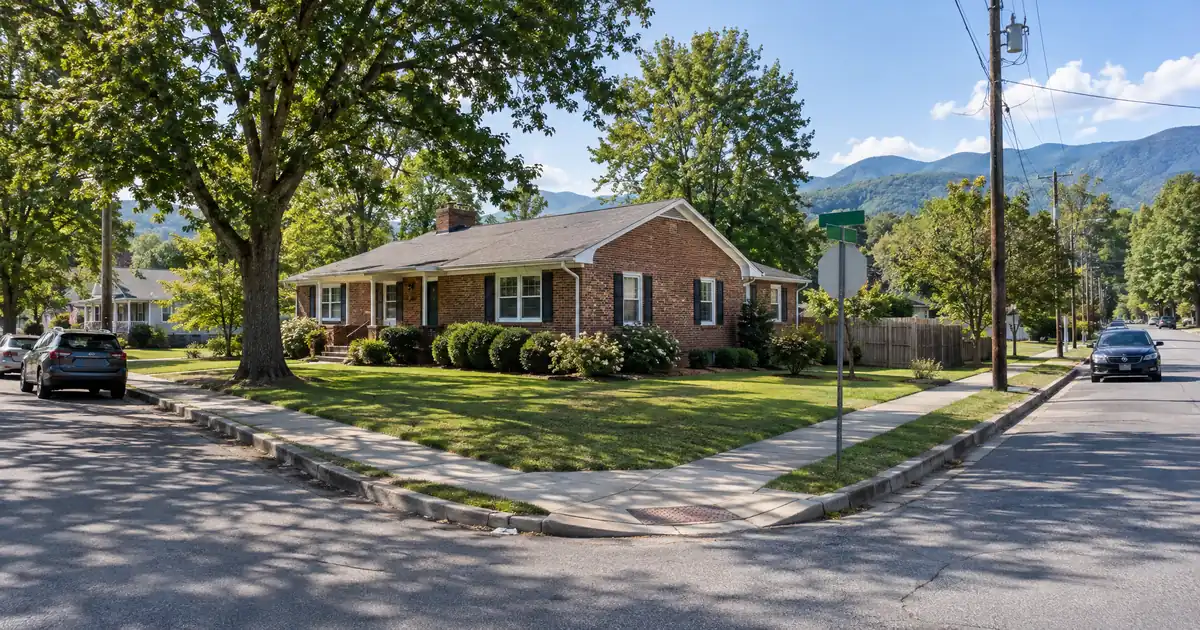
Gallatin’s growth story is the wrong reason to plan a cash-out refinance here. Population is climbing, cranes are up along the pikes, and Meta has poured more than $1.5 billion into a campus on the edge of town. Yet price signals are close to flat, and rent growth is barely positive. Equity in Gallatin comes from what an investor paid or what they built into the asset, not from the market lifting the appraisal. That distinction decides which properties can support a DSCR cash-out and which will leave the owner short.
DSCR Cash-Out Calculator
Run the cash-out numbers in Gallatin, TN
Rate source: Freddie Mac 30-yr average via FRED® — Federal Reserve Bank of St. Louis · effective Sep 24, 2026
Prefilled with starting assumptions — enter your property’s value, balance, taxes, and insurance for a more accurate picture.
Program parameters update from Lendmire’s centralized guideline source. Taxes and insurance are editable estimates.
As of Sep 24, 2026 · General Freddie Mac market benchmark, not a Lendmire loan offer. Property value, balance, taxes, and insurance are editable estimates. Maximum loan-to-value varies by lender, program, property type, and seasoning. Not a Loan Estimate, approval, or commitment to lend. Program availability and eligibility are subject to lender guidelines, credit approval, property review, and underwriting.
The Quick Read:
A DSCR cash-out refinance in Gallatin, Tennessee fits owners of small multi-unit or attached rentals who bought below current appraised value, since the loan is underwritten primarily on the property’s rental income measured against its full monthly obligation, and a flat local price trend means basis, not market lift, creates the equity.
- Redfin shows a median sale price near $429,666, up 3.8 percent year over year. RentCafe puts average rent at $1,568, roughly flat.
- Cash-out leverage tops out at 75 percent LTV, with about six months of seasoning.
- Single-family coverage runs thin; two-unit stacking is the cleaner path to the 1.00x benchmark.
Gallatin Market Snapshot
A quick read on the Gallatin investor landscape — figures come from the cited sources below. Confirm current property-level numbers before underwriting.
| Metric | Detail |
|---|---|
| Home prices | 36.6 median age (Census Reporter, Gallatin TN) |
| University enrollment | 6,963 total enrollment (2024) (Data USA, Vol State) |
| Population | 48,532 population (Census Reporter, Gallatin TN) |
| Employment | 1,000+ employees (Highpoint Health) |
Start at the Hartsville Pike Employment Corridor
The strongest cash-out candidates sit near the employers that anchor Gallatin’s renter base, and Hartsville Pike is the densest cluster. Highpoint Health – Sumner operates a 167-bed hospital there with more than 1,000 employees and 300 physicians, and describes itself as one of the largest non-government employers in Sumner County. The Meta campus sits south of Roundtree Drive and north of the same pike. Per the Gallatin Economic Development Agency, Meta’s investment on roughly 800 acres will exceed $1.5 billion. WKRN reported over 100 operational jobs and an average of 1,100 skilled trade workers on site at peak.
Read that carefully. The permanent payroll is modest and the construction workforce is temporary. Meta is a fiscal-stability and demand-support story, not a reason to underwrite rents rising. The hospital is the steadier tenant source: clinical staff and allied-health trainees generally sign longer leases than seasonal trades. For a cash-out borrower, the takeaway is durability. A rental within a short commute of these employers should hold occupancy through the appraisal and the hold period, which matters more than rent upside.
Nashville Pike and the Vol State Renter Pool
Nashville Pike is the second corridor worth studying. Volunteer State Community College is here, and Data USA shows 6,963 total enrolled students in the most recent year. Other directories cite higher figures from earlier periods, so treat enrollment as a directional demand signal, not a headcount of renters. Student and staff households tend to seek one- and two-bedroom product.
There is a supply wrinkle. The City of Gallatin developments page lists Gallatin Gap, a 372-unit apartment complex planned along this pike, and Atlas Townhomes at 161 units. New large-format supply can cap rent growth on competing older units. Owners refinancing a 1980s-era duplex nearby should model flat rents. Skip any pro forma that assumes a bump.
Other pockets show up in the city’s own project list: Long Hollow Pike and the Station Camp area for newer master-planned growth, and Red River Road, where the housing authority is adding duplexes. No reliable neighborhood-level rent or price series exists for any of them. Gaps like that are worth naming. Anyone claiming precise rent-to-value bands by subdivision here is guessing.
The Property-Type Split That Drives Coverage
Small buildings dominate the rental base. RentCafe’s Yardi-sourced data on the Gallatin rental market puts 62 percent of rentals in complexes under 50 units, 25 percent in single-family rentals and only 11 percent in buildings over 50 units. A duplex or small multifamily isn’t a niche competing against apartments. It is the mainstream rental format.
Yet stock is scarce. A local agent blog citing state housing data reports duplexes at 1.8 percent and three-to-four-unit buildings at 2.2 percent of the county’s housing mix. Treat that as directional, since it is secondary and county-level. An owner who already holds a small multi-unit is sitting on a scarce asset type.
Now the arithmetic, which has to be modeled honestly because published rent data here skews toward big complexes. The Sumner County/Gallatin RentCafe page shows $1,387 for a one-bedroom, $1,625 for a two-bedroom and $2,001 for a three-bedroom, but covers only buildings with 50 or more units. Small-building rents typically sit below those averages, so treat them as an upper bound.
| Scenario (modeled) | Rent basis | Coverage incl. Taxes and insurance |
|---|---|---|
| Single-family at citywide rent | $1,568 average | Roughly 0.6x-0.8x |
| Single-family, 3-bed | $1,998 average | Low-0.8 territory |
| Duplex, two 2-beds | $1,625 each | Roughly 1.2x-1.3x |
These bands assume a price near the citywide $429,900 median, a 30-year term at 75 percent LTV, and full PITIA including taxes and insurance. They are modeled assumptions, not sourced market metrics. Single-family clears the 1.00x benchmark only with a lower-priced property or lower leverage. Some lenders review sub-1.00 files, but those typically require stronger compensating factors, more reserves or different pricing. The duplex stack is where the number works. The paths for a thin single-family file are a sub-1.00 program, an interest-only structure, or a lower LTV. All are subject to lender guidelines, credit approval and property review.
How the Equity Actually Gets Pulled
Walk through the mechanism, because the order of operations matters.
1. Seasoning. Programs typically look for about six months of ownership, measured from title recording. An investor who closed last month waits.
2. Value. An appraisal sets the number. Cash-out leverage tops out at 75 percent LTV, lower than the 80 percent common on purchases. Multiply appraised value by 75 percent, subtract the existing payoff and closing costs, and the remainder is the ceiling on proceeds. It is not a promise.
3. Coverage. The property’s rent must clear the 1.00 DSCR benchmark against the new, larger obligation. Cash-out raises the loan balance, so coverage that passed on the old mortgage can fail on the new one. This is the step that surprises borrowers.
4. Reserves. Expect about six months of PITIA in reserves, rising to about nine months on balances above $1,500,000. Credit tiers run 620, 660, 680 and 700, with 620 the floor. Standard programs go up to $3,000,000 in loan size.
Picture an investor who bought a duplex near Hartsville Pike at a price 20 percent below where comparable closings now sit. At 75 percent LTV against current appraised value, meaningful proceeds are on the table even in a flat market, because the discount is the equity. Now picture a second investor who bought at full price and is counting on lift. Same market, same loan program, no proceeds. The DSCR cash-out overview covers the mechanics in more depth, and Lendmire’s refi programs page outlines the structures.
DSCR vs. conventional financing
Two common ways to finance an investment property in Gallatin, TN. They qualify you differently — here’s how investors weigh them.
Why investors choose it
- Qualifies on the property’s rental income — no personal tax returns, W-2s, or pay stubs needed to document income.
- No personal debt-to-income ceiling to clear, so existing mortgages and obligations don’t cap your borrowing the same way.
- Can be closed in an LLC, keeping the property inside a business entity.
- Built for scaling — not held to the limit on number of financed properties that conventional financing applies.
- Underwriting centers on the deal: generally qualifies when the rent covers the payment, a 1.00x coverage ratio being a common baseline (confirmed in underwriting).
- Designed specifically for investment property, including long-term and, where the program allows, short-term rentals.
Where it’s strong
- Often the lowest ongoing financing cost for a buyer who fully qualifies on personal income — a fit for a first property or a cost-first purchase.
Trade-offs for investors
- Requires full personal income documentation and must fit within a debt-to-income limit — salary, existing debts, and other mortgages all count.
- Typically held in your personal name rather than a business entity.
- Caps how many financed properties you can carry, which can become a ceiling as a portfolio grows.
- Evaluates you as a borrower as much as the property, which usually means more paperwork.
How investors usually choose: a first or single property often optimizes for the lowest financing cost; portfolio builders often optimize for leverage, vesting in an LLC, and scaling past conventional caps. The right answer depends on your goals, the property, and current guidelines — both paths run through select lenders in Lendmire’s wholesale network, with eligibility and terms confirmed in underwriting.
Why Appraisals Deserve a Stress Test
Price data conflicts, and the conflict tells you something. Redfin’s June figures show a median sale price of $429,666 up 3.8 percent, while Resideline shows a $429,900 median across 742 closings, with the middle half between $339,990 and $549,990. That is a wide band, and it’s a deep comp pool, which helps a defensible appraisal. (One separate Redfin page shows a 24 percent jump for a single month, which is a mix-shift artifact and not appreciation. Ignore it.)
Speed is loosening. Movoto reports 57 days on market against 42 last year. Slower sales and frequent price cuts push appraisers toward closed comps and away from asking prices. The practical read: a value-add plan should not assume an appraisal above recent closings. If renovation adds a bedroom or converts a basement unit, the lift is real only to the extent closed comps support it.
Rent tells the same story. RentCafe shows average rent of $1,568, essentially flat, and about 1.04 percent growth on the Sumner County page. Zumper reports a 9 percent increase to a $1,640 median. Sources disagree, so underwrite flat rents and treat any growth as upside.
What Working Brokers See in Commuter Suburbs
Working DSCR brokers see a recurring pattern in commuter-suburb markets like this one: the file that stalls is rarely the one with weak occupancy. It is the one where the owner refinanced on last year’s rent roll while the new loan balance quietly pushed coverage under 1.00x. The files that go smoothly usually arrive with a current lease schedule, a fresh insurance quote and a clear plan for what the proceeds will buy. Unlike conventional lenders that cap investor cash-outs by personal debt-to-income, the non-QM channel reviews the property’s rental income, which is why a self-employed owner with a strong duplex can often find a workable structure.
Vacancy and the Supply Question
One affordable-housing directory puts Gallatin’s rental vacancy at 6 percent, with 1.08 rental units per renter household. A local blog reports Sumner County at 6.6 percent. Both are secondary and neither is submarket-specific, but they support a routine vacancy allowance of around that size. This isn’t an oversupplied market. The new large complexes still bear watching, since 372 units at Gallatin Gap alone is a real addition. Renters make up 42 percent of Gallatin households, so the tenant base is broad.
The population base supports the thesis. Census Reporter’s ACS profile shows 48,532 residents, and Sumner County Schools serves 30,232 students across 53 schools per a regional development profile. Growth is real. It simply isn’t showing up as appraisal growth right now.
This one’s a genuine toss-up for owners of townhomes. An outside source puts average townhome rent near $2,247, which would help coverage, and new townhome supply is abundant. But abundant new supply also means competing comps at appraisal time. The stronger play may be the older two-to-four-unit building with a scarce-supply story, though an investor comfortable with newer product could argue the other way.
Where Proceeds Go Next
Cash-out proceeds are dry powder. The Gallatin-specific question is where to redeploy them. Given the thin single-family coverage, the logic points toward multi-unit acquisition or a value-add on the property already owned, though the proceeds could equally fund a purchase elsewhere in the state. The DSCR loans in Tennessee hub covers the wider footprint. For the tradeoffs against bank financing, compare conventional and DSCR loans, and for the underlying product, see the guide “What Is a DSCR Loan”.
Before committing, verify current local rental rules, property taxes and insurance with qualified local professionals, since those inputs change coverage. Owners who want to see where a specific property lands can compare DSCR options or call 828-256-2183.
Frequently Asked Questions
How do you qualify for a DSCR loan in Gallatin?
Qualification centers on the property’s rent measured against its full monthly obligation, with 1.00x the common baseline. Credit tiers start at a 620 floor, and reserves of about six months of PITIA are typical. On a Gallatin single-family at citywide rents, coverage often runs below that baseline, so duplexes tend to clear more easily. Eligibility depends on lender guidelines, credit and property review.
What are the requirements for an investment property loan in Gallatin, Tennessee?
For a cash-out, expect about six months of seasoning from title recording and a 75 percent LTV ceiling. Rents must support the new loan balance. LLC-titled properties can be eligible, subject to lender program eligibility. Manufactured homes, log homes and barndominiums fall outside these programs, which matters in a county with rural-edge housing.
Does flat pricing in Gallatin make a cash-out pointless?
No, but it changes who benefits. Redfin’s 3.8 percent annual gain and RentCafe’s 1.04 percent rent growth mean market lift is small. Owners who bought at a discount, or added value verified by closed comps, still have equity to pull. Owners who paid full price and expected lift generally do not.
Does the Meta data center affect rental demand?
Modestly and differently than headlines suggest. About 1,100 skilled trades workers were on site at peak, which is temporary, and operational jobs number just over 100. The steadier support comes from the hospital and college. Meta’s larger contribution is to the local tax base, not to permanent rental demand.
For current guidelines and terms, see Lendmire’s DSCR loan programs page.
Get Started
Ready to find the right loan for you?
In about 30 seconds you can review financing options available for your investment property. No commitment required.
Informational only. Not a Loan Estimate, approval, or commitment to lend. Program availability and eligibility are subject to lender guidelines, credit approval, property review, and underwriting.
About Lendmire
As a non-QM mortgage broker (NMLS# 2371349), Lendmire facilitates DSCR investor loans across 41 markets, including Washington, D.C. DSCR eligibility is generally reviewed around property-level rental income instead of personal income documentation, subject to lender guidelines, serving LLC-structured portfolios and self-employed borrowers who don’t fit conventional boxes. A two-time Scotsman Guide Top Mortgage Workplace: a 2025 Scotsman Guide Top Mortgage Workplace and a 2026 Scotsman Guide Top Mortgage Workplace.
If you only take one thing from this piece, it’s this: in Gallatin, the equity you can pull is set by what you paid and what you built, not by the market, so underwrite the duplex and the discount instead of the growth story.
References
1. Freddie Mac 30-yr average via FRED® — Federal Reserve Bank of St. Louis
2. median sale price near $429,666, up 3.8 percent year over year
3. RentCafe puts average rent at $1,568
4. Census Reporter, Gallatin TN
8. Volunteer State Community College
9. City of Gallatin developments page
11. Sumner County/Gallatin RentCafe page
12. Resideline
This article is part of Lendmire’s investment property cash-out refinance program — full qualification details, guidelines, and scenarios live on the program page.
Related reading: Cash Out Refinance Investment Property Gallatin Tennessee · DSCR Cash Out Refinance in Nashville, Tennessee: East Nashville Equity After the Run-Up · Cash Out Refinance Investment Property in Shelbyville, Kentucky
Guides: Investment Property Cash-Out Refinance in Gallatin, TN · Investment Property Cash-Out Refinance in Tennessee
Brandon Miller
Founder & CEO, Mortgage Loan Originator, Lendmire LLC
- Mortgage Loan Originator · NMLS# 1129696 · Verify on NMLS Consumer Access
- North Carolina Real Estate Broker · License# 343312 · Verify on NCREC
- North Carolina Insurance Producer · License# 19053198 · Property, Casualty, Life, Health · Verify on NAIC SBS
- Lendmire LLC · Firm NMLS# 2371349 · Verify firm licensure
Compliance and disclosures. Lendmire (NMLS# 2371349) is a licensed mortgage broker and is not a direct lender, depository institution, financial advisor, or tax professional. Content in this article is general market analysis and educational information — not financial, legal, or tax advice for any specific situation. Lendmire does not guarantee loan approval; every transaction is subject to underwriting by the funding lender. Mortgage pricing and loan program guidelines are subject to change at any time without notice and vary by borrower characteristics, property type, and state regulations. Lendmire complies with Equal Housing Opportunity. Licensure verification: NMLS Consumer Access.