
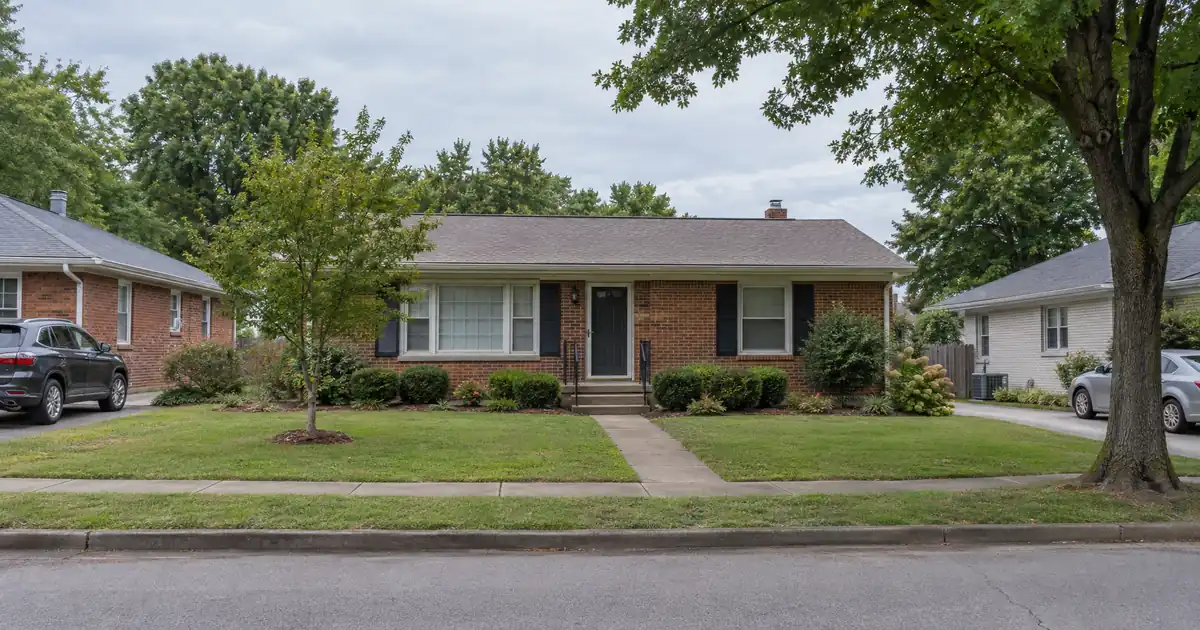
A duplex a few blocks from the Cumberland University campus hits the DSCR math like this. Model it at an assumed appraised value comfortably in the mid-six-figure range with two 2BR doors, each at $1,578, the RentCafe citywide 2BR average. Run a 75 percent cash-out against full PITIA, taxes and insurance included, and coverage lands in the low-1.3 range. Now run a single-family 3BR at $2,066 against the $415,000 median sold price at the same leverage. It comes out in the mid-0.8s. Same city, same loan structure, very different files. That gap is the whole story of a DSCR cash out refinance in Lebanon, Tennessee.
(Both scenarios are modeled assumptions, not sourced deal data.)
DSCR Cash-Out Calculator
Run the cash-out numbers in Lebanon, TN
Rate source: Freddie Mac 30-yr average via FRED® — Federal Reserve Bank of St. Louis · effective Sep 24, 2026
Prefilled with starting assumptions — enter your property’s value, balance, taxes, and insurance for a more accurate picture.
Program parameters update from Lendmire’s centralized guideline source. Taxes and insurance are editable estimates.
As of Sep 24, 2026 · General Freddie Mac market benchmark, not a Lendmire loan offer. Property value, balance, taxes, and insurance are editable estimates. Maximum loan-to-value varies by lender, program, property type, and seasoning. Not a Loan Estimate, approval, or commitment to lend. Program availability and eligibility are subject to lender guidelines, credit approval, property review, and underwriting.
Lendmire is a DSCR-focused mortgage broker (NMLS# 2371349). Investors underwriting deals in Lebanon, Tennessee can use DSCR programs Lendmire arranges — available across 41 markets, including D.C. This article skips purchase mechanics and covers pulling equity out of a property you already own.
TL;DR: A DSCR cash-out refinance in Lebanon, Tennessee is underwritten primarily on the property’s rental income measured against its full monthly obligation, so it fits investors holding duplexes or small multifamily near the university core far better than owners of single-family rentals bought near the median.
- Median sold price is $415,000 per Resideline, so single-family rents rarely cover the debt.
- Duplexes near Cumberland University stack two rents on one building basis.
- Prices are flat to slightly down, so proceeds depend on rent rather than appreciation.
- The 75 percent LTV cap and a 1.00 minimum DSCR set the ceiling.
- Every figure here varies by lender and program — guidelines, property type, leverage, and credit profile all apply.
Run the Duplex, Then Run the Single-Family
The ratio is monthly rent used for lender review divided by monthly PITIA, which is principal, interest, taxes, insurance and any HOA dues. At 1.00, rent covers the obligation exactly. Most standard programs are built around that benchmark, though some lenders review lower scenarios with less leverage and stronger credit.
Take the single-family first. A 3BR at $2,066 against a roughly $415,000 value works out to about 0.50 percent rent-to-value per month. That’s thin. At 75 percent LTV with full taxes and insurance, coverage lands below 1.00, around the mid-0.8s. Skip the idea that a median-priced house in Lebanon pulls meaningful cash out on a DSCR file.
Now the duplex. Two doors at $1,578 against a modeled $400,000 value puts coverage in the low-1.3 range. Drop each door to $1,200, the figure one listing for a fully rehabbed 2BR duplex unit claims (an agent claim, unverified), and coverage falls to right around 1.0. So the rent assumption is the whole file. A lender-ordered appraisal rent schedule decides it, not the listing copy.
The guide “What Is a DSCR Loan” is covered elsewhere, and the comparison with conventional underwriting explains why personal income doesn’t drive this file.
What Actually Limits the Cash Out
Four things cap proceeds, and none of them is a guarantee.
Leverage. Cash-out tops out at 75 percent LTV. That ceiling is hard, and it’s lower than the purchase cap.
Seasoning. Programs typically want about six months of ownership, measured from title recording. A property bought last month isn’t a candidate yet.
Coverage and reserves. The standard floor is 1.00, and reserves usually run about six months of PITIA (more on larger balances). Credit tiers generally step through 620, 660, 680 and 700, with 620 as the floor. Better scores tend to support better leverage. Equity available depends on rent used for lender review, PITIA, reserves and that 75 percent ceiling, never on the value alone. Standard programs go up to $3,000,000, with smaller balances routed through select lenders in the network. All of it is subject to lender guidelines and varies by borrower and property.
Appraised value. This is the one most investors underweight in Lebanon. Zillow lists an average home value of $429,372, down 0.5 percent year over year. Movoto shows listing medians flat. Every source in the research points flat to slightly soft. There’s no appreciation wave to lean on here. Underwrite on rent and treat any value gain as a bonus.
The guide “The Refi Options” covers the mechanics in more depth. The broader menu of investment property refinance options is worth a look as well.
The Demand Under the Rents
Rents only hold if tenants keep showing up. Lebanon’s tenant base is broader than its size suggests. Cumberland University reports 3,266 students, and the campus sits beside the Historic Square. The TNECD Wilson County profile lists county employers with estimated headcounts: FedEx Supply Chain at 1,168, CEVA Logistics at 1,063, Cracker Barrel at 784, Lochinvar at 761 and Wilson County Government at 725. Logistics, manufacturing, a corporate headquarters and local government don’t all contract together.
Vanderbilt Wilson County Hospital adds a healthcare tenant pool. It’s a 245-bed, two-campus facility and the sole inpatient provider for the county, and the hospital reports more than 2,000 employees. (TNECD lists a lower Vanderbilt number under a different definition, so treat headcounts as approximate.)
Then there’s the train. Leadership Middle Tennessee calls the Music City Star the state’s only commuter train, and Lebanon and Hamilton Springs both connect to Nashville. A tenant who works downtown can rent here without a car commute, at rents below Nashville’s.
Working DSCR brokers see a recurring pattern in second-ring commuter markets like this one. The headline price looks affordable, the single-family files miss 1.00, and the small multifamily files carry the volume. The investors who get cash out cleanly are usually the ones who bought per-door rather than per-house, and whose rent schedule survives an appraiser’s haircut.
Where the Equity Sits
Historic Square and the Cumberland corridor. This is the strongest pocket for DSCR cash-out. Duplexes across from the university, a 5-unit townhome property near the Square, and new-construction-plus-duplex lots all show up in Homes.com multi-family listings. That snapshot shows 13 multi-family listings from $294,900 to $4,798,000, with an average of 37 days listed. Treat that as inventory color, not a market statistic. Demand is students, staff, city and county workers and hospital employees. Stacked rents against a per-door basis are what move coverage above 1.0 here.
South Hartmann Drive and the I-40 corridor. Duplexes here market on access to I-40 and West Main Street. Tenants lean toward distribution, retail and healthcare workers. The math is decent but less proven than the Square, and rent data is sparse.
Hamilton Springs. A mixed-use area with its own Music City Star stop. The tenant is the Nashville commuter, which is a real draw. Product skews newer, so appraisal comps matter more than rent.
Castle Heights and Coles Ferry Pike. Newer builds appeal to family renters and owner-occupants. Workable for townhome rentals, but rent-to-value looks like the single-family problem again.
Five Oaks, StoneBridge and the southern edge toward Gladeville and Vine. Skip these for cash-out. Golf-course and acreage settings suit owner-occupants, and the unit-count stacking that makes coverage work isn’t there. No neighborhood-level rent data supports a DSCR case in these areas.
What Could Go Wrong?
Three things deserve more attention than they usually get.
New-apartment concessions. Apartments.com shows 20 recently built apartment communities averaging $1,366, with a range of $1,184 to $1,916. Some advertise concessions, such as one month free on a 13-month lease at Hartmann Plantation. A duplex owner competes with those effective rents. If an appraiser leans on concession-adjusted comps, your rent schedule comes in lower than the asking rents you’re underwriting. This isn’t measured vacancy data. It’s a risk to check, not a proven oversupply.
Thin comps on new product. Redfin’s ZIP 37136 page shows new-construction townhome-style units listed between $244,990 and $315,000. Those sit well below the city median. If only a handful sell nearby, appraisal support for a cash-out gets shaky.
Unit-count limits. The 5-unit property near the Square sounds like the dream stack. Many DSCR programs stop at four units, and larger buildings may route into commercial or multifamily programs with different terms. Confirm the unit count before you plan around it.
Rent sources also disagree. RentCafe’s 3BR average is $2,066, while dated Rentcast figures differ by ZIP. That variance is real, so the appraisal’s rent schedule governs, not any single website. Beyond that, check current local rules, taxes and insurance with qualified local professionals.
Where the Proceeds Go
Cash-out only makes sense if the next deal clears its own coverage. The cleanest loop in this market is duplex equity funding the next duplex or fourplex in the same corridor, because both files stack rents. Using proceeds on a median-priced single-family house just rebuilds the sub-1.00 problem with more debt on top.
Title matters too. Many investors hold in an LLC, which is available subject to lender program eligibility. Sort that out before the refinance, not during it.
DSCR vs. conventional financing
There are two common ways to finance an investment property in Lebanon, TN, and they qualify you differently — here’s how investors weigh them.
Why investors choose it
- Qualifies on the property’s rental income — no personal tax returns, W-2s, or pay stubs needed to document income.
- No personal debt-to-income ceiling to clear, so existing mortgages and obligations don’t cap your borrowing the same way.
- Can be closed in an LLC, keeping the property inside a business entity.
- Built for scaling — not held to the limit on number of financed properties that conventional financing applies.
- Underwriting centers on the deal: generally qualifies when the rent covers the payment, a 1.00x coverage ratio being a common baseline (confirmed in underwriting).
- Designed specifically for investment property, including long-term and, where the program allows, short-term rentals.
Where it’s strong
- Often the lowest ongoing financing cost for a buyer who fully qualifies on personal income — a fit for a first property or a cost-first purchase.
Trade-offs for investors
- Requires full personal income documentation and must fit within a debt-to-income limit — salary, existing debts, and other mortgages all count.
- Typically held in your personal name rather than a business entity.
- Caps how many financed properties you can carry, which can become a ceiling as a portfolio grows.
- Evaluates you as a borrower as much as the property, which usually means more paperwork.
How investors usually choose: a first or single property often optimizes for the lowest financing cost; portfolio builders often optimize for leverage, vesting in an LLC, and scaling past conventional caps. The right answer depends on your goals, the property, and current guidelines — both paths run through select lenders in Lendmire’s wholesale network, with eligibility and terms confirmed in underwriting.
Lebanon’s employment base is growing. Data USA shows employment in the Lebanon and Mt. Juliet PUMA up 3.71 percent from 2023 to 2024, and the Middle Tennessee Industrial Development Association profile puts county unemployment at 3.1 percent with manufacturing at 10.4 percent of jobs. That supports rental demand without promising rent growth.
Two Ways to Use the Equity
Say you own a duplex near the Square with a clean rent schedule. There are really two moves, and both have a cost.
Pull to the cap. Take the full 75 percent and redeploy into another per-door property. More capital works, but your coverage cushion shrinks. If concessions at the new apartment communities pull your rents down, the margin over 1.00 disappears first.
Borrow less than the cap. Hold leverage lower and keep coverage comfortably above the benchmark. You pull out less, and you give up some growth, but the file survives a soft rent schedule or a conservative appraisal.
In a Lebanon market where prices have gone flat and rents carry every file, the choice comes down to how much cushion you want when the next apartment community opens its doors.
Frequently Asked Questions
How do you qualify for a DSCR loan in Lebanon, Tennessee?
Qualification centers on the property’s rent covering its full PITIA, with 1.00 as the standard minimum. Credit tiers typically run 620 through 700, and reserves of about six months PITIA are common. In Lebanon, duplexes near the university tend to clear that ratio more easily than median-priced single-family homes. Final eligibility depends on lender guidelines, credit and property review.
What are the requirements for a cash-out refinance on an investment property in Lebanon, Tennessee?
Expect a maximum of 75 percent LTV, about six months of ownership from title recording, a coverage ratio of at least 1.00 and reserves of roughly six months PITIA. Standard programs go up to $3,000,000. Manufactured homes, log homes and barndominiums fall outside these programs. Each file is reviewed subject to the lender’s guidelines. Connect with Lendmire to walk through a specific property.
Can a single-family rental in Lebanon support a DSCR cash-out?
Usually not much. A 3BR near the $415,000 median runs about 0.50 percent rent-to-value, and full PITIA pushes coverage below 1.00 at 75 percent LTV. Sub-1.00 programs, lower leverage or interest-only structures may be reviewed by select lenders, but the file gets harder. Duplexes are the better fit.
How do DSCR lenders review rental income instead of traditional tax-return income in Tennessee?
Lenders weigh the property’s rent used for lender review against its PITIA rather than relying mainly on personal income documents. Lendmire arranges DSCR investor programs and the key feature is that the property’s cash flow drives the review. Details vary by program. Start with Lendmire’s Tennessee DSCR platform or call 828-256-2183.
Does the Music City Star matter for Lebanon rental values?
It widens the tenant pool, especially near Lebanon Station and Hamilton Springs, because Nashville workers can rent without a car commute. It supports demand, not a guaranteed rent premium. Appraisers value on comparable sales and rent schedules, so the train helps the story more than the number.
For current guidelines and terms, see Lendmire’s DSCR loan programs page.
About Lendmire
Lendmire (NMLS# 2371349) is a mortgage brokerage focused on DSCR investor financing, helping arrange programs through wholesale and investor-lending channels in 41 markets, including Washington, D.C. DSCR loans are evaluated by the lender on property cash flow rather than personal income, subject to lender guidelines, supporting LLC closings and accommodating investors with four or more financed properties. Scotsman Guide named Lendmire a Top Mortgage Workplace in both 2025 and 2026.
Get Started
Ready to find the right loan for you?
In about 30 seconds you can review financing options available for your investment property. No commitment required.
Informational only. Not a Loan Estimate, approval, or commitment to lend. Program availability and eligibility are subject to lender guidelines, credit approval, property review, and underwriting.
References
1. RentCafe
2. resideline.com — Lebanon TN Housing Market
3. Zillow
4. Movoto
6. TNECD Wilson County profile
7. Vanderbilt Wilson County Hospital
8. Leadership Middle Tennessee
9. Homes.com multi-family listings
10. Apartments.com
12. Data USA
13. Middle Tennessee Industrial Development Association profile
14. 2025
15. 2026
This article is part of Lendmire’s investment property cash-out refinance program — full qualification details, guidelines, and scenarios live on the program page.
Related reading: Cash Out Refinance Investment Property in Lebanon TN · DSCR Cash Out Refinance in Bristol, Tennessee: Avoca Equity and a Thin Rent-to-Value Market · Cash Out Refinance Investment Property in Cookeville, Tennessee: Campus Corridor Duplex Equity
Guides: Investment Property Cash-Out Refinance in Lebanon, TN · Investment Property Cash-Out Refinance in Tennessee
Brandon Miller
Founder & CEO, Mortgage Loan Originator, Lendmire LLC
- Mortgage Loan Originator · NMLS# 1129696 · Verify on NMLS Consumer Access
- North Carolina Real Estate Broker · License# 343312 · Verify on NCREC
- North Carolina Insurance Producer · License# 19053198 · Property, Casualty, Life, Health · Verify on NAIC SBS
- Lendmire LLC · Firm NMLS# 2371349 · Verify firm licensure
Important disclosures. Lendmire (NMLS# 2371349) is a licensed mortgage brokerage. Lendmire is not a direct lender, depository institution, or financial advisor. All loan inquiries are subject to lender underwriting; this article does not constitute a commitment to lend. Rates, terms, and program guidelines are subject to change without notice and vary by borrower profile, property type, and state. Information in this article is general in nature and is not financial, legal, or tax advice. Equal Housing Opportunity. NMLS Consumer Access: nmlsconsumeraccess.org.