
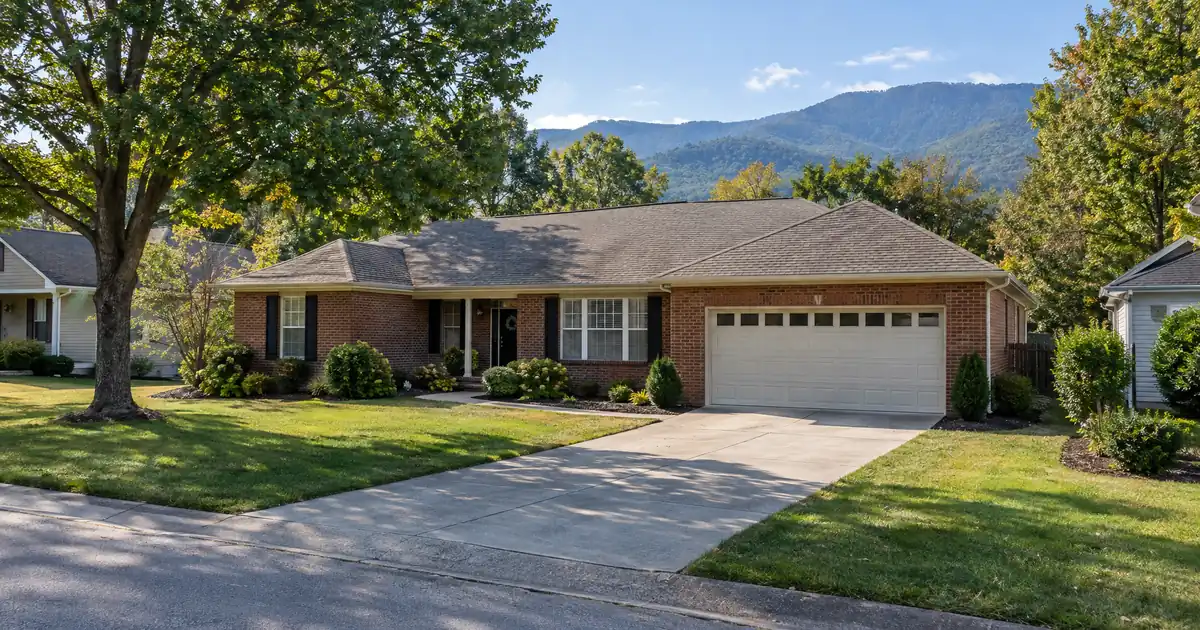
Most investors pulling equity from a Maryville rental assume appreciation will do the heavy lifting. Check that before you order the appraisal. Redfin shows the median sale price at $375K, down 1.8% year over year, while price per square foot rose 6.4% to $217. A cash-out refinance on an investment property here is decided by rent coverage and the 75% LTV ceiling far more than by market lift. The properties that clear the number are the ones that earn their way there. Final terms depend on lender guidelines, property type, leverage, and the borrower’s complete credit picture.
The Quick Read: A DSCR cash-out refinance on an investment property in Maryville, Tennessee is underwritten primarily on the property’s rental income measured against its full PITIA obligation, with proceeds capped by a 75% LTV ceiling and roughly six months of ownership seasoning, subject to lender guidelines and property review.
DSCR Cash-Out Calculator
Run the cash-out numbers in Maryville, TN
Rate source: Freddie Mac 30-yr average via FRED® — Federal Reserve Bank of St. Louis · effective Sep 24, 2026
Prefilled with starting assumptions — enter your property’s value, balance, taxes, and insurance for a more accurate picture.
Program parameters update from Lendmire’s centralized guideline source. Taxes and insurance are editable estimates.
As of Sep 24, 2026 · General Freddie Mac market benchmark, not a Lendmire loan offer. Property value, balance, taxes, and insurance are editable estimates. Maximum loan-to-value varies by lender, program, property type, and seasoning. Not a Loan Estimate, approval, or commitment to lend. Program availability and eligibility are subject to lender guidelines, credit approval, property review, and underwriting.
- Duplexes carry the strongest coverage story: two rent streams, one lot, one roof.
- A single-family 3-bedroom sits near 1.00 coverage at full leverage, taxes and insurance included.
- Appraisal risk matters more than rent risk when new-construction comps and rising supply set the value.
- Manufacturing, hospital and aviation payrolls spread tenant income across several employers.
Maryville Market Snapshot
A quick read on the Maryville investor landscape — figures come from the cited sources below. Confirm current property-level numbers before underwriting.
| Metric | Detail |
|---|---|
| Home prices | $400,812 median (Homes.com) |
| University enrollment | 1,151 students (Maryville College Quick Facts) |
Start on the U.S. 411 South Corridor
The U.S. Highway 411 S corridor and the North Fifth Street infill pocket are where Maryville’s duplex story is visible. Two-door product shares one lot, one roof and one tax bill, so it carries cash-out coverage better than a single-family house at the same leverage. That is the pattern worth owning.
Two duplex developments have cleared local approval, according to Hoodline relaying The Daily Times: 13 duplexes off U.S. Highway 411 S and a single duplex on North Fifth Street. The same piece relays a forecast need for 1,734 additional housing units over five years. Hoodline is a secondary aggregator, so treat that figure as directional.
On the listing side, Homes.com shows Maryville multi-family priced from $390,000 to $1,650,000, with an average of 39 days on market. One new-build duplex listing offers 3 bedrooms and 2.5 baths per side. That is the unit layout that holds a long-term tenant. Another Homes.com listing describes a city lot marketed for a 5-plex and notes that few city lots remain for multifamily. Scarcity of small multi-unit product is the quiet argument for owning it.
Older value-add blocks exist too. A TNRealEstate.Auction listing advertises 12 townhouse units in two brick 6-plexes built in the early 1980s. Blocks like that can work for a cash-out, but they push the file toward more documentation and more appraisal scrutiny.
Here is the catch. That 13-duplex pipeline is also new competing supply. An investor who owns an older duplex nearby should expect the new product to set the ceiling on rent. Whether the new builds help your appraisal by supplying comps or hurt your rent by splitting the tenant pool is a toss-up. Honestly, it depends on how close your unit sits to the new construction and how it compares in condition.
No reliable neighborhood-level rent-to-value or cap-rate data exists for Maryville, so none appears here. The corridor read is qualitative. The coverage math below is modeled.
What the Duplex Math Looks Like
On modeled inputs, a Maryville duplex clears 1.00 coverage at full cash-out leverage while a comparable single-family house lands at or just below it. The difference comes from stacking two doors against a price that does not double. Run the numbers on both and the gap is plain.
These are modeled assumptions, not market facts. Zumper reports an average Maryville apartment rent of $1,250 and an average house rent of $2,185. Assume a duplex listed near $390,000 (the bottom of the Homes.com multi-family range) with two doors at $1,250 each, for $2,500 in total monthly rent. At 75% LTV, coverage against full PITIA, including taxes and insurance, comes out around 1.05. Coverage is monthly rent divided by the monthly principal, interest, taxes and insurance. How the qualification works follows the same logic on every file, and only the inputs change. These specifics are subject to lender guidelines and a full review of property, leverage, and credit.
Now the house. Assume a single-family rental at $375K (the Redfin median) renting at that $2,185 average. At 75% LTV, the modeled coverage including taxes and insurance sits around 0.95 to 1.00. That is the honest read. A typical Maryville house rental sits right at the benchmark and often just under it at full leverage. A 1.00x baseline is common because rent covers the obligation at that level, though some lenders review lower scenarios with stronger compensating factors.
If the house comes in under 1.00 on long-term rent, the paths a lender may review include lower leverage, a stronger credit tier, an interest-only structure or a sub-1.00 program. Each carries its own pricing and reserve trade-offs, and qualification stays subject to lender guidelines, credit approval and property review. For investors comparing this to a conventional refinance, how the two loan types differ is mostly about whose income gets underwritten. Rental coverage is the answer on one side and personal DTI on the other.
The duplex’s edge also depends on both doors staying leased. A vacant door cuts coverage hard, which is why the next section matters.
Rent Data Conflicts (Pick Your Source Carefully)
Maryville rent figures disagree by hundreds of dollars depending on the source and property type. Apartment-only data runs low, house data runs high, and the direction of travel differs too. Underwrite toward the low end of the credible range.
Rentcafe is apartment-only. It reports a $1,463 average, with 1-bedrooms at $1,302, 2-bedrooms at $1,503 and 3-bedrooms at $1,711, plus a 0.31% decline year over year. Prop:Metrics, sourcing Rentcast, reports medians of $1,070 for a 1-bedroom, $1,410 for a 2-bedroom, $2,300 for a 3-bedroom and $2,920 for a 4-bedroom in ZIP 37801, with the citywide average at $1,970, up 7.1% year over year. Those are from an earlier snapshot. Zumper’s own pages conflict with each other too: its listings page showed rents down 3.08% year over year while its research page showed an increase.
Yes, the sources disagree this much, and nobody here has a clean single number.
What does that do to a cash-out file? The appraiser’s rent schedule and any in-place lease drive the rent used for lender review, not a web aggregator. Investors who size the loan on the high Rentcast figure and then see the appraiser land closer to the apartment data are the ones who get surprised. The spread between houses and apartments is real, but it makes the 3-bedroom side-by-side duplex more attractive than a pair of 1-bedrooms. A 3-bedroom unit competes with house rentals, not garden apartments.
Equity Is Thinner Than the Headlines Suggest
Maryville has modest appreciation and rising supply, so a cash-out refinance after a short hold following purchase will not produce a large equity jump. Proceeds depend on the appraised value, the 75% LTV ceiling and whether the rent clears coverage. They are never a guaranteed figure. Terms vary by lender guidelines, property type, leverage, credit profile, and full file review.
The price sources do not agree on the median, and definitions differ (sold versus listed). This article uses Redfin’s $375K sold median, which recorded 54 homes sold in the month and 61 days on market. Prop:Metrics shows $390,000, up 1.4% year over year. Homes.com places its median higher at $400,812, which reflects a listing-based method. A local brokerage guide puts the median near $350,000, up roughly 4%, with about 2.5 months of supply versus 1.8 earlier. It also cites new construction in the Topside Road corridor and the Louisville area priced from $320K to $480K. Treat that one as a broker’s view, since its median conflicts with the others.
All of that points the same way. Flat to modest price movement, longer-sitting overpriced listings and a heavy new-construction mix mean an appraiser can lean on new-build comps. For a duplex or older rental, that can pull value either way. Cash-out proceeds are the appraised value times the LTV ceiling minus the existing balance, so a conservative appraisal leaves less than a spreadsheet promised.
The fixed program points matter more than appreciation here. Cash-out generally requires about six months of ownership, measured from title recording, and a 75% LTV ceiling that is lower than purchase leverage. Investors can read more on pulling equity out and the investor refinance breakdown. The stronger play for most Maryville owners is to treat the six-month mark as a minimum, not a trigger, and wait until the rent schedule and a realistic comp set both support the number. Buyers who bought below market or improved the property have the best equity story. Buyers hoping the market lifts them have the weakest.
Proceeds typically fund the next acquisition’s down payment and reserves. If the next target is another duplex on the corridor, the exit math repeats on a new file.
Who Rents Here
Maryville renters work in manufacturing, healthcare, education and aviation, and no single payroll dominates. That spread supports the stable-occupancy argument. It does not guarantee any single unit stays leased.
Census Bureau QuickFacts puts the city at 32,392 people with a median age of 40.8. Point2Homes counts 3,692 renter units, 31% of households, against 8,249 owner units, while Rentcafe shows 33%. This is a mostly owner-occupied city, so the rental pool is real but not deep.
The employer base is county-level, with no city-only ranking available. The Blount Chamber lists DENSO, Blount Memorial Hospital, Arconic, ProNova Solutions, Amazon, Smith & Wesson and Cirrus Aircraft as principal employers and counts more than 100 manufacturing plants in the county. Blount County Government adds Clayton Homes and McGhee Tyson ANG Base to its largest-employer list. No headcounts appear in those sources, so none are claimed here.
Two anchors deserve a closer look. The Daily Times reports that Smith & Wesson opened a 650,000 sq ft headquarters campus in Maryville that cost roughly $160M, with a minimum wage obligation of $25.97. That wage floor matters for tenant income in the airport and Proffitt Springs corridor. Few comparable cities this size picked up a publicly traded headquarters that way. WBIR reports a new Costco bringing a few hundred jobs to the former Alcoa West Plant site near McGhee Tyson Airport. On the healthcare side, Blount Memorial Hospital is a 304-bed hospital and the county’s second-largest employer, per WATE reporting from a few years back. Data USA counts 15.8k employed Maryville residents, led by health care at 2,204, education at 2,035 and manufacturing at 1,683.
The college is a smaller rental driver than people assume. Maryville College reports 1,151 students on a 263-acre campus, and US News says 77% live in college-affiliated housing. Don’t underwrite a rent premium near campus. None is measured.
Skip the Owner-Occupant Pockets
Heritage Hills and Wimbledon are Colonial Revival areas that read as owner-oriented, not duplex-oriented. They are good places to live and poor places to chase cash-out coverage. Price per door runs high and rental comps run thin, so the appraiser has little to lean on.
The downtown and College Hill Historic District core is a similar story. Charming, walkable and tied to the college, but no neighborhood-level data supports a rent premium. Skip it for cash flow unless you already own there.
Adjacent Alcoa is worth a glance. Zumper says Maryville’s median rent runs about 8% above Alcoa’s, which gives Maryville owners a modest edge. A new apartment community in Alcoa will pull from the same renter pool.
Apartment competition is the real vacancy risk. RentCafe shows 66% of apartment buildings were built since 2000, and about 95% of rental communities are low-rise garden-style. Because so much of the stock is recent, vacancy is better verified with current local data, such as a property manager’s occupancy history or a broker’s rent survey, than assumed from any single aggregator figure. New garden-style product competes with small multi-unit and single-family owners for the same renters, so don’t assume rent growth in the refinance appraisal.
The Plumbing: What the File Actually Needs
Cash-out files in a market like Maryville stall on documentation, not on the story. A clean file shows a recorded title date that clears seasoning, a rent schedule the appraiser can support, entity paperwork that matches the title and reserves that are seasoned in the account.
DSCR vs. conventional financing
There are two common ways to finance an investment property in Maryville, TN, and they qualify you differently — here’s how investors weigh them.
Why investors choose it
- Qualifies on the property’s rental income — no personal tax returns, W-2s, or pay stubs needed to document income.
- No personal debt-to-income ceiling to clear, so existing mortgages and obligations don’t cap your borrowing the same way.
- Can be closed in an LLC, keeping the property inside a business entity.
- Built for scaling — not held to the limit on number of financed properties that conventional financing applies.
- Underwriting centers on the deal: generally qualifies when the rent covers the payment, a 1.00x coverage ratio being a common baseline (confirmed in underwriting).
- Designed specifically for investment property, including long-term and, where the program allows, short-term rentals.
Where it’s strong
- Often the lowest ongoing financing cost for a buyer who fully qualifies on personal income — a fit for a first property or a cost-first purchase.
Trade-offs for investors
- Requires full personal income documentation and must fit within a debt-to-income limit — salary, existing debts, and other mortgages all count.
- Typically held in your personal name rather than a business entity.
- Caps how many financed properties you can carry, which can become a ceiling as a portfolio grows.
- Evaluates you as a borrower as much as the property, which usually means more paperwork.
How investors usually choose: a first or single property often optimizes for the lowest financing cost; portfolio builders often optimize for leverage, vesting in an LLC, and scaling past conventional caps. The right answer depends on your goals, the property, and current guidelines — both paths run through select lenders in Lendmire’s wholesale network, with eligibility and terms confirmed in underwriting.
Lendmire’s deal desk tends to see the same friction on files from markets structurally like this one: a mixed-source rent picture, a thin comp set and an owner who sized the loan on the highest rent estimate. The cleaner files from a documentation standpoint arrive with the lease, a proof of recent ownership, the insurance declarations page and a realistic view of the appraiser’s rent figure. Files that run into trouble usually have a rent gap between the lease and the market schedule, or a property type the programs do not cover.
On the parameters, expect these as typical guidance, not commitments, and subject to lender guidelines:
- Leverage: cash-out tops out at 75% LTV, below purchase leverage.
- Seasoning: about six months of ownership from title recording.
- Coverage: a minimum 1.00 DSCR, rent used for lender review against full PITIA.
- Credit: tiers at 620, 660, 680 and 700, with a 620 floor. Better tiers typically earn better leverage and pricing.
- Reserves: about six months of PITIA.
- Loan size: up to $3,000,000 on standard programs. Smaller balances route through select lenders in the network.
Property type matters on the county’s rural edges. Manufactured homes, log homes and barndominiums fall outside these DSCR programs. With Clayton Homes among the county’s largest employers, that is worth a quick check on any rural-fringe parcel. LLC-titled borrowers are generally fine, subject to lender program eligibility, but the entity documents need to match the title exactly.
Investors weighing the broader picture can start with DSCR loan options for Tennessee investors, and anyone ready to run a scenario can get a DSCR quote or call Lendmire at 828-256-2183. Verify current local rental rules, taxes and insurance with qualified local professionals before sizing the file.
Frequently Asked Questions
How do you qualify for a DSCR cash-out refinance in Maryville, Tennessee?
Qualification centers on the property’s rental coverage, meaning monthly rent against full PITIA, with 1.00 as the common baseline. Beyond that, the file typically needs a credit score at or above 620, about six months of ownership from title recording, reserves and a property that falls within eligible types. In Maryville, a duplex tends to clear the baseline more comfortably than a single-family rental at the same leverage. Everything remains subject to lender guidelines and property review.
What are the requirements for a cash-out refinance on a Maryville investment property?
Typical guidance is a 75% LTV ceiling, about six months of seasoning, about six months of PITIA in reserves and a credit tier from 620 up through 700. The appraisal drives the value, so proceeds depend on the comp set and the rent schedule, not on a purchase price. Manufactured homes, log homes and barndominiums are outside these programs. Confirm current program guidelines before sizing the loan. Exact terms depend on the lender’s guidelines, property type, leverage, and a full review of the borrower’s file.
Does a Maryville duplex work better than a single-family rental for cash-out?
On modeled inputs, yes. Two apartment-quality doors at the average Zumper rent produce coverage around 1.05 at 75% LTV including taxes and insurance, while a single-family house at the average house rent lands near 0.95 to 1.00. The trade-off is that new duplex supply on the U.S. 411 S corridor could soften rents for older product. The stronger duplexes have 3-bedroom layouts that compete with houses. Every figure here varies by lender and program — guidelines, property type, leverage, and credit profile all apply.
Why do Maryville rent estimates vary so much between sources?
The sources measure different things. Rentcafe tracks apartments only, Rentcast covers houses and apartments in a single ZIP, and Zumper’s listings and research pages disagree with each other. The appraiser’s rent schedule and any in-place lease will drive the coverage figure, so underwrite toward the low end of the credible range.
If you only take one thing from this piece, it’s this: Maryville’s cash-out is earned by a rent roll and a defensible appraisal, not by appreciation, so underwrite the lowest credible rent and the most conservative comp before counting on any proceeds.
For current guidelines and terms, see Lendmire’s DSCR loan programs page.
About Lendmire
Lendmire (NMLS# 2371349) is a mortgage brokerage focused on DSCR investor lending, with programs available in 41 markets, including Washington, D.C. DSCR lenders commonly weigh rental-income coverage in place of personal income paperwork, which suits LLC-owned and multi-property investors. Terms vary by lender, property, leverage and program. Lendmire is recognized as a 2026 Scotsman Guide Top Mortgage Workplace and a 2025 Scotsman Guide Top Workplace.
Get Started
Ready to find the right loan for you?
In about 30 seconds you can review financing options available for your investment property. No commitment required.
Informational only. Not a Loan Estimate, approval, or commitment to lend. Program availability and eligibility are subject to lender guidelines, credit approval, property review, and underwriting.
References
1. Redfin: Maryville Housing Market
2. Homes.com: Maryville Multi-Family
3. Maryville College Quick Facts
4. Hoodline: Maryville Duplex Approvals
5. Zumper: Maryville Rent Research
6. Rentcafe: Maryville Average Rent
7. Prop:Metrics
8. News.com — Living IN Maryville TN Guide
10. Point2Homes
11. Blount Chamber: Discover Blount County
13. The Daily Times
16. RentCafe
17. a 2026 Scotsman Guide Top Mortgage Workplace
18. a 2025 Scotsman Guide Top Workplace
This article is part of Lendmire’s investment property cash-out refinance program — full qualification details, guidelines, and scenarios live on the program page.
Related reading: DSCR Cash Out Refinance in Maryville, Tennessee: The 2026 DSCR Financing Guide to Broadway · DSCR Cash Out Refinance in Townsend, Tennessee: The DSCR Guide to Refinancing a Townsend Rental in 2026 · Cash Out Refinance Investment Property in Townsend, Tennessee
Guides: Investment Property Cash-Out Refinance in Tennessee
Brandon Miller
Founder & CEO, Mortgage Loan Originator, Lendmire LLC
- Mortgage Loan Originator · NMLS# 1129696 · Verify on NMLS Consumer Access
- North Carolina Real Estate Broker · License# 343312 · Verify on NCREC
- North Carolina Insurance Producer · License# 19053198 · Property, Casualty, Life, Health · Verify on NAIC SBS
- Lendmire LLC · Firm NMLS# 2371349 · Verify firm licensure
Disclosures. The information presented in this article is general market commentary, not financial, legal, or tax advice. Lendmire is a mortgage brokerage (NMLS# 2371349) — not a direct lender or depository institution — and loan placement is subject to lender underwriting. Nothing in this content represents a commitment to lend. Loan terms, pricing, and program availability vary based on borrower qualifications, property characteristics, and state of subject property, and are subject to change at any time. Lendmire complies with Equal Housing Opportunity requirements. Consumer access: nmlsconsumeraccess.org.