
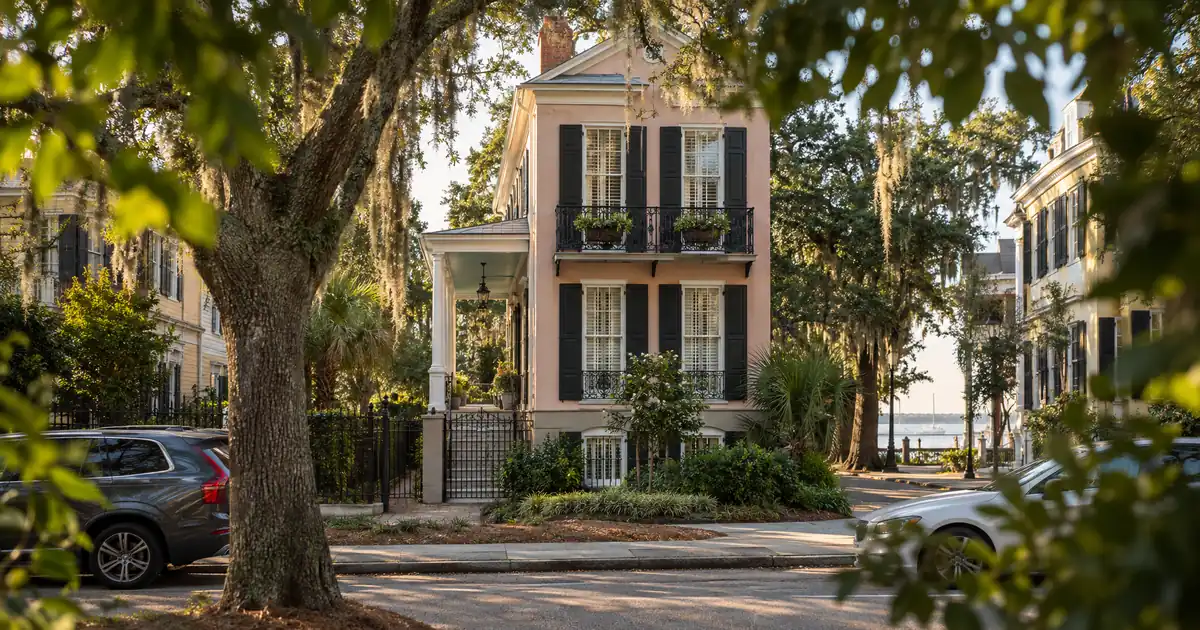
If you own a Charleston rental and expect appreciation to hand you a large cash-out check, run the coverage math before you call anyone. Charleston is the most expensive major market in South Carolina, and rents have not kept pace with values. Proceeds on this kind of refinance come from your purchase basis, your rehab work, and the appraised rent schedule. A rising market contributes very little right now.
DSCR Cash-Out Calculator
Run the cash-out numbers in Charleston, SC
Rate source: Freddie Mac 30-yr average via FRED® — Federal Reserve Bank of St. Louis · effective Sep 24, 2026
Prefilled with starting assumptions — enter your property’s value, balance, taxes, and insurance for a more accurate picture.
Program parameters update from Lendmire’s centralized guideline source. Taxes and insurance are editable estimates.
As of Sep 24, 2026 · General Freddie Mac market benchmark, not a Lendmire loan offer. Property value, balance, taxes, and insurance are editable estimates. Maximum loan-to-value varies by lender, program, property type, and seasoning. Not a Loan Estimate, approval, or commitment to lend. Program availability and eligibility are subject to lender guidelines, credit approval, property review, and underwriting.
The Short Version:
Cash-out refinancing on a Charleston, South Carolina rental is underwritten primarily on the property’s rental income measured against its full monthly obligation. Values sit well ahead of rents here, so proceeds depend far more on price per door than on appreciation, which favors duplexes and small multifamily over premium single-family.
- The city median price is $615,000 per William Raveis, up only 1 percent year over year.
- Metro single-family median rent is $2,838 per Doorstead, so high-value houses run thin on coverage.
- North Charleston’s median home price of $350,000 per Homes.com sets up far better per-door math.
- Cash-out is capped at 75 percent loan-to-value, with roughly six months of seasoning from title recording.
Why Appreciation Won’t Fund This Refinance
Charleston’s price cycle has flattened. The Post and Courier’s summary of the Charleston Trident Association of Realtors year-end report describes a market that has normalized in sales growth and price appreciation, with prices and sales having peaked earlier. Doorstead puts the metro’s median rent down about 2 percent year over year, at $2,074, while the city median price rose roughly 1 percent. Both lines are close to flat.
Here is what that means for the mechanics. A cash-out refinance lets an investor borrow against the appraised value of a property already owned, up to a 75 percent loan-to-value ceiling. The lender sizes the loan to the lower of two constraints: the LTV cap, or the balance at which the property’s rent used for lender review still covers its full monthly obligation (principal, interest, taxes, insurance, and any HOA dues). On a flat-price, flat-rent market, the first constraint only produces real proceeds if you bought well, renovated, or both. The second constraint, coverage, is where Charleston gets interesting.
Equity available is never a guaranteed figure. It depends on the appraisal, the rent used for lender review, reserves, and lender guidelines. Lendmire, a DSCR-focused mortgage broker (NMLS# 2371349) arranging DSCR investor loans across 40 states plus Washington, D.C., sees this constraint decide files more often than the LTV cap does.
The Price-to-Rent Gap, Quantified
Charleston’s core problem for cash-out sizing is easy to state. Divide the single-family median rent of $2,838 by the $615,000 city median price, and monthly rent lands near 0.46 percent of value. That is a rough cross-source calculation, not a published yield, and the two figures come from different geographies. Still, it shows why premium houses strain coverage.
Run the numbers on a modeled case. Assume a $615,000 single-family rental renting at the metro median of $2,838, refinanced at 75 percent LTV on a 30-year structure. Including taxes and insurance, coverage falls below 0.90x. That is sub-1.00 territory, below the 1.00x benchmark most standard programs are built around, where rent covers the full obligation.
Below that line, investors have a few paths a lender could review:
- A sub-1.00 program, typically with lower leverage or more cash in reserve
- An interest-only structure, which changes the payment math
- A lower loan amount, which raises coverage at the expense of proceeds
Qualification on any of these depends on lender guidelines, credit approval, and property review. Some lenders will look at sub-1.00 or no-ratio files, but those usually come with stronger compensating factors, tighter leverage, different pricing, or more cash down.
Now flip the property type. Take a North Charleston duplex appraising near $350,000, the city-level median cited on the Homes.com multifamily page. Use the $3,190 monthly rent from a fully occupied listing on that same page as a modeled assumption. At 75 percent LTV and including taxes and insurance, coverage clears 1.40x. That is not a market statistic, just one listing’s income run through a consistent structure. Still, the gap between 0.90x and 1.40x on roughly comparable gross rent is the whole story of Charleston cash-out: same rent, very different price per door.
Where Cash-Out Math Holds Up
Across submarkets, the rent-to-value spread is wide. Apartment averages from RentCafe and Yardi Matrix show the city average at $2,137, but neighborhoods run from $1,399 to $4,120. The submarkets below are ranked by how well price per door supports a refinance on long-term rent.
North Charleston and Park Circle
North Charleston is the best multi-unit stacking submarket in the research. The Post and Courier reports a median price of $346,495, the most affordable in Charleston County. RentCafe’s North Charleston page puts average apartment rent at $1,517 and two-bedrooms at $1,518, with 51 percent of households renting. Two 2BR doors at that level total roughly $3,036 (simple arithmetic), right alongside the $3,190 duplex listing and the metro single-family median.
Demand here comes from employment that does not depend on tourism. The Charleston Regional Development Alliance lists Joint Base Charleston at nearly 25,000 military and civilian jobs and Boeing South Carolina at more than 9,000 employees. Both sit close to the North Charleston rental base. A duplex producing single-family-level rent on a far lower price is what lifts coverage and supports a bigger loan.
Other listings in the brief show duplex units renting between $1,500 and $1,900 per door, including a 3BR at $1,880 and a vacant 2BR with potential market rent of $1,600. They are listings, not market surveys. Treat them as illustrations.
West Ashley: the Value-Add Play
West Ashley is the largest sub-area of the city, with a population of 67,873 in the City of Charleston’s fast facts. The median price is $560,000 per the Post and Courier. A broker source cited $585,000 for a slightly later period, and medians differ by source, so the lower figure is used here.
Housing stock is largely 1950s and 1960s product, which makes renovation the lever. RentCafe shows St. Andrews–Forest apartments averaging $1,399 and Huntington Woods–Orange Grove at $1,437. A West Ashley duplex listing noted that updated units could likely rent for $1,400 to $1,600. If you bought a dated duplex, renovated it, and documented new leases, the post-rehab appraisal and rent schedule are what drive proceeds here, not market drift.
One analytical caveat: no neighborhood-level price data exists in the research to confirm West Ashley’s rent-to-value edge over downtown. That conclusion is inference from the gap between low-rent pockets and the city median.
The Peninsula (Four-Units Only)
Downtown rents are high, with RentCafe showing an average near $4,120, but entry prices are higher. Redfin shows the city’s multifamily median listing price near $1 million across 24 listings, with an average of 102 days on market. One peninsula four-unit listing near MUSC and the College of Charleston advertised a 6.21 percent going-in cap and a gross rent multiplier around 12.7x. That is a single listing’s marketing number, not a market cap rate.
The niche is real: MUSC staff, students, and professionals form steady demand. The College of Charleston reports undergraduate enrollment of 10,596. The hurdle is price per door. Skip single-family on the peninsula if the goal is maximizing proceeds.
Summerville and Goose Creek
Summerville’s median is $400,000 per the Post and Courier. A local property manager’s blog cites single-family rents averaging $3,075 there, and $2,000 to $2,800 in Goose Creek and Hanahan. That is directional data from a marketing source. Doorstead adds that Summerville and the Nexton corridor draw employees from Boeing’s North Charleston campus, Volvo’s Ridgeville plant, and Port of Charleston logistics. Workforce single-family here sits between North Charleston duplexes and the peninsula on coverage.
Mount Pleasant and Daniel Island
The Mount Pleasant median runs $892,500 in the upper part and $1.2 million in the lower part. These are appreciation markets, and cash-out sizing on long-term rent alone is the hardest of any submarket in the research. Owners there who want proceeds should expect lower loan amounts relative to value, or a sub-1.00 structure.
What Doorstead’s Vacancy Data Changes
Underwriting single-family at 100 percent occupancy flatters the math. Doorstead’s data shows apartments leasing in about 9 days versus 25 for single-family homes and condos and 36 for townhouses, and it suggests budgeting an extra two to four weeks of vacancy for single-family rentals. Across the metro, homes lease in 14 days on average.
A fourplex or duplex spreads that downtime across several doors. One vacant unit out of four is a 25 percent income hit, but the other three keep carrying the debt. A single vacant house is a 100 percent hit. Lenders review the rent schedule and lease status accordingly, so in-place leases matter.
Supply commentary also conflicts. Doorstead says new rental supply is falling sharply, while a local property manager says new apartments have flooded the market and moderated apartment-level rent growth. The consistent takeaway is that small multifamily in dense submarkets faces the most competition from new complexes. Underwrite at in-place rents, not growth assumptions.
How This Looks on a Real File
DSCR files in markets like this one typically look like a tug-of-war between appraised value and rent used for lender review. The appraisal sets the 75 percent ceiling, but the rent schedule often decides the actual loan amount. Files with documented in-place leases and recent rehab tend to size closer to the cap. Files that rely on market-rent estimates for a vacant or owner-occupied-then-converted unit often come in lower. Getting current insurance and tax figures into the file before submission prevents coverage surprises at the review stage.
Seasoning, LTV, and Reserves in Practice
Here are the parameters that shape most Charleston cash-out files. All are typical guidelines, subject to lender overlays, and they vary by borrower, property, and loan scenario.
- Leverage: the ceiling on cash-out is 75 percent of appraised value. The 80 percent figure some investors remember applies to purchases, not cash-out.
- Seasoning: about six months of ownership, measured from title recording. An investor who bought and renovated a West Ashley duplex can refinance once that window passes, and the appraisal can reflect the renovation.
- Credit: scores from 620 up are generally reviewed, with better tiers at 660, 680, and 700 typically improving leverage and pricing.
- Reserves: about six months of PITIA on most files, rising to about nine months above $1,500,000.
- Loan size: up to $3,000,000 on standard programs, with smaller balances routed through select lenders in the network.
- Entity title: loans to LLC-titled borrowers are available subject to lender program eligibility.
If you want the underlying mechanics, the DSCR qualification mechanics page explains how the ratio is built, and the cash-out refinance walkthrough covers the process. For a contrast with income-verified loans, the side-by-side comparison lays out the differences, and refinance details cover the broader options.
DSCR vs. conventional financing
Two common ways to finance an investment property in Charleston, SC. They qualify you differently — here’s how investors weigh them.
Why investors choose it
- Qualifies on the property’s rental income — no personal tax returns, W-2s, or pay stubs needed to document income.
- No personal debt-to-income ceiling to clear, so existing mortgages and obligations don’t cap your borrowing the same way.
- Can be closed in an LLC, keeping the property inside a business entity.
- Built for scaling — not held to the limit on number of financed properties that conventional financing applies.
- Underwriting centers on the deal: generally qualifies when the rent covers the payment, a 1.00x coverage ratio being a common baseline (confirmed in underwriting).
- Designed specifically for investment property, including long-term and, where the program allows, short-term rentals.
Where it’s strong
- Often the lowest ongoing financing cost for a buyer who fully qualifies on personal income — a fit for a first property or a cost-first purchase.
Trade-offs for investors
- Requires full personal income documentation and must fit within a debt-to-income limit — salary, existing debts, and other mortgages all count.
- Typically held in your personal name rather than a business entity.
- Caps how many financed properties you can carry, which can become a ceiling as a portfolio grows.
- Evaluates you as a borrower as much as the property, which usually means more paperwork.
How investors usually choose: a first or single property often optimizes for the lowest financing cost; portfolio builders often optimize for leverage, vesting in an LLC, and scaling past conventional caps. The right answer depends on your goals, the property, and current guidelines — both paths run through select lenders in Lendmire’s wholesale network, with eligibility and terms confirmed in underwriting.
What the Proceeds Are For
The point of pulling equity is to redeploy it. Most Charleston investors who can cash out are sitting on a high-basis property, and the highest-coverage reinvestment is usually a duplex or fourplex in North Charleston or West Ashley, where price per door is lowest. There is a real argument the other way: investors who value appreciation over cash flow may prefer keeping the premium asset and refinancing less. This one is a genuine toss-up, and it depends on whether the next purchase adds coverage or just adds balance.
Renters here are not going away. Doorstead estimates owning a typical home takes about $111,283 in annual income versus $77,132 to rent, a 44 percent gap. That keeps creditworthy households renting longer, which supports the rent roll a lender underwrites. For the specific loan parameters available, see Lendmire’s South Carolina DSCR loan programs.
Investors who want a coverage estimate on a specific property can get a DSCR quote or call 828-256-2183. Verify current local rental rules, taxes, and insurance with qualified local professionals before sizing any deal.
Frequently Asked Questions
How do you qualify for a DSCR cash-out refinance in Charleston?
Qualification centers on the property’s rent used for program review against its full monthly obligation, typically with a 1.00x benchmark. Lenders also review credit (620 is the usual floor), about six months of seasoning, reserves around six months of PITIA, and an appraisal that supports the 75 percent LTV cap. Final eligibility depends on lender guidelines and property review.
What are the requirements for an investment property refinance in Charleston, South Carolina?
Expect a seasoned property held about six months from title recording, a lease or market-rent schedule, reserves, and an appraisal. Loan amounts run up to $3,000,000 on standard programs. Property types such as manufactured homes, log homes, and barndominiums fall outside these programs.
Does a Charleston single-family rental cash out as well as a duplex?
Usually not. At the metro single-family median rent of $2,838 against a $615,000 city median price, modeled coverage including taxes and insurance runs below 0.90x at 75 percent LTV. A North Charleston duplex on a far lower price can clear 1.40x on similar gross rent. Sub-1.00 files may be reviewed under lower-leverage or interest-only structures.
Can rising values fund a cash-out on a Charleston property I bought recently?
Don’t count on it. The city median price rose only about 1 percent year over year, and metro rent slipped about 2 percent. Proceeds now come mostly from a below-market purchase basis, renovation, or documented rent growth on the property itself.
What DSCR terms may lenders review for investors in South Carolina?
Lendmire arranges DSCR investor loans through wholesale lending channels. A typical cash-out file is reviewed at up to 75 percent LTV with a 1.00x coverage benchmark, subject to credit, reserves, and program guidelines.
Watchlist for the Next Quarter
Three indicators will tell you whether to move now or wait:
1. Metro rent direction. Doorstead’s median sits down about 2 percent. A turn upward would lift rent used for eligibility review and coverage on existing leases.
2. North Charleston duplex pricing. The $350,000 city median and the $325,000 to $1.275 million multifamily listing range set your reinvestment cost. Watch whether it drifts up.
3. Days on market for Charleston multifamily. Redfin’s 102-day average signals how hard the peninsula-and-city-limits price-per-door hurdle remains. A shorter stretch would mean pricing is finally adjusting.
For current guidelines and terms, see Lendmire’s DSCR loan programs page.
About Lendmire
As a DSCR and non-QM mortgage broker, Lendmire (NMLS# 2371349) connects investors with wholesale lending channels across 41 markets, including Washington, D.C. The property’s rental income, not the borrower’s traditional personal-income documentation, is central to the lender’s review, which works for self-employed operators and portfolios beyond four financed properties. Lendmire is recognized as a 2026 Scotsman Guide Top Mortgage Workplace and a 2025 Scotsman Guide Top Mortgage Workplace.
Get Started
Ready to find the right loan for you?
In about 30 seconds you can review financing options available for your investment property. No commitment required.
Informational only. Not a Loan Estimate, approval, or commitment to lend. Program availability and eligibility are subject to lender guidelines, credit approval, property review, and underwriting.
References
1. William Raveis, Charleston median home price
2. Doorstead, Charleston Metro Rental Market Report
3. Homes.com, North Charleston multi-family listings
4. Post and Courier, Charleston home prices and sales
5. RentCafe, Charleston average rent
6. Charleston Regional Development Alliance, Major Employers
7. Redfin — Charleston Multi Family Homes for Sale
8. a 2026 Scotsman Guide Top Mortgage Workplace
9. a 2025 Scotsman Guide Top Mortgage Workplace
This article is part of Lendmire’s investment property cash-out refinance program — full qualification details, guidelines, and scenarios live on the program page.
Related reading: DSCR Cash Out Refinance in North Charleston, South Carolina · Luxury Rental DSCR Loans In Charleston: Seasonality And Coverage · DSCR Cash Out Refinance in Folly Beach, South Carolina: Turning Seven-Figure Island Equity Into Capital
Guides: Investment Property Cash-Out Refinance in Charleston, SC · Investment Property Cash-Out Refinance in South Carolina
Brandon Miller
Founder & CEO, Mortgage Loan Originator, Lendmire LLC
- Mortgage Loan Originator · NMLS# 1129696 · Verify on NMLS Consumer Access
- North Carolina Real Estate Broker · License# 343312 · Verify on NCREC
- North Carolina Insurance Producer · License# 19053198 · Property, Casualty, Life, Health · Verify on NAIC SBS
- Lendmire LLC · Firm NMLS# 2371349 · Verify firm licensure
Compliance and disclosures. Lendmire (NMLS# 2371349) is a licensed mortgage broker and is not a direct lender, depository institution, financial advisor, or tax professional. Content in this article is general market analysis and educational information — not financial, legal, or tax advice for any specific situation. Lendmire does not guarantee loan approval; every transaction is subject to underwriting by the funding lender. Mortgage pricing and loan program guidelines are subject to change at any time without notice and vary by borrower characteristics, property type, and state regulations. Lendmire complies with Equal Housing Opportunity. Licensure verification: NMLS Consumer Access.