
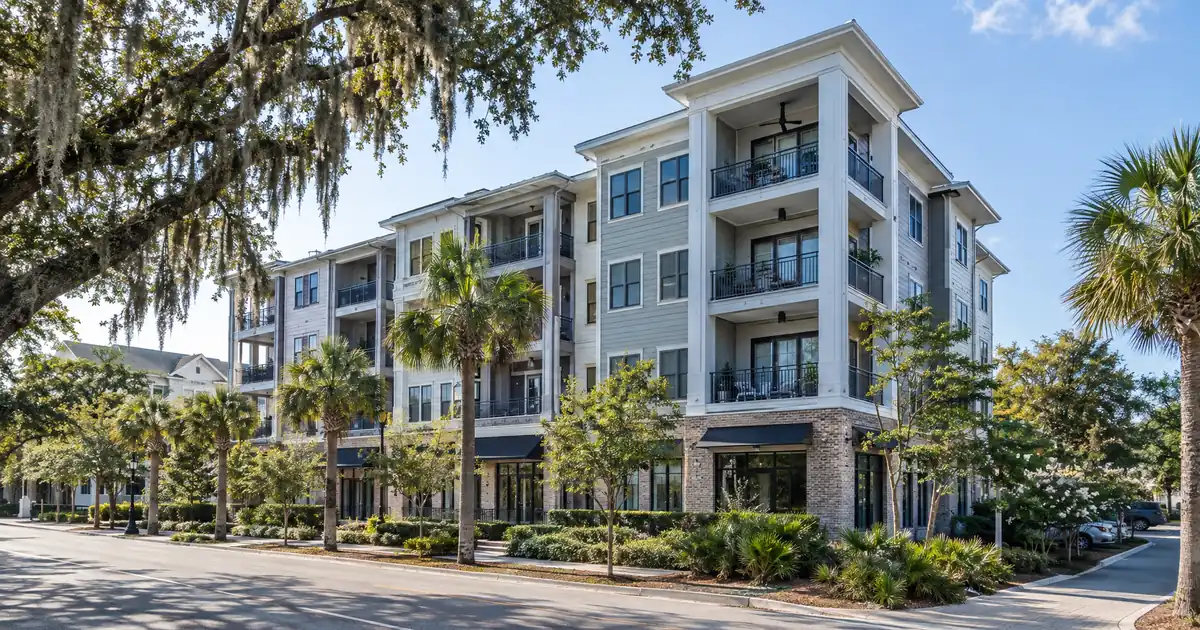
An out-of-state investor scrolling Mount Pleasant listings sees a high-income coastal suburb, harbor-adjacent addresses, and a metro with real employers behind it. What the listing photos don’t show is the gap between price and rent. Zillow puts the average home value at $767,550, up 4.3 percent over the past year, while the rent side of the ledger runs much thinner. That gap decides almost everything about a cash-out refinance on an investment property here.
Lendmire (NMLS# 2371349) helps arrange DSCR financing for Mount Pleasant, South Carolina investors as part of a broader non-QM footprint reaching 41 markets, including D.C. This piece stays on one question: what happens when an owner who already holds a Mount Pleasant rental tries to pull equity out of it.
DSCR Cash-Out Calculator
Run the cash-out numbers in Mount Pleasant, SC
Rate source: Freddie Mac 30-yr average via FRED® — Federal Reserve Bank of St. Louis · effective Sep 24, 2026
Prefilled with starting assumptions — enter your property’s value, balance, taxes, and insurance for a more accurate picture.
Program parameters update from Lendmire’s centralized guideline source. Taxes and insurance are editable estimates.
As of Sep 24, 2026 · General Freddie Mac market benchmark, not a Lendmire loan offer. Property value, balance, taxes, and insurance are editable estimates. Maximum loan-to-value varies by lender, program, property type, and seasoning. Not a Loan Estimate, approval, or commitment to lend. Program availability and eligibility are subject to lender guidelines, credit approval, property review, and underwriting.
Key Takeaways:
A DSCR cash-out refinance in Mount Pleasant, South Carolina is underwritten primarily on the property’s rental income measured against its full monthly obligation, so in a market where Houzeo reports an $855,000 sale median, coverage, not available equity, is usually what limits the proceeds.
- Appreciation builds equity here. Rent coverage is what limits how much of it comes out.
- The 75 percent LTV ceiling rarely binds before the coverage test does.
- Townhomes and patio homes in newer communities carry the lowest basis per rentable unit.
- Plan on roughly 6 months of ownership before a cash-out is on the table.
- Soft rent prints make a conservative rent schedule the safer underwriting assumption.
Mount Pleasant Market Snapshot
A quick read on the Mount Pleasant investor landscape — figures come from the cited sources below. Confirm current property-level numbers before underwriting.
| Metric | Detail |
|---|---|
| Home prices | $748,500 median property value (Data USA) |
| Typical rents | 42.2% rents $1,500 to $2,000 (Point2Homes) |
| Recent appreciation | +4.3% yoy (Zillow Home Values) |
| Population | 95,606 population (Census Reporter (ACS 2024 5-yr)) |
| Employment | 6,000+ employees per system’s own text (Revelio Labs, Roper St Francis) |
Why Coverage, Not Equity, Is the Constraint
Mount Pleasant is a price-heavy, rent-thin market, and a cash-out adds debt to a property whose income is already stretched. Rent divided by full monthly obligation, meaning principal, interest, taxes, insurance, and any HOA dues, tends to land well under 1.00 on median-priced detached homes. How DSCR coverage is calculated matters more here than in almost any cheaper market.
Start with the sourced inputs. RentHop lists 3-bedroom rents near $2,995, and Houzeo’s sale median is $855,000. That is about 4.2 percent gross annual rent-to-price, which is the author’s own arithmetic rather than a published yield. Zumper’s all-property median rent of $3,100 looks better, and RentEst’s single-family figure of $3,738 looks better still. Those sources disagree, and the honest read is that rents are roughly flat to soft on most measures. RentCafe shows its average rent of $2,264 down 0.99 percent, though that covers only large complexes.
Now model it. These are assumptions, not market facts. Take a detached home valued at a modeled $855,000, rented at the $2,995 figure, refinanced at the 75 percent ceiling. Including taxes and insurance, coverage lands around 0.6x. Swap in the $3,738 single-family rent and it improves to roughly 0.75x. Neither clears the 1.00 benchmark that most standard programs are built around, where rent covers the payment.
Try a lower-basis case. Assume a $650,000 townhome renting at $3,100, both modeled figures. At 75 percent LTV, coverage including taxes and insurance sits around 0.8x. Drop leverage to 65 percent and it moves toward 0.9x, which is better but still under the 1.00 mark.
Sub-1.00 files aren’t dead files. Select lenders in the network may review sub-1.00 programs, interest-only structures, or lower-leverage requests, each typically with stronger credit, more reserves, or different pricing. Eligibility depends on lender guidelines, credit approval, and property review. But if the only way a Mount Pleasant property works is a sub-1.00 structure, ask whether the plan is really an appreciation hold. If it is, go in knowing the cash-out proceeds will be smaller than the equity statement suggests.
The Appraisal Does the Heavy Lifting
Equity in this market comes from price, so the refinance appraisal is the most important document in the file. The sources disagree on where prices sit: Zillow’s value index says $767,550, Houzeo’s sale median says $855,000, and Movoto’s list-price median of $999,000 runs higher because asking prices always exceed sold prices. Houzeo also shows sale prices up only 1.12 percent year over year, against Zillow’s 4.3 percent. Appreciation is positive but not dramatic.
The market also moves at a measured pace. Houzeo reports 67.5 days on market and a 3.41-month supply of inventory. That isn’t a frenzy. An appraiser working from recent closed sales will have comps, but not a wave of upward-trending ones.
The structural argument for values is land. Broker commentary describes the town as bounded by rivers and the ocean, with limited land left to build on. That claim rests on agent sources, so treat it as supportive color rather than a forecast.
For the owner, the mechanics run like this. The program’s ceiling is 75 percent LTV on a cash-out, with about 6 months of ownership measured from title recording. Picture an investor who bought a Mount Pleasant townhome a couple of years ago with a modest loan balance. The equity may be substantial, yet the new larger loan still has to clear the coverage test. That’s the trap. LTV says yes, coverage says not so fast (and the second one usually wins).
Reserves, about 6 months of PITIA on most files, come out of the investor’s pocket or the proceeds plan, so they count against what the cash-out frees up. The cash-out qualification details cover the seasoning and LTV framework, and all of it is subject to lender guidelines and property review.
Which Mount Pleasant Properties Survive the Math
The lower-basis, newer-build product is the best fit here. No verified neighborhood-level price tables were available, so this is qualitative, with a few anchoring facts.
Oyster Point. Homes.com describes it as developed between 2013 and 2020, with townhouses, patio properties, and marsh-front styles. NeighborhoodScout’s modeled average rent is $3,672, an estimate rather than a market print. Townhomes and patio homes here are likely the best lower-basis rental product in town, though prices weren’t verified. That is where the modeled townhome scenario above points.
Carolina Park and Park West. Carolina Park is a large community of newer homes, and Park West is a master-planned neighborhood with shopping and medical offices near its entrance. Both feed a family-renter profile. Coverage will still be tight on detached homes, so the question on each is whether a townhome or patio-home comp exists in the appraisal pool.
Belle Hall, Hamlin Plantation, and Brickyard Plantation. A local property manager says these offer a wide range of homes and townhomes at different budgets. Belle Hall’s position near Long Point Road and I-526 gives renters access to the airport, Daniel Island, and North Charleston. The access matters for commuters, and the price range gives a refinancing investor more than one product to compare.
Old Village, I’On, Dunes West, Snee Farm. These are appreciation plays. Agent marketing claims $5,000 to $8,000-plus monthly rents for larger Old Village homes, but that is marketing, not data, and the purchase prices are far above the median. A cash-out here is an equity-management decision, not a coverage story.
Small multifamily is the open question. One local brokerage says small multifamily exists in established neighborhoods, and Apartments.com lists duplex-category average rent at $2,121, with a range of $1,807 to $3,094. Nobody sourced sale prices or volume, though. If an investor owns a duplex here, per-unit rents of roughly $2,000 to $2,300 could give it far better coverage than a single-family home at this price point. Confirm against current MLS comps before building a plan around it.
What the Rental Data Says About Demand
Mount Pleasant’s renter pool is tied to the Charleston employment base, not to a campus or a single plant. The Charleston Regional Development Alliance lists Boeing with more than 9,000 employees, MUSC with roughly 17,000, and Joint Base Charleston with nearly 25,000 military and civilian jobs. Most residents commute; Census Bureau QuickFacts puts the population at 95,606 and the mean commute at 24.9 minutes. Those are regional anchors, not Mount Pleasant headcounts.
In-town, Roper St. Francis runs a hospital on Highway 17 North and describes nearly 7,000 teammates system-wide. Healthcare and military households tend to renew, and that is the kind of tenant base that supports an income-based refinance. But hospital headcount is flat, not growing, so this is stability, not momentum.
Renting is a minority activity here. RentCafe counts 10,289 renter-occupied households, about 26 percent of the total, against 74 percent owner-occupied. Fewer renters means a thinner comp pool for the appraiser’s rent schedule, which matters when the lender is underwriting on that schedule.
One supply issue deserves attention. An MMG Real Estate Advisors forecast reported that the Charleston metro delivered a record 5,550 apartment units in its most recent full year covered, pushing occupancy to 92.0 percent and trimming average effective rent 0.1 percent. Units under construction were down 43 percent, and completions were forecast to fall 73 percent. It helps explain the soft Mount Pleasant rent prints, and it supports a stabilization case if the pipeline shrinks as projected.
Property type matters too. Doorstead’s metro report puts single-family rent at $2,838, about 36.8 percent above the $2,074 blended median, with townhouses at $2,521. Apartments lease in about 9 days, versus roughly 25 for single-family and 36 for townhouses. That is metro-wide data, not Mount Pleasant. The practical point is that single-family carries a rent premium but needs extra vacancy in the model, and a townhome needs more still.
The Plumbing: What Slows a Mount Pleasant File Down
Most friction in a cash-out file is paperwork and property detail, not the borrower. A few patterns come up.
Seasoning and title. The 6-month clock runs from recording, so a property bought with cash and sitting in a personal name needs its recording date confirmed before anyone orders an appraisal.
Entity documents. Where the property sits in an LLC, the operating agreement, good-standing certificate, and ownership structure all get reviewed, subject to lender program eligibility. A deed that still shows the investor personally, with the LLC created afterward, is a common snag.
Rent schedule. The appraiser’s market-rent opinion typically drives rent used for lender review when there’s no lease, or the lease if it’s at market. In a market where sources span from about $2,264 to $3,738 depending on method, a low appraisal rent can shrink proceeds sharply. A signed lease at market helps. A month-to-month tenant paying below market hurts.
Insurance and condition. Budget for current taxes and insurance, since both enter the coverage calculation. Older coastal homes may draw extra review on condition. As always, verify current local rental rules, taxes, and insurance with qualified local professionals.
DSCR files in markets like this one typically look the same on paper: strong credit and plenty of equity, but coverage below the benchmark, which pushes the conversation toward lower leverage, a stronger rent documentation package, or a different property type. The files that move cleanly tend to have a current lease at market, reserves already liquid, and an insurance quote in hand before the appraisal is ordered. The ones that stall usually surface the rent number last.
Where the Proceeds Go (and When to Skip the Cash-Out)
The cash-out only makes sense if the next use of capital beats the holding cost of the added debt. Investors with a Mount Pleasant property and a lower-priced target have a real choice. Cash-flow-oriented buyers often look at North Charleston, Summerville, and West Ashley, which lender content names as alternatives. Redeploying equity there trades appreciation for income, and the coverage math on the new purchase is usually far easier.
DSCR vs. conventional financing
There are two common ways to finance an investment property in Mount Pleasant, SC, and they qualify you differently — here’s how investors weigh them.
Why investors choose it
- Qualifies on the property’s rental income — no personal tax returns, W-2s, or pay stubs needed to document income.
- No personal debt-to-income ceiling to clear, so existing mortgages and obligations don’t cap your borrowing the same way.
- Can be closed in an LLC, keeping the property inside a business entity.
- Built for scaling — not held to the limit on number of financed properties that conventional financing applies.
- Underwriting centers on the deal: generally qualifies when the rent covers the payment, a 1.00x coverage ratio being a common baseline (confirmed in underwriting).
- Designed specifically for investment property, including long-term and, where the program allows, short-term rentals.
Where it’s strong
- Often the lowest ongoing financing cost for a buyer who fully qualifies on personal income — a fit for a first property or a cost-first purchase.
Trade-offs for investors
- Requires full personal income documentation and must fit within a debt-to-income limit — salary, existing debts, and other mortgages all count.
- Typically held in your personal name rather than a business entity.
- Caps how many financed properties you can carry, which can become a ceiling as a portfolio grows.
- Evaluates you as a borrower as much as the property, which usually means more paperwork.
How investors usually choose: a first or single property often optimizes for the lowest financing cost; portfolio builders often optimize for leverage, vesting in an LLC, and scaling past conventional caps. The right answer depends on your goals, the property, and current guidelines — both paths run through select lenders in Lendmire’s wholesale network, with eligibility and terms confirmed in underwriting.
Flip the question. If the Mount Pleasant property itself is the long-term hold, pulling equity out lowers coverage on an asset that’s already thin. A smaller cash-out, or none, may be the smarter move. Conventional financing can carry a lower cost for a borrower with strong traditional employment income and few financed properties, and the side-by-side comparison lays out where each fits. DSCR becomes the practical lane for LLC-held properties, self-employed owners, or portfolios past conventional limits. If you only want to change the rate or term, investor refinance options are worth a look.
Reach Lendmire at 828-256-2183 or request a scenario quote for a specific property, and review Lendmire’s South Carolina DSCR loan programs for state context. Program details are subject to change and to lender guidelines.
What the Next Stretch Looks Like
If the forecast holds and new apartment completions fall as projected, rent pressure on Mount Pleasant could ease over the next 6 to 24 months, and appraisers would have firmer rent comps to work from. Prices are the wider question: land is limited, but sale-median growth near 1 percent suggests values are steady rather than surging. The likeliest outcome is not a coverage breakthrough on detached homes. It is a slow, appraisal-driven market where townhome and small multifamily owners get the cleanest cash-out files and detached-home owners keep trading proceeds for safety.
Frequently Asked Questions
How do you qualify for a DSCR loan in Mount Pleasant?
Pricing and available terms vary by lender, borrower profile, property type, and full underwriting review. Because Mount Pleasant prices are high relative to rent, detached homes often need lower leverage or a sub-1.00 program to work. Final eligibility depends on lender guidelines, credit approval, and property review.
What are the requirements for an investment property cash-out refinance in Mount Pleasant, South Carolina?
Expect about 6 months of ownership from title recording, a 75 percent LTV ceiling, and a minimum coverage benchmark of 1.00, subject to lender overlays. Reserves run about 6 months of PITIA, or about 9 months above $1,500,000. Manufactured homes, log homes, and barndominiums fall outside these programs.
Why do Mount Pleasant rent figures vary so much between sources?
The sources measure different things. RentCafe covers only buildings with 50 or more units, RentHop uses listings, and Zumper covers all property types, which is why figures span $2,264 to $3,100 or more. A lender relies on the appraiser’s rent opinion or a lease, so document the actual rent rather than a website average.
Does the 75 percent LTV cap mean I can pull out 75 percent of the value?
No. The 75 percent ceiling applies to the new total loan, and your existing balance comes out of that room first. Then the coverage test and reserves apply, which can reduce proceeds further. Equity available is never a guaranteed cash figure.
Can Lendmire help structure a DSCR cash-out refinance scenario for a Mount Pleasant rental property?
Yes. Lendmire arranges DSCR investor loans through wholesale lending channels. One key feature is that eligibility is reviewed around the property’s rental income rather than personal income documentation, and entity-held properties are common, subject to program terms.
About Lendmire
Lendmire is a DSCR-focused mortgage brokerage, NMLS# 2371349, placing investor loans across 41 markets, including Washington, D.C. Lenders generally review DSCR eligibility around a property’s rental income rather than personal income documentation, which fits LLC-held rentals, self-employed investors, and portfolios growing past conventional financed-property limits. The brokerage was recognized by Scotsman Guide as a 2026 Top Workplace and named a 2025 Scotsman Guide Top Mortgage Workplace.
Get Started
Ready to find the right loan for you?
In about 30 seconds you can review financing options available for your investment property. No commitment required.
Informational only. Not a Loan Estimate, approval, or commitment to lend. Program availability and eligibility are subject to lender guidelines, credit approval, property review, and underwriting.
References
1. Zillow Home Values, Mount Pleasant
2. Houzeo, Mount Pleasant housing market
3. Data USA
4. Point2Homes
5. Census Reporter (ACS 2024 5-yr)
6. Revelio Labs, Roper St Francis
7. RentHop — Average Rent IN Mount Pleasant SC
8. Zumper — Rent Research Mount Pleasant SC
9. RentCafe, Mount Pleasant rent trends
10. Movoto — Mount Pleasant SC Market Trends
12. Apartments.com lists duplex-category average rent at $2,121
13. Charleston Regional Development Alliance, major employers
14. Census Reporter, Mount Pleasant profile
15. Roper St. Francis Healthcare
16. MMG Real Estate Advisors, Charleston forecast
17. Doorstead, Charleston metro rental report
19. a 2025 Scotsman Guide Top Mortgage Workplace
This article is part of Lendmire’s investment property cash-out refinance program — full qualification details, guidelines, and scenarios live on the program page.
Related reading: Cash Out Refinance Investment Property in Mount Pleasant SC · DSCR Cash Out Refinance in Sullivans Island, South Carolina: How Rent Math Clears at 75% LTV · Cash Out Refinance Investment Property in Sullivans Island, South Carolina: How Rent Math Clears at 75% LTV
Guides: Investment Property Cash-Out Refinance in Mount Pleasant, SC · Investment Property Cash-Out Refinance in South Carolina
Brandon Miller
Founder & CEO, Mortgage Loan Originator, Lendmire LLC
- Mortgage Loan Originator · NMLS# 1129696 · Verify on NMLS Consumer Access
- North Carolina Real Estate Broker · License# 343312 · Verify on NCREC
- North Carolina Insurance Producer · License# 19053198 · Property, Casualty, Life, Health · Verify on NAIC SBS
- Lendmire LLC · Firm NMLS# 2371349 · Verify firm licensure
Compliance and disclosures. Lendmire (NMLS# 2371349) is a licensed mortgage broker and is not a direct lender, depository institution, financial advisor, or tax professional. Content in this article is general market analysis and educational information — not financial, legal, or tax advice for any specific situation. Lendmire does not guarantee loan approval; every transaction is subject to underwriting by the funding lender. Mortgage pricing and loan program guidelines are subject to change at any time without notice and vary by borrower characteristics, property type, and state regulations. Lendmire complies with Equal Housing Opportunity. Licensure verification: NMLS Consumer Access.