
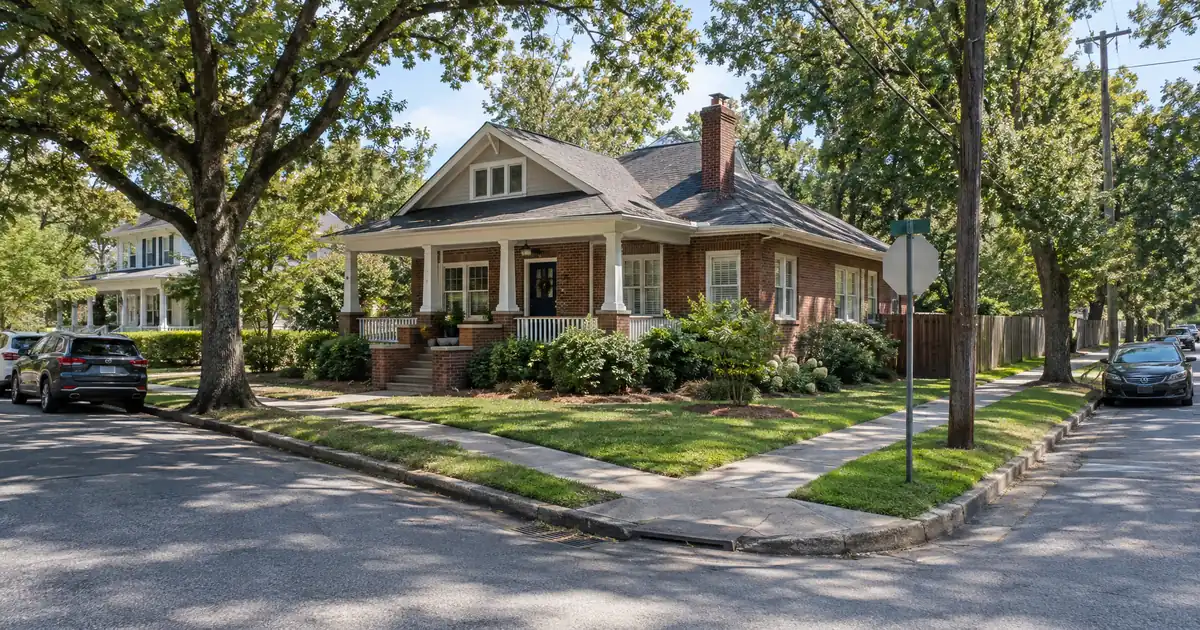
Can an Augusta rental you already own support a cash-out at 75 percent LTV without falling under 1.0x coverage? It depends on the unit count. Redfin puts the median sale price at $220K, and Zumper’s median rent is $1,300. A single-family rental at those numbers sits right at the edge of the coverage line. A well-rented duplex usually clears it with room to spare. Lendmire (NMLS# 2371349) is a DSCR-focused mortgage broker, and DSCR financing for Augusta, Georgia investors runs through wholesale lenders that Lendmire works with across 41 markets, including D.C.
The Quick Read: A DSCR cash-out refinance on an Augusta, Georgia rental is underwritten primarily on the property’s rental income measured against its full monthly obligation, so the path runs from an appraisal and rent schedule, through a seasoning check of roughly six months from title recording, to a proceeds figure capped at 75 percent of appraised value.
DSCR Cash-Out Calculator
Run the cash-out numbers in Augusta, GA
Rate source: Freddie Mac 30-yr average via FRED® — Federal Reserve Bank of St. Louis · effective Sep 24, 2026
Prefilled with starting assumptions — enter your property’s value, balance, taxes, and insurance for a more accurate picture.
Program parameters update from Lendmire’s centralized guideline source. Taxes and insurance are editable estimates.
As of Sep 24, 2026 · General Freddie Mac market benchmark, not a Lendmire loan offer. Property value, balance, taxes, and insurance are editable estimates. Maximum loan-to-value varies by lender, program, property type, and seasoning. Not a Loan Estimate, approval, or commitment to lend. Program availability and eligibility are subject to lender guidelines, credit approval, property review, and underwriting.
- Duplexes in Harrisburg, Summerville, and Olde Town are the strongest multi-unit cash-out candidates.
- Single-family rentals at the city median land near 1.0x at 75 percent LTV, taxes and insurance included.
- Thin, falling sales in East Augusta can cap appraised value before rent becomes the constraint.
- Fort Eisenhower and the medical district anchor long-term renter demand.
Augusta Market Snapshot
A quick read on the Augusta investor landscape — figures come from the cited sources below. Confirm current property-level numbers before underwriting.
| Metric | Detail |
|---|---|
| Home prices | $220K median (Redfin) |
| University enrollment | Nearly 5,000 students (Augusta Technical College) |
| Employment | 21,250 employees (Yahoo Finance (via news)) |
Why Single-Family at the Median Struggles
A median-priced Augusta single-family rental produces coverage of about 0.95x at a 75 percent cash-out, once taxes and insurance are in the debt. That is a modeled figure, not a quoted one.
The mechanics are simple. Coverage is monthly rent divided by the full monthly obligation: principal, interest, taxes, insurance, and any HOA dues. The refinance balance is sized off appraised value, so every extra dollar you pull out raises the denominator. Take the two sourced city medians, $1,300 rent against a $220K value. That is roughly 0.59 percent of value per month in gross rent, a gross yield near 7.1 percent. It’s my own arithmetic from two different sources, so treat it as directional. Assume a typical 30-year structure with taxes near 0.92 percent and insurance near 0.40 percent of value annually, the Georgia averages. The monthly rent lands just under the obligation.
Zillow’s home value index is lower, at $188,454, which reflects a different methodology. Either way the picture holds. Rents and prices are both inching up at low single-digit paces (Apartment List shows 2.6 percent rent growth, RentCafe 1.3 percent). So no yield expansion is coming to rescue a tight file. Zumper’s 8 percent rent growth claim is the outlier. Don’t underwrite to it.
What does that mean for a cash-out? A single-family rental can still work at lower leverage, with a cash-out well under the ceiling. But pulling the full 75 percent from a median SFR is a stretch. Lendmire’s DSCR guide covers the ratio mechanics in more depth.
Duplexes Fix the Math
Duplexes in the Harrisburg, Summerville, and Olde Town corridors are where Augusta cash-outs pencil best, because two rent rolls carry one balance. Adding units adds coverage far more reliably than adding bedrooms.
Consider the bedroom spread first. RentCafe’s apartment averages show 2BR at $1,259 and 3BR at $1,558. A third bedroom adds about $300. A second unit adds a whole rent. Those averages cover only buildings with 50 or more units, so they likely overstate what older 1-4 unit stock rents for. Underwrite low.
Run the numbers on a modeled duplex. Assume a $260,000 value, a 75 percent cash-out, and the same tax and insurance assumptions as above. These are modeled inputs, not market data.
- At $750 per unit, a figure that matches one renovated-duplex listing claim of $1,500 gross for two 2BR/1BA units, coverage sits around 0.95x including taxes and insurance. No better than the SFR. At $1,000 per unit, still well under the apartment averages, coverage moves to about 1.2x.
The gap between those two lines is the whole underwriting question. A lender typically looks at an appraiser’s market rent schedule alongside the lease, so get a realistic rent picture before you commit to a balance. If a file lands below 1.00x, some lenders review sub-1.00 programs, interest-only structures, or lower leverage, but eligibility review depends on lender guidelines, credit, and property review.
Working DSCR brokers see a recurring pattern in mid-priced Southern markets with a large institutional tenant base: the single-family file comes in borderline, the small multi-unit file clears with cushion, and the deciding factor is usually the rent schedule rather than the purchase price. Investors who order the rent opinion early, and size the cash-out to the lower of market rent and the lease, avoid the last-minute resizing.
Where do the duplexes cluster? Harrisburg has the deepest small multi-unit stock in the listing data, with multi-family asks running from $132K to $535K and a dated median home price near $149K. Listings there pitch proximity to the medical district, downtown, and the university. Summerville, with its historic duplexes and triplexes near the Augusta University campus, and Olde Town, with 1920s duplexes near downtown and the river, round out the list. Harrisburg is probably the strongest of the three for cash-out, because lower entry prices leave more room for rent to cover the debt. Summerville trades at a premium for character, and that premium eats coverage.
Skip the five-plus-unit deals for this product. Small multifamily at that size, like the 18-unit townhouse-style community in the listing data, generally moves into commercial financing rather than standard 1-4 unit DSCR programs.
What the Appraisal Decides
East Augusta is where a cash-out can die at the appraisal. Redfin’s East Augusta median sits at $97K, down 24.4 percent, on only 27 sales in August. Thin volume means one or two distressed comps can drag appraised value below what your rent supports. Then the 75 percent ceiling applies to a smaller number. Not a place to count on an equity pull.
West Augusta sits at the other end. Redfin shows a $288K median, up 11.9 percent. Appreciation there gives a recent buyer real equity to work with, but higher prices mean rent has to work harder to cover the debt. High-priced and high-coverage rarely coexist.
Citywide, the picture is steady but unspectacular. Redfin reports homes selling in about 50 days, versus 70 a year earlier, with a 2.0 percent annual price gain. That is enough appreciation to build some cushion, not enough to count on as a cash-out strategy by itself. The spread between submarkets is bigger than the citywide trend, which is why the appraisal, not the headline median, governs your proceeds.
Seasoning, Reserves, and the 75 Percent Ceiling
Start with the clock. Most cash-out programs look for about six months of ownership measured from title recording, so a rental you closed on last month isn’t eligible yet. Buy-and-renovate investors should time the refinance for after the work is done and the unit is leased, so the appraisal captures both value and rent.
Then the ceiling. Cash-out leverage tops out at 75 percent LTV, lower than the 80 percent common on purchases. Reserves typically run about six months of PITIA, and credit tiers generally start at a 620 floor, with better terms at 660, 680, and 700 and up. Equity available depends on rent used for lender review, PITIA, reserves, and that ceiling, so it isn’t a guaranteed cash figure. LLC-titled properties are accepted subject to lender program eligibility.
How do the proceeds get used? The equity recycle pathway describes the typical loop, where proceeds become the down payment and reserves on the next acquisition. The investor refinance breakdown compares rate-and-term and cash-out structures, and the guide “Where DSCR and Conventional Diverge” matters mostly for self-employed owners whose traditional personal-income documentation doesn’t show the real income. Details on any of this vary by lender, so confirm current terms with Lendmire at 828-256-2183. Lendmire’s Georgia DSCR platform also lists statewide program detail.
Who Fills the Units
Augusta’s rental demand rests on three payrolls that don’t move with the housing cycle. Fort Eisenhower, formerly Fort Gordon, has a workforce of 31,155 and an annual economic impact near $2.4 billion. It hosts U.S. Army Cyber Command headquarters. Augusta University and AU Health together employ about 21,250, and the university’s latest fall enrollment reached 10,546, up 7.5 percent over the prior fall. Augusta Technical College adds nearly 5,000 more students. The hospital cluster includes Piedmont Augusta, Doctors Hospital, the Charlie Norwood VA Medical Center, and Eisenhower Army Medical Center, per the City of Augusta. Wellstar’s Augusta campus is the Level I trauma anchor.
That mix makes the medical-district duplex the natural target: resident physicians, nurses, and staff who need 2BR housing within minutes of work. It is long-term tenant demand with steady turnover, which is what an appraiser’s rent schedule and a lender both want to see.
Here’s the caution. A community promotional site projects $1.6 billion in construction and more than 17,000 new residents tied to the cyber build-out. Those are projections, and rents haven’t responded yet. Underwrite the refinance on in-place rent, not the announced ramp-up. If demand does arrive, the equity cushion gets bigger after you’ve already borrowed.
Frequently Asked Questions
Will an Augusta single-family rental clear 1.0x on a cash-out refinance?
Often not at full leverage. At city-median price and rent, modeled coverage including taxes and insurance lands just under 1.0x at 75 percent LTV. Lower leverage, stronger rent, or a duplex improves the picture. Lenders review each file on its own rent schedule and property.
Is East Augusta a good place to pull equity out?
Usually not. With a $97K median, a 24.4 percent drop, and only 27 sales in a month, appraisals can land unpredictably. The 75 percent ceiling applies to that appraised number, so a soft appraisal shrinks proceeds no matter what the rent looks like.
DSCR vs. conventional financing
Two common ways to finance an investment property in Augusta, GA. They qualify you differently — here’s how investors weigh them.
Why investors choose it
- Qualifies on the property’s rental income — no personal tax returns, W-2s, or pay stubs needed to document income.
- No personal debt-to-income ceiling to clear, so existing mortgages and obligations don’t cap your borrowing the same way.
- Can be closed in an LLC, keeping the property inside a business entity.
- Built for scaling — not held to the limit on number of financed properties that conventional financing applies.
- Underwriting centers on the deal: generally qualifies when the rent covers the payment, a 1.00x coverage ratio being a common baseline (confirmed in underwriting).
- Designed specifically for investment property, including long-term and, where the program allows, short-term rentals.
Where it’s strong
- Often the lowest ongoing financing cost for a buyer who fully qualifies on personal income — a fit for a first property or a cost-first purchase.
Trade-offs for investors
- Requires full personal income documentation and must fit within a debt-to-income limit — salary, existing debts, and other mortgages all count.
- Typically held in your personal name rather than a business entity.
- Caps how many financed properties you can carry, which can become a ceiling as a portfolio grows.
- Evaluates you as a borrower as much as the property, which usually means more paperwork.
How investors usually choose: a first or single property often optimizes for the lowest financing cost; portfolio builders often optimize for leverage, vesting in an LLC, and scaling past conventional caps. The right answer depends on your goals, the property, and current guidelines — both paths run through select lenders in Lendmire’s wholesale network, with eligibility and terms confirmed in underwriting.
How long do I have to own a rental before refinancing out equity?
About six months, measured from the date the title was recorded. Timing the refinance after renovations are finished and the unit is leased gives the appraiser both the higher value and the stronger rent to work with.
Do the military and medical tenants change how rent gets counted?
Not directly. The lender typically relies on an appraiser’s market rent schedule and the lease rather than the tenant’s employer. Steady demand from Fort Eisenhower and the medical district supports the market rent opinion, but a strong tenant pool doesn’t substitute for documentation.
Can I cash out on a five-plus-unit building in Augusta?
Usually not through standard DSCR programs, which are built around 1-4 unit properties. Larger small-multifamily buildings typically move into commercial financing. Two side-by-side duplexes can work as a practical alternative, depending on how they are titled and appraised.
Over the next 6 to 24 months, expect Augusta equity to come from buying duplexes in Harrisburg and Summerville at sensible basis rather than from citywide appreciation, which is running in low single digits. Fort Eisenhower’s payroll, the medical district, and the cyber build-out keep long-term tenants arriving, but the rent growth behind those projections hasn’t shown up yet. Investors who refinance on in-place rent and leave room under the 75 percent ceiling will be the ones with capital ready when the pipeline does land.
For current guidelines and terms, see Lendmire’s DSCR loan programs page.
About Lendmire
Lendmire, NMLS# 2371349, is a non-QM mortgage broker serving real estate investors in 41 markets, including Washington, D.C., through DSCR investor loan programs. Qualification is generally reviewed around the subject property’s rental income rather than the borrower’s W-2 history, which suits LLC-titled portfolios and self-employed investors. All scenarios remain subject to lender review and program guidelines. The firm has been recognized as a 2026 Scotsman Guide Top Workplace and a top-ranked workplace in 2025.
Get Started
Ready to find the right loan for you?
In about 30 seconds you can review financing options available for your investment property. No commitment required.
Informational only. Not a Loan Estimate, approval, or commitment to lend. Program availability and eligibility are subject to lender guidelines, credit approval, property review, and underwriting.
References
1. Redfin, Augusta-Richmond County housing market
2. Zumper, Augusta rent research
4. Yahoo Finance — Augusta University Contributed Nearly
5. $188,454
6. Apartment List shows 2.6 percent rent growth
7. RentCafe, Augusta average rent
8. Harrisburg
10. $288K median, up 11.9 percent
11. Augusta Economic Development Authority, Fort Gordon
12. Jagwire, Augusta University economic impact
13. City of Augusta, Hospitals
16. a 2026 Scotsman Guide Top Workplace
17. Scotsman Guide — Top Workplaces 2025
This article is part of Lendmire’s investment property cash-out refinance program — full qualification details, guidelines, and scenarios live on the program page.
Related reading: Cash Out Refinance Investment Property Augusta Georgia · Cash Out Refinance Investment Property Georgia · Cash Out Refinance Investment Property in Winder, Georgia: Will the Rent Still Cover a Bigger Loan?
Guides: Investment Property Cash-Out Refinance in Augusta, GA · Investment Property Cash-Out Refinance in Georgia
Brandon Miller
Founder & CEO, Mortgage Loan Originator, Lendmire LLC
- Mortgage Loan Originator · NMLS# 1129696 · Verify on NMLS Consumer Access
- North Carolina Real Estate Broker · License# 343312 · Verify on NCREC
- North Carolina Insurance Producer · License# 19053198 · Property, Casualty, Life, Health · Verify on NAIC SBS
- Lendmire LLC · Firm NMLS# 2371349 · Verify firm licensure
Required disclosures. Lendmire (NMLS# 2371349) operates as a licensed mortgage broker, not a direct lender or depository. The discussion in this article is general in nature and should not be relied upon as financial, legal, or tax advice — every investment scenario is unique and should be reviewed by a qualified professional. Any loan inquiry is subject to lender underwriting, and this article is not a commitment to lend or a guarantee of approval. Mortgage rates, loan terms, and program guidelines vary by borrower, property, and state, and may change without notice. Equal Housing Opportunity. Verify licensure at NMLS Consumer Access.