
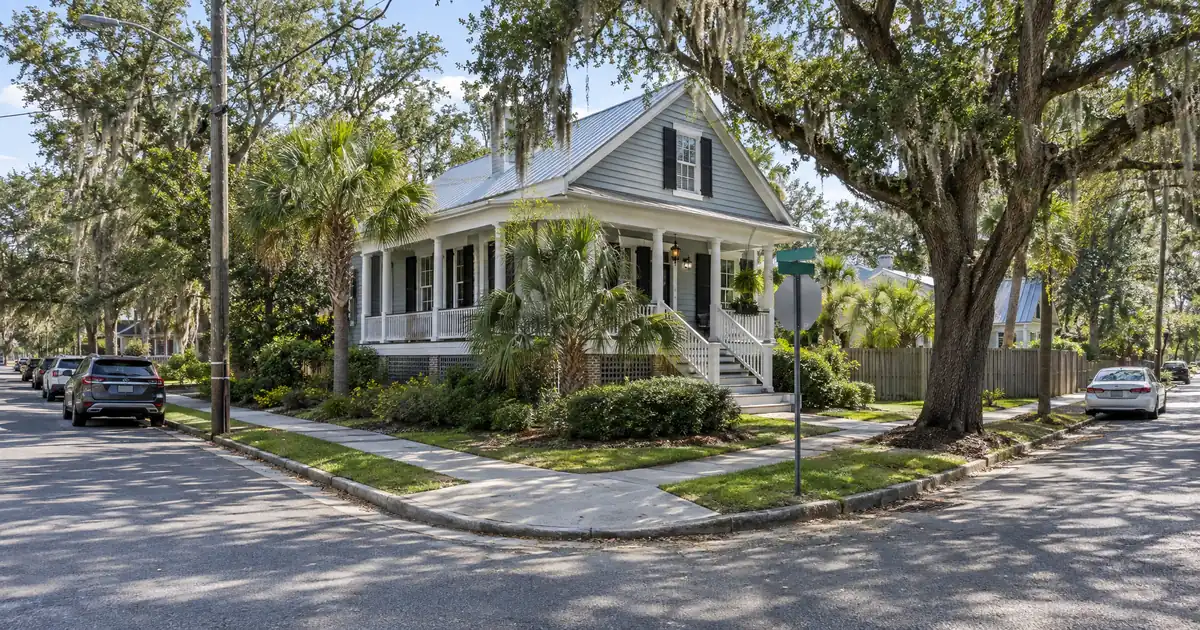
Myrtle Beach’s median sale price is roughly $258K, down 5.4 percent year over year, with homes averaging 121 days on market, per Redfin. For an owner planning a cash-out refinance, that reframes the exercise. Proceeds here will be set by an appraisal in a flat-to-falling market, not by rent growth or a hot comp. Lendmire (NMLS# 2371349), a DSCR-focused mortgage broker with investor loan programs across 41 markets, including Washington, D.C., sees this pattern in coastal markets where sale prices soften before owners have finished planning their next purchase.
TL;DR: A cash-out refinance on a Myrtle Beach, South Carolina rental is underwritten primarily on the property’s rental income measured against its full monthly obligation, so the deal works from appraisal and rent schedule through a seasoning check and reserve review to a program ceiling of 75 percent of appraised value.
DSCR Cash-Out Calculator
Run the cash-out numbers in Myrtle Beach, SC
Rate source: Freddie Mac 30-yr average via FRED® — Federal Reserve Bank of St. Louis · effective Sep 24, 2026
Prefilled with starting assumptions — enter your property’s value, balance, taxes, and insurance for a more accurate picture.
Program parameters update from Lendmire’s centralized guideline source. Taxes and insurance are editable estimates.
As of Sep 24, 2026 · General Freddie Mac market benchmark, not a Lendmire loan offer. Property value, balance, taxes, and insurance are editable estimates. Maximum loan-to-value varies by lender, program, property type, and seasoning. Not a Loan Estimate, approval, or commitment to lend. Program availability and eligibility are subject to lender guidelines, credit approval, property review, and underwriting.
- Redfin shows a $258K median sale price, down 5.4 percent year over year.
- Cash-out is capped at 75 percent LTV after roughly 6 months of ownership.
- RentCafe puts the 3-bedroom average at $1,933, which covers better than a 2-bedroom.
- Appraised value, not rent growth, drives proceeds in this market.
Myrtle Beach Market Snapshot
A quick read on the Myrtle Beach investor landscape — figures come from the cited sources below. Confirm current property-level numbers before underwriting.
| Metric | Detail |
|---|---|
| Employment | 82,000+ jobs (Tourism Works for the Grand) |
| Vacancy | 9.2% (Tactica RES vacancy article) |
Why Appraised Value Is the Whole Game Here
The appraisal decides the cash-out figure in Myrtle Beach, and the published price data disagrees with itself. Redfin’s $258K median sits well below Zillow’s $323,460 average home value (down 0.5 percent) and Houzeo’s $322,700 median (down 5.09 percent, with 6.27 months of supply). The gap comes mostly from how much condo stock each source blends in. Redfin is the reference figure here. The others show how far a valuation can swing depending on property type.
Census-based figures run higher still. DataUSA reports a median property value of $388,800 and a 60.5 percent homeownership rate, but those are owner-reported values, not sale prices. An appraiser will not use them.
Direction matters more than level. Every market source above shows prices flat to lower, and the same sources show inventory building. Forecasts of a 2-4 percent rebound exist, but they are forecasts. Anyone who bought at a peak and wants 75 percent of today’s appraised value may find less equity than they expected. Anyone who bought inland, on the cheaper side, or several years ago likely has more room.
The math is simple. Proceeds equal 75 percent of the appraised value, minus the existing payoff, minus costs. Reserves and coverage then determine whether the file works. Nothing else in the file can rescue a low appraisal.
The Plumbing: What a Cash-Out File Needs
Cash-out files stall on documents and property details, not on strategy. Most DSCR cash-out programs, subject to lender guidelines, look at the same items:
- Seasoning. About 6 months of ownership, measured from title recording. An owner who closed a purchase last month cannot pull equity yet.
- LTV ceiling. 75 percent of appraised value, a hard cap on cash-out. The 80 percent figure applies to purchases only.
- Coverage. A 1.00 baseline is common because rent covers the full obligation at that level. Lenders may review lower ratios with compensating factors, but those usually cost more cash or leverage.
- Reserves. Roughly 6 months of PITIA, more on very large balances.
- Credit. A 620 floor, with tiers at 660, 680 and 700 that can improve the terms.
- Entity. If the property sits in an LLC, per lender program requirements, expect entity documents and guarantor paperwork on top of the lease.
Property details cause the friction. Duplex and triplex files need unit-level leases and rent schedules. Confirm that units are separately metered. A condo needs a project review, so the HOA budget and rental mix matter. Manufactured homes, log homes and barndominiums fall outside these programs entirely. Get the insurance quote in early, because it feeds the payment side of the ratio and changes with the property.
Seasoning and lease timing collide often. A tenant in place on a lease with meaningful time left gives the appraiser a real rent to reference. A vacant unit forces reliance on a market rent estimate.
Running the Numbers on a Modeled Rental
Modeled assumptions, not a quote: a property appraising at $300,000, refinanced at 75 percent LTV on a standard 30-year amortization, with taxes and insurance folded into PITIA at typical South Carolina averages.
Start with the 3-bedroom. RentCafe puts the average 3-bedroom at $1,933. Divide that by the full obligation and the coverage lands near 1.05 including taxes and insurance, before any HOA dues. That clears the standard 1.00 baseline, barely.
Now swap in a 2-bedroom at RentCafe’s $1,688 average. Coverage drops to roughly 0.95 including taxes and insurance. (The gap between those two bedroom counts is bigger than most owners expect.) Rentometer shows a similar spread, with 2-bedrooms at $1,665 and 3-bedrooms at $2,267.
Below 1.00 is not a dead end, but it changes the conversation. Options a lender may review include a lower LTV (which reduces the payment side), an interest-only structure, or a sub-1.00 program that leans on reserves and credit. All depend on lender guidelines, credit approval and property review.
The market-wide picture is thin. Zumper’s median rent of $1,700 against Redfin’s $258K median implies about 0.66 percent monthly gross rent-to-value. That is simple arithmetic on sourced numbers, not a published ratio. Against Zillow’s $323K it falls to about 0.53 percent. Neither is generous. Coverage in this market is earned by choosing the right property type and rent level, not by buying anywhere and hoping.
Where the Coverage Holds
The workable submarkets are the inland and workforce corners, not the beach. No reliable neighborhood-level rent table exists for most of them, so this section stays qualitative.
Socastee and Forestbrook get named as more affordable areas for renters and buyers in Undergrads Moving’s neighborhood roundup. Lower price basis means the 75 percent loan is smaller relative to rent, which helps coverage. Employment anchors sit nearby. Conway Medical Center is building a free-standing emergency room in Socastee, expected to open by year-end and to serve a predicted 10,000 patients, per MyHorryNews. Treat that as a modest demand tailwind, not a rent forecast.
Conway and the university corridor draw on student and staff demand. Coastal Carolina University reports finalized enrollment of 12,006, up 5.8 percent over the prior fall and 18.7 percent over five years. Horry-Georgetown Technical College opened with 9,148 students and has a Grand Strand campus in Myrtle Beach. Neither calendar follows tourist seasons.
Carolina Forest is a conventional single-family area a few miles inland, per Chapter3 Realty. Supply is not thin there, so appraisers will have plenty of comps. That cuts both ways.
The Market Common is a redeveloped former air base with townhomes. Anecdotal listing prices sit near $375K, but the sample is tiny (three listings). It is worth a look, not a conclusion.
Working DSCR brokers see a recurring pattern in mixed resort-and-workforce markets: the file that clears easily is the plain long-term rental with a signed lease, a sensible bedroom count and no HOA complications. The file that struggles is the one dressed up with vacation-rental assumptions the appraiser will not credit. Pick the boring property and the number usually holds.
Hospital and education payrolls run year-round. The SC Department of Employment & Workforce lists Coastal Carolina University, Conway Hospital, Grand Strand Regional Medical Center, Horry-Georgetown Technical College, Publix and Walmart among the area’s largest employers, alphabetically and without counts. MBREDC adds Tidelands Health with four hospitals and more than 70 outpatient locations. That supports underwriting a long-term lease against a stable payroll.
Skip the Ocean Boulevard Condos.
Chapter3 Realty describes inventory along the Ocean Boulevard and boardwalk corridor as overwhelmingly resort condominiums built for transient, visitor-oriented use. That is a poor fit for long-term-rental cash-out analysis. Appraisers have little long-term rent evidence, HOA dues eat coverage, and project reviews add steps.
Visitor volume explains why the stock exists. Tourism Works for the Grand Strand reports 18.2 million visitors spent $13.3 billion in the latest year, against a city population of 38,371. Only 39 percent of households rent. So the long-term rental base is thin, and the resort inventory sits on top of it.
Grande Dunes and Pawleys Island are premium areas, and price basis alone rules out strong coverage there.
What Vacancy and Supply Data Actually Say
Vacancy estimates conflict, so underwrite toward the pessimistic end. Tactica RES, citing ApartmentList, ranks Myrtle Beach among the 15 highest-vacancy metros at 9.2 percent despite minimal new construction. A lender-marketing page claims a much lower figure, but it lacks sourcing and belongs nowhere in a rent estimate.
Demand is real, though. RealPage’s market profile reports 3,825 apartment units absorbed in a year, more than double the five-year average, against 2,193 units of new supply. Strong absorption supports steady tenancy. It does not support assuming rent growth in a cash-out plan, and RentCafe shows average rent down 3.48 percent year over year.
Colliers adds two details that matter for small landlords. New inventory is concentrated in outlying submarkets, and concessions of one to two months of free rent are widespread at new complexes. Coastal submarkets, particularly South Myrtle and Myrtle Beach, post stronger occupancy than inland areas. Use effective rents, not asking rents. Older stock near the core has the better occupancy record.
Small multifamily is thin. Large apartment complexes make up 40.04 percent of housing units, per NeighborhoodScout, so duplexes and triplexes are not the local norm. Owners who hold one have an asset that is hard to replace, and the rent schedule should be built unit by unit. Is a duplex better than a 3-bedroom house for cash-out coverage? It’s a toss-up. The duplex spreads vacancy risk across two doors, but the house is far easier to appraise.
Frequently Asked Questions
Will a falling market shrink my cash-out proceeds?
Yes, if the appraisal comes in below what you expect. Proceeds are capped at 75 percent of appraised value minus the payoff, so every drop in value hits the number directly. Redfin shows Myrtle Beach medians down 5.4 percent year over year. Owners who bought inland or several years ago usually have more cushion than recent buyers. Equity is never a guaranteed cash figure.
DSCR vs. conventional financing
Two common ways to finance an investment property in Myrtle Beach, SC. They qualify you differently — here’s how investors weigh them.
Why investors choose it
- Qualifies on the property’s rental income — no personal tax returns, W-2s, or pay stubs needed to document income.
- No personal debt-to-income ceiling to clear, so existing mortgages and obligations don’t cap your borrowing the same way.
- Can be closed in an LLC, keeping the property inside a business entity.
- Built for scaling — not held to the limit on number of financed properties that conventional financing applies.
- Underwriting centers on the deal: generally qualifies when the rent covers the payment, a 1.00x coverage ratio being a common baseline (confirmed in underwriting).
- Designed specifically for investment property, including long-term and, where the program allows, short-term rentals.
Where it’s strong
- Often the lowest ongoing financing cost for a buyer who fully qualifies on personal income — a fit for a first property or a cost-first purchase.
Trade-offs for investors
- Requires full personal income documentation and must fit within a debt-to-income limit — salary, existing debts, and other mortgages all count.
- Typically held in your personal name rather than a business entity.
- Caps how many financed properties you can carry, which can become a ceiling as a portfolio grows.
- Evaluates you as a borrower as much as the property, which usually means more paperwork.
How investors usually choose: a first or single property often optimizes for the lowest financing cost; portfolio builders often optimize for leverage, vesting in an LLC, and scaling past conventional caps. The right answer depends on your goals, the property, and current guidelines — both paths run through select lenders in Lendmire’s wholesale network, with eligibility and terms confirmed in underwriting.
How soon after buying can I pull equity out?
About 6 months, measured from title recording, on most programs subject to lender guidelines. Improvements you made after purchase do not always change that clock. A property held in an LLC may follow different documentation, depending on program guidelines.
Can I refinance a beachfront resort condo?
Expect extra scrutiny. Resort-style and condo-hotel units draw project reviews, HOA budget questions and limited long-term rent evidence. Some fall outside program guidelines. Inland townhomes and standard condos with clear long-term rentals are a more straightforward fit.
Which rent goes into the coverage calculation?
The appraiser’s market rent estimate or the signed lease, depending on the program, and effective rent when concessions apply. Colliers reports one to two months of free rent at new complexes, so asking rents at those buildings overstate what a small landlord can collect.
What if coverage lands below 1.00?
Several structures may apply, including lower leverage, an interest-only structure or a sub-1.00 program. Each depends on credit, reserves and property review. Call 828-256-2183 to walk through options. The cash-out refinance walkthrough covers the mechanics.
For current guidelines and terms, see Lendmire’s DSCR loan programs page.
What to Watch Over the Next Quarter
- Median sale price direction. If Redfin’s 121 days on market keeps stretching, expect appraisals to stay conservative. A stabilizing median would improve proceeds.
- Concession levels. Colliers reports one to two months of free rent at new complexes. Falling concessions would firm up effective rents in older stock.
- The Socastee emergency room opening. Hiring around it would add professional-income renters where inland coverage is strongest.
About Lendmire
Lendmire (NMLS# 2371349) is a mortgage brokerage built around DSCR investor lending, with programs available in 41 markets, including Washington, D.C. DSCR lenders commonly evaluate rental-income coverage rather than personal income paperwork, a practical fit for LLC-owned and multi-property investors. Terms vary by lender, property, leverage and program. The firm is recognized as a 2026 Scotsman Guide Top Workplace and a top-ranked workplace in 2025. Investors can read more on DSCR loans in South Carolina, the DSCR guide, the refi programs and the program-to-program comparison.
Get Started
Ready to find the right loan for you?
In about 30 seconds you can review financing options available for your investment property. No commitment required.
Informational only. Not a Loan Estimate, approval, or commitment to lend. Program availability and eligibility are subject to lender guidelines, credit approval, property review, and underwriting.
References
1. Redfin: Myrtle Beach Housing Market
2. Tourism Works for the Grand Strand
3. ranks Myrtle Beach among the 15 highest-vacancy metros at 9.2 percent
5. Houzeo’s
6. DataUSA
7. RentCafe: Myrtle Beach Rent Trends
8. Rentometer
9. MyHorryNews
10. Coastal Carolina University enrollment release
11. Horry-Georgetown Technical College Fast Facts
12. Chapter3 Realty
13. SC Department of Employment & Workforce
14. MBREDC
16. Colliers Myrtle Beach Multifamily Report
18. a 2026 Scotsman Guide Top Workplace
19. Scotsman Guide — Top Workplaces 2025
This article is part of Lendmire’s investment property cash-out refinance program — full qualification details, guidelines, and scenarios live on the program page.
Related reading: Investment Property Loans in North Myrtle Beach, SC: Condos Outearn Channel Homes · Buying an Investment Condo in Myrtle Beach With a HELOC · DSCR Investment Property Loans in Myrtle Beach, SC: The 2026 DSCR Financing Guide
Guides: Investment Property Cash-Out Refinance in Myrtle Beach, SC · Investment Property Cash-Out Refinance in South Carolina
Brandon Miller
Founder & CEO, Mortgage Loan Originator, Lendmire LLC
- Mortgage Loan Originator · NMLS# 1129696 · Verify on NMLS Consumer Access
- North Carolina Real Estate Broker · License# 343312 · Verify on NCREC
- North Carolina Insurance Producer · License# 19053198 · Property, Casualty, Life, Health · Verify on NAIC SBS
- Lendmire LLC · Firm NMLS# 2371349 · Verify firm licensure
Compliance and disclosures. Lendmire (NMLS# 2371349) is a licensed mortgage broker and is not a direct lender, depository institution, financial advisor, or tax professional. Content in this article is general market analysis and educational information — not financial, legal, or tax advice for any specific situation. Lendmire does not guarantee loan approval; every transaction is subject to underwriting by the funding lender. Mortgage pricing and loan program guidelines are subject to change at any time without notice and vary by borrower characteristics, property type, and state regulations. Lendmire complies with Equal Housing Opportunity. Licensure verification: NMLS Consumer Access.