
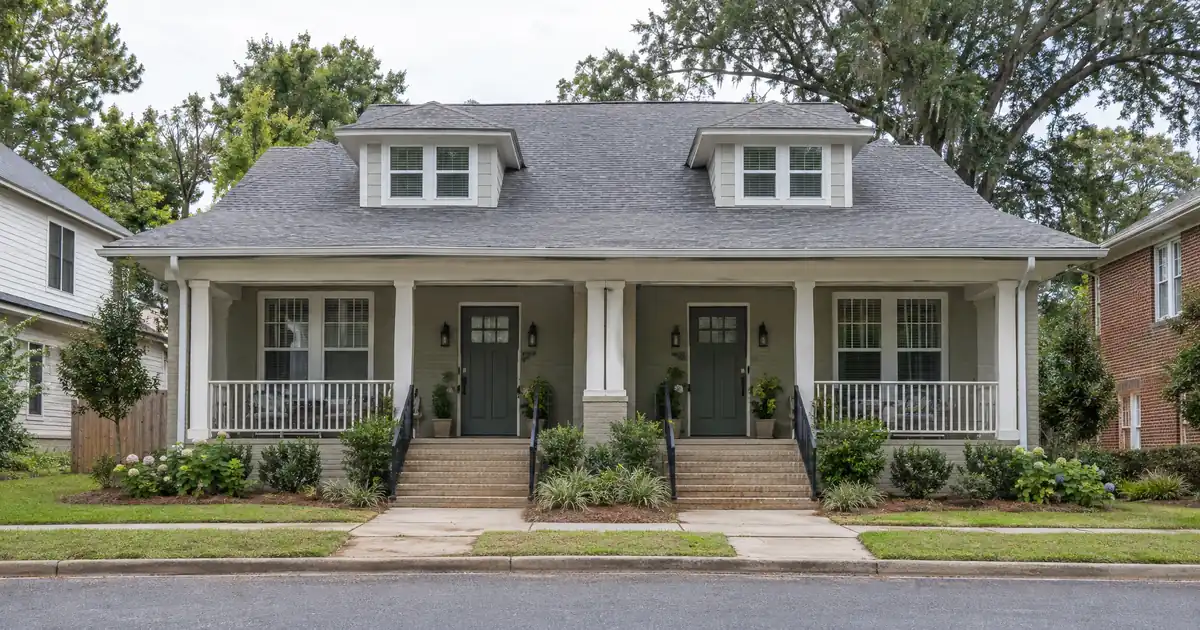
A single-family rental in Crabapple hits the DSCR math like this. Assume a house valued near the citywide median value of $789,000 (Census-derived, owner-estimated) and a rent of $3,875, the figure Homes.com shows for single-family rentals. These are modeled inputs, not a specific deal. At the 75% cash-out ceiling, with taxes and insurance included in the monthly obligation, coverage lands around 0.8x. Drop the LTV to 60% and it moves toward the low 0.9s. Milton has plenty of equity, and thin coverage is the hard part of a DSCR cash-out here. Final terms depend on lender guidelines, property type, leverage, and the borrower’s complete credit picture.
The Short Version: A DSCR cash-out refinance in Milton, Georgia is underwritten primarily on the property’s rental income measured against its full monthly obligation, and that ratio is tight because Redfin shows a $1.3M median sale price against rents in the low-to-mid $3,000s.
DSCR Cash-Out Calculator
Run the cash-out numbers in Milton, GA
Rate source: Freddie Mac 30-yr average via FRED® — Federal Reserve Bank of St. Louis · effective Sep 24, 2026
Prefilled with starting assumptions — enter your property’s value, balance, taxes, and insurance for a more accurate picture.
Program parameters update from Lendmire’s centralized guideline source. Taxes and insurance are editable estimates.
As of Sep 24, 2026 · General Freddie Mac market benchmark, not a Lendmire loan offer. Property value, balance, taxes, and insurance are editable estimates. Maximum loan-to-value varies by lender, program, property type, and seasoning. Not a Loan Estimate, approval, or commitment to lend. Program availability and eligibility are subject to lender guidelines, credit approval, property review, and underwriting.
- Cash-out LTV tops out at 75%, with about 6 months of ownership from title recording.
- Attached product in the Deerfield/Windward corridor is the most realistic rental fit.
- Small multifamily is nearly absent inside city limits.
- Coverage, not appraised value, is usually what limits the proceeds. Rent used for lender review comes from the appraiser’s rent schedule and signed leases, not portal averages.
Why Milton Has Equity but Not Yield
Milton values have climbed faster than rents, so the equity is real and the coverage is thin. Redfin shows the median sale price at $1.3M, up 8.0% year over year. Zillow’s value index sits lower at $956,345, up 2.7%, and the Census-derived median value is $789,000. Three sources, three definitions: sale prices, an index, and owner estimates. Don’t blend them. Pick the one that matches your appraisal target and stay with it.
Rents don’t keep pace. RentCafe puts the average apartment rent at $1,750, down 4.24% over the past year, with 27% of households renting. Rentometer shows three-bedroom houses in the $2,600s to $2,800s. Run gross rent against a median-priced house and monthly rent is roughly 0.25% to 0.35% of value. A full-PITIA coverage test at 75% LTV needs rent closer to 0.6% of value. That gap is the whole story. These specifics are subject to lender guidelines and a full review of property, leverage, and credit.
So the appraisal is only part of the story. An investor who bought a few years back in Crabapple or Deerfield is likely sitting on gains. Whether that equity converts to cash depends on the rent side, not the value side. That’s the reverse of most workforce markets.
How the Cash-Out Math Runs, Step by Step
The mechanics are simple even when the result isn’t. Coverage is monthly rent divided by the full monthly obligation: principal, interest, taxes, insurance, and any HOA dues. The standard benchmark is 1.00x. Some lenders review lower ratios with compensating factors, but those files usually mean lower leverage, different pricing, or more cash in. Eligibility depends on lender guidelines, credit profile, reserves, and property review. For the general framework, see Lendmire’s DSCR guide.
The parameters that matter on a Milton cash-out, all subject to lender guidelines and varying by borrower and property:
- LTV ceiling: 75% on cash-out. The 80% purchase figure does not apply.
- Seasoning: about 6 months of ownership, measured from title recording.
- Credit: tiers at 620, 660, 680, and 700, with 620 as the floor.
- Reserves: about 6 months of PITIA, and about 9 months above $1,500,000.
- Loan size: up to $3,000,000 on standard programs.
That last pair matters in Milton. With a $1.3M median sale price, many files sit near the reserve step-up. Reserves documentation becomes its own workstream: statements, source of funds, and any cash-out proceeds that can’t count toward reserves on the same transaction. Check that with the lender early.
Here’s the order files run in when they go cleanly:
1. Confirm seasoning. Pull the recorded deed or settlement statement and count from recording, not contract date.
2. Order a value estimate before the formal appraisal. Compare it to your basis to see whether 75% LTV leaves any cash at all. Terms vary by lender guidelines, property type, leverage, credit profile, and full file review.
3. Model coverage on full PITIA. Use the appraiser’s market rent schedule, not the listing portal.
4. If coverage lands under 1.00x, pick a structure. Lower LTV, interest-only, or a sub-1.00 program are options a lender would review. None is a promise.
5. Assemble entity and reserves documents. Operating agreement, good standing, insurance binder, and asset statements. LLC-held rentals are common, subject to lender program eligibility.
6. Submit clean. Missing entity paperwork and stale insurance quotes are the preventable gaps.
Deerfield and Windward: Where Attached Product Pencils Best
The Deerfield/Highway 9/Windward corridor in the southeast is the most realistic DSCR fit in Milton. It’s the city’s most commercial area, with shopping plazas like Deerfield Place and Bethany Bend, and it sits minutes from the Alpharetta employment center off Windward Parkway. Tenants there tend to be professionals commuting to that corridor.
The product type is the reason. Homes.com shows a townhouse median rent of $2,900, with three-bedroom townhouses at $2,750. Attached units cost less to buy than large-lot houses but rent near single-family levels. That narrows the rent-to-value gap. Not to 1.0x at 75% LTV on most files, but closer than the estate tier.
Milton also has a small new-supply signal here. Millstone Parc is 9 stacked flats and duplexes on 1.401 acres at Webb Road and Deerfield Parkway, one of the few duplex-type products in the city. It’s too small to build a strategy on. It does show where the city’s planners allow attached density.
Picture an investor holding a townhome here. Say the rent supports coverage in the mid-0.8s at 75% LTV with taxes and insurance included. Dropping to 65% LTV pushes that toward 1.0x. The cash-out shrinks, but the file becomes cleaner. Honestly, that trade is often the better one: less cash out, fewer coverage conditions, and a smaller reserve requirement.
Crabapple: Steady Demand, Executive Price Points
Crabapple in the southwest is the city’s walkable core. The City of Milton describes it as the heart of Milton and a fast-growing community. It hosts City Hall and the library, and it has townhomes, retailers, and a growing Market District. A new subdivision, Echo, adds 23 single-family lots along Crabapple Road.
Property managers describe tenants in Milton as high-income families and corporate relocators who want space. That’s a narrow renter pool but a stable one. Long-term demand is steady, not deep. It supports a well-priced house or townhome, not volume.
The catch is price. Crabapple houses trade at executive levels, so a cash-out here is an equity play. Coverage will typically sit below 1.0x at high leverage. The workable structures are lower LTV, a sub-1.00 program, or interest-only, each reviewed by the lender case by case.
Skip the Estates (Birmingham and the Gated Golf Communities)
North Milton around Birmingham Crossroads keeps the city’s equestrian character, and pricing there runs well into the multimillions. The gated golf communities, The Manor Golf & Country Club and White Columns among them, are executive-rental territory. No reliable rent data exists for either tier, and the price-to-rent gap is the widest in the city.
Two problems show up on these files. Coverage will typically fall well short of 1.0x. And appraisal risk is higher because the comps are sparse. Kroupa Team, a brokerage, reports that the sub-$1.8 million tier is seller-leaning while $3 million-plus estates move more slowly. That’s marketing data, so treat it as directional. Still, thinner comps and a bigger loan mean more reserves and more room for an appraisal to come in light.
Not ideal for DSCR. If the equity is there and you have strong personal income, other financing may fit better. See conventional vs DSCR on investor loans.
What Appraisers and Underwriters Actually Look At
Comps are deep between roughly $700K and $1.8M. Redfin reports 182 homes sold in August, up from 165 the year before. That volume means a cash-out valuation in the core tiers has recent in-market sales behind it. If the appraisal comes in short, an appraisal reconsideration with recent in-neighborhood sales and condition adjustments is a routine step, not a crisis.
Working DSCR brokers see a recurring pattern in high-price, low-rent suburbs: the value side of the file clears easily and the rent side doesn’t. Investors budget for the appraisal and forget the rent schedule. Then the market-rent line comes back at portal levels and the ratio lands under 1.00x. Files that go in with signed leases and a realistic rent expectation carry fewer surprises. The smart move is to model coverage before ordering anything.
One data-quality warning. Homes.com shows an overall “median rent” figure that’s inconsistent with its own single-family and townhouse numbers. Ignore it. Portal averages also conflict with each other: Apartments.com’s average house rent is $4,037, while RentCafe’s average single-family rent is $2,711. The appraiser’s 1007 schedule and your actual lease decide the rent used for lender review. Nothing else does.
Insurance quotes and local rental rules also affect the file. Verify current local rental rules, taxes, and insurance with qualified local professionals before you model.
Why 2-4 Unit Math Won’t Rescue Milton
Investors often look at duplexes and fourplexes to fix thin coverage. Inside Milton, that door is mostly closed. Fourplex and small multifamily supply is essentially absent, and Millstone Parc is the only new small-multifamily product in the research. Rent stacking isn’t a realistic Milton strategy. If you want 2-4 unit math, look in neighboring markets.
That’s actually a useful reframe for a cash-out. The Milton property is the equity source. The next deal may be somewhere else. Cash-out proceeds can become capital for a purchase in a market where rent-to-value runs closer to 1.0x, and the guide “The Refi Options” covers the mechanics of extraction. The refinance side covers rate-and-term and other refinance types.
DSCR vs. conventional financing
Two common ways to finance an investment property in Milton, GA. They qualify you differently — here’s how investors weigh them.
Why investors choose it
- Qualifies on the property’s rental income — no personal tax returns, W-2s, or pay stubs needed to document income.
- No personal debt-to-income ceiling to clear, so existing mortgages and obligations don’t cap your borrowing the same way.
- Can be closed in an LLC, keeping the property inside a business entity.
- Built for scaling — not held to the limit on number of financed properties that conventional financing applies.
- Underwriting centers on the deal: generally qualifies when the rent covers the payment, a 1.00x coverage ratio being a common baseline (confirmed in underwriting).
- Designed specifically for investment property, including long-term and, where the program allows, short-term rentals.
Where it’s strong
- Often the lowest ongoing financing cost for a buyer who fully qualifies on personal income — a fit for a first property or a cost-first purchase.
Trade-offs for investors
- Requires full personal income documentation and must fit within a debt-to-income limit — salary, existing debts, and other mortgages all count.
- Typically held in your personal name rather than a business entity.
- Caps how many financed properties you can carry, which can become a ceiling as a portfolio grows.
- Evaluates you as a borrower as much as the property, which usually means more paperwork.
How investors usually choose: a first or single property often optimizes for the lowest financing cost; portfolio builders often optimize for leverage, vesting in an LLC, and scaling past conventional caps. The right answer depends on your goals, the property, and current guidelines — both paths run through select lenders in Lendmire’s wholesale network, with eligibility and terms confirmed in underwriting.
There is a real trade-off. Pulling equity out of an appreciating asset gives up upside on the dollars withdrawn. But the coverage math also says Milton is not where you’d deploy new capital for yield. The stronger play might be the cash-out and redeploy, though an investor focused on appreciation could reasonably hold and refinance later at lower LTV.
Who This Fits (and Doesn’t)
Milton is a small, high-income, owner-occupied city. It has about 41,546 residents, per Census Dots, and 72.5% homeownership. Median household income is $171,295. The city’s own land-use mix is about 60% residential and 30% agricultural, with under 2% commercial. Supply stays scarce by design, which is why prices hold.
The fit is narrow. It works for an owner who bought a townhome or a lower-priced house, has seasoned equity, and is willing to accept moderate LTV. It also works for a self-employed investor whose traditional personal-income documentation understates income. It doesn’t work well for someone hoping to pull 75% out of a median-priced house on rent alone.
Most residents in professional services, retail, and finance work across the Alpharetta and Windward corridor. The City of Milton’s financial report names Verizon Wireless, Philips Healthcare, Infor Global Solutions, and Wal-Mart among large employers, though it gives no headcounts. For the Georgia program overview, see Lendmire’s Georgia DSCR platform. To run a specific file, request a quote or call 828-256-2183.
Frequently Asked Questions
How do you qualify for a DSCR cash-out refinance in Milton, Georgia?
Qualification centers on the property’s rent covering its full monthly obligation, with 1.00x as the standard benchmark. Typical guidelines include about 6 months of ownership from title recording, a 75% LTV ceiling, credit tiers starting at a 620 floor, and roughly 6 months of PITIA in reserves. In Milton the rent side is the pressure point, so lender review may look at lower LTV or other structures. All of it is subject to lender guidelines.
What are the requirements for an investment property loan in Milton, Georgia?
Expect an entity or personal-name title, an appraisal with a market rent schedule, proof of insurance, and reserves documentation. Ineligible property types include manufactured homes, log homes, and barndominiums. LLC borrowers are common, subject to program terms. Confirm details with a broker before ordering an appraisal.
Why do Milton cash-out refinances often come in under 1.00x coverage?
Rents run about $2,600 to $4,000 for houses while median values range from $789,000 to $1.3M depending on the source. Roughly 0.25% to 0.35% of value in monthly rent doesn’t cover a full PITIA test at 75% LTV. Townhomes in the Deerfield/Windward corridor come closest, and lower leverage improves the ratio.
Does Milton have duplexes or fourplexes for multi-unit DSCR math?
Almost none. The main new small-multifamily product found is Millstone Parc, with 9 stacked flats and duplexes near Deerfield Parkway. Investors seeking 2-4 unit math usually look in neighboring markets and use Milton equity as the source of capital.
For current guidelines and terms, see Lendmire’s DSCR loan programs page.
About Lendmire
Lendmire is a DSCR-focused mortgage brokerage, NMLS# 2371349, placing investor loans across 41 markets, including Washington, D.C. DSCR eligibility is generally reviewed by the lender on a property’s rental income rather than personal income documentation, which fits LLC-held rentals, self-employed investors, and portfolios scaling past conventional financed-property limits. Lendmire is a 2026 Scotsman Guide Top Workplace and a 2025 Scotsman Guide Top Workplace.
Get Started
Ready to find the right loan for you?
In about 30 seconds you can review financing options available for your investment property. No commitment required.
Informational only. Not a Loan Estimate, approval, or commitment to lend. Program availability and eligibility are subject to lender guidelines, credit approval, property review, and underwriting.
References
2. $3,875
3. Redfin, Milton housing market
5. RentCafe, Milton rent trends
6. Rentometer — Average Rent IN Milton GA
7. Homes.com, Milton townhouses for rent
10. Kroupa Team
11. $4,037
12. RentCafe’s
13. Census Dots
14. $171,295
15. City of Milton Economic Development
16. City of Milton’s financial report
17. a 2026 Scotsman Guide Top Workplace
18. a 2025 Scotsman Guide Top Workplace
This article is part of Lendmire’s investment property cash-out refinance program — full qualification details, guidelines, and scenarios live on the program page.
Related reading: Cash Out Refinance Investment Property in Milton, Georgia: The 2026 DSCR Guide to Crabapple · DSCR Cash Out Refinance in Alpharetta, Georgia: Equity Strategy for a Thin-Yield Market · DSCR Cash Out Refinance in Birmingham, Alabama: The 2026 DSCR Financing Guide to Southside Rentals
Guides: Investment Property Cash-Out Refinance in Georgia
Brandon Miller
Founder & CEO, Mortgage Loan Originator, Lendmire LLC
- Mortgage Loan Originator · NMLS# 1129696 · Verify on NMLS Consumer Access
- North Carolina Real Estate Broker · License# 343312 · Verify on NCREC
- North Carolina Insurance Producer · License# 19053198 · Property, Casualty, Life, Health · Verify on NAIC SBS
- Lendmire LLC · Firm NMLS# 2371349 · Verify firm licensure
Disclosures. The information presented in this article is general market commentary, not financial, legal, or tax advice. Lendmire is a mortgage brokerage (NMLS# 2371349) — not a direct lender or depository institution — and loan placement is subject to lender underwriting. Nothing in this content represents a commitment to lend. Loan terms, pricing, and program availability vary based on borrower qualifications, property characteristics, and state of subject property, and are subject to change at any time. Lendmire complies with Equal Housing Opportunity requirements. Consumer access: nmlsconsumeraccess.org.