
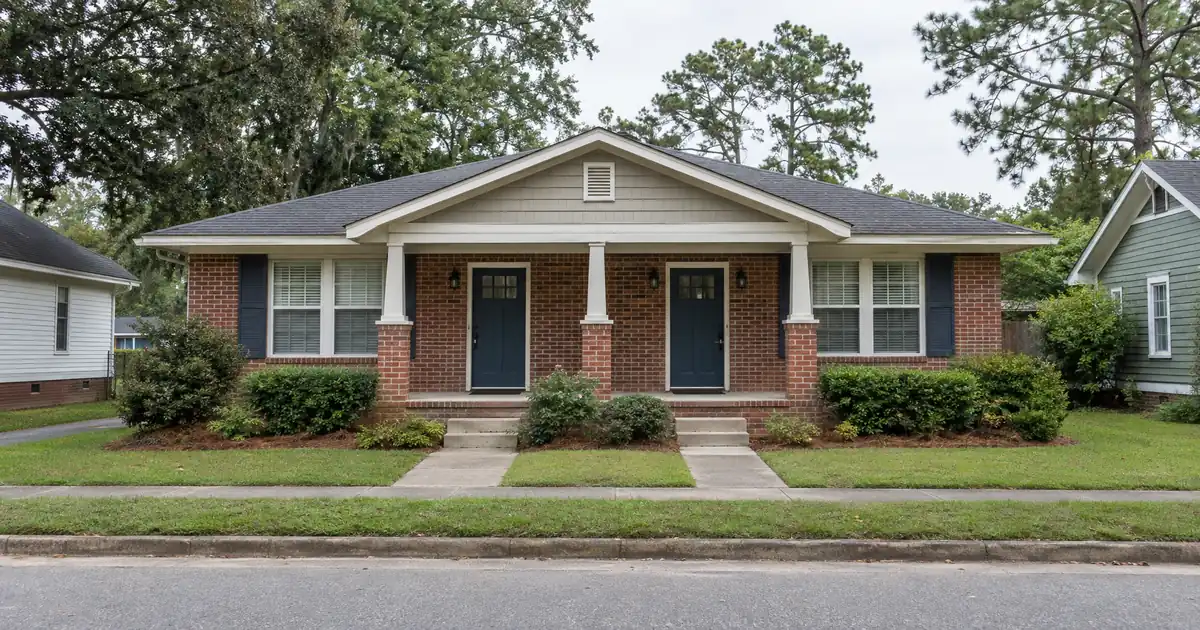
If you own a rental in Dalton priced near the $278K median Redfin reports, here’s what most brokers skip: the appraisal is not what limits your cash-out. The coverage ratio is. In a flat-price, blue-collar rental market, the rent roll sets the ceiling on what comes out, and the file has to show it.
TL;DR: A DSCR cash-out refinance in Dalton, Georgia suits investors holding seasoned workforce rentals near the flooring plants and Dalton State, and it is underwritten primarily on the property’s rental income measured against its full monthly obligation, subject to lender guidelines.
DSCR Cash-Out Calculator
Run the cash-out numbers in Dalton, GA
Rate source: Freddie Mac 30-yr average via FRED® — Federal Reserve Bank of St. Louis · effective Sep 24, 2026
Prefilled with starting assumptions — enter your property’s value, balance, taxes, and insurance for a more accurate picture.
Program parameters update from Lendmire’s centralized guideline source. Taxes and insurance are editable estimates.
As of Sep 24, 2026 · General Freddie Mac market benchmark, not a Lendmire loan offer. Property value, balance, taxes, and insurance are editable estimates. Maximum loan-to-value varies by lender, program, property type, and seasoning. Not a Loan Estimate, approval, or commitment to lend. Program availability and eligibility are subject to lender guidelines, credit approval, property review, and underwriting.
- Median-priced single-family rentals model below 1.0x at 75% LTV, so proceeds are coverage-limited.
- Cash-out LTV tops out at 75%, with about 6 months of seasoning from title recording.
- Prices are flat, so equity comes from basis and rehab, not appreciation.
- Duplex stock near downtown is the strongest coverage candidate. Rent data there is thin. Exact terms depend on the lender’s guidelines, property type, leverage, and a full review of the borrower’s file.
Lendmire (NMLS# 2371349) is a DSCR-focused mortgage broker. Lendmire’s DSCR program footprint covers Dalton, Georgia as part of a 41-market reach that includes Washington, D.C. The brokerage arranges these loans through wholesale lending channels. Lenders review the file and make the credit decision. What follows is the file-level view of pulling equity out of a Dalton rental you already own.
Dalton Market Snapshot
A quick read on the Dalton investor landscape — figures come from the cited sources below. Confirm current property-level numbers before underwriting.
| Metric | Detail |
|---|---|
| Home prices | $278K median (Redfin (Dalton market)) |
| Typical rents | $1,350 average apartment (Zumper (rent research)) |
| University enrollment | 5,570 students (Dalton State College) |
| Employment | Qcells 510 jobs (Georgia Trend) |
What Does the Cash-Out Math Look Like on a Median Dalton Rental?
On a median-priced Dalton single-family rental, a 75% LTV cash-out models below 1.00x coverage once taxes and insurance are counted. Trimming the loan-to-value into the mid-60s% brings it to roughly 1.0x. That is the central fact of this market, and it shapes every cash-out decision here. Every figure here varies by lender and program — guidelines, property type, leverage, and credit profile all apply.
Run the numbers this way. Use the $278K Redfin median sale price as the value. Use the $1,556 Rentometer figure for a 3-bedroom as rent used for lender review. Those two are listing-based figures from different sources, so treat the pairing as a modeled assumption, not a market fact. The gross rent runs a little over half a percent of value per month. Divide that rent by a full monthly obligation (principal, interest, taxes and insurance at a 30-year term) and the ratio at 75% LTV lands in the low 0.9s. Round down and say it plainly: including taxes and insurance, it does not clear 1.00x. Final terms depend on lender guidelines, property type, leverage, and the borrower’s complete credit picture.
Sub-1.00 does not end the conversation. It changes the structure. A lender may review a lower LTV that lifts coverage toward 1.0x. It may review a sub-1.00 program with stronger compensating factors such as reserves or credit. It may review an interest-only structure. Each carries different pricing and terms, and qualification stays subject to lender guidelines, credit approval and property review. The guide “What Is a DSCR Loan” explains the ratio if you want the mechanics.
Two practical points. Rent per bedroom is not linear in Dalton. The same source shows a 2-bedroom at $1,266, and the 4+ bedroom number looks like a small-sample outlier, so don’t underwrite off it. And lower-priced stock below the median carries a better rent-to-value ratio than the citywide averages suggest, which matters if you’re deciding which property in a portfolio to refinance first.
Flat Prices Change the Thesis
Dalton is a cash-flow market, not an appreciation market, and a cash-out here should be underwritten that way. Redfin shows the median sale price down 0.75% year over year, with 58 homes sold in July against 61 a year earlier. Nobody is refinancing into a rising appraisal.
The long view is friendlier. NeighborhoodScout reports appreciation over ten years of about 7.48% a year. That data is older, so use it as background, not as a forecast. An investor who bought several years back has real equity on paper. An investor who bought recently at today’s price has very little to pull.
So where does the cash come from? Three places:
1. Basis. You bought below market, or bought before the last run-up. 2. Rehab. Older stock gets renovated and rent steps up, which lifts both value and coverage. 3. Amortization. Slow, but it counts.
The Dalton Daily Citizen’s housing briefing reported that two of every three housing units in Whitfield County are more than 40 years old. That is the realistic rental stock here. Condition and deferred capex show up in the appraisal and in achievable rent, so a rehab budget belongs in the cash-out math.
Appraisal Variance Is the Real File Risk
Thin sales volume is the most likely thing to move your cash-out number in Dalton. The price sources disagree by a wide margin. Redfin’s median sale price is $278K. Movoto shows a $289,900 median list price. The Census-derived median home value, at $203,100 per CostOfLivingData, is an older “value” metric and runs well below both. They measure different things. Still, the spread tells you how much room an appraiser has.
With only a few dozen closed sales a month, appraisers lean on a small comp set. Expect a conservative valuation and plan the LTV around it, not around the listing median. Here’s the catch: at a 75% ceiling, a value that comes in a few percent light can drop proceeds by more than the same miss would in a deep market, because the coverage ratio is already tight.
Appraisal reconsideration is a routine step, not an emergency move. A packet with recent in-neighborhood closings, condition adjustments and the rehab scope recovers value more often than a bare request does. Prepare it before the appraisal lands, not after.
Why the Rent Roll Holds Up
Dalton’s tenant demand comes from jobs, not population growth, and the jobs are concentrated. The metro grew only 2.9% between 2010 and 2024 per USAFacts, and the city itself sits near 34,538 residents per Census Bureau QuickFacts. Nobody buys here for growth. They buy for the employer base.
Georgia Trend reports more than 6,000 Shaw Industries workers and more than 4,000 Mohawk workers locally. It also reports roughly 30,000 additional daily commuters. Whitfield County is Georgia’s 25th largest county but its third largest manufacturer. Add Engineered Floors and the Qcells solar plant, which Believe Greater Dalton says brought over 1,500 jobs on a $500 million investment. That is a diversifying base, though solar work depends on federal policy and trade conditions and should be watched, not assumed.
The supply side matters for a refinance file. Believe Greater Dalton, citing Flooring Capital Development Corporation research, says the county added more than 4,000 jobs but fewer than 400 housing units over twelve years. That gap plus a large pool of out-of-town commuters supports occupancy and rent stability, which is the durability a lender wants to see behind the coverage number. Long-tenured plant households also tend to sign and renew long-term leases. That helps the lease evidence in the file.
Then there’s the college. Dalton State College reported 5,570 students, up 8.4% in a year. Per Complete College Georgia, 93% of them commute and there is one residential hall. Most student and staff housing demand lands in the private rental market, mainly the west-central corridor.
Where the Coverage Holds Best
Submarket rent and price data does not exist at a level worth quoting, so this section stays qualitative on purpose. The citywide medians are the only usable numbers, and the tenant profiles below come from the housing mix and nearby employers.
Historic Downtown, McCarty and Thornton Avenue–Murray Hill. This is the best candidate for income stacking. The neighborhood association describes a mix of detached homes, duplexes and small apartment buildings, mostly 2- and 3-bedroom. Homes here date largely from the 1940s to 1960s. A duplex with two leases carries more coverage cushion than a single-family at the same price, and one vacancy doesn’t zero out the income. The tradeoff is condition. Older stock means capex, and capex shows up in the appraisal.
Walnut Avenue and the Dalton State corridor. Apartments and single-family homes serve college staff, healthcare workers and Walnut Square retail employees. Hamilton Medical Center on Memorial Drive anchors the health side. Vitruvian Health, the rebranded Hamilton system, is described as one of the area’s largest employers. Demand is steady and diversified, though I’d expect rents here to track the citywide numbers instead of beating them.
Rocky Face and New Hope. Semi-rural, west on US-41. Believe Greater Dalton’s neighborhood guide describes 1960s and 1970s ranches, newer subdivisions and acreage. This is commuter-family single-family rental territory. Multi-unit stock is unlikely. One property-type note for anyone holding acreage: manufactured homes, log homes and barndominiums fall outside the network’s DSCR programs.
Cohutta and the northern edge. Cohutta sits about 13 miles north near I-75 and the Carbondale Business Park, close to Qcells. Townhomes and condos on the city’s northern edge run mostly $200,000 to $250,000 per Homes.com. Condo listings span $185,000 to $299,999. These are entry-priced options, but condo files bring the HOA questionnaire and condo certification into play, and those add documents to chase.
Which is stronger for a cash-out, downtown duplex or a northside townhome? This one’s a toss-up. The duplex has the better coverage story. The townhome has the cleaner, newer condition. Investors weighing a first refinance should price both against their own rent rolls.
Skip the Assumption That New Supply Doesn’t Matter
New apartments compete at the top of Dalton’s rental market, and that pressure belongs in any cash-out stress test. The Dalton Daily Citizen reported roughly 900 apartment units opened or expected in Whitfield County, including downtown lofts. I found no sourced vacancy or absorption rate, so ask a local property manager for current numbers instead of assuming.
The Hamilton Street project is 40 owner-occupied, single-family detached homes. It’s small. But owner-occupied infill can pull some entry-level renters into ownership, so position rentals at workforce price points and keep leases current.
The File That Goes Clean
Working DSCR brokers see a recurring pattern in small, employer-anchored markets like Dalton: the property is fine and the file stalls on paperwork. Leases are expired or month-to-month with no rent evidence. The entity documents don’t match the vesting on title. The appraisal comes in light and nobody prepared a reconsideration packet. Reserves sit in three accounts with no seasoning statements. None of those are market problems. All of them are preventable.
Here is the documentation set that keeps a Dalton cash-out file clean:
1. Current leases, or a market rent schedule the appraiser can support, for every unit. 2. Entity documents (operating agreement, EIN letter, good standing) that match how title is held, subject to lender program eligibility on LLC-titled properties. 3. Settlement statement or recorded deed showing the ownership date. The lender measures roughly 6 months of seasoning from title recording, and files that assume seasoning away get kicked back. 4. Reserves documentation. Programs typically look for about 6 months of PITIA in reserves, higher above $1,500,000 in balance. 5. Insurance and tax figures for the specific property, since coverage is calculated on the full obligation.
Typical guidelines cap cash-out at 75% LTV, set the standard DSCR baseline at 1.00x, and use credit tiers starting at a 620 floor. Balances up to $3,000,000 run on standard programs. These are guideline ranges from the wholesale network, not commitments, and exact eligibility depends on the borrower, property and lender. Cash-out equity is never a guaranteed figure. It’s whatever the rent, the obligation, the reserves and the 75% cap allow. For the detail, see the cash-out qualification details and the investor refinance breakdown. Investors comparing this to a bank refinance can read the guide “Where DSCR and Conventional Diverge”, and DSCR loan options for Georgia investors covers the state view. These specifics are subject to lender guidelines and a full review of property, leverage, and credit.
Then there’s the recycling question. Proceeds are capital for the next deal, and in Dalton the next deal often means a lower-priced house with better rent-to-value, or a duplex in the old core. The catch: pulling out the maximum from one property lowers its own coverage cushion. Sizing the loan for the file, not the maximum, is often the cleaner move (and the one that survives a light appraisal).
Investors can talk through the file with Lendmire at 828-256-2183 before ordering an appraisal. Verify current local rental rules, taxes and insurance with qualified local professionals before you commit.
DSCR vs. conventional financing
Two common ways to finance an investment property in Dalton, GA. They qualify you differently — here’s how investors weigh them.
Why investors choose it
- Qualifies on the property’s rental income — no personal tax returns, W-2s, or pay stubs needed to document income.
- No personal debt-to-income ceiling to clear, so existing mortgages and obligations don’t cap your borrowing the same way.
- Can be closed in an LLC, keeping the property inside a business entity.
- Built for scaling — not held to the limit on number of financed properties that conventional financing applies.
- Underwriting centers on the deal: generally qualifies when the rent covers the payment, a 1.00x coverage ratio being a common baseline (confirmed in underwriting).
- Designed specifically for investment property, including long-term and, where the program allows, short-term rentals.
Where it’s strong
- Often the lowest ongoing financing cost for a buyer who fully qualifies on personal income — a fit for a first property or a cost-first purchase.
Trade-offs for investors
- Requires full personal income documentation and must fit within a debt-to-income limit — salary, existing debts, and other mortgages all count.
- Typically held in your personal name rather than a business entity.
- Caps how many financed properties you can carry, which can become a ceiling as a portfolio grows.
- Evaluates you as a borrower as much as the property, which usually means more paperwork.
How investors usually choose: a first or single property often optimizes for the lowest financing cost; portfolio builders often optimize for leverage, vesting in an LLC, and scaling past conventional caps. The right answer depends on your goals, the property, and current guidelines — both paths run through select lenders in Lendmire’s wholesale network, with eligibility and terms confirmed in underwriting.
Frequently Asked Questions
How do you qualify for a DSCR cash-out refinance in Dalton, Georgia?
Qualification centers on the property’s rent measured against its full monthly obligation, with a 1.00x baseline typical on standard programs. Lenders also review credit (tiers start at a 620 floor), reserves of about 6 months, about 6 months of seasoning and a 75% LTV ceiling. Whether a specific Dalton property qualifies depends on lender guidelines, credit approval and the appraisal.
What are the requirements for an investment property loan in Dalton, Georgia?
The file needs a qualifying rental property, leases or a market rent schedule, entity documents if the property sits in an LLC, title information and reserves documentation. Manufactured homes, log homes and barndominiums are outside these programs. Details vary by borrower, property and loan scenario, and nothing here is a commitment to lend.
Can an LLC-owned Dalton rental be reviewed for DSCR financing?
Yes, subject to lender program eligibility. The entity documents need to match how title is held.
Will flat prices in Dalton limit how much cash comes out?
Usually yes, but the bigger limit is coverage. With the median sale price slightly down and only 58 July sales, appraisals lean on few comps. At 75% LTV a median-priced 3-bedroom models below 1.00x including taxes and insurance, so many files size to a lower LTV or to a lower-priced property.
Does a duplex near downtown Dalton improve the DSCR math?
It can. The historic core’s mix of duplexes and small apartment buildings offers two rent streams against one obligation, which tends to lift coverage relative to a single-family at a similar price. No sourced duplex rent data exists for Dalton, so run each property on its own leases and expect older-stock condition to affect the appraisal.
Your Next Move
Dalton’s rents are steady, its employers are large and its prices are flat. That combination rewards the investor who sizes the loan to the rent roll. Looking at the rentals you already own, which one has the coverage to carry a cash-out, and which one is better left alone?
For current guidelines and terms, see Lendmire’s DSCR loan programs page.
About Lendmire
Lendmire (NMLS# 2371349) is a mortgage brokerage focused on DSCR investor financing, helping arrange programs through wholesale and investor-lending channels in 41 markets, including Washington, D.C. DSCR loans are evaluated by the lender on property cash flow rather than personal income, subject to lender guidelines, supporting LLC closings and accommodating investors with four or more financed properties. Scotsman Guide named Lendmire a Top Mortgage Workplace in both 2025 and 2026.
Get Started
Ready to find the right loan for you?
See your offer in seconds. No credit pull, no obligation.
Informational only. Not a Loan Estimate, approval, or commitment to lend. Program availability and eligibility are subject to lender guidelines, credit approval, property review, and underwriting.
References
1. Redfin, Dalton housing market
3. Dalton State College, enrollment growth
4. Georgia Trend, Dalton and Whitfield talent hub
5. Rentometer, average rent in Dalton
7. daltoncitizen.com — Public Invited to Voice Concerns About Housing
8. Movoto
10. USAFacts, Dalton metro population
13. Believe Greater Dalton, housing and jobs
15. historicdowntowndaltonneighborhood.org — Neighborhood association
16. Believe Greater Dalton’s neighborhood guide
17. Homes.com
18. reported
20. 2025
21. 2026
This article is part of Lendmire’s investment property cash-out refinance program — full qualification details, guidelines, and scenarios live on the program page.
Related reading: Cash Out Refinance Investment Property Dalton Georgia · DSCR Loans in Dalton, Georgia: Investor Financing for Crown Gardens, Downtown Dalton Workforce Rentals & Carpet Capital Cash-Flow Properties · DSCR Cash Out Refinance Ringgold Georgia
Guides: Investment Property Cash-Out Refinance in Dalton, GA · Investment Property Cash-Out Refinance in Georgia
Brandon Miller
Founder & CEO, Mortgage Loan Originator, Lendmire LLC
- Mortgage Loan Originator · NMLS# 1129696 · Verify on NMLS Consumer Access
- North Carolina Real Estate Broker · License# 343312 · Verify on NCREC
- North Carolina Insurance Producer · License# 19053198 · Property, Casualty, Life, Health · Verify on NAIC SBS
- Lendmire LLC · Firm NMLS# 2371349 · Verify firm licensure
Important disclosures. Lendmire (NMLS# 2371349) is a licensed mortgage brokerage. Lendmire is not a direct lender, depository institution, or financial advisor. All loan inquiries are subject to lender underwriting; this article does not constitute a commitment to lend. Rates, terms, and program guidelines are subject to change without notice and vary by borrower profile, property type, and state. Information in this article is general in nature and is not financial, legal, or tax advice. Equal Housing Opportunity. NMLS Consumer Access: nmlsconsumeraccess.org.