
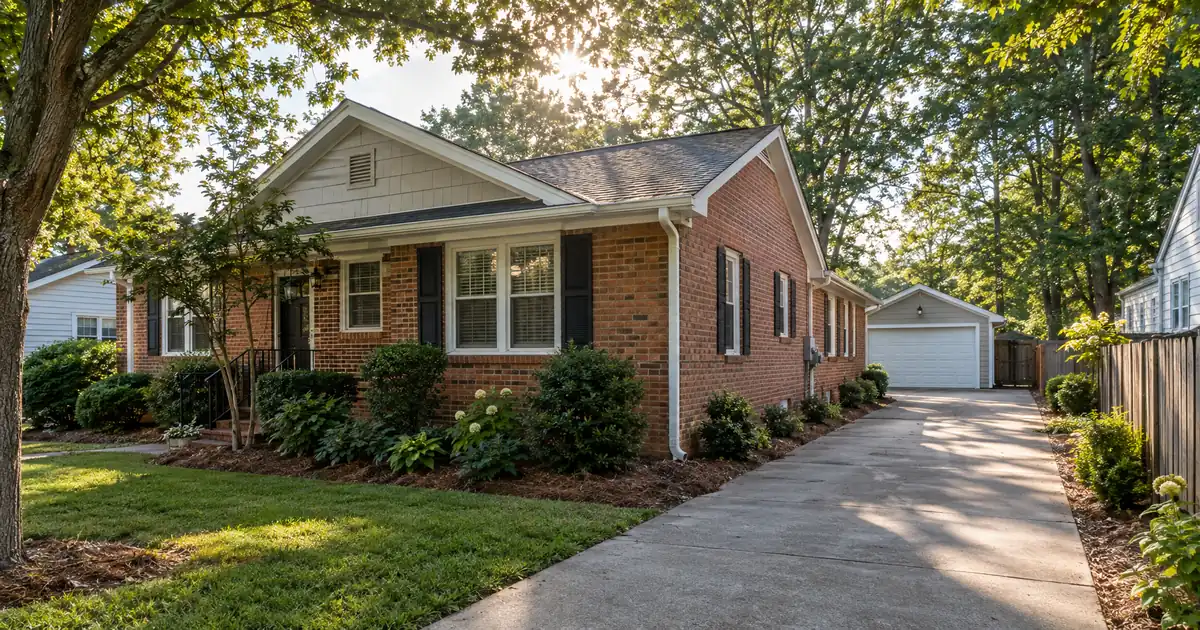
Picture two investors in this Wake County town of 51,492 residents. One holds a townhome bought at a modest basis and wants to pull a small slice of equity at low LTV. The other holds a large single-family home bought near the top of the local price band and wants the full 75 percent. The math favors the first investor, and it isn’t close. Amgen and Roche have together committed more than $3.5 billion to a town where only 17 percent of households rent. Tenant demand is real. Rent-to-value is the constraint.
DSCR Cash-Out Calculator
Run the cash-out numbers in Holly Springs, NC
Rate source: Freddie Mac 30-yr average via FRED® — Federal Reserve Bank of St. Louis · effective Sep 24, 2026
Prefilled with starting assumptions — enter your property’s value, balance, taxes, and insurance for a more accurate picture.
Program parameters update from Lendmire’s centralized guideline source. Taxes and insurance are editable estimates.
As of Sep 24, 2026 · General Freddie Mac market benchmark, not a Lendmire loan offer. Property value, balance, taxes, and insurance are editable estimates. Maximum loan-to-value varies by lender, program, property type, and seasoning. Not a Loan Estimate, approval, or commitment to lend. Program availability and eligibility are subject to lender guidelines, credit approval, property review, and underwriting.
Key Takeaways:
Cash-out refinancing on a Holly Springs, North Carolina rental is underwritten primarily on the property’s rental income measured against its full monthly obligation. Because home prices here run well ahead of rents, the coverage ratio usually binds before the 75 percent LTV ceiling does, so lower-LTV structures become the practical lane.
- Modeled coverage on a median-priced single-family rental at 75 percent LTV lands in the low-0.7s, including taxes and insurance.
- Lower LTV or a townhome priced under $540,000 pushes the number toward 1.0x.
- Value sources disagree on direction, so the appraisal, not the trend, sets your equity.
- Program guidance is about 6 months of seasoning and about 6 months of PITIA reserves, subject to lender guidelines.
Holly Springs Market Snapshot
A quick read on the Holly Springs investor landscape — figures come from the cited sources below. Confirm current property-level numbers before underwriting.
| Metric | Detail |
|---|---|
| Home prices | $576K median (Redfin) |
| Typical rents | Avg rent $1,704 (RentCafe (apartment listings)) |
| Employment | 725 jobs by 2032 (Town of Holly Springs) |
Start With the Appraisal Problem
Holly Springs has no single trustworthy price trend, and a cash-out thesis that depends on one is fragile. Redfin puts the median sale price at $576K, up 18.9 percent year over year, with days on market at 40 versus 19 a year earlier. Zillow’s value index shows a 3.3 percent decline over the same stretch, at about $547,566. Resideline tracked 406 closings with a $582,749 median, and the middle half of sales landed between $440,000 and $772,000. Those numbers describe the same town, and they can’t all be the story.
This article uses the Redfin figure as its reference point. Zillow’s reading is lower because an automated value model and a median of closed sales measure different things. The median swings also likely reflect changes in sales mix, including new-build supply, more than movement in any given house.
The practical read: don’t underwrite a cash-out on assumed appreciation. An investor who has owned for six months or more (program guidance measures seasoning from title recording) faces an appraisal that may come in flat against what was paid. The equity available depends on the appraised value, the rent used for lender review, the full monthly obligation, reserves, and the 75 percent LTV ceiling. It isn’t a guaranteed cash figure. Think of the equity recycle pathway as three gates in sequence: appraisal, coverage, reserves. The coverage gate is where Holly Springs files get tested.
The Coverage Math (It’s Tighter Than the Headlines)
Coverage is monthly rent divided by the full monthly obligation: principal, interest, taxes, insurance and any HOA dues. The DSCR qualification mechanics treat 1.00x as the common baseline, because rent just covers the payment at that level. Some lenders review lower ratios with compensating factors, and eligibility always depends on lender guidelines.
Here’s what that baseline does in Holly Springs. These are modeled assumptions, not market data: 30-year amortization, taxes and insurance included, and rents chosen inside the observed band. Pricing and available terms vary by lender, borrower profile, property type, and full underwriting review.
| Modeled property | LTV | Modeled coverage |
|---|---|---|
| $576K SFR, $2,500 rent | 75 percent | Low-0.7s |
| $576K SFR, $2,500 rent | 60 percent | Mid-0.8s |
| $576K SFR, $2,500 rent | 50 percent | About 1.0x |
| $400K townhome, $2,000 rent | 60 percent | About 1.0x |
Read that table twice. A single-family rental at the local median has to drop to roughly half the property’s value before the ratio clears the baseline. The town’s own data point explains why. Niche shows a $535,800 median home value against a $2,021 median rent, roughly a 0.38 percent monthly rent-to-value ratio by simple arithmetic. NeighborhoodScout puts the median value higher, at $620,307, which drops the ratio to about 0.33 percent.
So what happens when the number lands below 1.00 at your desired LTV? Some structures exist that a lender may review: a sub-1.00 program with reduced leverage and stronger credit, an interest-only period, or a lower loan amount that brings the ratio up. Qualification stays subject to lender guidelines, credit approval and property review.
The better question is whether you should use them. If you’re pulling cash out of a property with a realistic path to higher rent, a sub-1.00 structure is a defensible bridge. If the property only works on paper at a sub-1.00 ratio, the signal is to lower the ask or reconsider the asset, not to shop for a looser program.
Working DSCR brokers see a recurring pattern in high-price suburbs where rents trail values: the borrower’s target cash-out number is set by their next purchase, and the file’s coverage ratio sets the actual ceiling. The files that go smoothly start from the coverage math and work backward to proceeds. The ones that stall start with a desired dollar figure.
Small Multifamily Is the Scarce Asset
Duplexes, triplexes and fourplexes barely register in the research. No sourced multi-unit comps turned up, and that is itself informative. NeighborhoodScout reports a higher share of four- and five-plus-bedroom homes than 98 percent of U.S. communities. The town is built out in large single-family product that’s expensive per door.
That changes the usual multifamily-versus-SFR argument. Elsewhere, a fourplex covers its payment with cushion that a single-family house can’t match. Here, a listed small multifamily property would be a rare chance to stack income, but it demands underwriting against actual comps, since there’s no local rent data to lean on. Treat any multi-unit owner’s equity as potentially more valuable than the market’s averages suggest, and verify it with an appraisal before building a plan on it.
For single-family owners, the rental pool is deeper than the renter share implies. RentCafe reports 19 percent of residents rent, versus 17 percent on its separate average-rent page, so the sources differ slightly. Of rentals, 38 percent are single-family, 57 percent are in small complexes under 50 units and 5 percent are in large buildings. A house investor competes with a meaningful set of comparable rentals. That helps appraisers and lenders find comps.
Where the Tenants Come From
Payroll is the demand story, and it’s unusually concentrated. Wake County Government says FUJIFILM Biotechnologies’ site investment exceeds $3.2 billion, with employment reaching 1,400. Axios reports 680 new jobs carrying a minimum average salary of $109,000. The Town’s Amgen page cites more than $1.5 billion in investment and 725 jobs. Roche plans 500-plus jobs. CSL Seqirus, the North American influenza vaccine operation that traces to the original cluster, rounds out the list.
The resident base matches. Data USA shows 22.5k employed residents, with 4,889 in professional, scientific and technical services, 2,836 in health care and 2,239 in manufacturing. The Town’s housing data page says more than 700 households earning over $100,000 already rent. The Town’s workforce page puts 576,000 people inside a 15-mile radius, with a civilian labor force of nearly 300,000.
The inference (and it is an inference, not a sourced finding) is that new hires often rent before buying. Well-paid renters meeting a thin rental stock is the core of the bull case. The counterweight shows up in listings: newer apartment complexes such as Peterson Station at Sunset Lake advertise concessions, per Redfin’s rental listings. That is a point-in-time snapshot, not an absorption study. Still, RentCafe shows average rent at $1,726, up just 1.77 percent year over year, with apartment averages well below Niche’s $2,021 median. Underwrite at in-place rent, not asking rent.
Rex Holly Springs Hospital, a seven-story facility with 50-plus licensed inpatient beds downtown, adds a steady health-care employment anchor alongside Duke Health clinics.
Four Pockets, Four Different Cash-Out Stories
Woodcreek townhomes. Homes.com shows townhouses ranging from $330,000 to nearly $540,000. This is the price band where modeled coverage gets closest to the baseline at moderate LTV. The catch is HOA rules. A local brokerage article flags that townhomes with rental restrictions can trade at a large discount to comparable single-family homes. Check community documents before counting on rent, because restricted product can strand a refinance.
Downtown and Main Street. Braxton Village, Windcrest and Oakhall sit near the Cultural Center, Main Street cafés and new mixed-use development, with the Rex hospital as an anchor. This is the renter-oriented side of town. Main Street Square, Main Street Vista and Hawthorne at Holly Springs are the named rental communities. The Town’s demographics page cites 100,000 square feet of retail and mixed-use added downtown. No neighborhood-level rent figures exist in the research, so comps have to come from the appraisal itself.
Twelve Oaks. This golf-course community near NC-55 is owner-occupant country. Homes.com shows a three-bedroom single-family home starting near $530,000 and new builds reaching $1.7 million. At those values a rent of any plausible size produces thin coverage. Cash-out here is mostly an equity-preservation decision, not a cash-flow one. It can make sense for an owner who is moving up, but the ratio won’t support high leverage.
Amgen’s site sits south of US-1. Employer proximity suggests tenant demand, but no housing data was found, so this is a thesis to test, not a fact to rely on.
What’s the Catch on the Proceeds?
The catch is the same in every market with thin rent-to-value: the cash you can take out is smaller than the equity you have. A 75 percent LTV ceiling is a maximum, not a target, and reserves of about 6 months of PITIA (about 9 months above $1,500,000) come out of the same pool of capital. Credit tiers run from a 620 floor up through 660, 680 and 700, with pricing and leverage generally improving at the higher tiers, subject to lender guidelines. Loan amounts run up to $3,000,000 on standard programs.
The flip point with conventional financing is worth naming. A W-2 borrower with one or two properties and a clean personal income profile may find a conventional cash-out or a home equity line cheaper than a DSCR structure, and the coverage ratio wouldn’t matter for qualification there. DSCR versus conventional tips the other way for LLC-held portfolios (subject to lender program eligibility), self-employed investors, or anyone whose traditional personal-income documentation doesn’t reflect rental income cleanly. In Holly Springs, where coverage is thin, that’s a real tradeoff and not a formality.
Then there’s the use of proceeds. Pulling equity to buy another Holly Springs townhome where the math clears 1.0x is one thing. Pulling it to chase a market where the numbers don’t work is a different decision. Stress-testing the next deal before refinancing the last one is the disciplined order.
This one’s a genuine toss-up for owners near the median: hold the existing loan and wait for rents to catch up, or refinance now at lower LTV and redeploy. A thin 1.77 percent rent growth figure argues for patience, while sitting on idle equity argues for action. Investors with a specific next acquisition in hand lean toward acting. Those without one usually shouldn’t refinance just because equity exists. Investors can also review North Carolina DSCR financing for state-level context, or run the numbers with Lendmire on a specific property. As a reminder, current local rental rules, taxes and insurance deserve a check with qualified local professionals before any purchase or refinance.
DSCR vs. conventional financing
There are two common ways to finance an investment property in Holly Springs, NC, and they qualify you differently — here’s how investors weigh them.
Why investors choose it
- Qualifies on the property’s rental income — no personal tax returns, W-2s, or pay stubs needed to document income.
- No personal debt-to-income ceiling to clear, so existing mortgages and obligations don’t cap your borrowing the same way.
- Can be closed in an LLC, keeping the property inside a business entity.
- Built for scaling — not held to the limit on number of financed properties that conventional financing applies.
- Underwriting centers on the deal: generally qualifies when the rent covers the payment, a 1.00x coverage ratio being a common baseline (confirmed in underwriting).
- Designed specifically for investment property, including long-term and, where the program allows, short-term rentals.
Where it’s strong
- Often the lowest ongoing financing cost for a buyer who fully qualifies on personal income — a fit for a first property or a cost-first purchase.
Trade-offs for investors
- Requires full personal income documentation and must fit within a debt-to-income limit — salary, existing debts, and other mortgages all count.
- Typically held in your personal name rather than a business entity.
- Caps how many financed properties you can carry, which can become a ceiling as a portfolio grows.
- Evaluates you as a borrower as much as the property, which usually means more paperwork.
How investors usually choose: a first or single property often optimizes for the lowest financing cost; portfolio builders often optimize for leverage, vesting in an LLC, and scaling past conventional caps. The right answer depends on your goals, the property, and current guidelines — both paths run through select lenders in Lendmire’s wholesale network, with eligibility and terms confirmed in underwriting.
Where the Asymmetry Sits
Price-to-rent in Holly Springs is expensive almost everywhere, which makes the exceptions stand out. The most underpriced corner against its demand fundamentals looks like unrestricted townhomes in the Woodcreek price band near the downtown corridor. They sit at the low end of a market where more than 700 six-figure households already rent, rental supply is thin and the cash-out math comes closest to working at sensible LTV. That’s an inference from the research and not a sourced conclusion, and HOA rental rules decide whether it holds. The trap is the opposite end: large single-family homes bought on appreciation hopes, where a refinance at high leverage can’t clear the coverage test.
Frequently Asked Questions
How do you qualify for a DSCR loan in Holly Springs?
Qualification centers on the property’s rent compared with its full monthly obligation, with 1.00x as the common benchmark. Rent is typically established by lease or appraiser’s market-rent schedule. On most files the lender also reviews credit, reserves and the property itself. Holly Springs borrowers at higher price points often need lower leverage to get there, though specifics vary by lender.
What are the requirements for an investment property cash-out loan in Holly Springs, North Carolina?
Program guidance points to about 6 months of ownership measured from title recording, a credit floor of 620 and reserves of about 6 months of PITIA. LTV tops out at 75 percent on cash-out. Manufactured homes, log homes and barndominiums fall outside these DSCR programs. Everything remains subject to lender guidelines and property review.
Will biomanufacturing hiring keep pushing Holly Springs rents up?
Not automatically. High-wage jobs at Fujifilm, Amgen and Roche support demand, but average rent grew only 1.77 percent year over year, and newer complexes advertise concessions. Supply and unit type matter more than headline payroll, so underwrite at in-place rent.
Can you pull cash from a Holly Springs townhome with HOA rental restrictions?
It depends on the restriction. If community rules limit leasing, rent used for lender review may be harder to document and the exit options shrink. Get the governing documents before choosing the property or planning the refinance.
For current guidelines and terms, see Lendmire’s DSCR loan programs page.
About Lendmire
Lendmire (NMLS# 2371349), a non-QM mortgage broker serving investors in 41 markets including Washington, D.C., helps structure DSCR scenarios commonly evaluated around a property’s rental income rather than personal income paperwork, subject to lender guidelines. The firm was recognized by Scotsman Guide as a 2026 Top Workplace and was a top-ranked workplace in 2025 as a Top Mortgage Workplace. Lendmire places loans through wholesale investor lenders and is not a direct lender. Questions can go to 828-256-2183.
Get Started
Ready to find the right loan for you?
See your offer in seconds. No credit pull, no obligation.
Informational only. Not a Loan Estimate, approval, or commitment to lend. Program availability and eligibility are subject to lender guidelines, credit approval, property review, and underwriting.
References
1. e1.nmcdn.io — Wced Holly Springs 2025
3. Redfin
4. RentCafe
7. Resideline
8. Niche
11. Axios
12. Data USA
14. RentCafe
15. Homes.com
16. recognized by Scotsman Guide as a 2026 Top Workplace
17. Scotsman Guide — Top Workplaces 2025
This article is part of Lendmire’s investment property cash-out refinance program — full qualification details, guidelines, and scenarios live on the program page.
Related reading: DSCR Cash Out Refinance in Holly Springs, North Carolina: How the Rent Math Clears at 75% LTV · Cash Out Refinance Investment Property in Wake Forest NC · DSCR Cash Out Refinance in Blue Springs, Missouri: The 2026 DSCR Financing Guide to Adams Dairy Parkway
Guides: Investment Property Cash-Out Refinance in Holly Springs, NC · Investment Property Cash-Out Refinance in North Carolina
Brandon Miller
Founder & CEO, Mortgage Loan Originator, Lendmire LLC
- Mortgage Loan Originator · NMLS# 1129696 · Verify on NMLS Consumer Access
- North Carolina Real Estate Broker · License# 343312 · Verify on NCREC
- North Carolina Insurance Producer · License# 19053198 · Property, Casualty, Life, Health · Verify on NAIC SBS
- Lendmire LLC · Firm NMLS# 2371349 · Verify firm licensure
Legal disclosures. Lendmire (NMLS# 2371349) is a state-licensed mortgage brokerage that arranges financing through wholesale lender relationships. Lendmire is not a direct lender, depository institution, or registered financial advisor. The discussion above is general informational content about real estate financing — it is not financial, legal, or tax advice, and readers should consult licensed professionals for guidance on their individual circumstances. Loan inquiries are subject to lender underwriting; this article does not represent a commitment to lend. Loan terms, rates, and qualification standards vary by borrower, property, and state, and are subject to change at any time. Equal Housing Opportunity. NMLS Consumer Access: nmlsconsumeraccess.org.