
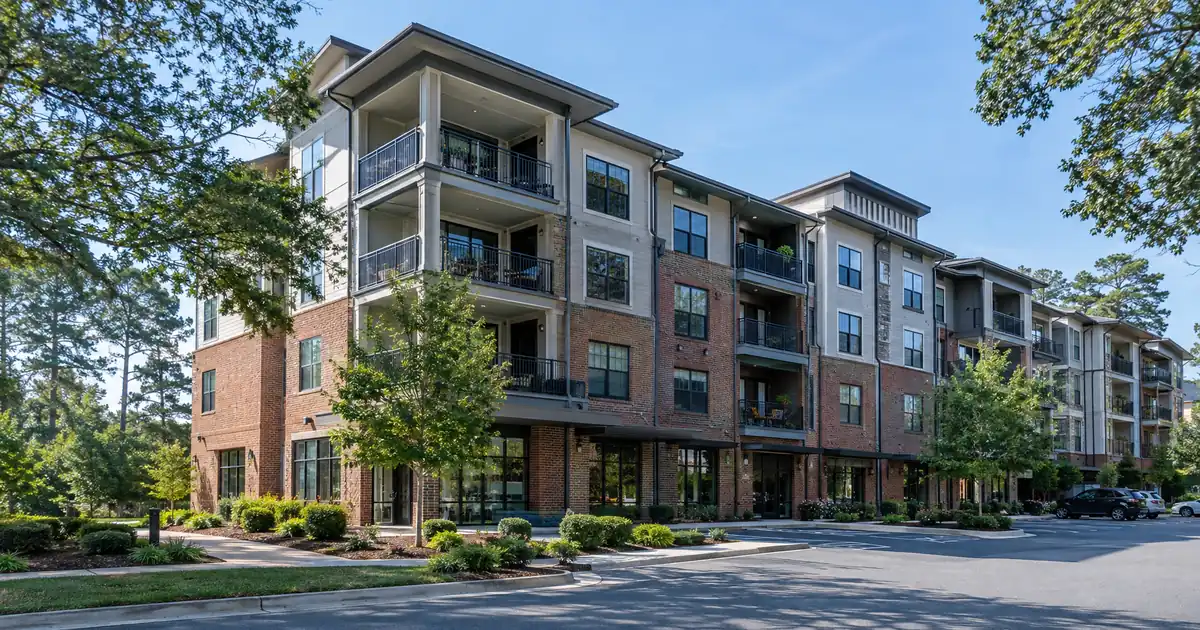
The city’s own economic materials describe roughly 45,000 residents and roughly 45,000 jobs, according to a Curiosity Lab press release. That claim is dated, so treat it as directional. Still, a suburb that works as a daytime job center sits on top of a rental stock built mostly in the 1970s through the 1990s. That mismatch is the whole cash-out story here. Tenant demand is anchored by employers. Equity is there for owners who bought before recent price gains. The rent is the limiting piece.
The Short Version: A DSCR cash-out refinance in Peachtree Corners, Georgia is underwritten primarily on the property’s rental income measured against its full monthly obligation, and with a median sale price near $601,967 per Redfin, rent, not equity, usually sets the ceiling.
DSCR Cash-Out Calculator
Run the cash-out numbers in Peachtree Corners, GA
Rate source: Freddie Mac 30-yr average via FRED® — Federal Reserve Bank of St. Louis · effective Sep 24, 2026
Prefilled with starting assumptions — enter your property’s value, balance, taxes, and insurance for a more accurate picture.
Program parameters update from Lendmire’s centralized guideline source. Taxes and insurance are editable estimates.
As of Sep 24, 2026 · General Freddie Mac market benchmark, not a Lendmire loan offer. Property value, balance, taxes, and insurance are editable estimates. Maximum loan-to-value varies by lender, program, property type, and seasoning. Not a Loan Estimate, approval, or commitment to lend. Program availability and eligibility are subject to lender guidelines, credit approval, property review, and underwriting.
- Median rent for a house runs about $2,200, per Homes.com, against roughly $600K values.
- Cash-out LTV tops out at 75 percent, with about 6 months of seasoning.
- Small apartment buildings make up 77 percent of rental stock, per RentCafe.
- Price growth slowed to 4.0 percent while rents stayed roughly flat.
Lendmire arranges these files through its wholesale lender network. It does not lend or approve. The lender reviews the file, and everything below is subject to lender guidelines. Details on Georgia DSCR investor loans sit on the state hub page.
Peachtree Corners Market Snapshot
A quick read on the Peachtree Corners investor landscape — figures come from the cited sources below. Confirm current property-level numbers before underwriting.
| Metric | Detail |
|---|---|
| Typical rents | $2,200 median (Homes.com rentals) |
| Recent appreciation | +10.8% (Redfin housing market) |
| Employment | ~45,000 residents and jobs (Curiosity Lab press release) |
Where the Cash-Out Math Breaks First
Single-family rentals here run into a ratio problem before they run into an equity problem. Homes.com puts median home rent near $2,200. Redfin’s median sale price is $601,967, up 4.0 percent year over year. That is a gross monthly rent-to-price ratio around 0.37 percent. It is a rough calculation that mixes two sources and property types, so treat it as directional.
At 75 percent LTV, with taxes and insurance included in the full monthly obligation, a house at that ratio lands well below the 1.00x benchmark. Modeled that way, coverage sits in the low 0.6 range. The equity may be there. The rent doesn’t carry the loan.
Price sources disagree, which matters at the appraisal stage. Zillow shows an average home value of $524,030, up 1.3 percent, a different methodology from Redfin’s sold-price median. Movoto shows a median sold price of $602,900. Use the range. Don’t pick the number that flatters the cash-out.
Here’s the catch on a sub-1.00 file. Options a lender may review include a sub-1.00 DSCR program, interest-only structuring, or a smaller loan amount to bring the ratio up. Each usually comes with stronger compensating factors, lower leverage, or different pricing, and eligibility depends on lender guidelines, credit, reserves, and property review. None of it is a promise.
Multi-Unit Stacking (and Why It’s Harder Than It Looks)
Small multifamily is where the ratio improves. RentCafe reports that 77 percent of the city’s apartments sit in buildings under 50 units, 10 percent are in buildings of 50 or more, and 13 percent are single-family rentals. The average rental building is 39 years old. Renters are 47 percent of households, or 8,360 households.
Run the numbers on unit rents. RentCafe’s rent data shows two-bedroom averages of $1,585 and three-bedroom averages of $1,982. Model four two-bedroom units at that average and the building throws off roughly $6,340 a month, nearly three times the rent on a single house. That is a modeled assumption, not a listing.
Two cautions. First, “under 50 units” is not a duplex-to-fourplex count. Don’t present it as one. Second, true 2-to-4 unit product looks scarce in recent sales activity, and no reliable duplex, triplex, or fourplex rent or value data turned up. Appraisers may have to reach for comparables. On a cash-out, thin comps put a cap on value, and value drives the 75 percent LTV ceiling.
The stronger play might be a small multifamily building over a rehabbed house. Investors who already own a house could argue the reverse: no new acquisition, less documentation. It’s a real toss-up, and the answer turns on which asset hits 1.00x with taxes and insurance included.
Condos and Townhomes: The Quiet Option
Homes.com notes that condos tend to be the most affordable rental type in the city, with houses and townhouses costing more. Lower entry prices are where rent-to-price ratios improve. The condo price and rent bands weren’t found, so no figures here.
The friction is documentation. Condo certification and HOA questionnaire completeness decide whether a unit is eligible at all. Rental caps or a high owner-occupancy requirement in the association can stall a file that pencils fine on paper. Order the questionnaire early and read it before underwriting the coverage number.
Submarkets That Matter for Tenant Demand
No neighborhood-level price or rent data exists for the city, so these are qualitative reads drawn from Apartments.com descriptions.
Winters Chapel and Peachtree Corners Circle. This is the workforce and multifamily concentration, with shopping, gyms, and plenty of apartment communities. Named complexes include Fields at Peachtree Corners, Wynfield Trace, and Corners at 1700. If small multifamily comes up for sale, it most likely surfaces near here.
Technology Park and the Curiosity Lab district. The park sits on more than 500 acres with more than 7,500 workers, per Business View Magazine. That figure is dated. Tenants skew toward tech and corporate workers, and housing nearby serves short commutes.
Spalding Drive toward Dunwoody and the Peachtree Industrial corridor. These pull tenants who commute toward Perimeter Center, I-285, Norcross, and I-85. Demand is tied to the highway network more than to a single employer.
Jones Bridge and the river side. Trailheads and water views. Owner-occupant lean, in general. No data supports a strong rent-to-value ratio anywhere in the city, so don’t assume one.
The Employer Base Behind the Tenant Pool
Intuitive Surgical is the anchor. Its expansion announcement covers more than $500 million invested and approximately 1,200 jobs, per a major local employer. The same publication’s employer coverage projected headcount growing from nearly 200 to more than 1,200 over the build-out. Those are projections from the time of announcement, so confirm current staffing before leaning on them.
Curiosity Lab adds a second layer. The City of Peachtree Corners reports a mean household income of $115,814, with 12 percent of the population earning $200,000 or more. Its focus sectors include connected and autonomous mobility and secure connected technologies. The U.S. Economic Development Administration says the lab provides a test environment for more than fifty local businesses.
Those incomes are owner-heavy. Tenants in the apartment stock earn less than the mean, which is why unit rents cluster around $1,500 to $2,000. High-wage jobs raise the floor under demand. They don’t push rents up on 39-year-old buildings on their own.
Appreciation-Led, Cash-Flow-Thin
The refinance thesis here rests on price gains since purchase, not rent growth. Redfin’s earlier housing-market report showed the median sale price up 10.8 percent year over year, to $587K. The latest reading is up only 4.0 percent. Rents are roughly flat. Apartment List shows a $1,349 median, up 0.3 percent year over year, after an earlier report of rents down 1.0 percent.
Brokerage data points the same direction. Inventory is rising, price cuts are more common, and days on market have lengthened, per Orchard’s market report. Those numbers are undated, so they stay qualitative. The takeaway for an owner: an appraisal after seasoning may not exceed the purchase price by much. Underwrite the cash-out on conservative value assumptions.
Working DSCR brokers see a recurring pattern in high-price, moderate-rent suburbs: the borrower assumes the appraisal will confirm the listing-portal median, and the rent survey confirms the apartment-community average. Neither happens cleanly. The file that clears is the one where the owner ran the coverage number on the lower value and the lower rent first, then found out how much room was left.
What Cash-Out Actually Requires
The parameters are short. Cash-out refinance LTV tops out at 75 percent, and about 6 months of ownership are typically required, measured from title recording. Pricing and available terms vary by lender, borrower profile, property type, and full underwriting review. Reserves run about 6 months of full housing payment, more on larger balances. Loan amounts reach up to $3,000,000 on standard programs. Program details vary by lender and can change. Confirm current terms before you commit to a plan.
Seasoning is where files get kicked back. Investors who bought recently assume the clock runs from contract or closing dates. Lenders read it from the recorded date and want the settlement statement to prove it. If the property was renovated, rehab receipts help with value, but the seasoning clock is separate.
The cleanest file has a signed lease, rent-roll clarity, vesting documents if the property is held in an LLC (subject to lender program eligibility), a current insurance quote, and a title commitment ready for review. Clean documentation doesn’t guarantee approval. It just leaves fewer preventable gaps. The DSCR fundamentals page covers how the ratio is calculated, and the investor refinance breakdown compares refinance types. For the specific program, see Lendmire’s DSCR cash-out refinance. Compared with a conventional loan, owners with heavy tax-return deductions often choose this route.
Where does the money go? Proceeds typically become the down payment on the next acquisition, or fund a renovation on an older building. That is a use of funds, not a payment estimate. The calculator handles the dollar side. Investors can reach Lendmire at 828-256-2183 to walk through a scenario.
DSCR vs. conventional financing
Two common ways to finance an investment property in Peachtree Corners, GA. They qualify you differently — here’s how investors weigh them.
Why investors choose it
- Qualifies on the property’s rental income — no personal tax returns, W-2s, or pay stubs needed to document income.
- No personal debt-to-income ceiling to clear, so existing mortgages and obligations don’t cap your borrowing the same way.
- Can be closed in an LLC, keeping the property inside a business entity.
- Built for scaling — not held to the limit on number of financed properties that conventional financing applies.
- Underwriting centers on the deal: generally qualifies when the rent covers the payment, a 1.00x coverage ratio being a common baseline (confirmed in underwriting).
- Designed specifically for investment property, including long-term and, where the program allows, short-term rentals.
Where it’s strong
- Often the lowest ongoing financing cost for a buyer who fully qualifies on personal income — a fit for a first property or a cost-first purchase.
Trade-offs for investors
- Requires full personal income documentation and must fit within a debt-to-income limit — salary, existing debts, and other mortgages all count.
- Typically held in your personal name rather than a business entity.
- Caps how many financed properties you can carry, which can become a ceiling as a portfolio grows.
- Evaluates you as a borrower as much as the property, which usually means more paperwork.
How investors usually choose: a first or single property often optimizes for the lowest financing cost; portfolio builders often optimize for leverage, vesting in an LLC, and scaling past conventional caps. The right answer depends on your goals, the property, and current guidelines — both paths run through select lenders in Lendmire’s wholesale network, with eligibility and terms confirmed in underwriting.
Verify current local rental rules, taxes, and insurance with qualified local professionals before underwriting any property.
Frequently Asked Questions
Can a single-family rental in Peachtree Corners support a DSCR cash-out?
Sometimes, but rent is the constraint. With median house rent near $2,200 and median sale prices around $602K, coverage at 75 percent LTV including taxes and insurance runs well under 1.00x on a typical house. Lower-priced condos and townhomes, or a smaller loan amount, are the paths a lender may review.
How much equity can be pulled out?
It depends on rent used for lender review, the full monthly obligation, reserves, and the 75 percent LTV ceiling. It isn’t a guaranteed figure. In this city the rent side usually binds before the LTV does.
Does the 39-year average building age matter to a lender?
It matters for appraisal and condition, not as an automatic disqualifier. Older buildings may need condition adjustments, and value-add candidates can raise value after renovation. Document capital improvements with receipts so the appraiser can support them.
How long do I have to own the property before cashing out?
About 6 months, measured from the recorded title date. The settlement statement documents it. Renovation spending doesn’t reset or shorten the clock.
Is the Curiosity Lab a reason to expect rent growth?
It supports demand, not necessarily rents. Rents have been essentially flat across sources. Jobs anchor occupancy, but the aging apartment stock limits how far rents can climb.
The Real Choice
An owner here has two ways to read the same equity. One is to hold the house, accept a smaller cash-out sized to rent, and keep a lower-risk asset in a city with roughly one job per resident. The other is to use the proceeds to buy a small multifamily building, where stacked rents lift coverage but comps are thin and appraisals can come in light.
For current guidelines and terms, see Lendmire’s DSCR loan programs page.
About Lendmire
A DSCR-focused mortgage broker, Lendmire (NMLS# 2371349) places investor financing across 41 markets, meaning 40 states plus Washington, D.C. DSCR eligibility is generally reviewed by the lender on property cash flow instead of traditional personal-income documentation, subject to lender guidelines. Lendmire was named a 2025 Scotsman Guide Top Workplace and a 2026 Scotsman Guide Top Workplace.
Get Started
Ready to find the right loan for you?
In about 30 seconds you can review financing options available for your investment property. No commitment required.
Informational only. Not a Loan Estimate, approval, or commitment to lend. Program availability and eligibility are subject to lender guidelines, credit approval, property review, and underwriting.
References
1. Curiosity Lab press release
4. RentCafe, apartment listings
7. Movoto
11. City of Peachtree Corners, Economic Development
12. U.S. Economic Development Administration
13. Apartment List
15. a 2025 Scotsman Guide Top Workplace
16. a 2026 Scotsman Guide Top Workplace
This article is part of Lendmire’s investment property cash-out refinance program — full qualification details, guidelines, and scenarios live on the program page.
Related reading: Cash Out Refinance Investment Property Peachtree Corners Georgia · DSCR Cash Out Refinance Peachtree City Georgia: Access Equity Without Income Docs · Cash Out Refinance on Investment Property in Peachtree City
Guides: Investment Property Cash-Out Refinance in Georgia
Brandon Miller
Founder & CEO, Mortgage Loan Originator, Lendmire LLC
- Mortgage Loan Originator · NMLS# 1129696 · Verify on NMLS Consumer Access
- North Carolina Real Estate Broker · License# 343312 · Verify on NCREC
- North Carolina Insurance Producer · License# 19053198 · Property, Casualty, Life, Health · Verify on NAIC SBS
- Lendmire LLC · Firm NMLS# 2371349 · Verify firm licensure
Important disclosures. Lendmire (NMLS# 2371349) is a licensed mortgage brokerage. Lendmire is not a direct lender, depository institution, or financial advisor. All loan inquiries are subject to lender underwriting; this article does not constitute a commitment to lend. Rates, terms, and program guidelines are subject to change without notice and vary by borrower profile, property type, and state. Information in this article is general in nature and is not financial, legal, or tax advice. Equal Housing Opportunity. NMLS Consumer Access: nmlsconsumeraccess.org.