
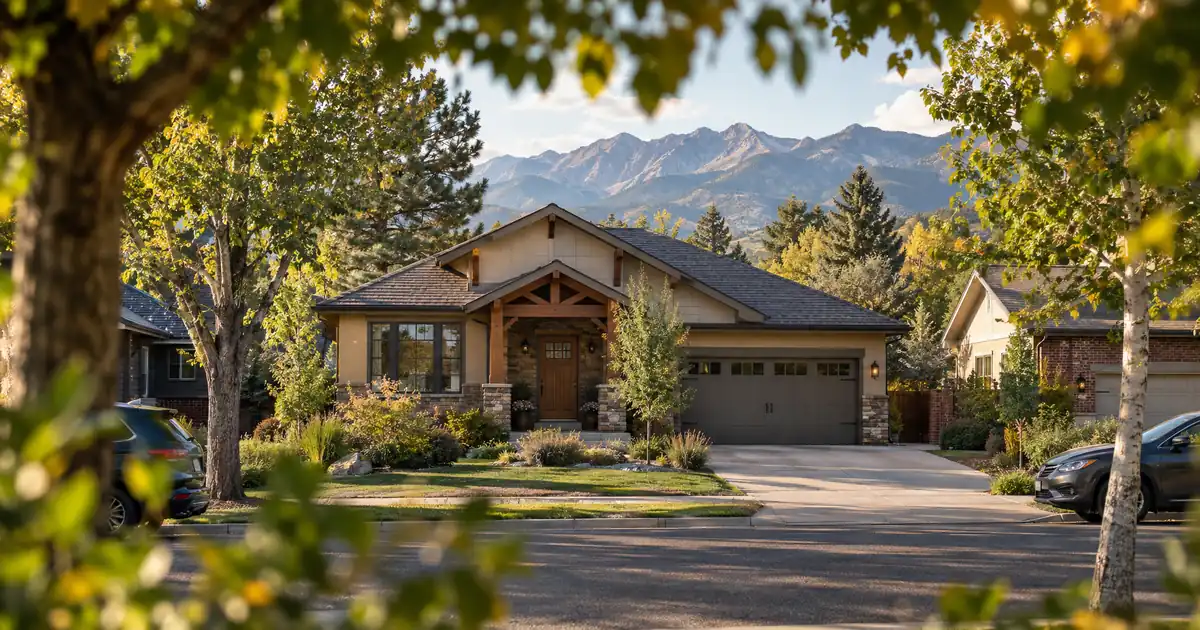
Picture an investor holding a small rental near the old downtown grid, bought several years ago at a price that now looks modest. The appraisal has moved up. The tenant has renewed twice. The investor wants that trapped equity working on the next acquisition, and the question is no longer whether the equity exists. The question is whether the rent will carry a bigger loan.
That is the Littleton problem in one sentence. For real estate investors in Littleton, Colorado, Lendmire (NMLS# 2371349), a DSCR-focused mortgage broker, helps structure and place DSCR financing through wholesale lenders operating in 41 markets, including D.C. The structuring work here is mostly about rent, because equity is the easy part.
DSCR Cash-Out Calculator
Run the cash-out numbers in Littleton, CO
Rate source: Freddie Mac 30-yr average via FRED® — Federal Reserve Bank of St. Louis · effective Sep 24, 2026
Prefilled with starting assumptions — enter your property’s value, balance, taxes, and insurance for a more accurate picture.
Program parameters update from Lendmire’s centralized guideline source. Taxes and insurance are editable estimates.
As of Sep 24, 2026 · General Freddie Mac market benchmark, not a Lendmire loan offer. Property value, balance, taxes, and insurance are editable estimates. Maximum loan-to-value varies by lender, program, property type, and seasoning. Not a Loan Estimate, approval, or commitment to lend. Program availability and eligibility are subject to lender guidelines, credit approval, property review, and underwriting.
The Quick Read: Littleton, Colorado suits investors who already own a seasoned, low-basis rental and want capital for the next acquisition, because a DSCR cash-out refinance is underwritten primarily on the property’s rental income measured against its full monthly obligation, with proceeds capped by a 75 percent loan-to-value ceiling and constrained by thin local rent-to-value.
- Median price sits near $625K and is roughly flat, per Redfin’s Littleton market data.
- Rents are drifting down: RentCafe shows a 3.66 percent annual decline.
- Rent against price runs about 0.36 percent monthly on a median house.
- Seasoning is about six months of ownership, measured from title recording.
- Small multifamily near downtown and Santa Fe is the likelier path to 1.0x.
Littleton Market Snapshot
A quick read on the Littleton investor landscape — figures come from the cited sources below. Confirm current property-level numbers before underwriting.
| Metric | Detail |
|---|---|
| University enrollment | 12,823 students (Arapahoe Community College) |
| Employment | 320 employees (City of Littleton Comp Plan) |
| Vacancy | 5–7% in some segments (Littleton Property Management) |
The Constraint Is Rent, Not Equity
Littleton cash-outs are rent-limited, not equity-limited. Recent sale-price data shows the median holding essentially flat against a year earlier, with homes moving at a steady pace rather than sitting. Other aggregators land higher and lower depending on method, but none show a market running away from its rents.
Now the rent side. Steadily reports a median house rent of $2,220 across a range of $1,256 to $3,590. Against a $625K median value, that is a monthly rent-to-value ratio of about 0.36 percent, which is a thin return relative to the price of the home.
Run the numbers on it, and treat this as a modeled assumption, not a market fact. Take a median-valued house renting at the median, a standard 30-year structure, and full carrying costs including taxes and insurance. At 75 percent LTV, coverage lands around 0.6x. Drop leverage to 60 percent and it improves to roughly 0.7x. Still short of 1.00x, which is the baseline most standard DSCR programs are built around because rent covers the payment at that level. Some lenders review lower ratios, but usually with lower leverage, different pricing, or more cash in the deal.
A stronger unit changes the picture. Rentometer shows a 3BR average of $3,038. Set against the 80128 ZIP average price of $592,102 from a market source, coverage at 75 percent LTV runs just under 0.9x, and near 1.0x at 60 percent. That mixes a citywide rent with a single-ZIP price, so read it as directional.
The takeaway: the 75 percent ceiling is rarely the binding number in Littleton. Coverage is. Where the file falls below 1.00x, the paths a lender may review include a sub-1.00 program, a lower-leverage structure, or an interest-only option, all subject to lender guidelines, credit approval, and property review.
Six Months, Then the Ceiling
Seasoning runs about six months of ownership, measured from title recording, and the cash-out LTV ceiling is 75 percent. Those are the two mechanical gates, and both are typical program guidance rather than guarantees. The rest of the sizing comes from rent used for lender review, full monthly obligation, and reserves of about six months.
Because Littleton prices are flat, an investor should not count on recent appreciation to create the equity. The equity in a pull here comes from purchase basis: buy-and-hold owners with older acquisitions have it, while recent buyers at today’s median mostly do not. Investors holding a low-basis property can read the guide “What Is a DSCR Loan” before pricing a pull, and should understand how rate-and-term and cash-out structures differ. The refi options page covers the cash-out track specifically.
Credit tiers start at a 620 floor, with pricing and leverage improving at higher tiers such as 660, 680, and 700. Loan sizes run up to $3,000,000 on standard programs, and smaller balances route through select lenders in the network. That range comfortably covers a Littleton duplex or a single-family rental. Titling the property in an LLC is common, subject to lender program eligibility.
Where the Rent-to-Value Ratio Holds Up
Coverage varies by pocket, and the pockets with the highest dollar rents are not the ones with the best ratios.
Historic Downtown and the Light-Rail Edge
This is the deepest small-unit pocket. Rent.com puts the neighborhood’s 1BR average at $1,675, per its Littleton rent trends, a small-sample listing figure. The Littleton-Downtown light-rail station drew 1,168 average daily riders, per Wikipedia’s station entry. Housing is older, mixed with townhomes and lofts. A local manager puts condos and townhomes near the station at $1,600 to $2,400, per Littleton Property Management.
Older stock with a low basis is the best cash-out candidate. Condo pulls face a thinner ratio.
The Santa Fe and ACC Corridor
Arapahoe Community College anchors the south end, and the older ranch homes and small infill nearby suit workforce tenants. This corridor is also where new supply is landing. The same manager reports vacancy rising from about 3 to 4 percent to roughly 5 to 7 percent in some segments, particularly newer complexes along Santa Fe Drive. One manager’s view, no stated methodology. Still, an appraiser using nearby comps will see the same competition.
Skip aggressive leverage here. Small units compete with newer apartments for the same tenants.
Columbine and the 80128 ZIP
Columbine’s larger lots and river-trail access draw families, and Lockheed employees rent here. Price is the issue: the ZIP average of $592,102 is high against typical rents. A 3BR at the top of the range gets coverage near 1.0x only at moderate leverage. This one is a genuine toss-up: the tenant pool is durable, but the ratio favors smaller balances.
Ken Caryl and Sterling Ranch
Both are newer, higher-priced single-family and townhome pockets. Local guides describe Sterling Ranch as a master-planned community of newer homes and townhomes. New construction means the basis is recent and equity is limited, so neither is a natural cash-out market yet. No rent or price series was found for either, so treat the ratio as unproven.
Demand Anchors: One Big, a Few Steady
Littleton’s rental demand rests on a distinctive employer. Lockheed Martin Space’s Waterton campus carries a Littleton mailing address but sits in unincorporated Jefferson and Douglas Counties. A company release called it Jefferson County’s largest private-sector primary employer, with over 6,200 employees across 5,400 acres. Lockheed’s Colorado careers page cites more than 14,000 employees statewide. Few suburbs this size sit beside an aerospace payroll of that scale.
Healthcare and education fill in the rest. AdventHealth Littleton, formerly Littleton Adventist Hospital and serving the area since 1989, was the city’s third-largest employer at 1,242 workers on an older municipal list, and has construction underway. Arapahoe Community College reports 12,823 concurrent-enrollment students. It has no dorms, so demand is modest and commuter-driven. Nurses, technicians, and staff around Broadway and Santa Fe are the natural small-unit tenant pool.
Tenant stability is the case for holding these properties. It does not change the coverage math.
What a Pull Looks Like
Consider a scenario, modeled and hypothetical. An investor owns a downtown-area duplex, held well past seasoning, with each unit renting for roughly $2,000 to $2,300. That range comes from a local manager’s blog, and the combined rent is the writer’s arithmetic, not a sourced duplex figure. No sourced Littleton duplex prices were found, so the comps have to be pulled before sizing anything.
The logic still holds. Two units on one acquisition cost lift the rent side without lifting the price proportionally. That is why multi-unit stacking is the likelier route to 1.0x or better in this market, compared with the roughly 0.6x to 0.9x band on single-family rentals.
DSCR files in markets like this one typically look like a moderate-leverage cash-out on an older small property, with the appraiser’s market rent, not the owner’s lease, driving the coverage figure. Files that arrive with a fresh rent schedule and comparable rentals within the same corridor tend to size more cleanly than those relying on a pro forma. Reserves get checked against the new balance, and the investor’s stated use for proceeds rarely matters as much as the coverage number.
The proceeds then move to the next acquisition, which is the point. Investors weighing the structure against bank financing will find the tradeoffs between conventional and DSCR loans worth comparing. Colorado-specific program detail lives on Lendmire’s Colorado DSCR loan programs page. Reach the team at 828-256-2183 for a scenario review, with any local rental rules, taxes, and insurance confirmed separately with qualified local professionals.
Soft Rents Cap the Size of the Pull
Rents are flat to down, and lenders underwrite to appraiser-supported market rent, so that softness shrinks loan size directly. RentCafe shows the average rent falling from $2,114 to $2,037. Zumper shows a median of $1,838, down 3 percent over the year. RentCafe covers only buildings with 50 or more units, so it skews toward newer apartments, and Zumper’s median is a listing figure.
Population tells the same quiet story. The aggregator figure has Littleton at 44,879 residents, down 1.6 percent from 2020. Prices are flat, not falling sharply, and no vacancy series was available at the city level. This is a stable-yield story, not a growth story.
DSCR vs. conventional financing
Two common ways to finance an investment property in Littleton, CO. They qualify you differently — here’s how investors weigh them.
Why investors choose it
- Qualifies on the property’s rental income — no personal tax returns, W-2s, or pay stubs needed to document income.
- No personal debt-to-income ceiling to clear, so existing mortgages and obligations don’t cap your borrowing the same way.
- Can be closed in an LLC, keeping the property inside a business entity.
- Built for scaling — not held to the limit on number of financed properties that conventional financing applies.
- Underwriting centers on the deal: generally qualifies when the rent covers the payment, a 1.00x coverage ratio being a common baseline (confirmed in underwriting).
- Designed specifically for investment property, including long-term and, where the program allows, short-term rentals.
Where it’s strong
- Often the lowest ongoing financing cost for a buyer who fully qualifies on personal income — a fit for a first property or a cost-first purchase.
Trade-offs for investors
- Requires full personal income documentation and must fit within a debt-to-income limit — salary, existing debts, and other mortgages all count.
- Typically held in your personal name rather than a business entity.
- Caps how many financed properties you can carry, which can become a ceiling as a portfolio grows.
- Evaluates you as a borrower as much as the property, which usually means more paperwork.
How investors usually choose: a first or single property often optimizes for the lowest financing cost; portfolio builders often optimize for leverage, vesting in an LLC, and scaling past conventional caps. The right answer depends on your goals, the property, and current guidelines — both paths run through select lenders in Lendmire’s wholesale network, with eligibility and terms confirmed in underwriting.
Underwrite with a 5 to 7 percent vacancy factor and no assumed rent growth. A pull sized to today’s rents survives a soft year. One sized to a hoped-for increase does not.
Frequently Asked Questions
Does Lockheed’s Waterton campus being outside city limits affect a Littleton cash-out?
Not the loan mechanics. The financing looks at the subject property, its rent, and its location, not where a tenant’s employer sits. The campus draws workers into Littleton-addressed housing regardless of the municipal boundary, which supports long-term tenant demand around Columbine and Ken Caryl.
How soon after buying can a Littleton owner pull cash?
Typically about six months of ownership, measured from title recording, subject to lender guidelines. The cash-out ceiling is 75 percent LTV. Because Littleton prices are roughly flat, owners who bought recently may find little equity beyond what they paid, while long-term holders have room.
Why do falling rents matter more than flat prices for the size of a pull?
The rent used for lender review comes from the appraiser’s market rent estimate, so declining rents lower the ratio directly. RentCafe, Zumper, and Apartments.com all show flat-to-down trends. Coverage, not the 75 percent ceiling, usually sets the loan amount in this market.
Do condos near the light-rail station work for a DSCR cash-out?
They can, but the ratio is thin. A local manager puts condo and townhome rents near the station at $1,600 to $2,400, which is modest against Littleton values. Lower leverage or a sub-1.00 program structure, subject to lender review, may apply.
Which property type gives the best chance of clearing 1.00x here?
Small multifamily, most plausibly duplexes near downtown and Santa Fe, since two rents sit on one acquisition cost. No sourced Littleton duplex or fourplex rents or prices turned up, so local rental comps must be pulled before sizing.
Littleton Against Its Neighbors
Littleton rewards the investor who already owns and wants to harvest, not the one shopping for the next purchase. For a buyer redeploying proceeds, the math likely favors Englewood’s older, lower-basis stock along the same light-rail line, though this research did not price Englewood directly. For a holder with a seasoned downtown duplex and a stable tenant base, Littleton’s flat prices are a feature: nothing has run away, and the equity is already locked in.
About Lendmire
A non-QM mortgage broker (NMLS# 2371349), Lendmire arranges DSCR financing for real estate investors in 41 markets, meaning 40 states plus Washington, D.C. Because deals are underwritten primarily on property cash flow rather than personal income documentation, the structure suits self-employed buyers and entity-owned portfolios. Lendmire places loans through wholesale investor lenders; it is not a direct lender. The firm was named a top-ranked workplace in 2026 and a 2025 Scotsman Guide Top Workplace.
Get Started
Ready to find the right loan for you?
In about 30 seconds you can review financing options available for your investment property. No commitment required.
Informational only. Not a Loan Estimate, approval, or commitment to lend. Program availability and eligibility are subject to lender guidelines, credit approval, property review, and underwriting.
References
1. Redfin’s Littleton market data
2. RentCafe
4. City of Littleton Comp Plan
5. Littleton Property Management
6. Steadily
7. Rentometer
10. news.lockheedmartin.com — Company release
13. Zumper
14. Scotsman Guide — Top Workplaces 2026
15. a 2025 Scotsman Guide Top Workplace
This article is part of Lendmire’s investment property cash-out refinance program — full qualification details, guidelines, and scenarios live on the program page.
Related reading: Luxury Rental DSCR Loans In New Jersey · Jersey Shore Vacation Rental Loans: DSCR Financing In Ocean City, Cape May And Long Beach Island · DSCR Cash-out Refinance In New Jersey: Pulling Equity From A Rental
Guides: Investment Property Cash-Out Refinance in Colorado
Brandon Miller
Founder & CEO, Mortgage Loan Originator, Lendmire LLC
- Mortgage Loan Originator · NMLS# 1129696 · Verify on NMLS Consumer Access
- North Carolina Real Estate Broker · License# 343312 · Verify on NCREC
- North Carolina Insurance Producer · License# 19053198 · Property, Casualty, Life, Health · Verify on NAIC SBS
- Lendmire LLC · Firm NMLS# 2371349 · Verify firm licensure
Compliance and disclosures. Lendmire (NMLS# 2371349) is a licensed mortgage broker and is not a direct lender, depository institution, financial advisor, or tax professional. Content in this article is general market analysis and educational information — not financial, legal, or tax advice for any specific situation. Lendmire does not guarantee loan approval; every transaction is subject to underwriting by the funding lender. Mortgage pricing and loan program guidelines are subject to change at any time without notice and vary by borrower characteristics, property type, and state regulations. Lendmire complies with Equal Housing Opportunity. Licensure verification: NMLS Consumer Access.