
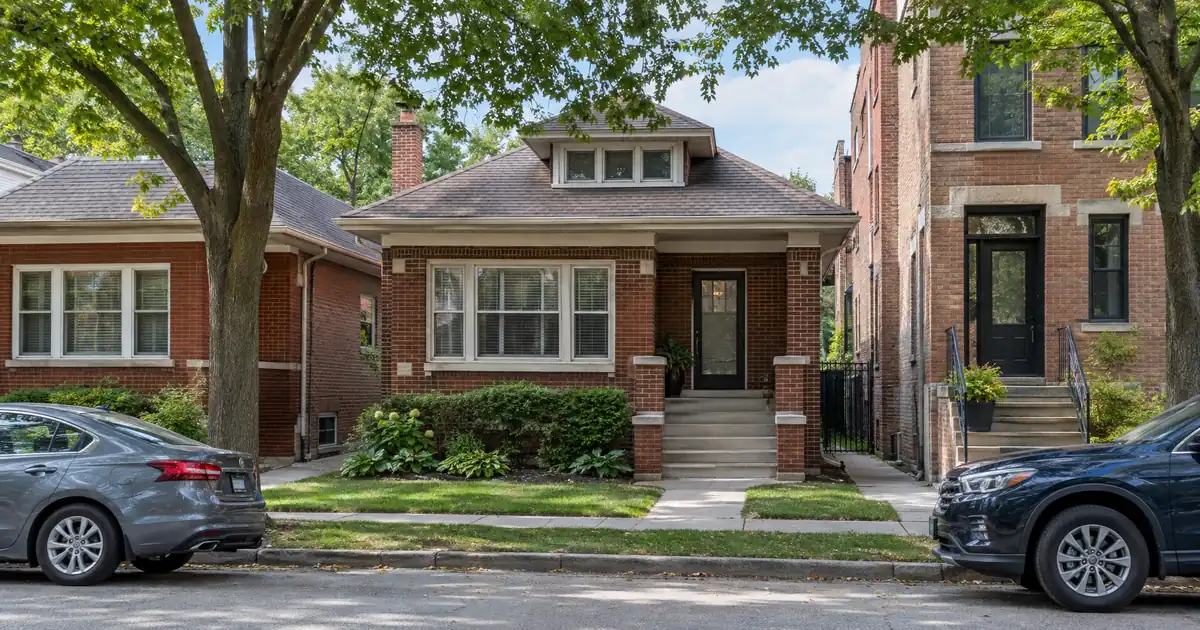
An out-of-state investor typing “investment property” into Redfin’s Springfield search sees a thin slate: eight homes at a median listing price near $187K. Cheap by coastal standards, and that is the part that catches the eye. What the same investor tends to miss is that in a flat-to-slow-growth Midwest capital, the money is rarely made at the purchase. It gets made on the refinance, when a property already held for six months or more is appraised, leased, and recapitalized into the next acquisition. This piece covers that equity-extraction side of a DSCR cash-out refinance in Springfield and skips purchase mechanics.
DSCR Cash-Out Calculator
Run the cash-out numbers in Springfield, IL
Rate source: Freddie Mac 30-yr average via FRED® — Federal Reserve Bank of St. Louis · effective Sep 24, 2026
Prefilled with starting assumptions — enter your property’s value, balance, taxes, and insurance for a more accurate picture.
Program parameters update from Lendmire’s centralized guideline source. Taxes and insurance are editable estimates.
As of Sep 24, 2026 · General Freddie Mac market benchmark, not a Lendmire loan offer. Property value, balance, taxes, and insurance are editable estimates. Maximum loan-to-value varies by lender, program, property type, and seasoning. Not a Loan Estimate, approval, or commitment to lend. Program availability and eligibility are subject to lender guidelines, credit approval, property review, and underwriting.
At a Glance:
A DSCR cash-out refinance on a Springfield, Illinois rental is underwritten primarily on the property’s rental income measured against its full monthly obligation, and the local variable that moves the number most is the gap between conservative rent and appraiser-supported rent, not price appreciation.
- Cash-out tops out at 75% LTV, after about 6 months of title seasoning.
- Citywide median property value sits at $177,300, per Data USA.
- Three-bedroom rent sources disagree widely, so the appraiser’s rent schedule decides coverage.
- State payroll and two Level One trauma centers anchor long-term lease demand. Terms vary by lender guidelines, property type, leverage, credit profile, and full file review.
Springfield Market Snapshot
A quick read on the Springfield investor landscape — figures come from the cited sources below. Confirm current property-level numbers before underwriting.
| Metric | Detail |
|---|---|
| Typical rents | $3,200/mo duplex (Redfin) |
| Recent appreciation | +5.7% 1-yr (Homestimulus Springfield) |
| Population | 112,170 population (Census Reporter) |
| Employment | Uis 1,000+ employees (Livability.com) |
| Vacancy | 205,111 metro residents (Buildium 5 Best Rental Markets) |
Why Springfield’s Rent Floor Holds
Springfield’s tenant base rests on government and healthcare payroll, not on one employer or one campus. Data USA lists health care and social assistance (17,046 workers), public administration (13,452), and educational services (9,915) as the top sectors for metro residents. The Springfield Sangamon Growth Alliance describes the State of Illinois as the area’s largest employer, with over 17,000 employees. Livability puts Memorial Health at more than 5,200 employees and HSHS at more than 4,400 in Springfield.
That mix matters for refinance underwriting because it supports 12-month leases, which is what a DSCR file wants to see. Memorial is a 500-bed teaching hospital, and St. John’s shares Level One trauma status with it. Nurses, residents, technicians, and state staff don’t churn the way a single-industry renter pool does.
The honest counterweight is growth. Census Bureau QuickFacts shows 112,170 city residents, below the last decennial count of 114,431 reported by World Population Review, and the metro sits at 206,371. Homeownership runs 71.8%, so the renter pool is the minority. This is a stability-and-cash-flow market. Buildium rates it as strengthening on rent and cap rates, but it didn’t make the publication’s up-and-coming list. Nobody should build an equity plan on a population boom here.
The Appraisal Is the Variable
The refinance lives or dies on the appraised value, and Springfield’s price sources don’t agree. Zillow shows roughly $162,579 and +6.4% over the past year. Houzeo shows a $187,000 median sale price up only 0.23%. FHFA-based data from Homestimulus puts the metro at +5.7% over one year and +43.2% over five. This article anchors on the $177,300 median property value from Data USA; the rest are contrast points.
The read: index measures show real appreciation, while closed-sale medians are flat. Appraisers work from closed comps. Underwrite the cash-out at the flat-price scenario and treat index appreciation as upside. Not the equity plan.
Houzeo’s market data helps on the comp side: 27 days on market, 1.1 months of supply, and sales at 98.43% of asking, with 113 houses sold in a recent month. Tight supply and near-asking closes give an appraiser current evidence. The catch is volume. A few dozen comps a month means duplexes and distressed east-side blocks get thin support, and appraisal outcomes on that product can vary widely.
The program ceiling is a hard 75% LTV on cash-out, never the 80% purchase figure, with seasoning of about 6 months measured from title recording. Reserves run about 6 months of PITIA, credit tiers start at a 620 floor, and standard programs go up to $3,000,000 (smaller balances route through select lenders in the network). All of it is subject to lender guidelines and program terms. What comes out the other side depends on rent used for lender review, the full payment, reserves, and the 75% cap. It is not a guaranteed cash figure.
The Rent Number You Underwrite
Springfield rent data is scattered enough to be a risk by itself. Here is what the sources say for a three-bedroom:
| Source | 3-bed rent | Trend |
|---|---|---|
| Rentometer | $1,543 | All property types |
| RentHop | $1,170 | Down 11.14% YoY |
| Prop:Metrics | $1,850 | Down 0.6% YoY (ZIP-labeled) |
| Apartments.com | $1,343+ | Up 2.2% YoY |
Zumper shows an average of $1,100 and 6% growth, but on a thin inventory of 139 units. The pattern is flat to modest rent growth with a wide dispersion. Underwrite the low end and let the appraiser’s rent schedule (Form 1007) settle it.
Run the numbers on a modeled $165,000 three-bedroom at 75% LTV. These are illustrative assumptions, not market data. With rent modeled at $1,500, coverage including taxes and insurance lands around 1.25x. Drop the rent to $1,250 and the number slides to roughly 1.05x. At $1,100, it falls just under 1.00x. That is a 27% swing in rent turning a comfortable file into a borderline one. Illinois’ heavy tax load is the reason the cushion is thinner than the price suggests. Exact terms depend on the lender’s guidelines, property type, leverage, and a full review of the borrower’s file.
A 1.00x baseline is common because rent covers the payment at that level. Some lenders may review lower-coverage scenarios, but those usually require lower leverage, different pricing, or more cash in. When a file lands under 1.00x, the options a lender would review include a sub-1.00 program, interest-only structuring, or reducing the cash-out amount. Qualification stays subject to credit approval and property review.
Where the Files Come From
Enos Park and the Medical District. The Enos Park Neighborhood Improvement Association notes the area sits inside a medical district created in 2002, one of only three statewide. It is bounded by Memorial to the west, St. John’s to the east, and SIU School of Medicine to the south, with a $33 million YMCA anchoring the core. Tenant demand is hospital staff, medical students, and visiting clinicians. Price and rent data at the neighborhood level is not available from a reliable source. The surrounding east side is uneven, so underwrite block by block.
Historic West Side and Hawthorne Place. Older brick duplexes and multifamily conversions dominate. One Redfin duplex listing in Hawthorne Place shows two roughly 1,500 sq ft units with a rental history of $3,200 a month. It is a single listing, so treat it as an anecdote, but it shows why two-to-four-unit product tends to stack income better than a single-family rental. Tenant demand comes from state workers, medical staff, and young professionals near Washington Park.
Near East and Far East. Redfin names the Far East District among Springfield’s popular investment neighborhoods, and local commentary flags the Near East Side as a value-add area. This is BRRRR-to-DSCR-refinance territory. Recent sold comps in the $65,000 to $75,000 range on the north and east sides imply a gross rent-to-price ratio near 1.5% a month or better, against roughly 0.9% on the $165,000 south-side comp. (Arithmetic on an older comp snapshot, so read it as illustrative.) The highest yield sits in a more affordable stock, but many DSCR lenders set minimum loan sizes, and a sub-$100K purchase may not support a cash-out at all. Confirm the floor before counting on proceeds.
South Side near UIS and the Lake. The University of Illinois Springfield and Lincoln Land Community College sit within a short drive of each other southeast of downtown, feeding students, faculty, and staff demand. UIS is small, so this is a supporting driver, not a primary one. West side suburbs like Leland Grove top the price range; the research supports only a qualitative read.
What the Deal Desk Tends to See
On files from markets structurally like Springfield, meaning mid-size capitals with broad payroll and thin comp volume, the cleaner files share a pattern. They arrive with complete leases, entity documents, title, and property details ready for lender review. The common friction point is the gap between the rent the owner has in mind and what the appraiser’s schedule supports. Lendmire’s deal desk tends to see the difference resolved earlier on files where the investor ran the low-rent case before ordering anything. LLC-titled properties are common on these files, subject to program terms.
What the Proceeds Are For
Cash-out only makes sense if the redeployment beats the carry. Sequence matters: the six-month clock runs from title recording, so a BRRRR investor on the east side has to finish the rehab, place a tenant, and season the title before the refinance can happen. A refinance that strips cash out of a thin-coverage file also reduces the margin for the next vacancy. The comparison between DSCR and conventional investment loans is worth reading for owners with traditional employment income who might have a choice. Investors weighing the broader menu can review the investment property refinance options and Lendmire’s DSCR cash-out refinance page. The DSCR guide covers how the ratio works. For state-level program coverage, see the DSCR loan options for Illinois investors. Verify current local rental rules, taxes, and insurance with qualified local professionals.
Frequently Asked Questions
How do you qualify for a DSCR cash-out refinance in Springfield?
Qualification centers on the property’s rent used for lender review against its full PITIA, with a 1.00x minimum coverage, a credit floor of 620, about 6 months of seasoning from title recording, and roughly 6 months of reserves. LTV caps at 75% on cash-out. Final eligibility depends on lender guidelines, credit, and property review.
What are the requirements for an investment property loan in Springfield, Illinois?
The standard parameters are a 1.00x minimum DSCR, credit tiers of 620, 660, 680, and 700, reserves near 6 months of PITIA, and loans up to $3,000,000 on standard programs. Smaller balances route through select lenders in the network. Manufactured homes, log homes, and barndominiums fall outside these programs. Every figure here varies by lender and program — guidelines, property type, leverage, and credit profile all apply.
DSCR vs. conventional financing
Two common ways to finance an investment property in Springfield, IL. They qualify you differently — here’s how investors weigh them.
Why investors choose it
- Qualifies on the property’s rental income — no personal tax returns, W-2s, or pay stubs needed to document income.
- No personal debt-to-income ceiling to clear, so existing mortgages and obligations don’t cap your borrowing the same way.
- Can be closed in an LLC, keeping the property inside a business entity.
- Built for scaling — not held to the limit on number of financed properties that conventional financing applies.
- Underwriting centers on the deal: generally qualifies when the rent covers the payment, a 1.00x coverage ratio being a common baseline (confirmed in underwriting).
- Designed specifically for investment property, including long-term and, where the program allows, short-term rentals.
Where it’s strong
- Often the lowest ongoing financing cost for a buyer who fully qualifies on personal income — a fit for a first property or a cost-first purchase.
Trade-offs for investors
- Requires full personal income documentation and must fit within a debt-to-income limit — salary, existing debts, and other mortgages all count.
- Typically held in your personal name rather than a business entity.
- Caps how many financed properties you can carry, which can become a ceiling as a portfolio grows.
- Evaluates you as a borrower as much as the property, which usually means more paperwork.
How investors usually choose: a first or single property often optimizes for the lowest financing cost; portfolio builders often optimize for leverage, vesting in an LLC, and scaling past conventional caps. The right answer depends on your goals, the property, and current guidelines — both paths run through select lenders in Lendmire’s wholesale network, with eligibility and terms confirmed in underwriting.
Will a sub-$100K east-side rental support a cash-out refinance?
Often not. The rent-to-price ratio is strong, but many DSCR lenders set minimum loan sizes, and 75% of a $65,000 to $75,000 value may sit below them. Stack the equity into a larger property or confirm a lender’s floor before planning around proceeds.
Which Springfield rent figure should the coverage ratio use?
The low end of the range. Three-bedroom sources span roughly $1,170 to $1,850, so the appraiser’s rent schedule is the deciding number. A file that clears 1.00x on conservative rent is sturdier than one that only works on the highest source.
The Real Choice
Springfield hands a cash-out borrower two distinct paths. The first is refinancing the higher-priced, better-documented duplex or south-side single-family, where comps are easier to find and coverage holds on conservative rent, but the equity is slower to build and the proceeds modest. The second is seasoning a sub-$100K east-side value-add, where the rent-to-price yield is highest but loan floors, thin comps, and block-level condition risk can leave the cash-out smaller than planned, or unavailable.
For current guidelines and terms, see Lendmire’s DSCR loan programs page.
About Lendmire
Lendmire (NMLS# 2371349) is a mortgage brokerage built around DSCR investor lending, with programs available in 41 markets, including Washington, D.C. DSCR lenders commonly evaluate rental-income coverage instead of personal income paperwork, a practical fit for LLC-owned and multi-property investors. Terms vary by lender, property, leverage, and program. Lendmire is recognized as a 2026 Scotsman Guide Top Mortgage Workplace and a top-ranked workplace in 2025.
Get Started
Ready to find the right loan for you?
In about 30 seconds you can review financing options available for your investment property. No commitment required.
Informational only. Not a Loan Estimate, approval, or commitment to lend. Program availability and eligibility are subject to lender guidelines, credit approval, property review, and underwriting.
References
1. Redfin — Amenity Investment Property
2. Data USA, Springfield metro
5. Livability, Springfield major employers
6. Buildium 5 Best Rental Markets
7. Springfield Sangamon Growth Alliance
8. Memorial Health, Springfield Memorial Hospital
9. Census Reporter, Springfield metro profile
10. 206,371
11. Houzeo, Springfield housing market
12. Rentometer
13. RentHop
14. Prop:Metrics
15. Apartments.com
16. Enos Park Neighborhood Improvement Association
17. a 2026 Scotsman Guide Top Mortgage Workplace
18. Scotsman Guide — Top Workplaces 2025
This article is part of Lendmire’s investment property cash-out refinance program — full qualification details, guidelines, and scenarios live on the program page.
Related reading: Luxury Rental DSCR Loans In New Jersey · Jersey Shore Vacation Rental Loans: DSCR Financing In Ocean City, Cape May And Long Beach Island · DSCR Cash-out Refinance In New Jersey: Pulling Equity From A Rental
Guides: Investment Property Cash-Out Refinance in Springfield, IL · Investment Property Cash-Out Refinance in Illinois
Brandon Miller
Founder & CEO, Mortgage Loan Originator, Lendmire LLC
- Mortgage Loan Originator · NMLS# 1129696 · Verify on NMLS Consumer Access
- North Carolina Real Estate Broker · License# 343312 · Verify on NCREC
- North Carolina Insurance Producer · License# 19053198 · Property, Casualty, Life, Health · Verify on NAIC SBS
- Lendmire LLC · Firm NMLS# 2371349 · Verify firm licensure
Disclosures. The information presented in this article is general market commentary, not financial, legal, or tax advice. Lendmire is a mortgage brokerage (NMLS# 2371349) — not a direct lender or depository institution — and loan placement is subject to lender underwriting. Nothing in this content represents a commitment to lend. Loan terms, pricing, and program availability vary based on borrower qualifications, property characteristics, and state of subject property, and are subject to change at any time. Lendmire complies with Equal Housing Opportunity requirements. Consumer access: nmlsconsumeraccess.org.