
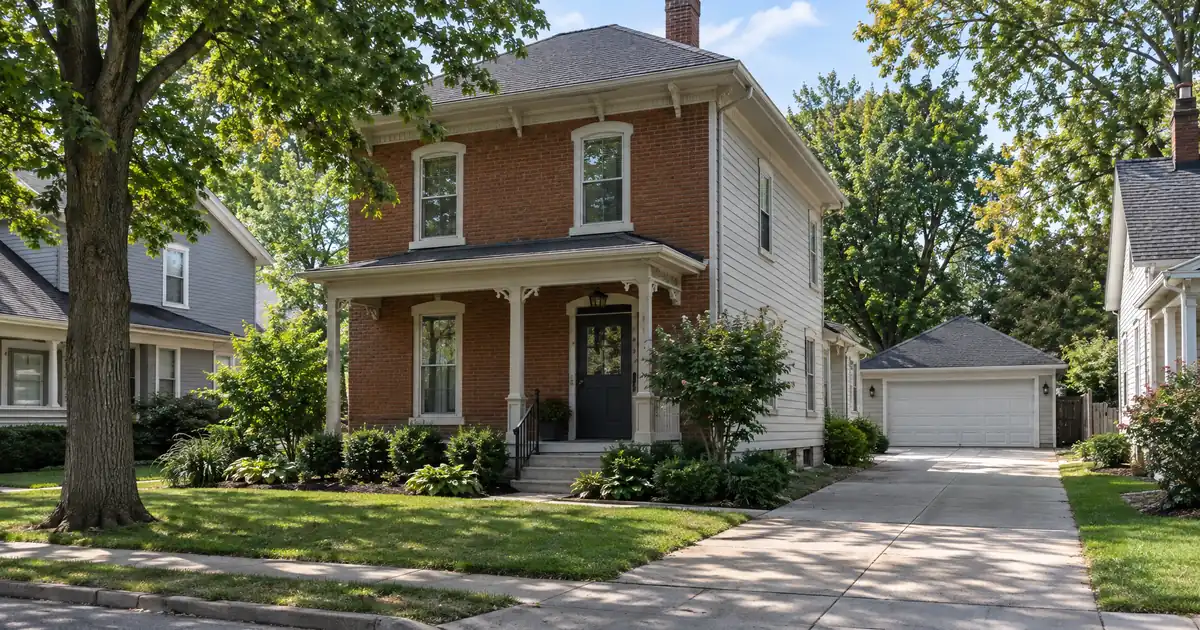
The standard objection to a DSCR cash out refinance in Richmond, Indiana is comp depth, and it deserves a straight answer. Redfin counts 38 homes sold in the past month across the entire city, with 15 multi-family units for sale. That is a thin evidence base for an appraiser asked to support a higher value on one specific duplex. The objection is fair, and it is manageable. Richmond’s basis is low enough that a modest value gain on a multi-unit building releases usable equity, provided the refinance is built on conservative numbers and the right property type. This analysis covers only the equity-extraction side: the investor already owns the asset, and the question is how much capital can come out and whether the rents carry the new balance.
DSCR Cash-Out Calculator
Run the cash-out numbers in Richmond, IN
Rate source: Freddie Mac 30-yr average via FRED® — Federal Reserve Bank of St. Louis · effective Sep 24, 2026
Prefilled with starting assumptions — enter your property’s value, balance, taxes, and insurance for a more accurate picture.
Program parameters update from Lendmire’s centralized guideline source. Taxes and insurance are editable estimates.
As of Sep 24, 2026 · General Freddie Mac market benchmark, not a Lendmire loan offer. Property value, balance, taxes, and insurance are editable estimates. Maximum loan-to-value varies by lender, program, property type, and seasoning. Not a Loan Estimate, approval, or commitment to lend. Program availability and eligibility are subject to lender guidelines, credit approval, property review, and underwriting.
Key Takeaways:
A DSCR cash-out refinance on an investment property in Richmond, Indiana is underwritten primarily on the rental income the property produces measured against its full monthly obligation, with leverage limits and ownership seasoning set by lender guidelines, so a duplex’s lease stack carries more weight than the owner’s personal income documentation.
- Median home price is $159,900 per Homes.com, a low basis for stacking leases.
- Duplexes, converted homes, and small buildings make up 11.85% of housing, per NeighborhoodScout.
- Cash-out leverage tops out at 75% LTV, with about six months of seasoning.
- Modeled single-family coverage lands below 1.0x. Modeled duplex coverage clears it comfortably. Reid Health employs 2,998 people, anchoring rental demand.
- Every figure here varies by lender and program — guidelines, property type, leverage, and credit profile all apply.
Richmond Market Snapshot
A quick read on the Richmond investor landscape — figures come from the cited sources below. Confirm current property-level numbers before underwriting.
| Metric | Detail |
|---|---|
| Home prices | $159,900 median (Homes.com) |
| Population | 35,376 (2025 population) (STATS Indiana (IBRC)) |
| Employment | 3,100+ employees (Wikipedia, Reid Health) |
Start at the Reid Health Corridor
The east and northeast side of Richmond, anchored by Reid Health, Indiana University East, and Ivy Tech near U.S. 27 and I-70, is the strongest demand pocket for a rental refinance. Employment stability is the draw here, not rent growth.
The Wayne County Economic Development Corporation’s major employer list puts Reid Health at 2,998 employees. Richmond Community Schools follows at 800, then Richmond State Hospital at 435, with Wayne County government and the City of Richmond at 400 each. A published report on Forward Wayne County’s indicator report gives slightly different numbers (723 for the school district, with Belden the largest manufacturer at 714), so treat headcounts as ranges. Other sources put Reid above 3,100 employees. The pattern holds across all of them: one hospital system dwarfs everything else, and nurses, technicians, and support staff rent.
The Wayne County EDC’s healthcare page describes a 100-acre Reid campus off U.S. 27, less than half a mile from I-70. Indiana University East enrolls somewhere between roughly 3,500 and 4,000 students depending on the source, mostly commuters who rent locally. Ivy Tech and Purdue programs add to the cluster, though no enrollment figures turned up for them. Earlham College enrolls 696 undergraduates, and most live on campus. Its southwest-side location adds little to off-campus rental demand. Skip it as a rental thesis.
Population tells the other half of the story. STATS Indiana lists 35,376 residents for Richmond, Wayne County’s largest city, against a 2020 Census count of 35,720. That is a flat-to-slightly-declining base. Richmond is a stabilizer market, not a growth market, and that shapes how aggressively to size a cash-out.
Here’s the data gap. No sourced rent or price figures exist below the city level. The corridor case rests on employer geography, not a measured rent premium. An investor holding property near the hospital and campuses has a sound tenant-demand argument but should not expect the appraiser to price it as a premium submarket.
Why the Duplex Beats the Single-Family Here
On Richmond’s numbers, a duplex clears coverage comfortably at 75% LTV, while a median-priced single-family rental falls short of 1.00. Stacking two leases on one loan is the most direct way to support a larger cash-out balance in a low-rent market. Final terms depend on lender guidelines, property type, leverage, and the borrower’s complete credit picture.
Start with how the number works. Debt service coverage is monthly rent divided by the full monthly obligation: principal, interest, taxes, insurance, and any HOA dues. A 1.00x baseline is common because rent covers the payment at that level. Some lenders review lower or no-ratio scenarios, but those usually require lower leverage, different pricing, or stronger compensating factors. The mechanics are laid out here.
Rents in Richmond are low and noisy. Zillow’s rental data shows a $650 one-bedroom average, about $900 for two bedrooms, and about $1,000 for three bedrooms. Zumper shows a $730 overall average, a $710 one-bedroom, and an $870 two-bedroom. Zumper’s reported 19% annual drop looks like a small-sample listing swing, and Zillow labels the market “cool” with average rent down $28 year over year. RentalSource puts average house rent at $873, within a $600 to $1,411 range, and 32.0% ($411) below the Indiana average of $1,284. Use ranges, not point estimates. Rents run roughly $730 to $800 on average across unit types, and $870 to $1,000 for the two- and three-bedroom units that matter most to investors.
Run the numbers on four modeled scenarios. The inputs are modeled assumptions drawn from the researched price and rent levels, not quoted comps, and each coverage figure uses full PITIA with taxes and insurance included, rounded down.
| Modeled scenario | Gross monthly rent | Coverage at 75% LTV |
|---|---|---|
| SFR near the $159,900 median | $873 (average house rent) | About 0.9x |
| 3BR SFR, same price | $1,000 | Around 1.0x |
| Duplex near $172,602, both units leased | $1,740 | About 1.6x |
| Same duplex, one unit vacant | $870 | About 0.8x |
Three things stand out. First, the single-family rental at the median sits near a 0.55% monthly rent-to-price ratio (modeled), which is thin for a high-leverage cash-out. Second, the duplex roughly doubles the income against a similar price, and the coverage gap follows. Third, the vacancy row is the risk. In a market this small, one empty unit is half the income. A duplex that looks like 1.6x on paper drops below 1.0x the month a tenant leaves. The stress test matters more here than the headline number.
When a single-family file lands under 1.00 on long-term rent, the paths a lender may review include a sub-1.00 program, lower leverage, an interest-only structure, or a larger reserve position. Each trades some pricing or proceeds for a lower coverage threshold, and qualification stays subject to lender guidelines, credit approval, and property review. For a $159,900 asset, the more efficient move is usually to take less cash out rather than force the ratio.
DSCR files in markets like this one typically look the same. The property is cheap, the rents are modest, and the loan balance is small relative to national DSCR norms. Coverage on small multi-unit buildings usually clears with room to spare, while single-family files sit near the line and depend on the leverage choice. The deciding factors tend to be the appraiser’s rent schedule, how many recent comps support value, and whether the loan size routes cleanly. The strongest files arrive with in-place leases, proof of rent collection, and reserves already documented.
Loan size is a practical point in this market. Standard programs run up to $3,000,000, but smaller balances route through select lenders in the network. A Richmond duplex refinance will usually land in that smaller-balance category, so confirming lender fit before ordering the appraisal saves time and money.
Lendmire (NMLS# 2371349), a DSCR-focused mortgage broker, structures files like these. For real estate investors in Richmond, Indiana, Lendmire helps structure and place DSCR financing through wholesale lenders operating in 41 markets, including D.C. Investors who want a coverage number on a specific building can pull a DSCR quote or call 828-256-2183. The cash-out mechanics and DSCR versus conventional pages cover the general framework. For state-level context, see the DSCR loan options for Indiana investors.
How Thin Are the Comps, Really?
Thin enough to cap proceeds. Appraisers in a market with about three dozen sales a month, spread citywide, may reach for older or more distant comparables on a duplex or fourplex, and that limits how much value they will support.
Redfin’s page shows 38 sales in the past month and 15 multi-family units for sale. Days on market conflict between sources: Homes.com reports 38 days for multi-family homes, while Redfin says most homes stay on the market for 51 days. Treat both as noise around a slow-to-moderate absorption pace. This one’s a genuine toss-up on whether the market is tight or soft. RentalSource calls Richmond’s rental market-rate for well-priced units as of mid-year, while Zillow’s reading is “cool.” Both are listing-platform characterizations, not vacancy data. No credible rental vacancy or rent-growth figure turned up, so none is stated here.
The practical response is conservative construction. Size the cash-out against the median, not the average. Homes.com shows a $159,900 median and a $172,602 average, and the gap suggests a few higher-priced sales pull the average up. Underwrite to the lower figure. Zillow’s home value index shows an average value of $158,766, consistent with the Homes.com median.
Asking rents also run softer than rents on file. An appraisal rent schedule (Form 1007) and in-place leases will drive the coverage figure, not the listing-platform average. Investors who have raised rents since purchase should have lease documentation ready, because the appraiser is not obligated to credit a rent that exists only in a listing.
Property type matters just as much as comp depth. The 13 to 15 multi-family listings overstate the reviewable pool. Some are mixed-use buildings with a storefront. One is an eight-property bundle priced at $655,500, and another is a duplex on a corner lot spanning two parcels with split utilities. Many DSCR lenders treat commercial-storefront and multi-property bundles differently from standard 2-4 unit residential, and larger apartment complexes typically fall into commercial financing instead. (Split utilities, by the way, help coverage, since tenant-paid utilities keep landlord expenses lower.) The clean residential duplex, triplex, or fourplex is the target. Manufactured homes, log homes, and barndominiums fall outside these programs entirely.
Appreciation Is Modest, So Plan the Equity Accordingly
Richmond’s price gains are steady but not dramatic, so cash-out proceeds depend more on a low original basis and in-place rents than on market momentum.
Zillow shows values up 5.3% year over year. Homes.com’s trailing 12-month median sale price is $150,900, up 7% from the prior 12 months. That is a different window from the $159,900 spot median, so the two should not be blended. Both point the same direction. A property bought a year or more ago has probably gained value, and that gain is what a cash-out refinance converts into capital, but only if the appraiser can support it with comps. Appreciation and cash flow pull in opposite directions in many markets. In Richmond they do not conflict much, because neither is large. The low basis does the work.
The mechanics are straightforward. Cash-out leverage generally tops out at 75% LTV, with ownership seasoning of about six months measured from title recording. Coverage minimums are typically built around the 1.00x benchmark. Credit scores generally start at a 620 floor with pricing tiers above it, and reserves are typically about six months of PITIA. The equity available is not a guaranteed figure: it depends on appraised value, rent used for lender review, the full monthly obligation, and reserves. All terms are subject to lender guidelines, and loans to LLC-titled borrowers are subject to lender program eligibility.
The strongest use of proceeds in this market is another small-multifamily acquisition. Pricing and available terms vary by lender, borrower profile, property type, and full underwriting review. Spreading proceeds across two or three small buildings diversifies the vacancy exposure that makes a single duplex fragile. Investors weighing a rate-and-term alternative should review the refinancing options.
Older Stock: Starr District, the Depot, and Everything Else
No neighborhood-level price or rent data exists for Richmond, so submarket analysis here is qualitative. The older housing stock is where small-multifamily conversions are most likely to turn up.
The Starr Historic District in north-central Richmond was listed on the National Register of Historic Places in 1974 and has 102 contributing buildings in a predominantly residential area. Large older homes there suggest possible conversions and small multi-unit stock, but that needs verifying property by property. The Historic Depot District, near the Pennsylvania Railroad Depot on North E Street, is a mixed-use area of arts venues and museums. It is a likely source of upper-floor apartments, though the mixed-use caveat from the comps discussion applies. The Advisory Council on Historic Preservation counts fourteen historic districts across the city, and the Whitewater Gorge Trail runs through the core.
Beyond those, the bulk of the rental stock is workforce single-family and older duplex housing spread across many neighborhoods. About 69.25% of units are single-family detached, 11.85% are duplexes, converted homes, or small buildings, and 12.94% are large apartment complexes. That 11.85% slice is the real pool for the strategy above, roughly one unit in eight. Any investor claiming submarket-level rent premiums here is working from data this research could not find.
Investors should verify current local rental rules, taxes, and insurance with qualified local professionals before sizing a refinance.
DSCR vs. conventional financing
There are two common ways to finance an investment property in Richmond, IN, and they qualify you differently — here’s how investors weigh them.
Why investors choose it
- Qualifies on the property’s rental income — no personal tax returns, W-2s, or pay stubs needed to document income.
- No personal debt-to-income ceiling to clear, so existing mortgages and obligations don’t cap your borrowing the same way.
- Can be closed in an LLC, keeping the property inside a business entity.
- Built for scaling — not held to the limit on number of financed properties that conventional financing applies.
- Underwriting centers on the deal: generally qualifies when the rent covers the payment, a 1.00x coverage ratio being a common baseline (confirmed in underwriting).
- Designed specifically for investment property, including long-term and, where the program allows, short-term rentals.
Where it’s strong
- Often the lowest ongoing financing cost for a buyer who fully qualifies on personal income — a fit for a first property or a cost-first purchase.
Trade-offs for investors
- Requires full personal income documentation and must fit within a debt-to-income limit — salary, existing debts, and other mortgages all count.
- Typically held in your personal name rather than a business entity.
- Caps how many financed properties you can carry, which can become a ceiling as a portfolio grows.
- Evaluates you as a borrower as much as the property, which usually means more paperwork.
How investors usually choose: a first or single property often optimizes for the lowest financing cost; portfolio builders often optimize for leverage, vesting in an LLC, and scaling past conventional caps. The right answer depends on your goals, the property, and current guidelines — both paths run through select lenders in Lendmire’s wholesale network, with eligibility and terms confirmed in underwriting.
Frequently Asked Questions
How much cash can a Richmond duplex actually release?
No fixed number applies. Proceeds are capped at 75% of appraised value, less the existing payoff and reserve requirements, and the appraisal is the swing factor in a thin-comp market. The loan amount is also limited by the coverage ratio on the in-place rent. Run the math on a conservative value before counting on a specific figure. These specifics are subject to lender guidelines and a full review of property, leverage, and credit.
Does the “cool” rent data from Zillow hurt the coverage number?
Not directly. Listing-platform averages do not set the rent used for lender review. The appraiser’s rent schedule and in-place leases do, so a duplex with documented leases at or above market can still show strong coverage. The risk is the opposite case, where asking rents have drifted above what tenants actually pay.
Can a Richmond rental be refinanced in an LLC?
Yes, in many cases, subject to lender program eligibility. Title and entity structure should be settled before the application, since some programs have specific requirements for LLC-held properties and guarantors.
Will mixed-use or bundled multi-family listings qualify like a standard duplex?
Often not. Many DSCR lenders treat a three-unit with a storefront or an eight-property bundle differently from a clean 2-4 unit residential building. Confirming property type with the lender before the appraisal avoids wasted cost.
Does a median-priced single-family rental cover at 75% LTV?
On modeled numbers, it lands near 0.9x including taxes and insurance, which is below the 1.00x baseline. Lower leverage, a sub-1.00 program, or an interest-only structure are paths a lender may review, subject to credit approval and property review. Terms vary by lender guidelines, property type, leverage, credit profile, and full file review.
What to Watch Next Quarter
Three indicators will show whether the thin-comp objection is easing or hardening:
1. Monthly sales volume. Redfin’s 38 sales in a month is the benchmark. A sustained climb means appraisers will have more comparables, while a drop means smaller proceeds on multi-unit files.
2. Reid Health headcount. The Wayne County EDC figure is 2,998, and third-party estimates trend flat to slightly lower. A visible contraction would weaken the demand anchor, and an expansion would strengthen the corridor thesis.
3. Rent direction. Watch whether Zillow’s “cool” label and its $28 year-over-year decline persist, and whether Zumper’s 19% drop reverses. A stable rent stack is what keeps a duplex’s coverage number above 1.0x.
Richmond’s equity story will be decided in appraisal comps and signed leases near the hospital corridor, not in headline price growth.
For current guidelines and terms, see Lendmire’s DSCR loan programs page.
About Lendmire
Lendmire, NMLS# 2371349, is a mortgage brokerage focused on investor financing, arranging DSCR loans in 40 states plus Washington, D.C. (41 markets total). Qualification is based on the property’s income rather than personal income documentation, subject to lender guidelines, making it a fit for LLC-held rentals and scaling portfolios. Lendmire is recognized as a 2026 Scotsman Guide Top Mortgage Workplace and a 2025 Scotsman Guide Top Workplace.
Get Started
Ready to find the right loan for you?
In about 30 seconds you can review financing options available for your investment property. No commitment required.
Informational only. Not a Loan Estimate, approval, or commitment to lend. Program availability and eligibility are subject to lender guidelines, credit approval, property review, and underwriting.
References
1. Redfin, Richmond multi-family
2. Homes.com, Richmond multi-family
3. NeighborhoodScout, Richmond real estate
4. Wayne County EDC, major employers
5. STATS Indiana, Wayne County profile
7. Wayne County EDC, healthcare
8. Zillow, Richmond rental market
9. Zumper, Richmond rent research
10. RentalSource, houses for rent
11. Zillow — Home Values Richmond
13. Advisory Council on Historic Preservation, Richmond
14. a 2026 Scotsman Guide Top Mortgage Workplace
15. a 2025 Scotsman Guide Top Workplace
This article is part of Lendmire’s investment property cash-out refinance program — full qualification details, guidelines, and scenarios live on the program page.
Related reading: Luxury Rental DSCR Loans In New Jersey · Jersey Shore Vacation Rental Loans: DSCR Financing In Ocean City, Cape May And Long Beach Island · DSCR Cash-out Refinance In New Jersey: Pulling Equity From A Rental
Guides: Investment Property Cash-Out Refinance in Indiana
Brandon Miller
Founder & CEO, Mortgage Loan Originator, Lendmire LLC
- Mortgage Loan Originator · NMLS# 1129696 · Verify on NMLS Consumer Access
- North Carolina Real Estate Broker · License# 343312 · Verify on NCREC
- North Carolina Insurance Producer · License# 19053198 · Property, Casualty, Life, Health · Verify on NAIC SBS
- Lendmire LLC · Firm NMLS# 2371349 · Verify firm licensure
Disclosures. The information presented in this article is general market commentary, not financial, legal, or tax advice. Lendmire is a mortgage brokerage (NMLS# 2371349) — not a direct lender or depository institution — and loan placement is subject to lender underwriting. Nothing in this content represents a commitment to lend. Loan terms, pricing, and program availability vary based on borrower qualifications, property characteristics, and state of subject property, and are subject to change at any time. Lendmire complies with Equal Housing Opportunity requirements. Consumer access: nmlsconsumeraccess.org.