
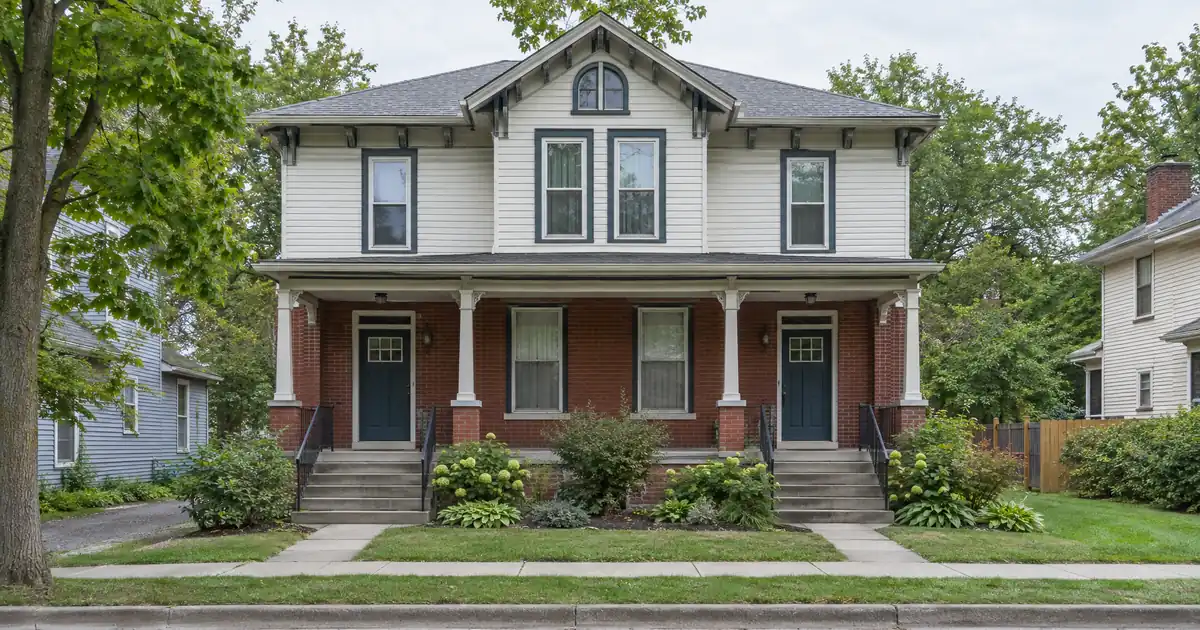
If you own a rental in Valparaiso that has been on title for six months or more, the question is not whether you have equity. The question is whether the rent on that property supports the loan amount you want at a 75 percent ceiling. On a single-family house near the median, the answer is often no. On a stacked two-to-four-unit building, it often is. Most brokers skip that split and quote a number off appraised value alone. The file then dies at coverage review.
DSCR Cash-Out Calculator
Run the cash-out numbers in Valparaiso, IN
Rate source: Freddie Mac 30-yr average via FRED® — Federal Reserve Bank of St. Louis · effective Sep 24, 2026
Prefilled with starting assumptions — enter your property’s value, balance, taxes, and insurance for a more accurate picture.
Program parameters update from Lendmire’s centralized guideline source. Taxes and insurance are editable estimates.
As of Sep 24, 2026 · General Freddie Mac market benchmark, not a Lendmire loan offer. Property value, balance, taxes, and insurance are editable estimates. Maximum loan-to-value varies by lender, program, property type, and seasoning. Not a Loan Estimate, approval, or commitment to lend. Program availability and eligibility are subject to lender guidelines, credit approval, property review, and underwriting.
The Quick Read:
A cash-out refinance on a Valparaiso, Indiana rental is underwritten primarily on the property’s rental income measured against its full monthly obligation, so the gap between a single-family lease and a stacked two-to-four-unit rent roll decides how much equity a lender may allow an owner to pull under the program’s LTV ceiling.
- Valparaiso Northeast shows a $386,192 median value against $1,650 average rent, which models below 1.00 coverage at full leverage.
- Porter County multi-family listings run $349,900 to $495,000, and stacked unit rents lift coverage. Audubon Estates reports 0.0 percent vacancy and South Haven reports 1.1 percent.
- Citywide vacancy sits near 6 percent, so underwrite by submarket.
- Seasoning of about six months from title recording gates every cash-out request.
Valparaiso Market Snapshot
A quick read on the Valparaiso investor landscape — figures come from the cited sources below. Confirm current property-level numbers before underwriting.
| Metric | Detail |
|---|---|
| Home prices | $342,837 median cost (NeighborhoodScout) |
| Typical rents | $1,650 avg (NeighborhoodScout) |
| University enrollment | ~2,300-2,451 students (Wikipedia) |
| Population | 35,065 population (2024) (Data Commons (population)) |
| Employment | 16.8K→17.5K employees (2023-2024) (Data USA (Valparaiso profile)) |
| Vacancy | 1.1% (South Haven Neighborhood Profile) |
What Six Months of Ownership Unlocks
Cash-out eligibility on these files rests on three numbers: seasoning of about six months measured from title recording, a 75 percent maximum LTV on a cash-out (not the 80 percent purchase figure), and a coverage ratio of 1.00 or better on rent used for lender review against full PITIA. Those are typical program guidelines, and lender, borrower and property review can move them.
Seasoning is the quiet killer. Say you closed on a duplex near Vale Park in the spring and the settlement statement shows a recording date. The clock starts there, not at contract and not at the day the tenants moved in. Owners who plan a renovation, re-lease the units and refinance on a strict schedule need the recording date documented, because settlement reconciliation is how a lender verifies ownership length.
Equity available is not a fixed number. It depends on rent used for lender review, PITIA, reserves (about six months of PITIA on most files) and the LTV ceiling. Any figure you hear before an appraisal is a guess. For the broader mechanics, see DSCR cash-out refi mechanics and the refinance side of the investment property program.
Appreciation Is Running Hot While the Median Slides
Valparaiso’s appreciation data points in two directions, and both matter for timing a refinance. NeighborhoodScout puts the citywide median home cost at $342,837 and shows twelve-month appreciation of 4.65 percent, with the latest quarter annualizing to 9.65 percent. That is higher than 70 percent of Indiana cities and towns. This article uses that $342,837 as its citywide median throughout.
Redfin reads the market differently. Its average house price is $352K, down 4.6 percent year over year, while median sale price per square foot is $179, up 3.5 percent. Homes sell in around 86 days. Different methodologies produce different numbers, so treat both as directional.
Here is how to read that split. A falling average price with rising price per square foot usually means the mix shifted toward smaller, more efficiently priced homes. Those are the workforce single-family and small multi-unit properties that DSCR borrowers hold. Larger homes are softening while the product you own is holding. That supports an appraisal on the right property type, though no appraisal is guaranteed.
The forward-looking question is whether the hot quarter persists. One strong quarter annualized is a data point, not a trend. If you are deciding between refinancing now and waiting for more appreciation, the safer read is to plan the refinance around what the rent supports today. Treat any additional appraised value as a bonus, not as the basis for the loan.
Run the Numbers on Three Valparaiso Rentals
The three scenarios below use modeled assumptions, not sourced deals. Each coverage figure divides rent by full PITIA (principal, interest, taxes and insurance), modeled with Indiana-average tax and insurance loads, and each is rounded down. Confirm actual rent, taxes and insurance on your own property.
Scenario one: the Northeast single-family. Take a house valued near the Valparaiso Northeast median of $386,192 renting at the neighborhood’s $1,650 average, per NeighborhoodScout. At a 75 percent cash-out LTV including taxes and insurance, coverage models around 0.7x. That is below the 1.00 baseline. Owners in that position have several structures a lender may review: a sub-1.00 program, interest-only structuring, a lower LTV or a stronger compensating profile. At roughly 50 percent LTV the same house models near 1.0x. Any of these paths is subject to lender guidelines, credit approval and property review. The takeaway is that the cash-out amount on this house is set by rent, not by how much equity has built.
Scenario two: the duplex. Assume a duplex appraises at $349,900, the bottom of the Porter County multi-family price band shown on Homes.com. Assume two 2-bedroom units at the citywide $1,379 per Apartments.com, or $2,758 combined. At a 75 percent cash-out LTV including taxes and insurance, coverage models around 1.3x. Same neighborhood price tier as scenario one, and the coverage is nearly double. That is the whole small-multifamily case. Two rents against one set of taxes and one mortgage.
Scenario three: the top-rent pocket. Audubon Estates posts an average rent of $2,720 against a median price of $462,714. Modeled the same way, coverage lands just under 1.00 at 75 percent LTV. Even the highest-rent submarket in the city does not carry full leverage on a single-family house. Round down, and expect to size the loan to the ratio.
DSCR files in markets like this one typically look the same. The equity is real, the appraisal is fine, and the rent is what limits the loan. Files that clear on the first pass usually carry a full lease set and a clean rent schedule, and the borrower has already asked how much loan the rent supports rather than how much equity exists. The files that stall are the ones where the borrower walked in with a number in mind and worked backward to justify it.
If you want to see where your own property lands, pull a DSCR quote with the actual rent and value.
Where Coverage Holds
South Haven and the near-campus pocket. South Haven averages $1,988 in rent and reports 1.1 percent vacancy, per NeighborhoodScout. That is a tight-supply submarket, and it lets you underwrite with little downtime baked in. The older, smaller-lot housing near Valparaiso University, including Vale Park, has the mix of single-family and some multi-family product that suits duplex and triplex income stacking. Comps for small multis are more available here than in the newer subdivisions.
Downtown Valparaiso. Per Apartments.com data, downtown is the city’s most apartment-dense submarket and among its most affordable. That is where converted buildings and small apartment properties cluster. NeighborhoodScout puts duplexes and small apartment buildings at 10.88 percent of housing units, while detached single-family homes are 55.39 percent. A small-multi refinance has a real base of comparable stock behind it, which matters for an income-approach appraisal.
The West Side is a single-family play. The Manchester Meadows and Pepper Creek area runs larger homes on larger lots, with prices from the 400s into the 700s and above for estate-style properties. That price tier pushes against the rent, so coverage on full leverage will be thin. Treat it as a lower-LTV holding, not a cash-out engine.
Blackhawk Beach is the caution. That submarket showed 8.5 percent vacancy on an older profile page, against roughly 6 percent citywide. Underwriting at the citywide figure would overstate coverage there. Stress the rent, not the city average.
One more data caution. City-Data reports average values of $879,030 for 2-unit structures and $235,802 for 3-to-4-unit structures. Those averages are noisy, likely driven by a few outliers, and no one should size a refinance from them. Use closed comps for the specific building type.
Demand Anchors and What Could Break Them
Valparaiso’s rental demand rests on a mixed employment base. Per Data USA, the largest resident employment sectors are manufacturing (2,275 people), educational services (2,179) and health care and social assistance (2,142). Employment in the metro grew 3.94 percent, from 16.8k to 17.5k employees. STATS Indiana lists Porter County’s top employers as Cleveland-Cliffs Burns Harbor, Northwest Health-Porter and Regal Power Trans Solutions, with Pratt Industries and Ivy Tech Community College also on the list. The population is about 35,065.
Health care is the steadiest anchor. Northwest Health operates the local Porter campus, and its network reports more than 3,000 employees and 700 physicians across Porter, La Porte and Starke counties.
The university is the soft spot. Valparaiso University reports 2,579 total students, but full-time equivalent enrollment fell 18.3 percent, from 3,032 to 2,477, over four school years, and the school faces financial headwinds. Anyone underwriting a near-campus rental on student demand should not assume it grows. The stronger read is that near-campus product works when hospital, manufacturing and school-district workers rent it, and that is a long-term-lease profile a lender can document.
The upside catalyst is outside the city limits. Amazon’s $7 billion data center campus in Jasper County is within commuting distance, and local sellers already cite it in Porter County duplex listings. Construction-phase and permanent jobs could tighten workforce rental supply over the next one to two years. That is a thesis, not a fact on the ground. The indicators to watch are lease-up pace on small multis, days on market for duplexes and whether rents in South Haven and downtown keep moving. If the project stalls, the demand story goes with it.
One structural difference matters for commuters. The West Lake Corridor rail extension serves Lake County communities toward Chicago. Valparaiso’s own planned branch was canceled after a ridership study, so the city stays highway-dependent. Do not price your rent expectations off rail-served suburbs.
Documentation That Stalls These Files
The friction on Valparaiso cash-out files is documentation, not credit. Here is what tends to derail them.
1. Lease evidence. Every unit needs a signed lease, and the rent schedule has to match the leases. A duplex with one lease and one verbal arrangement models as a single-unit file.
2. Rent-roll clarity. On a triplex or fourplex, the lender wants unit-by-unit rents. Mixed unit sizes, like two 3-bedrooms and two 2-bedrooms, need to be laid out clearly so the appraiser’s income approach ties to the leases.
3. Small-multi appraisal support. Comps for two-to-four-unit properties are thinner than single-family comps. A well-documented appraisal reconsideration packet, with recent closed sales and condition adjustments, is a routine step, not an emergency move.
4. Settlement statement for seasoning. Keep the closing document that shows the recording date. No document, no seasoning.
5. Entity paperwork. If the property sits in an LLC, the operating agreement, EIN letter and good-standing certificate need to be current and consistent with the vesting on title, subject to lender program eligibility.
6. Reserves documentation. About six months of PITIA in verifiable accounts is typical. Statements that show the money moving in last week draw questions.
7. Insurance and title. A complete insurance quote and clean title work, meaning clearing any open liens or name mismatches, prevent late-file surprises. Confirm current local rental rules, taxes and insurance with qualified local professionals.
Credit tiers on these programs generally start at a 620 floor and improve at 660, 680 and 700, subject to lender guidelines. Loan sizes run up to $3,000,000 on standard programs, and smaller balances route through select lenders in the network. Manufactured homes, log homes and barndominiums fall outside these programs.
DSCR vs. conventional financing
Two common ways to finance an investment property in Valparaiso, IN. They qualify you differently — here’s how investors weigh them.
Why investors choose it
- Qualifies on the property’s rental income — no personal tax returns, W-2s, or pay stubs needed to document income.
- No personal debt-to-income ceiling to clear, so existing mortgages and obligations don’t cap your borrowing the same way.
- Can be closed in an LLC, keeping the property inside a business entity.
- Built for scaling — not held to the limit on number of financed properties that conventional financing applies.
- Underwriting centers on the deal: generally qualifies when the rent covers the payment, a 1.00x coverage ratio being a common baseline (confirmed in underwriting).
- Designed specifically for investment property, including long-term and, where the program allows, short-term rentals.
Where it’s strong
- Often the lowest ongoing financing cost for a buyer who fully qualifies on personal income — a fit for a first property or a cost-first purchase.
Trade-offs for investors
- Requires full personal income documentation and must fit within a debt-to-income limit — salary, existing debts, and other mortgages all count.
- Typically held in your personal name rather than a business entity.
- Caps how many financed properties you can carry, which can become a ceiling as a portfolio grows.
- Evaluates you as a borrower as much as the property, which usually means more paperwork.
How investors usually choose: a first or single property often optimizes for the lowest financing cost; portfolio builders often optimize for leverage, vesting in an LLC, and scaling past conventional caps. The right answer depends on your goals, the property, and current guidelines — both paths run through select lenders in Lendmire’s wholesale network, with eligibility and terms confirmed in underwriting.
For a plain read on how the ratio is calculated, the guide “What Is a DSCR Loan” covers it, and Lendmire’s DSCR-versus-conventional breakdown explains why rental income, not traditional personal-income documentation, is central here.
Turning Proceeds Into the Next Deal
The proceeds only help if the next purchase’s coverage clears on its own. A common structure is to refinance a seasoned small multi and use the proceeds as down payment capital on another small multi in a different submarket. The second property must qualify on its own rent, so do not assume the first property’s cash flow rescues it.
Sequence matters. Refinance first, keep the reserves documented and then contract on the next property. Pulling cash out and then discovering the reserves fell below the six-month mark can undo the second file. There is also a trade-off worth weighing. Pulling to the LTV ceiling maximizes cash but tightens coverage on the refinanced property. Pulling less leaves a wider cushion if rents soften. Neither answer is wrong, but the decision should be made before the appraisal, not after.
Frequently Asked Questions
Can Lendmire help arrange DSCR financing for an investment property in Valparaiso?
How do you qualify for a DSCR cash-out refinance in Valparaiso?
Typical guidelines call for about six months of ownership from title recording, a maximum 75 percent LTV, coverage of 1.00 or better and a credit floor of 620. Reserves of about six months of PITIA are common. Every item is subject to lender guidelines, credit approval and property review. Rent supported by leases is the deciding input.
What are the requirements for an investment property loan in Valparaiso, Indiana?
Expect a signed lease set, a rent schedule, entity documents if the property is in an LLC, insurance quotes, clean title and reserves statements. Loan amounts run up to $3,000,000 on standard programs. Manufactured homes, log homes and barndominiums are not eligible. Program terms vary by lender.
Does a Valparaiso single-family rental usually clear 1.00 at 75 percent LTV?
Often not. A house near the Northeast median of $386,192 renting at about $1,650 models near 0.7x including taxes and insurance at full leverage. Lower LTV, interest-only structuring or a sub-1.00 program are options a lender may review. A duplex at similar pricing models much higher because two rents carry one loan.
Which Valparaiso submarkets carry the least vacancy risk?
Audubon Estates reports 0.0 percent vacancy and South Haven 1.1 percent. Blackhawk Beach ran 8.5 percent on an older profile, and the citywide figure is about 6 percent. Underwrite the specific submarket rather than the average.
Where the Gap Sits
The mispriced spot in Valparaiso is the small multi near the university and downtown. Duplexes and triplexes there are listed in the $349,900 to $495,000 band, and a stacked rent roll models well above the single-family houses that carry higher median values on thinner coverage. If the Jasper County data center pipeline tightens workforce rental supply, that product type sits closest to the demand.
For current guidelines and terms, see Lendmire’s DSCR loan programs page.
About Lendmire
As a DSCR and non-QM mortgage broker, Lendmire (NMLS# 2371349) connects investors with wholesale lending channels across 41 markets, including Washington, D.C. Lenders review the property’s rental income, not the borrower’s traditional personal-income documentation, as the central factor, which fits self-employed operators and portfolios beyond four financed properties. The firm was recognized by Scotsman Guide as a 2026 Top Workplace and is also a 2025 Scotsman Guide Top Workplace.
For broader investor-financing rules and property-type coverage across the state, see Indiana DSCR loans.
Get Started
Ready to find the right loan for you?
In about 30 seconds you can review financing options available for your investment property. No commitment required.
Informational only. Not a Loan Estimate, approval, or commitment to lend. Program availability and eligibility are subject to lender guidelines, credit approval, property review, and underwriting.
References
1. NeighborhoodScout: Valparaiso Northeast
2. Homes.com: Porter County multi-family listings
4. South Haven
5. Affordable Housing Online — Indiana Valparaiso
6. NeighborhoodScout: Valparaiso real estate
7. Wikipedia
8. 35,065
9. Data USA: Valparaiso profile
10. Redfin: Valparaiso housing market
11. Apartments.com: Valparaiso rent market trends
13. NeighborhoodScout — Valparaiso Blackhawk Beach
14. City-Data — Valparaiso Indiana
15. STATS Indiana: Porter County major employers
16. Northwest Health
17. $7 billion data center campus in Jasper County
18. en.wikipedia.org — Wiki West Lake Corridor
19. recognized by Scotsman Guide as a 2026 Top Workplace
20. a 2025 Scotsman Guide Top Workplace
This article is part of Lendmire’s investment property cash-out refinance program — full qualification details, guidelines, and scenarios live on the program page.
Related reading: Cash Out Refinance Investment Property in Portage, IN · DSCR Cash Out Refinance in Valparaiso, Indiana: How Much Equity Can You Pull Out? · DSCR Cash Out Refinance Munster Indiana
Guides: Investment Property Cash-Out Refinance in Indiana
Brandon Miller
Founder & CEO, Mortgage Loan Originator, Lendmire LLC
- Mortgage Loan Originator · NMLS# 1129696 · Verify on NMLS Consumer Access
- North Carolina Real Estate Broker · License# 343312 · Verify on NCREC
- North Carolina Insurance Producer · License# 19053198 · Property, Casualty, Life, Health · Verify on NAIC SBS
- Lendmire LLC · Firm NMLS# 2371349 · Verify firm licensure
Important disclosures. Lendmire (NMLS# 2371349) is a licensed mortgage brokerage. Lendmire is not a direct lender, depository institution, or financial advisor. All loan inquiries are subject to lender underwriting; this article does not constitute a commitment to lend. Rates, terms, and program guidelines are subject to change without notice and vary by borrower profile, property type, and state. Information in this article is general in nature and is not financial, legal, or tax advice. Equal Housing Opportunity. NMLS Consumer Access: nmlsconsumeraccess.org.