
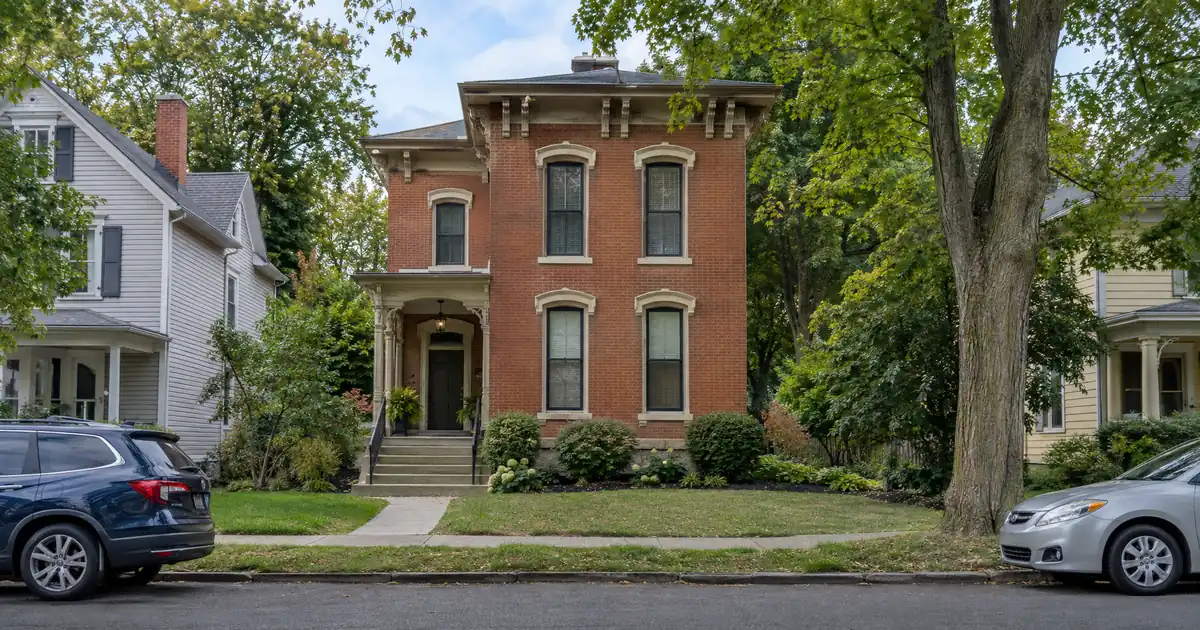
If a rental property in Valparaiso is worth meaningfully more today than what was owed on it at purchase, the question isn’t whether that equity exists. It’s whether the rent on that property is strong enough to let a lender release it. That’s a different math problem than most owners assume, and in Valparaiso the answer changes block by block.
The Quick Read: In Valparaiso, Indiana, a DSCR cash-out refinance is underwritten against the property’s rental income measured against its full monthly obligation, not traditional personal-income documentation — and the gap between submarket rent ceilings like Audubon Estates’ $2,720 average (NeighborhoodScout) and the citywide $1,251 average (Apartments.com/CoStar) decides whether single-family cash-out clears coverage alone or needs a multi-unit structure.
DSCR Cash-Out Calculator
Run the cash-out numbers in Valparaiso, IN
Rate source: Freddie Mac 30-yr average via FRED® — Federal Reserve Bank of St. Louis · effective Sep 17, 2026
Prefilled with starting assumptions — enter your property’s value, balance, taxes, and insurance for a more accurate picture.
Program parameters update from Lendmire’s centralized guideline source. Taxes and insurance are editable estimates.
As of Sep 17, 2026 · General Freddie Mac market benchmark, not a Lendmire loan offer. Property value, balance, taxes, and insurance are editable estimates. Maximum loan-to-value varies by lender, program, property type, and seasoning. Not a Loan Estimate, approval, or commitment to lend. Program availability and eligibility are subject to lender guidelines, credit approval, property review, and underwriting.
- Audubon Estates rents average $2,720 per month with 0.0 percent vacancy
- South Haven’s student-tenant submarket runs 1.1 percent vacancy at $1,988 average rent
- Citywide appreciation ran 4.65 percent over the trailing twelve months
- Cash-out LTV caps at 75 percent after roughly six months of seasoning
- A nearby $7 billion AWS data center campus is adding construction-phase rental demand
Valparaiso Market Snapshot
A quick read on the Valparaiso investor landscape — figures come from the cited sources below. Confirm current property-level numbers before underwriting.
| Metric | Detail |
|---|---|
| Home prices | $342,837 median cost (NeighborhoodScout) |
| Typical rents | $1,650 avg (NeighborhoodScout) |
| University enrollment | ~2,300-2,451 students (Wikipedia) |
| Population | 35,065 population (2024) (Data Commons (population)) |
| Employment | 16.8K→17.5K employees (2023-2024) (Data USA (Valparaiso profile)) |
| Vacancy | 1.1% in the South Haven neighborhood (South Haven Neighborhood Profile) |
Why Valparaiso Equity Isn’t Uniform Right Now
Citywide, home values are running a strange split. NeighborhoodScout puts Valparaiso’s median home cost at $342,837, with appreciation over the past year at 4.65 percent — higher than 70 percent of Indiana cities and towns. Meanwhile Redfin’s more recent snapshot shows the average sale price dipping to $352,000, down 4.6 percent year-over-year, even as median price-per-square-foot climbed to $179, up 3.5 percent, and sales volume rose from 29 homes sold in March of the prior year to 46 in the most recent March.
Put those together and the picture isn’t a market cooling. It’s a market where smaller, efficiently-priced homes — the exact workforce single-family and small multi-unit stock a DSCR cash-out investor targets — are outperforming larger comps that skew the headline median downward. That’s good news for anyone holding a modest three-bedroom rental bought a few years back: the appraisal-backed equity is likely real, even if the citywide “average price” headline looks soft.
The catch is rent. Citywide average rent sits at $1,251 per month per Apartments.com/CoStar data (with two-bedroom units averaging around $1,379 and three-bedroom units around $1,798), while Yardi Matrix’s RentCafe dataset puts the citywide average higher, at $1,385. Either figure, run against a $342,837 to $386,000 price band at 75 percent cash-out leverage, produces coverage that’s tight — sometimes below the 1.00x floor most standard DSCR programs are built around. That’s not a citywide problem. It’s a submarket-specific one, and it’s exactly where a cash-out strategy needs to be built neighborhood by neighborhood rather than off a blended average.
The Seasoning and Leverage Mechanics
Before running any submarket math, the structural rules matter more than the address. On the wholesale programs Lendmire arranges access to, a cash-out refinance on an investment property caps at 75 percent loan-to-value, and most lenders want roughly six months of ownership seasoning measured from the title recording date before releasing equity. Minimum qualifying DSCR on standard programs is 1.00 — rent divided by the full monthly obligation, not personal income, not traditional personal-income documentation. Credit tiers on the network run from a 620 floor up through 680-700 for the strongest pricing, and reserve requirements typically land around six months of PITIA, stepping up toward nine months on loan balances above $1.5 million.
None of that is a promise of approval — actual terms depend on lender guidelines, credit profile, and the specific property under review — but it’s the frame every Valparaiso cash-out scenario has to run through. A property that appraised at $386,000 six months after purchase doesn’t automatically release equity at 75 percent LTV. It releases equity if the rent, run against a fully-loaded payment including taxes and insurance, still clears the lender’s DSCR floor. That’s where the neighborhood-level rent data starts to matter more than the appreciation headline.
Where the Single-Family Math Actually Clears
Audubon Estates is the strongest single-family cash-out candidate identified in this market, and it isn’t close. Per NeighborhoodScout, the neighborhood posts an average rental price of $2,720 — higher than 96.3 percent of Indiana neighborhoods — against a vacancy rate of 0.0 percent, tighter than every U.S. neighborhood on record. Running a modeled cash-out scenario on a property near Audubon Estates’ median price of $462,714, using 75 percent LTV, a 30-year amortization at an assumed rate in the high-6s, plus Indiana-average property tax near 0.84 percent and insurance near 0.35 percent of value, produces a monthly obligation that the $2,720 rent covers at right around 1.00x — a coverage number that clears the standard floor, but without much cushion.
Compare that to Valparaiso Northeast. NeighborhoodScout describes this submarket as suburban, built mostly between 1970 and 1999, with a large Slovak and Polish ancestry base that has historically anchored stable long-term tenancy. Running the same modeled math (75 percent LTV, comparable rate environment, and qualitative tax/insurance assumptions) against that price-and-rent combination produces coverage in roughly the 0.70x–0.76x range on a single detached home alone — short of breakeven. The appreciation story in Northeast is real — NeighborhoodScout flags it as priced below state median with moderate, steady appreciation — but the rent-to-price ratio doesn’t support a clean single-family cash-out at full leverage. That gap doesn’t rule the market out. It’s a signal to stack units instead.
South Haven sits in between. Described by NeighborhoodScout as a college-student-friendly, walkable submarket, it runs an average rent of $1,988 against a vacancy rate of just 1.1 percent — tighter than nearly 90 percent of U.S. neighborhoods. That combination of above-average rent and near-zero downtime risk lets an investor underwrite the DSCR stress test with less padding for vacancy loss than the numbers would otherwise require, even if the price point sits closer to the citywide median than Audubon Estates’ premium tier.
Where Single-Family Math Falls Short, Multi-Unit Picks Up
The 2-4 unit stacking play exists because Valparaiso’s housing stock supports it. Per NeighborhoodScout data, small apartment buildings, converted homes, and duplexes make up roughly 11 percent of the city’s housing units, with large apartment complexes accounting for another 26 percent — meaning appraisers and lenders in this market already have comps and familiarity with multi-unit income underwriting. That’s not true in every small Midwest city.
Active Porter County listings show what that looks like in practice. Multi-family properties are currently trading in a $349,900 to $495,000 range, including a four-unit property with two three-bedroom units and two two-bedroom units, each with an attached garage. Running a modeled scenario against the top of that range — a $495,000 quadruplex at 75 percent cash-out LTV, combining two three-bedroom units near $1,798 each and two-bedroom units near $1,379 each for roughly $6,354 in combined monthly rent — produces a fully-loaded monthly obligation (P&I plus Indiana-average tax and insurance) that the rent covers at somewhere north of 2.0x, even after accounting for the higher price point. That’s the mechanism: four leases on one lot generate gross rent no single detached home on the same footprint could touch, and it’s why the coverage math clears with real margin where a comparable single-family purchase in the same price tier would struggle.
Vale Park, near Valparaiso University, is the geographic sweet spot for this strategy. Local market data describes the area as a mix of older homes and smaller-lot multi-family residences near campus — exactly the housing stock that supports duplex-to-triplex conversion or acquisition. Downtown Valparaiso, meanwhile, is flagged by Apartments.com/CoStar data as the neighborhood with both the most affordable rents and the highest concentration of available apartment units citywide, making it the primary rental-density submarket for anyone running a small multifamily cash-out play near the courthouse and university core.
DSCR files in markets with a meaningful duplex-to-fourplex share like Valparaiso’s tend to follow a recognizable pattern: single-family files near the middle of the price range come in tight on coverage and need either a lower leverage point or a stronger rent comp to clear 1.00x, while small multifamily files — where appraisers pull income-approach comps from an active local market — usually clear with more room. The stronger DSCR file in this market is rarely the single detached home bought for appreciation. It’s the converted duplex or triplex bought for the rent roll.
The Employment Base Behind the Rent Roll
Valparaiso’s population sits at roughly 35,065 per Data Commons Census-based estimates, up from 34,151 at the 2020 Census and 27,428 in 2000 — steady growth for a small Midwest city, not explosive, but not shrinking either. The employment base leans on manufacturing (2,275 workers), educational services (2,179), and health care and social assistance (2,142), per Data USA figures drawn from Census data, with metro-area employment growing from 16,800 to 17,500 jobs in the most recent year measured.
Porter County’s top employers, include Cleveland-Cliffs Burns Harbor, Northwest Health-Porter, and Pratt Industries, alongside Valparaiso staples like Urschel Laboratories, Valparaiso University, and Ivy Tech Community College. Northwest Health — the hospital system operating the local Porter campus — runs three hospitals, more than 30 physician offices, and five emergency departments across its Northwest Indiana footprint, employing more than 3,000 people alongside 700 physicians. That’s a durable, diversified tenant base: manufacturing and healthcare workers don’t disappear when enrollment softens at the university.
And enrollment has softened. Valparaiso University’s full-time equivalent enrollment dropped from 3,032 in the 2020-21 academic year to 2,477 in 2024-25, an 18.3 percent decline, with total enrollment at 2,579 in fall 2024. Investors leaning on student-adjacent rental demand near campus should factor that decline in rather than assume growing tenant pressure from the university alone — it’s the manufacturing and healthcare base, not the student body, doing the heavy lifting on rental demand right now.
The Data Center Wildcard Nobody’s Pricing In Yet
Here’s the dynamic worth tracking over the next 12 to 24 months: a $7 billion AWS data center campus is under construction in neighboring Jasper County, roughly 13 miles from Valparaiso via Highway 49, part of a broader $15 billion Amazon investment across Northern Indiana projects expected to add 2.4 gigawatts of capacity and roughly 1,100 permanent jobs, per reporting on the Jasper County approval. Local sellers are already marketing Porter County duplexes explicitly on proximity to the project — a sign the rental-demand case is starting to price in before the broader market catches on.
Construction-phase workforce alone can tighten workforce single-family and small multi-unit supply well before the facility opens permanently, and Valparaiso — sitting closer to the project than Porter County’s more rural stretches — is positioned to absorb some of that demand. This is the kind of driver that changes the vacancy assumption on a DSCR file over a two-year window, not the kind that shows up in a trailing-twelve-month rent comp yet. Worth watching, not worth overweighting in today’s underwriting.
The Vacancy Trap in the Averages
Citywide vacancy in Valparaiso runs around 6 percent, per Affordable Housing Online data — a below-average figure on its face. But that blended number hides real spread. Blackhawk Beach runs vacancy near 8.5 percent, while South Haven and Audubon Estates sit near 1 percent or below. An investor underwriting a cash-out refinance off the citywide 6 percent figure, rather than the submarket the property actually sits in, risks overstating achievable coverage on paper and understating it in practice. The fix is simple: pull the neighborhood-level vacancy figure, not the city average, before stress-testing the DSCR ratio.
What This Looks Like on a File
Picture an investor holding a single-family rental in Valparaiso Northeast, purchased some months back and now seasoned past the six-month mark most lenders require before releasing cash-out equity. The property has appreciated modestly along with the broader market’s trend, and rents have held near the submarket norm. Run against a 75 percent LTV cash-out at the modeled tax-and-insurance assumptions above, the coverage ratio on the single-family lease alone lands well below the 1.00x line — not disqualifying on its face, but the kind of file that needs either a lower leverage point, a rent bump documented through a fresh lease, or a sub-1.00 program structure reviewed on its own terms, subject to lender guidelines and credit approval.
Now run the same equity position through a duplex-conversion lens: if that same lot supported a second unit, or if the investor’s actual holding is a converted two-unit near Vale Park with combined rents closer to $2,600-$3,000, the coverage math shifts meaningfully. That’s the practical decision point on a lot of Valparaiso cash-out files — not whether the equity is there, but whether the rent roll on the specific unit configuration supports pulling it out at full leverage or a reduced one.
Getting a clear read on what DSCR qualification actually looks like before ordering an appraisal saves a lot of wasted underwriting time on files like this. Investors comparing this structure against a standard rate-and-term refinance can also review Lendmire’s DSCR-versus-conventional breakdown to see how the review basis differs.
Two Forces Pulling Against Each Other
There’s a real tension in this market between appreciation and cash flow, and it’s worth naming directly. Citywide appreciation is currently running hot — the trailing quarter’s rate of 2.33 percent annualizes to 9.65 percent, well above the trailing-twelve-month 4.65 percent figure. That favors a “buy now, season six months, refinance once equity builds” timeline. But the submarkets driving that appreciation — the higher-priced west side product, for instance — aren’t necessarily the ones with the rent-to-price ratio to support pulling that equity back out cleanly at 75 percent LTV.
The stronger cash-out candidate right now might genuinely be the lower-appreciation, higher-rent-ceiling property in Audubon Estates over the faster-appreciating but rent-thin property in a newer west-side development — though an investor prioritizing long-term appreciation over near-term equity access could reasonably argue the opposite. It’s a real trade-off, not a settled call.
DSCR vs. conventional financing
Two common ways to finance an investment property in Valparaiso, IN. They qualify you differently — here’s how investors weigh them.
Why investors choose it
- Qualifies on the property’s rental income — no personal tax returns, W-2s, or pay stubs needed to document income.
- No personal debt-to-income ceiling to clear, so existing mortgages and obligations don’t cap your borrowing the same way.
- Can be closed in an LLC, keeping the property inside a business entity.
- Built for scaling — not held to the limit on number of financed properties that conventional financing applies.
- Underwriting centers on the deal: generally qualifies when the rent covers the payment, a 1.00x coverage ratio being a common baseline (confirmed in underwriting).
- Designed specifically for investment property, including long-term and, where the program allows, short-term rentals.
Where it’s strong
- Often the lowest ongoing financing cost for a buyer who fully qualifies on personal income — a fit for a first property or a cost-first purchase.
Trade-offs for investors
- Requires full personal income documentation and must fit within a debt-to-income limit — salary, existing debts, and other mortgages all count.
- Typically held in your personal name rather than a business entity.
- Caps how many financed properties you can carry, which can become a ceiling as a portfolio grows.
- Evaluates you as a borrower as much as the property, which usually means more paperwork.
How investors usually choose: a first or single property often optimizes for the lowest financing cost; portfolio builders often optimize for leverage, vesting in an LLC, and scaling past conventional caps. The right answer depends on your goals, the property, and current guidelines — both paths run through select lenders in Lendmire’s wholesale network, with eligibility and terms confirmed in underwriting.
Owners also considering the refinance side more broadly, or wanting the mechanics of DSCR cash-out refi mechanics laid out in more detail, can review those before running numbers on a specific address. And for anyone weighing Indiana-wide options against the Valparaiso-specific submarket data above, Lendmire’s Indiana DSCR platform covers program parameters across the state’s other markets as a point of comparison.
What Sets Valparaiso Apart From Its Chicago-Exurb Peers
Two things make Valparaiso a different animal than other Northwest Indiana Chicago-exurb cities. First, it’s home to the Orville Redenbacher popcorn legacy — the annual Popcorn Festival, running since 1979, draws over 40,000 visitors each September, per Wikipedia’s account of the festival’s history, driving a burst of downtown foot traffic and visitor demand unusual for a city this size. Second, and more relevant to the equity thesis, Valparaiso isn’t getting a commuter rail connection to Chicago. The West Lake Corridor extension opening in Lake County communities like Munster and Dyer skips Valparaiso entirely — an earlier planned branch to the city was canceled back in 2008 over weak ridership projections. That’s a structural difference worth remembering before comparing Valparaiso’s appreciation trajectory to Lake County suburbs benefiting from new rail infrastructure. Valparaiso’s rental demand case rests on manufacturing, healthcare, the university, and now the Jasper County data center pipeline — not on a Chicago commuter play.
Frequently Asked Questions
How do you qualify for a DSCR cash-out refinance in Valparaiso, Indiana?
Qualification centers on the property’s rent measured against its full monthly obligation — taxes, insurance, and principal and interest — rather than the owner’s personal income documents. Lenders in Lendmire’s wholesale network typically want the coverage ratio at or above 1.00x, roughly six months of ownership seasoning from the recorded title date, and reserves around six months of the monthly payment, all subject to lender guidelines and credit approval.
What are the requirements for an investment property cash-out refinance in Valparaiso?
On standard non-QM programs, expect a 75 percent loan-to-value ceiling on cash-out (lower than the leverage allowed on a purchase), a credit floor generally starting near 620 with better pricing available above 680, and documented rent — either a signed lease or a market rent schedule — supporting the DSCR calculation. Property type matters too: manufactured homes, log homes, and barndominiums fall outside these programs.
Does a single-family rental in Valparaiso Northeast cash-out cleanly?
Not always at full leverage. Modeled math against Northeast’s roughly $386,000 median price and $1,650 average rent tends to land under the 1.00x coverage floor at 75 percent LTV once taxes and insurance are included, meaning a lower leverage point, a documented rent increase, or a sub-1.00 program structure may be the path — subject to lender review rather than a given approval.
Why does the Audubon Estates rent level matter for a cash-out decision?
Audubon Estates carries the highest rent ceiling identified in this market, averaging $2,720 per month against 0.0 percent vacancy. That rent level is high enough to clear a 1.00x coverage floor on single-family cash-out math at full leverage in modeled scenarios — a threshold that thinner-rent submarkets like Northeast don’t reach without a multi-unit structure or reduced leverage.
For current guidelines and terms, see Lendmire’s DSCR loan programs page.
About Lendmire
Lendmire, NMLS# 2371349, operates as a DSCR and non-QM mortgage broker, linking investors to wholesale lending partners across 41 markets — 40 states plus Washington, D.C. Rather than leaning on a borrower’s traditional income documentation, lender review centers on the property’s own rental income, an approach that fits self-employed investors and those holding portfolios beyond four financed properties, subject to program guidelines and eligibility review. Lendmire has been recognized by Scotsman Guide as a 2026 Top Workplace.
Get Started
Ready to find the right loan for you?
In about 30 seconds you can review financing options available for your investment property. No commitment required.
Informational only. Not a Loan Estimate, approval, or commitment to lend. Program availability and eligibility are subject to lender guidelines, credit approval, property review, and underwriting.
References
1. NeighborhoodScout — Audubon Estates
2. Apartments.com / CoStar — Valparaiso Rent Market Trends
5. Wikipedia
6. Data Commons — Valparaiso, IN Population
7. Data USA — Valparaiso, IN Profile
8. South Haven Neighborhood Profile
11. Ink Free News — Jasper County AWS Data Center Approval
12. Wikipedia — Valparaiso Popcorn Festival
13. Wikipedia — West Lake Corridor
14. recognized by Scotsman Guide as a 2026 Top Workplace
This article is part of Lendmire’s investment property cash-out refinance program — full qualification details, guidelines, and scenarios live on the program page.
Related reading: Cash Out Refinance Investment Property in Valparaiso IN · Cash Out Refinance Investment Property in Bloomington, Indiana: Turning Near-Campus Equity Into Capital · Cash Out Refinance Investment Property in Muncie, Indiana: The 2026 DSCR Cash-Out Guide for Muncie Investors
Guides: Investment Property Cash-Out Refinance in Indiana
Brandon Miller
Founder & CEO, Mortgage Loan Originator, Lendmire LLC
- Mortgage Loan Originator · NMLS# 1129696 · Verify on NMLS Consumer Access
- North Carolina Real Estate Broker · License# 343312 · Verify on NCREC
- North Carolina Insurance Producer · License# 19053198 · Property, Casualty, Life, Health · Verify on NAIC SBS
- Lendmire LLC · Firm NMLS# 2371349 · Verify firm licensure
Compliance and disclosures. Lendmire (NMLS# 2371349) is a licensed mortgage broker and is not a direct lender, depository institution, financial advisor, or tax professional. Content in this article is general market analysis and educational information — not financial, legal, or tax advice for any specific situation. Lendmire does not guarantee loan approval; every transaction is subject to underwriting by the funding lender. Mortgage pricing and loan program guidelines are subject to change at any time without notice and vary by borrower characteristics, property type, and state regulations. Lendmire complies with Equal Housing Opportunity. Licensure verification: NMLS Consumer Access.