
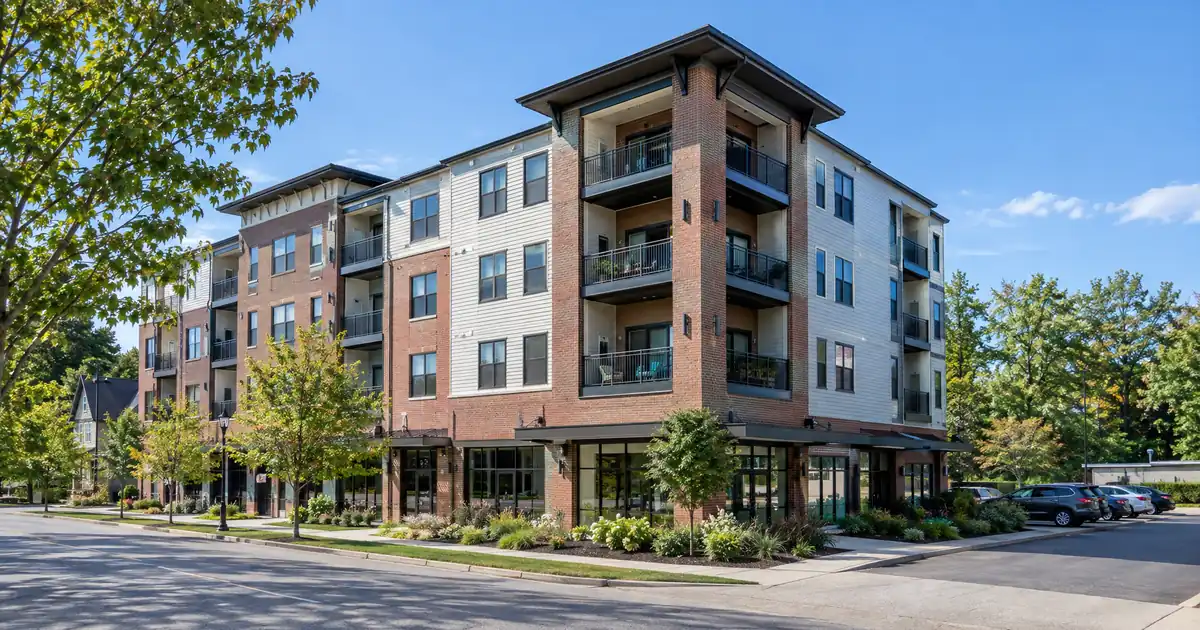
A downtown triplex currently on the Muncie market shows two units leased at $850 and $725 a month, with a third 2-bedroom sitting at $725 — gross rent north of $2,300 a month on a property that would price well under $220,000. That single data point tells you more about how cash-out refinancing works in this market than any citywide average could.
Key Takeaways: A cash-out refinance on a Muncie investment property is underwritten primarily on the property’s documented rent roll measured against its full monthly obligation, with equity access capped at 75 percent loan-to-value and gated by roughly six months of title seasoning. Multi-unit assets tend to produce stronger coverage ratios than single-family rentals here because gross rent stacks faster than acquisition cost.
DSCR Cash-Out Calculator
Run the cash-out numbers in Muncie, IN
Rate source: Freddie Mac 30-yr average via FRED® — Federal Reserve Bank of St. Louis · effective Sep 17, 2026
Prefilled with starting assumptions — enter your property’s value, balance, taxes, and insurance for a more accurate picture.
Program parameters update from Lendmire’s centralized guideline source. Taxes and insurance are editable estimates.
As of Sep 17, 2026 · General Freddie Mac market benchmark, not a Lendmire loan offer. Property value, balance, taxes, and insurance are editable estimates. Maximum loan-to-value varies by lender, program, property type, and seasoning. Not a Loan Estimate, approval, or commitment to lend. Program availability and eligibility are subject to lender guidelines, credit approval, property review, and underwriting.
- Duplex and triplex acquisitions in Muncie run $95,000 to $219,900, often below the mean 3-4 unit valuation of $234,763
- In-place rents on small multifamily assets have been documented at $1,475–$2,300 gross monthly across two- and three-unit properties
- Citywide renter-occupied units (13,401) now edge out owner-occupied units (13,224), per Point2Homes
- Old West End posts a 29.1 percent vacancy rate despite average rents of $1,212 — a caution flag for stabilized-income assumptions
- The cash-out LTV ceiling sits at 75 percent, with seasoning measured from the title recording date, not the closing date
Muncie Market Snapshot
A quick read on the Muncie investor landscape — figures come from the cited sources below. Confirm current property-level numbers before underwriting.
| Metric | Detail |
|---|---|
| Home prices | $139,400 median property value (Data USA) |
| Typical rents | $1,202 average (RentCafe Muncie Rent Trends) |
| University enrollment | 21,089 total (Ball State University) |
| Employment | 52.6K to 53.2K employees (Data USA) |
| Vacancy | 29.1% (NeighborhoodScout Old West End) |
Why Multi-Unit Beats Single-Family on the Refinance Math
The rent-to-value spread in Muncie inverts what most out-of-state investors expect. Single-family median value sits near $97,200, but mean pricing on 3-to-4-unit structures runs $234,763 and 5-plus-unit buildings average $201,615. That gap matters on a cash-out file because a lender is measuring rent against the full monthly obligation — principal, interest, taxes, and insurance — not against the sale price alone.
A 3-bedroom single-family rental pulling the citywide per-bedroom median of roughly $1,240 a month sits close to the edge of a 1.00 coverage floor once taxes and insurance are folded into PITIA on even a modest note. Stack three units under one roof — say two 2-bedrooms and a 1-bedroom generating something in the $1,450–$2,300 gross range, as seen on active downtown listings — and the same acquisition basis, refinanced, produces meaningfully more monthly income to underwrite against. That’s the difference between a file that clears 1.00 with no room to spare and one that clears comfortably above it. This isn’t a promise that any specific deal qualifies; qualification runs through lender guidelines, credit approval, and full property review. It’s a structural observation about where the rent-to-debt math has more room to work in this metro.
A near-campus duplex example makes the same point with long-term, non-student tenancy: an upstairs 4-bedroom unit renting for $1,085 and a downstairs 3-bedroom at $875 — $1,960 a month gross on documented, seasoned leases rather than speculative market-rent projections. That’s exactly the kind of rent roll a DSCR file wants walking into underwriting: signed leases, consistent occupancy history, no turnover drama.
The Seasoning Clock and Why It Matters Here
Six months. That’s roughly the ownership period most lenders in Lendmire’s network require before a cash-out refinance is available, measured from the date the deed records — not from the day rehab wrapped or the first tenant moved in.
Muncie’s multi-family inventory turns fast enough to make that seasoning window workable rather than theoretical. Active listings in the 2-4 unit range spend an average of 47 days on market before selling, and the sub-$220,000 price ceiling on most of that stock means investors aren’t competing hard for scarce comps. Acquire, stabilize the rent roll, hold through the seasoning period, then refinance — the timeline math works cleanly in this market compared to metros where multi-unit inventory is thinner or pricier.
South Central illustrates the appreciation side of that hold period sharply. Median sale price there over the trailing twelve months sits at $89,950, up 34 percent from the prior twelve-month window, on housing stock described as small single-family homes built between the 1880s and early 1900s requiring significant renovation. That’s a real number, but a one-year swing that large off a low base deserves a careful comp pull before an investor assumes it repeats on a refinance appraisal. The stronger play here is probably treating South Central as a buy-renovate-season-refinance thesis rather than banking on continued 34 percent annual comp growth — though an investor holding through a second strong appreciation year could reasonably argue otherwise.
East Central and the Room-Count Advantage
East Central sits just east of downtown, built out with Queen Anne, Colonial Revival, and American Foursquare homes dating to the mid-1800s through the early 20th century. Renovated homes there sell $100,000 to $150,000, fixer-uppers run $50,000 to $100,000, and average home size runs 2,000 square feet — with some properties carrying five or six bedrooms.
That room count matters for a refinance thesis built on income stacking. A large-format house converted into a legal multi-unit or run as a room-by-room rental produces a rent roll that looks more like the duplex/triplex math above than a standard single-family lease. The neighborhood also anchors the Cardinal Greenway trailhead, a 62-mile rail trail spanning five east-central Indiana counties — a durable amenity, not a speculative one.
Riverside-Normal City: The Renter-Heavy Corridor
Riverside-Normal City runs roughly 80 percent renter-occupied against 20 percent owner-occupied, one of the highest renter concentrations identified in Muncie’s neighborhood data. Residents can walk to Ball State University in 15 to 20 minutes and reach downtown in 10, with IU Health Ball Memorial Hospital nearby as well.
That combination — university proximity plus hospital-staff proximity — diversifies the tenant base away from a pure academic-calendar dependency. A property here leased to hospital staff or long-term working tenants tends to produce steadier occupancy history than a purely student-driven lease cycle, which is exactly the kind of documentation a lender wants to see on a cash-out file: consistent tenancy, not nine-month leases that turn every summer.
Old West End: Where the Rent Roll Needs a Second Look
Old West End looks attractive on a rent sheet and risky on an occupancy sheet — both things are true at once. Average rent there runs $1,212, market-rate against much of the metro, but the neighborhood’s real estate vacancy rate sits at 29.1 percent, higher than roughly 95 percent of U.S. neighborhoods tracked by that dataset.
For a cash-out refinance, that gap between posted rent and actual absorption is the whole story. A lender underwriting rental income wants documented, collected rent — not an asking-price figure pulled from a listing. An investor holding a property here should walk into the refinance conversation with a real occupancy history, actual collected-rent statements, and a lease that’s been renewed at least once, not a pro forma built on the neighborhood’s advertised average.
Citywide, rental vacancy in Muncie sat at 8.60 percent in 2019 per Census ACS data, up from a 2017 post-peak low of 5.87 percent but still well below the 2007 peak of 11.61 percent. The floor has been drifting upward off its cycle low. Underwriting a refinance on 90-91 percent realistic occupancy, rather than a best-case near-full lease-up, is the more defensible approach here.
The Downtown Mixed-Use Angle
Downtown Muncie is mid-redevelopment. The city has a 120-unit combined affordable-and-market-rate apartment project underway along the White River on Kilgore Avenue, backed by a $1.2 million Low Income Housing Tax Credit award from the state. A Home2 Suites hotel is also under construction nearby.
For an investor holding a smaller mixed-use or multi-unit building downtown, that redevelopment activity is worth knowing about heading into a refinance appraisal — new institutional-grade supply in the immediate area can move comps in either direction depending on how an appraiser treats it. Small multi-unit buildings with commercial space under roughly half the total square footage can still qualify under many DSCR programs, which widens the refinance pool beyond pure residential stock downtown.
What a Clean File Looks Like on a Muncie Refinance
This scenario came across the desk last quarter, and it’s a fair stand-in for the shape of most Muncie cash-out requests: an investor holding a duplex or triplex acquired under $150,000, seasoned past the six-month mark, with rent collected consistently for at least that period. The cleanest file from a documentation standpoint has complete leases for every unit, entity formation documents if the property sits in an LLC (subject to lender program eligibility), a current title report, and a rent roll that matches what’s actually been deposited — not what a listing sheet claimed at acquisition.
Coverage math on a file like that runs on rent against full PITIA — principal, interest, taxes, and insurance together, not principal and interest alone. On a modeled triplex generating roughly $2,300 in gross monthly rent against a note in the $150,000–$180,000 range at 75 percent LTV, full PITIA coverage (factoring Indiana-average property tax near 0.84 percent annually and insurance near 0.35 percent annually of value) tends to land in a range that clears the 1.00 minimum with room to spare — often into the low-1.20s to mid-1.30s, depending on the specific tax parcel and insurance quote. That’s a modeled illustration, not a quoted deal; actual coverage depends on the specific rent roll, tax assessment, and insurance premium at time of underwriting.
Lendmire’s deal desk sees a common pattern in markets structurally similar to Muncie: the files that stall aren’t the ones with weak rent, they’re the ones with incomplete documentation — a missing unit lease, a rent roll that doesn’t match bank deposits, or an LLC operating agreement that hasn’t been updated to reflect current ownership. The rent math in a market like this one is usually fine. The paperwork is where files lose time.
Employment and Enrollment Anchors Behind the Rent Base
Ball State University enrolled 21,089 students for the current academic year — 15,189 undergraduate and 5,900 graduate — against a projected 2025 city population of 65,466. That’s roughly one in three residents connected to the university as student, employee, or family, an unusually high ratio for a city this size and a structural feature worth weighing on turnover-timing assumptions.
IU Health Ball Memorial Hospital is the region’s largest employer and only hospital, staffing 3,000 employees per older but still directionally useful data, and serves as the area’s largest teaching center outside Indianapolis. Health Care and Social Assistance is the single largest employment sector citywide at 9,065 workers, ahead of Educational Services at 6,639 and Retail Trade at 6,435, per Data USA. Citywide employment grew from 52.6 thousand to 53.2 thousand jobs over the most recent tracked year — modest, but positive.
The metro area itself has posted four straight years of population gains, adding 1,044 residents since the 2020 Census to reach 112,951, according to the Muncie Journal — outpacing peer metros including South Bend, Kokomo, and Elkhart over the same stretch. That’s a reversal of the population-loss narrative that colors most outside impressions of Muncie, and it matters for refinance appraisals: a growing renter and buyer pool supports comp stability better than a shrinking one.
One more data point worth knowing: per the Indiana Business Research Center’s 2026 housing outlook, Muncie and Terre Haute were the only Indiana metros where homeownership was still considered affordable as of September 2025, with ownership costs far below the 43 percent national income benchmark — compared to Indianapolis, where ownership costs ran 36 percent of median household income. That affordability cuts both ways for a refinance investor: low acquisition cost supports rent-to-value coverage, but it also caps the pool of would-be buyers who’d otherwise need to rent. Durable cash flow, not rapid appreciation, is the realistic thesis here relative to Indianapolis-adjacent submarkets.
How the Refinance Mechanics Work
DSCR loans qualify primarily on the property’s rental income rather than the borrower’s traditional personal-income documentation; see Lendmire’s primer on DSCR loans. On a cash-out request specifically, Lendmire’s guide to the refi options says it comes down to three moving parts: the appraised value today, the 75 percent LTV ceiling, and the rent used for lender review measured against full PITIA. Equity available through a refinance depends on all three variables together — it isn’t a fixed dollar figure quoted up front.
Reserve requirements typically run around six months of PITIA on standard-balance files, moving to roughly nine months above $1.5 million — well outside the range most Muncie duplex and triplex refinances will hit, given local pricing. Credit tiers in the network generally start at a 620 floor, with better pricing tiers available at 660, 680, and 700-plus, subject to lender guidelines and program terms. None of this is a pricing quote — the specific coverage ratio and terms on any given file depend on the lender’s review of the complete package.
Investors comparing this structure to a conventional cash-out refinance should note the fundamental difference: conventional lending runs on personal income and debt-to-income ratios; DSCR lending runs on the property’s own numbers. Lendmire’s DSCR-versus-conventional breakdown covers that distinction in more depth. For a LLC-held Muncie duplex, that difference is often the whole reason DSCR is the workable path — an investor holding title in an entity, subject to lender program eligibility, generally can’t run a conventional refinance through personal income documentation at all.
Manufactured homes, log homes, and barndominiums fall outside these DSCR programs regardless of rent roll strength — worth knowing before spending time pricing one of Muncie’s older mobile-home-heavy pockets for a refinance.
DSCR vs. conventional financing
Two common ways to finance an investment property in Muncie, IN. They qualify you differently — here’s how investors weigh them.
Why investors choose it
- Qualifies on the property’s rental income — no personal tax returns, W-2s, or pay stubs needed to document income.
- No personal debt-to-income ceiling to clear, so existing mortgages and obligations don’t cap your borrowing the same way.
- Can be closed in an LLC, keeping the property inside a business entity.
- Built for scaling — not held to the limit on number of financed properties that conventional financing applies.
- Underwriting centers on the deal: generally qualifies when the rent covers the payment, a 1.00x coverage ratio being a common baseline (confirmed in underwriting).
- Designed specifically for investment property, including long-term and, where the program allows, short-term rentals.
Where it’s strong
- Often the lowest ongoing financing cost for a buyer who fully qualifies on personal income — a fit for a first property or a cost-first purchase.
Trade-offs for investors
- Requires full personal income documentation and must fit within a debt-to-income limit — salary, existing debts, and other mortgages all count.
- Typically held in your personal name rather than a business entity.
- Caps how many financed properties you can carry, which can become a ceiling as a portfolio grows.
- Evaluates you as a borrower as much as the property, which usually means more paperwork.
How investors usually choose: a first or single property often optimizes for the lowest financing cost; portfolio builders often optimize for leverage, vesting in an LLC, and scaling past conventional caps. The right answer depends on your goals, the property, and current guidelines — both paths run through select lenders in Lendmire’s wholesale network, with eligibility and terms confirmed in underwriting.
Investors working a Muncie file, or comparing it against other Indiana secondary markets, can review Lendmire’s Indiana DSCR platform for the state-level program view, or reach the team directly at 828-256-2183 with questions about how a specific rent roll and title-seasoning timeline would be reviewed.
Frequently Asked Questions
How does the six-month seasoning rule apply if I bought a Muncie property through a 1031 exchange or inherited it?
Seasoning is typically measured from the date title recorded in the current owner’s name, regardless of how the property was acquired. An inherited property or one acquired through a 1031 exchange still needs to clear the standard seasoning window from that recording date before cash-out proceeds become available, subject to lender guidelines.
Does a triplex with one vacant unit still qualify for cash-out refinancing in Muncie?
It depends on how the lender treats the vacant unit’s income — some programs allow market-rent credit for a vacant unit backed by a lease-ready appraisal addendum, others require an in-place lease on every unit counted toward qualifying income. Given Old West End’s 29.1 percent vacancy rate as a cautionary example, a documented occupancy history strengthens any file with a vacant unit far more than a listing-sheet rent estimate would.
Why would a lender value my Muncie multifamily property differently than my county assessor does?
DSCR appraisals for multi-unit properties often weigh income approach heavily, meaning the appraiser is comparing your actual or market rent against comparable multi-unit sales — not simply matching square footage to nearby single-family sales. That’s part of why the mean value on 3-4 unit structures ($234,763) runs well above the citywide single-family median ($97,200): the income approach values the rent stream, not just the structure.
Is a Muncie property near Ball State treated differently on a cash-out file because of student tenancy?
Not automatically, but lease structure matters. A near-campus duplex leased to long-term tenants on standard 12-month leases — like the $1,085 and $875 units cited on active Muncie listings — documents more cleanly than a unit turned annually to new student tenants on nine-month academic-year leases, since the latter shows income gaps a lender will want explained.
Can I use proceeds from a Muncie cash-out refinance to buy another property in the same market?
Yes, that’s a common use of cash-out proceeds among investors scaling a multi-unit portfolio in one metro, though the new purchase would be underwritten as its own separate DSCR file, subject to the same 1.00 minimum coverage standard and full lender review on the acquisition.
For current guidelines and terms, see Lendmire’s DSCR loan programs page.
About Lendmire
Lendmire is a non-QM mortgage brokerage (NMLS# 2371349) that arranges DSCR investor loans across 41 markets, including Washington, D.C., working through wholesale and investor-lending channels rather than funding loans directly. Because DSCR programs evaluate rental income rather than personal income, subject to lender guidelines, the structure tends to fit LLC-owned portfolios, self-employed investors, and operators scaling past conventional loan caps. Lendmire was recognized as a 2025 Scotsman Guide Top Workplace and a 2026 Scotsman Guide Top Workplace.
Muncie’s refinance case rests less on chasing appreciation and more on a durable, near-even renter-owner split city-wide and a multi-unit price structure that still leaves room for coverage above the 1.00 floor. The next move for any investor holding property here is straightforward: pull a real occupancy history and a matching bank-deposit record before assuming the posted rent is the collectible rent.
For broader investor-financing rules and property-type coverage across the state, see Indiana DSCR loans.
Get Started
Ready to find the right loan for you?
In about 30 seconds you can review financing options available for your investment property. No commitment required.
Informational only. Not a Loan Estimate, approval, or commitment to lend. Program availability and eligibility are subject to lender guidelines, credit approval, property review, and underwriting.
References
1. Redfin — Muncie Multi Family Homes for Sale
2. Homes.com — Muncie IN Multi Family Homes for Sale
3. Point2Homes
5. RentCafe Muncie Rent Trends
7. NeighborhoodScout — Muncie Old West End
8. reindiana.com — Homes for Sale Muncie
9. Homes.com — Muncie IN East Central Neighborhood
10. STATS Indiana / Indiana Business Research Center
11. Muncie Journal
12. Indiana Business Research Center — 2026 Housing Outlook
13. a 2025 Scotsman Guide Top Workplace
14. a 2026 Scotsman Guide Top Workplace
This article is part of Lendmire’s investment property cash-out refinance program — full qualification details, guidelines, and scenarios live on the program page.
Related reading: Cash Out Refinance Investment Property Muncie Indiana · Cash Out Refinance Investment Property in Jeffersonville, Indiana · DSCR Cash Out Refinance in Valparaiso, Indiana: How Much Equity Can You Pull Out?
Guides: Investment Property Cash-Out Refinance in Muncie, IN · Investment Property Cash-Out Refinance in Indiana
Brandon Miller
Founder & CEO, Mortgage Loan Originator, Lendmire LLC
- Mortgage Loan Originator · NMLS# 1129696 · Verify on NMLS Consumer Access
- North Carolina Real Estate Broker · License# 343312 · Verify on NCREC
- North Carolina Insurance Producer · License# 19053198 · Property, Casualty, Life, Health · Verify on NAIC SBS
- Lendmire LLC · Firm NMLS# 2371349 · Verify firm licensure
Legal disclosures. Lendmire (NMLS# 2371349) is a state-licensed mortgage brokerage that arranges financing through wholesale lender relationships. Lendmire is not a direct lender, depository institution, or registered financial advisor. The discussion above is general informational content about real estate financing — it is not financial, legal, or tax advice, and readers should consult licensed professionals for guidance on their individual circumstances. Loan inquiries are subject to lender underwriting; this article does not represent a commitment to lend. Loan terms, rates, and qualification standards vary by borrower, property, and state, and are subject to change at any time. Equal Housing Opportunity. NMLS Consumer Access: nmlsconsumeraccess.org.