
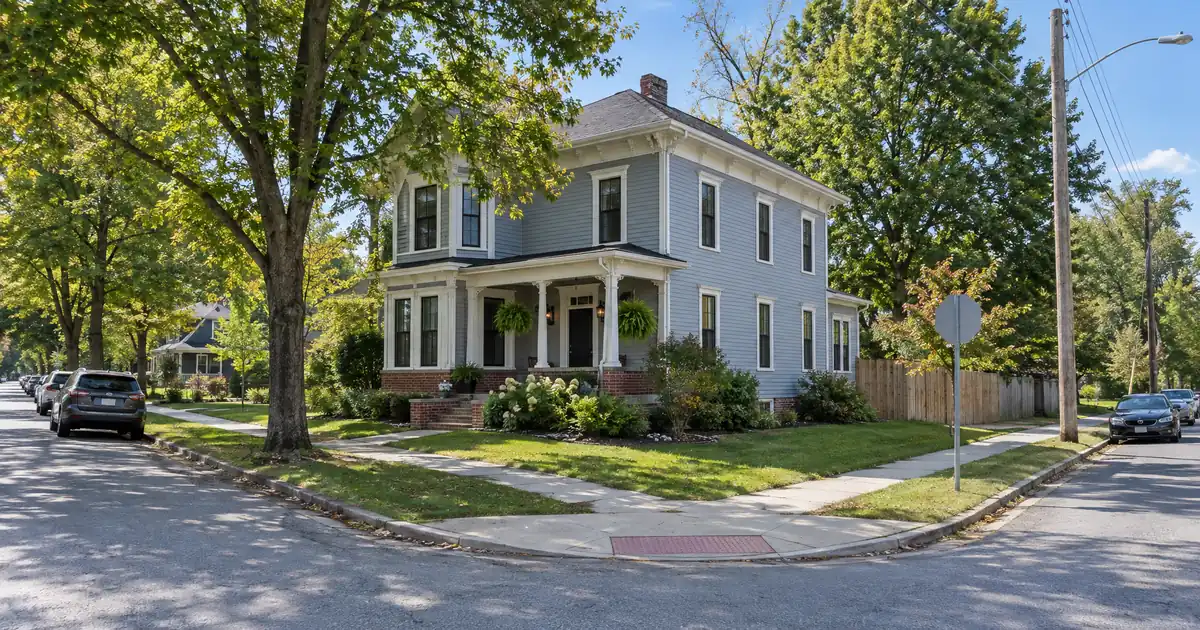
Picture an investor holding a three-bedroom house near the Ronald Reagan Parkway corridor, bought a few years ago with modest down payment and a light rehab. The listing-site value looks strong, the tenant is paying on time, and the plan is simple: pull equity out, buy the next rental, repeat. Then the appraisal comes back lower than the portal estimate, the lender’s market-rent figure lands under the lease, and the numbers on the refinance stop working. That sequence is the real risk in Brownsburg, and it is worth understanding before ordering anything.
The Quick Read: A DSCR cash-out refinance in Brownsburg, Indiana is underwritten primarily on the property’s rental income measured against its full monthly obligation, with the appraised value setting the proceeds ceiling rather than any portal estimate.
DSCR Cash-Out Calculator
Run the cash-out numbers in Brownsburg, IN
Rate source: Freddie Mac 30-yr average via FRED® — Federal Reserve Bank of St. Louis · effective Sep 24, 2026
Prefilled with starting assumptions — enter your property’s value, balance, taxes, and insurance for a more accurate picture.
Program parameters update from Lendmire’s centralized guideline source. Taxes and insurance are editable estimates.
As of Sep 24, 2026 · General Freddie Mac market benchmark, not a Lendmire loan offer. Property value, balance, taxes, and insurance are editable estimates. Maximum loan-to-value varies by lender, program, property type, and seasoning. Not a Loan Estimate, approval, or commitment to lend. Program availability and eligibility are subject to lender guidelines, credit approval, property review, and underwriting.
- Cash-out tops out at 75 percent LTV, after roughly six months of ownership from title recording.
- Portal home values conflict by tens of thousands of dollars, so appraiser variance is the main proceeds risk.
- Modeled 3-bedroom coverage lands near 1.00 once taxes and insurance are included.
- Small multifamily is nearly absent from local listings, so coverage rides on one lease.
- The Labcorp campus supports workforce rental demand, but the build is multi-year.
Brownsburg Market Snapshot
A quick read on the Brownsburg investor landscape — figures come from the cited sources below. Confirm current property-level numbers before underwriting.
| Metric | Detail |
|---|---|
| Home prices | Do not use the $244,256 median value (Town of Brownsburg, About) |
| Employment | 400+ jobs (Town of Brownsburg, Home) |
The Ronald Reagan Parkway Corridor Is Where the Cash-Out Case Starts
The Ronald Reagan Parkway and I-74 corridor is the strongest area for this strategy because it sits where demand is being created. Brownsburg Hospital, newer apartment communities, and the Labcorp build all cluster here. It is also where competing new supply is thickest, so it cuts both ways.
The parkway is the spine of that story. The Town of Brownsburg reports that Phase 1A of the parkway extension has opened, and it also lists a HarperCollins logistics facility expected to create over 400 jobs. Hendricks Regional Health runs Brownsburg Hospital and a medical building on the same road. Per the Town’s healthcare page, the Brownsburg hospital is a six-bed facility, so the healthcare draw comes mostly from IU Health West in Avon at 125 beds and the larger Indianapolis systems. Local residents work in those sectors: Data USA shows health care and social assistance as the top resident employment sector at 2,625 people, ahead of educational services at 1,843 and retail trade at 1,804.
For an investor already holding a house here, that mix supports a mid-market tenant profile: medical staff, logistics workers, and dual-income households paying middle-of-the-market rent. It does not support a luxury rent premium. Underwrite to the middle.
Here is the catch. Older single-family rentals in this corridor compete directly with new construction. Apartments.com shows 76 newly constructed apartments in Brownsburg, and Rent.com listings for communities such as Bailey Park, Redwood Brownsburg, Legacy Park, and Dublin Glen carry concessions like one month free and $1,000 off. A house with dated finishes will not command the rent a new-build townhome does, and an appraiser’s market-rent estimate will reflect that.
Run the Coverage Math Before You Fall for the Equity
Coverage on a typical Brownsburg three-bedroom sits right around the 1.00 line at full leverage, and that is the honest read. The standard baseline for a DSCR program is 1.00, meaning rent used for lender review covers the full monthly obligation of principal, interest, taxes, insurance, and any HOA dues. Eligibility depends on lender guidelines, credit profile, reserves, and property review.
The rent sources conflict, so start there.
| Source | Rent figure | Scope |
|---|---|---|
| RentCafe | $1,654 average; 3BR $2,087 | 50+ unit buildings |
| Zumper | $1,923 median | All types |
| Rent.com | 2BR $1,545 | Apartments |
| Redfin | $1,460 median | Rental listings |
| Niche | $1,486 median | Undated |
RentCafe draws on 50+ unit buildings, so its three-bedroom figure of $2,087 reflects apartment communities, not a scattered-site house. Zumper puts the median at $1,923, while Redfin shows $1,460 and Niche shows $1,486. Growth claims are even less consistent: RentCafe shows 10.23 percent year over year and Zumper says 24 percent. Treat rent as “rising per some sources” and underwrite to the lease you actually have.
Now the modeled scenario. These inputs are assumptions, not market data. Assume a three-bedroom house with a $2,000 lease and a full-PITIA calculation that includes taxes and insurance at Indiana-typical levels. At an appraised value near $360,000 and 75 percent LTV, coverage lands just under 1.00. Drop the appraised value to about $313,000 at the same leverage and the number improves into the low 1.0x range. Same house, same rent, and the appraisal alone moves the file from marginal to workable.
If the number falls below 1.00 on the lease, the paths a lender may review include a lower LTV, a sub-1.00 program, or an interest-only structure. Each involves trade-offs: reduced proceeds, stronger credit and reserves, or different pricing. Approval remains subject to lender guidelines, credit review, and the property appraisal. If you want to see how the mechanics work, the DSCR qualification mechanics page walks through the ratio.
Working DSCR brokers see a recurring pattern in owner-occupied suburbs like this one: the rent looks fine on the lease, but the appraiser’s market-rent estimate for a larger house comes in under it because the comp pool is thin. When qualifying income is the lower of lease or appraised market rent under a given program, that gap can decide the file. Investors who pull their own rent comps before ordering the appraisal avoid most of the surprises.
Appraisers, Not Zillow, Set Your Ceiling
Home value data for Brownsburg is inconsistent enough that no single figure should drive a proceeds estimate. Zillow puts the average home value at $362,536, up 1.3 percent over the past year. Redfin’s November median sale price was $313K, down 10.7 percent year over year, with homes taking 29 days to sell versus 20 a year earlier. That figure rests on only 32 sales in the month, so it is noisy. Movoto reports a $395,000 median for the same month. U.S. News lists a median home value of $310,250.
That is a spread of well over $80,000 depending on the source. None of these sources shows strong appreciation. The takeaway for equity extraction is direct: Brownsburg cash-out proceeds will be driven by a low original purchase basis or value-add work, not by market drift.
Be skeptical of anyone projecting a refinance off appreciation alone. An investor who bought near the top of the recent run and is counting on portal values to hold could find the appraisal lands close to what was paid. Model the file on conservative values, not the highest estimate you can find.
The program guardrails matter here. Cash-out is capped at 75 percent LTV, and the 80 percent purchase figure does not apply. Seasoning is typically about six months of ownership measured from title recording, though specific lender terms vary. Reserves generally run about six months of PITIA, moving to about nine months on balances above $1,500,000. Credit tiers commonly start at a 620 floor and step up through 660, 680, and 700, with better tiers generally improving the terms available. Standard programs go up to $3,000,000, and smaller balances route through select lenders in the network. These are guideline ranges, not commitments, and DSCR cash-out refi mechanics covers how they interact.
One more guardrail: manufactured homes, log homes, and barndominiums fall outside these DSCR programs entirely. In a suburb with plenty of newer site-built housing this is rarely an issue, but it rules out some rural-fringe Hendricks County product.
Where the Proceeds Go Next (It Isn’t a Brownsburg Fourplex)
Equity extraction only makes sense if there is somewhere to redeploy the capital, and small multifamily is close to absent in Brownsburg. Redfin’s multi-family page shows one multi-family unit, 20 condos, and 6 townhouses for sale in a recent month. The page carries stale population data, so treat that as a rough snapshot. Still, the direction is clear.
Brownsburg is a single-family, owner-occupied suburb: 73 percent of households own and 27 percent rent, or 2,913 renter-occupied households against 7,857 owner-occupied. The rental pool is small. There is no local data on duplex, triplex, fourplex, or ADU rents, and claiming a stacking advantage here would be inventing one.
That reshapes the strategy. If cash-out proceeds are meant to buy a small multifamily, the target is more likely west-side Indianapolis or the Avon and Plainfield corridors, where inventory is deeper. Point2Homes data shows 44.67 percent of Brownsburg rentals priced between $1,500 and $2,000 and only 2 percent of rentals with four bedrooms. The site warns its figures may reflect older conditions, so use it directionally. The mid-market band is where the tenant pool concentrates, which supports two- and three-bedroom product over large four-bedroom houses.
Niche adds another warning. Its median home value of $309,400 against a $1,486 median rent works out to roughly 0.48 percent a month, though those are all-unit medians, not house-specific comps. A carefully chosen three-bedroom sits higher, roughly 0.57 to 0.66 percent by simple arithmetic across sources. Either way, that is thin for high-leverage cash-out. Skip the assumption that any Brownsburg house cash-flows at 75 percent LTV.
DSCR vs. conventional financing
Two common ways to finance an investment property in Brownsburg, IN. They qualify you differently — here’s how investors weigh them.
Why investors choose it
- Qualifies on the property’s rental income — no personal tax returns, W-2s, or pay stubs needed to document income.
- No personal debt-to-income ceiling to clear, so existing mortgages and obligations don’t cap your borrowing the same way.
- Can be closed in an LLC, keeping the property inside a business entity.
- Built for scaling — not held to the limit on number of financed properties that conventional financing applies.
- Underwriting centers on the deal: generally qualifies when the rent covers the payment, a 1.00x coverage ratio being a common baseline (confirmed in underwriting).
- Designed specifically for investment property, including long-term and, where the program allows, short-term rentals.
Where it’s strong
- Often the lowest ongoing financing cost for a buyer who fully qualifies on personal income — a fit for a first property or a cost-first purchase.
Trade-offs for investors
- Requires full personal income documentation and must fit within a debt-to-income limit — salary, existing debts, and other mortgages all count.
- Typically held in your personal name rather than a business entity.
- Caps how many financed properties you can carry, which can become a ceiling as a portfolio grows.
- Evaluates you as a borrower as much as the property, which usually means more paperwork.
How investors usually choose: a first or single property often optimizes for the lowest financing cost; portfolio builders often optimize for leverage, vesting in an LLC, and scaling past conventional caps. The right answer depends on your goals, the property, and current guidelines — both paths run through select lenders in Lendmire’s wholesale network, with eligibility and terms confirmed in underwriting.
Two structural options are worth weighing. One is a lower LTV cash-out, say 65 percent, that reliably clears 1.00 and leaves smaller proceeds. The other is holding the house unrefinanced and using outside capital for the next deal. This one’s a genuine toss-up: the first extracts cash but tightens your coverage cushion, and the second preserves cushion but ties up equity. Investors buying for cash flow rather than appreciation often lean toward the smaller extraction.
Labcorp: Real Jobs, Slow Timeline
The Labcorp campus is the largest employment story in Brownsburg, but its rental effect will arrive in phases. The Brownsburg Sentinel reports that 1,776 jobs will relocate at an average hourly wage of $40.71, with more than 300 new jobs expected at $45.90. The Labcorp press release describes a 50-acre campus with more than 500,000 square feet of lab and production space. Current puts the investment near $435 million and calls it the largest economic development investment in the town’s history.
The reasoning on the jobs is careful. The 1,776 positions relocate from within roughly six miles of the current site, so many workers already live nearby. That limits the number of net-new renters. Construction has a multi-year runway with completion targeted several years out, so the demand effect phases in slowly.
Still, wages at that level support mid-market rent, and 300-plus net-new jobs at $45.90 an hour are real. Brownsburg’s population sits at 33,430 per the U.S. Census Bureau, up 15.4 percent since the 2020 count of 28,973. Median household income is $111,622. Underwrite on today’s lease, not the Labcorp story. Investors who price in future rent bumps are borrowing against an announcement.
Motorsports and the Rest of Town
Other corners of Brownsburg matter less for this strategy, and some can be dismissed briefly.
Lucas Oil Indianapolis Raceway Park has made Brownsburg a “motorsports haven,” per Visit Hendricks County, and hosts the NHRA U.S. Nationals every Labor Day weekend. Wikipedia puts annual visitation near 500,000, a figure worth verifying. That points to a race-industry workforce and event-driven demand, but it is not rental data, and it should not be presented as a coverage driver on the US-136 side of town.
Downtown and Main Street form the historic core, and the town publishes a Main Street Vision Plan. There is no reliable price or rent series here, so there is nothing to underwrite on beyond the individual comp. The South Green Street and Avon border area is served by a Hendricks Regional medical building. Same story: qualitative support, no numbers.
One Redfin page lists a $1,665 median rent for Eagle Creek, but it is thin and dated. Do not build a file on it. The takeaway: no submarket in Brownsburg has enough clean data to support a neighborhood-level premium, so the appraisal and the individual lease do the work. Investors who need a deeper comparison of financing options can read the guide on where DSCR and conventional loans diverge, and the investor refinance breakdown covers rate-and-term versus cash-out.
Vacancy is another gap. There is no sourced vacancy or absorption figure for Brownsburg. Point2Homes says 23 percent of rentals, or 688 units, were built between 2010 and 2019, so competition from newer product is real. Underwrite lease-up time conservatively rather than assuming zero vacancy. Verify current local rental rules, taxes, and insurance with qualified local professionals before committing.
Investors who want to see how Lendmire places these files can review Lendmire’s Indiana DSCR platform, which covers state-level programs.
Frequently Asked Questions
How do you qualify for a DSCR cash-out refinance in Brownsburg, Indiana?
The property’s rental income has to cover its full monthly obligation, typically at or above a 1.00 baseline. Lenders also look at credit (a 620 floor with better tiers above it), about six months of reserves, and roughly six months of ownership seasoning. Eligibility review depends on lender guidelines, credit approval, and the property appraisal. To review your scenario, start with the lease, the expected appraisal, and the payoff balance.
What are the requirements for an investment property loan in Brownsburg, Indiana?
Standard programs allow loans up to $3,000,000, with cash-out capped at 75 percent LTV. Expect a property appraisal, a lease or market-rent estimate, a credit review, and reserves of about six months of PITIA. Manufactured homes, log homes, and barndominiums are not eligible. Terms vary by borrower, property, and lender, and nothing here is a commitment to lend.
Will the Labcorp campus raise my appraisal?
Not on its own, and probably not soon. The build is multi-year, and 1,776 of the jobs relocate from within about six miles. The 300-plus net-new positions at higher wages help demand over time, but appraisers work from closed sales and comparable rents. Underwrite on today’s numbers.
Can I use cash-out proceeds to buy a duplex or fourplex in Brownsburg?
Rarely inside town limits. Redfin shows about one multi-family listing in a recent month, and the rental pool is only 27 percent of households. Investors usually look toward Indianapolis’ west side or nearby Avon and Plainfield for small multifamily inventory. Confirm any specific property’s rents and comps before committing.
Can Lendmire help structure a DSCR cash-out refinance scenario for a Brownsburg rental property?
For current guidelines and terms, see Lendmire’s DSCR loan programs page.
Get Started
Ready to find the right loan for you?
In about 30 seconds you can review financing options available for your investment property. No commitment required.
Informational only. Not a Loan Estimate, approval, or commitment to lend. Program availability and eligibility are subject to lender guidelines, credit approval, property review, and underwriting.
About Lendmire
Lendmire is a non-QM mortgage brokerage (NMLS# 2371349) arranging DSCR investor loans in 41 markets, including Washington, D.C., through wholesale and investor-lending channels. DSCR loans are evaluated by the lender on rental income rather than personal income, subject to lender guidelines, a fit for LLC-owned portfolios, self-employed investors, and operators scaling beyond conventional loan caps. Recognized as a 2026 Scotsman Guide Top Mortgage Workplace and a top-ranked workplace in 2025.
Before ordering an appraisal on any Brownsburg rental, pull three to five recent lease comps for the same bedroom count and finish level, then compare them against the concession-heavy new-build townhome listings nearby, because that gap will set the market-rent number the whole refinance rests on.
This article is part of Lendmire’s investment property cash-out refinance program — full qualification details, guidelines, and scenarios live on the program page.
Related reading: Luxury Rental DSCR Loans In New Jersey · Jersey Shore Vacation Rental Loans: DSCR Financing In Ocean City, Cape May And Long Beach Island · DSCR Cash-out Refinance In New Jersey: Pulling Equity From A Rental
Guides: Investment Property Cash-Out Refinance in Indiana
Brandon Miller
Founder & CEO, Mortgage Loan Originator, Lendmire LLC
- Mortgage Loan Originator · NMLS# 1129696 · Verify on NMLS Consumer Access
- North Carolina Real Estate Broker · License# 343312 · Verify on NCREC
- North Carolina Insurance Producer · License# 19053198 · Property, Casualty, Life, Health · Verify on NAIC SBS
- Lendmire LLC · Firm NMLS# 2371349 · Verify firm licensure
Required disclosures. Lendmire (NMLS# 2371349) operates as a licensed mortgage broker, not a direct lender or depository. The discussion in this article is general in nature and should not be relied upon as financial, legal, or tax advice — every investment scenario is unique and should be reviewed by a qualified professional. Any loan inquiry is subject to lender underwriting, and this article is not a commitment to lend or a guarantee of approval. Mortgage rates, loan terms, and program guidelines vary by borrower, property, and state, and may change without notice. Equal Housing Opportunity. Verify licensure at NMLS Consumer Access.