
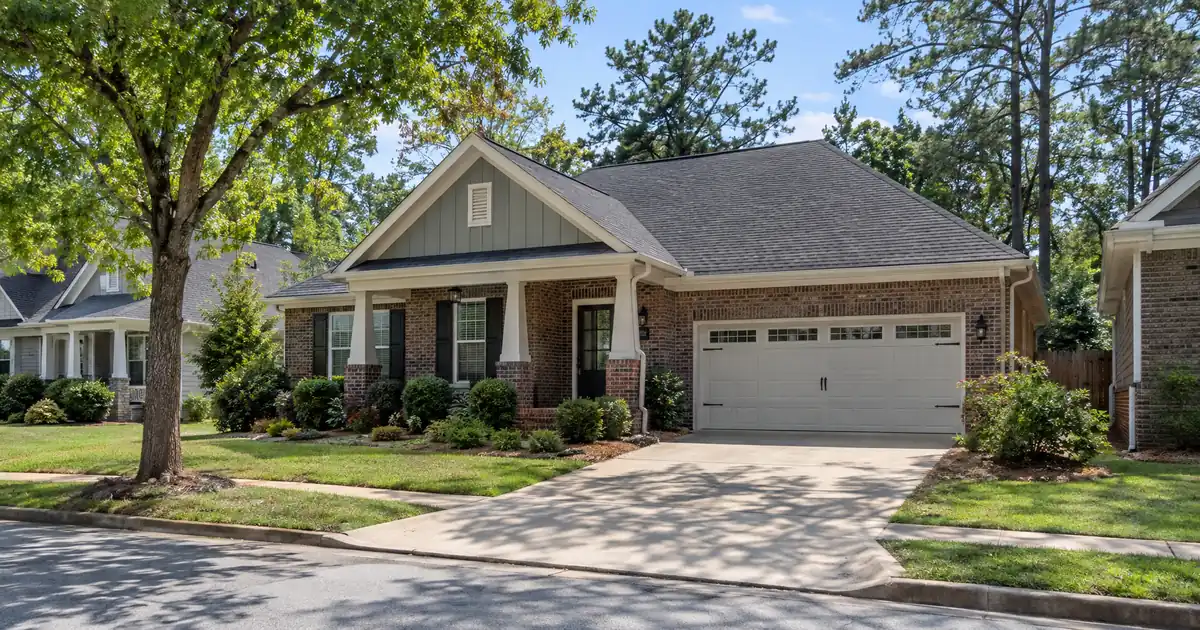
Zillow’s home value index puts the average Madison home at $378,797, up just 0.9% year over year. That is barely growth. For an investor weighing a cash out refinance investment property strategy in Madison, Alabama, it changes the question. Appreciation won’t manufacture the equity, so the proceeds depend on the original purchase basis, any value-add work, the appraisal, and whether rent covers the new debt at a sensible loan-to-value. Lendmire, a DSCR-focused mortgage broker, arranges these files, and Madison’s numbers make the leverage decision the center of the story.
DSCR Cash-Out Calculator
Run the cash-out numbers in Madison, AL
Rate source: Freddie Mac 30-yr average via FRED® — Federal Reserve Bank of St. Louis · effective Sep 24, 2026
Prefilled with starting assumptions — enter your property’s value, balance, taxes, and insurance for a more accurate picture.
Program parameters update from Lendmire’s centralized guideline source. Taxes and insurance are editable estimates.
As of Sep 24, 2026 · General Freddie Mac market benchmark, not a Lendmire loan offer. Property value, balance, taxes, and insurance are editable estimates. Maximum loan-to-value varies by lender, program, property type, and seasoning. Not a Loan Estimate, approval, or commitment to lend. Program availability and eligibility are subject to lender guidelines, credit approval, property review, and underwriting.
The Quick Read:
A cash-out refinance on a Madison, Alabama rental is underwritten primarily on the property’s rental income measured against its full monthly obligation, including taxes and insurance, with proceeds capped by a 75% loan-to-value ceiling and roughly six months of seasoning, subject to lender guidelines.
- Madison rent sources span roughly $1,850 to $1,995 for houses, per Zillow and Homes.com.
- At the 75% cap, modeled coverage on a median-priced house lands below 1.00.
- Lower cash-out LTVs, roughly 60-65%, move the number toward or above the 1.00 baseline.
- Multi-unit stock is thin, so single-family rentals and townhomes carry most of the deal flow.
- Federal and defense employment anchors keep tenant demand steady even as appreciation stalls.
Madison Market Snapshot
A quick read on the Madison investor landscape — figures come from the cited sources below. Confirm current property-level numbers before underwriting.
| Metric | Detail |
|---|---|
| Home prices | 78 sales (Redfin) |
| Recent appreciation | +0.9% (Zillow Home Values) |
| Employment | 143,156 jobs (City of Huntsville Blog) |
Why Flat Appreciation Changes the Cash-Out Question
Cash-out investors in fast-appreciating markets can lean on rising values to refill equity. Madison doesn’t offer that. Zillow’s index is nearly flat, Homes.com shows prices down 2% over twelve months, and Redfin’s county-level data has days on market lengthening. Meanwhile Redfin’s city page reported a $486K median on just 78 sales in a single month, while Valley MLS lists a median value of $378,000. Small samples and new-build mix distort the headline number. These specifics are subject to lender guidelines and a full review of property, leverage, and credit.
The takeaway is that the headline median is not the number an appraiser will use. Appraisers lean on close, similar sales in the same subdivision. An investor who bought a resale in an older neighborhood and one who bought a new build in a master-planned community can sit in very different equity positions, even at the same purchase price.
Here’s the catch. Madison is a mature, high-priced suburb, and rent-to-price is modest. Homes.com reports a price-to-rent ratio of 15.1, which is not the kind of ratio that produces easy coverage at high leverage. Equity extraction here is a structuring exercise, not a foregone conclusion.
For context, the city holds roughly 64,000 people per Wikipedia’s Census-based summary, and it is entirely surrounded by Huntsville. That enclave position is why demand stays durable when values sit still.
The Coverage Math at Each LTV
Modeled coverage on a Madison house clears 1.00 only when cash-out leverage drops below the 75% ceiling. This is the central finding for anyone pulling equity here. Coverage is rent divided by the full monthly obligation (principal, interest, taxes, and insurance), and the borrowed amount scales directly with LTV.
Run the numbers on a house valued near $378,000, using a modeled assumption for financing cost that includes taxes and insurance. The rent inputs are the two house-rent figures in the research: $1,850 from Zillow and $1,995 from Homes.com. These are modeled assumptions, not a quote.
| Cash-out LTV | Modeled coverage at $1,850 rent | Modeled coverage at $1,995 rent |
|---|---|---|
| 75% | about 0.85 | about 0.90 |
| 70% | about 0.90 | about 0.95 |
| 65% | about 0.95 | about 1.00 |
| 60% | about 1.05 | about 1.10 |
Figures are rounded down and include taxes and insurance. Actual results vary by borrower, property, and loan scenario, and are subject to lender guidelines.
Most standard DSCR programs are built around a 1.00 benchmark because the property’s rent covers its payment at that level. Some lenders review lower ratios, but those files typically require a lower LTV, stronger credit, deeper reserves, or different pricing. Eligibility depends on lender guidelines, credit, reserves, property review, and state overlays.
So what happens on a file that sits at 0.90? There are a few paths a lender might review: a sub-1.00 program with reduced leverage, an interest-only structure, or simply trimming the cash-out amount until coverage clears. None of these is a promise. Each is subject to credit approval and property review. The sharper question is whether the borrower should reach for sub-1.00 at all. If the property only works with a sub-1.00 structure, that may signal the wrong submarket or the wrong price, not the wrong loan.
Stress-test before committing. A local agent’s analysis and the apartment-supply data below both point to soft rents, so a 5-10% rent haircut is a sensible test. At 60% LTV on Zillow-level rent, that haircut pulls the number toward 0.95-1.00. The DSCR calculation is simple arithmetic, but the margin for error in Madison is thin. Terms vary by lender guidelines, property type, leverage, credit profile, and full file review.
Skip the Apartment Comps.
Rent data for Madison is a mess, and picking the wrong source overstates coverage. RentCafe’s Yardi-based figure averages $1,363 across apartment buildings, with 3-bedroom units at $1,684. House rents run higher: $1,995 median, $1,850 average, and about $1,885 for 3-bedrooms.
The lender’s rent schedule will reflect the property type. Underwrite a single-family rental on house comps, not on large-complex apartment averages, and expect the appraiser to scrutinize the rent comps.
The larger threat is supply. WAFF reported, citing a local broker, that nearly 5,000 apartment units were built in Madison County in the most recent full year, with rents averaging $1,100-$1,300 and some complexes offering free rent or monthly discounts. About 524 single-family homes were listed for rent. One local agent blog puts Huntsville-metro apartment vacancy at 17.7% at the end of the prior year, a secondary source worth treating with caution. Concessions on new apartments cap what a landlord can ask for a comparable house. That’s why the conservative in-place rent, not the top of the range, is the right underwriting input.
Where Cash-Out Pencils: Submarkets That Matter
Madison has almost no neighborhood-level sale price data, so this section is qualitative except where the research supplies rent figures.
Newer suburban SFR pockets (Town Madison, Clift Farm, and nearby subdivisions). These carry most of the cash-out inventory. Homes.com says new houses in modern subdivisions typically list between $300,000 and $550,000. Listings here cite convenient access to Redstone Arsenal gates, the airport, and Toyota Field. The tenant profile is employment-driven: defense, tech, and healthcare workers. The catch is that the higher the purchase price, the lower the rent-to-value, so these are the properties most likely to need a 60-65% LTV to clear coverage.
Palmer Park, Colinwood Estates, and Liberty Manor. This is the lower-rent tier. RentCafe lists Palmer Park at $1,199, and Rocket City Times cites averages of $1,134-$1,167 across the three. These are apartment-oriented figures, so they understate house rents, but they show the floor. No sale prices turned up. An investor who bought a lower-basis property here has a better rent-to-value story, though also less absolute equity to extract.
Edgewater and the Toyota Field area. Homes.com names Edgewater as a popular rental area, and Apartments.com called it Madison’s most affordable neighborhood at one point. Those are apartment prices, and they compete directly with house rentals at similar rent levels.
Rainbow Mountain Heights. Rocket City Times describes established lots, mature trees, and pricing below the newer master-planned communities. No price figure was published. It’s an area to underwrite property by property.
Downtown and Old Madison. RentCafe lists Downtown Madison at $1,680, though that is a building-level apartment figure in 50+ unit buildings, not a house or duplex rent. Don’t apply it to a single-family refinance.
The Multi-Unit Gap
Duplexes and fourplexes would improve coverage, but Madison barely has them. Redfin’s multifamily page showed one multi-family home for sale, a 4-unit with a $450K listing price, located at a Harvest address. Investors hunting small multifamily are more likely to find it in nearby markets than in Madison proper.
So, for most Madison borrowers, the property being refinanced is a 3- or 4-bedroom house or a townhome. Rentals skew toward larger units, and RentCafe shows 74% of households are owner-occupied. That’s a suburb of owner-occupied family housing where the rental pool is a minority. If your portfolio includes a small multifamily elsewhere, the coverage math may work better there, and Madison equity can fund it.
What Anchors the Rent Roll
Federal and defense employment give Madison its floor. The City of Madison notes its adjacency to Redstone Arsenal, Cummings Research Park, and Huntsville International Airport. The City of Huntsville puts the Arsenal’s annual economic impact in Alabama at $36.2 billion and its workforce at about 45,500, expected to climb toward 50,000. It also reports NASA’s $8 billion economic impact and more than 35,000 supported jobs, and notes the FBI campus has passed 2,000 employees.
The Encyclopedia of Alabama says Cummings Research Park is home to 300 companies with more than 26,000 workers. Huntsville Hospital Health System reports 20,000 employees, and Madison Hospital sits just off Highway 72. Headcounts for Mazda Toyota Manufacturing vary between roughly 2,500 and 4,000 depending on the source, so quote it as a range.
For a 30-year hold, federal and defense employment is less cyclical than most sectors. It won’t lift rents on its own, since the rent data is flat to soft, but it supports tenant retention and lender comfort. Nurses, engineers, and manufacturing workers are the natural tenant pool for mid-priced houses and townhomes.
Seasoning, Basis, and Who Can Actually Pull Cash
Most DSCR cash-out programs look for about six months of ownership measured from title recording, with the LTV cap at 75%. Reserves typically run around six months of PITIA. Credit tiers generally start at a 620 floor with better positioning at 660, 680, and 700, and loan amounts can run up to $3,000,000 on standard programs, subject to lender guidelines.
Consider an investor who bought a Madison house at 80% LTV a couple of years ago and has paid the balance down modestly. With flat values, that borrower likely sits near the 75% cap already. A cash-out would produce little or nothing, and leaving the loan alone may be the smarter move. Now consider an investor who bought at a lower basis, or who completed renovations that lifted the appraised value. That borrower may have a real cushion between the existing balance and a 60-65% LTV target.
This is the flip point. The refinance makes sense when the gap between the current balance and the coverage-constrained LTV is meaningful. It fails when the appraisal barely exceeds the original price and the balance is high.
DSCR vs. conventional financing
Two common ways to finance an investment property in Madison, AL. They qualify you differently — here’s how investors weigh them.
Why investors choose it
- Qualifies on the property’s rental income — no personal tax returns, W-2s, or pay stubs needed to document income.
- No personal debt-to-income ceiling to clear, so existing mortgages and obligations don’t cap your borrowing the same way.
- Can be closed in an LLC, keeping the property inside a business entity.
- Built for scaling — not held to the limit on number of financed properties that conventional financing applies.
- Underwriting centers on the deal: generally qualifies when the rent covers the payment, a 1.00x coverage ratio being a common baseline (confirmed in underwriting).
- Designed specifically for investment property, including long-term and, where the program allows, short-term rentals.
Where it’s strong
- Often the lowest ongoing financing cost for a buyer who fully qualifies on personal income — a fit for a first property or a cost-first purchase.
Trade-offs for investors
- Requires full personal income documentation and must fit within a debt-to-income limit — salary, existing debts, and other mortgages all count.
- Typically held in your personal name rather than a business entity.
- Caps how many financed properties you can carry, which can become a ceiling as a portfolio grows.
- Evaluates you as a borrower as much as the property, which usually means more paperwork.
How investors usually choose: a first or single property often optimizes for the lowest financing cost; portfolio builders often optimize for leverage, vesting in an LLC, and scaling past conventional caps. The right answer depends on your goals, the property, and current guidelines — both paths run through select lenders in Lendmire’s wholesale network, with eligibility and terms confirmed in underwriting.
Working DSCR brokers see a recurring pattern in flat-price suburbs like this one: the LTV that clears the coverage number is lower than the LTV cap, so the binding constraint is rent, not equity. Borrowers who expect the 75% ceiling to define their proceeds are often surprised when the file is sized off coverage instead. Running coverage before ordering the appraisal keeps expectations realistic.
Sales momentum offers one small encouragement. A local agent blog, citing the multiple listing service and Realtor association data, reports 824 sales across Huntsville and Madison County in June, up 29.8% from the prior June. Deeper transaction volume means more comparables for the appraiser and an easier exit. Treat it as directional, since the source is a broker blog.
What Should the Proceeds Buy?
The cash-out thesis depends on where the money goes. Proceeds deployed into another Madison-area rental face the same thin coverage, so the second deal has to pencil on its own. Proceeds moved to a market with stronger rent-to-price might improve the portfolio’s overall coverage, but that trade adds distance and management complexity.
Thinking out loud: the stronger play for a Madison owner might be pulling modest proceeds at a conservative LTV and buying in a lower-priced market where the rent-to-value is stronger, then keeping the Madison house as the stable, low-vacancy anchor. Investors who prize appreciation could argue the opposite, but with values flat, the yield case is easier to defend.
If the aim is simply to swap into a better-priced loan structure without taking cash, the rate-and-term and cash-out refi details cover that distinction. The cash-out refinance details explain how proceeds are sized. And for a borrower whose traditional employment income is strong and who holds only a couple of properties, Lendmire’s DSCR-versus-conventional breakdown is worth reading first, because conventional financing may cost less when personal income cleanly supports the file. DSCR becomes the practical path for LLC-held portfolios (subject to lender program eligibility), self-employed investors, and anyone past the conventional property-count limit.
Investors can review the state-level program details on Lendmire’s Alabama DSCR platform or call 828-256-2183 to walk through a specific file. Verify current local rental rules, taxes, and insurance with qualified local professionals.
Frequently Asked Questions
How do you qualify for a DSCR cash-out refinance in Madison, Alabama?
The property has to show that its rent used for lender review covers its full monthly obligation, typically at or above a 1.00 benchmark, subject to lender guidelines. The borrower generally needs about six months of ownership, a credit score at or above 620, and roughly six months of reserves. In Madison, that usually means underwriting on house rents of roughly $1,850-$1,995 rather than apartment averages.
What are the requirements for an investment property loan in Madison, Alabama?
Expect a credit floor around 620, a cash-out LTV ceiling of 75%, and reserves of about six months PITIA. Eligible property types include single-family homes and townhomes, while manufactured homes, log homes, and barndominiums fall outside these programs. Final terms depend on the borrower, property, and lender review.
Why might my Madison cash-out come in below the 75% LTV cap?
Because coverage, not the cap, often sets the limit. Modeled figures on a house near $378,000 show coverage below 1.00 at 75% LTV and around 1.00 at roughly 65%. Lower leverage improves the number, which is why proceeds are usually sized off rent.
Does flat appreciation in Madison hurt a cash-out refinance?
It removes the assumption that rising values will refill equity. Proceeds then depend on the purchase basis, improvements, and how close comparable sales sit to your value. With values roughly flat, plan around a conservative LTV rather than a rising appraisal.
What a Local Appraiser Would Tell You
Madison is not a market where the appraisal does the heavy lifting. Values have been sitting still, the median depends on which source you read, and new apartment concessions keep a lid on what a house can rent for. The refinances that work here are the ones where the owner bought at a sensible basis, kept the balance well under 70% of value, and can prove rent on a house, not on an apartment average. If your balance is already near the top of the range, leave the loan alone and wait.
For current guidelines and terms, see Lendmire’s DSCR loan programs page.
About Lendmire
Lendmire (NMLS# 2371349) is a mortgage brokerage focused on DSCR investor financing, arranging programs through wholesale and investor-lending channels in 41 markets, including Washington, D.C. DSCR loans are evaluated by the lender on property cash flow rather than personal income, subject to lender guidelines, and support LLC closings and investors with four or more financed properties. Scotsman Guide named Lendmire a Top Mortgage Workplace in both 2025 and 2026.
Get Started
Ready to find the right loan for you?
In about 30 seconds you can review financing options available for your investment property. No commitment required.
Informational only. Not a Loan Estimate, approval, or commitment to lend. Program availability and eligibility are subject to lender guidelines, credit approval, property review, and underwriting.
References
2. Zillow
3. Homes.com
5. City of Huntsville Blog, Redstone Arsenal
6. Wikipedia’s Census-based summary
8. WAFF, Madison County apartment supply
9. Homes.com
11. Encyclopedia of Alabama, Cummings Research Park
12. Huntsville Hospital Health System
13. 2025
14. 2026
This article is part of Lendmire’s investment property cash-out refinance program — full qualification details, guidelines, and scenarios live on the program page.
Related reading: Cash Out Refinance Investment Property Mountain Brook Alabama · DSCR Cash Out Refinance Selma Alabama · DSCR Loans in Huntsville, Alabama: Investor Financing for Midtown, Madison, Hampton Cove & Real Estate Investors
Guides: Investment Property Cash-Out Refinance in Madison, AL · Investment Property Cash-Out Refinance in Alabama
Brandon Miller
Founder & CEO, Mortgage Loan Originator, Lendmire LLC
- Mortgage Loan Originator · NMLS# 1129696 · Verify on NMLS Consumer Access
- North Carolina Real Estate Broker · License# 343312 · Verify on NCREC
- North Carolina Insurance Producer · License# 19053198 · Property, Casualty, Life, Health · Verify on NAIC SBS
- Lendmire LLC · Firm NMLS# 2371349 · Verify firm licensure
Required disclosures. Lendmire (NMLS# 2371349) operates as a licensed mortgage broker, not a direct lender or depository. The discussion in this article is general in nature and should not be relied upon as financial, legal, or tax advice — every investment scenario is unique and should be reviewed by a qualified professional. Any loan inquiry is subject to lender underwriting, and this article is not a commitment to lend or a guarantee of approval. Mortgage rates, loan terms, and program guidelines vary by borrower, property, and state, and may change without notice. Equal Housing Opportunity. Verify licensure at NMLS Consumer Access.