
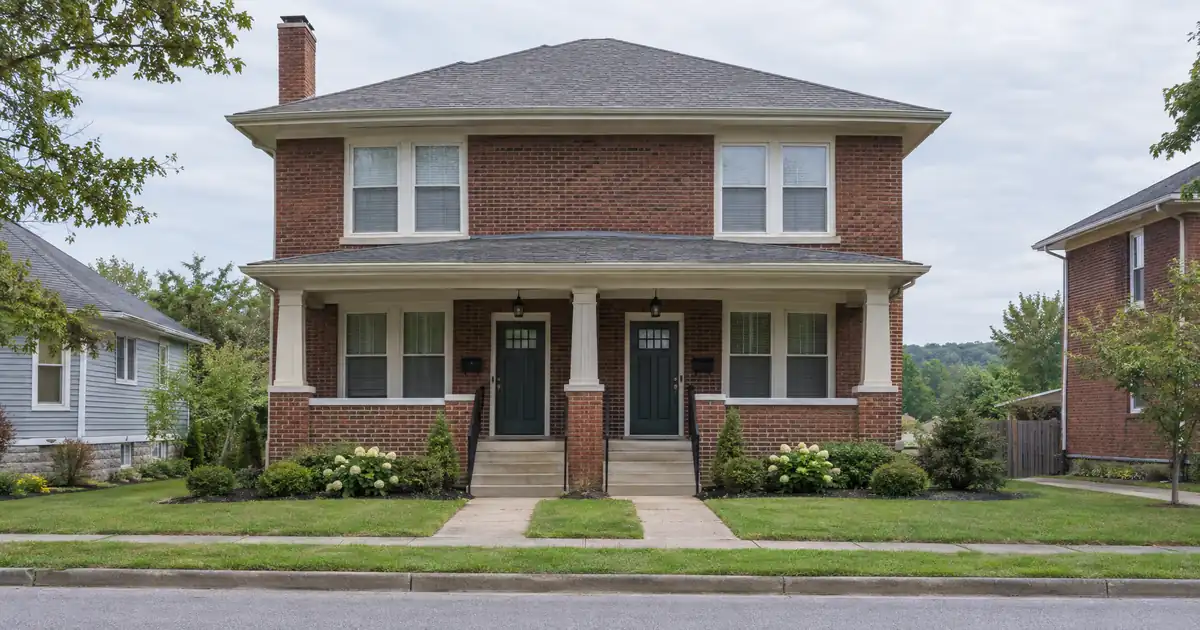
Two Bowling Green investors can hold the same amount of equity and end up in very different files. One owns a house in Bowling Green East (ZIP 42103), where NeighborhoodScout’s modeled estimate shows a median price of $569,897 against average rent of $2,130. The other owns a duplex within walking distance of Western Kentucky University. The duplex owner has the better DSCR cash out refinance case, because rent-to-value holds up better at older-stock prices. The east-side owner has more equity on paper and thinner coverage. Lendmire, a DSCR-focused mortgage broker, sees the same split in Bowling Green files, and it drives how to prepare one.
DSCR Cash-Out Calculator
Run the cash-out numbers in Bowling Green, KY
Rate source: Freddie Mac 30-yr average via FRED® — Federal Reserve Bank of St. Louis · effective Sep 24, 2026
Prefilled with starting assumptions — enter your property’s value, balance, taxes, and insurance for a more accurate picture.
Program parameters update from Lendmire’s centralized guideline source. Taxes and insurance are editable estimates.
As of Sep 24, 2026 · General Freddie Mac market benchmark, not a Lendmire loan offer. Property value, balance, taxes, and insurance are editable estimates. Maximum loan-to-value varies by lender, program, property type, and seasoning. Not a Loan Estimate, approval, or commitment to lend. Program availability and eligibility are subject to lender guidelines, credit approval, property review, and underwriting.
Key Takeaways:
A DSCR cash-out refinance in Bowling Green, Kentucky is underwritten primarily on the property’s rental income measured against its full monthly obligation, with proceeds capped by a maximum loan-to-value and a seasoning period on the current ownership.
- Older duplexes near campus, downtown, and Park Street are the natural fit.
- Cash-out LTV tops out at 75 percent, with roughly 6 months of ownership seasoning.
- Apartment vacancy sits at 10.0 percent, so underwrite to in-place rent only.
- Thin monthly sales volume means appraisal comps are the usual pressure point.
Bowling Green Market Snapshot
A quick read on the Bowling Green investor landscape — figures come from the cited sources below. Confirm current property-level numbers before underwriting.
| Metric | Detail |
|---|---|
| Home prices | $293K median (Redfin Bowling Green Housing) |
| Typical rents | $1,098 avg asking (Kirkland Company Bowling Green) |
| Employment | 3,566 med center jobs (Kirkland Company Bowling Green) |
| Vacancy | 10.0% (Kirkland Company Bowling Green) |
The Campus and Downtown Core Is Where the Math Works
Duplexes and small buildings near WKU, Russellville Road, Campbell Lane, and the downtown historic core are the strongest cash-out candidates in the city. NeighborhoodScout puts duplexes, converted homes, and small apartment buildings at 17.76 percent of local housing units. That is a real stock of two-to-four-unit product, and it prices well below the newer complexes.
Demand here comes from a university and a downtown that keeps redeveloping. Western Kentucky University reports preliminary fall enrollment of 15,920. The WKU Herald reports that enrollment peaked at 21,124 and is down 24.6 percent since. Both numbers matter. The renter pool is still large. But a file that leans on student-only tenancy carries enrollment risk, and lenders read the lease schedule with that in mind.
Student leases also run on the academic calendar. A rent roll showing three of four units vacant in late summer isn’t a red flag, but it does need an explanation in the file. Mixed tenancy (staff, downtown workers, medical staff) reads cleaner than a building that empties every May.
Investors buying here earlier are the ones sitting on usable equity now. Homes.com listing snapshots show older duplex and three-unit rents in the range of $675 to $775 per door. Those are examples, not averages. They show why the equity is in the value and not the rent.
Park Street and the Medical Corridor
The Park Street and Fairview Avenue corridor around The Medical Center at Bowling Green is the second-best fit, mainly for value-add owners. Med Center Health operates the 373-bed hospital there and reports more than 3,500 employees systemwide. Housing nearby skews to 1950s and 1960s builds that often need cosmetic work.
That profile suits an owner who bought, renovated, and now wants to refinance. The renovation is the cash-out lever. Anecdotal investor reports describe a premium of a couple hundred dollars per door for updated two-bedroom units over unrenovated ones. Treat that as directional, not underwriting input. What lenders underwrite is what the lease and the appraiser’s rent schedule show after the work is done.
This is a genuine trade-off. The higher rent raises coverage, but the higher appraised value also raises the balance at the same LTV, which pulls coverage back down. Owners who forget the second effect are the ones surprised by the final number.
Bowling Green East: Skip It for Cash-Out Math
Bowling Green East gets attention because of the price tag. For DSCR cash-out, it’s the weaker fit. The NeighborhoodScout figures above are a proprietary model, so read them as an estimate for a higher-priced suburban area, not a transaction record. At that price, rent covers little of the monthly obligation once taxes, insurance, and principal and interest are counted. Equity there is real, but the coverage number usually caps proceeds before the 75 percent ceiling does.
The same goes for the higher-end suburban pockets on the east and south sides. Nothing wrong with owning there. It’s just not a DSCR workhorse.
Vacancy: The Number That Caps Rent Assumptions
Rent growth in Bowling Green is flat, so a refinance package should never assume increases. Kirkland Company’s multifamily report shows 10.0 percent vacancy across 9,548 institutional apartment units, average asking rent of $1,098, and annual rent growth of -0.5 percent. It also shows 255 units under construction and 198 units absorbed over twelve months. The pressure sits in newer 4- and 5-star product, much of it around Cave Mill and Scottsville Road.
Small workforce properties compete differently. Older duplexes are priced below the new complexes, and lower-tier assets have held tighter on occupancy. But the file still has to be built conservatively. Lenders typically underwrite to the lease or the appraiser’s market rent, whichever the program uses. A pro forma with projected bumps comes in short.
The wider economy gives the demand side something to stand on. Data Commons puts the city at 78,505 residents with a median age of 28.7, and USAFacts reports a metro population of 195,200, up 22.5 percent over a decade-plus. Manufacturing is the largest employment sector at 6,772 workers, per Data USA. It’s a supply-digestion story, not a boom story. Coverage math should reflect that.
Appreciation Versus Rent: What Seasoning Unlocks
Prices are rising while rents are not, which is the exact setup that favors cash-out on property bought earlier. Redfin shows a March median sale price of $293K, up 6.1 percent year over year, with homes selling after 81 days on market versus 116 a year earlier. Zillow’s typical home value is $265,861, up 4.6 percent. The two measure different things (a sale median versus an index), so treat them as a range, not one number.
The equity is there. Getting it out is a matter of program limits: cash-out LTV tops out at 75 percent, seasoning runs about 6 months from title recording, and the standard benchmark is a 1.00 DSCR, using the rent counted by the lender against full PITIA. Pricing and available terms vary by lender, borrower profile, property type, and full underwriting review. Reserves typically run about 6 months of PITIA. All of it is subject to lender guidelines, and the equity available is never a guaranteed figure.
Run the numbers on a modeled duplex. Assume a $250,000 appraised value, 75 percent LTV, and coverage calculated on full PITIA (principal, interest, taxes, and insurance at Kentucky-average assumptions). These are modeled inputs, not market data.
- Unrenovated doors at $850 each: coverage lands around 1.1x.
- Updated doors at $1,050 each: coverage lands around 1.4x, holding the appraised value flat to isolate the rent effect.
- Doors at $675 and $775: combined rent lands just under 1.00x.
That last case is common on older stock bought cheap. A file under 1.00 isn’t dead. Options a lender may review include a sub-1.00 program, an interest-only structure, or a lower LTV, each with its own pricing and reserve terms. Eligibility review depends on the lender, the credit profile, and the property review. The full mechanics are in the cash-out refinance walkthrough, and Lendmire’s DSCR walkthrough covers how the ratio itself is built.
What Derails Bowling Green Files
The friction on these files is almost never the math. It’s the paper. Working DSCR brokers see a recurring pattern in small college-and-medical markets like this one: the equity is fine, the coverage is fine, and the file stalls on comparable sales and lease evidence. Small multifamily sells infrequently, so the appraiser reaches for older or farther comps, and the value comes in light of what the owner expected.
Redfin recorded only 47 home sales in March, down from 53. Thin volume like that is why appraisal reconsideration is a routine step here. A packet with recent in-neighborhood sales, condition adjustments, and a documented renovation scope usually recovers value that the first pass missed.
The other failure points are predictable:
- Lease evidence. Student leases expire in summer. Current leases, or a documented month-to-month history, need to be in the file.
- Rent schedule versus lease. If the lease is well below the appraiser’s market rent, the program dictates which one governs. Know before submitting.
- Title and settlement reconciliation. Seasoning is measured from title recording. A settlement statement with a wrong date, or an unreleased prior lien, delays clearing title.
- Entity documents. For LLC-titled properties, articles, operating agreement, and good-standing evidence need to match the vesting deed, subject to lender program eligibility.
- Insurance quote completeness. A binder missing the correct entity name or dwelling coverage gets sent back.
- Reserves documentation. Statements need to show funds seasoned and separate from the cash-out proceeds.
Clean paper gives the lender fewer preventable gaps to review. It doesn’t guarantee an outcome. Investors can compare structures in the comparison or look at investor refinance options before choosing between a cash-out and a rate-and-term refinance.
Turning Proceeds Into the Next Deal
Cash-out proceeds are acquisition capital. An owner who pulls equity from a seasoned duplex near campus can put it toward the down payment on another small building, often in the Park Street corridor where older stock needs work. The proceeds figure is set by the 75 percent ceiling, the coverage, and the reserves, so run it in the calculator before making an offer contingent on it.
The trap is sequencing. Buying the next property before the first refinance has cleared leaves the investor carrying reserves twice. Reserve statements need to work for both files. Lendmire’s Kentucky DSCR loan programs cover the state-level program details, and the team can be reached at 828-256-2183 to talk through structure.
Frequently Asked Questions
How much equity can I pull from a Bowling Green duplex?
The ceiling is 75 percent of the appraised value, minus the existing balance and closing costs. The actual figure depends on rent used for lender review, full PITIA, and reserves, so coverage often limits proceeds before LTV does. Lenders set the final number.
DSCR vs. conventional financing
Two common ways to finance an investment property in Bowling Green, KY. They qualify you differently — here’s how investors weigh them.
Why investors choose it
- Qualifies on the property’s rental income — no personal tax returns, W-2s, or pay stubs needed to document income.
- No personal debt-to-income ceiling to clear, so existing mortgages and obligations don’t cap your borrowing the same way.
- Can be closed in an LLC, keeping the property inside a business entity.
- Built for scaling — not held to the limit on number of financed properties that conventional financing applies.
- Underwriting centers on the deal: generally qualifies when the rent covers the payment, a 1.00x coverage ratio being a common baseline (confirmed in underwriting).
- Designed specifically for investment property, including long-term and, where the program allows, short-term rentals.
Where it’s strong
- Often the lowest ongoing financing cost for a buyer who fully qualifies on personal income — a fit for a first property or a cost-first purchase.
Trade-offs for investors
- Requires full personal income documentation and must fit within a debt-to-income limit — salary, existing debts, and other mortgages all count.
- Typically held in your personal name rather than a business entity.
- Caps how many financed properties you can carry, which can become a ceiling as a portfolio grows.
- Evaluates you as a borrower as much as the property, which usually means more paperwork.
How investors usually choose: a first or single property often optimizes for the lowest financing cost; portfolio builders often optimize for leverage, vesting in an LLC, and scaling past conventional caps. The right answer depends on your goals, the property, and current guidelines — both paths run through select lenders in Lendmire’s wholesale network, with eligibility and terms confirmed in underwriting.
Does the property need to be owned for a minimum period before cash-out?
Yes. Seasoning is about 6 months from the date title was recorded, verified through the settlement statement. Properties bought more recently generally need to wait, or be refinanced on a different basis.
Will WKU’s enrollment decline hurt my refinance?
It won’t change the program terms, but it affects how lenders and appraisers read student-heavy buildings. Enrollment is 15,920 preliminary, down 24.6 percent from its peak. Mixed tenancy and current leases keep the file cleaner than a student-only rent roll.
Do I need a 1.00 DSCR to refinance?
1.00 is the standard benchmark, since rent covers the full obligation at that level. Some lenders review lower ratios with stronger compensating factors, a lower LTV, or different pricing. Exact eligibility depends on guidelines, credit, and property review.
Which Bowling Green properties fit cash-out best?
Older duplexes and three-to-four-unit buildings near campus, downtown, and Park Street. They price below newer complexes competing at 10.0 percent vacancy. Higher-priced east-side homes usually return thinner coverage.
Where the Gap Is
The asymmetric opportunity in Bowling Green is older two-to-four-unit buildings near the university, downtown, and the Park Street medical corridor. They sit at per-door prices well below newer apartment product that is fighting 10.0 percent vacancy. Owners who hold them with documented leases and a renovation history have appreciation on their side and a 75 percent cash-out ceiling that still leaves room for the next building.
For current guidelines and terms, see Lendmire’s DSCR loan programs page.
About Lendmire
A DSCR-focused mortgage broker, Lendmire (NMLS# 2371349) places investor financing across 41 markets, 40 states plus Washington, D.C., with DSCR eligibility generally reviewed by the lender on property cash flow rather than traditional personal-income documentation, subject to lender guidelines. Lendmire is a 2026 Scotsman Guide Top Mortgage Workplace and a top-ranked workplace in 2025, and the firm details the award in the 2026 industry recognition release.
Get Started
Ready to find the right loan for you?
In about 30 seconds you can review financing options available for your investment property. No commitment required.
Informational only. Not a Loan Estimate, approval, or commitment to lend. Program availability and eligibility are subject to lender guidelines, credit approval, property review, and underwriting.
References
1. NeighborhoodScout’s modeled estimate
2. Redfin Bowling Green Housing Market
3. Kirkland Company Bowling Green Multifamily Report
4. NeighborhoodScout: Bowling Green real estate
5. Western Kentucky University enrollment release
6. WKU Herald enrollment report
7. Homes.com listing snapshots
8. Med Center Health, The Medical Center at Bowling Green
9. Data Commons: Bowling Green
10. USAFacts: Bowling Green Metro Population
11. Data USA
12. Zillow’s typical home value
13. a 2026 Scotsman Guide Top Mortgage Workplace
14. Scotsman Guide — Top Workplaces 2025
15. EIN Presswire — Lendmire Recognized as a 2026 Top Workplace by Scotsman Guide
This article is part of Lendmire’s investment property cash-out refinance program — full qualification details, guidelines, and scenarios live on the program page.
Related reading: Luxury Rental DSCR Loans In New Jersey · Jersey Shore Vacation Rental Loans: DSCR Financing In Ocean City, Cape May And Long Beach Island · DSCR Cash-out Refinance In New Jersey: Pulling Equity From A Rental
Guides: Investment Property Cash-Out Refinance in Bowling Green, KY · Investment Property Cash-Out Refinance in Kentucky
Brandon Miller
Founder & CEO, Mortgage Loan Originator, Lendmire LLC
- Mortgage Loan Originator · NMLS# 1129696 · Verify on NMLS Consumer Access
- North Carolina Real Estate Broker · License# 343312 · Verify on NCREC
- North Carolina Insurance Producer · License# 19053198 · Property, Casualty, Life, Health · Verify on NAIC SBS
- Lendmire LLC · Firm NMLS# 2371349 · Verify firm licensure
Important disclosures. Lendmire (NMLS# 2371349) is a licensed mortgage brokerage. Lendmire is not a direct lender, depository institution, or financial advisor. All loan inquiries are subject to lender underwriting; this article does not constitute a commitment to lend. Rates, terms, and program guidelines are subject to change without notice and vary by borrower profile, property type, and state. Information in this article is general in nature and is not financial, legal, or tax advice. Equal Housing Opportunity. NMLS Consumer Access: nmlsconsumeraccess.org.