
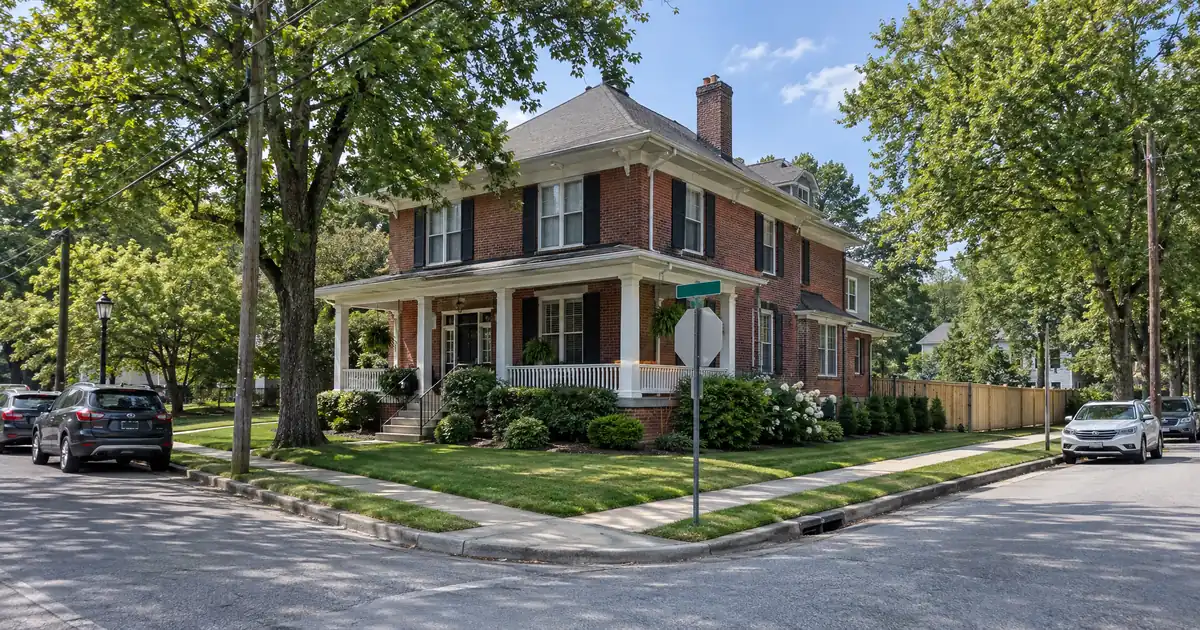
The objection is fair. A median Georgetown rental home asks about $1,795 a month (Homes.com), while Redfin puts the three-month median sale price near $333,000 (Redfin). That is a rent-to-value ratio around half a percent a month. On a plain single-family rental, that math leaves little room once taxes and insurance enter the payment, and a cash-out refinance needs room. So does the skeptic’s second point: one employer dominates this city. Both concerns are valid. Neither kills the thesis, but they decide which properties to refinance and how much proceeds to expect.
DSCR Cash-Out Calculator
Run the cash-out numbers in Georgetown, KY
Rate source: Freddie Mac 30-yr average via FRED® — Federal Reserve Bank of St. Louis · effective Sep 24, 2026
Prefilled with starting assumptions — enter your property’s value, balance, taxes, and insurance for a more accurate picture.
Program parameters update from Lendmire’s centralized guideline source. Taxes and insurance are editable estimates.
As of Sep 24, 2026 · General Freddie Mac market benchmark, not a Lendmire loan offer. Property value, balance, taxes, and insurance are editable estimates. Maximum loan-to-value varies by lender, program, property type, and seasoning. Not a Loan Estimate, approval, or commitment to lend. Program availability and eligibility are subject to lender guidelines, credit approval, property review, and underwriting.
The Quick Read:
A cash-out refinance on a Georgetown, Kentucky rental is underwritten primarily on the property’s rental income measured against its full monthly obligation, with the loan capped at 75% of appraised value and proceeds limited by whatever equity and coverage remain after payoff.
- Median asking rent for Georgetown rental homes sits near $1,795, per Homes.com.
- Single-family coverage runs thin against a median sale price near $333,000; multi-unit stacking is the lever.
- Toyota’s Georgetown plant employs nearly 10,000 people, anchoring long-term tenant demand.
- Sales volume is down from a year ago, which tightens appraisal comps on atypical properties.
- Cash-out programs typically look for about six months of ownership before proceeds are pulled.
Georgetown Market Snapshot
A quick read on the Georgetown investor landscape — figures come from the cited sources below. Confirm current property-level numbers before underwriting.
| Metric | Detail |
|---|---|
| Typical rents | Avg rent $1,316 (RentCafe Georgetown apartments) |
| Employment | Nearly 10,000 employees (WKYT, Toyota $204.4M investment) |
Why Toyota Changes the Underwriting Conversation
Toyota Motor Manufacturing Kentucky is the demand story, and it is large enough to matter. The plant employs nearly 10,000 people and can produce up to 700,000 powertrain units a year, per WKYT. That same report covers a $204.4 million commitment adding 82 jobs. A later governor’s announcement added $800 million to prepare the plant for a second battery electric vehicle, according to The Lexington Times. The Kentucky Cabinet for Economic Development references a $1.3 billion Toyota investment in Scott County.
Stacked announcements like these matter for a refinance because lenders underwrite on rent and appraised value, not narrative. The investment pipeline supports the odds that tenants keep renting. It does not raise your appraisal.
The risk is the flip side. A single employer anchoring a city of roughly 41,000 residents, per Data Commons, means correlated exposure. A plant disruption would hit rents and values together. Investors pulling equity should size the new leverage as if a softer rental market is possible. Georgetown also draws on Lexington-metro spillover, which gives it a second demand leg beyond the plant.
The Equity Math: Seasoning, LTV, and What Proceeds Really Look Like
Three inputs govern the proceeds: the 75% loan-to-value ceiling on cash-out, the rent used for lender review against the full payment (principal, interest, taxes, insurance), and reserves. Typical DSCR programs look for roughly six months of ownership, measured from title recording, before cash-out is available. The standard coverage benchmark is 1.00x, meaning rent covers the full obligation. Credit tiers usually start at a 620 floor, with better terms at 660, 680, and 700. Reserves of about six months of payments are common. Loan sizes run up to $3,000,000 on standard programs. All of that is subject to lender guidelines, credit review, and property review.
The binding constraint in Georgetown is usually coverage, not LTV. Appreciation has been flat to modest. Zillow shows a typical home value of $285,123, up 4.3% (Zillow). Redfin shows the median sale price down 1.1% year over year while price per square foot rose 6.7%. A Century 21 Simpson market update reports Scott County medians essentially flat near $340,000. The sources disagree on direction but agree on shape: flat to modestly up, no surge.
That shapes strategy. Underwrite the refinance on today’s appraised value with zero assumed gain. If you bought with a rehab plan and the appraisal lands at or below purchase-plus-rehab, proceeds shrink. The 75% ceiling then takes most of what is left after payoff. Equity available is never a guaranteed cash figure. How the cash-out works breaks the mechanics down in more detail.
Duplexes Beat Single-Family Here (Run the Numbers)
Small multifamily is the best coverage play in Georgetown. Consider a modeled scenario, not a market quote. Say an investor owns a duplex that appraises at $400,000, with two 2-bedroom units each renting near $1,300. Stacked rent comes to about $2,600 a month against a single mortgage payment. Compare that to a single-family rental at the $1,795 citywide median. Two doors on one loan lift gross rent without doubling the debt.
The assumption is grounded in listings. Asking rents at apartment communities run about $1,070 to $1,125 for one-bedrooms, $1,195 to $1,570 for two-bedrooms, and $1,470 to $1,961 for three-bedrooms, per Apartments.com. RentCafe shows a two-bedroom range of $1,142 to $1,790 and an average rent of $1,316. Rent sources conflict widely across portals, because they measure different things. Zumper’s average apartment rent is $2,050, while other portals run well under $1,100. Treat every figure as directional and underwrite the actual leases in place.
Single-family is harder. A large house can ask $2,700, per a Zillow listing for a 4-bedroom, 2,342-square-foot home. But build-to-rent communities, per Homes.com, compete for the same tenant. Appraisers may use that product for the rent schedule, so pull comps before assuming the asking number.
Townhomes sit in between. Homes.com lists 2-bedroom townhouse rents at $1,125 and 3-bedroom at $1,800, per its townhouse page. Whether a 3-bedroom clears 1.00x including taxes and insurance depends on the price paid. Skip the assumption that it does.
There is a supply catch. No source shows a count of buildings with three or more units, and small multifamily stock appears limited relative to single-family. Duplexes exist, including renovated units near Georgetown College listed on Homes.com, but the pool is shallow. Shallow pools mean thin comps.
Where the Submarkets Differ
The data gap is honest: no clean submarket rent or price dataset exists for Georgetown, so this section is qualitative.
Downtown and the Georgetown College area. This is the likeliest home for older duplexes and small conversions. The historic core includes 83 buildings on the National Register of Historic Places, per Smiley Pete. Georgetown College enrolls 1,123 undergraduates, or 1,345 total including graduate students per Data USA. That is a modest student base. It helps small units near campus, not the city at large. Older stock also raises appraisal variance, which brings up the comp issue below.
Northeast and east Georgetown, near Toyota and Cherry Blossom Way. Subdivision-heavy, with retail and apartment supply nearby. The newer ranch-and-traditional product here leans toward owner-occupants more than investor yield. Workforce demand is the draw, but yield is the question.
Value-first subdivisions. Local agent material names South Crossing, Falls Creek, and Fox Run as the value-oriented areas. These are the most plausible workforce single-family rental pockets. There is no rent data, so the coverage math has to be built property by property.
Amerson Way and the US-460 bypass. This is a growth node rather than a rent dataset. Baptist Health broke ground on a freestanding ER and urgent care on Amerson Way, due in the fall, with no inpatient beds, per WKYT. It adds a second healthcare node beside Georgetown Community Hospital, which leadership said could handle up to 18,000 emergency visits annually, per the News-Graphic. Lexington’s hospitals are also within commuting distance.
Appraisal Risk in a Thinning Market
Fewer closed sales mean a thinner comp pool. Redfin reports 177 homes sold in May versus 221 a year earlier. Century 21 Simpson describes a 16% drop in Scott County closed sales, from 111 to 93. For a three-bedroom ranch in a subdivision, that is workable. For a duplex, it is not ideal. Atypical properties lean on fewer comparables, and conservative valuations follow.
Size the cash-out with that in mind. Treat the 75% ceiling as a cap, not a forecast. An investor who needs a specific dollar amount to close the next deal should model the appraisal a notch below expectation and see whether the plan still holds.
Oversupply and Vacancy: A Qualitative Read
No reliable Georgetown vacancy rate turned up, so the read is directional. Apartment supply is new. RentCafe says buildings average about 17 years old, with 83% built since 2000, and Apartments.com shows 625 recently constructed units listed. Zillow flags a special offer at one community. Amenity-rich complexes offering concessions compete directly for the same renter pool. Older duplexes should be underwritten conservatively against that competition.
The renter base itself is substantial. About 37% of households rent, roughly 5,378 of them, per RentCafe. The broader Georgetown area shows a median household income of $82,544 and a median age of 34.6 in American Community Survey data from Census Bureau QuickFacts. That geography is wider than the city limits, so read it as a regional signal.
What the Deal Desk Sees in Markets Like This
In employer-anchored markets of this size, the common friction point is not credit or leverage but the rent schedule. Files tend to go cleaner when a current lease and a rent comparison are lined up before the appraisal is ordered, and cash-out sizing is run on the appraisal-low case rather than the hoped-for number. Duplex and small-multifamily files in thin-comp markets are where that discipline pays off (and where surprises show up).
Where the Proceeds Go
A cash-out refinance turns trapped equity into capital for the next acquisition or a reserve account. The pattern that fits Georgetown: refinance a seasoned duplex or a well-priced townhouse that clears coverage, then redeploy into another small multifamily in the downtown pocket. Reserves matter. Lenders typically look for around six months of payments, so a meaningful slice of any proceeds may sit in reserve. Review details are subject to lender overlays. See Lendmire’s primer on DSCR loans for the coverage mechanics, the guide “Where DSCR and Conventional Diverge” for the income-documentation contrast, and Lendmire’s rate-and-term and cash-out refinance guidance for the broader refinance menu. Lendmire’s Kentucky program coverage is summarized on Lendmire’s Kentucky DSCR platform. Investors can also see what the numbers look like or call 828-256-2183.
Loans to LLC-titled borrowers are subject to lender program eligibility. Investors should also verify current local rental rules, taxes, and insurance with qualified local professionals.
Frequently Asked Questions
How do you qualify for a DSCR cash-out refinance in Georgetown, Kentucky?
The file is reviewed on the property’s rent against its full monthly obligation, with 1.00x as the standard benchmark, though some lenders review lower ratios with stronger compensating factors. Typical guidance also includes about six months of ownership, a credit floor around 620, and roughly six months of reserves. Exact eligibility depends on lender guidelines, credit, and property review.
What are the requirements for an investment property loan refinance in Georgetown?
Expect a cash-out LTV ceiling of 75%, a seasoning period measured from title recording, and a rent figure supported by a lease or appraiser’s schedule. Loan amounts run up to $3,000,000 on standard programs, with smaller balances routed through select lenders. Manufactured homes, log homes, and barndominiums fall outside these programs.
DSCR vs. conventional financing
Two common ways to finance an investment property in Georgetown, KY. They qualify you differently — here’s how investors weigh them.
Why investors choose it
- Qualifies on the property’s rental income — no personal tax returns, W-2s, or pay stubs needed to document income.
- No personal debt-to-income ceiling to clear, so existing mortgages and obligations don’t cap your borrowing the same way.
- Can be closed in an LLC, keeping the property inside a business entity.
- Built for scaling — not held to the limit on number of financed properties that conventional financing applies.
- Underwriting centers on the deal: generally qualifies when the rent covers the payment, a 1.00x coverage ratio being a common baseline (confirmed in underwriting).
- Designed specifically for investment property, including long-term and, where the program allows, short-term rentals.
Where it’s strong
- Often the lowest ongoing financing cost for a buyer who fully qualifies on personal income — a fit for a first property or a cost-first purchase.
Trade-offs for investors
- Requires full personal income documentation and must fit within a debt-to-income limit — salary, existing debts, and other mortgages all count.
- Typically held in your personal name rather than a business entity.
- Caps how many financed properties you can carry, which can become a ceiling as a portfolio grows.
- Evaluates you as a borrower as much as the property, which usually means more paperwork.
How investors usually choose: a first or single property often optimizes for the lowest financing cost; portfolio builders often optimize for leverage, vesting in an LLC, and scaling past conventional caps. The right answer depends on your goals, the property, and current guidelines — both paths run through select lenders in Lendmire’s wholesale network, with eligibility and terms confirmed in underwriting.
Does Toyota’s concentration make a Georgetown refinance riskier?
It raises correlation risk, not underwriting difficulty. Toyota’s roughly 10,000 jobs and recent investment announcements support tenant demand, but a disruption would hit rents and values together. Sizing the new loan so coverage holds under softer rents is the prudent response.
Which Georgetown property types produce the best coverage on a cash-out?
Small multifamily near downtown, where two doors sit on one loan. Single-family at the citywide median rent against a median sale price near $333,000 runs thin. Townhomes land in between, depending on the purchase price.
How does rental income affect DSCR refinance eligibility in Georgetown?
The Next Step Before Any Application
Pull recent Scott County closed sales for duplexes and townhomes, then compare them with your own rent roll before ordering anything. That single exercise shows whether the appraisal comps and the lease income can carry a 75% ceiling in a market where closed-sale volume is down and Toyota’s next expansion is still ahead.
For current guidelines and terms, see Lendmire’s DSCR loan programs page.
About Lendmire
As a DSCR and non-QM mortgage broker, Lendmire (NMLS# 2371349) works with wholesale lending channels covering 41 markets, Washington, D.C. included. Lender review centers on the property’s rental income, not the borrower’s traditional personal-income documentation, which suits self-employed operators and portfolios beyond four financed properties. The firm was recognized by Scotsman Guide as a 2026 Top Workplace.
Get Started
Ready to find the right loan for you?
In about 30 seconds you can review financing options available for your investment property. No commitment required.
Informational only. Not a Loan Estimate, approval, or commitment to lend. Program availability and eligibility are subject to lender guidelines, credit approval, property review, and underwriting.
References
1. Homes.com
2. Redfin
3. RentCafe
4. WKYT
6. Kentucky Cabinet for Economic Development
7. Data Commons
8. Zillow
9. century21simpson.com — Central Kentucky Real Estate Market Update May 2026
10. Apartments.com
11. Zillow
12. Homes.com
13. Homes.com — Georgetown KY Townhouses for Rent
14. Homes.com
15. Smiley Pete
17. Data USA
18. WKYT
19. News-Graphic
20. Apartments.com
21. RentCafe
23. recognized by Scotsman Guide as a 2026 Top Workplace
This article is part of Lendmire’s investment property cash-out refinance program — full qualification details, guidelines, and scenarios live on the program page.
Related reading: Luxury Rental DSCR Loans In New Jersey · Jersey Shore Vacation Rental Loans: DSCR Financing In Ocean City, Cape May And Long Beach Island · DSCR Cash-out Refinance In New Jersey: Pulling Equity From A Rental
Guides: Investment Property Cash-Out Refinance in Kentucky
Brandon Miller
Founder & CEO, Mortgage Loan Originator, Lendmire LLC
- Mortgage Loan Originator · NMLS# 1129696 · Verify on NMLS Consumer Access
- North Carolina Real Estate Broker · License# 343312 · Verify on NCREC
- North Carolina Insurance Producer · License# 19053198 · Property, Casualty, Life, Health · Verify on NAIC SBS
- Lendmire LLC · Firm NMLS# 2371349 · Verify firm licensure
Disclosures. The information presented in this article is general market commentary, not financial, legal, or tax advice. Lendmire is a mortgage brokerage (NMLS# 2371349) — not a direct lender or depository institution — and loan placement is subject to lender underwriting. Nothing in this content represents a commitment to lend. Loan terms, pricing, and program availability vary based on borrower qualifications, property characteristics, and state of subject property, and are subject to change at any time. Lendmire complies with Equal Housing Opportunity requirements. Consumer access: nmlsconsumeraccess.org.