
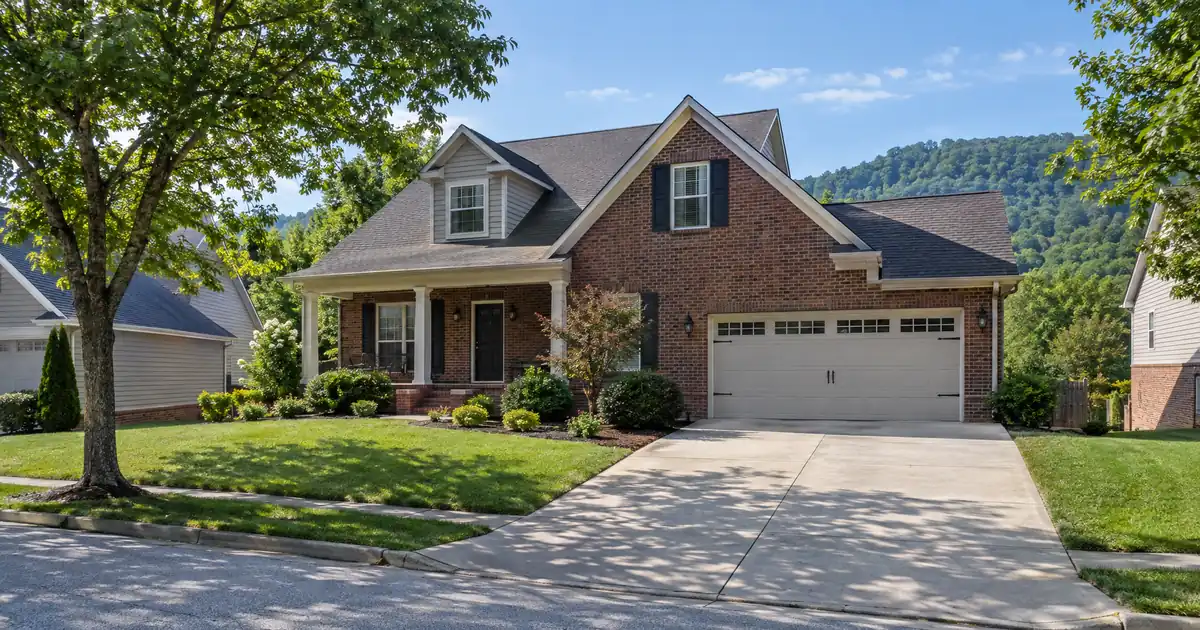
Homes.com puts Pikeville’s price-to-rent ratio at 24.6, with single-family rents around $1,000 a month. That single number tells you how to structure a DSCR cash out refinance in Pikeville, Kentucky. A house renting near $1,000 in a market where typical values sit in the mid-$200,000s rarely carries a 75 percent loan on rent alone. A small building with two or three units often does. The rest of this piece walks through that mechanism step by step.
DSCR Cash-Out Calculator
Run the cash-out numbers in Pikeville, KY
Rate source: Freddie Mac 30-yr average via FRED® — Federal Reserve Bank of St. Louis · effective Sep 24, 2026
Prefilled with starting assumptions — enter your property’s value, balance, taxes, and insurance for a more accurate picture.
Program parameters update from Lendmire’s centralized guideline source. Taxes and insurance are editable estimates.
As of Sep 24, 2026 · General Freddie Mac market benchmark, not a Lendmire loan offer. Property value, balance, taxes, and insurance are editable estimates. Maximum loan-to-value varies by lender, program, property type, and seasoning. Not a Loan Estimate, approval, or commitment to lend. Program availability and eligibility are subject to lender guidelines, credit approval, property review, and underwriting.
Key Takeaways:
A DSCR cash-out refinance in Pikeville, Kentucky is underwritten primarily on the property’s rental income measured against its full monthly obligation, and the local constraint is rent-to-value: single-family rents sit low against prices, so small multifamily near the hospital and university carries the equity-extraction math while single houses usually need far lower leverage.
- Single-family rents near $1,000 against a 24.6 price-to-rent ratio make houses the hardest coverage test (Homes.com).
- Cash-out is capped at 75 percent LTV after about six months of seasoning.
- Duplex and small-building units stack rent on one loan and usually clear coverage more easily.
- Rental comps are scarce, so expect a conservative appraisal and build your own rent file.
Pikeville Market Snapshot
A quick read on the Pikeville investor landscape — figures come from the cited sources below. Confirm current property-level numbers before underwriting.
| Metric | Detail |
|---|---|
| University enrollment | 2,547 total (Wikipedia) |
| Employment | Pmc employs over 3,000 (City of Pikeville) |
The Rent-to-Value Problem Comes First
Test rent against the full monthly obligation before you think about how much cash you want out. DSCR is monthly rent divided by principal, interest, taxes and insurance (plus any HOA dues), so a low rent against a high value fails before leverage even enters the conversation.
Walk through it in order:
1. Start with the value the appraiser is likely to support. 2. Apply the 75 percent LTV ceiling for cash-out. That ceiling is fixed. The 80 percent figure you see on purchase loans does not carry over. 3. Load taxes and insurance onto the payment. 4. Divide rent used for lender review by that total.
A standard DSCR program is built around a 1.00 benchmark. Some lenders will look at lower or no-ratio files, but those typically need lower leverage, stronger credit or more reserves. Exact eligibility depends on lender guidelines, credit profile and property review. For a primer on the mechanics, see the guide “What Is a DSCR Loan”.
Now run the numbers on a single-family rental. These are modeled assumptions, not sourced market data. Say the property is valued at $250,000 and rents for $1,000, in line with the Homes.com single-family figure. At 75 percent LTV, coverage including taxes and insurance lands in the low-0.6 range. Drop leverage to 60 percent and it still sits in the 0.7s. The house does not clear 1.00 on rent alone at any leverage that leaves meaningful cash out.
That is where a sub-1.00 path comes in. A lender may review a sub-1.00 program, an interest-only structure, or a much lower LTV with stronger credit and more reserves. Those are options a lender would evaluate, not outcomes. They also shrink the cash you pull, which defeats the purpose of most equity extractions.
For context on prices, Niche reports a median home value near $263,800. Movoto shows a lower median of $249,500 on only 8 recent sales. Eight sales is a thin sample, so this article uses the Niche figure as the market reference and treats the Movoto number as a reminder of how noisy a town this size can be.
Why Two Units Beat One House
Stacking rents on a single loan is how Pikeville equity gets extracted. A duplex or small building spreads one mortgage payment across two or three rent checks, and Pikeville’s listed rents for individual units run well above the citywide median.
Homes.com’s median is $875, but asking rents in small buildings tell a different story. Apartments.com listings across Pike County show two-bedroom units asking $1,250 and $1,400 and one-bedrooms asking $850 and $1,175. Those are asking rents, not leased rents, so treat them as a ceiling to verify against actual leases.
Run the numbers on a modeled duplex valued at $250,000. Assume one unit leases at $1,000 and the other at $1,250. At 75 percent LTV, coverage including taxes and insurance comes out around 1.4. Shave a hundred dollars off each unit and it falls into the low-1.2s. Still workable. The same value in a single house fails, and the only difference is the second rent check.
Two cautions on this math:
- Rent dispersion is wide. ApartmentHomeLiving shows two-bedroom asks from $640 to $3,400, averaging $1,314. Unit quality drives rent here more than address does. Underwrite the actual unit, not the average.
- Landlord-paid utilities matter. One listing near the university and medical center, a two-bedroom at $950, includes water, sewer and trash in the rent. That lowers net income even though the headline rent looks fine.
How much small multifamily exists? NeighborhoodScout puts duplexes and small apartment buildings at about 14 percent of the housing stock, against roughly 48 percent single-family detached. It’s a real product but a modest slice, which means good candidates are not plentiful. If you already own one, you hold something the market has a limited supply of.
Where the Tenants Come From
Pikeville’s renter base is tied to a hospital and a university, not to coal or industrial shifts. That is the reason the town supports rent levels and lease stability far beyond what its population of roughly 7,000 to 7,700 residents would suggest.
A regional health system is the anchor. The City of Pikeville says it employs over three thousand people and operates as a Level 2 trauma center. WSAZ reported that it is the only Kentucky hospital on Forbes’ America’s Dream Employers list. The U.S. EDA describes the regional economy as diversifying away from coal, with healthcare at the center of that shift. The University of Pikeville adds a second engine, and so does a Big Sandy Community and Technical College campus downtown.
Wikipedia’s University of Pikeville entry lists 2,547 students in the most recent fall term, 1,540 undergraduates and 1,007 postgraduates. The city notes the campus houses the only college of optometry in Kentucky and the Kentucky College of Osteopathic Medicine. U.S. News reports 43 percent of undergraduates live off campus. The university’s own housing page says graduate and married housing is limited. About 1,000 postgraduate and medical students, plus the off-campus undergrads, fit the one- and two-bedroom units near the hospital and campus.
This is a base of demand, not a growth story. Enrollment is small and the town is small. The appeal for a cash-out borrower is steady, recurring renters who tend to sign standard leases, which gives an appraiser and a lender something concrete to underwrite.
The land itself is part of the story. The Pikeville Cut-Through moved nearly 18 million cubic yards of soil and rock at a total cost of about $77.6 million, rerouting the Levisa Fork away from downtown. The city says land had been so scarce that it was choking growth. Buildable land near the hospital and university is finite, and that limits how many new rental competitors can show up close to the tenant base.
Downtown, the Medical Corridor and What to Skip
The medical and university corridor is the strongest area for a cash-out candidate. It covers Bypass Road, Town Mountain Road and S. Mayo Trail, with the hospital and campus within reach. Hospital staff, residents and students are the tenant pool, and small buildings here compete on proximity. No reliable neighborhood-level rent or price series exists for Pikeville, so this is reasoning from anchors, not from sourced neighborhood medians.
Downtown and Hambley Boulevard has potential, with a catch. A city-hosted listing shows a mixed-use building priced at $540,000, with an office on the ground floor, two-bedroom apartments upstairs and month-to-month leases. Income stacking is attractive. But a building with a meaningful commercial component may fall outside a residential DSCR program, and month-to-month leases are a weaker documentation story than signed annual terms. Expect extra lender review on any mixed-use file.
The US-23 retail corridor near Weddington Square is commercial. Nearby workforce housing may rent well, but that is a separate question from the retail buildings.
Coal Run Village, about six miles up US-23, is the workforce single-family alternative. Homes.com describes ranch-style, New Traditional and manufactured homes there. Manufactured homes fall outside these DSCR programs entirely, so a large part of that housing stock is not a cash-out candidate.
Skip the rural hollows for DSCR. Addresses along roads like Chloe Road, Cushaw Road and Elisha Fork show up in Redfin’s Pikeville data as rural single-family homes with recent sales like $193,000 and $250,000. Rural properties are harder to rent, harder to appraise and often face tighter lender eligibility. Some DSCR lenders will not touch rural collateral at all.
One more market-rate note. Pikeville Commons, a managed one-to-three-bedroom community with in-unit laundry and a fitness center, markets itself on proximity to US-23, the medical center and the university. A small landlord with unrenovated units competes with an amenitized property for the same tenants. No vacancy data exists to size that pressure, so underwrite conservatively.
Thin Comps, Seasoning and the Appraisal
The appraisal is where Pikeville cash-out deals live or die. A town this size produces few sales and fewer rental comps, and a conservative value shrinks the 75 percent ceiling.
Consider what the listing counts say. Homes.com counted only 4 homes for rent when checked, while Apartments.com showed 27 rentals. Redfin reports homes going pending in about 86 days and selling about 8 percent below list. An appraiser may not find enough same-submarket comps to support a high value, and the rent survey may lean on whatever it can find.
Seasoning adds a timing layer. Expect a wait of about six months from title recording before a cash-out refinance on a property you already own. The clock runs from recording, not from closing paperwork. A property that just came out of renovation still needs to sit through it. Plan the exit from the first deal before the ink dries on the purchase.
Appreciation does not do the heavy lifting here. NeighborhoodScout’s figures, which carry unclear dating, show about 33 percent over ten years, an annualized 2.89 percent. Treat them as directional. The lesson is the appreciation-versus-cash-flow tension: with slow market lift, most of the equity you can extract comes from a low basis, a value-add improvement or a rent increase, not from the market rising around you. That favors borrowers who bought below market or renovated, and it penalizes anyone who paid full price for a house at $1,000 rent.
The common friction point on files from small, hospital-and-campus markets like this one is documentation, not credit. The cleaner files tend to arrive with a signed lease for each unit, a rent schedule and proof of deposits. Appraisers in thin markets lean hard on that paper when they can’t lean on comps. Borrowers who show up with only a verbal rent number tend to watch the value, and with it the cash-out, get trimmed.
On the lender side, typical program guidance runs like this, always subject to lender guidelines and credit approval:
- Credit tiers generally start at a 620 floor and step up through 660, 680 and 700, with better leverage at higher tiers.
- Reserves are typically about six months of PITIA, rising to about nine above $1,500,000.
- Loan amounts can reach $3,000,000 on standard programs, with smaller balances routed through select lenders in the network.
Where other non-QM platforms often ask for 720-plus FICO and 25 percent down, the network Lendmire places through works from a 620 floor and lower-leverage structures, though pricing and proceeds tighten at lower tiers. The general comparison with bank financing is covered separately. Bank underwriting on a self-employed investor’s traditional personal-income documentation is a different conversation than a rent-based file.
DSCR vs. conventional financing
Two common ways to finance an investment property in Pikeville, KY. They qualify you differently — here’s how investors weigh them.
Why investors choose it
- Qualifies on the property’s rental income — no personal tax returns, W-2s, or pay stubs needed to document income.
- No personal debt-to-income ceiling to clear, so existing mortgages and obligations don’t cap your borrowing the same way.
- Can be closed in an LLC, keeping the property inside a business entity.
- Built for scaling — not held to the limit on number of financed properties that conventional financing applies.
- Underwriting centers on the deal: generally qualifies when the rent covers the payment, a 1.00x coverage ratio being a common baseline (confirmed in underwriting).
- Designed specifically for investment property, including long-term and, where the program allows, short-term rentals.
Where it’s strong
- Often the lowest ongoing financing cost for a buyer who fully qualifies on personal income — a fit for a first property or a cost-first purchase.
Trade-offs for investors
- Requires full personal income documentation and must fit within a debt-to-income limit — salary, existing debts, and other mortgages all count.
- Typically held in your personal name rather than a business entity.
- Caps how many financed properties you can carry, which can become a ceiling as a portfolio grows.
- Evaluates you as a borrower as much as the property, which usually means more paperwork.
How investors usually choose: a first or single property often optimizes for the lowest financing cost; portfolio builders often optimize for leverage, vesting in an LLC, and scaling past conventional caps. The right answer depends on your goals, the property, and current guidelines — both paths run through select lenders in Lendmire’s wholesale network, with eligibility and terms confirmed in underwriting.
If you plan to hold and improve instead of cash out, refinancing options cover the rate-and-term side. For the equity-extraction version in detail, see the guide “The Refi Options”. Investors can also review the Kentucky DSCR financing hub for statewide context.
Where the Proceeds Go
Extracting equity only makes sense if the next deal clears its own coverage test. Pikeville’s pattern suggests recycling cash into another small building near the hospital and campus, not into another single-family house.
Picture an investor who owns a renovated duplex near the medical corridor and pulls cash at the 75 percent ceiling. The better move is probably a second duplex, not a rural house, because the coverage math repeats. The alternative is reinvesting in improvements on a current property to lift rent, which improves the next appraisal. That is a genuine toss-up: a second building adds exposure to the same tenant pool, while improvements concentrate capital in a single asset. Either way, the next purchase has to survive its own rent test.
Keep the local caution in mind (and it’s not a small one): Pikeville’s whole rental base leans on one hospital and one university. If either sheds headcount, every landlord in the corridor feels it at once. Diversifying tenants across medical staff, students and downtown workers eases that, but it does not eliminate it.
Investors should verify current local rental rules, taxes and insurance with qualified local professionals before committing to any file. To talk through structure on a specific property, call Lendmire at 828-256-2183 or get a DSCR quote.
Frequently Asked Questions
How do you qualify for a DSCR loan in Pikeville?
Qualification centers on the property’s rent compared with its full monthly obligation, typically measured against a 1.00 benchmark, plus a credit score at or above the tier floor and adequate reserves. In Pikeville, single-family rents near $1,000 often leave coverage below that benchmark, while small multifamily near the hospital usually fares better. Final eligibility depends on lender guidelines, credit approval and property review.
What are the requirements for a cash-out refinance on an investment property in Pikeville, Kentucky?
Typical guidance includes about six months of ownership from title recording, leverage up to 75 percent LTV, and reserves of about six months of PITIA. Credit generally starts at a 620 floor. Available cash depends on rent used for lender review, the payment and the LTV ceiling, so it is never a fixed figure. Terms vary by lender and property.
How does rental income affect DSCR refinance eligibility in Pikeville?
Will an appraiser find enough comps in a town the size of Pikeville?
Often not. Only a handful of homes are listed for rent at any moment, and sales are sparse, so appraisers may lean on rent surveys and a wider search area. A rent schedule, signed leases and a lease history give the file more support. Expect a conservative value rather than an aggressive one.
Can I cash out on a manufactured home or rural property near Pikeville?
Manufactured homes fall outside these DSCR programs, and some lenders restrict or decline rural collateral altogether. That rules out a large share of the housing in Coal Run Village and the surrounding hollows. Duplexes and single-family homes in town, close to the hospital and campus, are the more realistic candidates.
The Real Choice
Pikeville equity owners face a binary. One option is to hold a low-basis house where coverage is thin, keep the file simple and accept that the cash-out will be small or absent. The other is to concentrate on a two- or three-unit building near the hospital and campus, pull cash at the 75 percent ceiling and accept a conservative appraisal, heavier documentation and a tenant base that depends on one medical center and one university.
For current guidelines and terms, see Lendmire’s DSCR loan programs page.
About Lendmire
Lendmire (NMLS# 2371349) is a DSCR-focused mortgage broker, with investor programs available in 41 markets, including Washington, D.C. Lenders in the network commonly weigh rental-income coverage over personal income paperwork, which suits LLC-owned and multi-property investors, subject to program terms. Terms vary by lender, property, leverage and program. Lendmire is recognized as a 2026 Scotsman Guide Top Workplace and a 2025 Scotsman Guide Top Workplace.
Get Started
Ready to find the right loan for you?
In about 30 seconds you can review financing options available for your investment property. No commitment required.
Informational only. Not a Loan Estimate, approval, or commitment to lend. Program availability and eligibility are subject to lender guidelines, credit approval, property review, and underwriting.
References
1. Homes.com – Pikeville rentals
3. City of Pikeville – About Pikeville Business
4. Niche — Pikeville Pike KY Real Estate
5. Movoto — Pikeville KY Market Trends
6. Apartments.com listings across Pike County
10. WSAZ – Pikeville Medical Center Forbes list
11. U.S. EDA – Kentucky Annual Report
12. City of Pikeville – History
15. villagegreen.com — Pikeville Commons
16. Apartments.com showed 27 rentals
17. a 2026 Scotsman Guide Top Workplace
18. a 2025 Scotsman Guide Top Workplace
This article is part of Lendmire’s investment property cash-out refinance program — full qualification details, guidelines, and scenarios live on the program page.
Related reading: Luxury Rental DSCR Loans In New Jersey · Jersey Shore Vacation Rental Loans: DSCR Financing In Ocean City, Cape May And Long Beach Island · DSCR Cash-out Refinance In New Jersey: Pulling Equity From A Rental
Guides: Investment Property Cash-Out Refinance in Kentucky
Brandon Miller
Founder & CEO, Mortgage Loan Originator, Lendmire LLC
- Mortgage Loan Originator · NMLS# 1129696 · Verify on NMLS Consumer Access
- North Carolina Real Estate Broker · License# 343312 · Verify on NCREC
- North Carolina Insurance Producer · License# 19053198 · Property, Casualty, Life, Health · Verify on NAIC SBS
- Lendmire LLC · Firm NMLS# 2371349 · Verify firm licensure
Legal disclosures. Lendmire (NMLS# 2371349) is a state-licensed mortgage brokerage that arranges financing through wholesale lender relationships. Lendmire is not a direct lender, depository institution, or registered financial advisor. The discussion above is general informational content about real estate financing — it is not financial, legal, or tax advice, and readers should consult licensed professionals for guidance on their individual circumstances. Loan inquiries are subject to lender underwriting; this article does not represent a commitment to lend. Loan terms, rates, and qualification standards vary by borrower, property, and state, and are subject to change at any time. Equal Housing Opportunity. NMLS Consumer Access: nmlsconsumeraccess.org.