
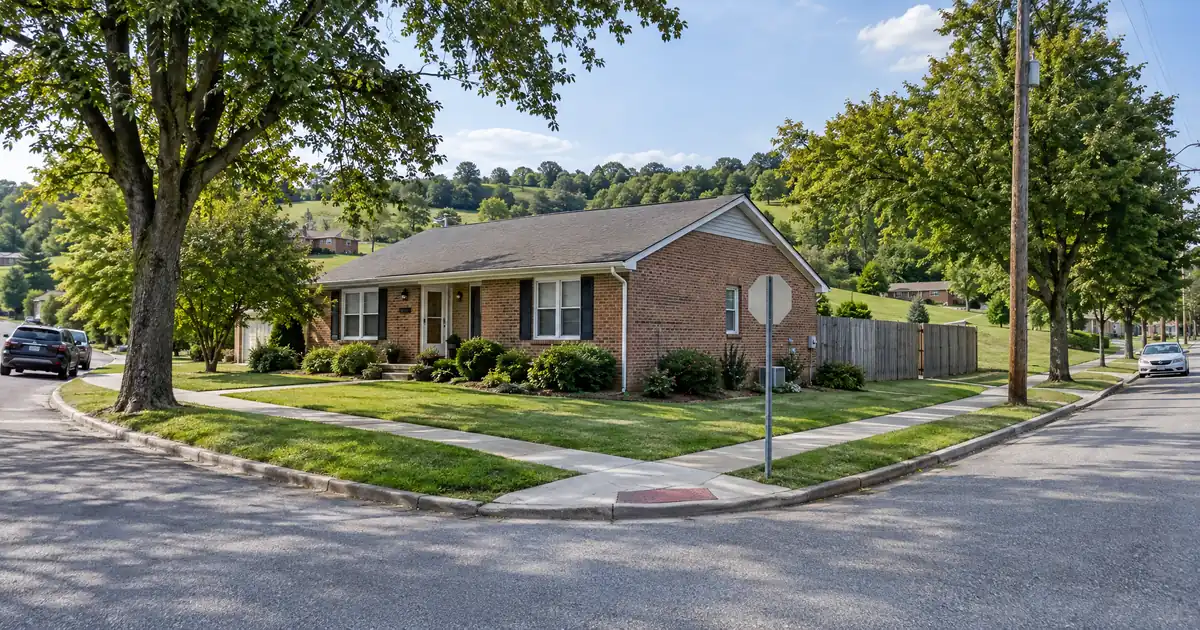
The objection comes up on almost every small-market file: “Nobody sells homes here. How does an appraiser support a number, and how much cash-out is left after the haircut?” In Campbellsville the objection is fair. Redfin’s latest read counted just 6 sales in its snapshot month, so any price swing is mostly noise. This piece takes that problem head-on. The rest of it covers how to size a cash-out against a thin comp set, and where the proceeds are best redeployed.
DSCR Cash-Out Calculator
Run the cash-out numbers in Campbellsville, KY
Rate source: Freddie Mac 30-yr average via FRED® — Federal Reserve Bank of St. Louis · effective Sep 24, 2026
Prefilled with starting assumptions — enter your property’s value, balance, taxes, and insurance for a more accurate picture.
Program parameters update from Lendmire’s centralized guideline source. Taxes and insurance are editable estimates.
As of Sep 24, 2026 · General Freddie Mac market benchmark, not a Lendmire loan offer. Property value, balance, taxes, and insurance are editable estimates. Maximum loan-to-value varies by lender, program, property type, and seasoning. Not a Loan Estimate, approval, or commitment to lend. Program availability and eligibility are subject to lender guidelines, credit approval, property review, and underwriting.
Key Takeaways:
A DSCR cash-out refinance in Campbellsville, Kentucky is underwritten primarily on the property’s rental income measured against its full monthly obligation, including taxes and insurance, and it converts existing equity into capital. Cash-out is capped at 75% LTV, and the amount depends on appraised value, rent used for lender review, and reserves. Terms vary by lender guidelines, property type, leverage, credit profile, and full file review.
- Redfin’s median sale price rests on only 6 sales, so expect a conservative appraisal.
- Rents of $1,150-$1,275 support roughly 1.05x-1.25x coverage at 75% LTV, depending on value.
- Seasoning is about 6 months from title recording before cash-out is available.
- Amazon, the hospital, and the university anchor tenant demand. Exact terms depend on the lender’s guidelines, property type, leverage, and a full review of the borrower’s file.
Campbellsville Market Snapshot
A quick read on the Campbellsville investor landscape — figures come from the cited sources below. Confirm current property-level numbers before underwriting.
| Metric | Detail |
|---|---|
| Home prices | 6 sales (Redfin) |
| University enrollment | 11,900+ students (Campbellsville University (news)) |
| Population | 11,622 population (Census Reporter) |
| Employment | 700+ employees incl. PRNs (Taylor Regional Hospital) |
Start Near the Hospital: Where Cash-Out Files Are Cleanest
The strongest refinance candidates sit in the residential pockets around Taylor Regional Hospital and the downtown core. Small-to-mid single-family homes and small buildings there draw a steady mid-income tenant pool, and the rent evidence is easiest to document.
Taylor Regional Hospital is a 90-bed facility serving roughly 110,000 people, and it calls itself the second-largest employer in Campbellsville and Taylor County, with more than 700 employees when PRN staff are counted. Nurses, technicians, and travelers rent in blocks, and hospital staffing changes slowly. That makes it a durable demand source. Lease-up risk is modest, and vacancy is the line item most likely to surprise on a small-market file. It’s the one place where this market behaves like a bigger one.
No sourced neighborhood-level rent or price data exists for Campbellsville, so treat any block-by-block claim as unverified. Local property managers are the better rent source, and lenders generally want rent verified through a lease or market rent schedule anyway.
The University Gap
Campbellsville University reports more than 11,900 students, and US News lists 12,451 total, against a city of about 11,622 residents per Census Bureau QuickFacts. Those figures don’t equal local renters. Most of the headcount is online or extension, and Niche puts full-time undergraduates near 2,600.
So the campus supports rental demand, but it’s a few thousand tenants, not twelve thousand. Investors who underwrite student-housing volume off the headline enrollment will overstate the case. The university is better read as a staff-and-faculty anchor, since it’s also a major employer. Homes near campus that rent to staff, grad students, and hospital workers on standard leases are the safer thesis than a student-turnover play.
Where the Industrial Payroll Lands
Workforce single-family is the dominant rental product. NeighborhoodScout shows single-family detached homes at 73.28% of housing units. That is the stock most Campbellsville landlords hold, and it’s what an appraiser will be comparing against.
Team Taylor County lists Amazon and UPS among the county’s employers, along with major facilities owned by companies from Japan, South Korea, France, and the Netherlands. For a city of this size, that is an unusually diversified base: logistics, automotive parts, healthcare, and education. Diversification matters for a refinance because your tenant’s employer risk is spread across several payrolls rather than one plant.
I don’t have verified locations for the industrial parks, so this article doesn’t name streets. The practical filter is commute-shed logic: two- and three-bedroom homes within a reasonable drive of the warehouse and plant employers.
What the Rent Numbers Actually Support
Rents cluster in a tight band. Zumper shows an average of $1,150, up 6% year over year. Zillow averages $1,250 across a $995-$1,550 range, with two-bedrooms near $1,050 and three-bedrooms near $1,275. Homes.com shows a $1,275 median, but only 8 listings back it. (Treat that one as a data point, not a benchmark.)
Underwrite to the low end. Measured against local household incomes, as reported by USCostOfLiving, rents at this level already consume a meaningful share of local wages. That leaves limited room for aggressive rent growth outside the higher-paying employer tiers. Flat-to-modest growth is the safer assumption, even with the recent uptick.
Run the Numbers: Two Values, One Rent
Here is the tension that defines cash-out in a thin market. These are modeled assumptions, not sourced market data. Each uses standard financing inputs and includes taxes and insurance in the full obligation.
Run the numbers on a rental appraising near $164,000, the Redfin median, at 75% LTV with $1,150 in rent used for lender review. Coverage lands around 1.15x. Bump the rent to $1,275 and it improves to roughly 1.25x. Both clear the 1.00x baseline that most standard programs are built around, subject to lender guidelines.
Now say the appraiser lands nearer $198,450, a market source median list price. Same 75% LTV, same $1,275 rent. Coverage compresses toward 1.05x, because the larger loan carries more debt service and taxes against the same rent. You’d pull more equity, but the file gets thinner. Every figure here varies by lender and program — guidelines, property type, leverage, and credit profile all apply.
This one’s a genuine toss-up for investors: a higher appraisal is good for proceeds and bad for coverage. Investors often chase the higher value without checking the ratio. A better approach is to size the cash-out to the coverage number you can defend, not to the top of the appraisal range. If coverage on a given file falls under 1.00x, some lenders review reduced-leverage or interest-only structures, but those come with stronger credit, more reserves, and different pricing, and all remain subject to approval.
Seasoning, LTV, and the Cash You Actually Get
Cash-out on these programs is capped at 75% of appraised value, and the borrower typically needs about 6 months of ownership measured from title recording. Credit tiers generally start at a 620 floor. Reserves typically run around 6 months of the full obligation. These are guideline ranges, not commitments, and the cash-out qualification details walk through how they interact.
Two Campbellsville-specific points shape the proceeds. First, comps are scarce, so plan for a conservative appraisal and a cash-out smaller than an optimistic value would suggest. Redfin’s 7% average list-to-sale discount and roughly 69 days to pending both hint at buyers who negotiate. Second, loan balances here tend to run small. Standard programs go up to $3,000,000, and smaller balances route through select lenders in the network, so the lender pool for a sub-$150,000 loan is narrower than for a bigger metro file. Pricing and terms differ across that pool.
Eligibility also has edges. Some lenders exclude rural properties, so confirm the subject qualifies. Manufactured homes, log homes, and barndominiums fall outside these DSCR programs entirely, which matters in a Kentucky market where such stock exists. Verify current local rental rules, taxes, and insurance with qualified local professionals.
What Deals Look Like on Files Like This
Small-market files usually come down to paperwork. The cleaner files from a documentation standpoint tend to arrive with complete leases, entity documents if the property sits in an LLC (subject to lender program eligibility), a clean title, and a rent schedule that agrees with the leases. The common friction point in markets like this is the appraisal, not the borrower: with few closed sales nearby, the comp set gets stretched, and value conversations start late. Investors who order or discuss a broker price opinion early tend to size their ask more realistically. Lendmire’s DSCR-versus-conventional breakdown covers when a conventional refinance might do the job instead, and for an investor with one or two rentals and strong traditional employment income, it sometimes does.
Where the Proceeds Go
The refinance thesis depends on what happens next. Redeploying proceeds into another workforce rental in the same commute shed keeps the rent evidence local and the coverage math familiar. Buying small multi-unit stock is attractive on paper, since a duplex spreads vacancy across two doors. But small multi-unit inventory is scarce here, comps are thinner still, and a local property manager needs to verify rents before you rely on them. Pulling equity to fund deals in other markets is a different decision, one that needs its own coverage test.
Rental supply looks tight, with one aggregator citing Census data showing essentially no rental vacancy. That figure is a small-sample artifact, so use a standard vacancy factor regardless. The investor refinance breakdown helps compare cash-out against a rate-and-term structure, and the guide “What Is a DSCR Loan” explains the coverage formula. For Kentucky-wide context, see DSCR loans in Kentucky.
Frequently Asked Questions
Does the university’s enrollment mean strong student rental demand?
Only partly. Reported totals run from about 11,900 to 12,451, but most students study online. The residential base is closer to 2,600 full-time undergraduates. Faculty, staff, and hospital workers are the steadier tenant pool.
DSCR vs. conventional financing
Two common ways to finance an investment property in Campbellsville, KY. They qualify you differently — here’s how investors weigh them.
Why investors choose it
- Qualifies on the property’s rental income — no personal tax returns, W-2s, or pay stubs needed to document income.
- No personal debt-to-income ceiling to clear, so existing mortgages and obligations don’t cap your borrowing the same way.
- Can be closed in an LLC, keeping the property inside a business entity.
- Built for scaling — not held to the limit on number of financed properties that conventional financing applies.
- Underwriting centers on the deal: generally qualifies when the rent covers the payment, a 1.00x coverage ratio being a common baseline (confirmed in underwriting).
- Designed specifically for investment property, including long-term and, where the program allows, short-term rentals.
Where it’s strong
- Often the lowest ongoing financing cost for a buyer who fully qualifies on personal income — a fit for a first property or a cost-first purchase.
Trade-offs for investors
- Requires full personal income documentation and must fit within a debt-to-income limit — salary, existing debts, and other mortgages all count.
- Typically held in your personal name rather than a business entity.
- Caps how many financed properties you can carry, which can become a ceiling as a portfolio grows.
- Evaluates you as a borrower as much as the property, which usually means more paperwork.
How investors usually choose: a first or single property often optimizes for the lowest financing cost; portfolio builders often optimize for leverage, vesting in an LLC, and scaling past conventional caps. The right answer depends on your goals, the property, and current guidelines — both paths run through select lenders in Lendmire’s wholesale network, with eligibility and terms confirmed in underwriting.
How much equity can I pull from a Campbellsville rental?
It depends on appraised value, rent used for lender review, reserves, and the 75% LTV ceiling. It’s not a guaranteed figure. With thin comps, a conservative appraisal is likely, so model a lower value first. A scenario review can show the range for your file. Final terms depend on lender guidelines, property type, leverage, and the borrower’s complete credit picture.
Do I have to wait before refinancing a Campbellsville rental?
Typically about 6 months of ownership, measured from title recording, before cash-out is available. Lender guidelines vary, so confirm the seasoning rule that applies to your loan before planning around it.
Will a rural location disqualify my property?
It can, depending on the lender. Some lenders exclude rural properties, and Campbellsville’s surroundings include rural parcels. Confirm eligibility for the specific address early. Manufactured homes, log homes, and barndominiums are outside these programs regardless of location.
Which is better for cash-out coverage, a higher or lower appraisal?
Neither wins outright. A higher value raises proceeds but lowers coverage on the same rent. Investors comfortable at low-1.0x coverage may accept it. Those wanting cushion often size below the maximum.
The Blind Spot: A Market Too Small to Read
The biggest risk for DSCR-financed investors here is data thinness. Redfin’s median rests on 6 sales, the citywide value estimates range widely across sources, and rent data comes from small listing samples. Investors can mistake a favorable snapshot for a trend and size leverage to it. Reserves and a conservative vacancy assumption matter more in Campbellsville than in a deep metro, because one bad appraisal or one long vacancy moves the whole file. Underwrite as though the low end of every range is the real number. If the deal still works, it’s a deal.
For current guidelines and terms, see Lendmire’s DSCR loan programs page.
About Lendmire
Lendmire, NMLS# 2371349, is a non-QM mortgage broker serving real estate investors in 41 markets, including Washington, D.C., through DSCR investor loan programs. Qualification is generally reviewed around the subject property’s rental income rather than the borrower’s W-2 history, which can suit LLC-titled portfolios and self-employed investors. All scenarios remain subject to program review and program guidelines. Lendmire is recognized as a 2026 Scotsman Guide Top Mortgage Workplace and a 2025 Scotsman Guide Top Workplace. Investors can reach the team at 828-256-2183.
Get Started
Ready to find the right loan for you?
In about 30 seconds you can review financing options available for your investment property. No commitment required.
Informational only. Not a Loan Estimate, approval, or commitment to lend. Program availability and eligibility are subject to lender guidelines, credit approval, property review, and underwriting.
References
1. Redfin, Campbellsville housing market
2. Campbellsville University (news)
7. Team Taylor County Economic Development
8. Zumper, Campbellsville rent research
9. Zillow
10. Homes.com
11. USCostOfLiving
12. a 2026 Scotsman Guide Top Mortgage Workplace
13. a 2025 Scotsman Guide Top Workplace
This article is part of Lendmire’s investment property cash-out refinance program — full qualification details, guidelines, and scenarios live on the program page.
Related reading: Cash Out Refinance Investment Property: Campbellsville DSCR Guide · Cash Out Refinance Investment Property Danville Kentucky · DSCR Cash Out Refinance Madisonville Kentucky
Guides: Investment Property Cash-Out Refinance in Kentucky
Brandon Miller
Founder & CEO, Mortgage Loan Originator, Lendmire LLC
- Mortgage Loan Originator · NMLS# 1129696 · Verify on NMLS Consumer Access
- North Carolina Real Estate Broker · License# 343312 · Verify on NCREC
- North Carolina Insurance Producer · License# 19053198 · Property, Casualty, Life, Health · Verify on NAIC SBS
- Lendmire LLC · Firm NMLS# 2371349 · Verify firm licensure
Disclosure information. Lendmire is a state-licensed mortgage brokerage under NMLS# 2371349. Lendmire is not a depository institution, direct lender, or financial advisor — all loans referenced are placed through wholesale lender partners and are subject to each lender's underwriting standards. This article is provided for general informational purposes and is not a commitment to lend, nor does it constitute financial, legal, or tax advice. Loan programs, terms, rates, and qualification standards change without notice and depend on borrower profile, property type, and the state in which the subject property is located. Equal Housing Opportunity provider. NMLS Consumer Access: nmlsconsumeraccess.org.