
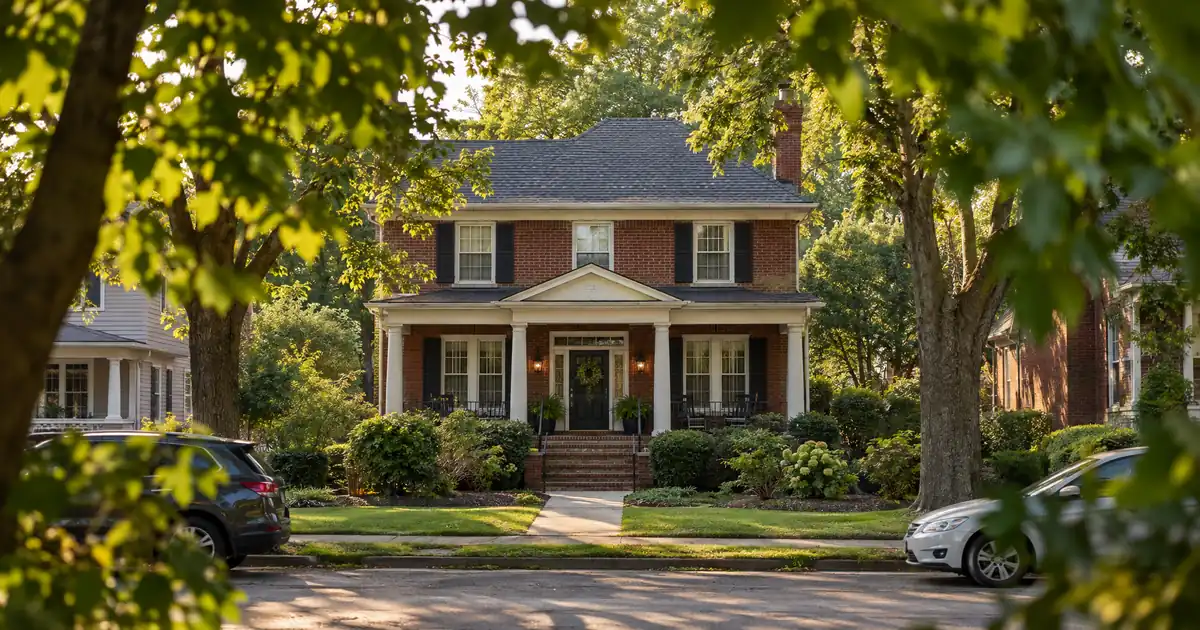
A rental in the older ZIP 42501 core hits the cash-out math like this. Model a three-bedroom house at an appraised value near $223,750, the Resideline median sold price. Put a 75% LTV refinance on it. Assume a $1,600 monthly rent, and the modeled coverage lands north of 1.15x including taxes and insurance. Drop the rent to $1,340 and the number sits right around 1.0x. Drop it to $1,150 and it falls into the high-0.8s. Same house, same loan, three different files. Somerset is a market where the rent you can document decides the outcome more than the purchase price does. Final terms depend on lender guidelines, property type, leverage, and the borrower’s complete credit picture.
Lendmire (NMLS# 2371349) is a non-QM mortgage broker. Somerset, Kentucky investors can have DSCR scenarios reviewed through lender programs that Lendmire helps place across 41 markets, including Washington, D.C. This piece covers the equity-extraction side only: seasoning, the 75% ceiling, and what a thin comp pool does to an appraisal. Purchase mechanics are a separate topic.
DSCR Cash-Out Calculator
Run the cash-out numbers in Somerset, KY
Rate source: Freddie Mac 30-yr average via FRED® — Federal Reserve Bank of St. Louis · effective Sep 24, 2026
Prefilled with starting assumptions — enter your property’s value, balance, taxes, and insurance for a more accurate picture.
Program parameters update from Lendmire’s centralized guideline source. Taxes and insurance are editable estimates.
As of Sep 24, 2026 · General Freddie Mac market benchmark, not a Lendmire loan offer. Property value, balance, taxes, and insurance are editable estimates. Maximum loan-to-value varies by lender, program, property type, and seasoning. Not a Loan Estimate, approval, or commitment to lend. Program availability and eligibility are subject to lender guidelines, credit approval, property review, and underwriting.
Key Takeaways:
A DSCR cash-out refinance in Somerset, Kentucky suits investors who already hold a seasoned house or small multifamily building and can document a lease. The file is underwritten primarily on the property’s rental income measured against its full monthly obligation, and the appraisal is where a thin market pushes back.
- Resideline tracked 126 closings with a $223,750 median sold price, so the comp pool is small (Resideline).
- Cash-out tops out at 75% LTV, with about 6 months of seasoning from title recording.
- Older ZIP 42501 houses plausibly pencil best. Lakefront homes do not fit long-term rental math.
- Multifamily asking prices run roughly 1.3–2.7x the single-family median, without a clear yield gain.
- Toyotetsu and the regional hospital anchor demand. Neither one drives rent growth.
Somerset Market Snapshot
A quick read on the Somerset investor landscape — figures come from the cited sources below. Confirm current property-level numbers before underwriting.
| Metric | Detail |
|---|---|
| Typical rents | $1,150 median (Homes.com Rentals) |
| University enrollment | 6,155 total (Data USA, SCC) |
| Employment | 20 jobs (SPEDA, Toyotetsu expansion) |
Which Price Do You Trust in a Market This Thin?
None of them on their own. The portals disagree, and on a cash-out file the appraiser’s read of value sets the proceeds.
This article anchors on the Resideline median of $223,750 across 126 closings, with a middle half of sales between $161,000 and $270,000. That spread is the real story: a $110,000 gap between the 25th and 75th percentile on a city of roughly 12,000 people. Zillow puts the average home value lower, at $201,818, down 2.4% over the past year. Homes.com reports a 12-month median of $282,000, up 6%, but that figure likely skews toward lakeside and newer homes, since lakefront product runs from $700,000 to over $1 million on the same page. Redfin showed a sharp year-over-year drop in one month, but on only 9 sales, so treat that as a thin-market signal and not a trend.
The takeaway on appreciation: flat to soft, slow-moving, wide dispersion. Anyone underwriting a cash-out on the assumption of a rising value is guessing. The equity in a Somerset refinance usually comes from a low original basis, a completed rehab, or a long hold. It rarely comes from market lift.
Smaller mid-century ranch homes start closer to $150,000. Those are the houses where the loan balance may route through select lenders in the network, since smaller balances are not the standard-program sweet spot.
Seasoning, the 75% Ceiling and What Equity Actually Means
Cash-out on a DSCR refinance caps at 75% LTV. Not 80%. The 80% figure belongs to purchases, and files that carry it over get corrected at lender review.
Seasoning is about 6 months of ownership, measured from title recording. The settlement statement documents it. Somerset investors who bought at a discount and rehabbed run into a specific wrinkle: the lender values the property on the appraisal, not on the purchase price plus rehab receipts. A house bought near the low end of the Resideline range and renovated toward the middle can show real equity. A house bought at the middle and renovated to the same finish shows less.
The proceeds figure depends on four things: rent used for lender review, the full monthly obligation (principal, interest, taxes, insurance and any HOA dues), reserves, and the LTV ceiling. Reserves run about 6 months of that obligation on most files, and higher on larger balances. Pricing and available terms vary by lender, borrower profile, property type, and full underwriting review. The minimum coverage benchmark is 1.00x. Some lenders review lower ratios, but those files usually need lower leverage, stronger compensating factors or different pricing. Cash out is never a guaranteed figure. The cash-out refinance details page walks through the mechanics, and the DSCR fundamentals covers the ratio itself.
Three Rent Cases on One House
The same $223,750 house produces three different files depending on the lease. These are modeled assumptions, not sourced market rents, and each coverage figure is rent divided by the full obligation including taxes and insurance, rounded down.
1. Rent at $1,600. This is a modeled assumption at the higher end of the scenarios in this example, not a sourced market rent. Coverage lands north of 1.15x. A clean lease and a 75% LTV request is a straightforward file. Terms vary by lender guidelines, property type, leverage, credit profile, and full file review.
2. Rent at $1,340. This is the overall average in the same dataset. Coverage sits right around 1.0x. It is borderline, and any move in insurance or taxes tips it.
3. Rent at $1,150. This matches the Homes.com rental median for houses. Coverage falls into the high-0.8s at 75% LTV. Exact terms depend on the lender’s guidelines, property type, leverage, and a full review of the borrower’s file.
The third case is below 1.00x. Options a lender may review include a sub-1.00 program, an interest-only structure, or lower leverage than 75%. Each carries its own pricing and reserve conditions, and eligibility depends on lender guidelines, credit, property review and state overlays. None of it is assured.
Illustrative gross yields tell the same story. Set $1,600 a month against the Zillow value and gross yield is about 9.5% before taxes, insurance and vacancy. Use the $1,340 average and it drops to about 8.0%. Derived figures, not published ones. Vacancy data for Somerset was not found, so no vacancy number is used here.
DSCR files in markets like this one typically look the same. The rent is real but the comp pool is small, so the appraisal and the lease evidence carry the file. The cleanest packages have a signed lease, proof of deposit and rent payments, entity documents, a clean title chain and a rehab scope with receipts. Files that arrive with a verbal rent and a purchase-price value expectation are the ones that get reworked at lender review. Preparing a comp packet with recent in-town sales before the appraisal is ordered is standard practice, and so is knowing the appraisal reconsideration route if the number comes back light.
Apartment listings complicate the picture. Apartments.com lists Somerset rents from $743 to $1,582 depending on location and size. That spread means the appraiser’s market rent schedule matters as much as the lease. If a tenant pays well above or below what comparable units rent for, expect the lender to lean toward the market figure.
Small Multifamily: Bigger Check, Same Yield
Multifamily does not clearly beat single-family here. It costs more, and the extra units have to earn that back.
Homes.com shows Somerset multifamily asking prices between $299,900 and $599,900. These are asking prices, not closed comps. Against the single-family median, that is a 1.3–2.7x price step.
Run the numbers on a modeled triplex: three two-bedroom units at $1,120 each. That grosses about $3,360 a month, or roughly $40,000 a year. At a $450,000 price, gross yield is about 9%, close to the single-family estimate. With a 75% LTV refinance and full taxes and insurance, coverage comes out around 1.2x on those assumptions. It works, but it isn’t better than a well-rented house, and it has more exposure to appraisal risk because there are so few multifamily comps. Every figure here varies by lender and program — guidelines, property type, leverage, and credit profile all apply.
Supply is mostly small and newer. Listings on Homes.com include a fully occupied, recently built triplex with three 2-bedroom, 1.5-bath units, along with new-build 3-bedroom duplexes. Newer 2–3 unit product carries less deferred-maintenance risk, which means fewer repair conditions at appraisal. That suits a long hold and a later refinance.
Older duplexes are a different file. One Kentucky listing, location unconfirmed, shows one side at $525 a month and a vacant side that previously rented at $700. Rents like that struggle to clear coverage. Underwrite the upside only after the rehab is done and a lease is signed, because the lender will not give credit for projected rent on a unit that is not yet leased.
Where the Tenants Come From
Somerset’s demand rests on manufacturing, healthcare and a college that draws commuters. The city’s 2020 census population was 11,924, and Pulaski County had 65,034 people, per Wikipedia. Pulaski County’s median household income was $44,598 in 2021, according to Pulaski County Government. That is a workforce-housing income level, and it caps how far rents can climb.
Toyotetsu America. The largest and first Toyotetsu plant in North America has operated in Somerset since 1995, per TTAI. The Somerset-Pulaski Economic Development Authority reports a $15 million expansion adding 55,000 square feet and 20 jobs, the plant’s 14th since opening. Twenty jobs won’t move a rental market. The pattern of repeated reinvestment tells a lender the anchor is not going anywhere.
Lake Cumberland Regional Hospital. The hospital is a 295-bed acute care facility serving an 11-county area. Its careers page cites a team of over 1,300 physicians, nurses, pharmacists and healthcare workers. Use the hospital’s own figure. Third-party aggregators show a much larger headcount that conflicts with it. A residency program adds a rotating pool of professionals who tend to rent a 2–3 bedroom house for a few years. That helps renewals and gives a lender a plain tenant-demand story, though it does not create rent growth.
Somerset Community College. SCC reports enrollment of 6,155, split 2,332 full-time and 3,823 part-time, per Data USA. That is a multi-campus number and mostly commuters, so it does not create student-housing demand. It supports steady workforce and training-program tenancy.
ZIP 42501 Versus the Newer Subdivisions
The older core in ZIP 42501 plausibly pencils best for cash-out. That is an inference from lower sale prices, not a confirmed rent-to-value study. Homes.com describes a small walkable downtown, with rural-feeling streets outside it. The stock is older and smaller, and the tenants are healthcare, retail and service workers. The catch: older stock means condition. Expect the appraiser to note deferred maintenance, and expect the lender to want repairs done before it prices the value.
ZIP 42503 has the newer subdivisions. One Redfin sale in that area was a 3-bed, 2-bath home at $315,000. A higher basis compresses coverage. Fine for an investor with strong rent evidence, tougher for one hoping the refinance pays back most of the original check.
Then there is Valley Oak. SPEDA says the commerce complex, anchored by TTAI, has 13 tenants, including a new housing complex with single-family homes and apartments. That is manufacturing-worker demand. It is also new supply that could compete with investor rentals nearby. Watch how it leases before assuming rents on eastern Pulaski houses hold.
Thinking it through: the older core wins on basis, the newer subdivisions win on condition, and the honest answer depends on the individual building. A house in 42501 with a documented rehab and a signed lease beats either area’s average.
Skip the Lakefront
Lake Cumberland is the largest man-made lake east of the Mississippi, and the Somerset-Pulaski Chamber traces the local houseboat industry to the lake’s impoundment. It shapes the local economy. It does not shape the DSCR math. Lakefront homes at $700,000 to over $1 million are unlikely to carry long-term rent that covers the obligation. Investors holding one for other reasons should treat any refinance as a separate underwriting question.
Other platforms limit LLC eligibility to specific vesting structures, but the network Lendmire works with reviews many LLC-titled scenarios, subject to lender program eligibility. Have entity documents, the operating agreement and the lease in the same folder before the file goes in. Entity paperwork is a common source of preventable delays, and it is easy to fix in advance.
DSCR vs. conventional financing
Two common ways to finance an investment property in Somerset, KY. They qualify you differently — here’s how investors weigh them.
Why investors choose it
- Qualifies on the property’s rental income — no personal tax returns, W-2s, or pay stubs needed to document income.
- No personal debt-to-income ceiling to clear, so existing mortgages and obligations don’t cap your borrowing the same way.
- Can be closed in an LLC, keeping the property inside a business entity.
- Built for scaling — not held to the limit on number of financed properties that conventional financing applies.
- Underwriting centers on the deal: generally qualifies when the rent covers the payment, a 1.00x coverage ratio being a common baseline (confirmed in underwriting).
- Designed specifically for investment property, including long-term and, where the program allows, short-term rentals.
Where it’s strong
- Often the lowest ongoing financing cost for a buyer who fully qualifies on personal income — a fit for a first property or a cost-first purchase.
Trade-offs for investors
- Requires full personal income documentation and must fit within a debt-to-income limit — salary, existing debts, and other mortgages all count.
- Typically held in your personal name rather than a business entity.
- Caps how many financed properties you can carry, which can become a ceiling as a portfolio grows.
- Evaluates you as a borrower as much as the property, which usually means more paperwork.
How investors usually choose: a first or single property often optimizes for the lowest financing cost; portfolio builders often optimize for leverage, vesting in an LLC, and scaling past conventional caps. The right answer depends on your goals, the property, and current guidelines — both paths run through select lenders in Lendmire’s wholesale network, with eligibility and terms confirmed in underwriting.
For Kentucky-specific program details, see Lendmire’s Kentucky DSCR loan programs. For the refinance variants, Lendmire’s guide to rate-and-term and cash-out refinancing lays out the differences. And Lendmire’s DSCR-versus-conventional breakdown explains why property-income underwriting is the fit for LLC-owned and self-employed borrowers. Investors ready to move can ask Lendmire to review the file or call 828-256-2183. Confirm current local rental rules, taxes and insurance with qualified local professionals before committing to a refinance.
The Blind Spot: Appraisal Depth
The single biggest risk for DSCR-financed investors in Somerset is comp depth. Homes.com’s multifamily page shows a 12-month single-family median of $270,000, up 4%, while its local guide shows $282,000, up 6%. Those portals cannot agree on the same market. With 4 to 9 active multifamily listings and only a few closings a month, an appraiser may reach for out-of-town or single-family comps. That can pull value below what the investor expects, and cash-out proceeds fall with it.
Size the refinance on a conservative value, not on purchase price plus rehab. Confirm comp depth before assuming a full 75% LTV, and treat the appraisal as the step most likely to change the plan.
Frequently Asked Questions
How do you qualify for a DSCR cash-out refinance in Somerset, Kentucky?
Qualification centers on the property’s rent against its full monthly obligation, with a 1.00x benchmark common on standard programs. Lenders also review a credit floor of 620, about 6 months of reserves, roughly 6 months of seasoning from title recording and a 75% LTV ceiling. Eligibility depends on lender guidelines, credit and the appraisal. Somerset’s thin comp pool makes appraisal support the file’s weak point.
What are the requirements for an investment property loan in Somerset, Kentucky?
Expect a lease or rent evidence, entity documents if the property is LLC-titled, a title search, insurance, reserves documentation and an appraisal with a market rent schedule. Manufactured homes, log homes and barndominiums fall outside these DSCR programs. Loan sizes run up to $3,000,000 on standard programs, and smaller balances route through select lenders in the network.
Does the hospital or Toyotetsu make Somerset rents rise?
Not in the data found. Both support tenant demand and low turnover, but the data shows rents flat to soft: one aggregator shows average rent down 5.6% year over year, another shows apartment rent up 1.1%. Underwrite on current rent, not projected growth.
Can a duplex or small multifamily in Somerset work for cash-out?
It can, if the rent roll supports coverage on its own. Asking prices run $299,900 to $599,900 according to Homes.com, and modeled gross yield is close to single-family. The larger risk is that few comps exist, so the appraisal is the main variable.
What down-payment ranges may DSCR lenders review for Somerset investment-property purchases?
Purchase files generally review around 20–25% down, subject to lender guidelines, credit and property review. Lendmire arranges DSCR investor loans, and these files are reviewed on the property’s rental income. This article focuses on refinancing, where the cap is 75% LTV.
For current guidelines and terms, see Lendmire’s DSCR loan programs page.
About Lendmire
Lendmire is a non-QM mortgage brokerage (NMLS# 2371349) arranging DSCR investor loans in 41 markets, including Washington, D.C. DSCR eligibility is generally reviewed around property-level rental income rather than personal income, subject to lender and program guidelines, which suits self-employed investors and LLC-owned portfolios. Lendmire was recognized as a 2025 Scotsman Guide Top Workplace and a top-ranked workplace in 2026, as covered in Lendmire’s 2026 Top Workplace announcement.
Get Started
Ready to find the right loan for you?
In about 30 seconds you can review financing options available for your investment property. No commitment required.
Informational only. Not a Loan Estimate, approval, or commitment to lend. Program availability and eligibility are subject to lender guidelines, credit approval, property review, and underwriting.
References
1. Resideline, Somerset housing market
3. Data USA, Somerset Community College
4. Somerset-Pulaski Economic Development Authority, Toyotetsu expansion
5. Zillow, Somerset home values
6. Homes.com, Somerset local guide
7. Redfin
9. Homes.com
10. Homes.com
11. Wikipedia
13. TTAI
14. Lake Cumberland Regional Hospital
15. lakecumberlandhospital.com — Careers page
16. SCC
18. a 2025 Scotsman Guide Top Workplace
19. Scotsman Guide — Top Workplaces 2026
20. Lendmire’s 2026 Top Workplace announcement
This article is part of Lendmire’s investment property cash-out refinance program — full qualification details, guidelines, and scenarios live on the program page.
Related reading: Cash Out Refinance on Somerset KY Investment Property · DSCR Cash Out Refinance Winchester Kentucky · Cash Out Refinance Investment Property: Bardstown DSCR Guide
Guides: Investment Property Cash-Out Refinance in Kentucky
Brandon Miller
Founder & CEO, Mortgage Loan Originator, Lendmire LLC
- Mortgage Loan Originator · NMLS# 1129696 · Verify on NMLS Consumer Access
- North Carolina Real Estate Broker · License# 343312 · Verify on NCREC
- North Carolina Insurance Producer · License# 19053198 · Property, Casualty, Life, Health · Verify on NAIC SBS
- Lendmire LLC · Firm NMLS# 2371349 · Verify firm licensure
Important disclosures. Lendmire (NMLS# 2371349) is a licensed mortgage brokerage. Lendmire is not a direct lender, depository institution, or financial advisor. All loan inquiries are subject to lender underwriting; this article does not constitute a commitment to lend. Rates, terms, and program guidelines are subject to change without notice and vary by borrower profile, property type, and state. Information in this article is general in nature and is not financial, legal, or tax advice. Equal Housing Opportunity. NMLS Consumer Access: nmlsconsumeraccess.org.