Sixty-three percent of Angelenos rent their homes. That single number explains why investors have been…
DSCR Loans Baltimore, Maryland — Row House Cash Flow in a City Turning the Corner
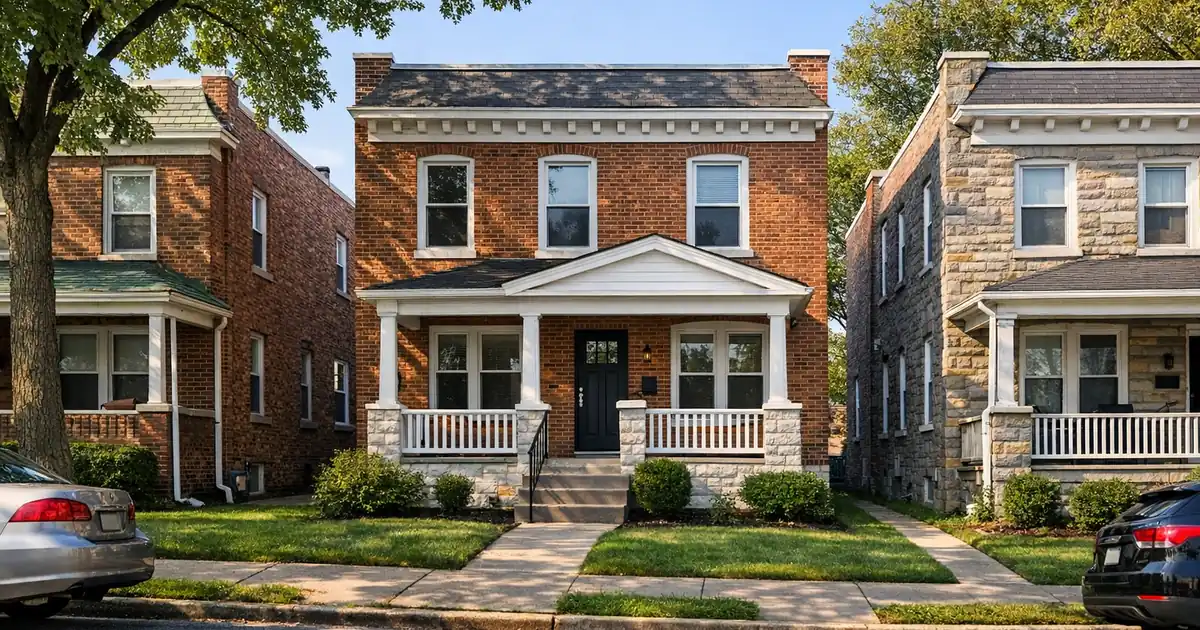
Baltimore just ended nine straight years of population decline. That’s not a marketing slogan — it’s U.S. Census Bureau data, and for investors who’ve been watching this market, it matters. A city that’s been bleeding residents for over a decade doesn’t reverse course without something structural happening underneath. Healthcare hiring is accelerating, Johns Hopkins and the University of Maryland Medical System together employ over 60,000 people, and the port handles more than 3 million TEUs annually. The foundation here is real.
Brandon Miller, Founder and CEO of Lendmire, has watched secondary cities like Baltimore become some of the most interesting DSCR loan stories in the country — not because they’re flashy, but because the rent-to-price ratios in specific neighborhoods actually produce qualifying income. DSCR loans qualify on property income, not personal W-2 — which means the Baltimore math either works or it doesn’t, and in the right pockets of this city, it works.
Lendmire (NMLS# 2371349) is a non-QM mortgage broker, and Lendmire’s DSCR guide covers the full qualification model for investors new to income-based financing. This article is about where to put that capital in Baltimore specifically.
The Employment Anchor Nobody Talks About Enough
Most investors hear “Baltimore” and think Inner Harbor. The real story is the medical and academic employment cluster that makes this one of the most tenant-stable cities on the East Coast.
Johns Hopkins Medicine alone employs roughly 35,000 people, operates multiple hospitals and the Bloomberg School of Public Health, and is consistently ranked among the top hospital systems in the United States. The University of Maryland Medical System adds another 28,000 employees, anchored by one of the largest teaching hospitals in the state. MedStar Health brings approximately 3,000 more healthcare professionals across 10 regional facilities. LifeBridge Health, St. Agnes HealthCare, and the Baltimore VA Medical Center round out a health system that effectively functions as an economic anchor for the entire metro.
Add Johns Hopkins University’s 22,000 students, UMBC’s 13,900-plus enrollment, Morgan State University’s 7,000-plus students, and professional schools at the University of Maryland, Baltimore — covering law, medicine, pharmacy, nursing, dentistry, and social work — and you have a tenant pipeline that doesn’t rely on any single industry cycle.
Exelon, headquartered in Baltimore, serves over 10 million customers along the East Coast. T. Rowe Price and Under Armour both call Baltimore home. Lockheed Martin has a significant regional presence. The Social Security Administration uses Baltimore as a central hub.
That’s the employment picture. When underwriters look at Baltimore rental demand, this is why it holds.
Where Baltimore’s Neighborhoods Actually Pencil for DSCR
Not every Baltimore neighborhood produces a qualifying DSCR ratio. Properties in West Baltimore can look attractive on paper at $150,000 median prices until you stress-test the debt service coverage with realistic rent levels and factor in the management overhead. Neighborhoods with strong institutional demand — proximity to hospitals, universities, and the waterfront employment corridor — are where the income-to-payment math produces results.
Here’s how the major submarkets break down.
Canton
Canton is the most straightforward DSCR story in Baltimore. Average home prices sit around $355,000, with newer and waterfront properties pushing toward $375,000–$500,000. Average rents are $1,989 for a one-bedroom and $2,336 for a two-bedroom.
Run a simple scenario: a $375,000 purchase with 20% down ($75,000) produces a $300,000 loan. Monthly PITIA on a 30-year structure at prevailing rates sits in the range that a $2,336 two-bedroom rent needs to cover at a 1.00 DSCR minimum. Whether it clears comfortably depends on the rate environment at closing — but the rent volume here is supported by genuine demand from young professionals who want harbor proximity without downtown pricing. Canton has seen home values increase roughly 8% recently, outpacing most other Baltimore neighborhoods.
The STR overlay is also real here. Canton pulls consistent Airbnb demand given its waterfront access and proximity to O’Donnell Square. For investors structuring with blended income — some long-term, some short-term occupancy — the short-term rental side of the DSCR model allows lenders to factor platform income into the qualifying calculation.
Fells Point
Fells Point runs at $2,011/month average rent, with one-bedrooms averaging $2,193. The neighborhood’s 18th-century waterfront architecture and cobblestone streets generate the kind of character that keeps vacancy rates low — there’s a reason properties here hold value even when broader Baltimore inventory softens.
For DSCR purposes, Fells Point works best for investors who can acquire in the $300,000–$400,000 range, which still exists in this market despite demand pressure. The limited inventory actually benefits long-term holders: when your property is one of a finite number of historic rowhomes within walking distance of the harbor, you don’t compete on price — you compete on condition.
Fells Point’s Airbnb potential adds another lever. The constant visitor flow from harbor tourism, nearby stadiums, and Baltimore’s events calendar makes short-term rental occupancy predictable here in ways it isn’t in purely residential submarkets.
Federal Hill
Federal Hill averages $1,974/month in rent — roughly 20% above the Baltimore city average — and two-bedrooms push toward $2,715. Oriole Park at Camden Yards and M&T Bank Stadium are within walking distance, which does two things for investors: it drives short-term demand during baseball and football seasons, and it draws exactly the young professional demographic that signs 12-month leases and pays on time.
The income profile here is solid. Investors who purchased Federal Hill rowhomes three to five years ago and have seen appreciation can access that equity through a cash-out structure at up to 75% LTV, then redeploy into additional Baltimore inventory. How the cash-out works on a DSCR basis is different from conventional — there’s no income verification against W-2s, which matters for investors whose portfolios generate more than their personal tax returns show.
Hampden
Hampden is the value play among Baltimore’s desirable neighborhoods. Rents typically range between $1,600 and $1,800 for a one-bedroom — lower than Canton or Federal Hill but still supported by genuine demand from young professionals, artists, and faculty from nearby Johns Hopkins University. The neighborhood’s identity (HonFest, the quirky commercial strip along “The Avenue”) keeps it distinctive enough that it doesn’t quietly become another generic rental market.
For investors who need a lower purchase price to hit 1.00 DSCR, Hampden is worth examining closely. A rowhome in the $275,000–$325,000 range with $1,700/month in rent can clear at the right loan amount. The tenant mix is stable — Johns Hopkins proximity ensures there’s always someone looking for a 12-month lease near the university who doesn’t want to pay Canton prices.
Mount Vernon
Mount Vernon carries the most interesting price-to-rent setup in Baltimore. Median home prices around $275,000 paired with average rents of $1,593/month on one-bedrooms and $1,828 on two-bedrooms. The Walters Art Museum, the historic Washington Monument, and proximity to UMB’s professional graduate schools create consistent demand from professionals and graduate students who plan to stay 2–3 years.
The math here can be tight on smaller purchases with higher-rate debt service. Investors who want Mount Vernon should look at interest-only loan structures to widen the monthly margin, or at 2–4 unit properties where aggregate rent income more comfortably covers PITIA. On a qualifying DSCR ratio, Mount Vernon’s sub-$300,000 entry points make it one of the few Baltimore neighborhoods where a 700+ credit score investor can get in at 80% LTV without stretching on the income side.
Charles Village
Charles Village is essentially a Johns Hopkins feeder market. Students, faculty, and hospital workers at multiple institutions within walking distance ensure consistent occupancy, and prices in the $250,000–$375,000 range give investors room to structure deals that actually cash flow.
The real opportunity in Charles Village isn’t the single-family rowhome — it’s the 2–4 unit building. A triplex or quadplex here puts multiple rental streams against a single loan, which is exactly how DSCR math improves. For 2-4 unit purchases, program parameters run at 75% LTV, so investors need to plan for a 25% down payment. The aggregate income across three or four units often produces a stronger qualifying DSCR than any single-family equivalent at the same purchase price. Multi-unit buildings in Charles Village do well precisely because the demand pool is so concentrated and reliable — the area’s program details should be confirmed with Lendmire directly, as qualification parameters are subject to lender overlays.
Station North / Arts District
Station North is the most forward-looking submarket on this list. Two-bedroom rents average around $2,021, and three-bedrooms around $2,266 — meaningful income for a neighborhood that’s still in the early innings of its revitalization arc. The arts-linked investment Baltimore has directed here is paying off in the form of renovated rowhomes, artist live/work conversions, and a pedestrian environment that draws the exact tenant profile (creative professionals, graduate students, urban-first millennials) who tends to stay put and renew leases.
The cap rate data from this area is notable: a seven-unit portfolio in the Station North corridor generated $125,000 in net operating income at an 8.31% cap rate — well above the Baltimore city average of 5–6%. That’s the kind of performance that makes how DSCR stacks up against conventional financing a genuinely useful conversation for experienced investors building out a multi-property strategy.
Penn Station is walkable, which adds commuter appeal for D.C.-connected professionals who want Baltimore pricing without sacrificing transit access. Baltimore sits roughly 35 miles northwest of Washington, and with MARC train service running between Penn Station and Union Station, some tenants in Station North are effectively D.C. workers paying Baltimore rents.
West Baltimore — Proceed With Calculation
West Baltimore’s median home price around $150,000 makes it look attractive at first glance. Prices have moved roughly 2% recently, and Coppin State University (2,790 students) provides some localized demand. The revitalization narrative is real in spots.
But for DSCR purposes, be honest about the inputs. Rents in West Baltimore are lower than citywide averages, which tightens the income-to-payment ratio on any loan above $100,000. For properties under $150,000, DSCR programs require a minimum ratio of 1.25 — which means the rent volume needs to be meaningfully higher relative to debt service than in a standard 1.00 scenario. Investors who can acquire here with substantial cash down, minimizing the loan amount and the monthly obligation, can make it work. A purely leveraged play at 80% LTV on a $150,000 property with modest rents is where deals stop qualifying.
West Baltimore is a patient equity play, not a day-one cash flow story. Know the difference before you put the property under contract.
Baltimore’s STR Layer
Baltimore’s short-term rental market has 1,286 active Airbnb listings and a median occupancy rate of 62%, with typical properties booked approximately 226 nights per year. That occupancy rate on an annual basis is meaningful — STR properties in markets with concentrated event and tourism demand (Camden Yards, M&T Bank Stadium, Inner Harbor, historic district tourism) tend to outperform generic short-term rental markets.
Fells Point and Canton are the two neighborhoods where STR demand is most defensible. Federal Hill gets a boost during baseball and football seasons. For investors structuring STR acquisitions in Baltimore, the DSCR model allows lenders to use Airbnb/VRBO income as the qualifying income stream rather than long-term market rent — which often produces a higher qualifying figure in a market like this.
The caveat: Baltimore’s STR regulatory environment is something to verify before acquisition. The city requires short-term rental operators to hold licenses, and enforcement has been increasing. Investors should confirm current licensing requirements directly with Baltimore City before assuming STR income qualifies in a specific property or zone.
Putting Together a Baltimore DSCR Loan
For investors new to DSCR financing, the model is straightforward: the loan qualifies on the property’s rental income, not the borrower’s personal income. Lendmire’s DSCR guide walks through the full structure. The practical implication for Baltimore investors is that a physician at Johns Hopkins who wants to buy a rental property but shows relatively little W-2 income after deductions can still finance an investment property — the property’s rent roll is what matters.
Standard parameters that apply across Baltimore:
- Purchase LTV: Up to 80% for single-family (700+ credit, ≤$1.5M). Two-to-four unit properties and condos: 75% purchase, 70% refi.
- Minimum DSCR: 1.00 at standard programs. Sub-1.00 programs are available for qualifying borrowers (660–700 credit score range, reduced LTV) — those properties are still financeable, just structured differently.
- Loan amounts: $100,000 minimum through $3 million, with jumbo capacity up to $6 million.
- LLC closing: Lendmire closes in LLC name, subject to lender program eligibility.
- Close speed: Lendmire targets closings in as few as 15 days.
For investors holding appreciated Baltimore properties — Federal Hill, Canton, or Fells Point assets purchased several years ago — the cash-out option at 75% LTV lets you pull equity without refinancing your entire portfolio. How the cash-out works on a DSCR basis uses the property’s current rental income to qualify, and cash-out proceeds apply toward investment debt only (existing rental mortgages, hard money, private lending). Investors who acquired in Baltimore’s sub-peak period and have equity to deploy should be looking at this seriously.
Investors can request a quote directly or reach Lendmire at 828-256-2183.
Lendmire’s DSCR platform covers Baltimore, Maryland and 39 other states, and is recognized as a top-ranked workplace in the mortgage industry.
Baltimore DSCR FAQs
Does the MARC train access in Baltimore affect how lenders view rental demand here?
Lenders don’t evaluate commuter infrastructure directly, but investors should. Penn Station’s MARC service to Washington, D.C. extends the effective tenant pool in neighborhoods like Station North and Mount Vernon significantly — tenants who work in D.C. but prefer Baltimore’s cost structure represent stable, higher-income renters. For DSCR qualification, this translates to market rent appraisals that reflect real demand rather than discounted assumptions.
Can I finance a rowhouse in Baltimore through a DSCR loan if it needs renovation?
Properties that aren’t rent-ready at time of closing generally don’t qualify for standard DSCR programs because there’s no income to document. Investors should look at fix-and-flip or bridge financing first, then refinance into a DSCR structure once the property is stabilized and generating rent. Lendmire handles refinance details on the back end of that sequence.
How does Baltimore’s STR licensing requirement affect DSCR qualification?
If a property isn’t operating legally as a short-term rental, lenders can’t use STR income to qualify the loan. Investors planning to use Airbnb income in their DSCR calculation need to confirm active licensing compliance before closing. For properly licensed STR properties, Lendmire works with lenders who accept platform income documentation — the short-term rental side of DSCR financing is different from conventional STR lending.
What happens if my Baltimore property falls below a 1.00 DSCR ratio?
Sub-1.00 DSCR programs exist specifically for this scenario. Borrowers with 660–700 credit scores in an acceptable range can access reduced-LTV programs where the property income doesn’t need to fully cover debt service. Interest-only loan structures also widen the monthly spread by lowering the payment, which can push a borderline property above the 1.00 threshold without changing the purchase price or down payment. Neither situation means the property doesn’t qualify — it means the structure needs to be engineered correctly.
Are 2-4 unit properties in neighborhoods like Charles Village or Hampden common for DSCR financing?
Yes, and they’re often the stronger performing loans in this market. Multi-unit properties aggregate rent income across multiple tenants, which improves DSCR coverage and reduces the impact of any single vacancy. The tradeoff is that 2-4 unit purchases require 75% LTV (25% down), so plan accordingly on reserves and equity.
How does West Baltimore’s $150,000 price point interact with DSCR minimums?
Properties under $150,000 carry a higher minimum DSCR requirement — 1.25 rather than 1.00. That’s a meaningful distinction. If market rent on a $130,000 West Baltimore property is $900/month, the debt service needs to be no more than $720/month to clear 1.25 DSCR. A smaller loan (higher down payment) is usually the path to making those numbers work. Low purchase price doesn’t automatically mean easy qualification.
Baltimore’s story for real estate investors is ultimately a patience story. The neighborhoods with the best DSCR math — Canton, Federal Hill, Fells Point — aren’t deeply discounted, but they produce income supported by institutional employment density that very few American cities can match at this price point. The population reversal, small as it is, signals that the demographic outflow that defined the prior decade may have run its course. For investors who want institutional tenant quality without institutional market pricing, Baltimore remains one of the more interesting places on the East Coast to build a rental portfolio.
For informational purposes only. This is not a commitment to lend or extend credit. Information and/or dates are subject to change without notice. All loans are subject to credit approval. All property values, rental rates, and market data referenced are approximate and based on publicly available information as of the date of publication. Lendmire is a licensed Mortgage Broker, NMLS# 2371349, Equal Housing Opportunity.

Related Posts