Sixty-three percent of Angelenos rent their homes. That single number explains why investors have been…
Cash Out Refinance Investment Property in Detroit, Michigan — Equity in a City Coming Back
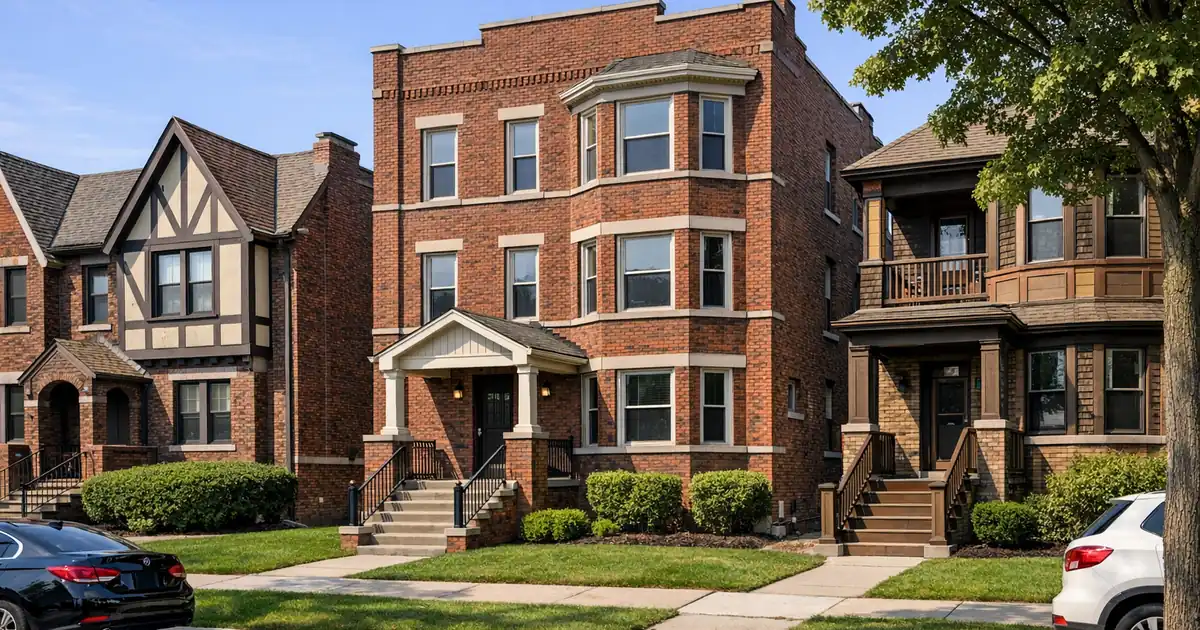
Detroit added nearly 6,800 residents in a single year and led Michigan in population growth for the first time since the 1950s. That’s not a footnote — that’s a market signal. For investors who bought in Detroit three to five years ago when nobody wanted to touch it, equity has arrived. The question now is what to do with it.
A cash-out refinance on a Detroit investment property lets you pull that equity out at 75 LTV and redeploy it — into the next acquisition, a renovation, or a portfolio expansion in another market. For investors sitting on a Corktown duplex or a University District four-unit that’s climbed in value, the mechanism is the same: qualify on the property’s income, not your personal W-2, close the refi, and put the capital back to work.
This is where cash-out refinance details through a DSCR structure become the tool of choice for Detroit investors. The loan qualifies on rent income against PITIA — no tax returns, no employment verification, no debt-to-income ratios pulling from your personal file. For the landlord who owns six properties across Detroit’s northwest side and shows modest W-2 income, that’s not a workaround. That’s the right product.
Detroit’s Comeback Is Producing Real Equity
Per U.S. Census Bureau data, Detroit’s population has grown to an estimated 645,705 — up from roughly 620,000 just three years ago. The metro area added nearly 31,000 residents in a single year, reaching approximately 4.4 million. This isn’t the Detroit of the bankruptcy era. The city now holds roughly $550 million in reserves and anchors the third-largest regional economy in the Midwest.
The employer base underpins all of it. General Motors, Ford Motor Company, and Stellantis — the Big Three auto manufacturers, all headquartered in the metro — combined with healthcare giants like Henry Ford Health and the Detroit Medical Center produce a stable, salaried tenant class that keeps long-term rentals occupied. Henry Ford Health alone employs 50,000 people across 550 locations. The DMC encompasses more than 12,000 employees and 3,000 affiliated physicians, concentrated in Midtown Detroit. These aren’t seasonal workers. They’re nurses, engineers, and technicians looking for two-year leases.
Add Wayne State University’s 23,964 students and the University of Detroit Mercy’s campus on the northwest side, and you’ve got institutional demand anchoring rental occupancy in multiple submarkets simultaneously.
According to the Detroit Regional Chamber, 99% of Detroit’s 208 neighborhoods — 206 of them — saw property value increases compared to the prior year. That’s a market-wide trend, not a pocket appreciation story.
Where the Deals Are: Neighborhood-by-Neighborhood
Corktown
Corktown has the highest price points in Detroit’s urban core, with a median sale price of $450,000 as of mid-2025. Ford Motor Company’s redevelopment of Michigan Central Station — a long-vacant historic rail terminal — has pulled young professionals, creative workers, and tech employees into this neighborhood, and property values have climbed over 30% in just two years.
At $450K, the cash-out math works like this: a property purchased at $350,000 two years ago now appraises near that $450K figure. At 75 LTV on the new value, the maximum loan is $337,500. If the original purchase loan balance is $260,000, the borrower pulls out roughly $77,500 in net proceeds — usable only for investment debt payoff or the next acquisition, per program guidelines.
Corktown’s rental demand is strong, but buyers should watch purchase prices carefully. If you’re acquiring now at $450K, you need monthly rent covering PITIA on a $360K loan (80% LTV purchase), which requires roughly $2,800-$3,200/month in rent depending on your rate and insurance — achievable on a two-unit but tighter on a single-family. Confirm your rent schedule before committing.
Midtown
Midtown is where Wayne State University, the DMC medical campus, and Detroit’s cultural corridor (the Detroit Institute of Arts, the Charles H. Wright Museum of African American History, the Detroit Historical Museum) converge. Homes here move fast — often within 20 days of listing — and the tenant pool is arguably the strongest in the city.
The dual-income driver — academic and medical — makes Midtown a natural long-term rental market. Downtown Detroit and Midtown are also active for short-term vacation rentals, so investors who want optionality can structure for either use case. The DMC’s hospitals, including Children’s Hospital of Michigan and DMC Harper University Hospital, are affiliated with both Wayne State and Michigan State University, creating a year-round rotation of medical residents and traveling staff that fill furnished rentals reliably.
There’s no isolated Midtown median in the research, but pricing sits well above the citywide median of approximately $98,000. Investors carrying Midtown properties from three to four years ago are likely sitting on meaningful appreciation and should be running refinance scenarios.
West Village
West Village is where investors find the best balance of price and tenant quality in Detroit right now. Median sale price of $294,403 — less than two-thirds of Corktown — with a tenant profile of young professionals and remote workers priced out of the more established neighborhoods. Private investment has moved into the neighborhood, and the historic home stock gives it a character that commands above-average rents for its price tier.
At $294K purchase, 80% LTV gets you a $235,200 loan. A two-unit in West Village producing $2,400/month in combined rent has a legitimate shot at a 1.10+ DSCR once you run the PITIA. That’s a clean qualification under standard program guidelines. For how the qualification works on income-based underwriting, the math is straightforward: rent ÷ PITIA = DSCR ratio. No W-2 required.
Boston-Edison Historic District
Boston-Edison is the cautionary note in this article — not because the neighborhood is declining, but because the pace of the market makes it a hold-and-refinance story, not an acquire-and-flip-income story. Median price of $315,000 with homes averaging 100 days on market and selling roughly 4% below list price. That’s a buyer’s market profile at a seller’s market price.
The upside: if you already own in Boston-Edison near the Henry Ford Health New Center campus, you probably have equity to extract, and the healthcare-worker tenant base is stable enough to support a long-term hold. Cash-out at 75 LTV works here as a portfolio financing move. But buying at current prices for cash flow requires careful underwriting — don’t assume the 100-day DOM means you can negotiate aggressively on every deal.
University District and Bagley
These two northwest-side neighborhoods are where the DSCR math gets the most interesting for yield-focused investors.
University District median is approximately $180,000, with the strongest demand in the $150,000-$250,000 price range. Proximity to University of Detroit Mercy creates consistent student and faculty rental demand. Bagley, just nearby, carries a $199,000 median with stable working-class and middle-income renters plus the same institutional anchor.
Run the scenario on a $180K University District single-family: 20% down is $36,000, loan amount $144,000. Monthly PITIA on that loan is in the $1,100-$1,300 range depending on insurance and taxes. Detroit’s citywide average rents are competitive enough that a three-bedroom in this neighborhood at $1,400-$1,600/month produces a DSCR comfortably above 1.10. For investors looking to build a Detroit portfolio without overleveraging, these two neighborhoods deserve more attention than they get.
Investors interested in how DSCR lending compares to conventional financing should know the fundamental difference: conventional loans cap out fast on property count and income documentation requirements. DSCR scales.
Indian Village, East English Village, and New Center
Indian Village is one of Detroit’s most historically prestigious neighborhoods — early 20th-century mansions near the Detroit River — and has seen above-average price increases driven by desirability and ongoing revitalization. Long-term family renters and stability-focused households anchor demand here. Not a high-yield market, but a reliable hold.
East English Village on the east side offers a more modest single-family profile — stable, working-class, and often overlooked in favor of the flashier revitalization neighborhoods. That can work in the buyer’s favor.
New Center is the neighborhood to watch most closely. The $3 billion Henry Ford Health expansion — a partnership involving Henry Ford Health, Michigan State University, Detroit Pistons owner Tom Gores, and the Gilbert Family Foundation, approved by Detroit City Council — is the largest single institutional investment in this part of the city in decades. The North End and Milwaukee Junction corridor bordering Midtown has drawn artists and small businesses. Buy-and-hold investors near the Henry Ford Hospital campus on the 53-acre New Center property are positioned for appreciation that institutional money will drive over the next several years.
The STR Layer: Real But Regulated
Detroit has 1,651 active Airbnb listings. Sports tourism from the Lions, Tigers, Pistons, and Red Wings, combined with music tourism anchored by the Motown Museum, the Movement Electronic Music Festival, and the Detroit Jazz Festival, creates genuine short-term rental demand. Business travel, medical tourism to Henry Ford and DMC, and auto industry events including the North American International Auto Show add event-driven occupancy throughout the year.
The regulatory reality is what it is: Detroit’s STR ordinance requires that the property be the owner’s principal residence. That means Detroit STR licensing is structured for owner-occupants, not investor-owned non-owner properties. Hosts are capped at 90 total days per year, and a $500 annual license from the city’s Buildings, Safety Engineering, and Environmental Department is required.
For investors, this is a significant constraint. If you’re underwriting a Detroit acquisition with STR income as the primary DSCR driver, get local regulatory counsel before closing. The STR lending details work best in markets where investor-owned STR is explicitly permitted — Detroit’s ordinance complicates that structure.
The practical play: Midtown and downtown properties with strong long-term rental demand don’t need the STR premium to pencil. Model long-term rent first. If the deal works on traditional rent, the STR optionality (where legally applicable) is upside.
What a Cash-Out Refi Actually Looks Like Here
Take a property in Bagley acquired at $150,000 three years ago. Appreciation across Detroit’s market puts a conservative current value at $190,000-$200,000. At 75 LTV cash-out on a $195,000 appraised value, the new loan is $146,250. If the remaining balance on the original mortgage is $115,000, the net cash-out proceeds are approximately $31,250.
That’s real capital to deploy into a University District acquisition or a renovation draw. The proceeds must service investment debt — not personal credit cards or consumer loans. That’s a hard program requirement, not a suggestion.
DSCR minimum at 660 credit score qualifies for a sub-1.00 program at reduced LTV if the math runs tight. Standard qualification at 1.00 or above is cleaner. Under $150K loan amounts require a 1.25 DSCR minimum — something to factor on Detroit’s lower-priced inventory.
For investors carrying multiple properties, the refinancing options available through Lendmire’s DSCR programs include 30-year fixed, 40-year, IO structures, and ARM products that can reduce monthly obligations enough to improve DSCR on tighter deals. An interest-only structure on a refinance can shift a 0.95 DSCR into a qualifying position without changing the underlying rent.
Program parameters are subject to change — confirm current guidelines directly with Lendmire before underwriting to a specific structure.
Frequently Asked Questions: Detroit DSCR Investors
Does Detroit’s residency requirement for STR licenses affect DSCR loan structuring?
Yes, directly. Detroit’s STR ordinance requires the property to be the host’s principal residence, which means investor-owned non-owner-occupied properties cannot operate as licensed short-term rentals under the current framework. DSCR underwriting for Detroit properties should rely on long-term rental income, not STR projections, unless ownership and occupancy qualify under the ordinance. Consult a Detroit real estate attorney before structuring any deal around STR income in this market.
Can I do a cash-out refinance on a Detroit property worth less than $150,000?
Yes, but with an important caveat: Lendmire’s DSCR program has a $100,000 minimum loan amount, and properties producing loans under $150,000 require a DSCR of at least 1.25. Detroit has significant inventory under $200,000 — particularly in University District, Bagley, and parts of the east side — so investors should model DSCR at the 1.25 threshold before assuming sub-$150K loans qualify at 1.00.
How does the Ford Michigan Central Station redevelopment affect nearby property values?
It already has. Corktown median prices have risen over 30% in two years, directly tied to the Ford campus development at Michigan Central Station. This isn’t a future projection — the appreciation has already been captured in current pricing. For investors who bought in Corktown before the Ford announcement, the cash-out opportunity is real. For new buyers entering now at $450K+ medians, the income-to-price equation is tighter and requires multi-unit density to generate qualifying DSCR.
What tenant classes drive Detroit rental demand, and which neighborhoods correlate to which employers?
Medical and healthcare workers anchor Midtown (DMC), New Center (Henry Ford Health), and Boston-Edison. Wayne State’s 24,000 students create demand in Midtown and adjacent neighborhoods. Auto-industry employees, particularly Ford’s growing Michigan Central campus, concentrate in Corktown. University of Detroit Mercy and the adjacent northwest-side corridor support University District and Bagley. For long-term hold investors, matching neighborhood to employer anchor produces the most stable occupancy.
Can an LLC hold the property on a DSCR cash-out refinance in Michigan?
LLC closings are available through DSCR programs, subject to lender program eligibility. Michigan doesn’t impose unusual state-level restrictions on LLC investment property ownership, but program guidelines vary by lender. Confirm LLC titling requirements with Lendmire before structuring ownership for a Detroit acquisition.
Is Detroit still considered a declining market by DSCR lenders?
Some lenders have historically applied declining market overlays to Detroit — typically limiting LTV to 70-75% on refinances and 75% on purchases. Lendmire works with investors across 40 states and has programs suited to Michigan’s market, but LTV guidelines should be confirmed at the property level. Census Bureau data showing consecutive years of population growth has improved how institutional lenders view Detroit, but individual program overlays still apply.
Pulling It Together
Brandon Miller, Founder and CEO of Lendmire, has built a platform specifically for investors who need income-based underwriting on properties conventional lenders won’t touch — whether that’s a Detroit four-unit in Midtown, a historic single-family in Boston-Edison, or a New Center rental positioned near the Henry Ford Health expansion. Lendmire works with real estate investors in Detroit, Michigan on purchases, rate-term refinances, and cash-out structures, and closes deals in under three weeks. Investors can reach the team at 828-256-2183 or request a quote directly. Lendmire’s DSCR programs are structured for investors operating at scale — not first-time homebuyers trying to house-hack their way to a portfolio. Recognized as a Scotsman Guide Top Workplace, Lendmire (NMLS# 2371349) closes loans for investors who know what they’re buying and need a lender who does too.
Detroit’s $3 billion Henry Ford Health expansion, Ford’s Michigan Central campus buildout, and consecutive years of population growth aren’t coincidental. Institutional money tends to move before residential price appreciation fully catches up — and in Detroit’s New Center, Corktown, and Midtown submarkets, that window is still open for investors who do the income math before they sign.
For informational purposes only. This is not a commitment to lend or extend credit. Information and/or dates are subject to change without notice. All loans are subject to credit approval. All property values, rental rates, and market data referenced are approximate and based on publicly available information as of the date of publication. Lendmire is a licensed Mortgage Broker, NMLS# 2371349, Equal Housing Opportunity.

Related Posts