
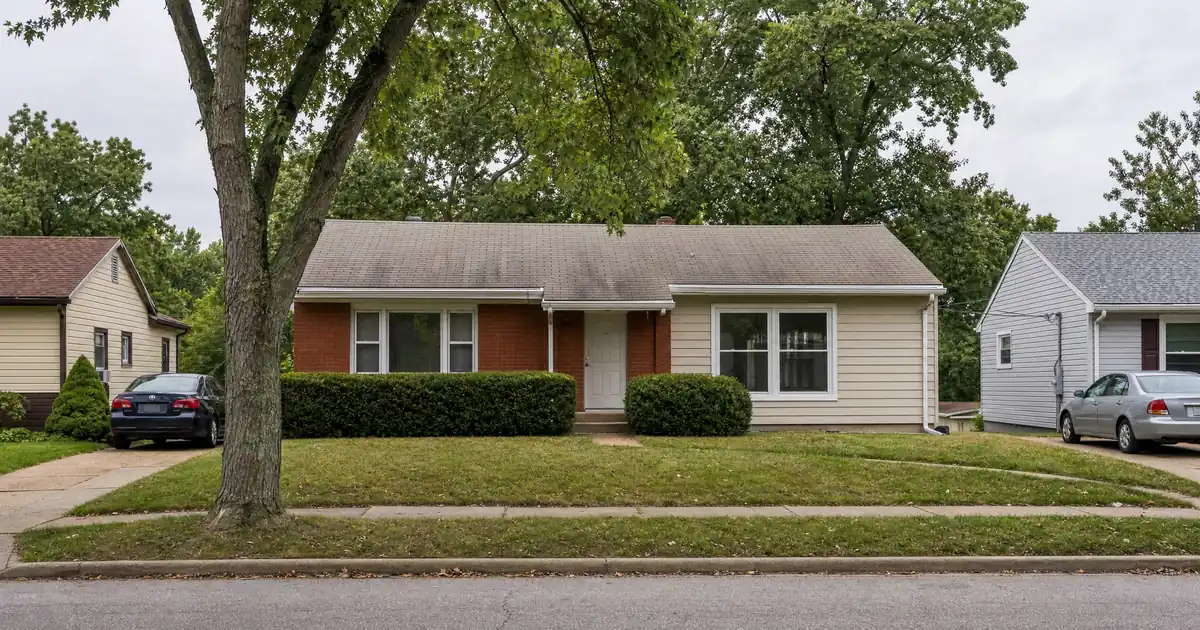
Picture an investor closing on a duplex near the Osage Beach Parkway corridor, priced near $340,000 — the metro-median list range — per Zillow’s duplex/triplex search data. Financed at 75 percent loan-to-value with two units renting near $1,300 apiece — the middle of the local townhome range — the file lands somewhere around 1.2x coverage once taxes and insurance get added to principal and interest — modest, but real. Now picture that same investor eyeing a lakefront single-family two miles away with a similar down payment, chasing a long-term tenant at the average house rent Zumper reports for this ZIP — a figure that runs well above typical apartment rents in the area. That file often comes in tighter, because the acquisition basis on waterfront product runs far ahead of what a year-round lease can support.
That gap — between what the lake’s tourist economy prices a house at and what a working tenant can actually pay — is the single most important fact for anyone underwriting a purchase here.
DSCR Calculator
Run the numbers in your market
Rate source: Freddie Mac 30-yr average via FRED® — Federal Reserve Bank of St. Louis · effective Jul 30, 2026
Prefilled with starting assumptions — enter your own rent or nightly figures, taxes, insurance, and HOA for a more accurate picture.
Program parameters update from Lendmire’s centralized guideline source. Taxes and insurance are editable estimates.
As of Jul 30, 2026 · General Freddie Mac market benchmark, not a Lendmire loan offer. Rent, nightly rate, occupancy, taxes, and insurance are editable estimates. Short-term rental figures are estimates only and vary significantly by season, property type, management approach, and local short-term-rental rules — confirm local regulations before relying on them. Qualifying income for short-term rentals varies by program — some use appraisal market rent, others use documented STR history or projections — and is confirmed in underwriting. Not a Loan Estimate, approval, or commitment to lend. Program availability and eligibility are subject to lender guidelines, credit approval, property review, and underwriting.
The Short Version: An investment property loan in Lake Ozark, Missouri is underwritten primarily against the property’s rental income measured against its full monthly obligation, not the borrower’s traditional personal-income documentation — and in this market, that structure favors multi-unit and off-water product over single lakefront houses, because the city’s small year-round population sits on housing stock built largely for seasonal use (Census Reporter).
- Duplex/triplex list prices in Lake Ozark run meaningfully higher than in nearby Eldon, where basis sits roughly half as much (Zillow).
- Apartment cap rates in the Osage Beach corridor run above typical Missouri metro averages.
- Long-term townhome rents across the Osage Beach–Camdenton–Lake Ozark corridor span a modest-to-moderate monthly range, per Revelation Rentals.
- Citywide rental vacancy runs well above typical stabilized-market levels — a seasonal-inventory signal, not a distress signal.
- Waterfront single-family carries a substantially higher basis than corridor multifamily and generally underwrites on short-term rental income, not a long-term lease.
Lake Ozark Market Snapshot
A quick read on the Lake Ozark investor landscape — figures come from the cited sources below. Confirm current property-level numbers before underwriting.
| Metric | Detail |
|---|---|
| Home prices | $278,100 median property value (Data USA) |
| Typical rents | $1,900 avg (KRCG TV) |
| Recent appreciation | 7.5% yoy (Steadily Missouri Real Estate) |
| Cap rates | ~7.00% cap rate (LoopNet) |
| University enrollment | 4,284 students (2019) (State Fair Community College) |
| Population | 2,335 population (Census Reporter) |
Two Housing Markets, One ZIP Code
Lake Ozark isn’t one rental market. It’s two, stacked on top of each other, and mixing them up is the fastest way to misprice a purchase file.
The city itself is a small year-round community spread across a modest land area, according to Census Reporter’s ACS-derived profile, and its population has grown at a pace that outpaces the surrounding counties and the state average since the last decennial count, according to Ingram’s Magazine. That’s a small resident base carrying a housing stock built almost entirely for a much larger vacation population: historical Census figures show a large share of the city’s housing stock sitting vacant for much of the year, with homeowner vacancy running low but rental vacancy running well above stabilized-market norms. That’s not a market in decline. It’s a market where second homes and vacation condos vastly outnumber year-round rentals — a structural feature that shapes every DSCR file written against city-limits property.
On the employment side, the resident workforce leans toward Health Care and Social Assistance, Retail Trade, and Manufacturing as its largest sectors, per Data USA. Regionally, the Lake of the Ozarks Regional Economic Development Council notes tourism drives most of the area’s economy, with manufacturing gaining ground in the outlying counties and workforce housing named as a regional priority — a theme that shows up again and again in the underlying research.
Bagnell Dam sits at the root of all of it. Built between 1929 and 1931 with a large workforce at peak construction, the dam created the 1,150-mile-shoreline reservoir that anchors the entire regional tourism economy, according to KRCG’s centennial retrospective. Ameren Missouri’s Osage Energy Center, housed at the dam, produces substantial electricity for the regional grid in an average year. None of that generates rental demand directly, but it’s the reason the lake exists as a destination in the first place — and the reason housing here got built for vacationers before it got built for workers.
Why the Duplex Math Beats the Waterfront View
Small multifamily near the Osage Beach Parkway corridor is the strongest purchase-side DSCR fit in this market — better rent-to-value stacking, a non-seasonal tenant base, and a cap rate that runs meaningfully above regional metro comps.
Apartment buildings in Osage Beach trade at cap rates that run above the averages cited for Kansas City and St. Louis multifamily in the same period, according to LoopNet’s commercial listings. A higher going-in cap rate means a given rent roll supports a lower purchase basis, which is exactly the direction an investor wants leverage to lean.
The tenant base backing that corridor is real and non-seasonal. Lake Regional Health System, the region’s dominant employer, operates a large hospital campus with a sizable emergency department that treats a substantial patient volume each year and supports a broad physician staff. The system’s most recent community impact report points to a sizable full-time-equivalent workforce with a payroll well into eight figures annually — and employee-milestone recognitions show long-tenured staff commuting from Camdenton, Macks Creek, Iberia, Pittsburg, and Osage Beach, not a single neighborhood. That’s a payroll base broad enough for a lender’s appraiser to reasonably support market rent across several submarkets, not just the blocks immediately around the hospital.
State Fair Community College’s Lake of the Ozarks campus, a good-sized facility inside the Stone Crest Mall offering general education, technical, and associate-degree coursework, adds another layer of non-seasonal renters — students and staff who need housing that isn’t priced for a July weekend. A partnership with Central Methodist University lets students finish bachelor’s degrees locally, in fields ranging from nursing to criminal justice, which extends the tenant pool beyond a two-year student cycle.
Rent levels in this corridor track what workforce tenants can actually pay. Revelation Rentals markets two-, three-, four-, and five-bedroom townhomes and apartments across Osage Beach, Camdenton, Lake Ozark, and Waynesville within a modest-to-moderate monthly range — figures that stack meaningfully across two to four units under one loan. Compare that to Zumper’s citywide averages, where one-bedroom and two-bedroom apartment rents sit well below the average house rent: single-unit long-term rent on a house-priced acquisition rarely clears strong coverage at full leverage here. Multiplying rent across doors, rather than betting the file on one lease, is the lever that makes the math work.
Run the numbers on a hypothetical duplex near that corridor, priced near $340,000 — the corridor’s typical duplex list level per Zillow’s duplex data — and financed at 75 percent LTV — a typical purchase structure on most DSCR programs, subject to lender guidelines and property review. Two units renting near $1,300 apiece — the middle of the corridor’s townhome range — produce a combined gross monthly rent that, once run through a modeled 30-year amortization in the current financing environment, plus typical regional property tax and insurance costs factored into the full monthly obligation, lands the file around 1.2x coverage — taxes and insurance included, not P&I alone. That’s a workable file, not a spectacular one, and it illustrates why stacking units matters more than chasing a single premium lease in this market.
Eldon Undercuts Everyone on Basis
Eldon is the cash-flow submarket investors keep overlooking because it sits outside city limits — and the price gap is large enough to matter.
The Zillow duplex/triplex data shows Lake Ozark, Osage Beach, Camdenton, Sunrise Beach, and Village of Four Seasons all clustering at a meaningfully higher basis than Eldon, which sits at roughly half the Lake Ozark figure. Against the same regional rent comps Revelation Rentals lists for corridor townhomes, that lower basis produces meaningfully stronger raw coverage on a purchase file, even before accounting for any rent growth.
Run the same modeled math on a duplex priced near Eldon’s typical median, financed at 75 percent LTV, with two units renting near the lower end of the corridor’s townhome range. Using the same modeled amortization, tax, and insurance assumptions, coverage lands well north of 1.7x. That’s the kind of cushion that gives an investor room to absorb a slow month or a vacancy without the file feeling fragile.
The tradeoff is thinner comps and a smaller pool of comparable sales for an appraiser to lean on — a real friction point, and one worth discussing directly with a lender before underwriting. Sunrise Beach and Village of Four Seasons sit at the opposite end: higher-basis submarkets where the return case leans more on price appreciation than raw rent coverage, and where a purchase file should be sized with that tradeoff in mind rather than expecting strong day-one cash flow.
Waterfront Is a Different Loan, Not a Better One
Lakefront single-family and premium condos support financing here, but on a fundamentally different basis than the workforce corridor — and treating the two as interchangeable is where purchase files go sideways.
Waterfront median pricing along the main channel sits well above corridor multifamily levels, with average prices trending higher and high-end sales activity increasing, according to Swift and Co. Realty’s 2026 market update. Against long-term rents that top out well below what that basis requires, that pricing simply doesn’t clear strong coverage on a 12-month lease. These properties generally get underwritten on short-term rental income instead — nightly-rental cash flow rather than a signed lease — and lenders typically discount gross short-term rents by roughly 20 percent before applying the coverage calculation, with cash-out leverage on this property type usually capped lower than on a standard long-term-rental file. Investors targeting waterfront product should plan the purchase around that STR-income underwriting path from the start, not assume it prices the same as a corridor duplex, and should confirm current short-term rental rules directly with the City of Lake Ozark before closing.
Statewide context matters here too: Missouri’s median home price sits well below Lake Ozark’s citywide figure, with the state overall showing steady year-over-year appreciation, per Steadily’s market overview. Lake Ozark’s own citywide median list price runs meaningfully above that state figure, per Movoto’s May figures — a premium the state median doesn’t carry, driven almost entirely by waterfront and second-home demand rather than by wage growth in the local economy.
That wage gap is worth sitting with. A local news report on a new cottage-development project pointed to average area rent running high relative to average area salary — meaning housing could eat a large share of income at that blended rent level. That mismatch is exactly why lower-cost, per-unit product in the workforce corridor, not the higher blended average, is where a tenant base can actually sustain occupancy over a lease term.
What Changes at the Lake Over the Next Two Years
Two projects entering the pipeline right now will reshape the comp picture for purchase-side underwriting sooner than most investors expect.
A 16.7-acre workforce-housing development is moving forward inside Lake Ozark city limits at Route W and Mockingbird Road, purchased by a local developer. That matters for appraisal depth: once units deliver, lenders and appraisers will have fresh, non-vacation-basis rent comps sitting inside the city itself, rather than leaning entirely on Osage Beach or Camdenton comparables — a gap that has made purchase files in Lake Ozark proper somewhat comp-thin historically.
Camdenton is moving faster on the institutional side. A 48-unit apartment complex with income-based rates is under construction there, a direct signal that developers see stabilized long-term-rental demand in Camdenton specifically, not in the tourist core. That project, combined with Camdenton’s lower duplex basis relative to Lake Ozark, reinforces that Camdenton — not lakefront Lake Ozark — is the region’s recognized long-term multifamily submarket right now.
Set against a housing supply gap that regional planners describe as structural rather than cyclical — a shortage severe enough that it’s slowing the area’s ability to fill open jobs, according to the Lake of the Ozarks Council of Local Governments’ housing study — new workforce supply entering the market over the next couple of years should get absorbed rather than sitting vacant. That’s a meaningfully different risk profile than resort markets where short-term rental overbuilding threatens long-term rent comps.
Files coming out of small tourism-adjacent lake markets tend to share a pattern at the deal-desk level: the cleanest ones separate STR-income and long-term-lease documentation from the start rather than blending the two, and they come in with a rent roll or lease evidence that matches the property’s actual use rather than an aspirational nightly rate. The friction usually shows up when a borrower submits a market-rent estimate for a lakefront condo without distinguishing whether it’s being underwritten as a long-term rental or a short-term one — that ambiguity slows a file down more than almost anything else in this kind of market.
What Investors Should Expect to Bring to Closing
Most DSCR purchase programs in this market run in a 75-to-80-percent LTV range, meaning 20 to 25 percent down for most files, with a high-leverage ceiling near 85 percent available on select files when guidelines allow it — subject to lender review. A 1.00x DSCR often serves as a floor on select programs, since at that level rent covers the full monthly obligation; many standard programs look for coverage above that baseline, and some lenders will review lower or no-ratio scenarios, but those generally require stronger compensating factors, lower leverage, or additional reserves. Credit-tier guidance commonly runs from a 620 floor up through a 700-plus overlay tier tied to higher-leverage files, and reserve requirements typically land around six months of the full monthly obligation, rising to roughly nine months on loan amounts above $1.5 million. LLC-titled purchases are commonly supported on these programs, subject to program eligibility, which matters in a market like this one where investors frequently hold multiple doors under a single entity to aggregate the corridor’s smaller rent checks into one file.
DSCR vs. conventional financing
Two common ways to finance an investment property in this market. They qualify you differently — here’s how investors weigh them.
Why investors choose it
- Qualifies on the property’s rental income — no personal tax returns, W-2s, or pay stubs needed to document income.
- No personal debt-to-income ceiling to clear, so existing mortgages and obligations don’t cap your borrowing the same way.
- Can be closed in an LLC, keeping the property inside a business entity.
- Built for scaling — not held to the limit on number of financed properties that conventional financing applies.
- Underwriting centers on the deal: generally qualifies when the rent covers the payment, a 1.00x coverage ratio being a common baseline (confirmed in underwriting).
- Designed specifically for investment property, including long-term and, where the program allows, short-term rentals.
Where it’s strong
- Often the lowest ongoing financing cost for a buyer who fully qualifies on personal income — a fit for a first property or a cost-first purchase.
Trade-offs for investors
- Requires full personal income documentation and must fit within a debt-to-income limit — salary, existing debts, and other mortgages all count.
- Typically held in your personal name rather than a business entity.
- Caps how many financed properties you can carry, which can become a ceiling as a portfolio grows.
- Evaluates you as a borrower as much as the property, which usually means more paperwork.
How investors usually choose: a first or single property often optimizes for the lowest financing cost; portfolio builders often optimize for leverage, vesting in an LLC, and scaling past conventional caps. The right answer depends on your goals, the property, and current guidelines — both paths run through select lenders in Lendmire’s wholesale network, with eligibility and terms confirmed in underwriting.
Frequently Asked Questions
How do you qualify for a DSCR loan in Lake Ozark, Missouri?
Qualification centers on the property’s rental income measured against its full monthly obligation rather than traditional personal-income documentation. Lenders typically want a signed or projected lease matching the property’s actual use — long-term for a corridor duplex, short-term income history for a waterfront condo — plus standard credit, reserve, and down-payment documentation reviewed subject to program guidelines.
What are the requirements for an investment property loan in Lake Ozark, Missouri?
Most programs look for 20 to 25 percent down, a credit score generally starting around 620 for standard tiers, roughly six months of reserves, and a DSCR that clears a lender’s minimum threshold, with 1.00x often serving as a floor on select programs rather than a universal standard. Waterfront and short-term-rental properties often carry additional documentation requirements, since income gets sourced from nightly-rental history rather than a lease.
What credit score ranges may DSCR lenders review for a Lake Ozark rental property?
Lenders commonly review credit tiers starting around a 620 floor, with stronger pricing and leverage tiers available near 660, 680, and 700-plus, subject to lender guidelines. Lendmire arranges DSCR financing and works within these tiers to match a borrower’s file to a lender that fits the property and credit profile.
Does a lakefront condo qualify differently than a duplex near Osage Beach Parkway?
Yes. A lakefront condo generally underwrites against short-term rental income, with lenders typically discounting gross nightly-rental income by roughly 20 percent before applying the coverage calculation, while a corridor duplex underwrites against signed long-term leases. The two property types often move through different documentation paths even within the same loan program.
Why do duplexes and fourplexes pencil better than single-family homes at the lake?
Because average long-term rents here run well below house-level pricing per Zumper’s apartment averages, single-family homes don’t clear strong coverage on a single unit. Stacking two to four units under one acquisition multiplies gross rent against a single appraisal basis, which is what makes the coverage math work at typical purchase leverage.
Is Eldon worth considering even though it’s outside Lake Ozark city limits?
It’s worth serious consideration for cash-flow-focused buyers. Eldon’s duplex median list price runs roughly half of Lake Ozark’s, and against comparable regional rents that gap produces stronger day-one coverage — the tradeoff being thinner comparable sales data for an appraiser to work with.
Lendmire operates as a DSCR and non-QM mortgage brokerage with investor loan programs across 41 markets. Rental income at the property level, rather than personal income documentation, is commonly the lender’s primary focus in reviewing DSCR eligibility, subject to lender guidelines, and the brokerage helps structure financing for LLC-owned portfolios that extend beyond conventional financed-property limits. Investors comparing this market against other Missouri options can review DSCR loans in Missouri for a broader statewide picture.
The math favors Camdenton over Lake Ozark right now — a lower duplex basis, a 48-unit income-based project already under construction, and a tenant base drawing directly from Lake Regional’s regional payroll. Lake Ozark’s own math is stronger on appreciation, thanks to a notable population surge and a downtown redevelopment push around the Bagnell Dam Strip, but an investor underwriting for coverage today, not equity five years out, gets a cleaner file a few miles down the road in Camdenton.
About Lendmire
Lendmire’s DSCR walkthrough covers how the qualifying math works in more depth, and its DSCR-versus-conventional breakdown is worth a look for investors weighing whether an LLC-held rental fits better under an income-based program or a conventional one. Lendmire (NMLS# 2371349), a DSCR-focused mortgage broker with investor loan programs across 40 states plus Washington, D.C. — 41 markets total — arranges financing for exactly this kind of multi-unit, income-stacking file, and investors working through a Lake Ozark or Camdenton scenario can call 828-256-2183 or request a scenario review to see how a specific corridor and unit count sizes out. Review details are subject to lender overlays, and exact eligibility depends on lender guidelines, credit profile, reserves, and property review.
The firm has been recognized by Scotsman Guide as a 2025 Top Mortgage Workplace and a 2026 Top Mortgage Workplace.
Get Started
Ready to find the right loan for you?
In about 30 seconds you can review financing options available for your investment property. No commitment required.
Informational only. Not a Loan Estimate, approval, or commitment to lend. Program availability and eligibility are subject to lender guidelines, credit approval, property review, and underwriting.
References
1. Zillow — Lake Ozark Duplex/Triplex Listings
3. KRCG TV
4. Steadily — Missouri Real Estate Market Overview
5. LoopNet — Osage Beach Apartment Buildings
6. State Fair Community College
8. Ingram’s Magazine — Beyond the Wake
9. Lake of the Ozarks Regional Economic Development Council
10. KRCG’s centennial retrospective
11. Lake Regional Health System
12. State Fair Community College — Lake of the Ozarks Campus
13. Swift and Co. Realty — 2026 Buyer’s Guide
15. Lake of the Ozarks Council of Local Governments — Housing Study
16. Scotsman Guide — 2025 Top Mortgage Workplaces
17. Scotsman Guide — 2026 Top Mortgage Workplaces
This article is part of Lendmire’s DSCR loan program — full qualification details, guidelines, and scenarios live on the program page.
Related reading: Cash Out Refinance Investment Property in Ozark, Missouri: A 2026 DSCR Refi Guide to Highway 65 · DSCR Cash Out Refinance in Ozark, Missouri: The 2026 DSCR Financing Guide to Hwy 65 Corridor · Investment Property Loans in Osage Beach, MO: Reading What the Long-Term Rental Data Shows
Guides: DSCR Loans in Lake Ozark, MO · DSCR Loans in Missouri
Brandon Miller
Founder & CEO, Mortgage Loan Originator, Lendmire LLC
- Mortgage Loan Originator · NMLS# 1129696 · Verify on NMLS Consumer Access
- North Carolina Real Estate Broker · License# 343312 · Verify on NCREC
- North Carolina Insurance Producer · License# 19053198 · Property, Casualty, Life, Health · Verify on NAIC SBS
- Lendmire LLC · Firm NMLS# 2371349 · Verify firm licensure
Required disclosures. Lendmire (NMLS# 2371349) operates as a licensed mortgage broker, not a direct lender or depository. The discussion in this article is general in nature and should not be relied upon as financial, legal, or tax advice — every investment scenario is unique and should be reviewed by a qualified professional. Any loan inquiry is subject to lender underwriting, and this article is not a commitment to lend or a guarantee of approval. Mortgage rates, loan terms, and program guidelines vary by borrower, property, and state, and may change without notice. Equal Housing Opportunity. Verify licensure at NMLS Consumer Access.