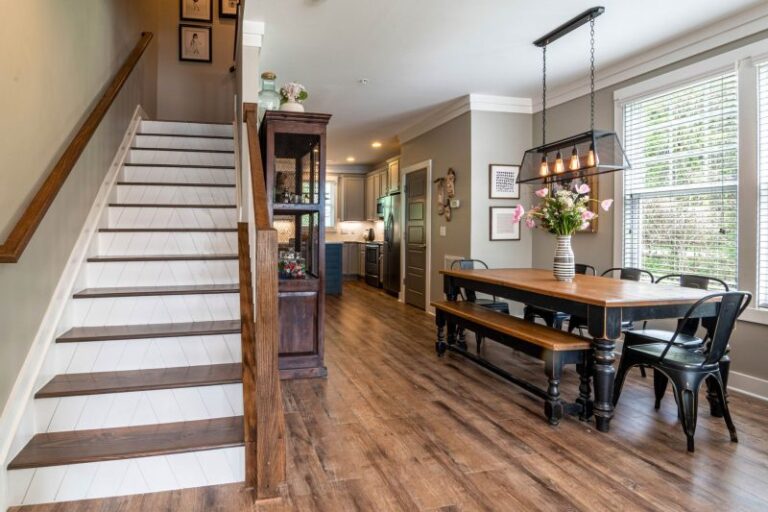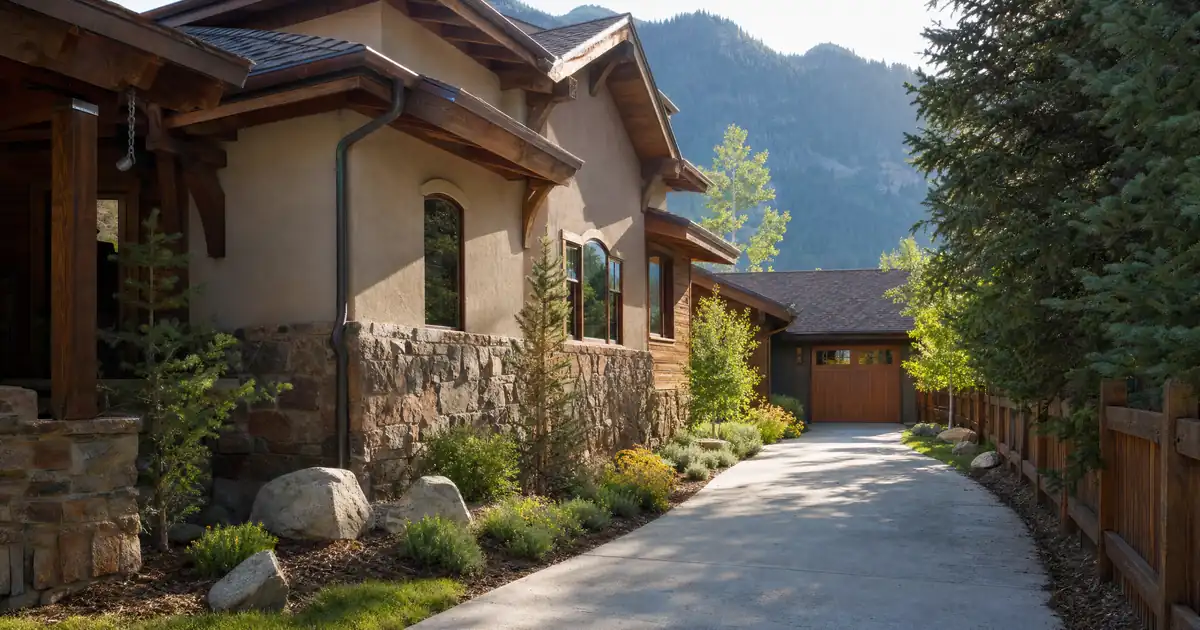
A half-duplex in Lawson Hill lists near $825,000 — three bedrooms, two baths, 1,567 square feet, per Compass listings. Run that basis through debt-coverage underwriting and it clears far more comfortably than almost anything sitting inside Telluride’s town limits, where Redfin currently puts the median sale price at $4.7 million. That gap sits at the center of every investment property loan conversation in this county. The math almost never works the same way twice, even between neighborhoods a few miles apart.
The Quick Read: Investment property loans in Telluride, Colorado get underwritten parcel by parcel against rent-to-basis math rather than a citywide average, and that math splits hard between the $4.7 million median inside town (Redfin) and the sub-$1 million corridor running from Lawson Hill down through Ridgway and the West End.
DSCR Calculator
Run the numbers in Telluride, CO
Rate source: Freddie Mac 30-yr average via FRED® — Federal Reserve Bank of St. Louis · effective Jul 16, 2026
Prefilled with local estimates — enter your own rent or nightly figures, taxes, insurance, and HOA for a more accurate picture.
As of Jul 16, 2026 · General Freddie Mac market benchmark, not a Lendmire loan offer. Rent, nightly rate, occupancy, taxes, and insurance are editable estimates. Short-term rental figures are estimates only and vary significantly by season, property type, management approach, and local short-term-rental rules — confirm local regulations before relying on them. Qualifying income for short-term rentals varies by program — some use appraisal market rent, others use documented STR history or projections — and is confirmed in underwriting. Not a Loan Estimate, approval, or commitment to lend. Program availability and eligibility are subject to lender guidelines, credit approval, property review, and underwriting.
- Town of Telluride core: median sale price $4.7 million, up 27% year over year (Redfin) — the toughest coverage math in the state
- Mountain Village: average home value $2,068,378 per Zillow, condos starting near $1 million
- Lawson Hill: half-duplex units listing near $825,000 — the closest node where multi-unit stacking pencils
- Naturita and Nucla: average values of $203,427 and $265,213 per Zillow’s regional comparison — strongest coverage ratios in the labor-shed
- Ridgway: median sale price $957,000, up 16.3% year over year per Redfin — an appreciation-and-cash-flow hybrid forming now
Telluride Market Snapshot
A quick read on the Telluride investor landscape — figures come from the cited sources below. Confirm current property-level numbers before underwriting.
| Metric | Detail |
|---|---|
| Home prices | $4.7M median sale price (Redfin Telluride Housing Market) |
| Recent appreciation | +27.0% yoy (Redfin Telluride Housing Market) |
| Population | Population 2,160 (Census Reporter) |
| Vacancy | Dated rates (2000 census baseline) (Wikipedia) |
A Box Canyon Doesn’t Expand
Telluride physically cannot sprawl its way to more supply. The town sits in a dead-end box canyon bordered on three sides by protected National Forest land, per Wikipedia’s geographic summary, with Bridal Veil Falls — the tallest free-falling waterfall in Colorado — marking the canyon’s head. Layer on National Historic Landmark District status covering the entire historic core, and you get a hard ceiling on new construction that few Colorado resort towns share in quite the same way. Vail and Breckenridge can push development up adjacent valleys. Telluride runs out of canyon.
That scarcity shows up in the demographics. Per Census Reporter’s American Community Survey estimates, the town’s population sits at 2,160 people with a density of 977 people per square mile, and median household income runs $102,405 — about 25% above the national figure of $80,734. Nearly seven in ten residents hold a bachelor’s degree or higher, a highly educated population driven by lifestyle migration rather than a local campus (there isn’t one — Telluride is served by public K-12 and a private alternative school, not a university). San Miguel County as a whole counted 8,072 residents at the last full census, per the county’s official demographics page, which describes a county running from “the rugged mountain resort communities of Telluride and Mountain Village to the arid ranching communities of the county’s west end.” That single sentence is basically the DSCR thesis for this entire market in miniature.
The Town Core and Mountain Village Are the Hardest DSCR Fit in the State
Single-family long-term rentals in the historic core and the Mountain Village base area are the toughest coverage math anywhere in Colorado — multi-million-dollar valuations stacked against comparatively modest achievable rents produce low rent-to-value ratios before a lender even looks at credit or reserves.
Town-core pricing runs roughly $2,115 per square foot against Mountain Village’s $1,510 per square foot, according to a local brokerage’s neighborhood comparison. Ski-in/ski-out estates in Mountain Village typically start around $5 million and run past $20 million, though entry-level Village Core condos start closer to $1 million — a smaller basis that can post a stronger coverage ratio than a standalone home, particularly where the HOA actually permits long-term rental use. Many Mountain Village condo projects restrict or limit rental terms outright, so HOA questionnaire completeness matters more here than in almost any other Colorado submarket Lendmire’s team reviews — confirm the specific project’s rental rules before underwriting, not after the appraisal comes back.
Mountain Village’s average home value sits at $2,068,378, up 1.8% over the past year per Zillow. That relative stability is about to get tested. A roughly $1 billion Four Seasons Resort and Residences broke ground there, backed by a $417.5 million JPMorgan Chase construction loan and a $162.4 million CanAm Enterprises mezzanine loan — the first major new luxury hospitality project in the market in more than fifteen years. A build of that size pulls hundreds of construction workers through a multi-year buildout and then a permanent hospitality staff once it opens. None of those workers are going to rent a $2 million condo. That demand lands somewhere else entirely, and that somewhere is the next section.
Lawson Hill and Society Turn: Where the Multi-Unit Math Actually Works
Lawson Hill is the most realistic long-term-rental submarket inside the immediate Telluride labor-shed, and it’s the one place where a duplex purchase can be underwritten against an $800,000-ish basis instead of a $4 million single-family number.
Half-duplex units there list around $825,000 for roughly 1,567 square feet, per Compass — a fraction of the town-core basis for comparable square footage. Model that at 75% leverage, a common purchase-LTV level on standard DSCR programs, and full monthly obligation — principal, interest, taxes, and insurance together, not principal and interest alone — likely lands the coverage ratio somewhere in the high-0.9x to low-1.0x range on modeled workforce-rent assumptions. Tight, not disqualifying, and the kind of file where reserves, credit tier, or a slightly larger down payment move the number from borderline to comfortable. Terms vary by lender guidelines, property type, leverage, credit profile, and full file review.
Here’s the catch nobody flags on the generic Colorado DSCR pages: much of a more affordable housing stock closest to town — Aldasoro, Lawson Hill, Rio Vista, Two Rivers — carries deed restrictions administered by the San Miguel Regional Housing Authority, which runs several deed-restricted developments tied to local workforce eligibility. A $1.2 million-looking “bargain” duplex near town can turn out to be capped to qualified local-workforce buyers or tenants, which shrinks the resale pool, caps appreciation, and thins the comp set an appraiser can pull from for any future refinance. Confirm deed-restriction status parcel by parcel before underwriting a near-town discount price. Skip that step and the file stalls in appraisal review.
DSCR files in high-basis resort markets like this one typically arrive with two pricing stories stapled together — a full appraisal on the subject property and a rent schedule that looks nothing like what the sale price would suggest on its own. The stronger files come in with entity documents ready, a signed lease or a lease-ready rent roll, and a current insurance quote pulled before the file goes to the lender, because appraisal reconsideration requests are routine here when comps land from a different price tier or a different neighborhood than the subject property.
Society Turn — the corridor just past Lawson Hill — is where Telluride Regional Medical Center is planning its next facility, replacing a building the hospital district describes as no longer able to keep pace with a growing region. The medical center’s foundation has laid out plans to secure 15 rental units for staff over the next several years, aiming to double that count within a decade. That’s a sole regional hospital effectively becoming a landlord because it can’t otherwise house nurses and techs. For an investor, that’s a tenant base — hospital staff, resort-hospitality workers, construction trades — that’s far steadier and less seasonal than anything tied to ski-season tourism.
The Down-Valley Corridor: Ridgway, Norwood, and the Four Seasons Ripple
Ridgway is turning from a pure cash-flow town into an appreciation-plus-cash-flow hybrid, and the trigger is a housing scramble tied directly to the Four Seasons build.
Per Colorado Sun reporting, the Four Seasons developers — backed by that same JPMorgan construction financing — bought Naturita’s 42-room Rimrock Hotel outright and separately signed a multi-year lease for all 52 rooms at Ridgway’s MTN Lodge, prompting Ridgway officials to challenge the arrangement over zoning. Read between the lines and the signal is blunt: long-term housing supply in the entire Telluride labor-shed is oversubscribed enough that a developer would rather buy or master-lease whole hotels than compete for scattered rentals.
That pressure shows up in pricing. Redfin puts Ridgway’s median sale price at $957,000, up 16.3% year over year, with homes selling in about 51 days — noticeably faster than Telluride’s own 78-day average. Zillow’s regional comparison shows the wider gradient: Ridgway averaging $846,934, Placerville $1,258,458, and the West End towns of Naturita and Nucla down at $203,427 and $265,213 respectively — a roughly tenfold spread within a single commuting labor-shed. Those West End towns are literally the ones housing Four Seasons construction crews right now. For an investor, that means the strongest coverage ratios in the entire region sit in Naturita and Nucla, at the cost of a genuinely long commute for tenants — the trade-off is basis versus drive time, not basis versus tenant demand.
Norwood sits in between geographically and price-wise, and functions as a workforce feeder in its own right. None of this down-valley corridor carries the historic-preservation or deed-restriction overlays that complicate near-town product, which is one reason title tends to clear cleaner out there — fewer easements, fewer HOA rental restrictions, more straightforward comp sets for an appraiser to work with.
What Actually Qualifies Here
Property type matters more in this market than almost any other Colorado submarket Lendmire’s team sees. Single-family workforce rentals and small multifamily in the Lawson Hill-Society Turn corridor and down-valley towns are the strongest DSCR fit — steady local tenant demand from hospital, resort, and construction-trade workers rather than income tied to peak ski-season occupancy. Duplex, triplex, and fourplex stacking is genuinely scarce inventory here — Telluride’s historic zoning and Mountain Village’s condo-heavy product mix mean true small multifamily rarely comes up for sale — but where it exists, combining two rent streams against one acquisition basis moves the ratio meaningfully versus a single-family purchase at the same price point. ADUs are more workable on larger down-valley and unincorporated county parcels than anywhere inside the dense historic core.
Debt coverage financing differs from a conventional investor loan mainly in what gets underwritten: rental income against the property’s full obligation rather than the borrower’s personal income documentation, a distinction Lendmire’s comparison of DSCR versus conventional investor financing covers in more depth. Qualification specifics — credit tier, reserve months, leverage ceiling — are subject to lender overlays and program guidelines, and they get reviewed file by file rather than promised up front. Investors working a Telluride-area file, or comparing it against other resort or mountain markets across Lendmire’s DSCR loan programs, can reach the team at 828-256-2183 to walk through a specific parcel before it gets tied up in a contract.
DSCR vs. conventional financing
Two common ways to finance an investment property in Telluride, CO. They qualify you differently — here’s how investors weigh them.
Why investors choose it
- Qualifies on the property’s rental income — no personal tax returns, W-2s, or pay stubs needed to document income.
- No personal debt-to-income ceiling to clear, so existing mortgages and obligations don’t cap your borrowing the same way.
- Can be closed in an LLC, keeping the property inside a business entity.
- Built for scaling — not held to the limit on number of financed properties that conventional financing applies.
- Underwriting centers on the deal: generally qualifies when the rent covers the payment, a 1.00x coverage ratio being a common baseline (confirmed in underwriting).
- Designed specifically for investment property, including long-term and, where the program allows, short-term rentals.
Where it’s strong
- Often the lowest ongoing financing cost for a buyer who fully qualifies on personal income — a fit for a first property or a cost-first purchase.
Trade-offs for investors
- Requires full personal income documentation and must fit within a debt-to-income limit — salary, existing debts, and other mortgages all count.
- Typically held in your personal name rather than a business entity.
- Caps how many financed properties you can carry, which can become a ceiling as a portfolio grows.
- Evaluates you as a borrower as much as the property, which usually means more paperwork.
How investors usually choose: a first or single property often optimizes for the lowest financing cost; portfolio builders often optimize for leverage, vesting in an LLC, and scaling past conventional caps. The right answer depends on your goals, the property, and current guidelines — both paths run through select lenders in Lendmire’s wholesale network, with eligibility and terms confirmed in underwriting.
Frequently Asked Questions
How do you qualify for an investment property loan in Telluride, Colorado?
Qualification centers on the property’s projected rent measured against its full monthly obligation, not the borrower’s personal income. select programs allow a 1.00x floor, with most standard programs looking for stronger coverage above it, a credit score in the 620-700 range depending on leverage requested, and reserves — generally around six months of the monthly obligation, more on loan amounts above $1.5 million given how quickly Telluride-area basis climbs. Files below 1.00x on long-term rent alone may still get reviewed under sub-1.00 or interest-only structures depending on lender guidelines, credit profile, and property review.
What are the requirements for an investment property loan on a Mountain Village or Telluride town-core property?
Beyond the standard credit and reserve criteria, HOA questionnaire completeness is the make-or-break item on any Mountain Village condo file — many projects restrict long-term rental use, and that has to get confirmed before the appraisal is ordered, not after. Historic-district properties in the town core carry preservation constraints that can limit conversion to multi-unit use, which matters if the acquisition strategy depends on income stacking.
Why does the same DSCR loan look so different in Telluride versus Ridgway or Naturita?
Basis. Telluride’s median sale price runs $4.7 million against Ridgway’s $957,000 and Naturita’s roughly $203,000 average value — a tenfold spread inside one commuting labor-shed. The lower the basis relative to achievable rent, the more room a file has to clear coverage comfortably; the higher the basis, the more the file depends on a large down payment or a lower-leverage structure to make the ratio work.
Can a deed-restricted property near Telluride work for DSCR financing?
It depends entirely on the specific restriction, and this is worth confirming before making an offer. Several developments near town — including Lawson Hill, Aldasoro, Rio Vista, and Two Rivers — carry deed restrictions tied to local workforce eligibility administered by the San Miguel Regional Housing Authority, which can cap resale value, limit the eligible tenant or buyer pool, and thin the comparable-sales set an appraiser can use. A property that looks like an obvious bargain relative to the town median may not function as a conventional investment asset at all.
What down-payment ranges may DSCR lenders review for Telluride investment-property purchases?
Most standard programs review purchase-side down payments in the 20%-25% range, corresponding to 75%-80% loan-to-value, with the strongest files sometimes reviewed up to 85% leverage where guidelines allow. Exact leverage and pricing depend on the specific property, credit profile, and lender program guidelines.
If you only take one thing from this piece, it’s this: in Telluride, the property’s location inside or outside the historic core and deed-restriction perimeter matters more to the DSCR file than almost any other variable in the state.
Program availability, loan terms, and eligibility are subject to lender guidelines, credit approval, property review, and full underwriting. This article is educational and is not a loan offer or commitment to lend.
About Lendmire
On the parameter side: standard purchase-side DSCR programs Lendmire arranges typically run 75%-80% loan-to-value, meaning 20%-25% down, with the strongest files sometimes reviewed up to 85% leverage when guidelines allow. Minimum debt coverage on most standard programs sits around 1.00x, credit tiers generally run from a 620 floor up through 700 for the highest-leverage options, and reserve requirements typically land around six months of the monthly obligation — closer to nine months on loan amounts above $1.5 million, which matters in a market where even the “affordable” product often clears seven figures. Lendmire, a DSCR-focused mortgage broker (NMLS# 2371349), arranges investor loan programs across 39 states plus Washington, D.C. — 40 markets total, Colorado included — and the Colorado DSCR financing page covers the state-level program detail this section doesn’t. For a plain-language walkthrough of how the ratio itself gets calculated, Lendmire’s DSCR walkthrough breaks down rent versus full monthly obligation without the resort-market noise. Investors with entity-titled purchases should know that LLC vesting is available on many of these programs, subject to lender program eligibility.
The firm has been recognized by Scotsman Guide as a 2025 Top Mortgage Workplace and a 2026 Top Mortgage Workplace.
Investment property review
See how the DSCR math works for Telluride, Colorado
Lendmire can review rent, leverage, property type, and DSCR fit before you get too far into the deal.
Informational only. Not a Loan Estimate, approval, or commitment to lend. Program availability and eligibility are subject to lender guidelines, credit approval, property review, and underwriting.
References
1. Compass — Lawson Hill Listings
2. Redfin — Telluride Housing Market
3. Zillow — Mountain Village Home Values
4. Redfin — Ridgway Housing Market
6. Wikipedia
7. Wikipedia’s
8. San Miguel County — Facts and Demographics
9. San Miguel Regional Housing Authority
10. Colorado Sun — Four Seasons Worker Housing
11. a top-ranked workplace in 2026
Brandon Miller
Founder & CEO, Mortgage Loan Originator, Lendmire LLC
- Mortgage Loan Originator · NMLS# 1129696 · Verify on NMLS Consumer Access
- North Carolina Real Estate Broker · License# 343312 · Verify on NCREC
- North Carolina Insurance Producer · License# 19053198 · Property, Casualty, Life, Health · Verify on NAIC SBS
- Lendmire LLC · Firm NMLS# 2371349 · Verify firm licensure
Important disclosures. Lendmire (NMLS# 2371349) is a licensed mortgage brokerage. Lendmire is not a direct lender, depository institution, or financial advisor. All loan inquiries are subject to lender underwriting; this article does not constitute a commitment to lend. Rates, terms, and program guidelines are subject to change without notice and vary by borrower profile, property type, and state. Information in this article is general in nature and is not financial, legal, or tax advice. Equal Housing Opportunity. NMLS Consumer Access: nmlsconsumeraccess.org.