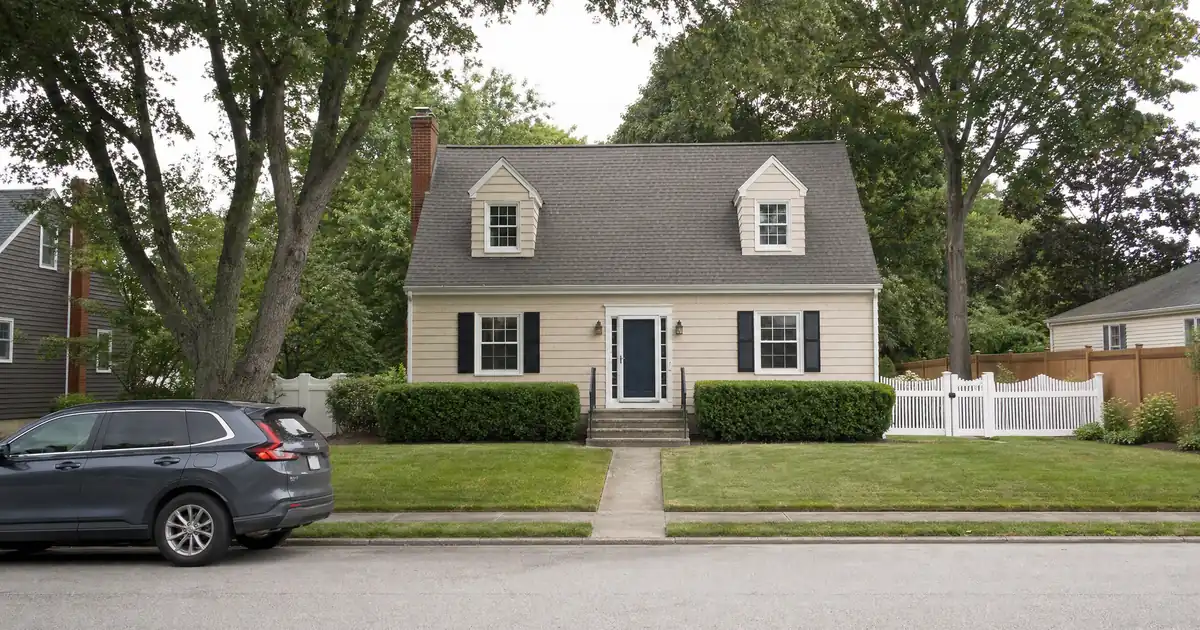
The Quick Read: Yes, you can. But it works differently than a HELOC on your own home. Lenders cap how much you can borrow. They want stronger credit scores too. Fewer banks even offer this loan on a rental property. Most rental HELOCs also block LLC ownership. A DSCR loan works the opposite way — it welcomes LLCs. Investors who don’t qualify often turn to a DSCR cash-out refinance instead.
Key Terms Defined
HELOC stands for home equity line of credit. It’s a revolving credit line secured by your property. Think of it like a credit card, but backed by real estate instead of your signature.
How large a line the equity supports in your market.
An equity line is sized by combined loan-to-value, occupancy, and credit — not by rental coverage. Switch the occupancy or the credit band and the ceiling moves with it.
Investment-property lines require a 700 minimum credit score. Second-home tiers reach 640; primary-residence tiers reach 600.
A debt-to-income ratio above 45% requires 680+ credit. Profiles under 640 are limited to single-family homes. At least 75% of the approved line is drawn at closing. Ceilings, floors, and caps update from Lendmire’s centralized guideline source.
Line estimate
Illustrative estimate only — not a quote, Loan Estimate, approval, or commitment to lend. The rate is an editable assumption; equity-line pricing is variable through both the draw and repayment periods and never converts to fixed. Occupancy and credit drive the ceiling together: investment property runs to 70% combined LTV with a 700 credit floor and a $500,000 cap; a second home runs to 70% at a 640 floor with a $500,000 cap; a primary residence reaches up to 80% at a 600 floor, and its $750,000 maximum line applies only at 75% combined LTV or below with 720+ credit and a full appraisal. Lines above $500,000 require a full appraisal. Credit, debt-to-income, property type, and full underwriting review all affect the final line.
CLTV, or combined loan-to-value, adds up every lien on the property — your first mortgage plus your HELOC limit — then divides that total by the property’s appraised value. This one number decides how much equity a lender lets you borrow against.
Draw period is the window when you can pull money from your line, up to its limit. During this time, you usually only pay interest. Once the draw period ends, the line typically converts to a fixed repayment schedule.
Junior lien (also called a second lien) means the HELOC sits behind the first mortgage in the repayment line. If the property sells or gets foreclosed, the first mortgage gets paid first. The HELOC lender only gets paid after that.
DSCR stands for debt-service coverage ratio. It’s a way to qualify a loan based on the property’s rent, not your personal income or debt-to-income ratio. If the rent covers the payment, the loan can qualify.
How Underwriting Actually Treats a Rental HELOC
Lenders judge a rental-property HELOC the same way they judge any home equity line. They look at five things: equity, credit score, debt-to-income ratio, documentation, and property type. But each of these gets stricter once the property isn’t your home. Published lender guidance lays out this five-factor framework clearly. It’s still the right way to think about it — rental programs just push every factor further than a primary-home file would.
Start with equity. Across the network Lendmire brokers through, investment-property HELOCs typically cap out around 70% combined loan-to-value on lines up to $500,000. Both the 700 and 720 credit tiers land at that same 70% cap. A higher score above 700 buys you eligibility for a bigger loan — not more leverage. That’s tighter than what a well-qualified borrower sees on their own home. Published bank guidance notes investment CLTV caps generally run 70–75%, compared to roughly 80% on an owner-occupied line.
Credit comes next, and this is where the gap gets sharpest. General HELOC underwriting looks for scores in the mid-to-high 600s, according to Experian. But investment properties need a 700 credit score minimum in most of Lendmire’s network. That’s well above the 640 floor for second homes and the 600 floor for primary residences. Two-to-four unit properties carry their own 640 floor, but that mostly matters on primary or second-home files — the investment floor already clears it. Finder reports that well-qualified investment HELOC files typically show scores above 720. That lines up with what stronger leverage actually requires.
Debt-to-income ratio runs on a sliding scale. The general ceiling is 50%. It tightens to 45% for credit scores between 600 and 679. Anything above a 45% ratio needs a credit score of at least 680. Since investment credit already floors at 700, most investment files clear the friendlier 50% tier automatically. They skip the tighter tier meant for weaker credit. One more thing to know: the math runs on the interest-only payment at the line’s maximum draw, not your current balance. A bigger line isn’t “free” just because you haven’t drawn on it yet.
Two Ways Investors Actually Use This
There are really two separate plays here. Mixing them up causes most of the confusion. One play draws equity out of a rental you already own. The other draws equity out of your primary residence to fund a rental purchase. People call both “a HELOC on a rental property” in casual conversation. But lenders underwrite them completely differently.
The second version — tapping your primary home’s equity to buy a rental — is easier to qualify for. Why? Because the collateral is your own home, even though the money funds an investment. This is also the version investor forums talk about most. A common strategy on BiggerPockets: open the HELOC while the property still counts as your primary residence, then convert it to a rental later. The line generally stays in place at its original terms even after you move out. That’s a real workaround. It explains why so many “rental property HELOCs” are actually secured by someone’s own house.
Here’s the risk, stated plainly: your primary home is the collateral, not the rental. If the rental falls short, you don’t just lose a tenant. You can put your own house on the line.
Investment vs. Baseline: Where the Overlay Bites
| Factor | General Program Floor | Investment Property Specifically |
|---|---|---|
| Minimum credit score | 600 (primary) | 700, regardless of unit count |
| Max CLTV | Varies by occupancy and credit tier | 70% up to $500,000 line |
| Line size before full appraisal | Automated valuation, $10K–$500K | Automated valuation across the entire $500,000 ceiling |
| Title/vesting | Individual or revocable living trust | Same — LLCs, corporations, and partnerships not eligible |
| Line size ceiling | Up to $750,000 (Michigan floor $10,000) | Hard-capped at $500,000 |
Investment lines cap out at $500,000, and full appraisals only kick in above that number. So an investment-property HELOC in this network almost always uses automated valuation instead. That’s a real convenience most investors don’t expect. In most cases, you skip the traditional appraisal — though you can always request one.
Title, Line Size, and the LLC Problem
Here’s the edge case that surprises the most investors. Title on a rental-property HELOC must sit with an individual borrower or an inter vivos revocable living trust. LLCs, corporations, partnerships, and irrevocable or land trusts cannot hold title at all. That’s the sharpest structural difference from a DSCR loan, which routinely closes in an LLC’s name, subject to lender program eligibility. If you already deeded a rental into an LLC for liability protection, you generally have two choices. Unwind that vesting, or pivot to a DSCR cash-out refinance instead. A HELOC simply isn’t built to sit behind entity ownership.
Portfolio scale matters too. A single borrower can hold up to three of these lines. But the combined limit is $750,000 across all three — not per line. And if you already own more than 15 properties, you fall outside program eligibility entirely. That’s true regardless of your credit or equity position. Investors scaling past that point are usually better served by DSCR financing, which doesn’t carry the same hard property-count ceiling.
Where the General Rule Breaks: State Overlays and Odd Corners
Texas treats these as non-homestead transactions once the property becomes a second home or rental. That sidesteps the 12-day waiting period, the one-lien-at-a-time rule, and the 12-month seasoning period that apply to Texas primary residences. But Texas properties are capped at 10 acres. And the minimum subsequent draw jumps to $4,000 there, versus $1,000 everywhere else. New Mexico and Ohio apply CLTV caps that shift with your credit profile instead of using one flat number. And a property listed for sale — or listed within the past 60 days — is ineligible outright in Indiana, North Carolina, Pennsylvania, Tennessee, Texas, and Washington.
Property type has its own hard lines too. Single-family homes, 2-4 units, PUDs, townhomes, and condos — including non-warrantable condos — are eligible. So are modular factory-built homes. Manufactured homes, co-ops, condotels, timeshares, barndominiums, log homes, and anything zoned commercial, mixed-use, or agricultural fall outside the program entirely. Log homes, barndominiums, and manufactured housing are excluded from Lendmire’s DSCR programs too. That’s one of the few places where the HELOC and DSCR rulebooks actually agree.
A Quick Equity Walkthrough, In Percentages
Picture a rental with a first mortgage at 45% of its appraised value. At a 70% CLTV ceiling, your first mortgage plus a new HELOC could together reach 70% of that value. That leaves roughly 25 percentage points of headroom to draw against — subject to the $500,000 line ceiling, the 700-credit floor, and full underwriting. Now push the first mortgage up to 60% of value. That headroom shrinks to about 10 percentage points before you hit the same ceiling. Your equity position, not just your credit score, usually decides whether a rental HELOC makes sense at all.
When a DSCR Loan Is the Better Tool
A HELOC and a DSCR loan solve overlapping problems, but from opposite directions. TechBullion frames the core distinction well. A HELOC underwrites your personal credit and equity. A DSCR loan is reviewed mainly on whether the property’s rental income covers the payment, subject to lender guidelines.
| Factor | Investment HELOC | DSCR Loan |
|---|---|---|
| Reviewed on | Borrower credit, equity, DTI | Rental income vs. payment |
| Title | Individual or revocable trust only | LLC-friendly, subject to lender program eligibility |
| Typical leverage | Up to 70% CLTV | 75-80% LTV purchase; select programs to 85% |
| Cash-out refinance | Not applicable — it’s a line | Around 75% LTV, roughly 6 months seasoning |
| Credit floor | 700 | 620 in parts of the network; most programs prefer 660 |
| Loan size | $25,000-$750,000 (network-wide) | Roughly up to $3,000,000 on standard programs (smaller balances available through select lenders) |
For most standard DSCR programs, 1.00 coverage is the benchmark. That means the rent covers the payment at that level. But it’s a program floor, not a universal rule — stronger ratios tend to unlock better leverage and pricing. A few lenders in the network will consider coverage below 1.00, but leverage and terms adjust accordingly. No-ratio qualification isn’t offered. Short-term rental income can factor in too, usually at lower leverage — around 75% on a purchase, 70% on a refinance or cash-out. Lenders typically want about 12 months of hosting history and a 700+ credit score. One caution: clearing 1.00 coverage isn’t the same as positive cash flow. Repairs, vacancy, management fees, and capital expenses all sit outside that ratio.
For a fuller breakdown of how that qualification works, Lendmire’s complete DSCR loans guide walks through the mechanics in more depth. The what is a DSCR loan primer covers the basics if you’re starting from zero. Investors weighing the two tools against a cash-out refinance may also find Lendmire’s breakdown of HELOC vs. cash-out refinance for a rental property useful, along with its separate look at getting a HELOC on a rental property for lender-shopping specifics.
A rental-property HELOC is typically structured as business-purpose credit, not as a consumer HELOC like the one on your primary home. Under the CFPB’s Regulation Z, loans made mainly to acquire, improve, or maintain a non-owner-occupied rental generally fall outside the consumer-disclosure and rescission rules that govern an owner-occupied home equity line. That means some paperwork protections tied to a “normal” HELOC may not apply the same way once the property is a business-purpose rental.
Tax treatment can depend on how you use the funds and how you hold the property. Keep clear records, and speak with a qualified tax professional before relying on any deduction. Lendmire’s piece on tax implications of a cash-out refinance on a rental is a reasonable starting point for that conversation.
Weighing whether to pull equity out or sell the asset entirely? Lendmire’s analysis of selling a rental property versus a cash-out refinance is worth reading before you commit to either path. Of course, the equity-tap tools above only matter if the property stays in your portfolio.
If your rental’s equity, credit profile, or title structure doesn’t fit the HELOC box, Lendmire can help. The team compares DSCR loan options based on the property’s rental income, your credit profile, leverage, and your goals. Reach the team at 828-256-2183 or request a quote to see how a specific file lines up. Every scenario discussed here is subject to lender approval and full underwriting. Nothing above is a commitment to lend, and loan approval is never guaranteed. This article is general information, not financial, legal, or tax advice. Actual terms depend on lender guidelines, credit profile, property review, and program availability at the time of application.
Frequently Asked Questions
Can I get a HELOC on a rental property held in an LLC?
Not through this HELOC structure. Title has to sit with an individual borrower or an inter vivos revocable living trust. LLCs, corporations, and partnerships are excluded outright. If a property is already deeded to an LLC, it generally needs a vesting change to qualify for a HELOC. Or you pivot to a DSCR cash-out refinance instead, subject to lender program eligibility.
How much equity do I actually need before a rental HELOC makes sense?
You need enough equity to clear the CLTV ceiling with room left over. In most of Lendmire’s network, investment property caps at roughly 70% combined loan-to-value on lines up to $500,000. If your rental’s first mortgage is already near that ceiling, you won’t have much room left to draw — no matter how strong your credit is.
Does a rental-property HELOC qualify off the rent the property collects?
No. A HELOC underwrites your personal credit, income, and debt-to-income ratio — not the property’s rental income. That’s the core difference from a DSCR loan, which qualifies primarily on whether the rent covers the payment, subject to lender guidelines.
Can I open a HELOC before I put a tenant in, and keep it after the property becomes a rental?
Investors commonly do exactly that. Open the line while the home still qualifies as a primary residence, then rent it out afterward. The line generally stays in place at its original terms. It’s a widely used workaround, precisely because direct rental-property HELOCs are scarcer and stricter to qualify for than a primary-residence line.
I already own several rental properties — can I stack more than one of these lines?
Only up to a point. A single borrower is capped at three lines, with a combined $750,000 ceiling across all of them. Owning more than 15 properties total removes eligibility entirely. Investors scaling past that threshold typically move toward DSCR financing, which doesn’t carry the same portfolio-size ceiling.
About Lendmire
Availability itself is an edge case. Lendmire brokers these investment-property HELOCs, subject to full lender review, in its 16 full-service states. That’s a narrower footprint than the network’s DSCR investor loan programs, which cover 39 states plus Washington, D.C. — 40 markets total. Lendmire operates under NMLS# 2371349 as a broker. It arranges financing through select wholesale lenders rather than funding loans directly.
Get Started
Ready to find the right loan for you?
In about 30 seconds you can review financing options available for your home or investment property. No commitment required.
Informational only. Not a Loan Estimate, approval, or commitment to lend. Program availability and eligibility are subject to lender guidelines, credit approval, property review, and underwriting.
Lendmire is a two-time Scotsman Guide Top Mortgage Workplace (2025, 2026). This recognition is documented by Scotsman Guide 2025 Top Mortgage Workplace and Scotsman Guide 2026 Top Mortgage Workplace.
References
1. Experian — Can You Get a HELOC on an Investment Property?
2. Finder — HELOC on Investment Property
3. BiggerPockets Forums — HELOC on Investment Property Strategy
4. TechBullion — DSCR Loan vs. HELOC for Investment Property
5. CFPB — Regulation Z, §1026.3 Exempt Transactions
Brandon Miller
Founder & CEO, Mortgage Loan Originator, Lendmire LLC
- Mortgage Loan Originator · NMLS# 1129696 · Verify on NMLS Consumer Access
- North Carolina Real Estate Broker · License# 343312 · Verify on NCREC
- North Carolina Insurance Producer · License# 19053198 · Property, Casualty, Life, Health · Verify on NAIC SBS
- Lendmire LLC · Firm NMLS# 2371349 · Verify firm licensure
Disclosure information. Lendmire is a state-licensed mortgage brokerage under NMLS# 2371349. Lendmire is not a depository institution, direct lender, or financial advisor — all loans referenced are placed through wholesale lender partners and are subject to each lender's underwriting standards. This article is provided for general informational purposes and is not a commitment to lend, nor does it constitute financial, legal, or tax advice. Loan programs, terms, rates, and qualification standards change without notice and depend on borrower profile, property type, and the state in which the subject property is located. Equal Housing Opportunity provider. NMLS Consumer Access: nmlsconsumeraccess.org.