
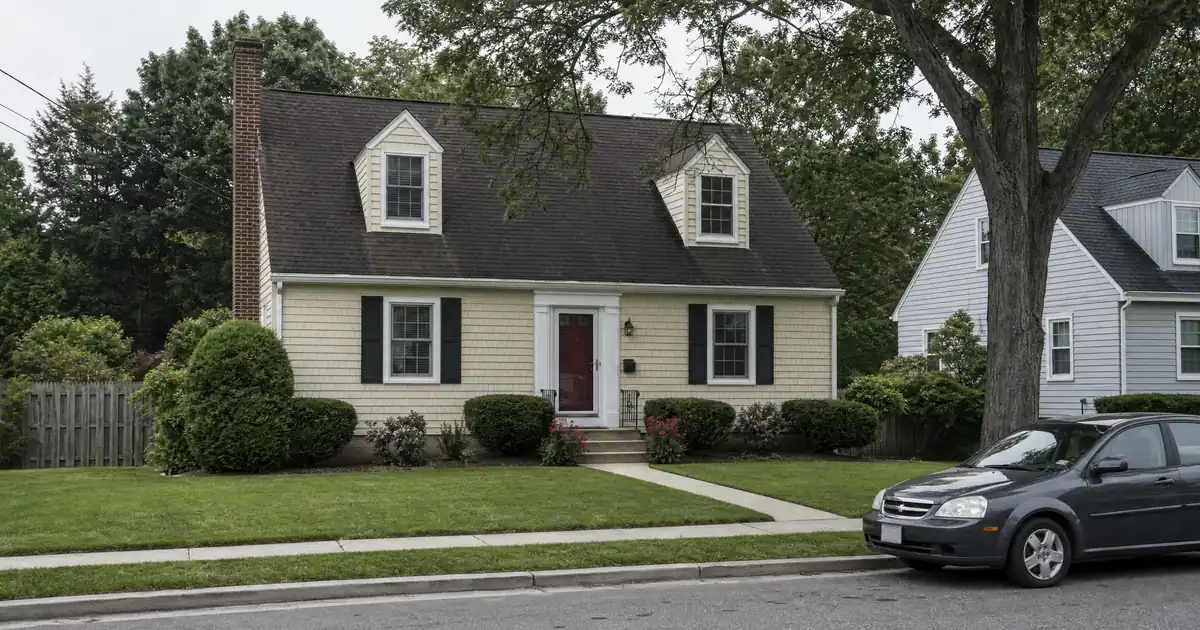
Banks That Offer HELOC on Investment Property — The Quick Read: Yes, HELOCs on investment property exist. But the lender pool is narrow. Most large depository banks stopped offering them after the 2008 downturn. Now the product sits mostly with credit unions, regional banks, and wholesale portfolio lenders. Combined loan-to-value ceilings in the broader market commonly run 75%-80%. The wholesale network Lendmire brokers through caps investment-property lines lower, at 70% CLTV, with a $500,000 program ceiling. Entity vesting is the biggest wall most investors hit. Properties titled to an LLC generally can’t use this product at all.
Key Takeaways
- Big banks mostly exited non-owner-occupied HELOC lending. Credit unions, regional banks, and portfolio/wholesale lenders now carry the product.
- Second-lien position drives every downstream restriction. That means lower CLTV, higher credit floors, and tighter reserve expectations.
- Lendmire’s own network caps investment-property equity lines at 70% CLTV and $500,000 total, with a 700 minimum credit profile. That floor is hard, not a soft target.
- Title has to sit with an individual borrower or a revocable living trust. LLC, corporate, and irrevocable-trust vesting doesn’t qualify. That’s where a DSCR loan vs. HELOC for investment property comparison usually enters the conversation.
- A DSCR cash-out refinance is often the more practical tool once leverage, entity structure, or geography rules out the HELOC path.
Key Terms Defined
Second lien — a loan recorded behind an existing first mortgage on the same property. If the property is ever sold or foreclosed, the second lien gets paid only after the first is satisfied in full.
How large a line the equity supports in your market.
An equity line is sized by combined loan-to-value, occupancy, and credit — not by rental coverage. Switch the occupancy or the credit band and the ceiling moves with it.
Investment-property lines require a 700 minimum credit score. Second-home tiers reach 640; primary-residence tiers reach 600.
A debt-to-income ratio above 45% requires 680+ credit. Profiles under 640 are limited to single-family homes. At least 75% of the approved line is drawn at closing. Ceilings, floors, and caps update from Lendmire’s centralized guideline source.
Line estimate
Illustrative estimate only — not a quote, Loan Estimate, approval, or commitment to lend. The rate is an editable assumption; equity-line pricing is variable through both the draw and repayment periods and never converts to fixed. Occupancy and credit drive the ceiling together: investment property runs to 70% combined LTV with a 700 credit floor and a $500,000 cap; a second home runs to 70% at a 640 floor with a $500,000 cap; a primary residence reaches up to 80% at a 600 floor, and its $750,000 maximum line applies only at 75% combined LTV or below with 720+ credit and a full appraisal. Lines above $500,000 require a full appraisal. Credit, debt-to-income, property type, and full underwriting review all affect the final line.
CLTV (combined loan-to-value) — add up every lien against a property, then divide by its appraised value. Lenders cap this number when they size an equity line.
Draw period — the phase of a HELOC or equity line when the borrower can pull funds. Payments are usually interest-only during this phase. It comes before the repayment period, when principal amortization starts.
Business-purpose loan — financing given for investment or income purposes, not for personal, family, or household use. This label changes which consumer-protection disclosures apply.
DSCR (debt-service coverage ratio) — a measure of a rental property’s income against its own housing payment. Many investor loans use this instead of personal income documents.
Do Banks Still Offer HELOCs on Investment Property?
Some do. Not many. And the ones that do tend to be smaller institutions rather than the big national names most borrowers think of first. Trade coverage of the non-agency lending shift describes the space plainly. An open-end second lien, the Scotsman Guide notes, “involves a revolving line of credit where the borrower can draw cash up to the maximum amount and pay it down over time — a common example is a home equity line of credit (HELOC).” That mechanic hasn’t gone away. What’s changed is who’s willing to extend it against non-owner-occupied collateral.
Today’s practical lender pool skews toward credit unions and portfolio-holding regional banks. These lenders keep the loans on their own books instead of selling them. A growing wholesale non-QM channel, built specifically for investors, adds to that pool. Large depository banks that still advertise home equity products often exclude investment property from eligibility outright. That’s a business decision, not a regulatory rule. For a broader breakdown of who offers HELOCs on investment property by lender type, take a look before assuming any given bank will say yes.
Published combined loan-to-value ceilings among the credit unions and regional lenders still active in this space commonly run 75%-80% on investment collateral. That’s a market-wide figure, not a Lendmire figure. The wholesale network Lendmire brokers through caps investment-property equity lines at 70% CLTV, with a $500,000 ceiling on total line size. There’s no higher tier for investment property in this network. Worth knowing before you shop around expecting to match that higher market number.
Why the Lender Pool Is So Much Smaller Here
Second-lien position causes nearly every restriction that follows. A second lien sits behind the first mortgage. If a borrower runs into trouble, the second-position lender gets paid only after the first lien is satisfied. That risk gets worse when the collateral is a rental instead of a primary home. A struggling borrower typically protects their own home before an investment property.
Regulators built supervisory rules around exactly this problem. The Office of the Comptroller of the Currency and other banking regulators jointly issued guidance. It directs institutions to build “debt service capacity standards, creditworthiness standards, equity and collateral requirements, maximum loan amounts, maturities, and amortization terms” into HELOC underwriting. This guidance applies to the product broadly. It doesn’t carve out a separate rulebook for investment property. It’s the backbone examiners use. But it doesn’t force any bank to offer the product on non-owner-occupied collateral in the first place. That choice belongs to each institution’s own risk appetite.
How Underwriting Actually Treats an Investment-Property Equity Line
Underwriting on an investment-property line runs tighter than a primary-residence HELOC at almost every step. The credit floor is the first thing that trips investors up. Across the wholesale network Lendmire brokers through, investment-property equity lines carry a 700 minimum credit score. This isn’t a soft suggestion. It’s a hard floor with nothing beneath it. That’s notably higher than the 600 credit floor the same network uses on owner-occupied properties. It reflects the same risk logic from above: a rental doesn’t get the same benefit of the doubt as a primary home.
Here’s a detail worth flagging for anyone shopping credit tiers. On the investment side, 720+ and 700+ both land at the same 70% CLTV ceiling. A stronger score doesn’t buy more leverage here. It buys eligibility, since 700 is the floor with nothing below it. That’s genuinely different from primary-residence lines, where credit tiers usually move the leverage number directly.
Debt-to-income runs up to 50% on most files. It tightens to 45% for credit profiles between 600 and 679. But investment property already floors at 700, so that lower band mostly applies to other occupancy types on the same product. Lenders calculate qualification on the interest-only payment at the maximum available draw, not on a lower introductory number. Some borrowers miss this detail when they estimate what they’ll actually qualify for.
Valuation is where the smaller line size actually helps investors. Investment-property lines cap at $500,000, and a full appraisal only kicks in above that threshold. Lines at or below $500,000 ordinarily run automated valuation, though a higher CLTV may require a secondary valuation — many investment lines still close without a traditional appraisal. It commonly closes without a traditional appraisal at all. That’s a real advantage over a purchase-money loan, where an appraisal is close to unavoidable.
The Structure: Draw Period, Repayment, and Line Size
The underlying product is a standalone line. It isn’t always a HELOC riding behind a fixed first mortgage. It can sit in either first or second lien position. That matters for an investor holding a free-and-clear rental who doesn’t want to add a separate first mortgage just to access equity.
Two draw structures exist across the wholesale network: a 3-year interest-only draw with a 17-year repayment on the higher-leverage path, and a 5-year interest-only draw with a 25-year repayment on the longer-runway path — a quoted CLTV always carries its own structure. Tennessee shortens the runway on both network structures: a 3-year draw with a 12-year repayment on the higher-leverage program, and a 5-year draw with a 10-year repayment on the longer-runway program. The rate on these lines floats through both phases. There’s no fixed conversion point built in. At closing, borrowers must draw at least 75% of the approved line. This isn’t structured as a rarely-touched standby facility. It functions more like an upfront draw with revolving access for the remainder.
Line sizes on the broader product run $25,000 to $750,000. Michigan carries a $10,000 floor. Investment property specifically caps at $500,000 total. There’s no tier above $500,000 for investment collateral in this network, full stop. Primary and second-home borrowers with 720+ scores can reach the $750,000 ceiling at up to 70% CLTV with a full appraisal, but investment property can’t. Minimum subsequent draws after closing run $1,000. Texas is the exception, where the minimum jumps to $4,000.
Portfolio exposure is capped too. A borrower can hold up to three lines, with combined exposure to $2,000,000 on the higher-leverage program ($750,000 on the longer-runway program) and a 15-financed-property limit on both. An investor already holding more than 15 financed properties isn’t eligible for the product at all, regardless of credit or equity position.
Where the Rule Breaks — Edge Cases
Title and vesting are the sharpest wall. These lines require fee-simple or leasehold title held by an individual borrower or an inter vivos revocable living trust. LLCs, corporations, partnerships, and irrevocable trusts can’t hold title on this product. None of them. An investor who already deeded a rental into an LLC for liability protection generally has two paths. Re-vest the property into a personal name, or pursue a DSCR cash-out refinance instead. DSCR loans are built as business-purpose financing that originates directly to an entity, subject to lender program eligibility.
Credit floors don’t move for investment property, even where the headline number looks lower. The network’s overall 600 credit floor only applies to primary residences with a clean 12-month housing history. It’s misleading if applied to a rental. Second homes carry a 640 floor and investment properties a 700 floor. Any borrower below 700 simply isn’t eligible for the investment-property version of this product. Period.
Geography narrows the field further. Lendmire (NMLS# 2371349)’s own investment-property equity line is currently available through 16 full-service states: Alabama, California, Colorado, Florida, Georgia, Indiana, Michigan, Montana, New Mexico, North Carolina, Ohio, Pennsylvania, Tennessee, Texas, Virginia, and Washington. That’s a smaller footprint than the 39-states-plus-Washington-D.C. reach of Lendmire’s DSCR investor loan programs (40 markets total). This distinction matters. An investor outside those 16 states may find the equity line unavailable while DSCR cash-out remains an option.
State overlays add texture on top of that. In Texas, the familiar 12-day waiting period, one-lien-at-a-time rule, and 12-month seasoning requirement apply only to primary residences. Texas second homes and investment properties count as non-homestead transactions, so they’re eligible outside those restrictions — though Texas properties are capped at 10 acres. New Mexico and Ohio apply CLTV caps that shift depending on the borrower’s credit profile rather than a flat number. And a property currently listed for sale, or listed within the past 60 days, is ineligible in Indiana, North Carolina, Pennsylvania, Tennessee, Texas, and Washington.
Property type has its own hard boundaries. Single-family homes, 2-4 unit properties, PUDs, townhomes, and condominiums (including non-warrantable) are eligible. Modular factory-built homes qualify too. Manufactured homes, co-ops, condotels, timeshares, barndominiums, and log homes are not offered through this program at all. They’re not “harder to finance” — they simply sit outside the product’s eligibility, along with commercial, mixed-use, agricultural-zoned, and raw land.
HELOC or DSCR Cash-Out? The Real Decision
Files that lean toward a HELOC-style equity line usually involve an individually-titled property, a borrower comfortably above the 700 credit floor, and a need for a revolving draw rather than a lump sum. Files that lean toward DSCR cash-out usually involve an LLC-titled property, a borrower who wants one lump-sum draw instead of an ongoing line, or leverage needs above the 70% CLTV ceiling this network applies to equity lines.
| Factor | Investment-Property Equity Line | DSCR Cash-Out Refinance |
|---|---|---|
| Title/vesting | Individual or revocable living trust only | LLC or entity eligible, subject to lender guidelines |
| Leverage ceiling (this network) | Up to 70% CLTV, $500,000 max | Up to roughly 70% LTV on most cash-out files |
| Review basis | Borrower credit, DTI, equity | Property income covering the payment, subject to lender guidelines |
| Draw structure | Revolving, interest-only draw then amortizing | Single lump-sum payout at closing |
| Credit floor | 700 typical | 620 on some programs; most want 660, 700+ for top leverage |
DSCR loans are built for non-owner-occupied investment properties. Because they’re business-purpose investor loans, lenders review them differently than a standard owner-occupied mortgage. That’s exactly why entity-titled rentals so often end up there instead of in the equity-line lane. Some lenders in the network will also consider coverage below the typical 1.00 select-program floor, though leverage and terms adjust to compensate, subject to lender guidelines. Lendmire’s complete DSCR loans guide walks through how that qualification actually works property by property.
What This Looks Like in Practice
Picture an investor holding a free-and-clear duplex. Its value sits comfortably within reach of the network’s leverage ceiling. It’s titled in the investor’s own name, and their credit profile sits above 720. Because the property carries no existing lien, the full 70% CLTV ceiling this network applies to investment property is available as a first-lien standalone line. No separate mortgage required. And since the request sits under $500,000, valuation runs through the automated model instead of a full appraisal.
Now flip the same property to LLC ownership for liability purposes — common among investors scaling past a handful of doors. That single change removes the equity-line option entirely under this network’s title requirements. The practical next step becomes a DSCR cash-out refinance instead. Rents that comfortably cover the property’s own payment would support the qualification review, not the owner’s personal debt-to-income.
Across files like these, one pattern shows up constantly. The deal that looks straightforward on equity often turns on a single structural fact: how the title reads, not how much value sits in the property.
If you’re comparing an equity line against a DSCR cash-out for a specific property, credit profile, and leverage target, Lendmire’s team can walk through both structures side by side. Reach the team at 828-256-2183 or request a quote directly to see which path actually fits.
Lendmire is a mortgage broker, not a lender. It arranges financing through select lenders in its wholesale network rather than funding, underwriting, or approving loans itself. Tax treatment can depend on how loan funds are used and how the property is titled, so investors should keep clear records and speak with a qualified tax professional before relying on any deduction. Nothing here is a commitment to lend, and every scenario described is subject to lender approval and to borrower, property, and program guidelines that can change without notice.
Frequently Asked Questions
Can I get a HELOC on a rental property if I have good credit but low equity?
Credit alone doesn’t substitute for equity on this product. Even a 720+ score sits at the same 70% CLTV ceiling as a 700 score in most wholesale-network guidelines. So a property without enough equity to clear that leverage threshold generally won’t qualify, no matter how strong the credit.
Does a HELOC on an investment property use rent to qualify?
Not typically. Lenders review this product mainly on the borrower’s personal credit, income, and debt-to-income ratio, not the property’s rental income. That’s the core difference from a DSCR loan, which qualifies mainly on property-level rental income covering the payment, subject to lender guidelines.
Can I use a HELOC on my primary home to fund a rental purchase instead?
Yes, and many investors do exactly that. Primary-residence HELOCs draw from a much wider lender pool than investment-property lines. The tradeoff: the loan is secured by the primary home instead of the rental, and interest tracing for tax purposes depends on documented fund use — worth discussing with a tax professional.
Why can’t I get this product on a property owned by my LLC?
Because this line is underwritten as a consumer transaction. It requires individual or revocable-living-trust title, not entity ownership. Properties already vested in an LLC generally need either a re-vesting to personal name or a DSCR cash-out refinance, which is built to originate directly to an entity, subject to lender program eligibility.
Is there a minimum loan amount for an investment-property equity line?
Pricing and available terms vary by lender, borrower profile, property type, and full underwriting review.
About Lendmire
Lendmire, NMLS# 2371349, is a non-QM mortgage broker serving real estate investors in 40 markets, including Washington, D.C., through DSCR investor loan programs. Lenders generally review qualification around the subject property’s rental income, not the borrower’s W-2 history — a practical fit for LLC-titled portfolios and self-employed investors. All scenarios remain subject to lender review and program guidelines. Lendmire has earned two consecutive Scotsman Guide Top Mortgage Workplace recognitions (2025, 2026).
Lendmire’s Top Mortgage Workplace recognition is documented by Scotsman Guide 2025 Top Mortgage Workplace and Scotsman Guide 2026 Top Mortgage Workplace.
Get Started
Ready to find the right loan for you?
In about 30 seconds you can review financing options available for your home or investment property. No commitment required.
Informational only. Not a Loan Estimate, approval, or commitment to lend. Program availability and eligibility are subject to lender guidelines, credit approval, property review, and underwriting.
References
1. Scotsman Guide — Climb to the Top
2. Office of the Comptroller of the Currency — Interagency Guidance on HELOCs Nearing End-of-Draw
Brandon Miller
Founder & CEO, Mortgage Loan Originator, Lendmire LLC
- Mortgage Loan Originator · NMLS# 1129696 · Verify on NMLS Consumer Access
- North Carolina Real Estate Broker · License# 343312 · Verify on NCREC
- North Carolina Insurance Producer · License# 19053198 · Property, Casualty, Life, Health · Verify on NAIC SBS
- Lendmire LLC · Firm NMLS# 2371349 · Verify firm licensure
Legal disclosures. Lendmire (NMLS# 2371349) is a state-licensed mortgage brokerage that arranges financing through wholesale lender relationships. Lendmire is not a direct lender, depository institution, or registered financial advisor. The discussion above is general informational content about real estate financing — it is not financial, legal, or tax advice, and readers should consult licensed professionals for guidance on their individual circumstances. Loan inquiries are subject to lender underwriting; this article does not represent a commitment to lend. Loan terms, rates, and qualification standards vary by borrower, property, and state, and are subject to change at any time. Equal Housing Opportunity. NMLS Consumer Access: nmlsconsumeraccess.org.


