
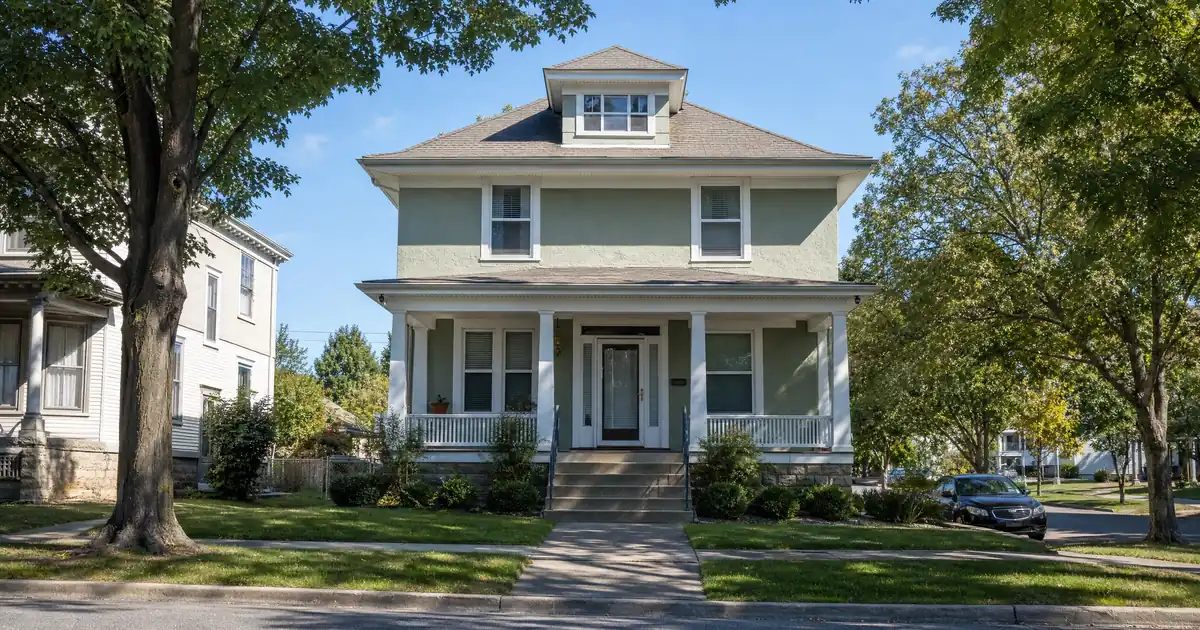
Investment HELOC — The Quick Read: An investment HELOC is a revolving line of credit. It’s secured by a rental property you already own. You can draw against your built-up equity. You don’t touch your first mortgage to do it. Across the wholesale network these lines move through, investment-property HELOCs cap at 70% combined loan-to-value. The total cap is $500,000. You need a 700 credit score at minimum. That’s tighter than the roughly 80% LTV ceiling the broader consumer market often advertises for this product, per Experian. The property also has to be titled to an individual or a revocable living trust — not an LLC. That’s the sharpest structural difference from a DSCR cash-out refinance. You draw against the line for five years, interest-only. Then it amortizes over 25 years. Pricing floats the whole way and never converts to fixed.
Key Takeaways
- Investment-property HELOCs in this network top out at 70% combined loan-to-value and $500,000 total line size — a ceiling, not a starting point.
- A 700 credit score is the floor for this product; scores above 700 make approval smoother but don’t buy a bigger line.
- Because lines here max at $500,000, valuation almost always runs through an automated model rather than a traditional appraisal.
- Title has to sit with an individual or a revocable living trust — LLCs, corporations, and irrevocable trusts can’t hold the collateral.
- A DSCR cash-out refinance reaches higher combined leverage and keeps LLC titling intact; the tradeoff is giving up the property’s existing first-mortgage rate. Exact terms depend on the lender’s guidelines, property type, leverage, and a full review of the borrower’s file.
Key Terms Defined
- HELOC (home equity line of credit): revolving credit secured by a property’s equity. Draw it, repay it, draw it again. Think of it like a credit card, but backed by real estate.
- CLTV (combined loan-to-value): add up every lien against the property — the first mortgage plus the new line. Divide that total by the property’s value.
- Draw period: the stretch of the loan when you can pull funds. Payments are usually interest-only during this time.
- Vesting: the legal way a property is titled — individual name, LLC, or trust. This determines whether you’re eligible for this specific product.
- DSCR (debt-service coverage ratio): this compares a property’s rent to its full monthly mortgage payment. It’s the qualifying math behind a DSCR loan, the main alternative to this HELOC.
- Business-purpose loan: financing made for investment or rental use, not personal use. This changes which consumer-lending disclosures apply.
How Much Equity Can You Actually Pull?
Seventy percent combined loan-to-value. Cap it at $500,000 total. That’s the ceiling on every investment-property line across the network Lendmire arranges these through — no matter your credit score.
How large a line the equity supports in your market.
An equity line is sized by combined loan-to-value, occupancy, and credit — not by rental coverage. Switch the occupancy or the credit band and the ceiling moves with it.
Investment-property lines require a 700 minimum credit score. Second-home tiers reach 640; primary-residence tiers reach 600.
A debt-to-income ratio above 45% requires 680+ credit. Profiles under 640 are limited to single-family homes. At least 75% of the approved line is drawn at closing. Ceilings, floors, and caps update from Lendmire’s centralized guideline source.
Line estimate
Illustrative estimate only — not a quote, Loan Estimate, approval, or commitment to lend. The rate is an editable assumption; equity-line pricing is variable through both the draw and repayment periods and never converts to fixed. Occupancy and credit drive the ceiling together: investment property runs to 70% combined LTV with a 700 credit floor and a $500,000 cap; a second home runs to 70% at a 640 floor with a $500,000 cap; a primary residence reaches up to 80% at a 600 floor, and its $750,000 maximum line applies only at 75% combined LTV or below with 720+ credit and a full appraisal. Lines above $500,000 require a full appraisal. Credit, debt-to-income, property type, and full underwriting review all affect the final line.
The math runs off combined loan-to-value, not a simple LTV on the new line alone. Add up every lien on the property. That means the existing first mortgage plus the new HELOC. Measure that total against the property’s value. That combined figure can’t cross 70%.
A higher credit score buys eligibility, not more room. A 720 score and a 700 score land on the identical 70% ceiling. Going higher than 700 makes underwriting smoother, but it won’t move the leverage cap. Seven hundred is a hard floor here. There’s no lower tier available for this occupancy type.
Here’s an example. Say a rental is valued at $600,000 through the automated model most files use. Say it carries an existing first-mortgage balance of $250,000. At the 70% ceiling, total debt against that property can’t exceed $420,000. Subtract the $250,000 already owed. The available line lands around $170,000. That’s nowhere near the $500,000 program cap — equity is the binding constraint on this file, not the cap itself.
Primary residences and second homes run bigger in this same network. Their lines can reach $750,000, with a higher CLTV tier available above $500,000 for stronger credit. None of that upper tier exists for investment property. The cap stays at $500,000. Full stop.
What Credit and Debt-to-Income Do Lenders Want?
Seven hundred is the credit floor. Debt-to-income tops out around 50% for most investment files.
A ratio above 45% typically needs a 680-plus score to support it. That bar is easy for investment borrowers to clear, since the product already requires 700 minimum. Underwriters qualify you off the interest-only payment on the full available draw — not the balance you actually pull at closing. That matters. Even if you draw only the required 75% minimum at closing, you get stress-tested as if the entire line were outstanding.
Self-employed investors using bank-statement income face a separate 680 minimum for the deposit analysis. Since investment-property files already require 700, that bank-statement threshold never ends up being the binding constraint on this particular loan.
Does the Appraisal Actually Happen?
Rarely, at these loan sizes. Lines from $10,000 up to $500,000 typically get valued through an automated model instead of a traditional appraisal. Since investment property caps at $500,000 total, an investment HELOC sits in the automated-valuation lane essentially every time. A full appraisal only enters the picture above $500,000 — and this product structurally never crosses that line. If you think the automated value understates your property, you can still request a full appraisal. That option exists regardless of loan size.
What Properties Qualify — and What Doesn’t
Several property types work as collateral for this product: single-family homes, 2-4 unit properties, condos (including non-warrantable), PUDs, townhomes, and modular factory-built homes.
Several property types simply aren’t offered through this line, no matter how strong your file looks. These include manufactured homes (single- and double-wide), co-ops, condotels, timeshares, barndominiums, log homes, commercial buildings, mixed-use properties, land zoned agricultural, raw land, and properties running an income-producing enterprise beyond ordinary rental use. These aren’t harder cases to work around. They sit outside the program entirely.
The Rule That Breaks Every LLC Investor’s Plan
Title has to sit with an individual borrower or an inter vivos revocable living trust. LLCs, corporations, partnerships, and irrevocable, blind, or land trusts can’t hold the collateral. Period.
This is the single most common fork investment HELOC files hit across the network. Most experienced investors title their rentals into an LLC. That property simply doesn’t qualify as-is. For LLC-held property, the eligible programs are a DSCR cash-out refinance or a DSCR HELOC — both permit entity titling, subject to lender program eligibility, and both are full-documentation loans with a traditional appraisal and a complete underwriting and closing process. This automated-valuation HELOC is available only for property titled in an individual name or a revocable living trust. Want a fuller side-by-side of that fork? DSCR loan vs. HELOC for investment property walks through it in more depth.
Files that arrive with a rental already sitting in an LLC create the single most common HELOC-versus-DSCR question the network sees. The fork resolves on titling: personally titled property fits this HELOC; LLC-titled property routes to a DSCR cash-out refinance or a DSCR HELOC, both of which leave the entity structure untouched.
How Many of These Can One Investor Carry?
Three, at most. A borrower can hold up to three lines, with combined exposure to $2,000,000 on the higher-leverage program ($750,000 on the longer-runway program) and a 15-financed-property limit on both.
If you already own more than 15 properties, you’re not eligible for this product at all, no matter your credit or equity. That ceiling limits how far this specific tool scales for larger portfolios. Investors with heavy holdings tend to outgrow it and move toward DSCR financing for continued growth, since DSCR programs don’t carry the same property-count limit.
Draw Period, Repayment Period — What Actually Changes
Structurally, this line works like any revolving equity credit. First comes a draw period where funds are accessible. Then comes a repayment period where the balance amortizes. The CFPB puts it simply: you can spend up to your limit during the draw period, then the loan converts to scheduled payments once that window closes. Two draw structures exist across the wholesale network: a 3-year interest-only draw with a 17-year repayment on the higher-leverage path, and a 5-year interest-only draw with a 25-year repayment on the longer-runway path — a quoted CLTV always carries its own structure. Tennessee shortens the runway on both network structures: a 3-year draw with a 12-year repayment on the higher-leverage program, and a 5-year draw with a 10-year repayment on the longer-runway program. This isn’t a line you open and leave mostly untouched.
Here’s one more mechanical wrinkle worth knowing. Because this line finances a rental rather than a primary home, it’s typically structured as business-purpose credit rather than ordinary consumer credit. That classification can affect which disclosures a lender provides. It doesn’t change any of the underwriting numbers above.
Where Overlays Change the Deal
State rules bend a handful of the mechanics above. They’re worth knowing before you assume national uniformity.
Texas treats investment and second-home properties as non-homestead transactions. The state’s 12-day waiting period, one-lien-at-a-time rule, and 12-month seasoning requirement bind primary residences only. Texas properties are still capped at 10 acres regardless of occupancy. The minimum subsequent draw there runs $4,000, versus $1,000 elsewhere in the network. Michigan floors the minimum line size at $10,000 rather than the network’s general $25,000 floor. New Mexico and Ohio scale the CLTV ceiling by credit tier rather than applying one flat number statewide. And in Indiana, North Carolina, Pennsylvania, Tennessee, Texas, and Washington, a property currently listed for sale — or listed within the past 60 days — isn’t eligible at all.
Where Is This Available?
Sixteen full-service states. That’s a narrower map than Lendmire’s DSCR footprint.
Lendmire (NMLS# 2371349) arranges these lines through select wholesale lenders across Alabama, California, Colorado, Florida, Georgia, Indiana, Michigan, Montana, New Mexico, North Carolina, Ohio, Pennsylvania, Tennessee, Texas, Virginia, and Washington. That’s meaningfully smaller than Lendmire’s DSCR investor-loan reach. Lendmire’s overview of investment property HELOC financing covers this footprint in more depth. Outside those 16 states, who offers a HELOC on an investment property becomes the more useful starting question. What banks offer HELOCs on investment property rounds out the broader lending landscape beyond this specific network.
Investment HELOC vs. DSCR Cash-Out Refinance
Both pull equity out of a rental. But they get there through completely different underwriting logic. And they leave completely different collateral positions behind.
| Factor | Investment HELOC | DSCR Cash-Out Refinance |
|---|---|---|
| Lien position | Usually second, behind existing mortgage | First lien — replaces the existing mortgage |
| Network leverage ceiling | Up to 70% CLTV | Up to 70% LTV |
| Title/vesting | Individual or revocable trust only | LLC/entity titling commonly permitted |
| Review basis | Personal credit and debt-to-income | Property’s rental income covering the payment |
| Rate structure | Floats throughout, never converts to fixed | Typically fixed |
| Funds delivery | Revolving line, draw as needed | Lump sum at closing |
A DSCR loan is reviewed mainly on whether the property’s rental income covers the payment, subject to lender guidelines. Lendmire’s complete DSCR loans guide walks through that qualification math in full. The HELOC leaves your existing first mortgage untouched. The DSCR refinance replaces it entirely. That only makes sense once the new rate and terms clearly beat what you already have.
How Investors Actually Use This Line
The most common draw goes toward the down payment on the next acquisition. Investors pull equity out of a stabilized rental to fund a purchase elsewhere, without disturbing the existing loan on the first property. Renovation and value-add work is the second most common use. This shows up most on a BRRRR-style hold, where the investor wants capital between purchase and refinance. Debt consolidation, bridge funding between deals, and general portfolio-scaling round out the rest.
That behavior tracks a broader shift in how owners and investors are tapping equity right now. Second-lien lending recently posted its strongest first-quarter volume in nearly two decades. More borrowers chose to preserve their low-rate first mortgages rather than refinance them away. That same rate-preservation logic pushes investors toward a HELOC over a full cash-out refinance whenever the first mortgage is worth protecting.
What’s Actually at Risk
The property securing this specific line is the investment property itself — not your primary residence. That’s because the occupancy here is investment, not owner-occupied. If payments stop, the second-lien holder sits behind the first mortgage in a foreclosure. That means recovery, and risk, both flow through that priority order. This is a meaningfully different exposure than pulling a HELOC against a primary residence to fund a rental purchase. In that case, it’s your primary home on the line instead. Know which asset is actually collateralized before you sign. That matters more on this product than on almost any other financing tool investors use.
Tax treatment can depend on how you use the funds and how you hold the property. Keep clear records, and speak with a qualified tax professional before relying on any deduction.
The Decision, in Practice
An investment HELOC makes the most sense for an investor who already has meaningful equity in a single rental. It works best if you want to keep that property’s existing first-mortgage rate intact. And it works best if you can title the property individually or through a revocable trust. It makes less sense if your properties sit in LLCs. It also makes less sense if you’re already carrying three lines or fifteen-plus properties, or if you need leverage past 70% CLTV. In those cases, a DSCR cash-out refinance is almost always the more workable path. It reaches higher leverage. It respects entity titling. And it’s reviewed on the rental income the property already produces, rather than your personal debt-to-income. Review details are subject to lender overlays. Every scenario runs through full underwriting before any number becomes final.
Loan approval is never guaranteed, and nothing here is a commitment to lend. Every scenario described here is subject to lender approval and to borrower, property, and program guidelines that can change. This article is general information, not financial, legal, or tax advice — investors should confirm current program specifics directly before making a financing decision.
If you’re weighing an investment HELOC against a DSCR cash-out refinance for a specific property, Lendmire can help compare both paths based on the property’s equity, your credit profile, and how the title is currently held.
Frequently Asked Questions
Does an investment property HELOC show up on my personal credit report? Yes. This line is underwritten to an individual borrower or a revocable trust, not an LLC. So it reports as personal debt on your credit history. That’s different from many DSCR loans, which are commonly structured to an entity, subject to lender program eligibility.
Can I put an investment property HELOC into an LLC? No. Title must stay with an individual borrower or an inter vivos revocable living trust. LLCs, corporations, partnerships, and irrevocable trusts can’t hold the collateral on this product. Investors who need entity titling typically move to a DSCR cash-out refinance instead.
What happens to my low first-mortgage rate if I open one of these lines? Nothing happens to it. That’s the point. A HELOC sits as a separate junior lien behind your existing first mortgage. Your original loan and its terms stay untouched while the new line handles the additional draw.
Is a full appraisal required to open an investment property HELOC? Usually not. Lines up to $500,000 — which covers the entire investment-property program — are typically valued through an automated model instead of a traditional appraisal. You can still request a full appraisal if you want one.
How many investment property HELOCs can I have at once? If you already own more than 15 properties, you’re not eligible for this specific product, regardless of your credit or equity position.
About Lendmire
Lendmire (NMLS# 2371349) is a mortgage brokerage focused on DSCR investor financing. It helps arrange programs through wholesale and investor-lending channels in 40 markets, including Washington, D.C. Lenders evaluate DSCR loans based on property cash flow rather than personal income, subject to lender guidelines. These loans support LLC closings and accommodate investors with four or more financed properties. Lendmire was named a Scotsman Guide Top Mortgage Workplace in both 2025 and 2026.
Get Started
Ready to find the right loan for you?
In about 30 seconds you can review financing options available for your home or investment property. No commitment required.
Informational only. Not a Loan Estimate, approval, or commitment to lend. Program availability and eligibility are subject to lender guidelines, credit approval, property review, and underwriting.
References
1. Experian — “Can You Get a HELOC on an Investment Property?”
2. Consumer Financial Protection Bureau — “What is a HELOC?”
Brandon Miller
Founder & CEO, Mortgage Loan Originator, Lendmire LLC
- Mortgage Loan Originator · NMLS# 1129696 · Verify on NMLS Consumer Access
- North Carolina Real Estate Broker · License# 343312 · Verify on NCREC
- North Carolina Insurance Producer · License# 19053198 · Property, Casualty, Life, Health · Verify on NAIC SBS
- Lendmire LLC · Firm NMLS# 2371349 · Verify firm licensure
Required disclosures. Lendmire (NMLS# 2371349) operates as a licensed mortgage broker, not a direct lender or depository. The discussion in this article is general in nature and should not be relied upon as financial, legal, or tax advice — every investment scenario is unique and should be reviewed by a qualified professional. Any loan inquiry is subject to lender underwriting, and this article is not a commitment to lend or a guarantee of approval. Mortgage rates, loan terms, and program guidelines vary by borrower, property, and state, and may change without notice. Equal Housing Opportunity. Verify licensure at NMLS Consumer Access.


