
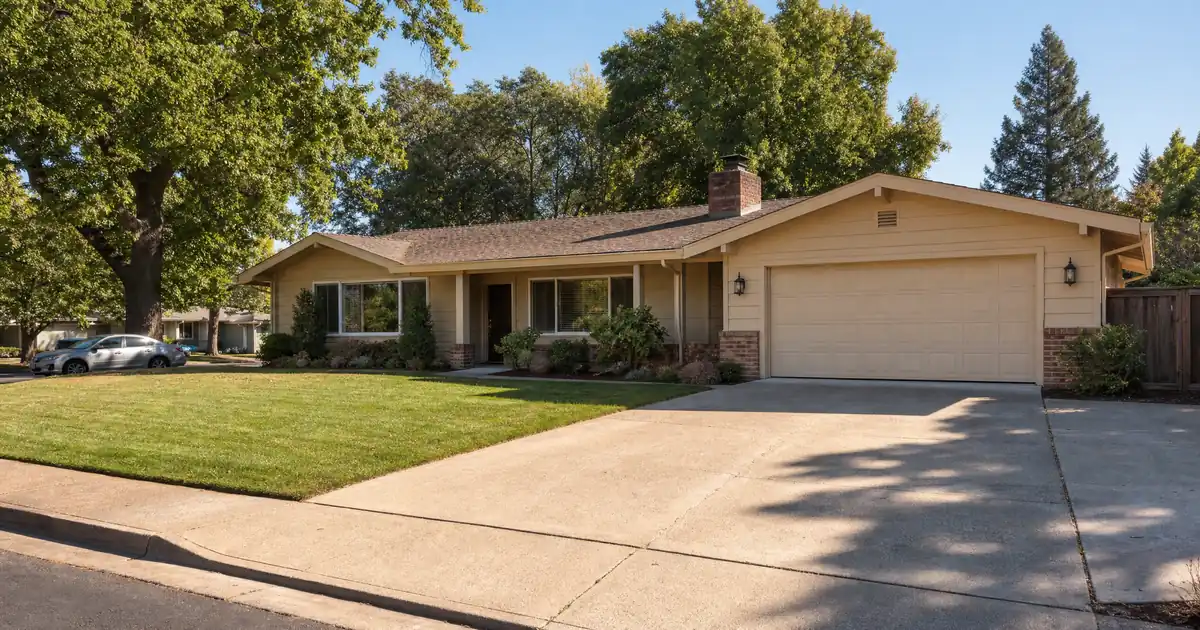
HELOC to Buy Investment Property — The Quick Read: Yes, you can draw a home equity line of credit against a property you already own and use that cash toward a new rental purchase. The catch is sequencing: the HELOC and the acquisition loan are two separate products, underwritten in two separate lanes. The HELOC draw shows up as borrowed money, not seasoned savings, and the new property still has to earn its own loan approval — usually through a DSCR loan that qualifies primarily on the rent the property produces. Done right, this is one of the more common ways investors add doors without writing a fresh check for the full purchase price. It also means an investor is managing two underwriting files at once, on two different timelines, and needs to understand how each one reads the other before signing anything.
Key Takeaways
- A HELOC is revolving credit against equity you already hold. Once drawn, that money is debt on your balance sheet, not cash reserves — lenders on the purchase side will see it that way, not as your own money.
- Investment-property HELOCs run smaller and stricter than primary-home lines — expect a 700+ credit floor and a hard 70% combined-loan-to-value ceiling through most of the wholesale network.
- The new property you’re buying still gets underwritten on its own, typically through a DSCR loan that looks at rent versus payment, not your personal income or your W-2 history.
- Title matters more than most investors expect: this network’s HELOCs can only sit on property held by an individual or a revocable living trust — never an LLC — while the DSCR purchase loan on the buying end often can be titled to an entity, subject to program terms.
- The two products live in different footprints. Home-equity lending runs through a set of full-service states; DSCR purchase and refinance programs reach a much wider network.
- Sequencing the two loans in the right order — draw first, close second — generally produces a smoother file than trying to run them in parallel with the same lender.
How a HELOC Actually Works
A HELOC is a revolving line of credit secured by the equity in real estate you already own — think of it as a credit card with a bigger limit and a lower cost of capital, backed by your house instead of your signature. Two draw structures exist across the wholesale network: a 3-year interest-only draw with a 17-year repayment on the higher-leverage path, and a 5-year interest-only draw with a 25-year repayment on the longer-runway path — a quoted CLTV always carries its own structure. Once the draw period ends, the line converts into a repayment period and amortizes whatever balance is left. Pricing floats for the life of the line — a HELOC never converts to a fixed structure the way a standard mortgage does, so an investor drawing against one should plan for a line that behaves differently than a term loan from open to close.
How large a line the equity supports in your market.
An equity line is sized by combined loan-to-value, occupancy, and credit — not by rental coverage. Switch the occupancy or the credit band and the ceiling moves with it.
Investment-property lines require a 700 minimum credit score. Second-home tiers reach 640; primary-residence tiers reach 600.
A debt-to-income ratio above 45% requires 680+ credit. Profiles under 640 are limited to single-family homes. At least 75% of the approved line is drawn at closing. Ceilings, floors, and caps update from Lendmire’s centralized guideline source.
Line estimate
Illustrative estimate only — not a quote, Loan Estimate, approval, or commitment to lend. The rate is an editable assumption; equity-line pricing is variable through both the draw and repayment periods and never converts to fixed. Occupancy and credit drive the ceiling together: investment property runs to 70% combined LTV with a 700 credit floor and a $500,000 cap; a second home runs to 70% at a 640 floor with a $500,000 cap; a primary residence reaches up to 80% at a 600 floor, and its $750,000 maximum line applies only at 75% combined LTV or below with 720+ credit and a full appraisal. Lines above $500,000 require a full appraisal. Credit, debt-to-income, property type, and full underwriting review all affect the final line.
Equity ceilings shift depending on occupancy. On a primary residence, many lenders comfortably work in a wide loan-to-value band, and MIDFLORIDA Credit Union notes that investment properties and second homes generally face tighter maximum loan-to-value limits than owner-occupied homes. Lendmire’s own wholesale network draws a firmer line than that broader market pattern: investment and second-home lines cap at 70% combined loan-to-value, full stop, with no tier above it regardless of credit score. That ceiling exists because a rental property carries more risk in a downturn than a primary home — vacancy, turnover, and deferred maintenance all sit on the lender’s side of the ledger, so the underwriting stays conservative even for borrowers with strong credit.
Because the line is revolving, the amount an investor can actually put toward a new purchase depends on how much of the limit sits undrawn at closing time. A HELOC that’s been used for other projects, or that’s carrying a balance from an earlier draw, leaves less room for a new down payment — which is why timing the draw close to the purchase, rather than months ahead of it, tends to keep more capacity available.
Key Terms Defined
- HELOC (home equity line of credit): a revolving credit line secured by equity in a property you already own — draw it, pay interest on what you drew, repay it, draw again.
- CLTV (combined loan-to-value): every loan against a property — the first mortgage plus the HELOC balance — expressed as a percentage of what the property’s worth.
- Draw period: the window when a HELOC borrower can pull funds and typically pays interest only on what’s outstanding.
- DSCR (debt-service coverage ratio): a ratio comparing a rental property’s monthly rent to its full monthly payment — principal, interest, taxes, insurance, and HOA dues (PITIA) — used to review a loan on the property’s income rather than the borrower’s paycheck.
- Seasoning: the minimum time a lender wants an investor to have owned or held a loan before doing something new with it, like a cash-out refinance.
- Business-purpose loan: a loan made for investment or business reasons, not to buy a home to live in. DSCR loans are designed for non-owner-occupied investment properties, and because they’re business-purpose loans, they get reviewed differently than a standard owner-occupied mortgage.
- Revocable living trust: an estate-planning structure that, in this network’s HELOC guidelines, is treated similarly to individual ownership for title purposes — unlike an LLC, which isn’t eligible to hold the collateral property for a HELOC.
Two Ways to Source the Equity
Investors reach for one of two pools of equity, and the underwriting lane changes depending on which pool it is. The first path draws against a primary residence — generally the more forgiving lane, with a lower credit floor in parts of the network and larger available line sizes, because the collateral is owner-occupied and statistically lower-risk. The second draws against equity in a rental property the investor already owns, which is the stricter lane described above: the 700+ credit floor, the 70% CLTV ceiling, and the individual-or-revocable-trust title requirement all apply here.
Either way, the cash that comes out of the line is treated as debt, not as the investor’s own seasoned funds, once it lands in a bank account. That distinction matters on the purchase side. A DSCR lender reviewing the new acquisition will ask where the down payment came from, and a HELOC draw generally needs to be documented and, in some cases, sourced and seasoned according to that lender’s own guidelines — it doesn’t automatically get treated the same way a cash reserve sitting in an account for months would be treated. Investors who plan to use a HELOC draw as part of a purchase should confirm with their broker how the purchase-side lender wants that money documented before they draw it, not after.
Sequencing the HELOC and the Purchase Loan
Because the HELOC and the acquisition loan are underwritten separately, the order of operations matters. Most investors draw the HELOC first, let the funds settle into an account, and then move into the purchase transaction — this gives the purchase-side lender a clean paper trail to follow. Trying to run both loans at the same time, with the HELOC draw landing days before closing on the new property, can create timing friction: the purchase lender may want to see the funds sit for a period before counting them, and the HELOC servicer has its own draw-processing timeline that isn’t built around a purchase closing date.
The new property being purchased is not underwritten on the strength of the HELOC. It’s underwritten on its own merits — typically through a DSCR loan, which looks at the rent the property is expected to generate relative to its full monthly payment obligation, rather than at the borrower’s personal income. That means an investor could have ample HELOC capacity and still not qualify for the purchase loan if the target property’s rent doesn’t support the debt service, and conversely, a strong DSCR file doesn’t get an investor a bigger HELOC. The two approvals run on separate tracks and separate criteria, and treating them as one process is a common and avoidable mistake.
Title alignment is worth double-checking early, too. Because this network’s HELOCs can only sit on a property held individually or by a revocable living trust, an investor who holds their existing rental in an LLC will not be able to draw a HELOC against that particular property through this program, even though the DSCR loan on the new purchase might accept LLC title, subject to program terms. Confirming how a property is titled — and how the new one will be titled — early in the process avoids a late surprise.
Where This Fits Geographically
Home-equity lending and DSCR purchase lending don’t cover identical footprints. Home-equity lines through this network run through a set of full-service states, while DSCR purchase and refinance programs reach a considerably wider network. An investor whose existing equity sits in a state outside the HELOC footprint, but who wants to buy in a state inside the DSCR footprint, needs to check both maps separately rather than assuming one program’s coverage implies the other’s.
FAQ
Can you really use a HELOC as the down payment on an investment property?
Yes, in most cases. The line of credit is drawn against equity in a property you already own, and the cash can be used toward a down payment on a new purchase. The purchase itself, though, still has to qualify on its own — commonly through a DSCR loan that evaluates the new property’s rent against its full monthly payment, rather than your personal income.
How do you qualify for a HELOC on an investment property?
Guidelines vary by lender, but through this wholesale network, investment and second-home HELOCs generally require a credit score of 700 or higher and cap at a 70% combined loan-to-value ceiling, with no higher tier available regardless of credit profile. The property being pledged as collateral also needs to be titled to an individual or a revocable living trust — LLC-held property isn’t eligible for this particular HELOC program.
Does drawing a HELOC count as using your own money for a DSCR purchase?
Not automatically. Once drawn, HELOC funds are debt, not seasoned savings, and a DSCR lender on the purchase side will want to see how that money is documented and sometimes sourced or seasoned according to its own guidelines. It’s worth confirming documentation requirements with your broker before drawing the funds, not after.
Can you draw a HELOC against a property held in an LLC?
Not through this network. HELOCs here are limited to property titled to an individual or a revocable living trust. If your existing rental is held in an LLC, that specific property won’t be eligible for this HELOC program, even though the DSCR loan on the new purchase you’re funding may accept LLC title, subject to program terms.
Do HELOC and DSCR loan programs cover the same states?
No. Home-equity lending through this network runs through a set of full-service states, while DSCR purchase and refinance programs reach a wider network across the markets Lendmire serves. It’s worth checking both footprints separately before assuming that equity available in one state can be paired with a purchase in every state DSCR programs cover.
Investors who want the broader program framework can review DSCR versus conventional investment loans.
About Lendmire
Lendmire is a mortgage broker, NMLS# 2371349, arranging DSCR investor loans through wholesale and investor-lending channels — not a direct lender. Lendmire works with investors across 40 markets, connecting borrowers to lenders that offer business-purpose DSCR financing for non-owner-occupied rental property, along with related equity and refinance products where available. Because Lendmire is a broker rather than a lender, final terms, credit decisions, and property approval always rest with the wholesale lender underwriting the file. Investors who want the broader program framework can review how DSCR loans work before deciding how to sequence a HELOC draw against a new purchase. Scotsman Guide named Lendmire a Top Mortgage Workplace in both 2025 and 2026.
For deeper background on the mechanics discussed here, see IRS – About Publication 936.
For the end-to-end picture of how these loans work — qualification, structures, and the full process — see Lendmire’s complete DSCR loans guide.
Get Started
Ready to find the right loan for you?
In about 30 seconds you can review financing options available for your home or investment property. No commitment required.
Informational only. Not a Loan Estimate, approval, or commitment to lend. Program availability and eligibility are subject to lender guidelines, credit approval, property review, and underwriting.
References
2. IRS – About Publication 936
Brandon Miller
Founder & CEO, Mortgage Loan Originator, Lendmire LLC
- Mortgage Loan Originator · NMLS# 1129696 · Verify on NMLS Consumer Access
- North Carolina Real Estate Broker · License# 343312 · Verify on NCREC
- North Carolina Insurance Producer · License# 19053198 · Property, Casualty, Life, Health · Verify on NAIC SBS
- Lendmire LLC · Firm NMLS# 2371349 · Verify firm licensure
Required disclosures. Lendmire (NMLS# 2371349) operates as a licensed mortgage broker, not a direct lender or depository. The discussion in this article is general in nature and should not be relied upon as financial, legal, or tax advice — every investment scenario is unique and should be reviewed by a qualified professional. Any loan inquiry is subject to lender underwriting, and this article is not a commitment to lend or a guarantee of approval. Mortgage rates, loan terms, and program guidelines vary by borrower, property, and state, and may change without notice. Equal Housing Opportunity. Verify licensure at NMLS Consumer Access.


