
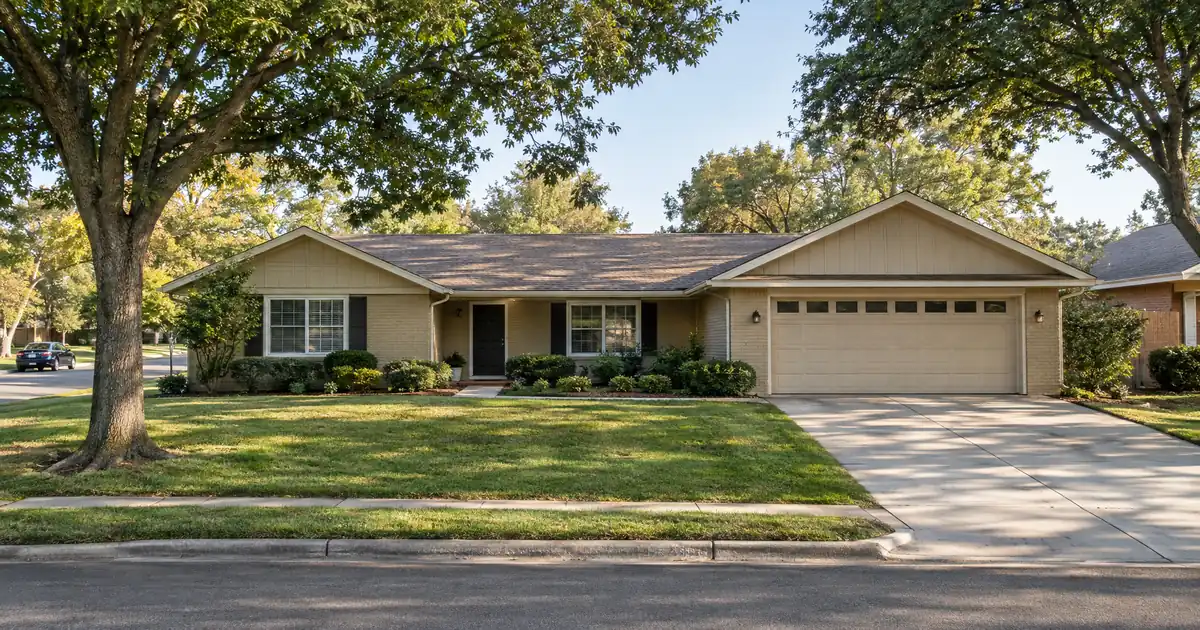
The Quick Read: Usually yes, when the cash-out is on a home the actor lives in and the file runs through a bank-statement program. The lender reads 12 months of deposits instead of traditional personal-income documentation, then adjusts business deposits for expenses. If the cash-out is on a rental, the actor’s income often stops mattering. A DSCR loan judges that property on its rent, not the paycheck.
Which Cash-Out Are You Actually Doing?
Two different loans hide inside this question, and mixing them up is how files get routed to the wrong program. Occupancy decides which one you have.
Owner-occupied cash-out. This covers a primary residence or a second home. The lender needs proof you can repay, and a loan-out actor’s tax return rarely shows it. Bank-statement programs exist for exactly this borrower. Qualification runs on documented income under the applicable program, subject to lender guidelines.
Rental cash-out. This is a refinance on a property you rent to tenants and do not live in. A DSCR loan tests the property’s rent against its monthly obligation. Your loan-out, your residuals and your write-offs are not part of the decision. Bank statements are not needed for that file, and for most rentals that clear the test, DSCR is the cleaner route.
Across the wholesale network Lendmire works with, a common mistake on entertainment files is an actor asking for a bank-statement loan on a rental that would clear a DSCR test on its own. The reverse happens too: an actor tries a DSCR loan on a house they plan to live in. That does not work.
Why the Tax Return Understates a Loan-Out Actor
Studio money rarely lands in the actor’s personal account. It goes to the loan-out, a personal-services company that contracts the actor’s work to the production. The payroll company or studio pays the loan-out. The loan-out then pays the actor.
For a loan-out taxed as an S-corp, the owner has to pay himself or herself reasonable W-2 compensation before taking distributions. The Tax Adviser notes that the IRS can recharacterize distributions as wages when pay is set too low, and calls the popular 50/50 split a myth. NATP describes the test as facts and circumstances, with no fixed ratio.
Here is the underwriting problem. After expenses, commissions and the salary split, the return can show modest personal income. Meanwhile, the account the studio pays into shows steady or large deposits. Conventional underwriting reads the return. A bank-statement program reads the deposits. That mismatch is the whole reason the product exists.
How the Lender Reads the Deposits
Most programs placed through the network ask for 12 months of statements, business or personal. Income comes from averaging the deposits. A few lenders will look at a longer window, and practitioners often prefer a 24-month average when the recent year is weaker. That is convention, not a rule.
Where the money lands changes the math:
| Where the deposit lands | How it is usually treated |
|---|---|
| Loan-out business account | Reduced by an expense factor |
| Personal account (from loan-out) | Reviewed; transfers get scrutiny |
| Payroll-house deposit to personal | Counts if clearly sourced |
| Transfer between your own accounts | Excluded |
Business deposits normally go through an expense factor. The factor is lender-specific, and no universal formula exists. Some lenders accept a CPA letter supporting a lower expense ratio. Personal statements often skip the factor, but underwriters trace each large deposit back to its source. A transfer from the loan-out to your personal account is the same money counted once, not twice.
Ownership matters as well. If you own the loan-out outright, the deposits are yours to count. If you hold a minority stake, the lender will want to know how much of the account is really your share.
Deposits That Don’t Count (and the Ones That Surprise Actors)
Underwriters strip out the following, as a practitioner habit:
- Transfers between your own accounts.
- Loan proceeds and credit-line draws. Borrowed money is not income.
- Gifts and one-off windfalls.
- Large deposits with no clear source. Expect a letter of explanation.
Actors get surprised in a few specific spots. A lump-sum contract payment can look like a one-off. Residuals that arrive in odd amounts need a clear paper trail. Agent and manager commissions sit inside the deposit stream, since they come out of the loan-out’s receipts. They are real costs, and they feed into the expense discussion. Pass-through payments that you simply forward to someone else are not your income.
Skip the temptation to dress up deposits before applying. Moving money in a circle to inflate the average is misrepresentation, and underwriters spot it. It ends the file.
A Worked Example
Run the steps in order. You will not see a payment figure here, because the numbers belong to a real quote, not to prose.
1. Pull 12 months of loan-out business statements.
2. Strip transfers, loan proceeds, gifts and unexplained one-offs.
3. Apply the lender’s expense factor to what remains. If a CPA letter supports a lower ratio and the lender accepts it, the usable income goes up.
4. Divide by 12 for monthly qualifying income.
5. Compare that figure to the new housing obligation and your other monthly debts.
6. Confirm credit, equity and reserves.
If the recent year was thin and the year before was strong, the file may do better on a longer window. If the strong year is the most recent, the 12-month view is fine. Either way, the lender picks the method under its own program sheet.
What Leverage and Loan Size Look Like
Leverage depends on occupancy and on the program. These are typical ranges from select lenders in the network, subject to lender guidelines:
- Primary residence purchase or rate-and-term refinance: up to 90% LTV on stronger files.
- Owner-occupied cash-out (primary residence or second home): up to 80% LTV with a fixed expense ratio, or 75% with an accountant-prepared ratio, depending on loan size and credit.
- Asset-depletion alternative on a primary residence: up to about 80% LTV.
- Cash-out on an investment property: tops out around 75% LTV on standard rentals.
- Loan amounts: roughly $125,000 to $3,500,000.
- Reserves: commonly around 6 months of the housing payment.
Lendmire arranges these loans through that wholesale network. Lenders review and approve each file individually. Consumer bank-statement lending runs in 16 states, so availability depends on where the property sits.
Rental Cash-Out: When the Loan-Out Drops Out of the File
DSCR loans are designed for non-owner-occupied investment properties. Because they are business-purpose investor loans, they are reviewed differently from a standard owner-occupied mortgage. The CFPB’s Regulation Z commentary treats credit for non-owner-occupied rental property as business-purpose. It also says that rule does not hold if the owner expects to occupy the property more than 14 days in the coming year. A vacation home you use for a month does not qualify as a pure rental.
For an actor with a rental, that means the underwriting question shifts. The loan is reviewed primarily on property-level rental income covering the payment, subject to lender guidelines. Credit, equity and reserves still count. Your variable income, write-offs and loan-out structure do not. Some programs will also look at files that fall below a 1.00 coverage ratio, but LTV and terms adjust when they do.
Cash-out proceeds on a business-purpose loan are usually paired with a business-purpose attestation. If the plan is to spend the cash on personal expenses, raise it with your loan officer early, because that can complicate the file. Tax treatment can depend on how the funds are used and how the property is held; investors should keep clear records and speak with a qualified tax professional before relying on any deduction.
The complete DSCR loans guide covers how coverage is calculated and which properties fit.
On disclosure, the split follows occupancy. An owner-occupied bank-statement loan is a consumer mortgage, so TRID applies. A DSCR loan on a non-owner-occupied rental, including a short-term rental, is business-purpose and exempt. Know which one your file is before you compare paperwork.
Thinking out loud for a second: if the rental covers its payment with room to spare, DSCR is the cleaner route. If the property is marginal and the actor’s deposits are strong, a bank-statement file can still carry a larger loan. That is a genuine judgment call, and it depends on the property.
Comparing the Paths
| Path | Income proof | Best for |
|---|---|---|
| Bank statements | 12 months of deposits | Owner-occupied, strong deposits |
| Tax-return documentation | Returns, W-2 and K-1 | Stable, high-reported income |
| Asset depletion | Liquid assets | Cash-rich, lumpy income |
| DSCR | Property rent vs. payment | Rentals only |
A tax-return file does read the loan-out through the actor’s own return, including S-corp wages and K-1 income. That works for actors whose reported income is already high. For many, it is not.
For related reading, Lendmire’s piece How to Cash Out Your Home on Bank Statements From Payout Income applies to irregular entertainment income too.
Key Terms Defined
Loan-out: A personal-services company that contracts an actor’s work to a studio and pays the actor.
Bank-statement loan: A non-QM loan that qualifies the borrower on average deposits instead of traditional personal-income documentation.
Expense factor: The percentage a lender subtracts from business deposits to estimate usable income.
Cash-out refinance: A new loan that pays off the old one and returns the extra equity as cash.
DSCR loan: An investor loan that compares a rental’s income to its payment.
Distribution: A payout of S-corp profit to the owner, separate from W-2 wages.
Document Checklist and Prep
Gather these before the file goes in:
- 12 months of statements for every account that receives studio or payroll money.
- A written explanation for any large or unusual deposit.
- Proof of loan-out ownership and percentage.
- A CPA letter if you are asking for a lower expense ratio.
- Your most recent mortgage statement and property details.
- Reserve documentation: the assets that cover roughly six months.
Preparation in the months before applying helps most. Keep income flowing to the same account. Avoid moving large sums around. Pay down revolving balances if credit is tight. Plan for a gap between jobs, since reserves cover that stretch.
When This Is the Wrong Tool
Bank statements are a poor fit in a few cases:
- The loan-out is brand new, with little history. Personal-income programs generally want about two years of self-employment.
- One huge payment accounts for most of the deposits.
- You own a small share of the loan-out.
- Income is declining month over month.
- The property is a rental that clears a DSCR test without needing your income at all.
In those cases, a different loan structure, or a wait, may serve you better.
Frequently Asked Questions
Does a loan-out company block me from getting a mortgage?
No. Non-QM bank-statement programs are built for borrowers whose traditional personal-income documentation understates cash flow. A rental cash-out on a DSCR loan does not look at the loan-out at all.
Which statements should an actor submit, business or personal?
It depends on where studio money lands and on the lender’s program. Business statements normally carry an expense factor, and personal statements often do not, though underwriters trace transfers from the business account. Many files use whichever account is the true destination of the income.
Does cash-out on a rental need bank statements?
No. A DSCR cash-out qualifies primarily on property-level rental income covering the payment, subject to lender guidelines. Credit, equity and reserves still apply, and cash-out on a standard rental tops out around 75% LTV.
What if my income is uneven from year to year?
Lenders can average over a longer window, and some programs accept it when the recent year is weaker. A CPA letter and clear contract documentation help. A single big payment with nothing else behind it is harder to carry.
Can I use a bank-statement cash-out on a vacation home?
Possibly, if it is a second home you occupy. A second home is treated as owner-occupied, which means a consumer mortgage and no DSCR option. If you expect to use the property more than 14 days in the coming year, it is not treated as a pure rental, so a DSCR loan on it is generally off the table.
Next Step
Call 828-256-2183 or request a quote. Every file is underwritten individually, and nothing here is a commitment to lend.
For actors, the file turns on one question: which account the studio check lands in.
For current guidelines and terms, see Lendmire’s bank statement loan programs page.
About Lendmire
A DSCR-focused mortgage broker, Lendmire (NMLS# 2371349) places investor financing across 41 markets, 40 states plus Washington, D.C., with DSCR eligibility generally reviewed by the lender on property cash flow instead of traditional income documentation, subject to lender guidelines. Scotsman Guide named Lendmire a Top Mortgage Workplace in 2025 and 2026.
For the mechanics of pulling equity out of a rental property, see Lendmire’s guide to cash-out refinance on an investment property.
Get Started
Ready to find the right loan for you?
In about 30 seconds you can review financing options available for your home or investment property. No commitment required.
Informational only. Not a Loan Estimate, approval, or commitment to lend. Program availability and eligibility are subject to lender guidelines, credit approval, property review, and underwriting.
References
1. The Tax Adviser (AICPA): Advising S Corporation Clients on Reasonable Compensation
2. NATP: S Corp Reasonable Compensation
3. CFPB Regulation Z Official Interpretation, §1026.3
This article is part of Lendmire’s bank statement loan program — full qualification details, guidelines, and scenarios live on the program page.
Related reading: Super Jumbo Cash-Out Refinance Documentation Using Bank Statements · How to Move a Declined Cash-Out to a Super Jumbo Bank Statement Loan · 40-Year DSCR vs. 24-Month Bank Statement Cash-Out for Steady Income
Brandon Miller
Founder & CEO, Mortgage Loan Originator, Lendmire LLC
- Mortgage Loan Originator · NMLS# 1129696 · Verify on NMLS Consumer Access
- North Carolina Real Estate Broker · License# 343312 · Verify on NCREC
- North Carolina Insurance Producer · License# 19053198 · Property, Casualty, Life, Health · Verify on NAIC SBS
- Lendmire LLC · Firm NMLS# 2371349 · Verify firm licensure
Disclosure information. Lendmire is a state-licensed mortgage brokerage under NMLS# 2371349. Lendmire is not a depository institution, direct lender, or financial advisor — all loans referenced are placed through wholesale lender partners and are subject to each lender's underwriting standards. This article is provided for general informational purposes and is not a commitment to lend, nor does it constitute financial, legal, or tax advice. Loan programs, terms, rates, and qualification standards change without notice and depend on borrower profile, property type, and the state in which the subject property is located. Equal Housing Opportunity provider. NMLS Consumer Access: nmlsconsumeraccess.org.